
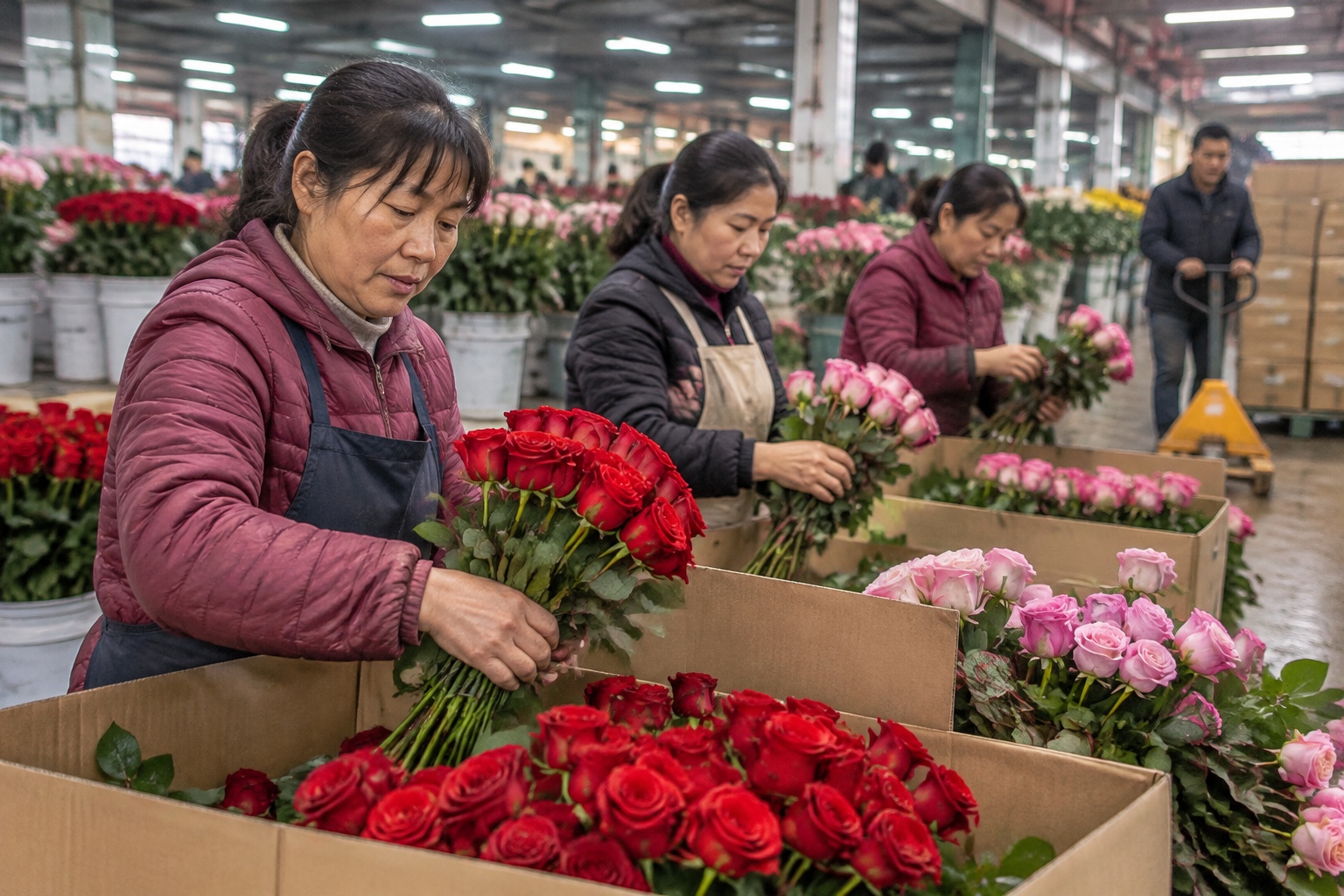

Just after 4 a.m. in Dounan, a wholesale district on the southern edge of Kunming, the auction hall is already full. Buyers sit in tiered rows facing a big clock. The price starts high and ticks downward; whoever presses the button first buys that lot. Almost nobody speaks. Outside, crates of roses are being loaded onto trucks that will reach Beijing or Shanghai by the next evening.
Dounan is the largest fresh-cut flower market in Asia, moving something like eleven billion stems a year. The province it sits in, Yunnan, grows roughly seven of every ten cut flowers sold in China. A bundle of twenty roses here costs less than a coffee in Shanghai, and people buy them the way you’d buy vegetables.
Nine days later, still inside Yunnan, you can be standing at 3,300 metres watching yaks graze beside a lake so still it reads as glass, a Tibetan monastery behind you. That jump — from a pre-dawn flower auction to a high plateau — is the thing worth explaining about this province. Its selling point isn’t that it has a lot of scenery. It’s the density: how much changes, how fast, without ever crossing a border.
The route: four altitudes, nine days
Yunnan is roughly the size of Germany, and its elevation runs from 76 metres in the far south to 6,740 metres at Kawagebo Peak on the Tibetan border. You don’t need to see all of that. One line — Kunming, Dali, Lijiang, Shangri-La — climbs through four bands: 1,900 m, 2,000 m, 2,400 m, 3,300 m. High-speed rail links the first three; a three-hour drive covers the last stretch.
Every few hundred metres upward, something shifts. The plants thin out. Houses go from whitewashed Bai courtyards to Naxi timber to Tibetan stone. Breakfast turns from rice noodles to yak butter. The script on shop signs changes alphabet. You are not changing countries. The country is changing around you.
Why this line, and not another
Four landscapes that never repeat
Kunming is flowers and a lake. Dali is a flat plain pressed between a mountain range and a large lake — white walls, grey tiles, fields. Lijiang is an old town at the foot of a snow mountain, with glacial water running down every alley. Shangri-La is grassland at 3,300 metres under gilded monastery roofs. Over nine days you won’t see the same picture twice, and you won’t spend six hours on a bus between them either.
A climate that lets you do nothing
Yunnan sits at low latitude but high altitude, which produces what locals call “four seasons like spring.” Daytime temperatures hover around 20–22°C most of the year. The sun is fierce; the shade is cool. Because of that, time is treated differently here than in China’s coastal cities. In Dali, people sit in courtyards all afternoon. In Lijiang, dogs sleep in the middle of the road and nobody hurries them along. This route leaves whole half-days empty on purpose.
Three cultures that aren’t performing for you
Twenty-five of China’s officially recognised ethnic minority groups live in Yunnan. On this line you’ll spend time with three: Bai, Naxi and Tibetan. Each has its own script, dress, faith and craft. What’s unusual is how little of it is staged. A Bai grandmother tie-dyes cloth in her doorway. Elderly Naxi men play classical music in a courtyard. Prayer wheels sit on the street in Shangri-La and anyone can spin them. There is no ticket gate between you and the life that’s going on.
Going up, stop by stop
1,900 m — Kunming, Day 1
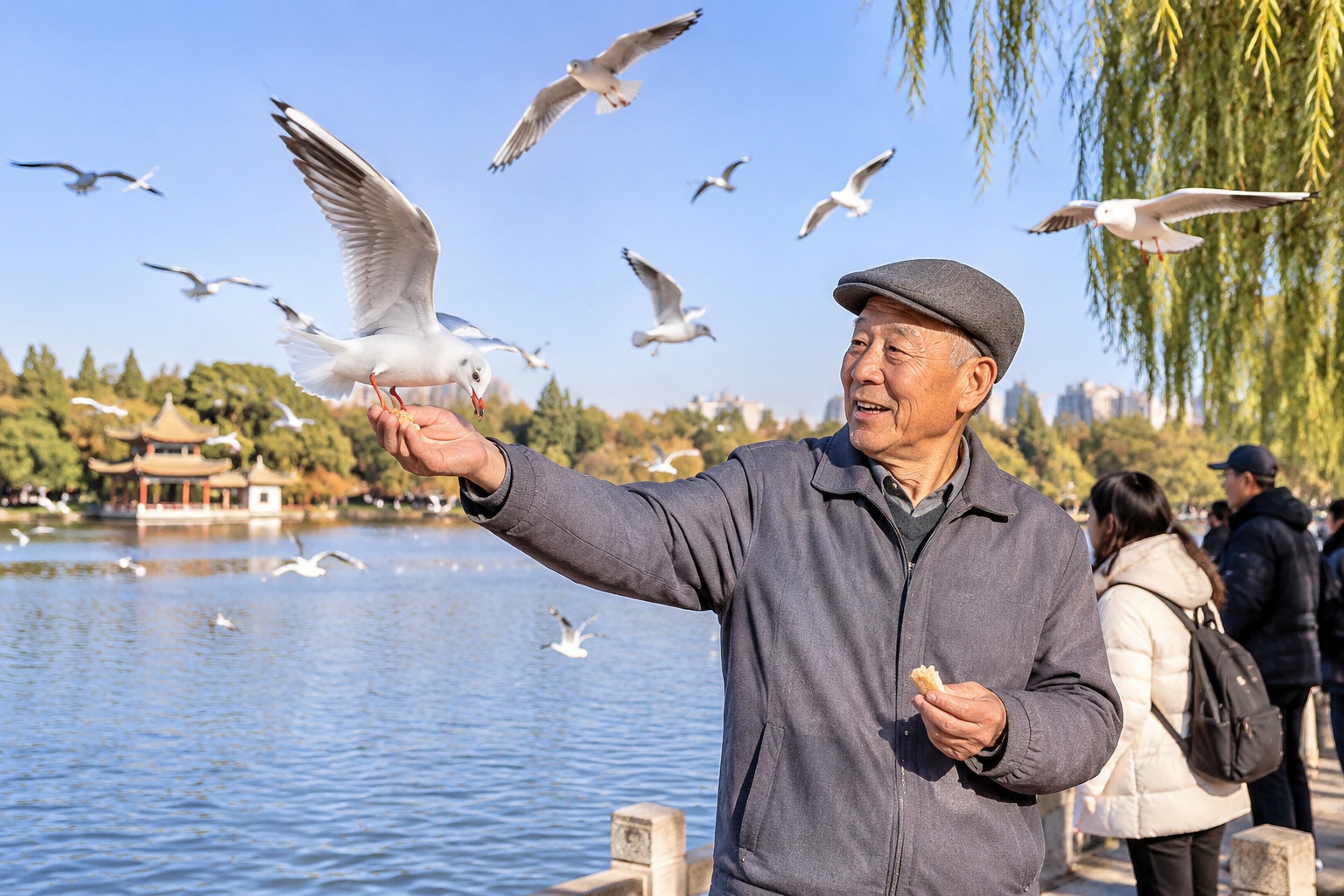
Land, breathe, adjust. In the afternoon, Green Lake Park: from November to March, red-billed gulls fly in from Siberia and land on people’s hands for bread. Then the flower market, where stems are sold by the bundle and the price is almost embarrassing.
Small thing: the market is busiest late at night. Dounan’s real trading happens between two and six in the morning.
2,000 m — Dali, Days 2–4
Two hours by train. Stay in the old town first: Bai houses built in the sanfang-yizhaobi style — three wings around a courtyard, one screen wall facing the gate — flowers in the yard, water at the corner.
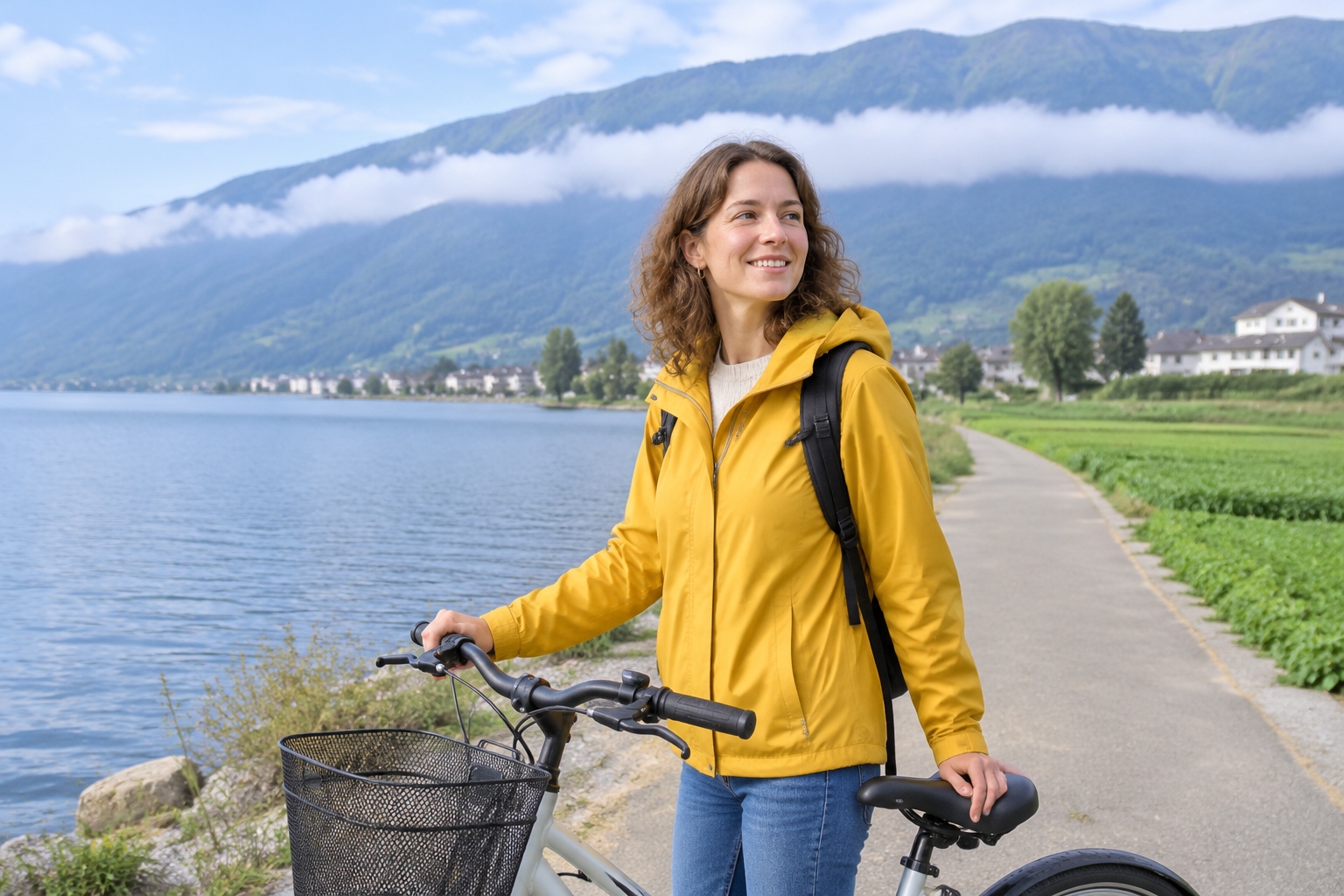
Day 3, cycle the west shore of Erhai Lake, the Caicun-to-Xizhou stretch. Lake on your left, fields on your right, cloud pressed against the middle of the Cangshan range. In Xizhou, eat a flaky baba flatbread and look at the woodcarving in the Yan family courtyard — layer on layer, so fine you can’t see where the knife stopped.
Day 4 morning, the Three Pagodas. The main one went up in the Tang dynasty, more than a thousand years ago; it has survived earthquakes and wars and is still standing. In the afternoon, Zhoucheng, making tie-dye: you bind white cloth with thread, drop it into an indigo vat, pull it out, cut the threads. The blue-and-white pattern is yours. There is no second one.
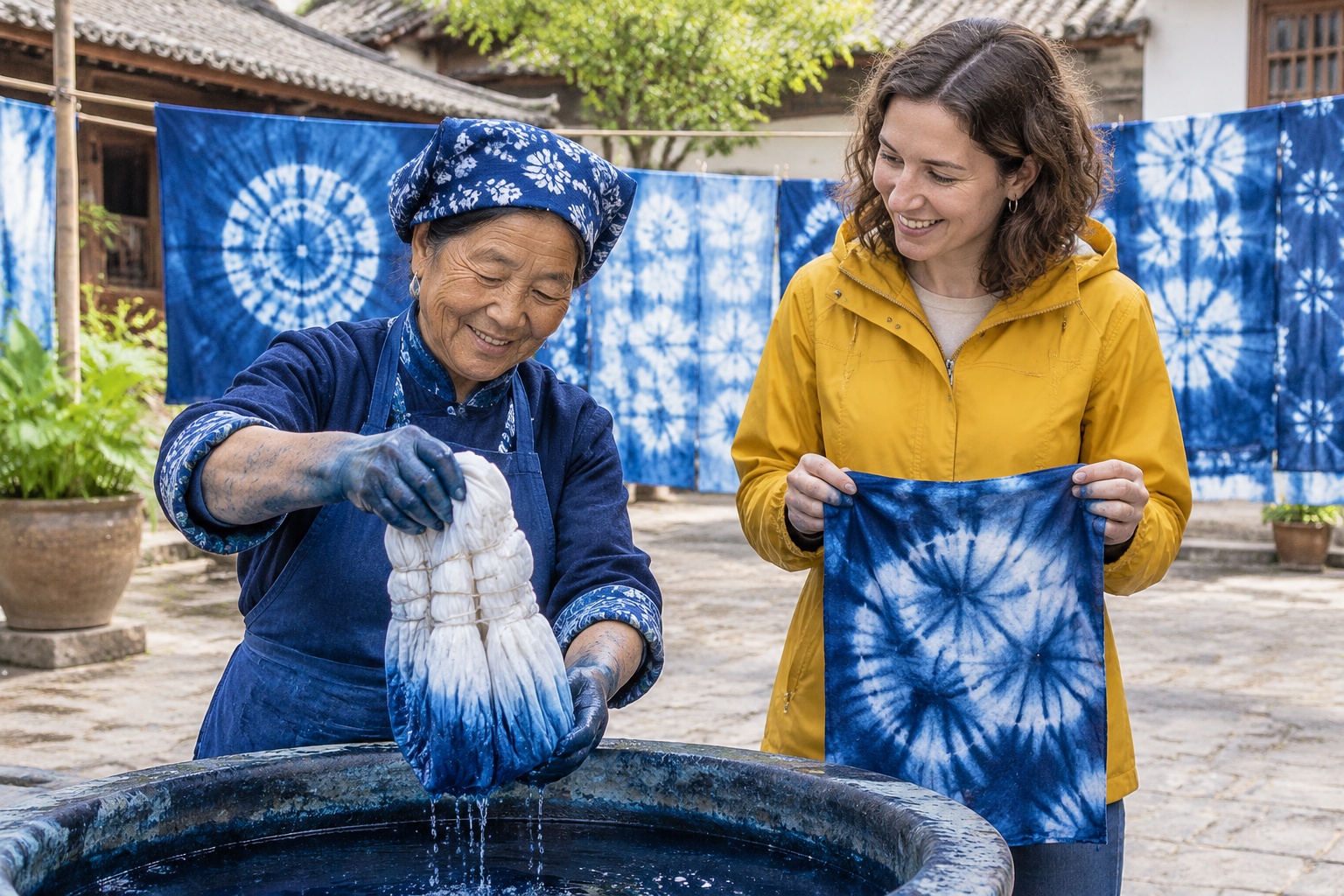
Small thing: cycle clockwise along the west shore and start in the morning — the wind picks up after lunch. Wear old clothes to the dye workshop; your hands stay blue for a day.
2,400 m — Lijiang, Days 5–7
Another two hours north by train. Lijiang’s old town has no city wall. The story locals tell: the family name of the ruling clan was Mu (木), and putting a box around that character turns it into kun (困), meaning trapped. So they left the town open. Water comes down from Jade Dragon Snow Mountain, splits into three main channels, then into dozens of smaller ones that run past every doorway.
Day 6, the snow mountain. A large cable car rises to 4,506 m; a boardwalk takes you to 4,680 m — one of the highest places on earth a non-climber can reach without effort. Coming down, Blue Moon Valley: the water is milky blue because glacial rock flour stays suspended in it, and in direct sun it looks like poured milk.
Day 7, Shuhe, quieter than the main old town and with clearer water. In the evening, Naxi ancient music — a repertoire preserved here after it vanished from the Chinese heartland, played by men and women in their seventies and eighties on instruments centuries old. You won’t understand the words. The tunes are older than the words anyway.
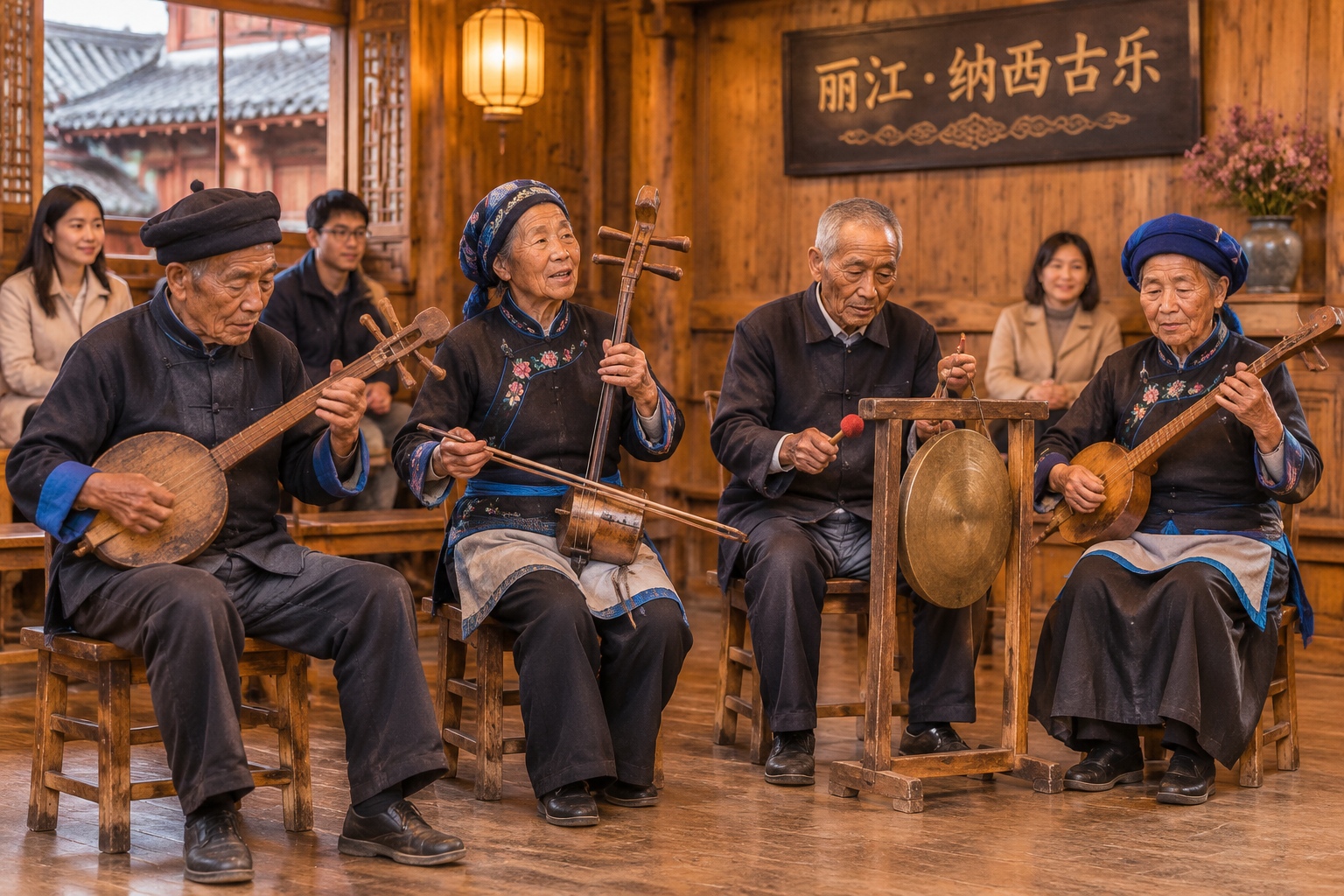
Small thing: book the big cable car ahead and keep a spare day — high winds shut it down. Blue Moon Valley looks best around midday.
3,300 m — Shangri-La, Days 8–9
Three hours by hired car, with a stop at Tiger Leaping Gorge, where the Jinsha River cuts a channel more than 300 metres deep between two snow mountains. On the viewing platform the roar comes up through your feet.
Then the altitude jumps to 3,300 m. A flight of stairs will leave you short of breath. That’s normal.
Afternoon at Songzanlin Monastery, the largest Tibetan Buddhist monastery in Yunnan: gold roofs, white walls, stone steps climbing to the main assembly hall, monks in red robes coming down as you go up. In the evening, Dukezong old town, where the giant prayer wheel on the hill takes several people pushing together to move.
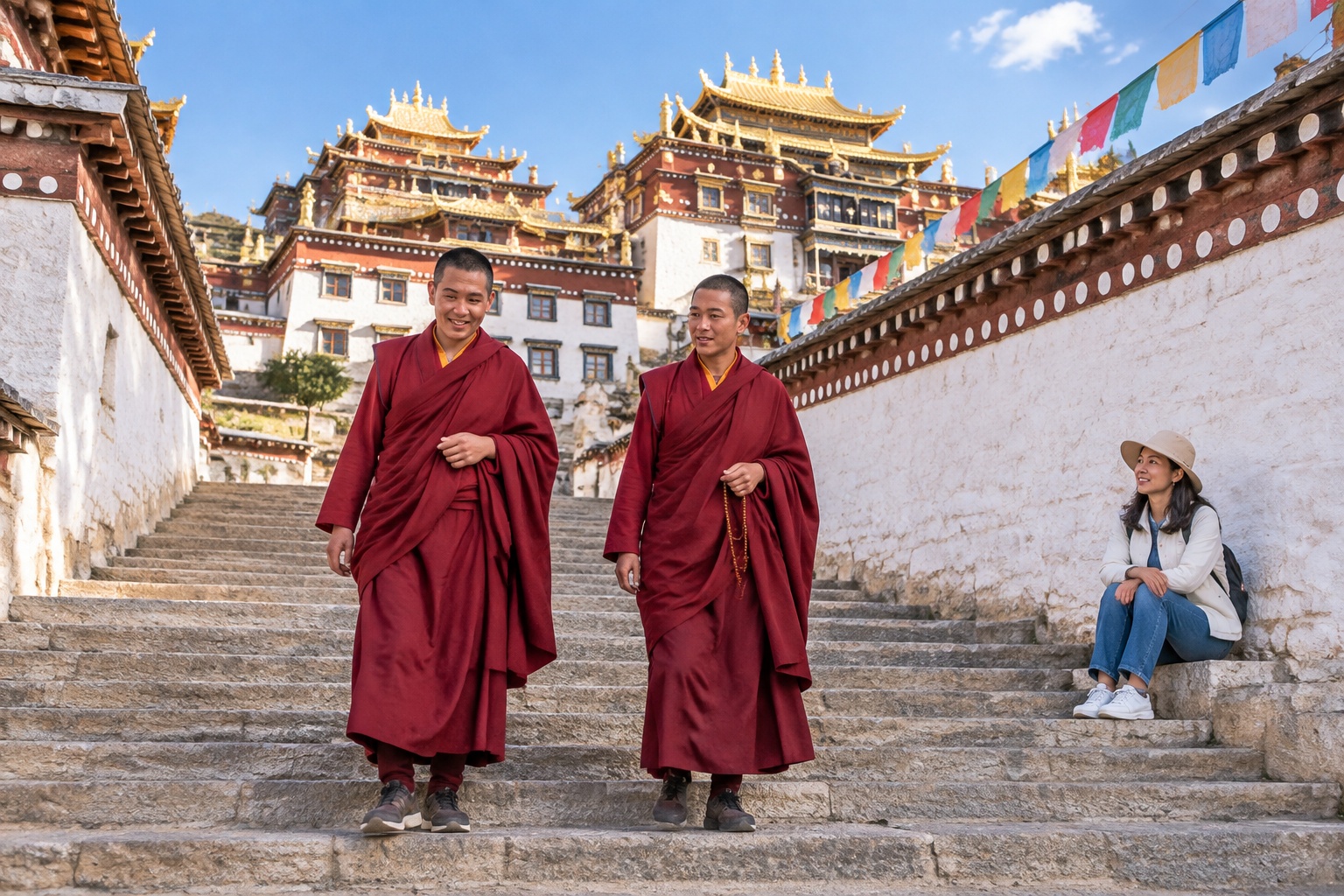
Day 9, Pudacuo National Park: alpine lakes, meadow, old-growth forest. Shudu Lake is so still it reads as glass, yaks grazing at the edge. Then out via Shangri-La or Lijiang airport.
Small thing: first night at 3,300 m — no shower, no alcohol, no late night. Walk slowly. In the monastery, hats off, don’t point at statues, spin prayer wheels clockwise.
Five things nobody warns you about
- Altitude. Kunming and Dali are barely noticeable. Lijiang is mild. Shangri-La at 3,300 m you will feel: headaches, breathlessness, poor sleep. Carry glucose, walk slower, and give it a day. Cable car stations on the snow mountain sell oxygen cans.
- Sun. High-altitude light is deceptive — it doesn’t feel hot, and it burns. Hat, sunglasses, sunscreen, all three.
- Temperature. Four seasons in one day. Bring a jacket even in summer; mornings and evenings are cold.
- Rain. The wet season runs June to September, mostly as afternoon showers. Mornings are usually clear.
- Etiquette. Ask before photographing people. Remove hats in temples, don’t step on thresholds, turn prayer wheels clockwise.
Who this suits, and who it doesn’t
It suits people who want to slow down rather than tick off sights; who like lakes, snow mountains and old towns; who are genuinely curious about minority cultures; and first-time visitors to China who want to see something that doesn’t look like a big city.
It doesn’t suit anyone who needs a headline attraction every day — the point of this route is staying put. It doesn’t suit travellers who can’t handle altitude; two days in Shangri-La will be uncomfortable. And it doesn’t suit people who hate commercialised old towns: Lijiang’s main quarter is loud at night, which is why the route beds you down in Shuhe or on the edge of the old town instead.
What you actually take home
A piece of blue-and-white cloth you dyed yourself. A bag of baba you finished on the road. A photo of cloud sitting halfway down a mountain. The two minutes you spent catching your breath on the monastery steps. And the end of the Naxi concert, when nobody clapped and a group of elderly musicians quietly began packing up their instruments.
Nine days, 1,900 to 3,300 metres. You don’t come home saying “I went to Yunnan.” You come home saying “I slowed down in Yunnan for nine days.”