
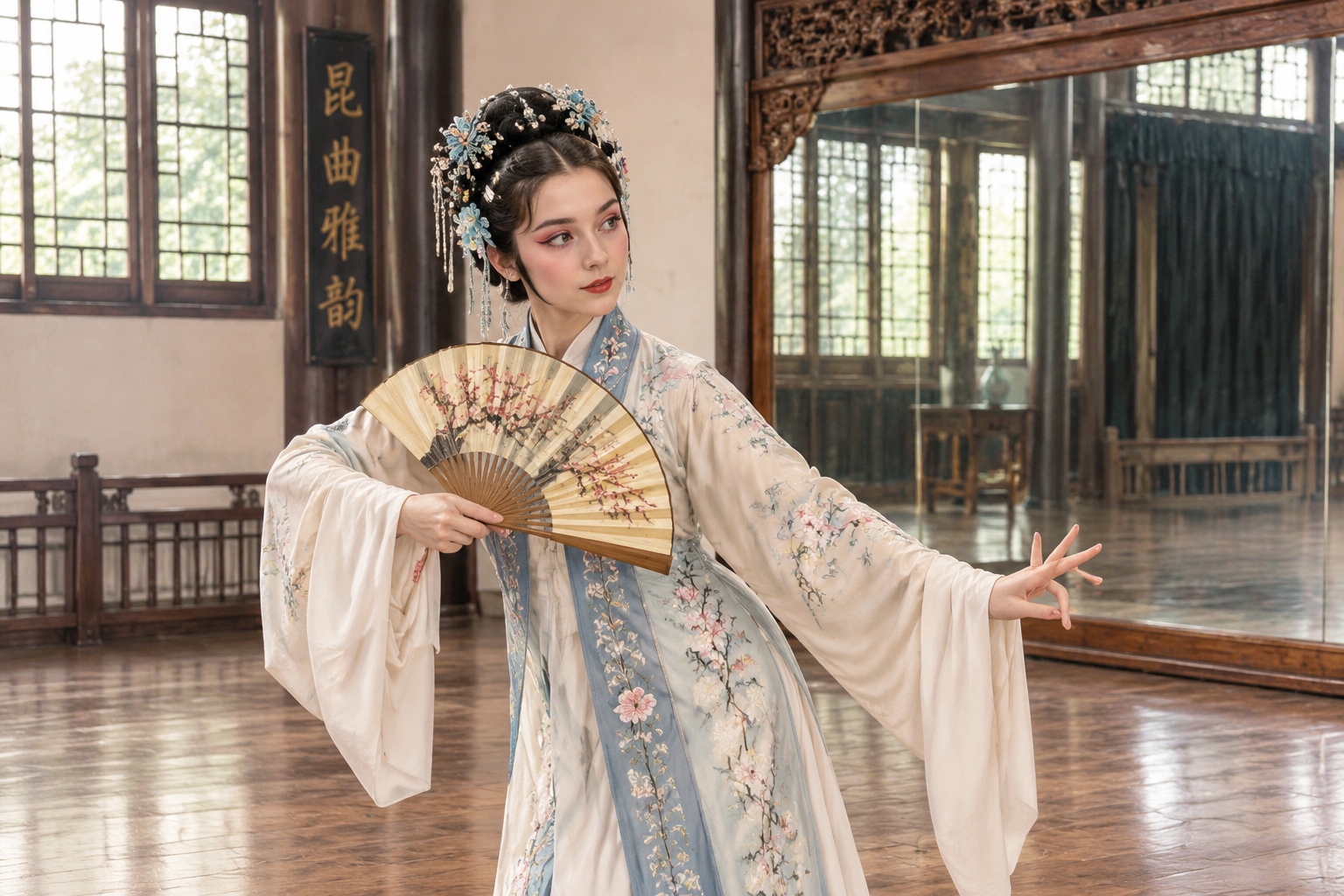

Why would a girl from Ohio move to Suzhou for opera?
It started with a YouTube video. Emily Carter, 24, was browsing opera performances late at night when she stumbled on a clip of the Chinese Kunqu artist Shi Xiaomei singing a scene from The Peony Pavilion. “I didn’t understand a word, but I started crying,” she tells me over tea in a narrow lane near Suzhou’s Pingjiang Road. “The voice felt like it was coming from somewhere ancient, but also right inside my own chest.”
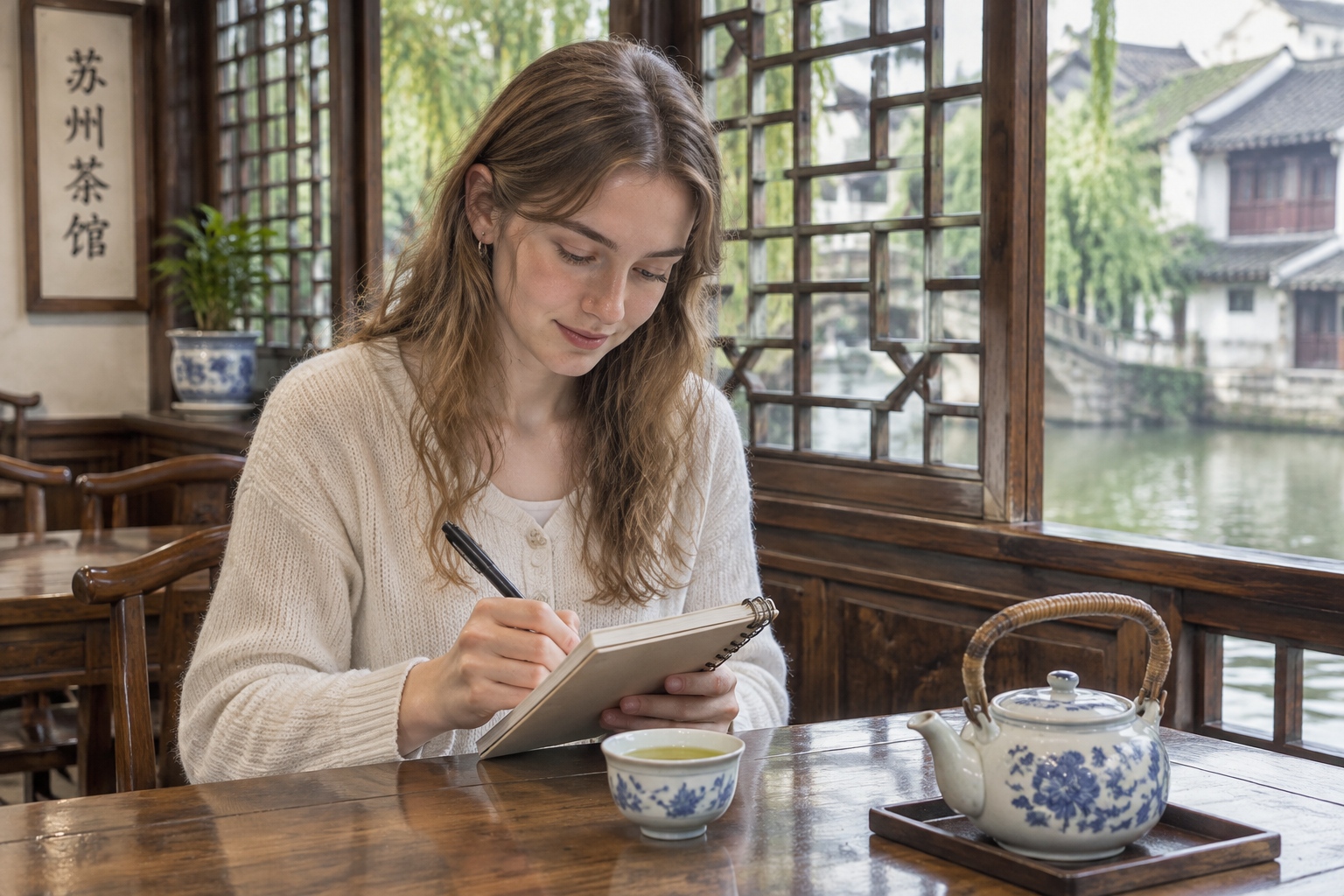
That was two years ago. Last September, Emily packed two suitcases, left her job at a coffee shop in Cleveland, and enrolled in a one-year language and performance program at the Suzhou Kunqu Opera Theatre. She calls her study diary Shuǐ mó qiāng rì jì— “water mill tune diary”, named after the delicate, flowing vocal style that defines Kunqu.
What exactly is the water mill tune?
Kunqu is one of China’s oldest surviving opera forms, born in the 14th century near Suzhou. The “water mill tune” refers to the gliding, unbroken quality of the singing—like water turning a mill wheel, it never stops or stumbles. Each syllable is shaped with extreme precision, often stretched across several notes, and the performer must control breath to sound effortless.
For Emily, the hardest part was not the notes but the language. “I studied Mandarin for two years before coming, but in Kunqu they use classical Chinese, and they also use the Suzhou dialect for some lines. My teacher says I sound like a robot trying to be a ghost,” she laughs.
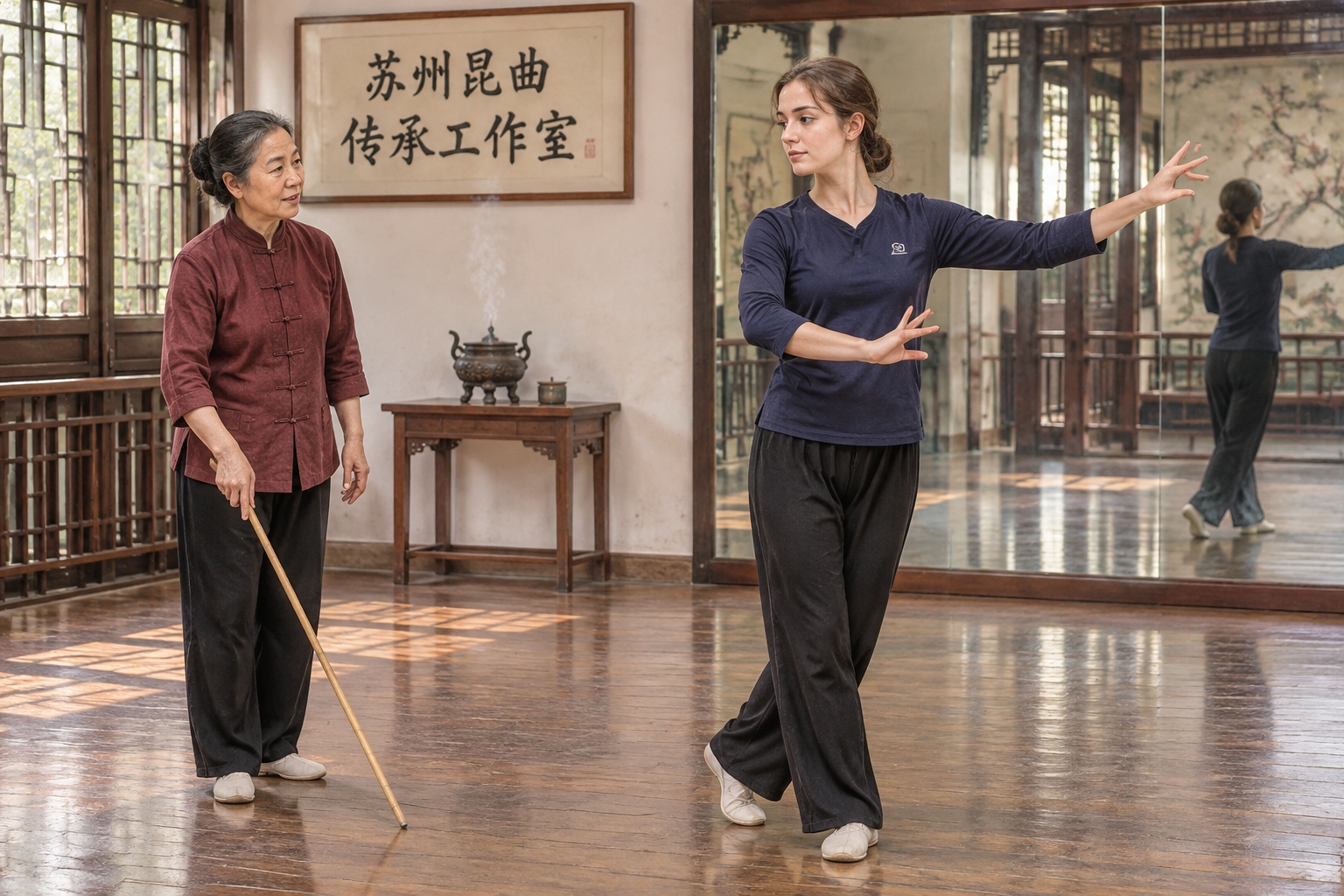
Her teacher, Wang Lan, has been performing for over 30 years. Wang never trained a foreign student before Emily. “At first I thought it would be impossible,” Wang says. “But she has a kind of stubbornness. She practices the same line for hours, even when I tell her to rest.”
Inside the daily practice: blisters, incense, and mirrors
A typical morning for Emily starts at 7 a.m. in the theatre’s practice hall. Wooden floors, high ceilings, and a wall of mirrors. She warms up with breathing exercises, then spends two hours on vocal drills. In the afternoon, she learns movement—the long flowing sleeves, the precise finger gestures, the slow step-by-step pacing that mimics a lady walking in a garden.
Her diary is full of small observations. “Today my teacher lit incense and told me to sing toward the smoke. It sounds weird, but it’s a trick to make me sing softer. When the smoke flickers, I’m using too much breath.” Another entry: “My dance slippers have holes. The floor is eating them.”
What do locals think when they see a foreigner playing Du Liniang?
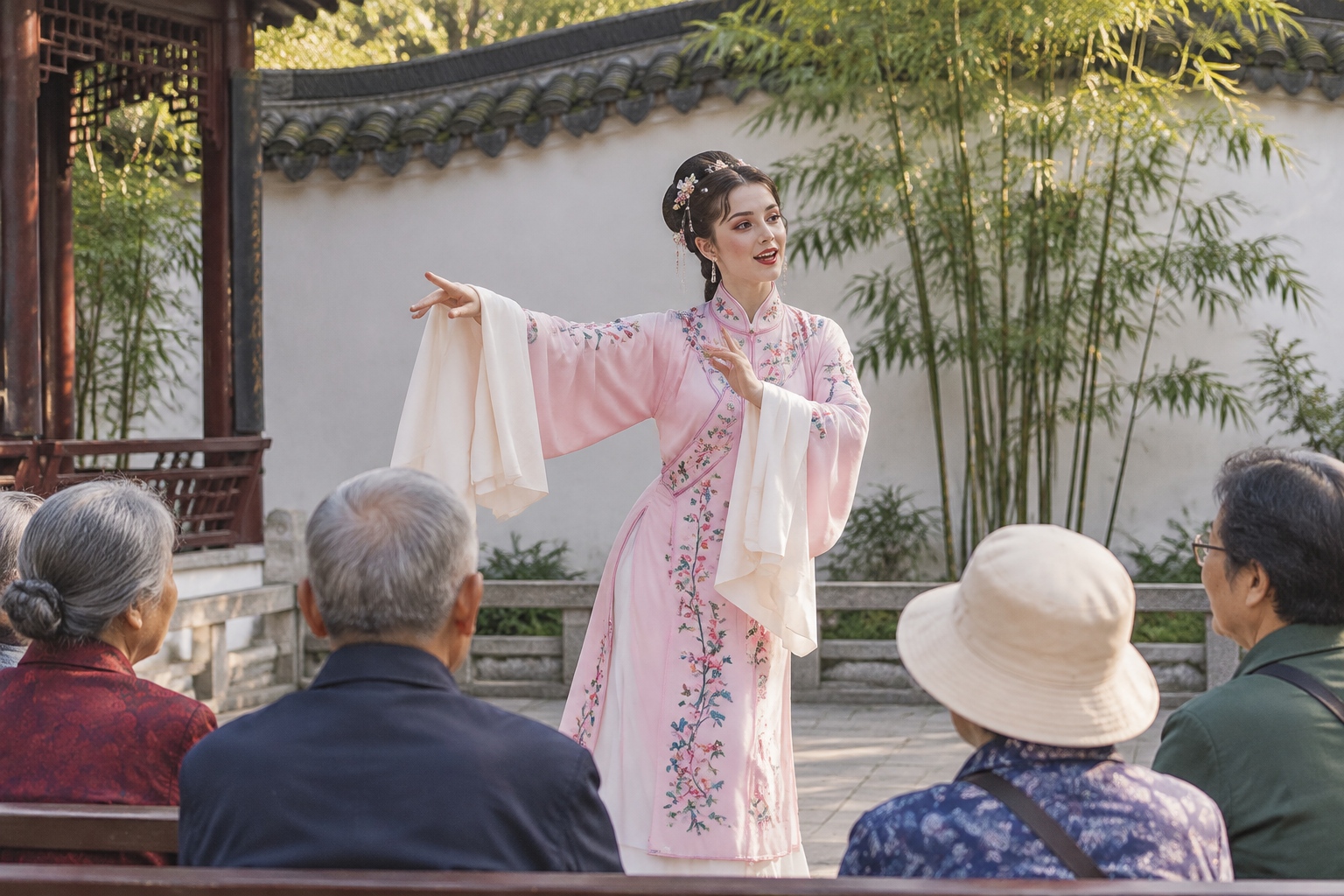
Suzhou is a city that prides itself on cultural refinement. Most locals grow up hearing Kunqu on the radio or in teahouses. When Emily first performed a short excerpt at an open-air stage near the Humble Administrator’s Garden, she expected curiosity or even resistance. Instead, she says, an elderly woman came up to her afterwards and held her hands.
“She spoke in Suzhou dialect, so I only caught part of it. My teacher translated for me. She said: ‘The girl moves like she’s from here but her face is from far away. That’s a good combination.’”
Not all reactions are so warm. Some critics online argue Kunqu should only be performed by Chinese artists. Emily shrugs. “I’m not trying to replace anyone. I’m just trying to honor the art the best I can. If an old lady smiles, that’s enough for me.”
Life beyond the theatre: a small apartment, a shared goal
Emily rents a 30-square-meter apartment a 15-minute walk from the theatre. The rent is about 3,500 yuan ($480) a month, which she covers with savings and a part-time online English teaching gig. She cooks simple dinners of vegetables and noodles, and on weekends she visits a local teahouse where a group of elderly amateur Kunqu fans let her join their sessions.
“They call me ‘Little American’ and they always give me the best peanuts. We don’t talk much. We just sing. Music makes us friends faster than small talk.”
Why does this matter beyond one student’s story?
Kunqu faces a quiet crisis. In 2001, UNESCO named it a Masterpiece of the Oral and Intangible Heritage of Humanity, but in Suzhou today, most audience members at professional performances are over 50. Young Chinese often prefer pop culture, and opera schools struggle to recruit enough students.
Emily’s presence is a small but visible sign that Kunqu still speaks to people across the world. Her teacher Wang Lan says she’s noticed a change: “Some of my younger students told me, if an American can spend a year learning this, maybe I should call my grandma and ask her about it more.”
The water mill tune never stops
Emily’s program ends in June. She plans to return to the U.S., but not to coffee shops. She wants to start a small Kunqu introduction group at a university library, using her diary as a teaching tool. “When people ask me what I got from this year, I say I learned how to wait. In Kunqu, the most important note is sometimes the pause between notes. That kind of patience changes the way you live.”
She still cries at some performances, but now she knows why. “Because I know how hard it is to make it sound easy,” she says. “And because the water mill keeps turning. It connects me to something bigger.”
In her final diary entry, she writes: “I came to Suzhou to learn how to sing. I never expected to learn how to listen.”
Start the discussion at forum.chinacomes.com