

The chair facing the door
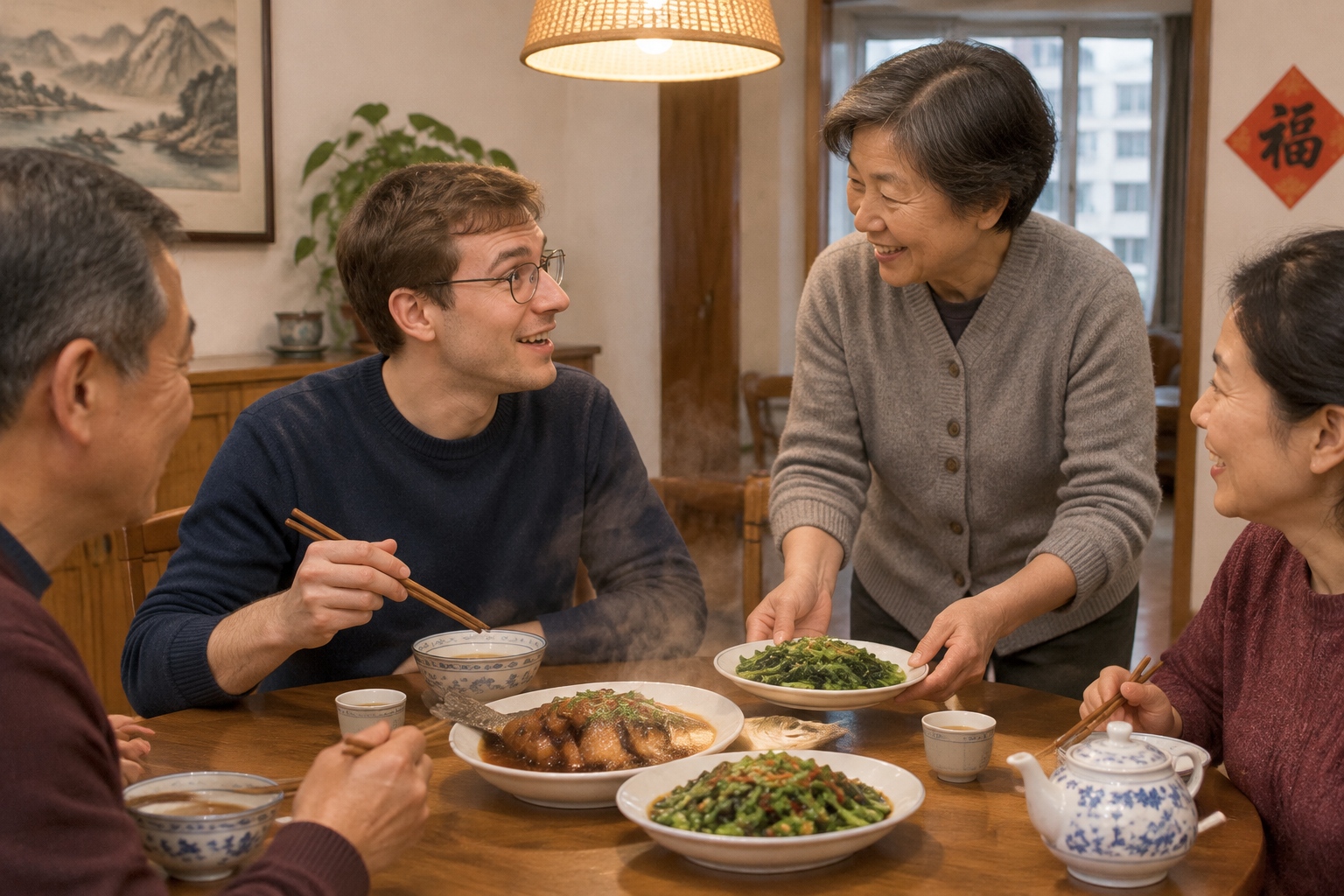
The apartment was warm and smelled of soy sauce and something steaming. Daniel — twenty-nine, from Ohio, two years into life in Shanghai — took off his shoes at the door, walked straight to the table and sat down in the chair facing the door. The good chair. The one with the clearest view of the room. He looked pleased with himself.
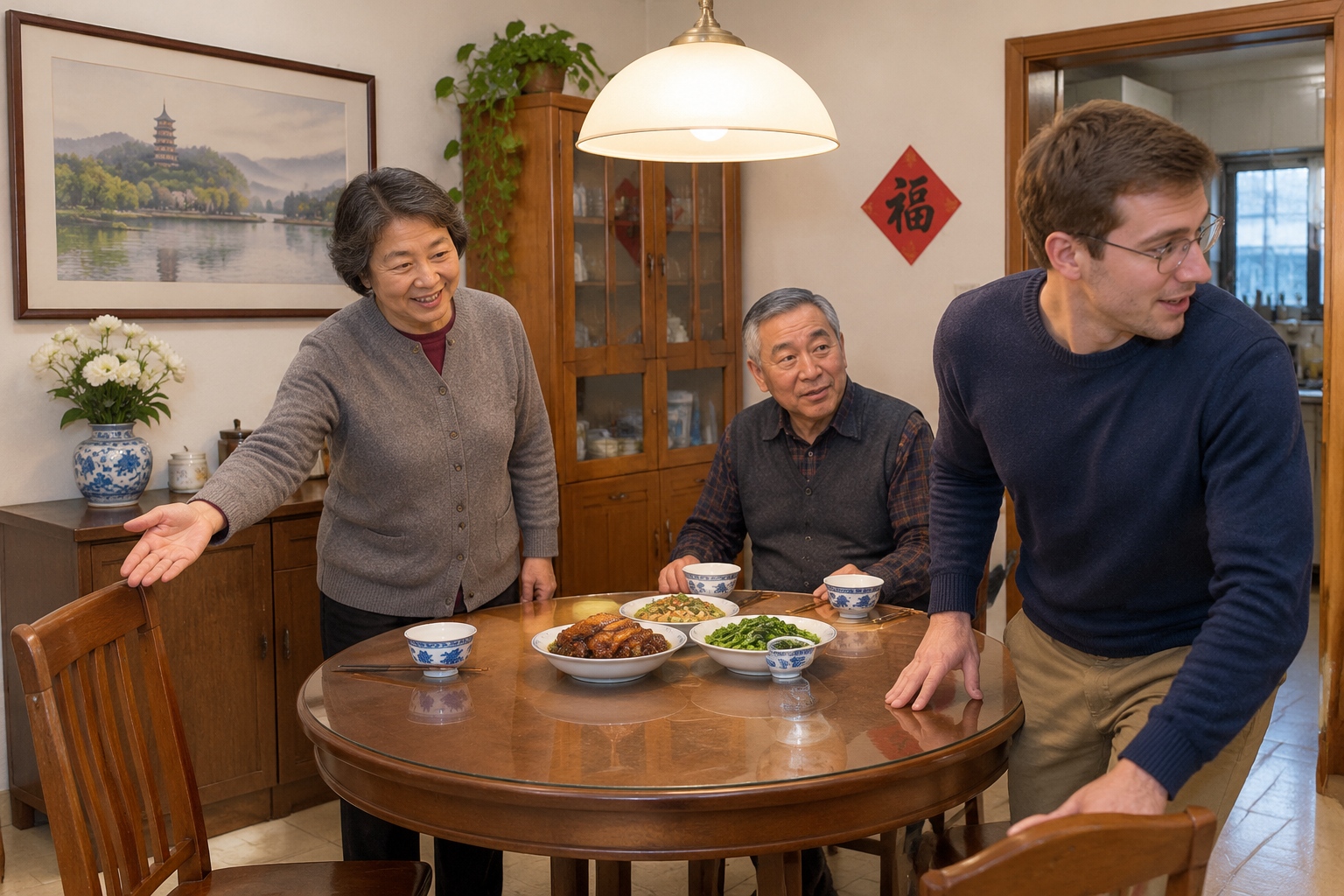
My colleague’s mother came out of the kitchen holding a plate of braised pork, saw him, and paused for about half a second. Then she laughed, waved her free hand, and said something I translated as: “Ah — that’s uncle’s seat. Sit here, sit here.”
Daniel stood up, said “sorry, sorry,” and moved one chair to the left. Someone pushed the pork toward him. He asked what was in the sauce. The conversation picked up roughly where it had stopped. Total disruption: eleven seconds, maybe twelve.
That is the whole story, and I think about it more than it deserves. Most guides to Chinese table manners make dinner sound like a driving test — a sequence of manoeuvres you either pass or fail. This was not a test. It was a small correction followed by a very large meal.
What the seat actually means
Traditional Chinese banquets are usually round, seating eight to twelve people, and the seating follows a loose logic rather than a written one. The chair facing the door — sometimes the chair with a wall behind it — tends to belong to the host or the most senior guest. In family homes it is often simply where the oldest person has always sat. The host’s side usually has the shortest route to the kitchen, which matters when someone has to keep getting up for more rice, more tea, more plates.
The details vary by region, by generation, and by how formal the occasion is. Nobody at that table in Hangzhou expected the American guest to have memorised any of it. What they were watching was not his knowledge. It was his reaction.
A handful of things are worth knowing because they come up often. Let the eldest lift their chopsticks first. Don’t leave chopsticks standing upright in a bowl of rice — it resembles incense at a funeral and makes people flinch. If there’s a lazy Susan in the middle, don’t spin it while someone is serving themselves. Pour tea for others before filling your own cup; if someone pours for you, tap two fingers on the table in thanks, a Cantonese habit now common in many cities, or just say thank you out loud.
None of these will ruin a dinner. All of them are things a table will quietly fix for you if you get them wrong.
Same person, two tables
Last month, a Saturday, six of us squeezed into a hotpot place in Shanghai where the queue number on the screen had already passed forty. Everyone was under thirty-five: four Chinese, one German, Daniel. Nobody sat anywhere in particular. We ordered a divided pot, red broth on one side, pale broth on the other, and piled plates of sliced beef, tripe and tofu skin around it. One person split the bill on WeChat in about ten seconds. We fished for food with the same chopsticks, shouted over the noise, and spilled sesame paste on the table without ceremony.
One friend did ask the server for serving chopsticks. Since 2020 that has become ordinary in Chinese cities, and nobody at the table thought it was strange.

That same friend, three weeks later, will sit perfectly upright at her grandmother’s eightieth birthday in Suzhou. She will wait until the oldest person at the table lifts their chopsticks. She will hold her glass lower than her uncle’s when she toasts him. She will not spin the lazy Susan without glancing around first.
This is not hypocrisy, and it is not performance. It is the same skill in a different gear — the way you behave differently at a work dinner and at a backyard barbecue, or the way you take your shoes off in one house and keep them on in another.
It’s also worth saying out loud: “Chinese people” are not one group with one set of manners. A twenty-four-year-old in Chengdu, a fifty-five-year-old at a state-owned enterprise, and a family from a small town in Henan will give you three different answers about whether you should finish the last piece of fish on the plate. Younger people who grew up in small families, or who have lived abroad, sometimes know the etiquette better than they practise it, and sometimes the reverse.
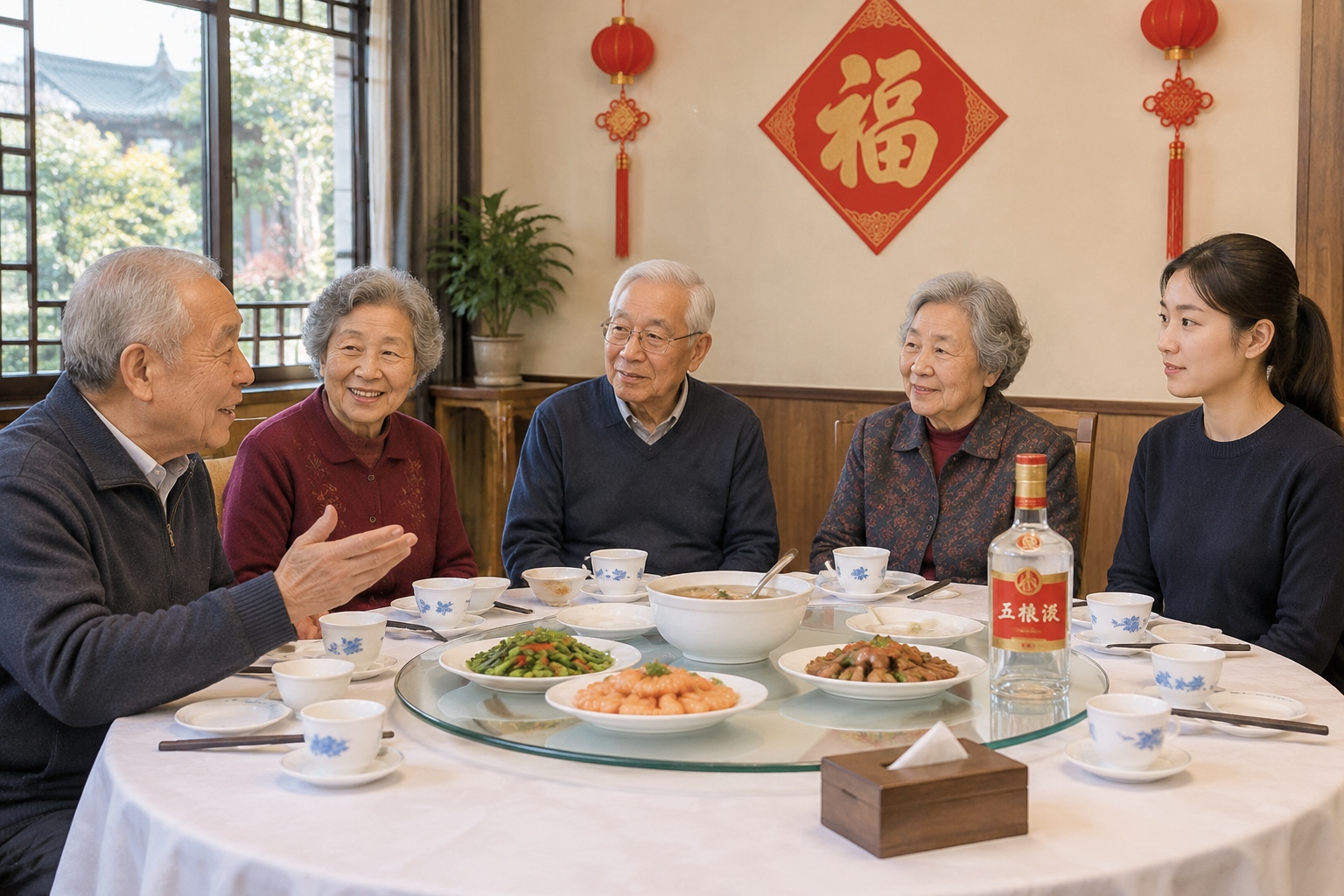
If you are the guest, you have more room than you think. The safest move, always, is to watch whoever seems to be hosting and follow them by about two seconds.
The difference between not knowing and ignoring
Two failures look identical from the outside and feel completely different inside the room.
The first is not knowing. You sit in the wrong chair, or turn the turntable at the wrong moment, or toast the wrong person first. This is an information gap, and information gaps are cheap. You will be corrected, often with an amused story about the last person who did the same thing, and the table moves on.
The second is ignoring. You were told, and you kept going. That reads differently — as if the rules applied to everyone except you. I watched this happen once: a colleague kept spinning the lazy Susan while an older woman was serving herself. Someone put a hand gently on the glass and said “等一下” — wait a moment. He said “oh, sorry” and stopped. That was the end of it. Nobody remembers. I have also seen the other version, where someone was told twice and carried on, and the table went quiet in a very particular way.
Alcohol is where people worry most, and where it matters least. In a formal dinner, toasts follow a rough order: the junior raises their glass to the senior, often with both hands, or with the left hand supporting the base, the rim slightly lower than the other person’s. No foreigner is expected to nail the geometry. What people notice is whether you look at the person you’re toasting, whether you join in at all, and whether you say something you actually mean instead of a memorised phrase.
Fixing it without making it a thing
One apology, not five. “啊,抱歉” — ah, sorry — is usually enough. Repeated apologies turn a small slip into the theme of the evening, and then everyone is managing your feelings instead of eating, which is a much bigger imposition than sitting in the wrong chair.
Do the correction visibly. Move the chair. Put the chopsticks down. Spin the turntable back. Action closes the loop faster than words, and it lets people see that the adjustment happened.
Then offer something small and concrete. Pour tea for the person next to you. Ask what a dish is and actually listen to the answer. Pass a plate before it’s asked for. Thank whoever cooked, and be specific — not “this is delicious” but “the sauce on the fish is really good.”
Asking out loud works better than guessing. “这样对吗?” — is this right? — said with a smile, is a completely normal thing to say at a Chinese table. Older relatives in particular tend to enjoy being asked, because it lets them teach and be respected at the same time.
And if you’ve done something bigger — stood chopsticks up in a bowl at someone’s grandmother’s table, say — name it once and change it. “Sorry, I didn’t know” is a complete sentence.
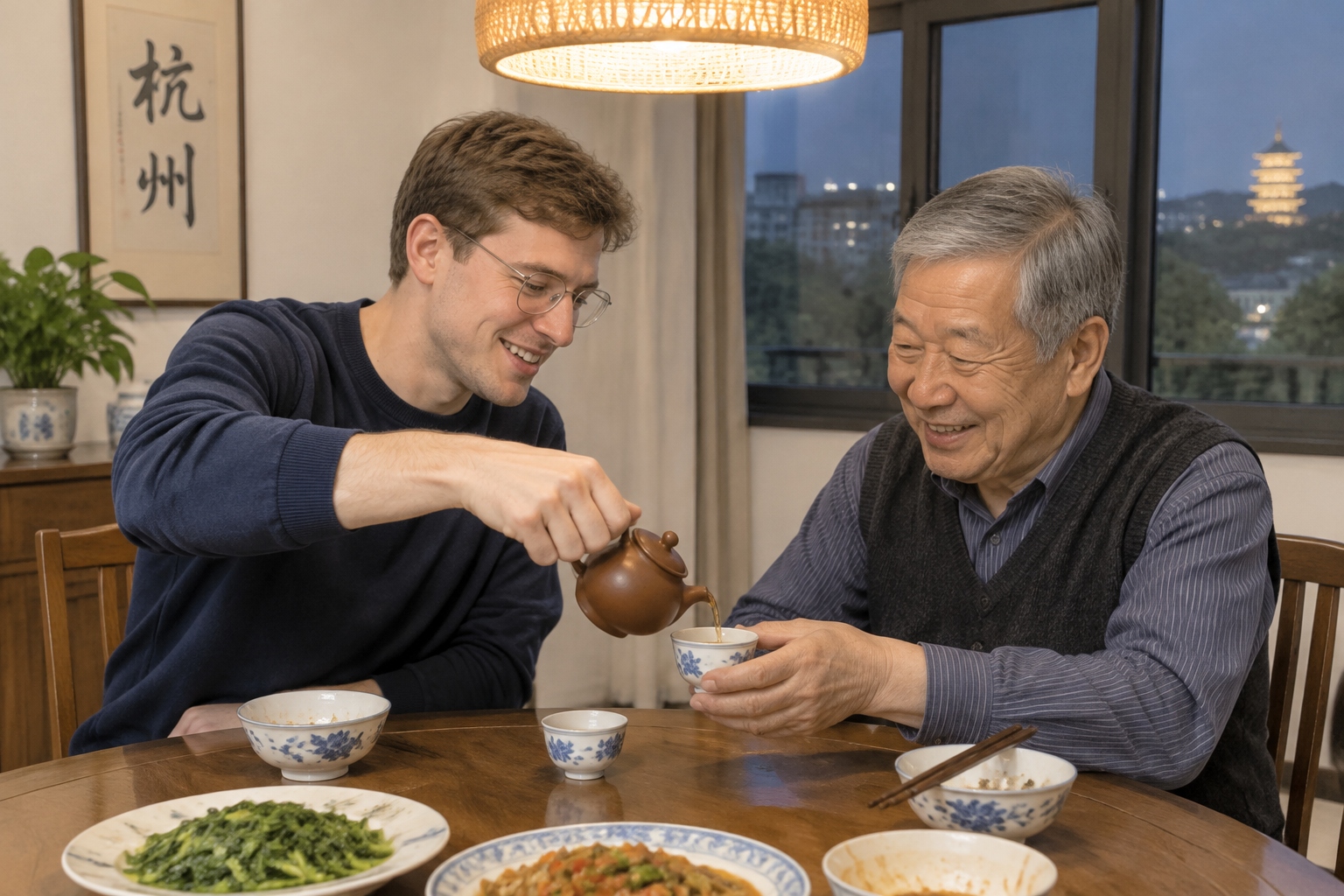
My own fallback, when I’m not sure: wait two seconds and watch the oldest person at the table. It works about nine times out of ten, and the tenth time someone will tell you kindly.
What people actually remember
Daniel went home that night. A few days later my colleague told me what her mother had said about him: “Your friend is polite.”
He had sat in the wrong chair. He had also asked what was in the sauce, thanked her twice for the pork, and tried to carry the bowls into the kitchen. She stopped him at the doorway, but she liked that he tried.
Chinese hospitality is rarely a test. It is an invitation, and the door is usually held open much wider than a nervous newcomer expects. The etiquette is a language, not a password. Speaking it badly, but clearly trying, is almost always enough.
The best thing you can do at a Chinese dinner table is not to execute everything perfectly. It is to notice, adjust, and keep talking.