
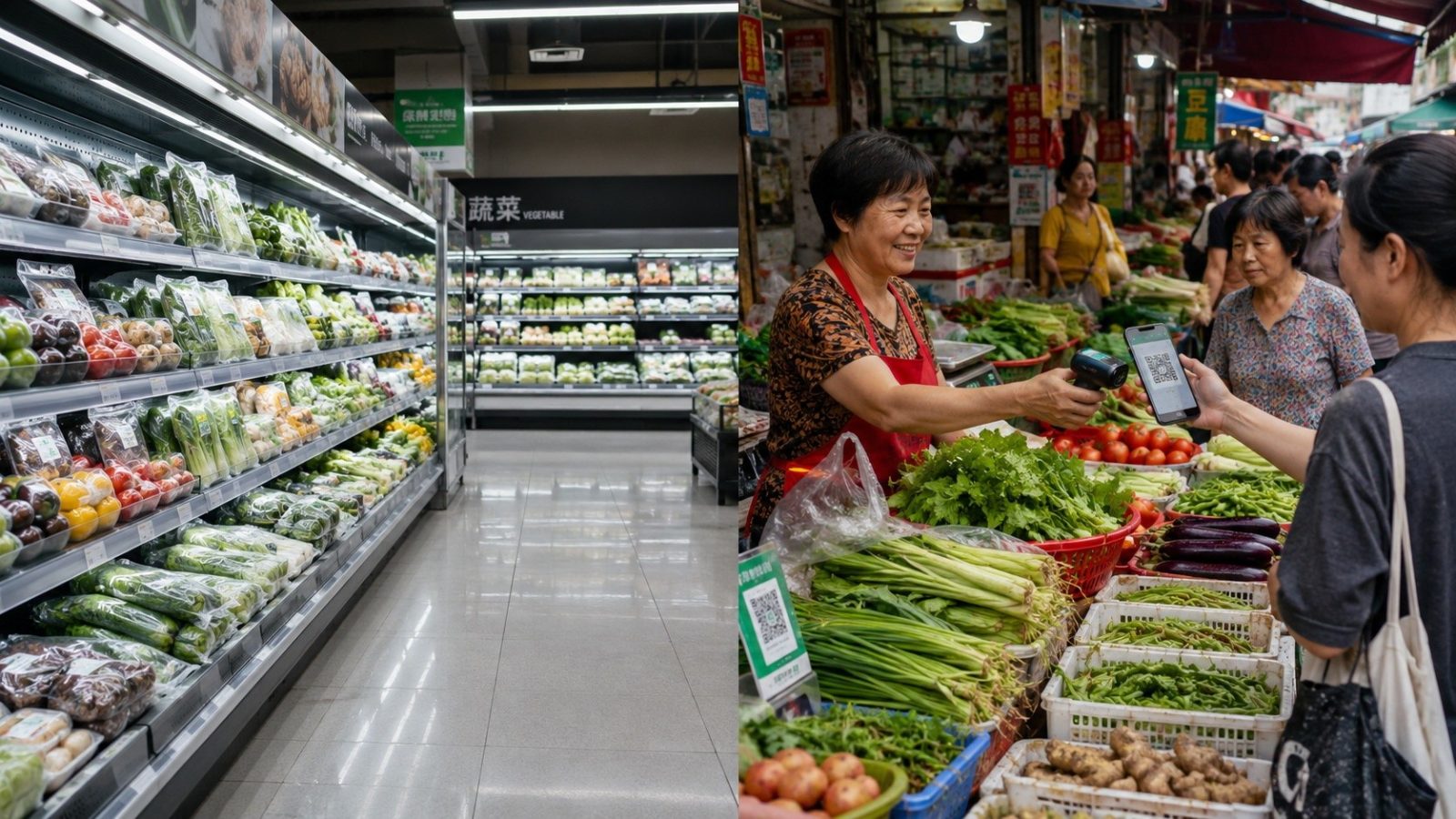

The Scent of Cilantro and QR Codes
Imagine walking into a grocery store in London or New York. The air is cool, the aisles are wide, and the vegetables are neatly stacked in plastic clamshells, glowing under sterile LED lights. It is clean, predictable, and efficient. Now, step just outside the back exit of that same supermarket in Beijing or Shanghai. You are immediately hit by a wall of noise and smell: the sharp scent of chopped cilantro, the sizzle of grilled skewers, and the loud, rhythmic shouting of vendors advertising prices. Here, produce isn’t wrapped in plastic; it’s piled in baskets, often covered with a light mist of water to keep it looking crisp.
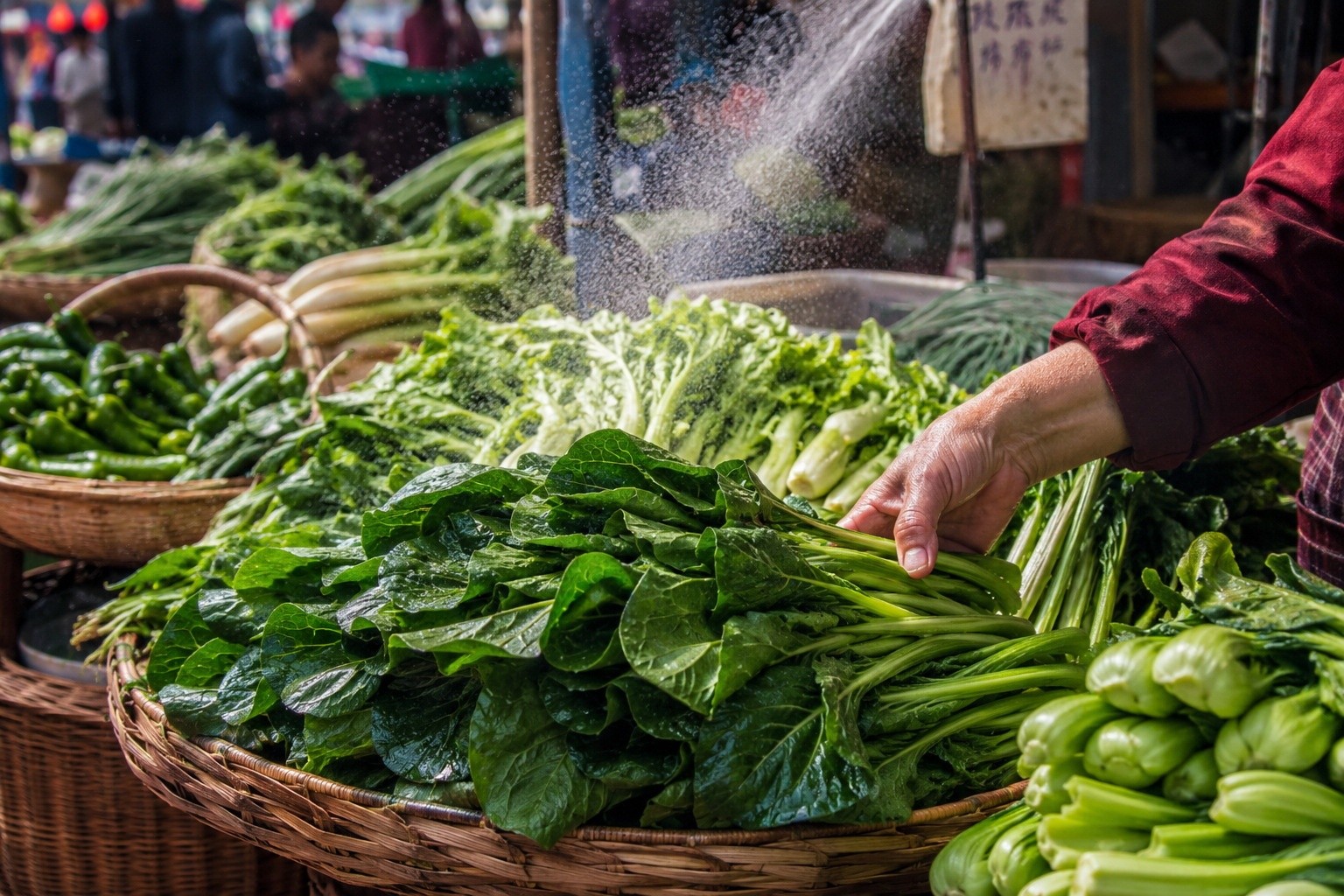
For many Western visitors, this contrast is jarring. In their home countries, the “formal” supermarket and the informal market are often distinct worlds, serving different demographics or occurring on different days. But for the average Chinese consumer, these two worlds are not competitors; they are complementary parts of a daily ritual. The question isn’t “which one do I choose?” but rather, “where do I go for what?”
Why ‘Cheap’ Is Still King
To understand this duality, you have to look at the wallet. While China’s middle class has grown significantly, the cost of living in tier-1 cities remains high. For many families, grocery budgets are carefully managed. This is where the street stall or the wet market (shichang) still holds a decisive advantage.
Vendors in these informal settings often have lower overhead costs than chain supermarkets. They don’t pay for expensive air conditioning, large staffing teams, or high-end packaging. As a result, fresh produce can be 20% to 30% cheaper than in supermarkets. For a family cooking dinner every night, that difference adds up. A basket of bok choy might cost 5 RMB at a stall but 8 RMB at the supermarket. Over a month, that’s a significant saving.
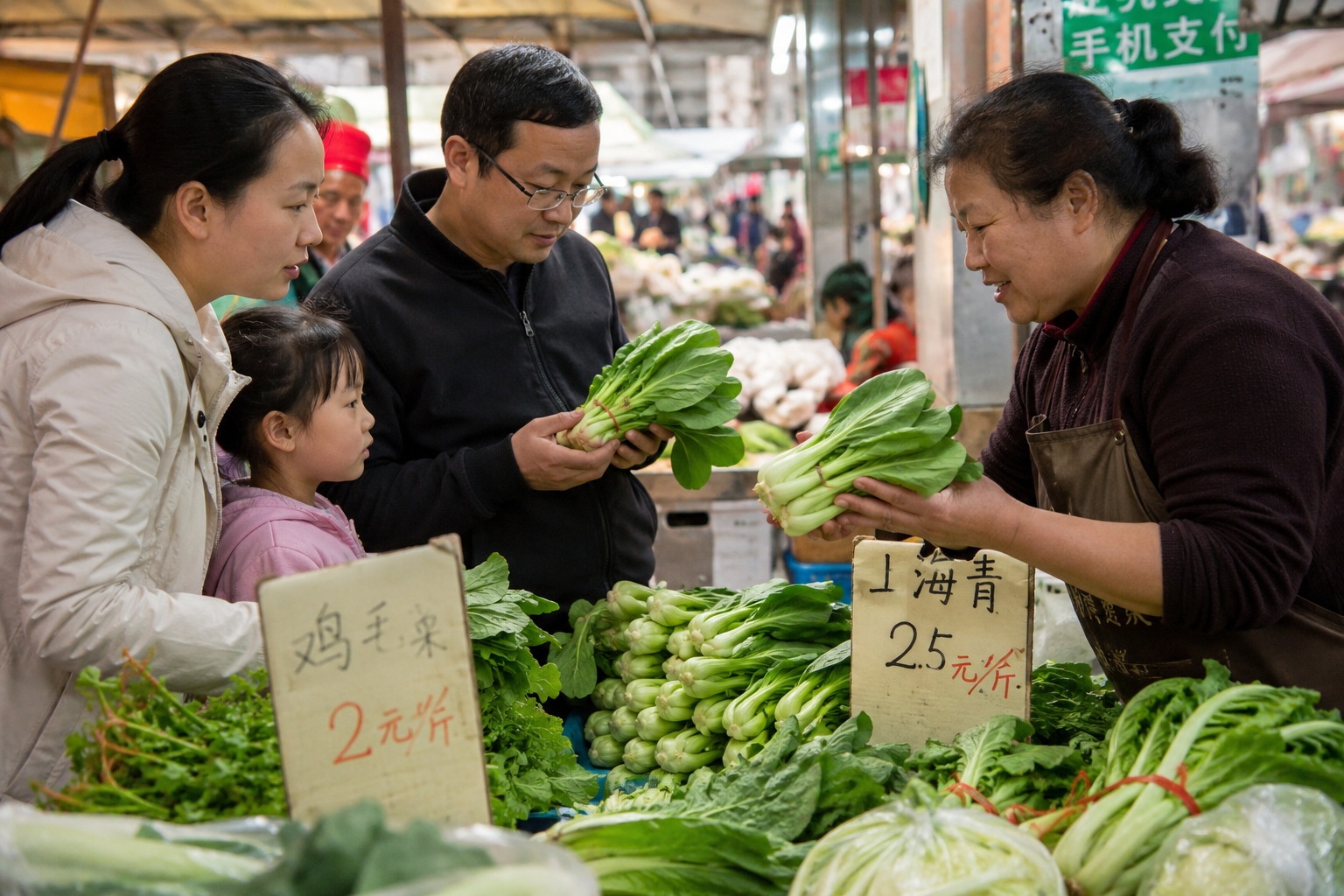
However, it’s not just about being poor. Even middle-income shoppers appreciate the tangible savings. In the West, there is a perception that street food or informal markets might be “low quality.” In China, the dynamic is different. The freshness of vegetables picked that morning is often superior to those sitting in a cold chain warehouse for days. The price advantage is real, but so is the perceived quality of the product.
The Freshness Paradox: Trusting the Human Touch
There is a strange paradox in Chinese grocery shopping: despite the rise of pre-packaged, hygienic supermarket goods, many consumers still trust their eyes and hands more than plastic wrap. In a wet market, you can ask the vendor to peel the shrimp for you, cut the meat to your specific thickness, or pick out the ripest mangoes from the pile. This level of customization is rare in Western supermarkets, where pre-cut items come at a premium.
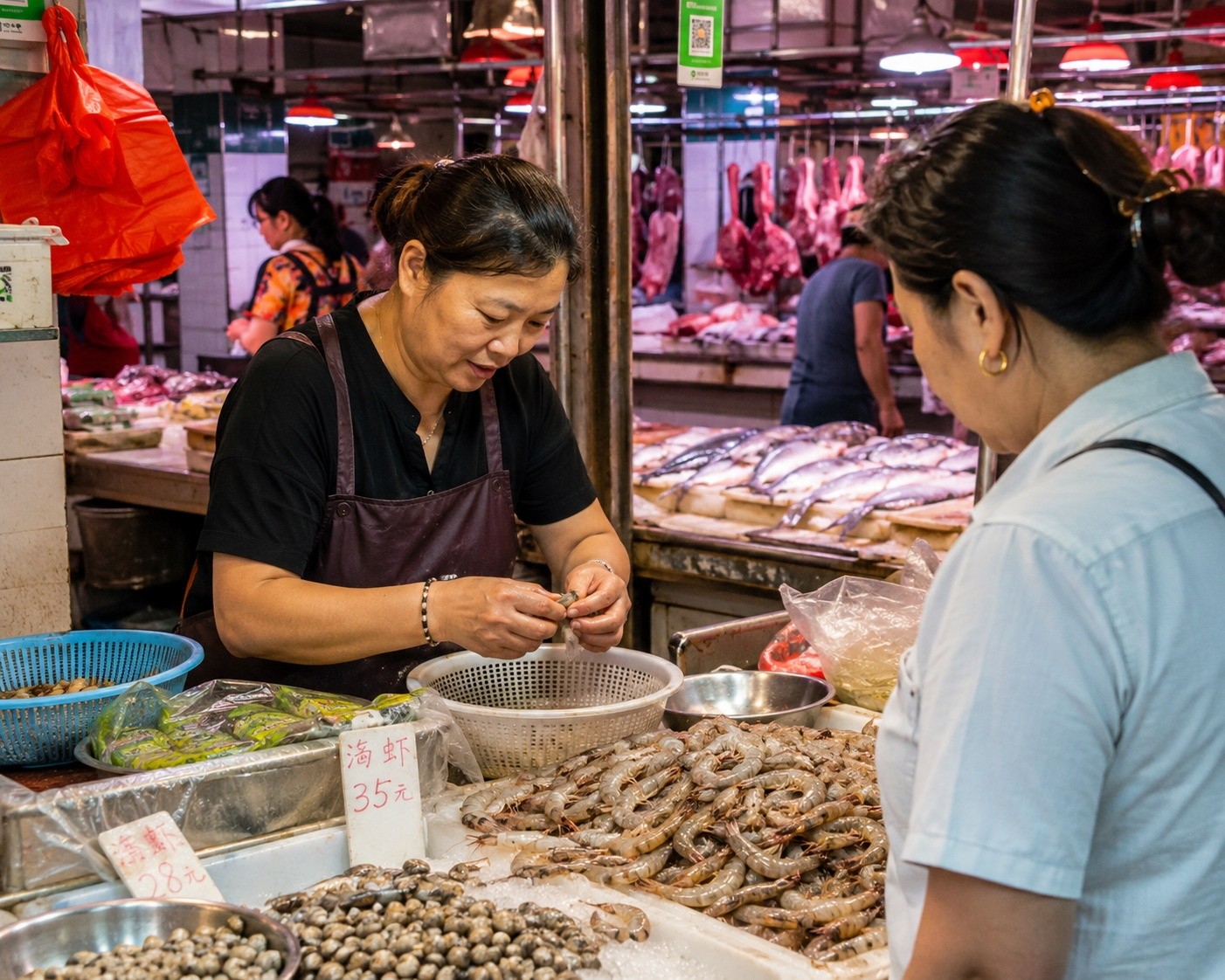
This “human touch” extends to trust. Many elderly consumers, and increasingly younger ones, have developed relationships with specific vendors. They know which farmer supplies the tofu, or which seller has the best fish of the day. This social capital replaces the brand loyalty we see in the West. You don’t buy “Brand X” milk; you buy from “Uncle Li,” who has been selling dairy for fifteen years. For many, this personal connection guarantees freshness in a way that a barcode cannot.
The Digital Bridge: Blurring the Lines
If you think street stalls are stuck in the past, think again. China’s digital infrastructure has infiltrated even the most traditional markets. Today, it is rare to see a vendor accept cash. Almost everyone uses WeChat Pay or Alipay. But the technology goes deeper than just payment.
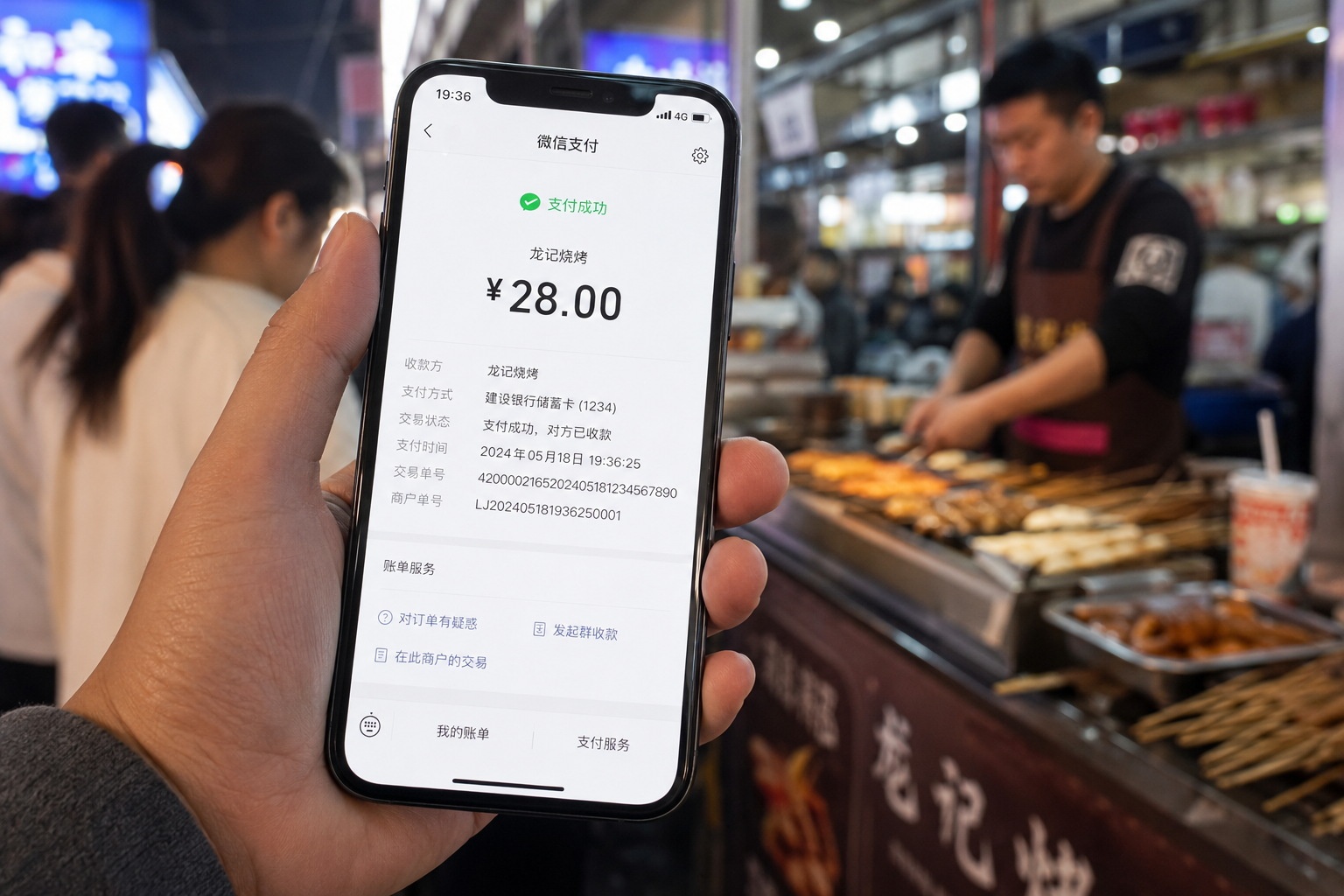
Vendors now use WeChat groups to take orders before the market opens. A neighbor might message, “Keep two tomatoes for me,” and the vendor sets them aside. This is a primitive form of e-commerce, but it works with high efficiency. Furthermore, community group-buying platforms have emerged, where a local resident acts as a “group leader.” Residents order fresh produce from wholesale markets via an app, pick it up at a designated spot in their neighborhood the next day, and save even more money. This model blends the low prices of bulk wholesale with the convenience of neighborhood pickup, effectively turning every residential compound into a mini-market.
More Than Just Transactions
Finally, there is the social dimension. In a Western supermarket, shopping is often an anonymous, solitary task. You grab your cart, scan your items, and leave. In China’s street markets, shopping is a social event. It’s where neighbors catch up on local gossip, where children are watched by elders while parents haggle over the price of green onions, and where the rhythm of the day is set.
The noise, which might seem chaotic to an outsider, is actually a form of community engagement. The bargaining itself is often ritualistic; it’s not always about saving money, but about the playful interaction. “Too expensive!” you say. “Come on, take it for 2 RMB less!” the vendor replies. It’s a dance that has been performed for decades.
A Hybrid Reality
So, how do Chinese consumers balance these worlds? They don’t choose one over the other. A typical week might look like this: You go to the high-tech supermarket on Saturday to buy household staples—laundry detergent, shampoo, and packaged snacks—where the variety and hygiene are unmatched. Then, on Tuesday evening, you walk to the nearby street market or wet market to buy fresh vegetables, meat, and fish for the week’s meals.
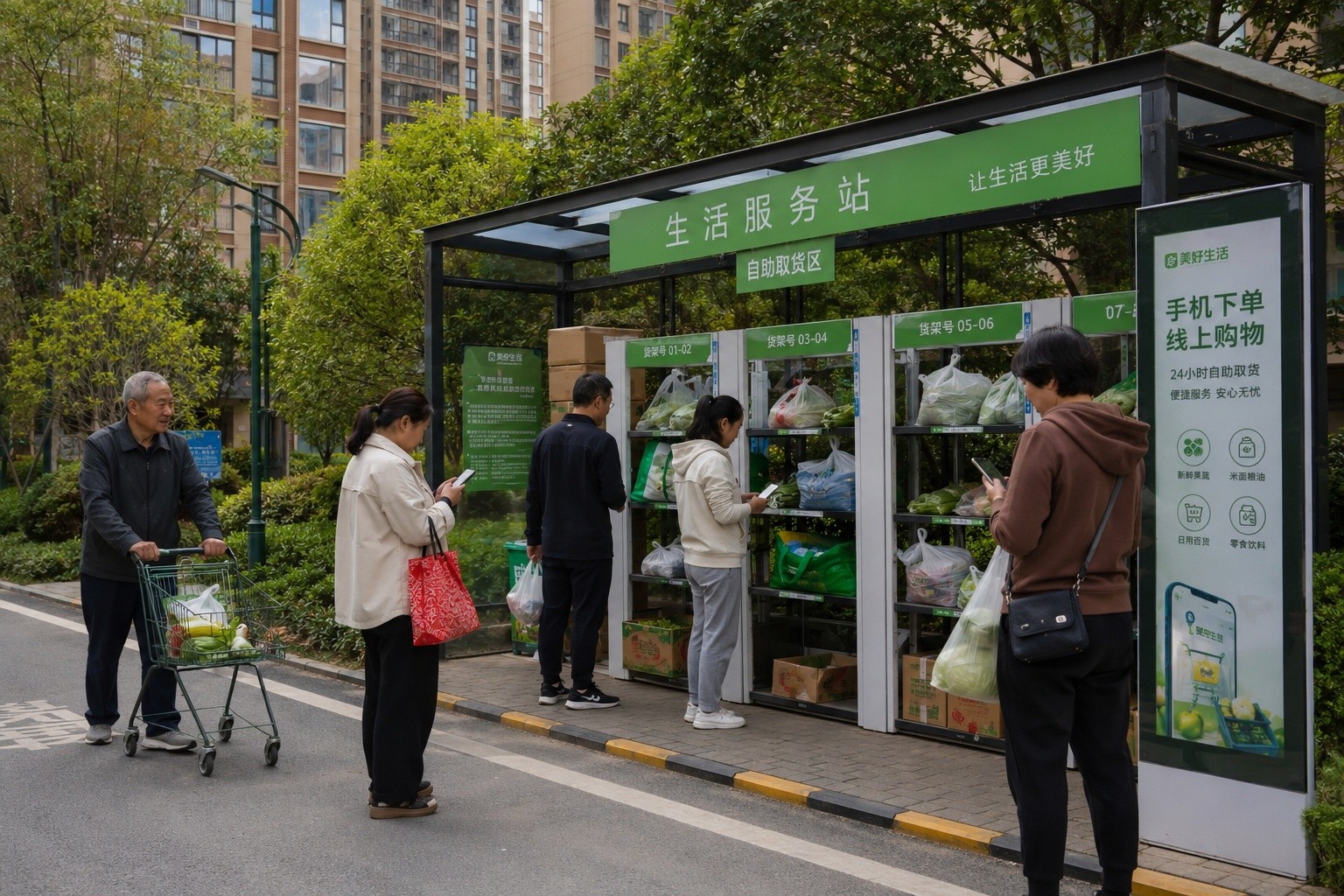
This hybrid approach allows Chinese consumers to enjoy the benefits of modern retail (convenience, consistency, hygiene) while still participating in the traditional economy (freshness, lower prices, social connection). It is a pragmatic adaptation to modern urban life, proving that technology and tradition don’t have to be enemies. They can coexist, side by side, in the same basket.