

The Floating Vanity in a Sea of Shoulders
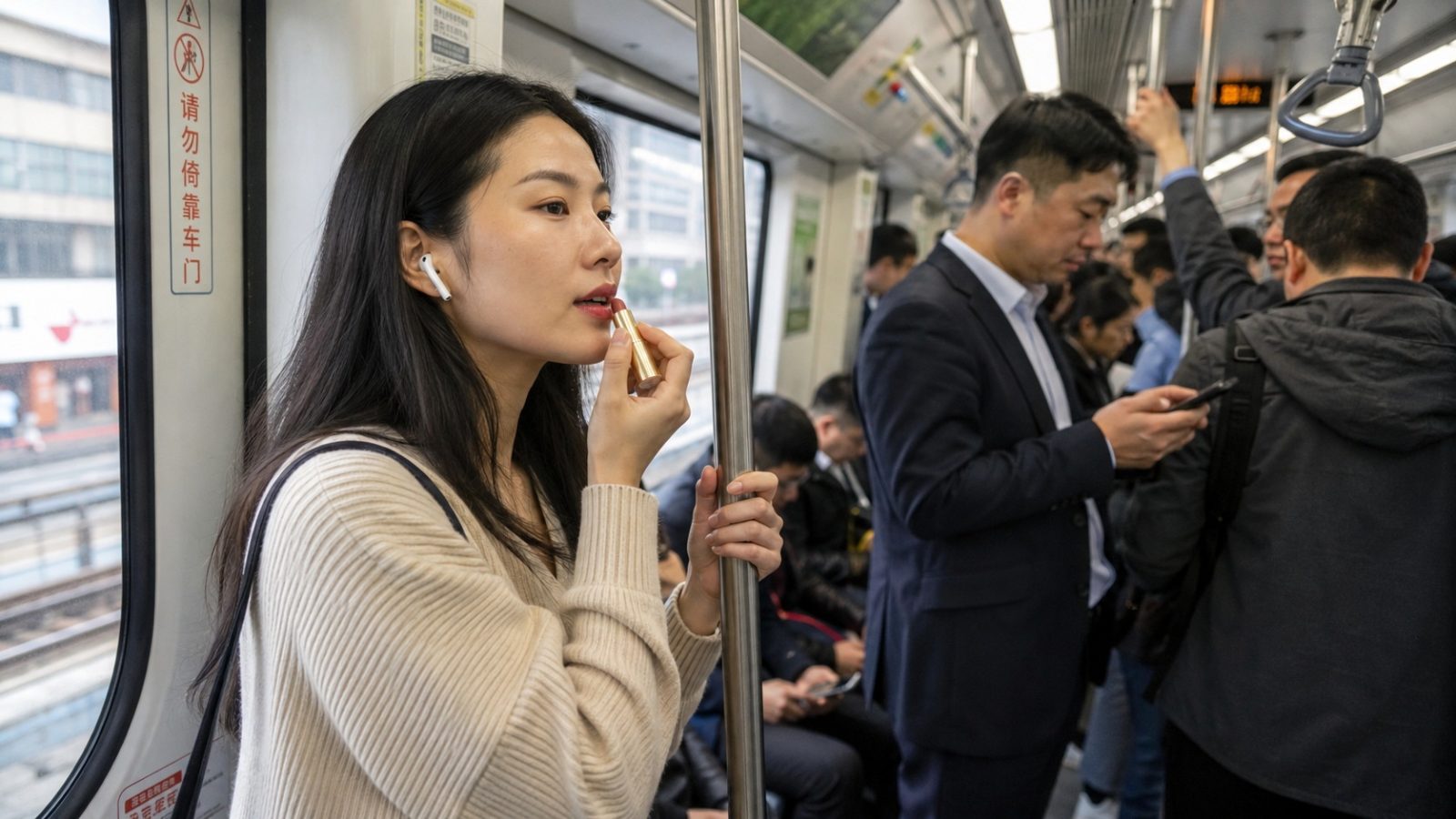
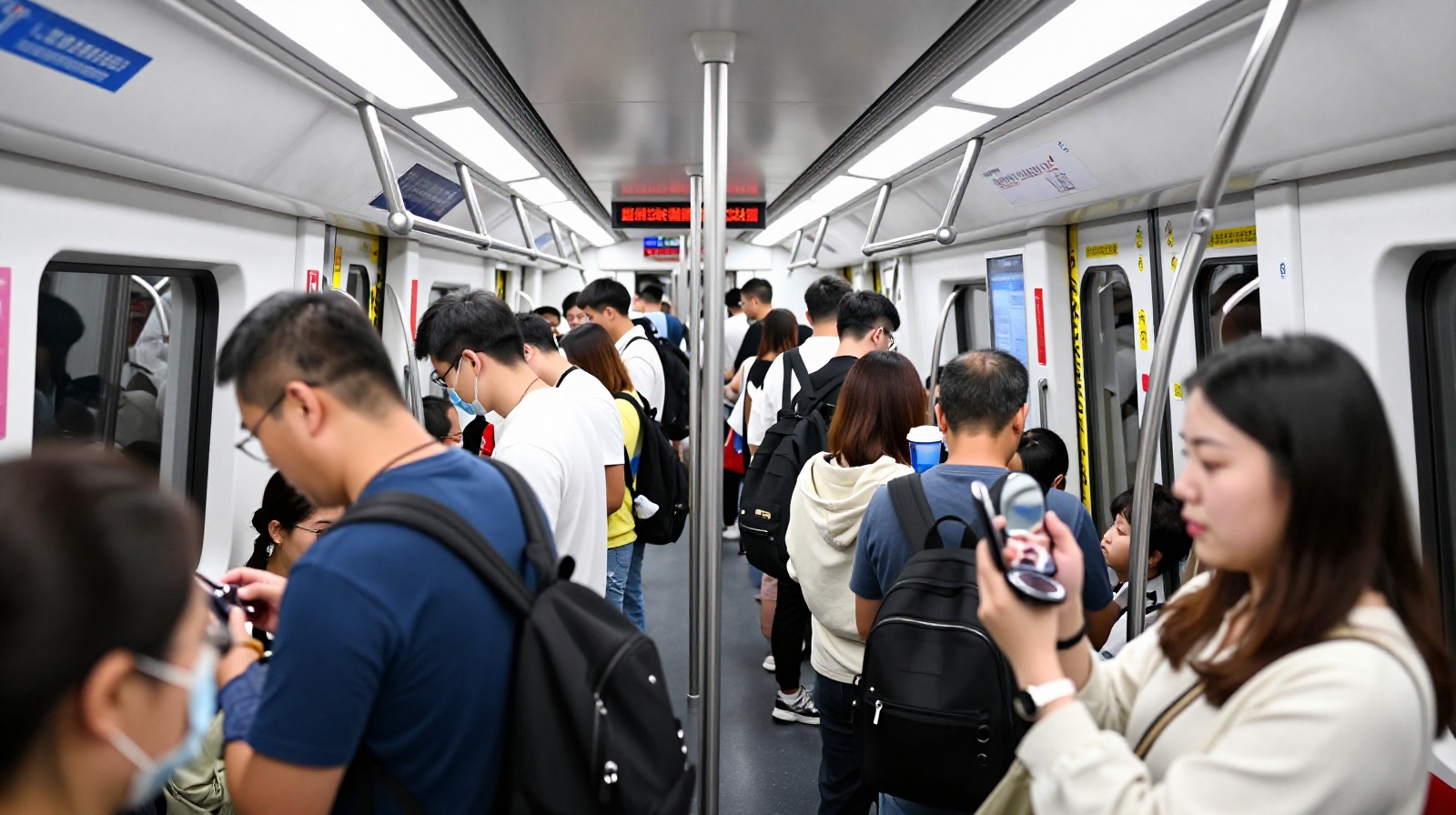
Imagine standing on a subway train in Shanghai at 8:15 AM. The air is thick, the doors have just closed, and you are pressed between a businessman smelling of coffee and a student with a heavy backpack. There is zero personal space. Yet, in this chaotic squeeze, something unexpected happens.
A young woman steps into a narrow gap near the door handle. With one hand gripping the vertical pole above her head for stability, she opens a compact mirror. In the next two minutes, she applies foundation, concealer, and eyeliner with precision that would make a professional makeup artist jealous. The train lurches, brakes, and turns, but her hand remains steady.
This is not a staged photo op for social media. It is a daily ritual for millions of women in China’s tier-one cities. To outsiders, it can look dangerous or absurd. But to those who live it, it is simply a matter of efficiency and social expectation.
The Mechanics of Stability
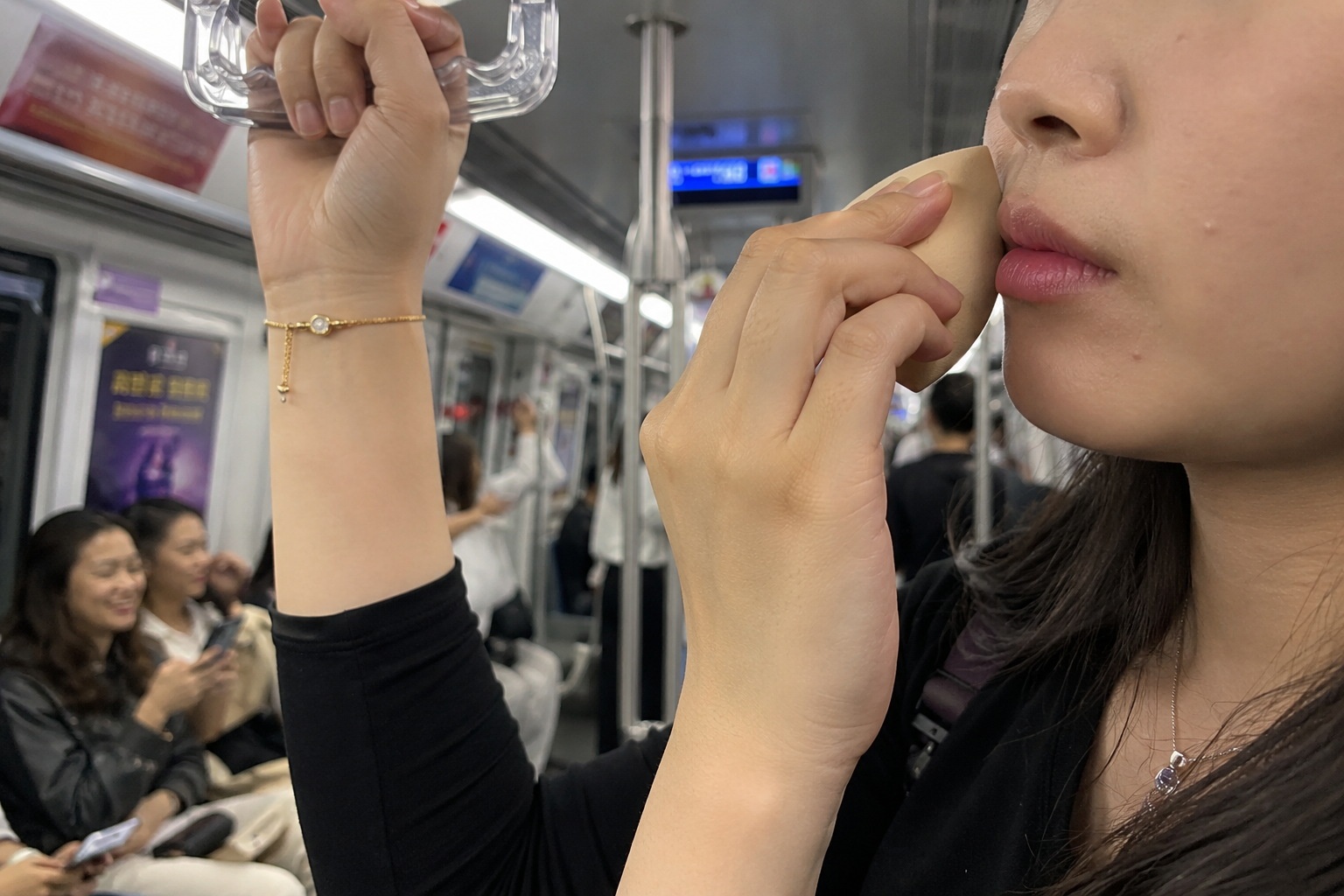
How do they do it? It is less about magic and more about physics and practice. The key is finding the “pivot point.” Experienced commuters know exactly where the train’s center of gravity shifts during acceleration and braking. They don’t fight the motion; they sync with it.
The vertical grab handles are crucial. By anchoring one arm high above the head, the upper body stabilizes against the swaying of the carriage. This creates a tripod effect: two feet planted firmly on the floor (or braced against another passenger, reluctantly), and one hand locked onto the pole. With the torso stabilized, the hands can move with surprising accuracy.
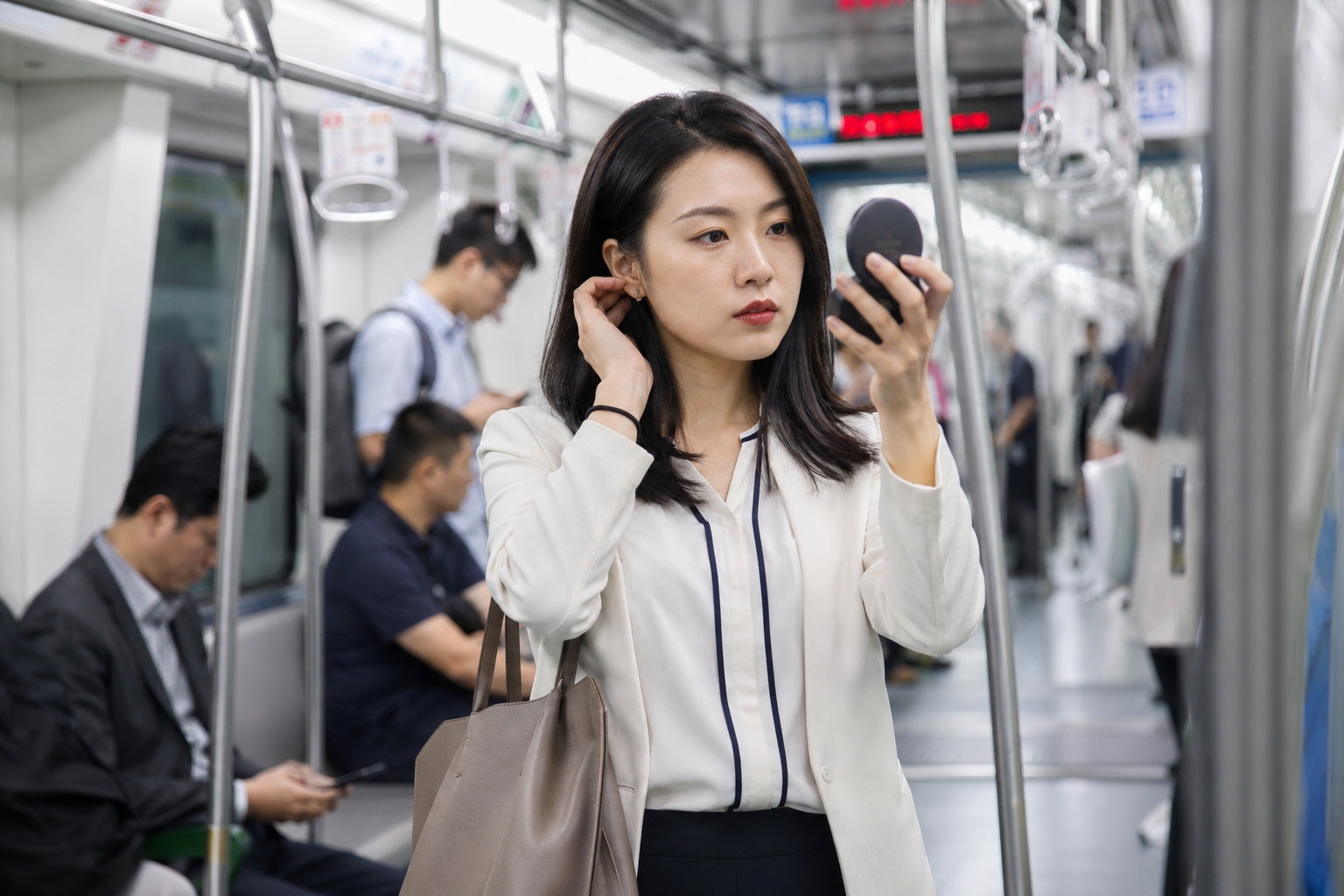
Another secret is the product itself. Liquid foundations that take ten minutes to blend are not an option. Chinese commuters prefer fast-drying formulas, cream-based concealers, and waterproof mascaras that set instantly. Lipsticks are applied quickly, often using the compact mirror as a shield against accidental bumps from passing strangers.
Why the Effort? Social Pressure and Professional Image
You might wonder: why risk it? Why not just wash your face and arrive looking natural? The answer lies in the intense social and professional environment of Chinese urban life.
In many Chinese workplaces, “looking polished” is an unspoken rule. It signals respect for colleagues, clients, and oneself. For many young women, spending 30 minutes at home is not enough time before a tight schedule of meetings, subway rides, and client visits. The commute becomes an extension of the workday.
There is also the factor of social evaluation. In cities where visual culture is dominant, appearance carries weight. A neat appearance can boost confidence and even influence professional opportunities. While this pressure is not unique to China, the density of urban life in cities like Beijing, Shanghai, and Shenzhen compresses the time available for personal grooming, making the subway a practical, albeit unconventional, salon.
Is It Really Just Women? The Changing Landscape
While the image of the “subway makeup artist” is predominantly female, the trend is slowly expanding. In recent years, an increasing number of young men in China have been seen adjusting their hair, checking their teeth, or applying a bit of skincare product on public transport. This reflects a broader shift in gender norms, where grooming is no longer strictly coded as feminine.
However, the complexity of a full makeup routine still makes it a predominantly female practice. Men’s routines are typically quicker and simpler—focused on hair and basic freshness—while women often manage multiple layers of color and texture correction in the same limited timeframe.
The Ethics of Public Space
Not everyone enjoys watching this. Some commuters feel their personal bubble is invaded when someone applies makeup inches from their face. The smell of perfume or the brush strokes can be intrusive. This has sparked debates about public etiquette.
Is it rude to apply cosmetics in a shared space? In China, there is no strict law against it, but social norms are evolving. Many commuters now wear noise-canceling headphones or look away, creating a psychological boundary. Meanwhile, city planners are starting to notice. Newer subway lines in cities like Hangzhou and Shenzhen feature brighter, more even lighting and strategically placed handrails, inadvertently supporting this “mobile vanity” culture.
A Symbol of Urban Resilience
Ultimately, the woman applying eyeliner on a swaying train is not just vain. She is resilient. She is maximizing every minute of her day, balancing the demands of a high-pressure career with the desire to present her best self to the world.
It is a small, everyday performance of control in a life that often feels out of control. For the outsider, it might look like a strange habit. But for the insider, it is a testament to how people adapt, survive, and thrive in the dense, fast-paced rhythm of modern Chinese urban life.