

A hand, a lump of clay, and a wheel that spins faster than you expect
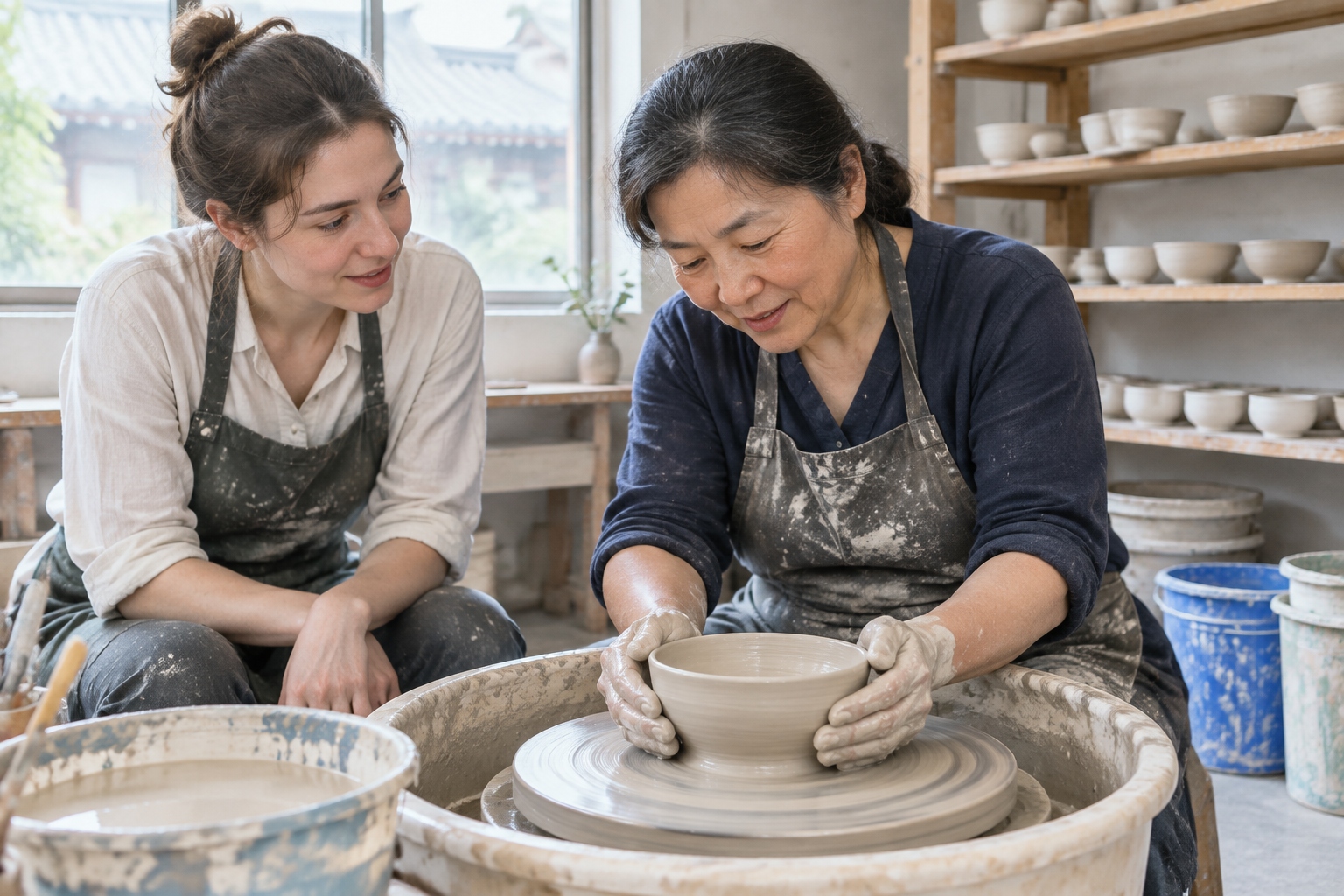
It is 9 a.m. in a rented workshop inside the Sculpture Factory complex in Jingdezhen, a small city in Jiangxi Province about three hours by high-speed train from Shanghai. The room smells of wet clay and, faintly, of vinegar — that’s the glaze buckets in the corner. A wheel hums. The teacher, a woman in her fifties with dried clay under her fingernails, slaps a wet lump onto the wheel head and looks at me.
“Don’t push,” she says in slow English. “Let it turn.”
My hands go onto the clay. Within four seconds the lump has become a lopsided mushroom, then a pancake, then a grey splash on my apron. She laughs — not unkindly — wipes the wheel, and puts down another lump.
That second lump is the reason people come here. Not the postcard scenery, not a museum. Jingdezhen is where you spend three days finding out that your hands are slower and less obedient than you thought, and then — maybe — walk away with a bowl you made yourself.
Why Jingdezhen, and why people slow down here
Jingdezhen has been making porcelain for more than a thousand years. The clay that made it famous — a white, unusually pure kaolin — came from a village nearby called Gaoling, which is where the English word “kaolin” comes from. For centuries this was an imperial kiln town; the porcelain in the Forbidden City was fired here. When you look at a piece of blue-and-white in a European museum, there is a real chance the recipe started in this valley.
What has changed in the last fifteen years is who does the making. Thousands of young ceramic artists — they call themselves jingpiao, “Jingdezhen drifters” — have moved here from other provinces because rents are cheap and the supply chain is absurdly complete. Need a specific cobalt pigment at 8 p.m.? Someone three streets away has it. That density is what makes a three-day visit possible: you are not booking a tourist demonstration, you are stepping into a working craft economy.
It is also cheap enough to genuinely try. A two-to-four-hour throwing session usually costs 150–350 yuan, roughly $20–50. A three-day beginner course with firing included runs about 800–1,500 yuan. Compare that with a weekend pottery class in London or Portland.
Day 1: Watch first, then touch
Arrive around midday. The station is Jingdezhen North; from Shanghai it is about three hours, from Hangzhou about ninety minutes, and there are flights from major cities into the small local airport. Most visitors stay either near Taoxichuan — a former ceramics factory turned arts district — or out in Sanbao village, where studios and guesthouses line a stream.
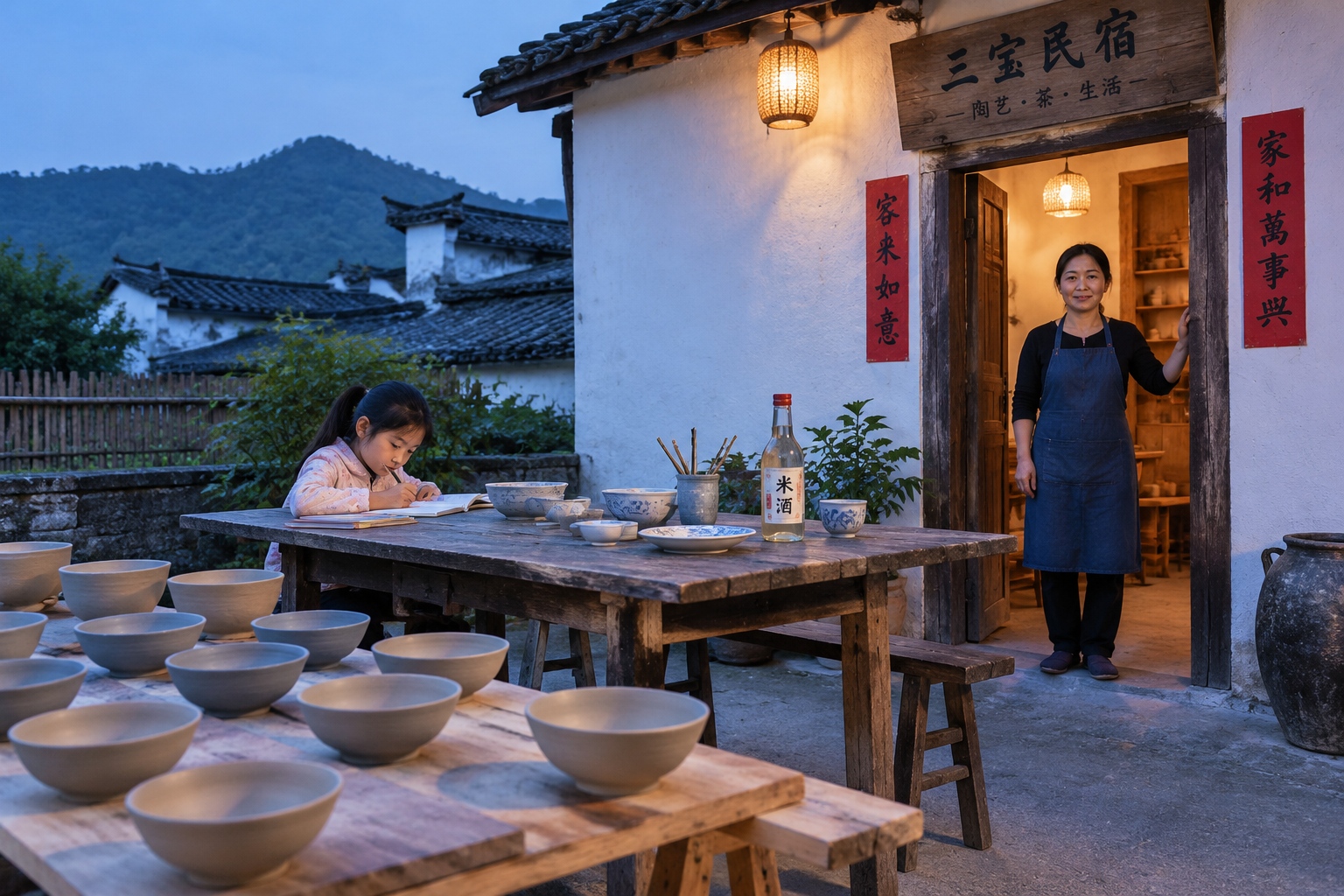
Pick a guesthouse rather than a hotel. This matters more than it sounds. In the courtyard-style places around Sanbao, breakfast is served at a shared table at eight, the owner’s mother is sorting vegetables, and unfired pots dry on boards in the sun. The rhythm of the day is set by other people’s work, not by your itinerary. That is the point.
The first afternoon, don’t touch clay. Walk. The Sculpture Factory complex is a warren of small studios where you can watch people work for free, and the Taoxichuan night market on weekend evenings is where young makers sell mugs, incense holders and slightly wonky teapots for 50–300 yuan.
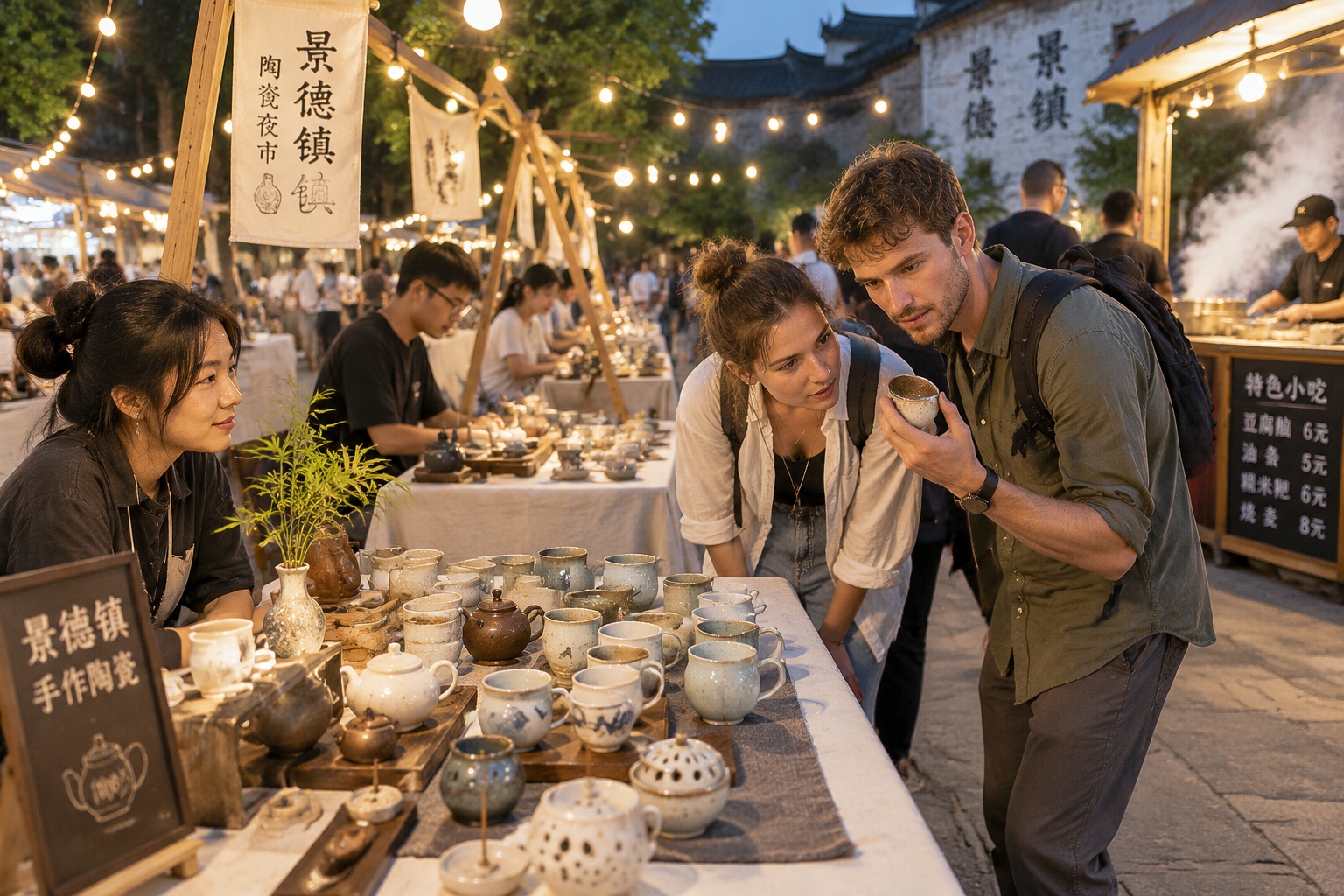
Sit somewhere with a bowl of cold rice noodles and just watch. By evening you will know what a well-thrown wall looks like, which is exactly the reference you need before you try to make one.
Day 2, morning: Centering the clay, and failing at it
The first real skill is centering — getting the lump to sit exactly in the middle of a spinning wheel. It sounds trivial. It is not. If the clay is off by a centimetre, everything you build will wobble and collapse.
You learn it with your body, not your brain. Elbows braced against your knees. Forearms locked. Both hands wet. The wheel turning toward you. You push in with the heel of one hand while the other supports the side, and suddenly the lump goes smooth and quiet under your palms — that is the moment. Most beginners find it, lose it, and find it again four or five times in an hour.
Then you open the centre with your thumbs and pull the wall up. This is where the failures happen. I pulled too fast and my bowl turned into a shallow plate. Then I pulled too slowly and the wall thickened into something like a flowerpot. The teacher took over twice, and both times her hands did in ten seconds what mine couldn’t do in ten minutes. Watching that is not discouraging. It is useful. You see the difference between force and control.
Day 2, afternoon: Trimming, glazing, and the bit nobody warns you about
After lunch the pots are firm enough to handle. You flip your bowl upside down on the wheel and trim the base with a loop tool, shaving away extra clay until the foot ring is clean. This is quietly satisfying — the first moment the object looks like something you would actually use.
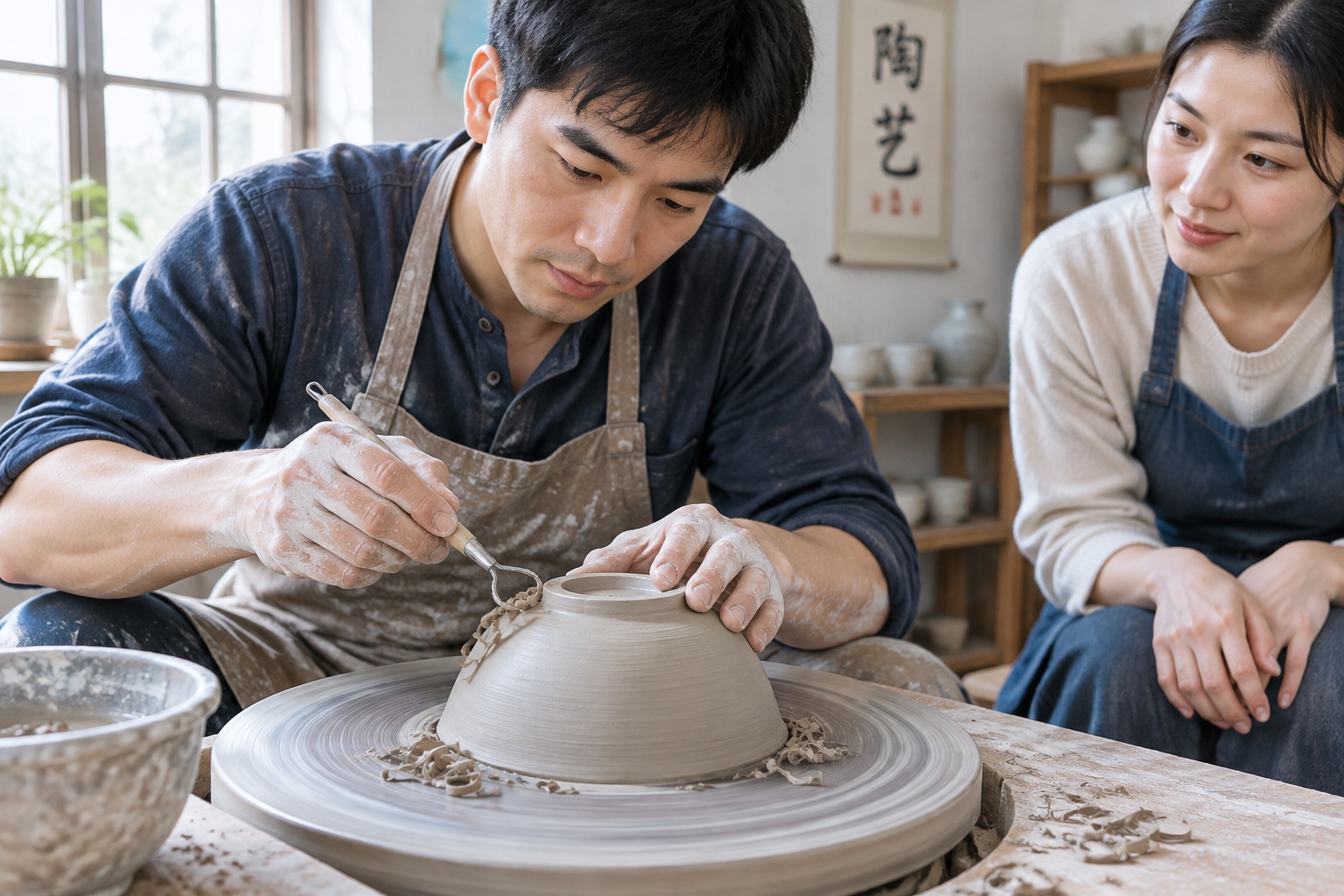
Then glaze. Most studios offer a shelf of buckets: celadon, tenmoku, and a copper red that looks nothing like its wet colour. You dip the bowl, or brush it, or — as many people do — hold it by the foot and dip two-thirds, leaving a bare ring at the bottom. Your fingerprints stay on it. Nobody minds.
Here is the part that surprises people: what you glaze is not what you get. Glaze is glass that forms in the kiln at 1,200–1,300°C, and the colour shifts. A pale grey slurry fires to deep green. A rusty brown fires to near-black. Your bowl will also shrink by about 12 percent.
Day 2, evening: The kiln teaches patience
This is the honest limitation of a three-day trip, and you should plan around it rather than be disappointed by it. Proper firing takes time — a bisque firing, then a glaze firing, then cooling, which can’t be rushed without cracking the piece. Many studios can give you a finished low-temperature piece within 48 hours, or ship your work within one to three weeks.
Ask before you book: Will I take it home, or will you ship it? If it’s shipping, ask for the international rate up front. It is usually 150–400 yuan to Europe or North America for a small box, and it’s worth knowing before you fall in love with your bowl.
Meanwhile, the waiting is not dead time. This is where the trip actually slows down. You eat dinner at the guesthouse. Someone’s kid does homework at the next table. The owner brings out rice wine. You walk back along the stream in the dark and hear a kiln fan running somewhere.
Day 3: Picking up the bowl
If your piece is ready, you collect it in the morning. Mine came out smaller than I remembered and slightly off-round, with the glaze pooling darker on one side. The teacher turned it over, looked at the foot ring, and said, “Good. It stands.” That’s the whole standard, apparently. It stands.
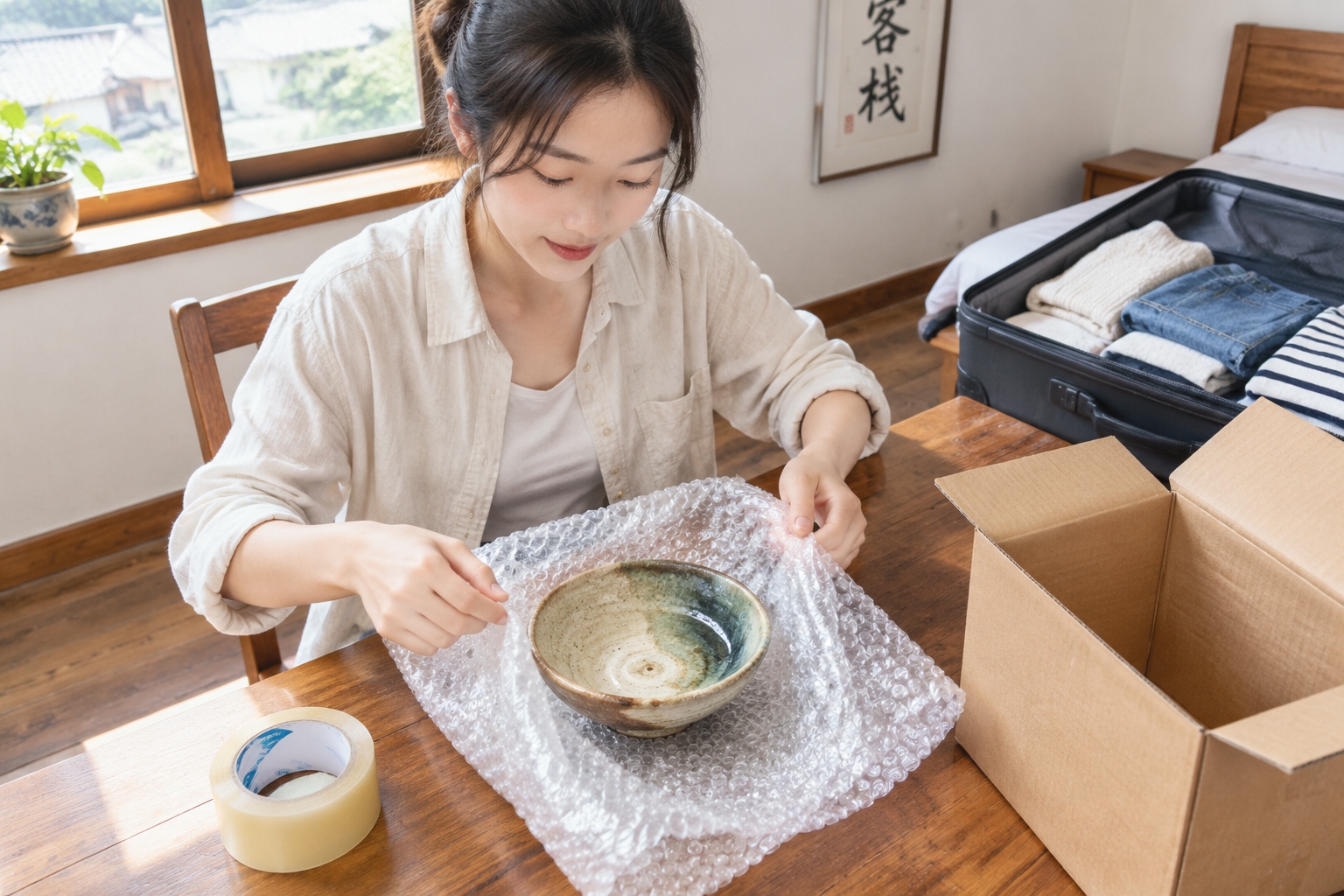
Then you wrap it. Studios usually have bubble wrap and boxes; bring a scarf or a jumper to cushion it inside your suitcase. If you’re flying onward, put it in hand luggage — a hard-sided bowl survives a flight, a soft bag does not.
The next morning at the guesthouse table, someone asked what I had made. I held up the bowl. It isn’t beautiful. It’s thick on one side and the rim dips. But I know exactly which hour of which day each flaw came from, and that is a different kind of souvenir from a fridge magnet.
Practical notes: doing Jingdezhen in three days
Getting there
High-speed trains run to Jingdezhen North from Shanghai (about 3 hours), Hangzhou (about 1.5 hours) and Nanchang (about 1 hour). The local airport has flights from Beijing, Shanghai and Shenzhen. A taxi from the station to Taoxichuan takes 20–30 minutes.
Where to stay
Taoxichuan for convenience — walkable to studios, markets and cafés. Sanbao for quiet courtyards, streams and potters as neighbours. Guesthouses run about 200–500 yuan a night.
Booking a workshop
Look for studios around the Sculpture Factory and Taoxichuan. Many advertise on Xiaohongshu or WeChat and have English-speaking staff. Ask three questions: how many hours are hands-on, is firing included, and when do I get the piece?
Best time to go
April–May and September–November. Avoid the first week of October (National Day holiday) and the first week of May, when trains and guesthouses fill quickly.
What to bring
Clothes you don’t mind ruining, short nails, and a willingness to make four bad bowls before one decent one. No experience needed.