

The Island Before the First Ferry
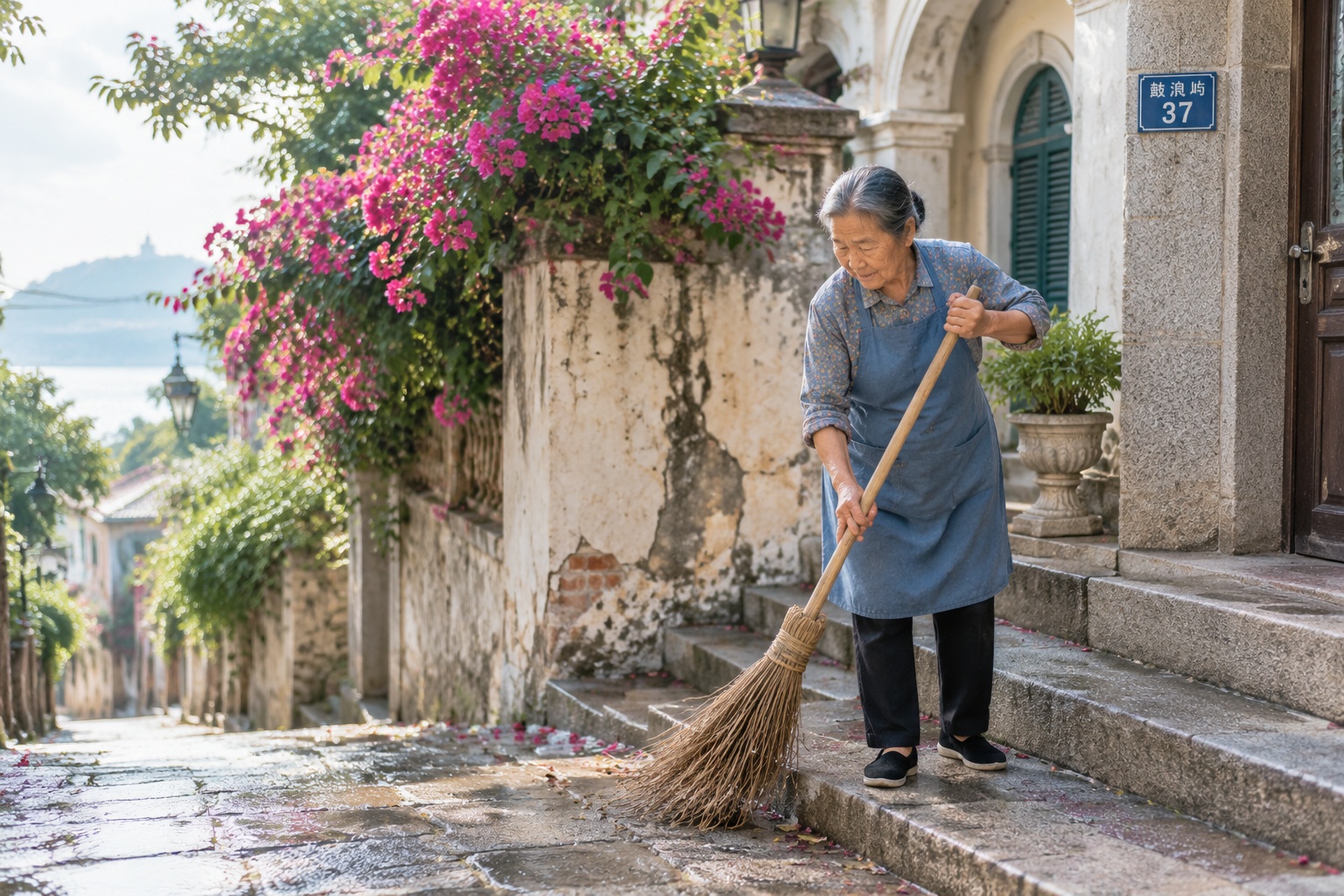
At 6:50 on a Tuesday morning, the lane behind Longtou Road is still wet from the night’s rain. A woman in her late sixties, wearing a faded blue apron, sweeps the steps of a 1920s villa with a broom made of stiff twigs. The villa’s plaster is cracked, but the bougainvillea above the door is blooming a violent pink. From an open window on the second floor, someone is playing scales on a piano—slow, deliberate, the same eight notes over and over. The woman doesn’t look up. “In the 1980s,” she says, without stopping, “you could hear piano from three houses at once. Now it’s just one.”
She has lived on Gulangyu her whole life. Her father was a teacher at the island’s music school. Her children moved to Xiamen Island, a seven-minute ferry ride away. She stays because the house is hers, and because, she says, “someone has to keep the plants alive.”
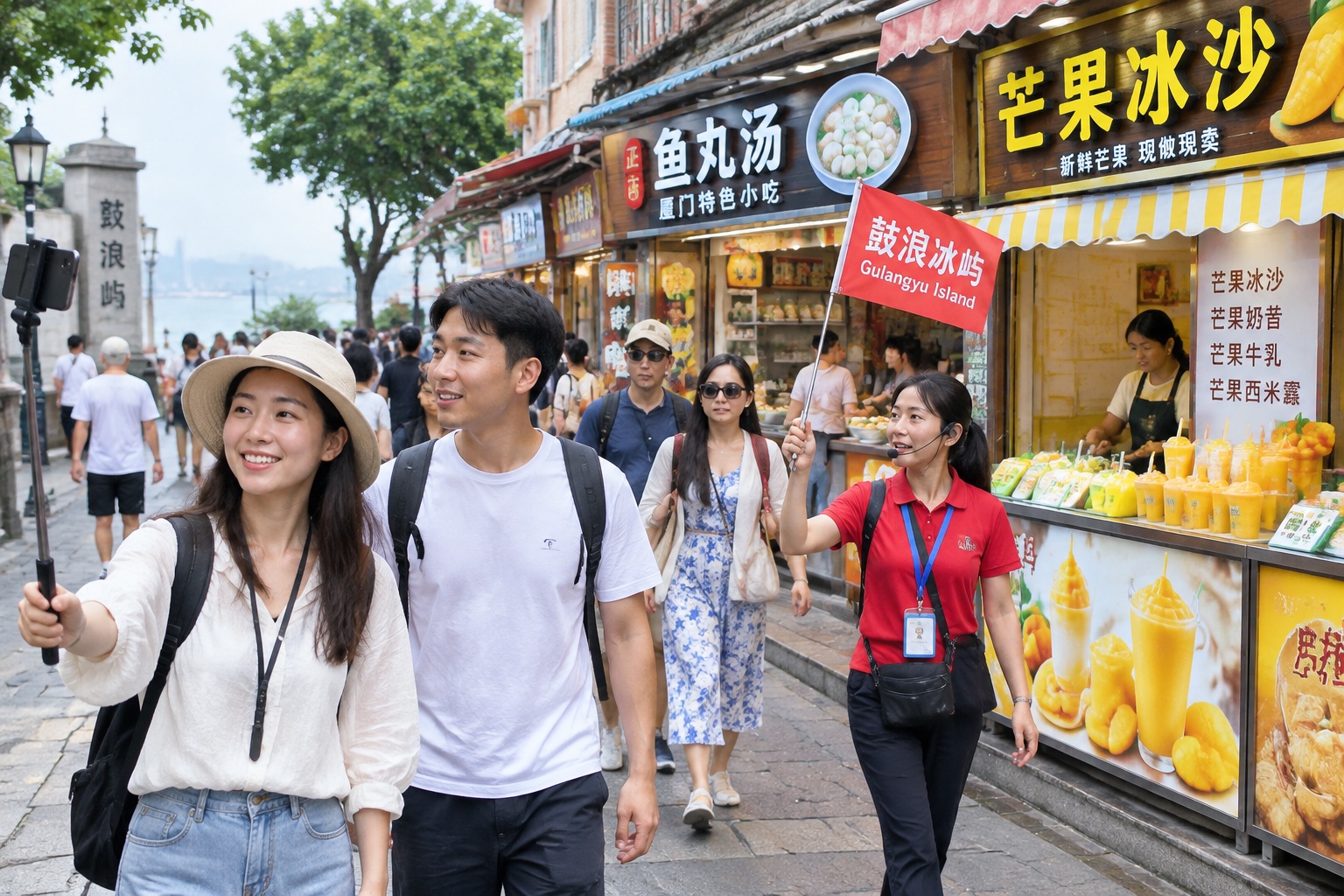
By 8:30, the first tourist ferry from Dongdu Wharf groans into Sanqiutian Pier. The spell breaks. Within twenty minutes, the narrow lanes fill with tour groups holding up colored flags. Selfie sticks rise like antennas. A loudspeaker announces the meeting point for a “Gulangyu Highlights” tour. The woman with the broom disappears behind a gate.
What the Tour Boats Bring, and What They Cover Up
Gulangyu is small—just 1.88 square kilometers—but it receives more than 10 million visitors in a typical year, according to local tourism figures. Since 2014, the island has capped daily tourist numbers at 65,000, a response to years of overcrowding. On a busy weekend, that cap feels generous. The main commercial street, Longtou Road, is a corridor of mango smoothie stands, fishball soup shops, and souvenir stores selling the same postcards and pineapple cakes. The most famous shops have names like Zhang Sanfeng Milk Tea and Miss Zhao’s, places that exist mostly on social media.
Tourists usually follow a loop: Sanqiutian Pier to Longtou Road, then Shuzhuang Garden, then Sunlight Rock for the view. They take photos of the European-style villas, the old churches, the banyan trees. They eat, they buy, they leave on the last ferry. Many never walk more than 500 meters from the main route.
That is a mistake, but it is also understandable. The island’s quieter half—the lanes of Neicuo’ao, Jishan Road, Bishan Road—has no souvenir shops, no tour guides. It has peeling walls, overgrown gardens, and cats that sun themselves on stone steps. It also has the people who still live here.
The Piano That Still Plays at Four O’Clock
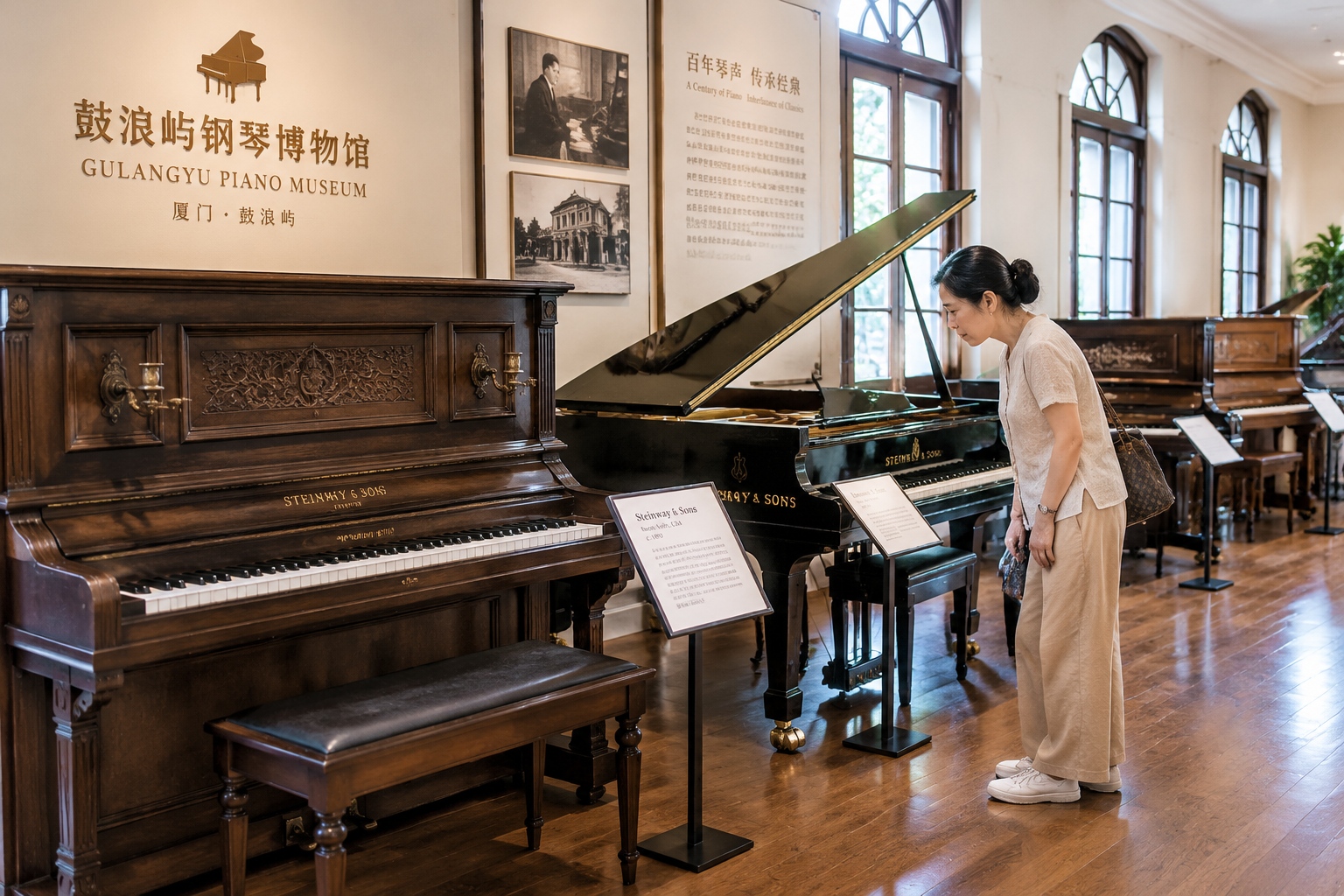
Gulangyu has been called “Piano Island” since the early 20th century. At its peak, in the 1980s and 1990s, residents owned more than 500 pianos. The island produced a number of well-known Chinese musicians, including the pianist Yin Chengzong. Today, the Gulangyu Piano Museum in Shuzhuang Garden displays more than 100 antique pianos, some from Europe, some from the United States, all shipped here by collectors. The Organ Museum at Bagua Lou holds a collection of pipe organs, including one of the largest in China.
But museums preserve objects, not habits. The island’s music school still teaches students, though many commute from Xiamen Island. A retired piano teacher, who asked not to be named, lives in a three-story villa near the island’s center. She gives lessons in her living room three afternoons a week. Most of her students are children from Xiamen whose parents take the ferry with them. “When I was young, my neighbors would complain if I practiced after 9 p.m.,” she says. “Now, if I play after 9 p.m., no one hears.”
The Gulangyu Piano Festival, held every two years, still draws performers and audiences. But the festival is a temporary event. On ordinary days, the island’s soundtrack is more likely to be a tour guide’s loudspeaker than a piano.
The Residents Who Left
In the 1990s, Gulangyu had about 20,000 residents. Today, local statistics put the number at around 10,000, and many of those are over 60. The reasons for the decline are practical. There are no cars on the island—only electric carts for deliveries and emergencies. That is charming for a weekend, but difficult for a family with a newborn or an elderly parent who needs regular hospital visits. The island’s primary school has far fewer students than it did two decades ago; many families moved to Xiamen Island for better schools and jobs. The nearest large hospital is a ferry ride away.
Tourism created jobs, but most are low-wage and seasonal: waiting tables, cleaning guesthouses, selling tickets. The people who own the shops and hotels often live off the island. The people who clean them often commute from Xiamen.
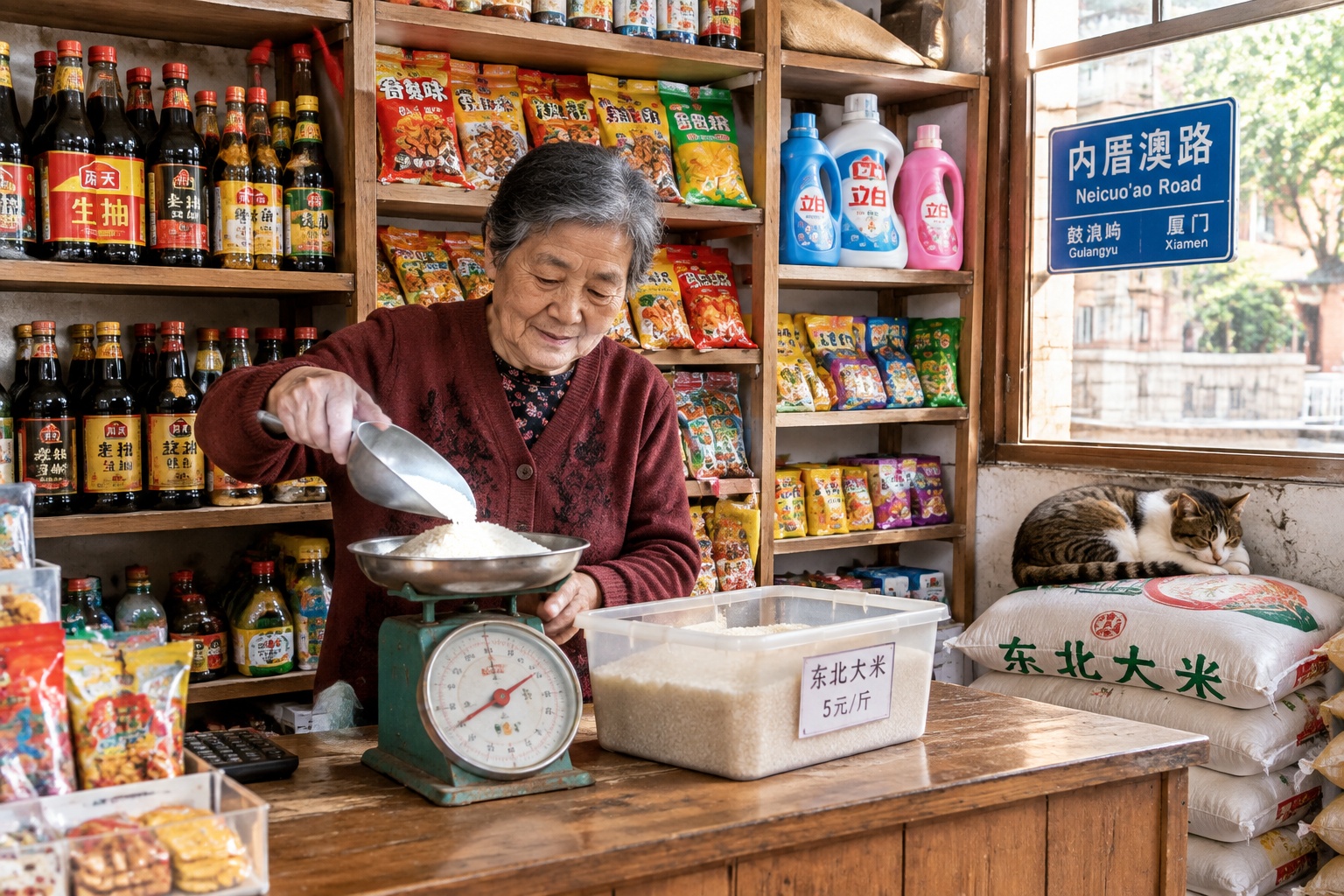
On Neicuo’ao Road, away from the crowds, a small grocery store opens at 7 a.m. and closes at 8 p.m. The owner, a woman in her seventies, sells rice, soy sauce, laundry detergent, and ice cream. Her customers are mostly elderly neighbors. “Everyone I knew is either dead or moved away,” she says. “But I’m still here. Where would I go?” Her son lives in Xiamen. He visits on Sundays.
A Few Who Came Back
Not everyone leaves. In the past five years, a small number of younger people have returned, often to restore family properties. One of them is a man in his mid-thirties who grew up on the island, studied in Shanghai, and worked in advertising for a decade. In 2019, he came back to renovate his grandmother’s villa—a crumbling 1920s building with a courtyard and a leaking roof. He turned it into a four-room guesthouse. He did much of the restoration himself, learning carpentry from YouTube and hiring local craftsmen for the plasterwork. The local government has a fund for heritage building repairs, but the process is slow and the paperwork is heavy.
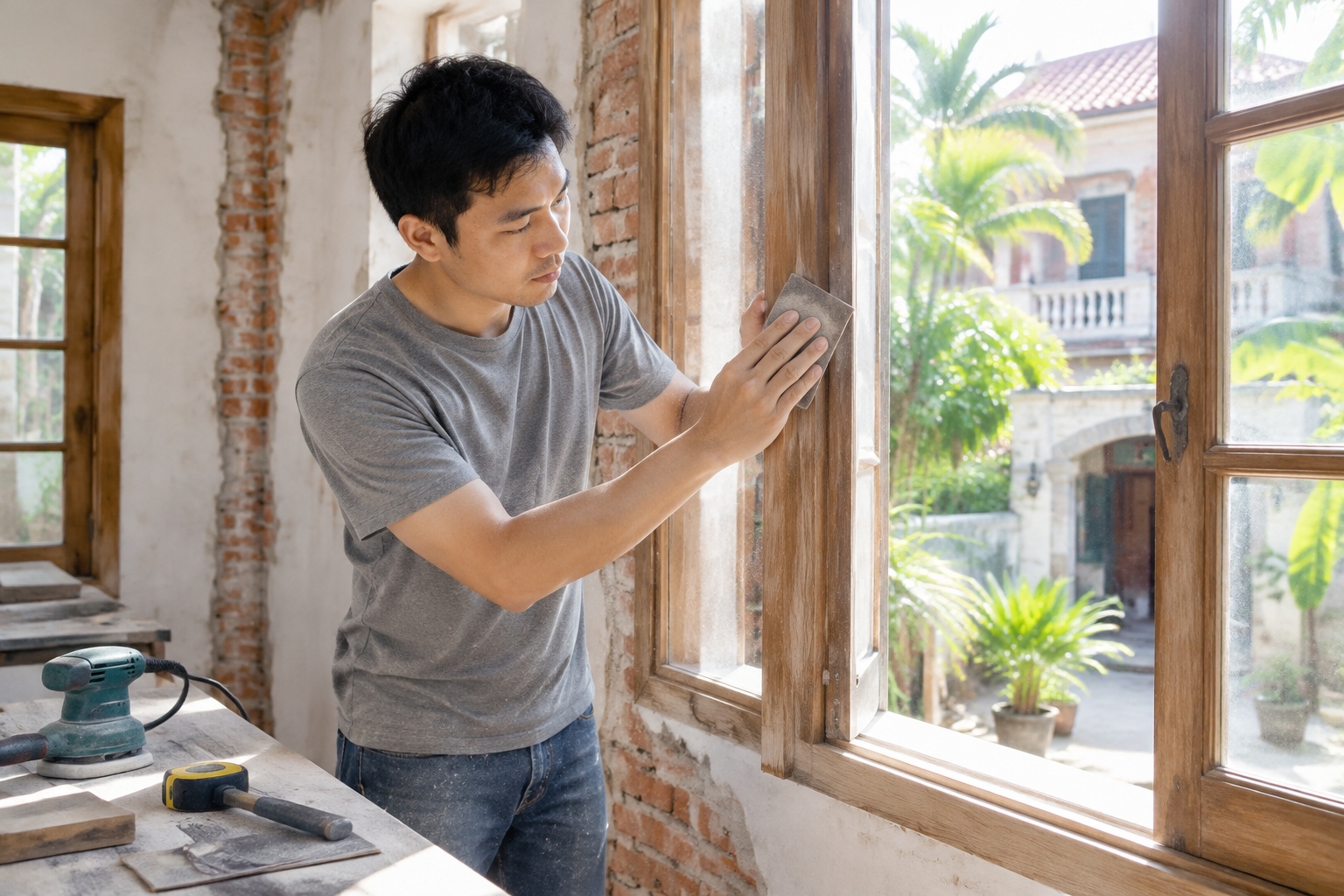
“Tourists come for the Instagram photo,” he says, standing in the courtyard, sanding a window frame. “But some of them want the story. They want to know who lived here, what the piano was for, why the tiles are shaped like that. That’s the part I can offer.” His guesthouse is full in summer and empty in January. He has thought about leaving again. “But then I think: if I don’t do this, who will?”
The Math of Preservation
In 2017, UNESCO added Gulangyu to its World Heritage List, recognizing it as a “Historic International Settlement.” The designation brought pride, tourists, and money for restoration. It also made the island’s problems more visible. Many of the old villas have multiple heirs, some living overseas, and getting all of them to agree on repairs can take years. Some buildings sit empty. The local government has tried to reduce the resident population further—a policy called “de-congestion”—to ease pressure on the island’s infrastructure. But if too many people leave, the island risks becoming a museum of itself.
The challenge is not unique to Gulangyu. Historic neighborhoods from Venice to Kyoto struggle with the same tension: tourism pays for preservation, but it also drives out the people who made the place worth preserving. Gulangyu’s version is complicated by its size, its ferry-dependent life, and the fact that its cultural identity—music, multilingualism, overseas connections—was always tied to the people who lived there, not just the buildings.
After the Last Ferry
At 9:40 p.m., the last tourist ferry leaves Sanqiutian Pier. The island exhales. The souvenir shops pull down their metal shutters. The smell of frying oil fades, replaced by sea salt and jasmine. On the lane behind Longtou Road, the woman in the blue apron is sweeping again. She sweeps the same steps every morning and every evening. It is a small act of ownership.
From somewhere up the hill, a piano starts to play—a slow, familiar melody. It might be a recording. It might be a student. It might be the retired teacher, playing for herself. The woman pauses, listens for a moment, then continues sweeping. “It’s still my home,” she says. “But it’s not the same home.”