
A Tuesday morning behind Sea World
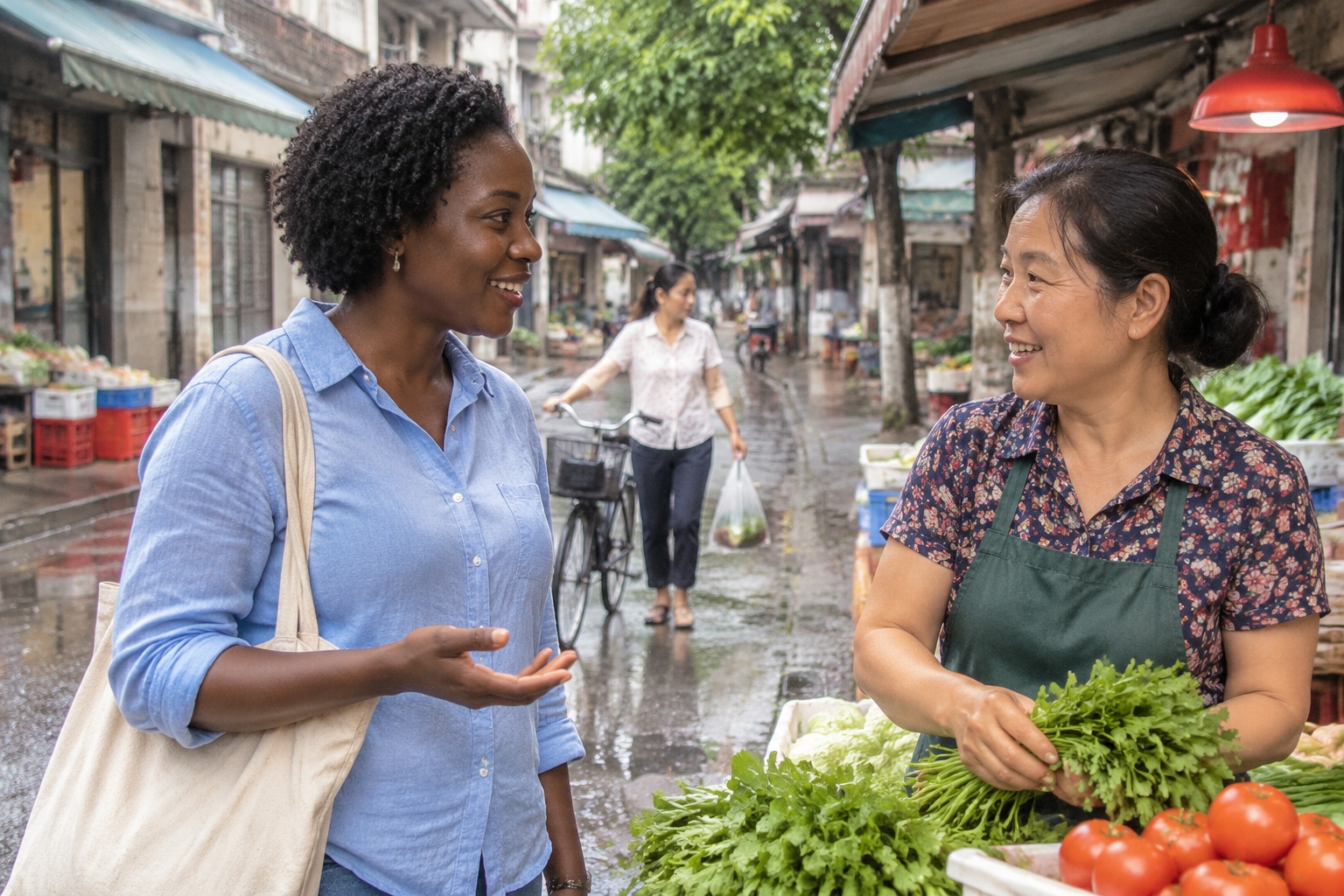
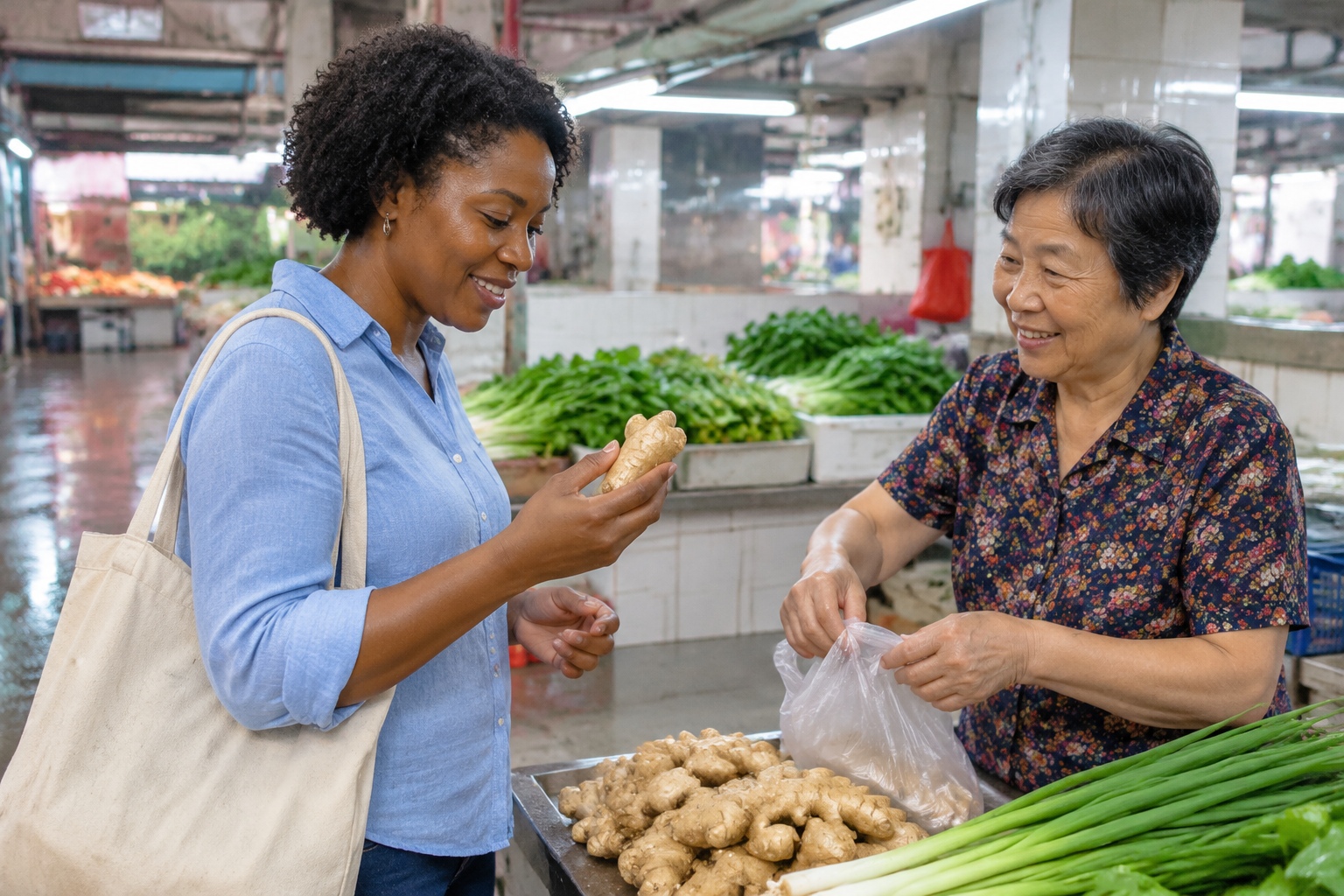
At 8:40 on a Tuesday, the most revealing place in Shenzhen is not a skyline bar or a tech exhibition hall. It is a wet market aisle in Shekou, behind the glass towers and expat bars around Sea World. Amara, a 34-year-old Nigerian supply-chain manager, holds a plastic basket and argues gently about the price of ginger.
The vendor, Auntie Chen, remembers her. “Your daughter still coughing?” she asks. Amara nods. Auntie Chen picks a smaller, knobbier piece of ginger. “This one. Boil with pear.”
Amara has lived here seven years. She arrived with two suitcases, a job offer and a six-month plan. The plan did not include knowing which ginger to buy for a cough, or having a market auntie ask after her child. That is the gap this article is about: the distance between living in a city and belonging to one.
I have changed a few names here, but the scenes are from recent visits to Shekou.
Settled is logistics. Belonging is being expected.
Foreign residents often describe settling in Shenzhen as a list of tasks: work permit, residence permit, bank card, phone number, rental contract, delivery app. The city can be remarkably efficient at this. You can land on Sunday and have most of it working by Wednesday. That speed is real, and it matters.
But paperwork does not make a neighbor. Belonging starts later, in smaller repetitions. Someone saves you a seat. A security guard remembers your bike. A shopkeeper keeps the oat milk you like. Your kid’s classmate’s mother asks if you are free on Saturday. These are not policy achievements. They are social facts, and they take time.
In Shekou, the old international district in Nanshan, that process is visible in ordinary places. The neighborhood has long been a first stop for foreigners in Shenzhen: seafarers, engineers, teachers, traders, designers. The interesting change is not that foreigners are here. It is that many have stayed long enough to become part of the local texture.
The neighborhood that knows your coffee order
Walk ten minutes from Sea World’s bright restaurant strip and the pace changes. A small park fills with retired men doing tai chi in the morning and teenagers on skateboards after school. A community room hosts a monthly swap of books, clothes and children’s toys. The barista knows Daniel takes his flat white with an extra shot and no sugar, and that he will be late on Wednesdays because he picks up his daughter.
Daniel is 41, from Manchester, and has been in Shenzhen nine years. He works in product design. When he talks about the city, he does not mention the skyline. He mentions the woman who runs the fruit stall downstairs. “She started giving my daughter free bananas,” he says. “Not because we were special. Because my daughter was small and kept staring at them. That was the first time I felt we were not invisible.”
Amara describes a similar shift. “In the beginning, I was ‘the foreigner.’ Everyone was polite, but I was a category. Now Auntie Chen asks why I look tired. She tells me I work too much. She scolds me a little. That is different.”
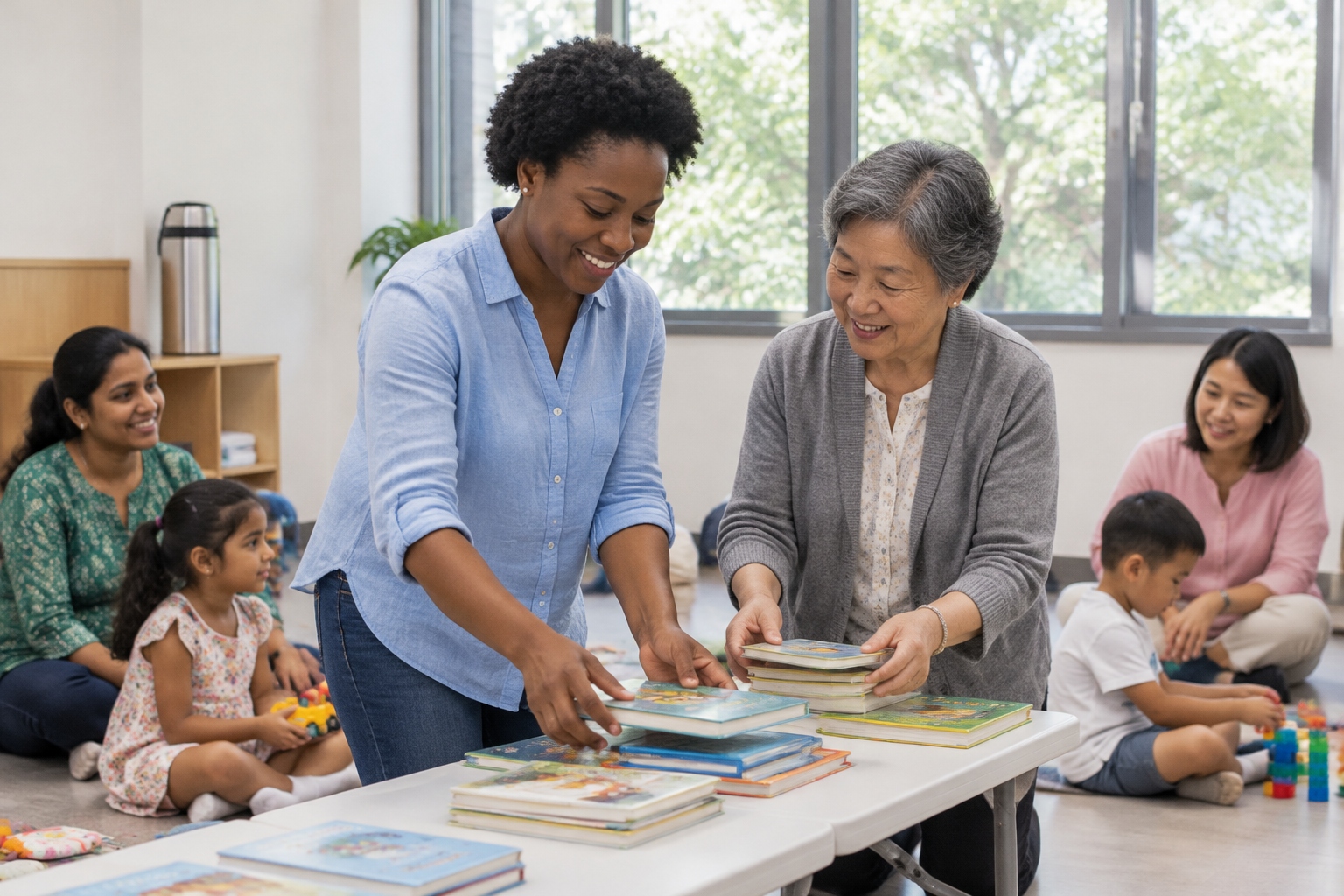
On Saturday mornings, the community room fills with a mixed crowd: Chinese retirees, Filipino teachers, Indian engineers, young parents, children on the floor. Folding tables hold secondhand books and toys. A thermos of hot water sits by the wall. Nobody makes a speech. People drop things off, chat, and go home.
Three turning points
Amara: the soup after the typhoon
Amara’s turning point came during a typhoon several years ago. The windows were taped. The power was out. She was alone with a toddler. A neighbor from across the hall knocked: a retired local woman who spoke almost no English. She handed over a thermos of soup and pointed at the child. “For her.” Then she pointed at Amara. “You too.”
“I cried after she left,” Amara says. “Not because of the soup. Because someone had thought of us. In a city of 17 million people, someone had noticed we were there.”
Daniel: the hospital queue that became a friendship
Daniel’s moment was more practical. His daughter had a fever on a Sunday night. He had insurance and a hospital card, but the registration system on his phone would not cooperate. A Chinese neighbor, the mother of his daughter’s classmate, walked him through the mini-program, then came to the hospital. They waited two hours. She bought him a bottle of warm water and said, “You would do it for me.”
“I am not sure I would have known how,” Daniel says. “But I liked that she assumed I would. It made me feel like a neighbor, not a guest.”
Yuki: the reading hour she was asked to lead
Yuki, 29, moved from Osaka four years ago to work in a bakery. She is quiet and says her Chinese is still “market-level.” One Saturday, a volunteer at the community room asked if she could read a picture book in Japanese to a group of children. She was surprised. “My Chinese is not good,” she said. The volunteer shrugged. “The kids don’t care. They just like stories.”
She read a book about a bear who cannot sleep. Half the children did not understand the words. They understood the bear. Now she does it once a month. “I am not a leader,” she says. “I just hold the book.”
The friction is real
None of this means Shenzhen is frictionless. Language is the first wall. Translation apps handle delivery addresses and menus, but they cannot make a joke land. At dinner with local colleagues, conversation can slide into rapid Mandarin or Cantonese, leaving a foreigner smiling and nodding for twenty minutes. Social circles often form through children, sports, church, volunteer work or very patient friends. Without one of those anchors, a newcomer can feel surrounded by people and still lonely.
Education is another pressure point. International schools are expensive. Local public schools can offer deep language immersion and a real social life, but they demand commitment from parents and children. Families choose different paths, and some leave Shenzhen before middle school. That is part of the honest picture.
Healthcare has improved for many foreigners, but it can still confuse. Registration apps, insurance rules and hospital levels are not obvious on day one. I once watched a new arrival stand in a hospital lobby, phone in hand, hunting for the right QR code. A volunteer in a blue vest finally pointed him to the self-service machine. It worked. It also took thirty minutes and a stranger’s patience.
The interfaces that catch people
What helps is not only policy. It is the layer of ordinary interfaces around it. In Shekou, community service windows answer questions about residence permits, medical insurance and school enrollment. Public libraries have English shelves and quiet desks. Parks function as free living rooms. Volunteer groups organize clean-ups, language corners and weekend activities for children.
These interfaces do not solve everything. A service window cannot make you a friend. But it can shorten the distance between confusion and the next step. Sometimes the next step is all a person needs.
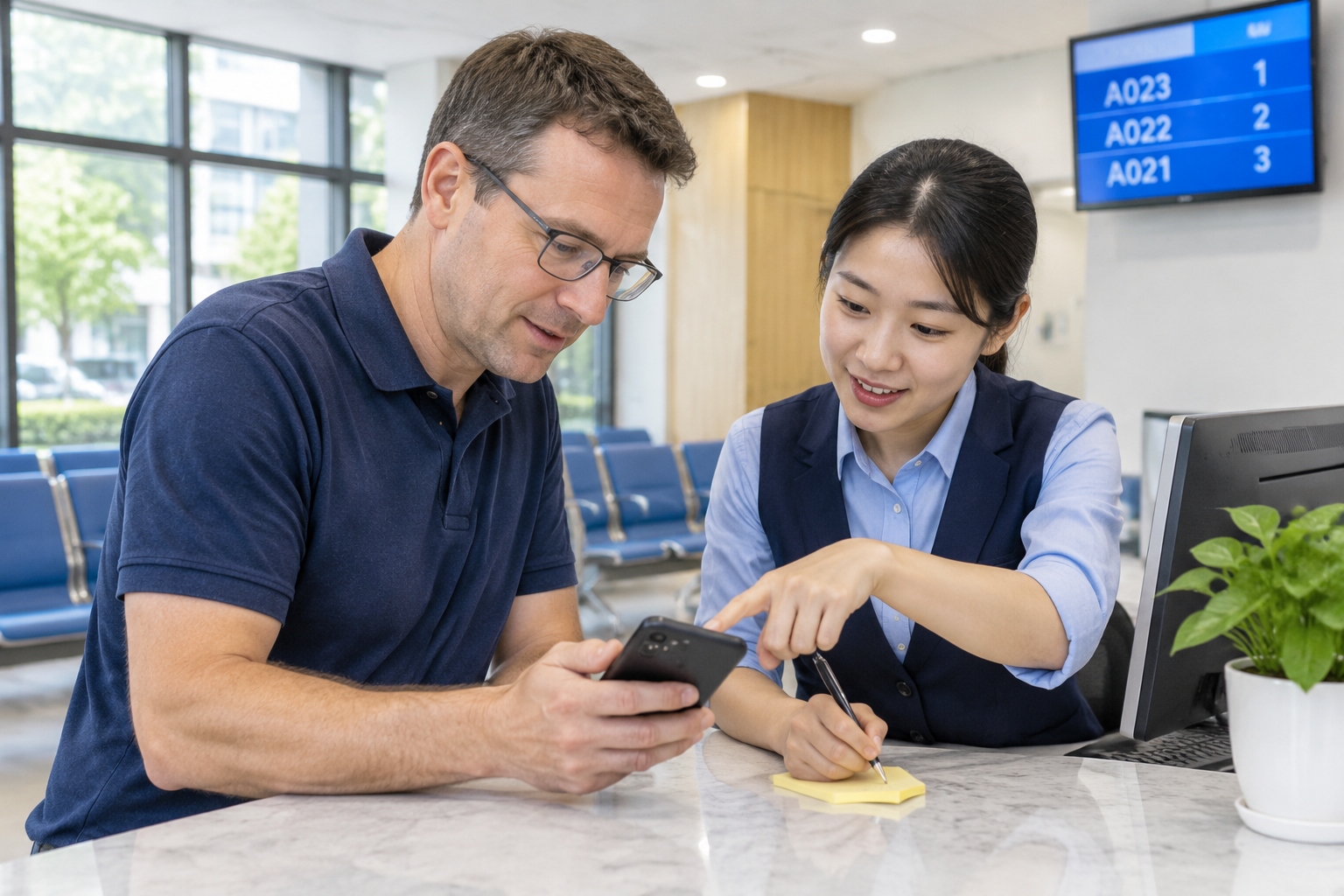
Amara used one of these centers when her daughter needed a vaccination record transferred. She expected a maze. A staff member helped her scan documents, called another office, and wrote the correct hospital name on a sticky note. “It was not magic,” Amara says. “But it was human. Someone treated my problem as a real problem.”
That is the difference between an interface and a community. The interface opens the door. The community is what happens after you walk through it.
Belonging is a verb
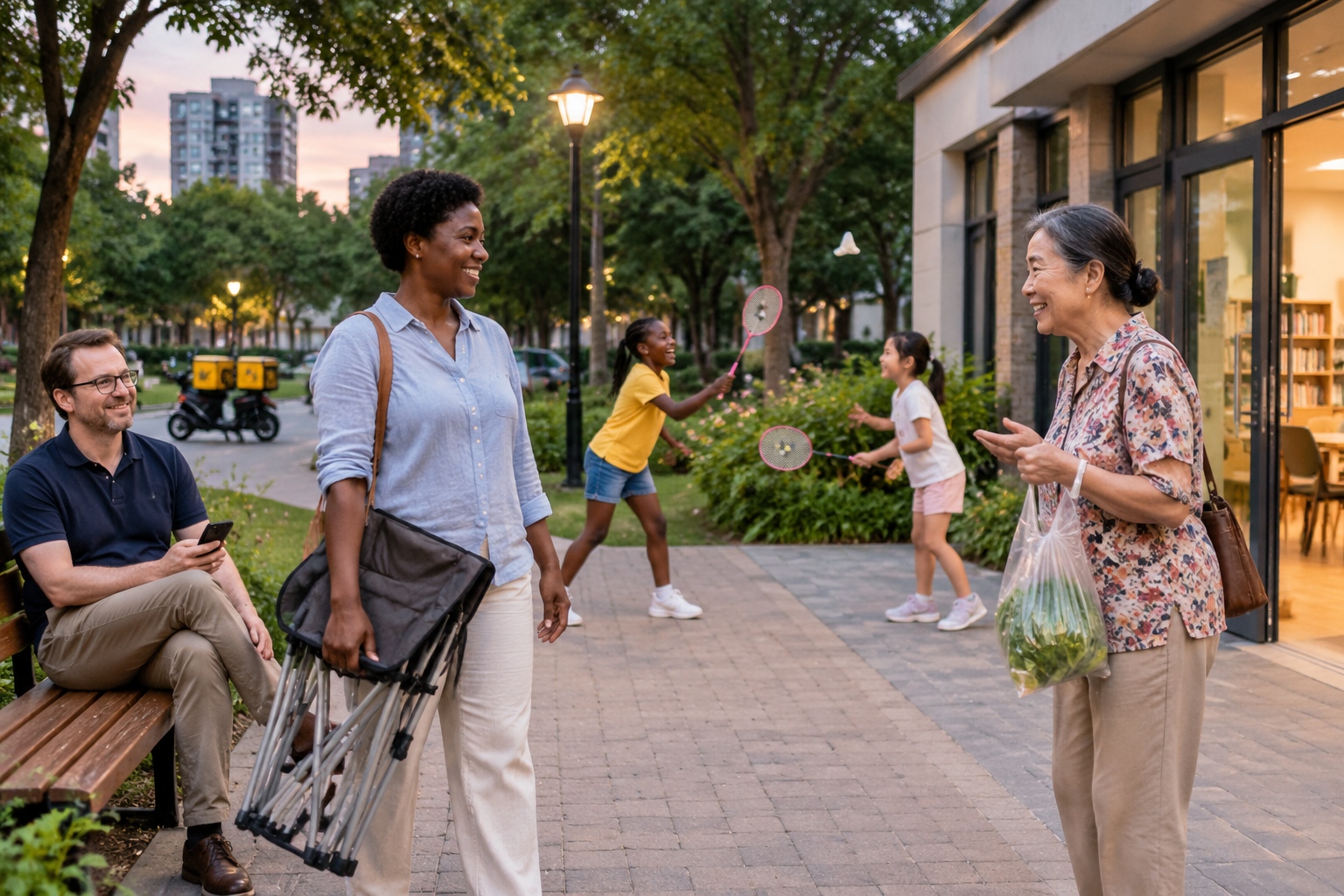
On a recent Friday evening, I stood outside the small park near Amara’s building. The street had the usual Shenzhen mix: delivery scooters, children with backpacks, older women walking laps, a man selling roasted sweet potatoes. Amara’s daughter was playing badminton with the girl from upstairs. Daniel sat on a bench, half-reading emails, half-watching his daughter on the swings.
Auntie Chen from the market walked past with a bag of greens. She stopped, said something to Amara, and laughed. Amara laughed back. I did not catch the whole exchange. I did not need to. It looked like a neighborhood.
This is not a story with a neat ending. People still leave Shenzhen. Visas expire. Jobs change. Children grow up. Some foreigners stay two years and never learn the bus routes. Others stay a decade and end up on the committee for the Mid-Autumn potluck.
But on that Friday, Amara was carrying a folding chair back to the community room. She had promised to help set up for the next morning’s reading hour. Yuki would hold the book. Daniel would bring extra tape for the posters. Auntie Chen had already donated a bag of oranges. Amara was not visiting Shenzhen. She had an errand to run.