

A Cup of Tea, Raised at the Right Moment
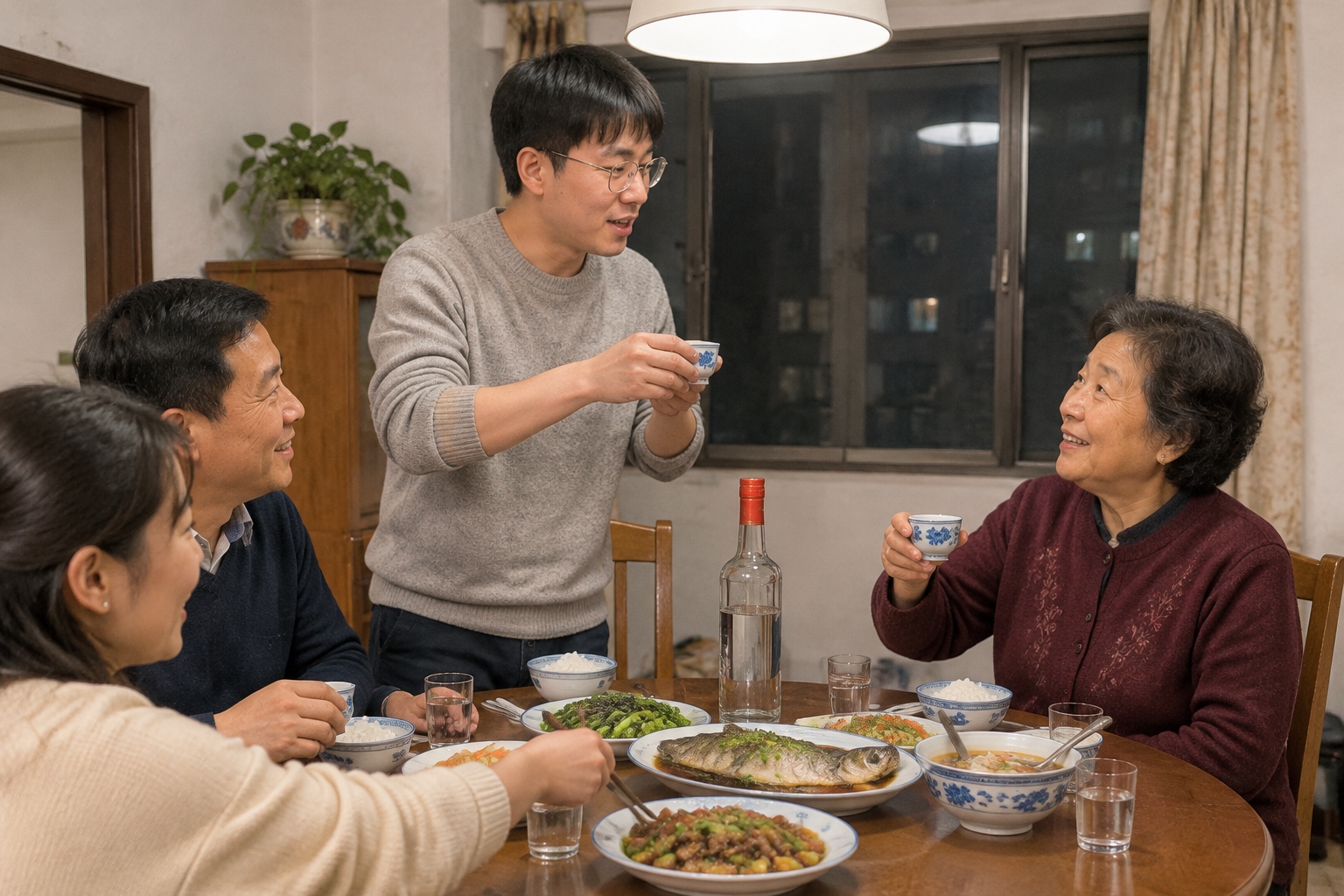
Last winter, at a family dinner in a Hangzhou apartment, a 26-year-old named Zhou stood up holding a cup of tea. Twelve people were around the table, his aunt had been cooking since morning, and the bottle of baijiu had already made two rounds.
He did not apologise for the tea. He said: “Auntie, thank you for putting up with all of us again this year. I’m not drinking tonight, so I’ll toast you with tea.”
She took a small sip of her baijiu, nodded, and that was the end of it. Nobody pushed. Nobody looked disappointed. The table moved on to the next topic, which was whether his cousin had gained weight.
If your picture of a Chinese dinner comes from stories about baijiu-soaked business banquets, this moment is worth pausing on. A toast is not a drinking contest. It’s a small ritual for saying something out loud that people here rarely say directly: thank you, I respect you, I’m glad you’re at this table. The alcohol is the delivery method, not the message.
What “Lowering Your Glass” Actually Means
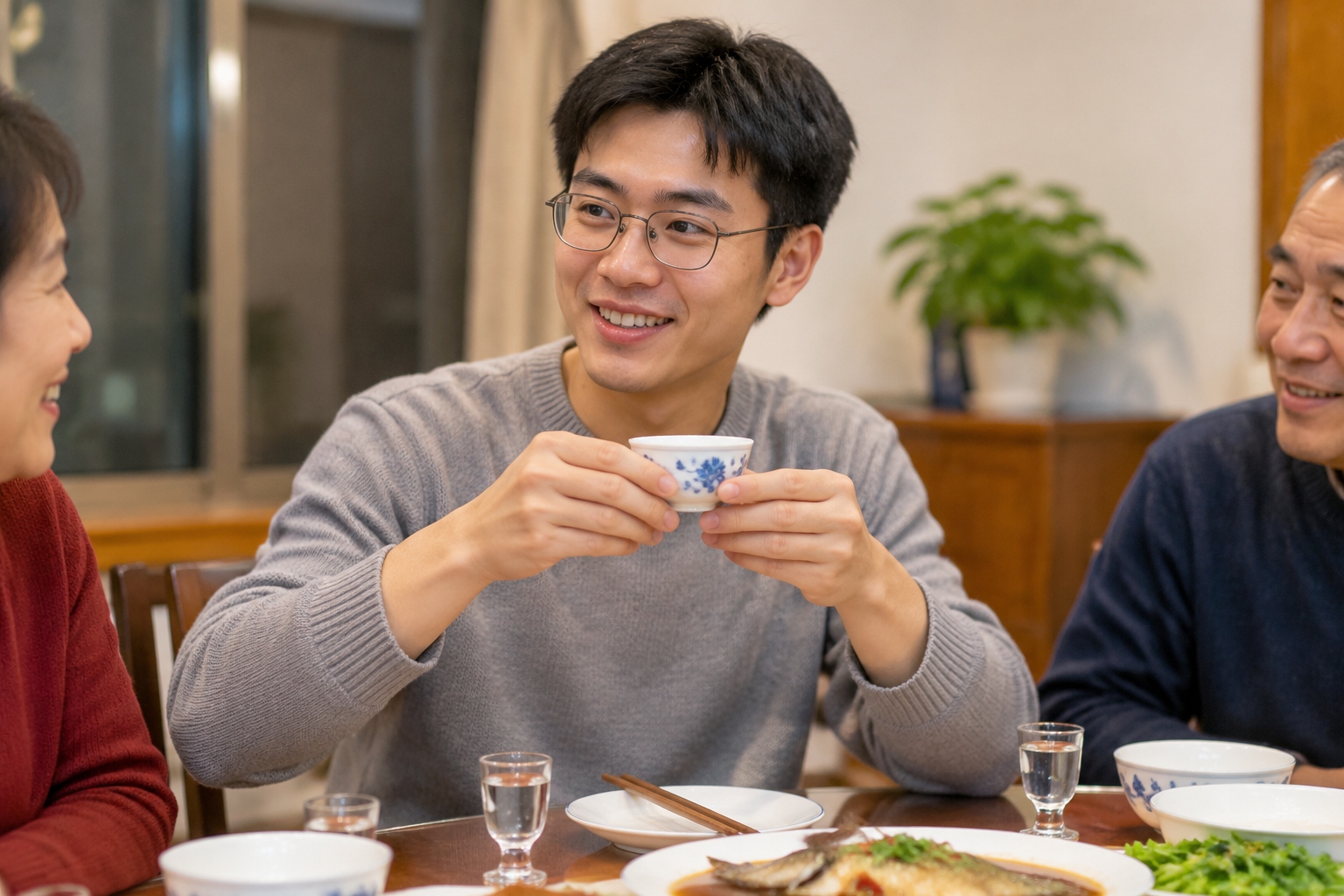
Watch two people clink glasses at a more formal table and you’ll see a small adjustment happen in mid-air. The younger one — or the guest, or the junior colleague — tilts their glass so the rim sits a centimetre or two below the other person’s rim.
It’s fast, sometimes almost invisible, and it is the entire point of the gesture. Toasting is a way of placing yourself in relation to someone: slightly lower for an elder, a teacher, a boss, your partner’s father. Not submission. More like standing up when an older person walks into the room.
Two things are easy to get wrong. The first is doing it too hard. A glass dropped halfway to the tablecloth looks theatrical and can embarrass the older person, who now has to lower theirs in return. One or two centimetres is plenty.
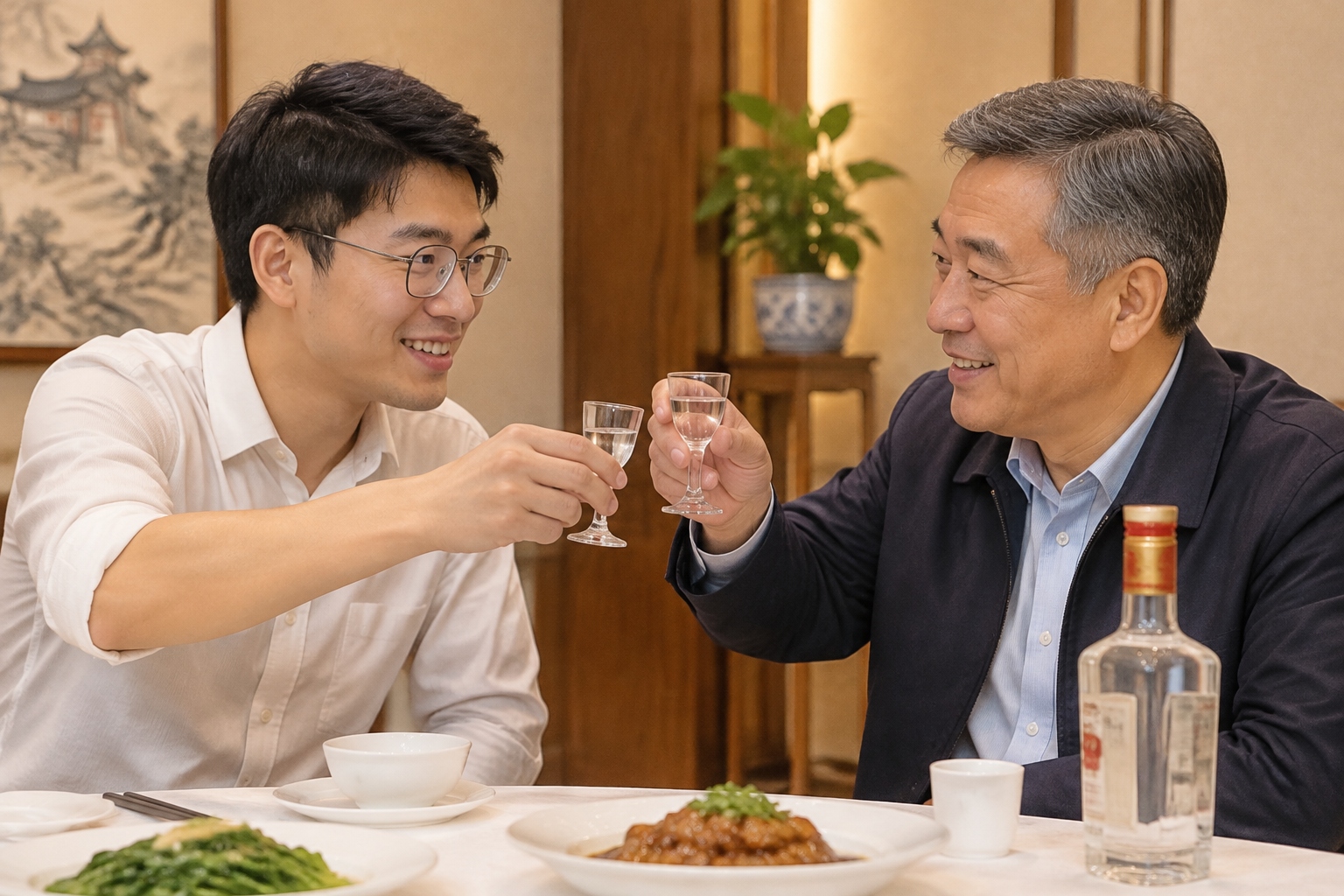
The second is the polite arms race. When both people are trying to be respectful, both glasses start sinking, and you end up watching two adults in a slow downward race towards the table. The standard rescue is a hand on the other person’s forearm and a laugh: 别低了 — “stop lowering it.”
There’s a related gesture you’ll see constantly and nobody explains. When someone pours tea for you, the person receiving it may tap two fingers on the table, twice. It’s a silent thank-you, invented so people could be polite without interrupting a conversation.
Casual Dinners Are a Different Animal
Now compare that with a Friday night in Chengdu, at a street stall with plastic stools and a folding table. Six friends, a plate of skewers, a crate of beer on the ground.
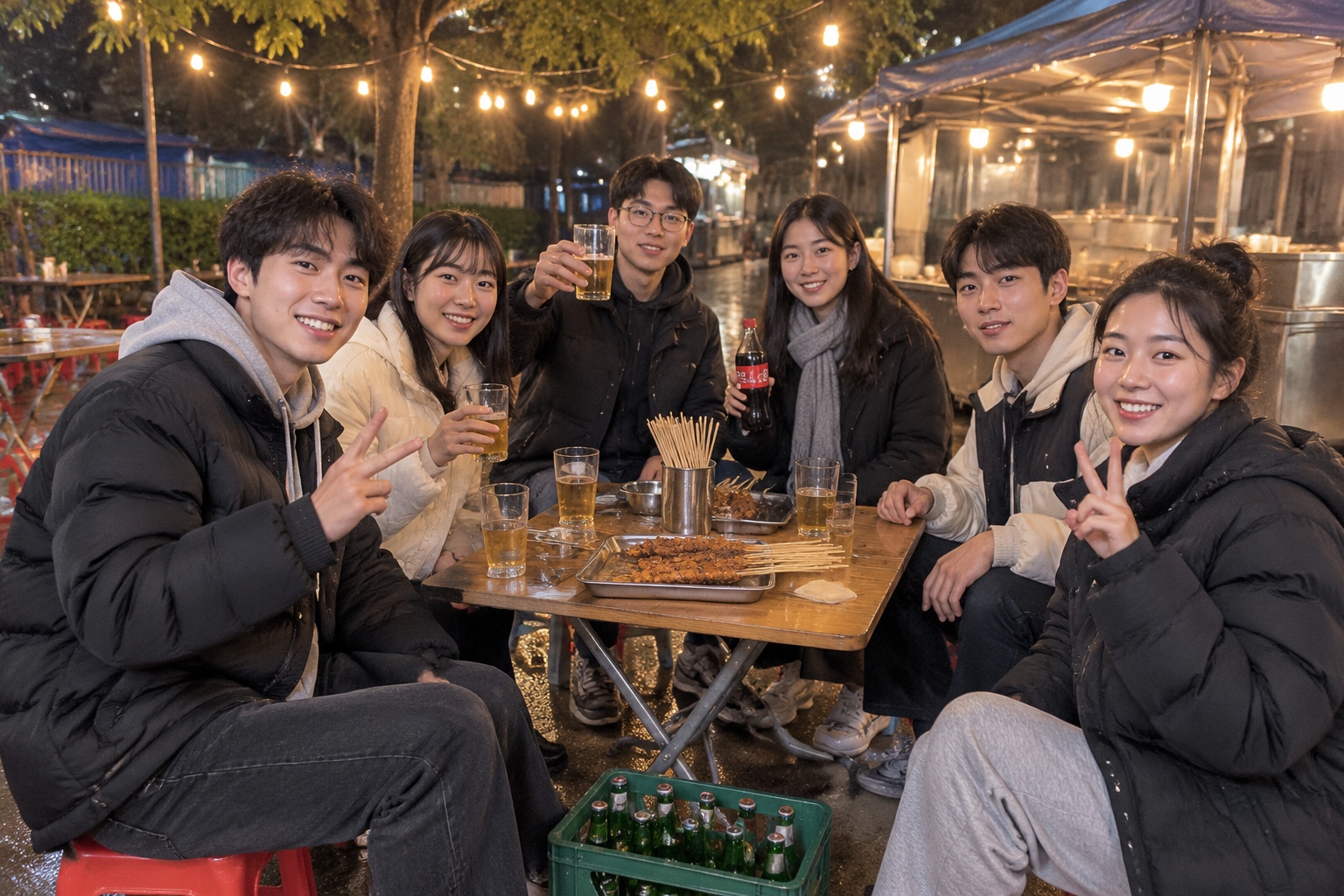
Here nobody lowers anything. Glasses meet at whatever angle they meet. Someone shouts 干杯 and everyone drinks about a third of what’s in their glass, because the food has just arrived. One person is on Coke and nobody comments. Another has an early flight and stops after one beer.
The rules are thin on purpose. Drink what’s in front of you, at the speed you like, and don’t make a thing of it.
So how do you know which dinner you’re at? A few signals. If there’s a seating order, a host who gives the first toast, cold dishes already laid out when you arrive, a whole fish pointed towards a particular guest, and people who dressed up — slow down and pay attention. If there’s a round table with a lazy Susan and someone’s grandmother telling you to eat more, you’re at a family table: be warm, be useful, help clear the plates.
How to Toast With Tea, and How to Say No
Zhou’s sentence worked because it did three jobs at once. It stated the fact early — “I’m not drinking tonight” — before anyone had poured him anything. It offered a substitute ritual — “I’ll toast you with tea.” And it contained a specific thank-you.
Chinese has a fixed phrase for this: 以茶代酒, “use tea in place of wine.” It isn’t an excuse invented by a reluctant guest. It’s a recognised move, and plenty of people use it — including at formal dinners.
Other lines that work:
- 我开车来的。 “I drove here.” Since 2011, drunk driving has been a criminal offence in China, and this ends the conversation faster than anything else you can say.
- 医生说了,最近不能喝。 “The doctor says no alcohol for now.” Nobody argues with a doctor.
- 我酒量不行,但心意得到。 “I can’t hold my liquor, but the sentiment is there.”
- 我以茶代酒,敬您,谢谢您招待。 “I’ll toast you with tea — thank you for hosting.”
Timing matters more than wording. Say it when you sit down, or when the glasses are being handed out — not when a full glass is already in front of you and a toast is aimed your way. Refusing at that point reads as refusing the person, not the drink.
Learn the two phrases that take pressure off everyone at the table. 您随意 means “drink as you please.” 我干了,您随意 means “I’ll finish mine, you take it easy.” Said out loud, they give the other person permission — which is usually what they were waiting for.
And if a bottle is already tipping towards your glass, a flat hand over the rim plus 够了够了,谢谢 — “that’s plenty, thank you” — is understood everywhere. It’s a gesture, not a rejection.
One more thing about 干杯. Literally it means “empty the cup,” but in practice it rarely does. Watch the table: if people take a sip and set the glass down, do the same. If someone drains theirs, you can finish yours or leave a mouthful. Nobody is measuring.
If Someone Walks Over to Your Seat
At larger banquets, toasting isn’t always done across the table. People get up, walk around, and toast the person they want to greet individually, glass in hand, often with both hands on it. If someone comes to you, put your chopsticks down, stand if you can, and answer with something specific rather than “thanks.” Mention their work, their city, the dish they recommended. Then drink however much you want, and say 您随意.
Pouring: Two Hands, and How Full
If you’re pouring for someone older or more senior, use two hands — one on the bottle, the other supporting the base or steadying their glass. When someone pours for you, hold your glass with two hands, or tap the table, and say thanks. At big tables, the person sitting nearest the bottle often quietly becomes the pourer for the whole evening.
How full? Wine and spirits get filled generously, often to eight or nine tenths. Tea does not. There’s an old line: 酒满敬人,茶满欺人 — a full glass of wine honours you, a full cup of tea insults you. The practical reason is simple. Tea is hot, and a cup filled to the brim can’t be picked up without burning your fingers. A brimming tea cup also carries a faint hint of “finish it and go.” So tea gets poured to about seven tenths and topped up often.
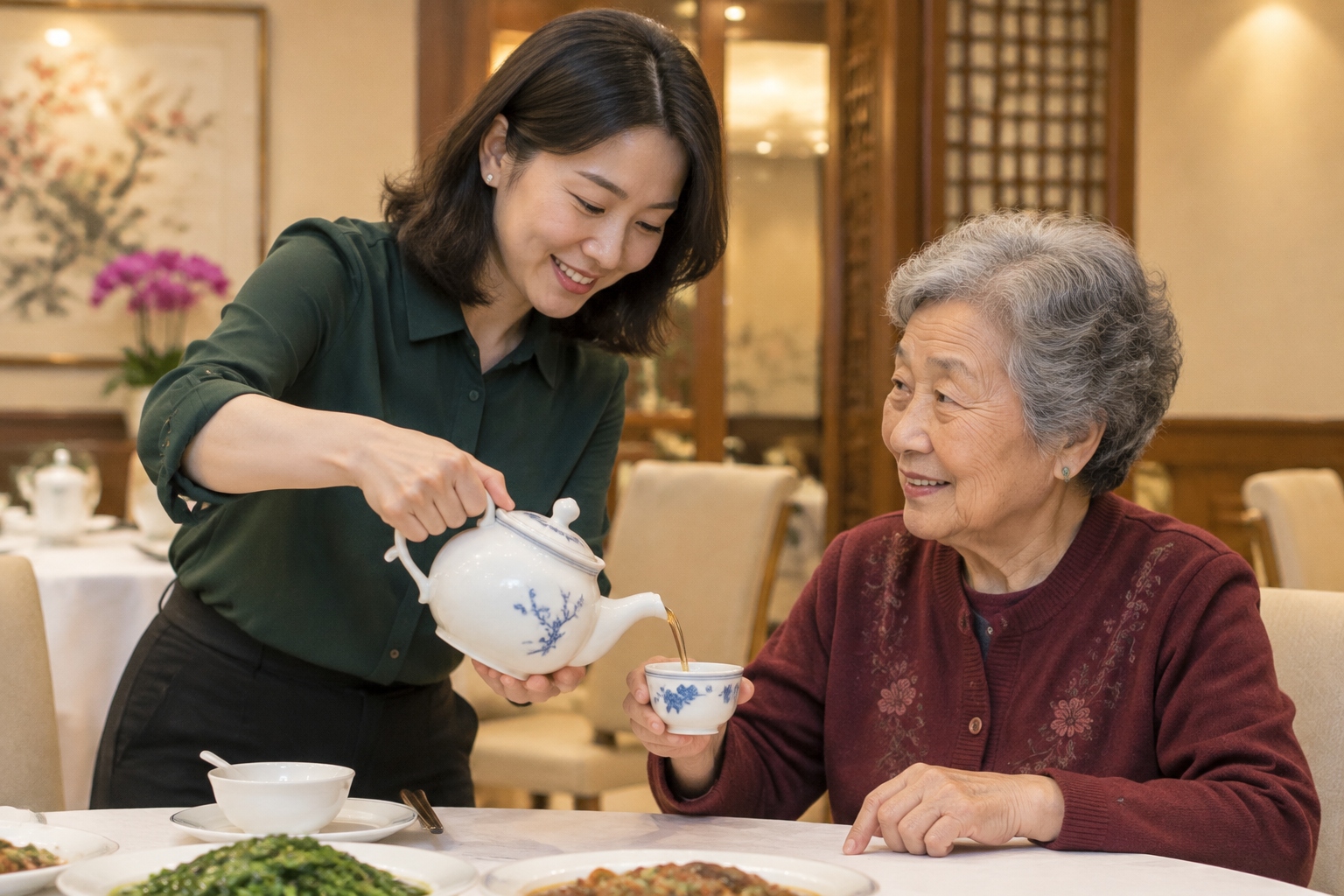
Ask first, though. 您喝点什么? — “what would you like?” — is normal now, and so is 给您添一点? — “can I top you up?” — instead of silently filling someone’s glass. Younger Chinese drink noticeably less than their parents’ generation, and at most city tables someone will ask whether anyone isn’t drinking before the bottle even opens.
What the Whole Ritual Is For
The glass, the lowered rim, the two hands, the generous pour — none of it is about volume. It’s scaffolding. A Chinese dinner gives people a structured excuse to say something warm out loud. “I’m glad you’re in my life” is hard to say across a table of twelve. “I’ll toast you” is not.
Zhou’s aunt has been hosting that dinner for thirty years. She wasn’t counting his tea.
Start the discussion at forum.chinacomes.com