

The Morning After the Gaokao: Awake Before the Alarm
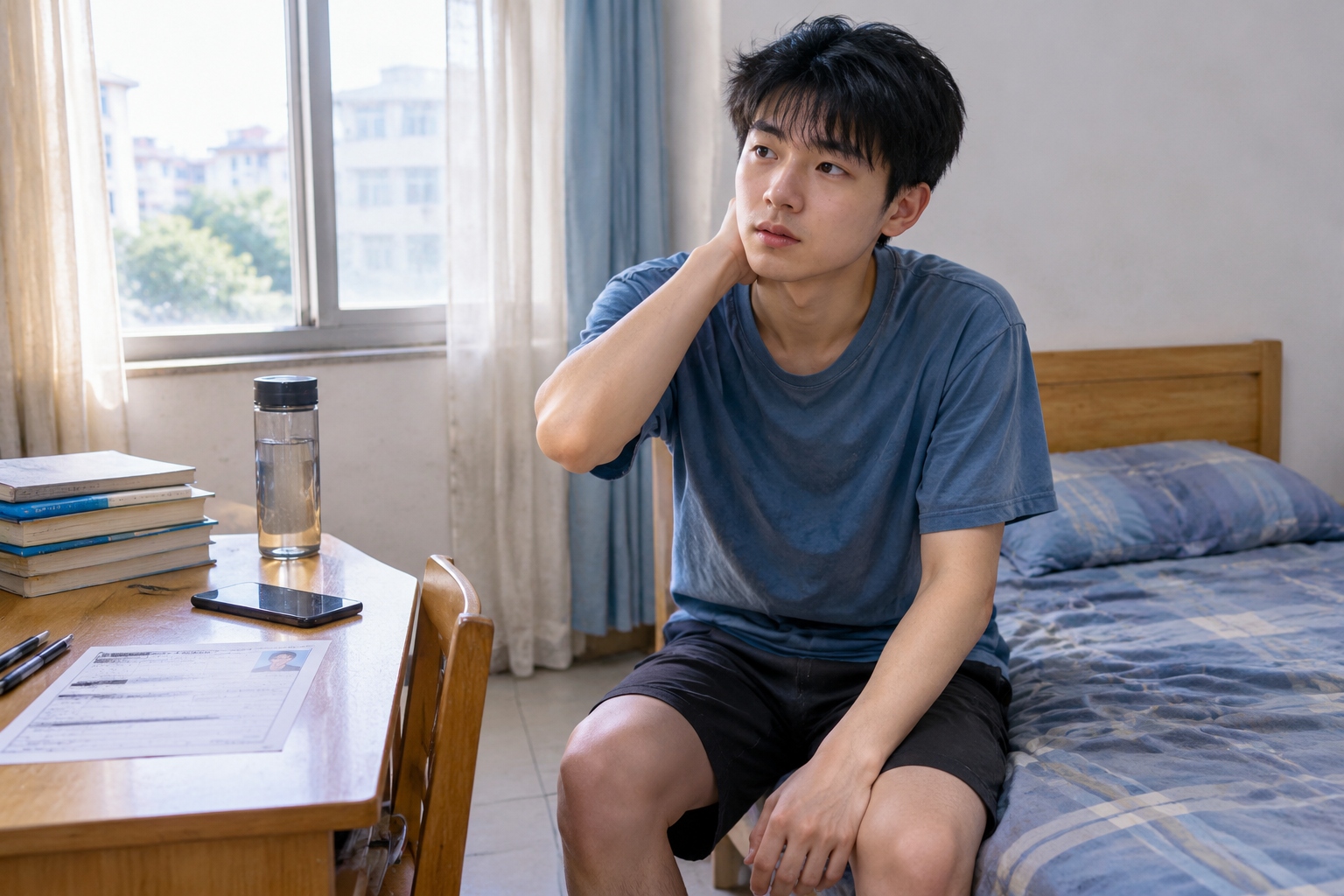
At 5:47 a.m. in a county-level city in Hubei, the sky over the apartment blocks had turned the color of weak tea. Chen Yu, 18, was already awake. His phone lay face down on the desk, its alarm still set for 6:10—a habit left over from two years of morning study. The gaokao, China’s national college entrance exam, had ended the day before. This was the first morning in months when he had nowhere to be.
He listened to the building wake up: water knocking in the pipes, a scooter coughing at the gate, a neighbor’s metal door sliding open. In the kitchen, his mother turned on the light and filled the kettle. Chen did not get up at once. He reached for the plastic sleeve on his desk and checked that his exam admission card was still inside. Then he put it down, as if it were a ticket to a train he had already boarded.
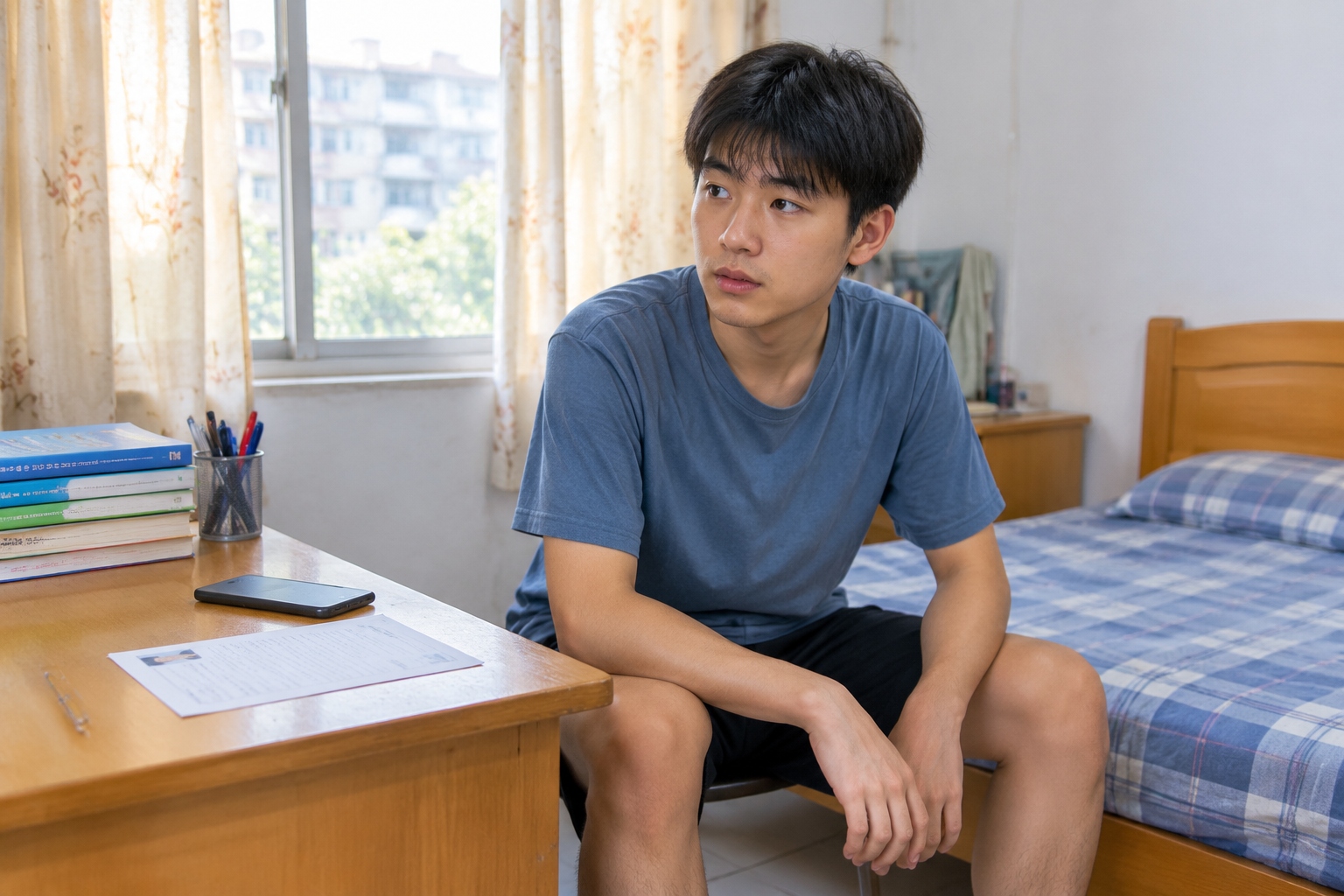
For readers outside China, the day after the gaokao can look like an ending. In practice, it is a strange gap between one intense routine and the next. The exam is usually held on June 7 and 8, though some provinces run a third day. For months, entire households organize themselves around it: quiet hours, extra meals, transport plans, relatives told not to call. When it stops, the silence is not empty. It is full of unfinished questions.
What the Gaokao Means for an Ordinary Chinese Family
Chen’s family is not unusual. His father works at a logistics depot on the edge of town; his mother works at a supermarket. They live in a modest apartment with a rented parking space downstairs and a grandmother in a village an hour away. No one in the family has attended a university outside Hubei. The gaokao is not an abstract policy for them. It is a practical sorting machine that will shape where Chen lives, what he studies, how much his family pays, and how often he comes home.
The exam itself is simple to describe and hard to overstate. Students take Chinese, math, and English, plus subjects based on their high-school track or province’s “new gaokao” model. Scores are released in late June. Then students fill in their university preferences—zhiyuan—a list of schools and majors submitted through a provincial system. A few points can move a student from one city to another, or from a public university to a private one with much higher tuition. Families with money sometimes book hotel rooms near exam sites; in smaller towns, many students simply take the school bus. The differences are real, but the pressure is shared.
Breakfast, Group Chats, and the First Quiet Hours
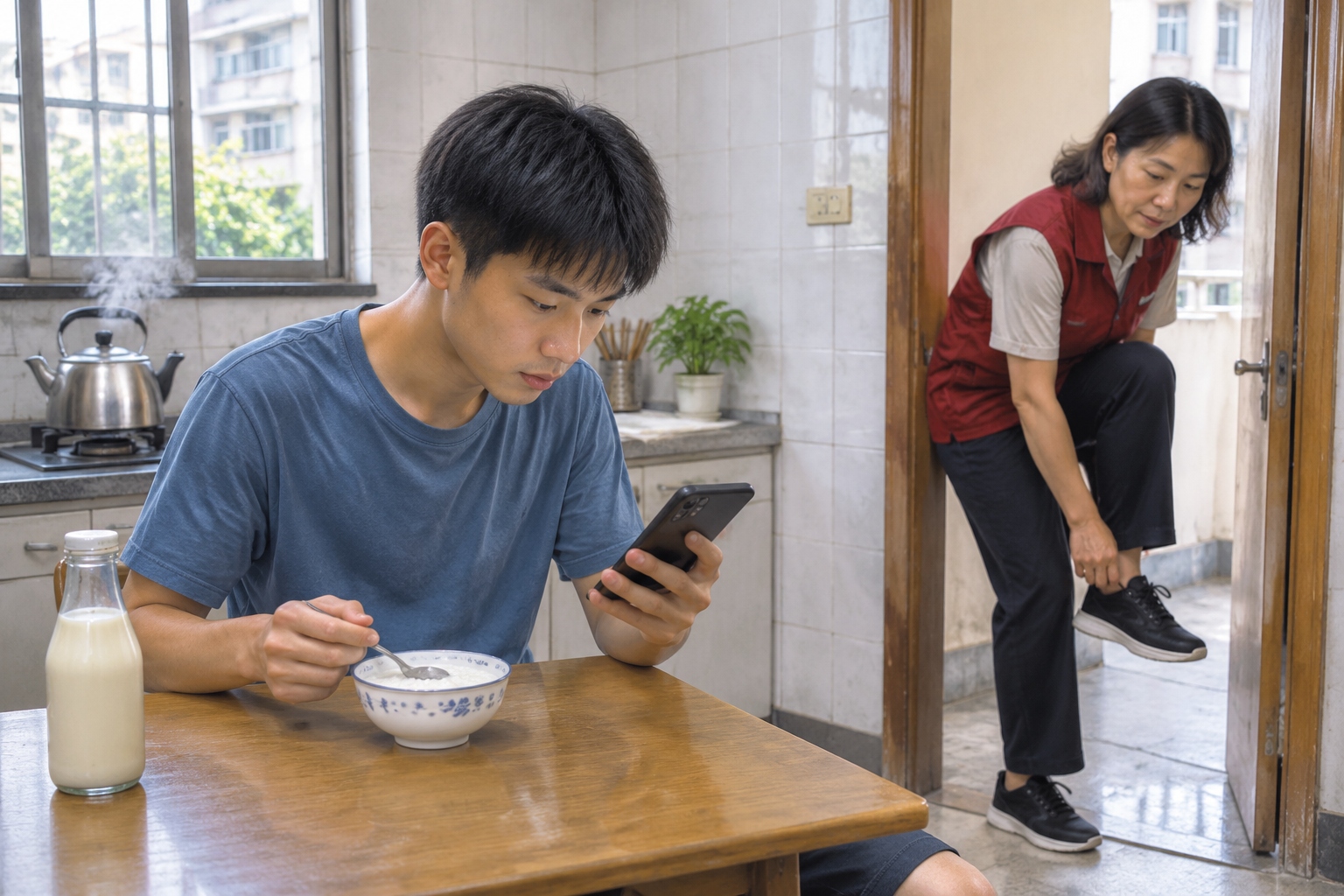
By 7:10, Chen’s father had left for work and his mother was pulling on her supermarket vest. She had left a pot of congee on the stove and two yuan coins on the table, a habit from junior high. Chen smiled at the coins and paid for soy milk and fried dough sticks with his phone instead. The woman at the stall scanned the QR code, and a small speaker announced the payment.
His phone had been quiet during the exam. Now it would not stop. The class group chat had 47 unread messages. One friend had slept until 7:30 and announced it like a record. Another had already checked an answer to a math problem and was told, by six people at once, to stop. A third asked whether anyone wanted to go to Wuhan for a concert in July. Chen typed “maybe” and deleted it. He opened an app to look at estimated score lines, closed it, and opened a delivery app to order milk tea for later. The ordinary digital life of a Chinese teenager resumed in small, unremarkable taps.
Noon on the Street: Milk Tea, Print Shops, and Summer Plans
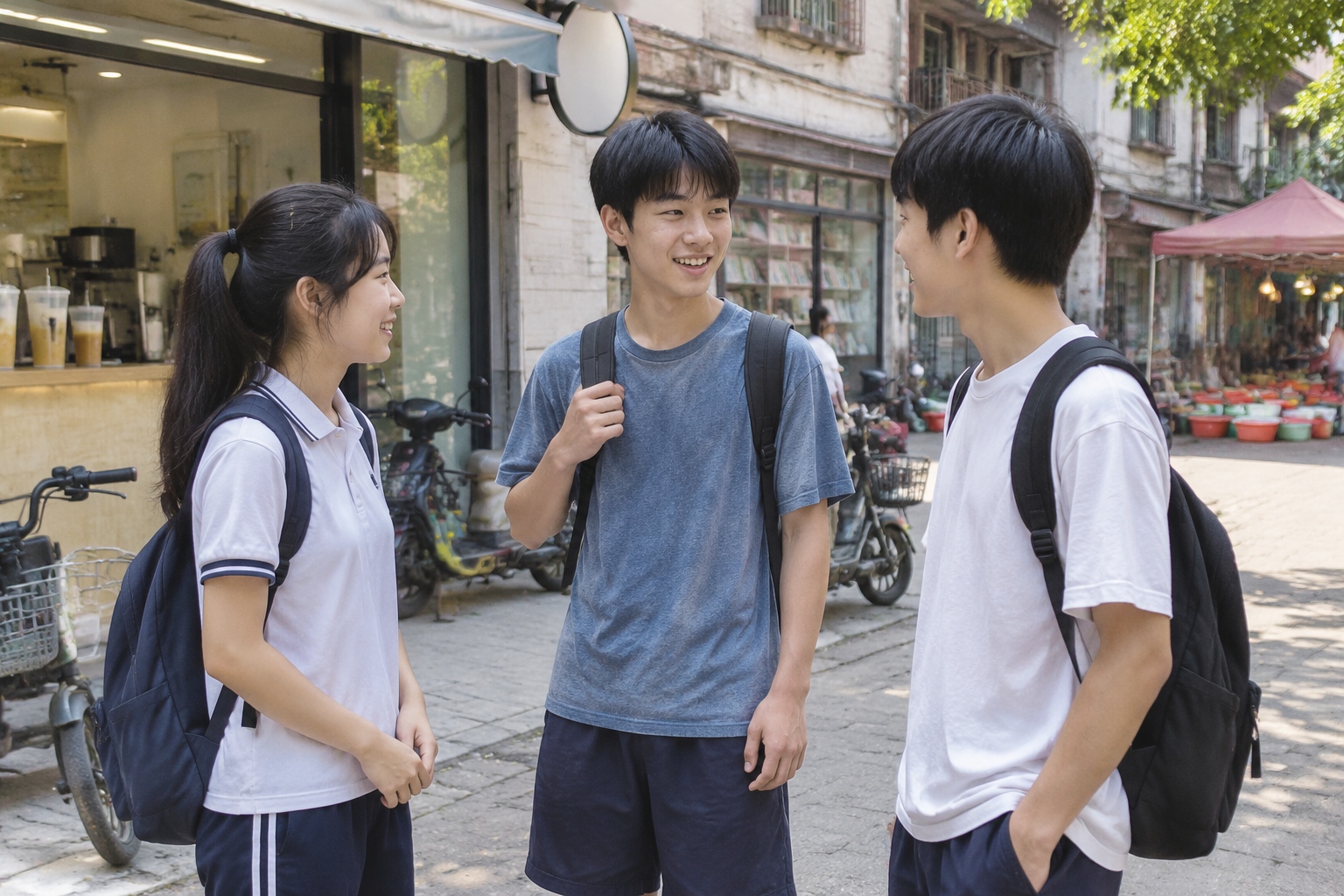
At noon, Chen met two classmates near the old No. 1 Middle School gate. The street was doing its usual business: a wet market with plastic basins of carp, a bus stopping every ten minutes, an e-bike repair stand, a print shop with a line of students. The print shop was busy with summer-job resumes and photocopies of ID cards. One of Chen’s friends, a girl named Luo, had already found work at a milk tea shop for 18 yuan an hour. Another, Wang, planned to visit his grandmother in a village in Henan and then look for a cheap trip to Chengdu.
They ordered milk tea through a mini-program and used a coupon. The conversation moved in loops: an English reading passage, a physics question, a teacher’s joke, the rumor that scores might come out earlier. Then it turned to the summer. Luo wanted to save money for a laptop. Wang wanted to travel before “real life” started. Chen said he might stay home and read, then admitted he did not know what he wanted. The day after the gaokao is not only relief. It is the first day when students must explain themselves to friends, parents, and themselves.
The Afternoon Conversation: Majors, Cities, Tuition, and Application Forms
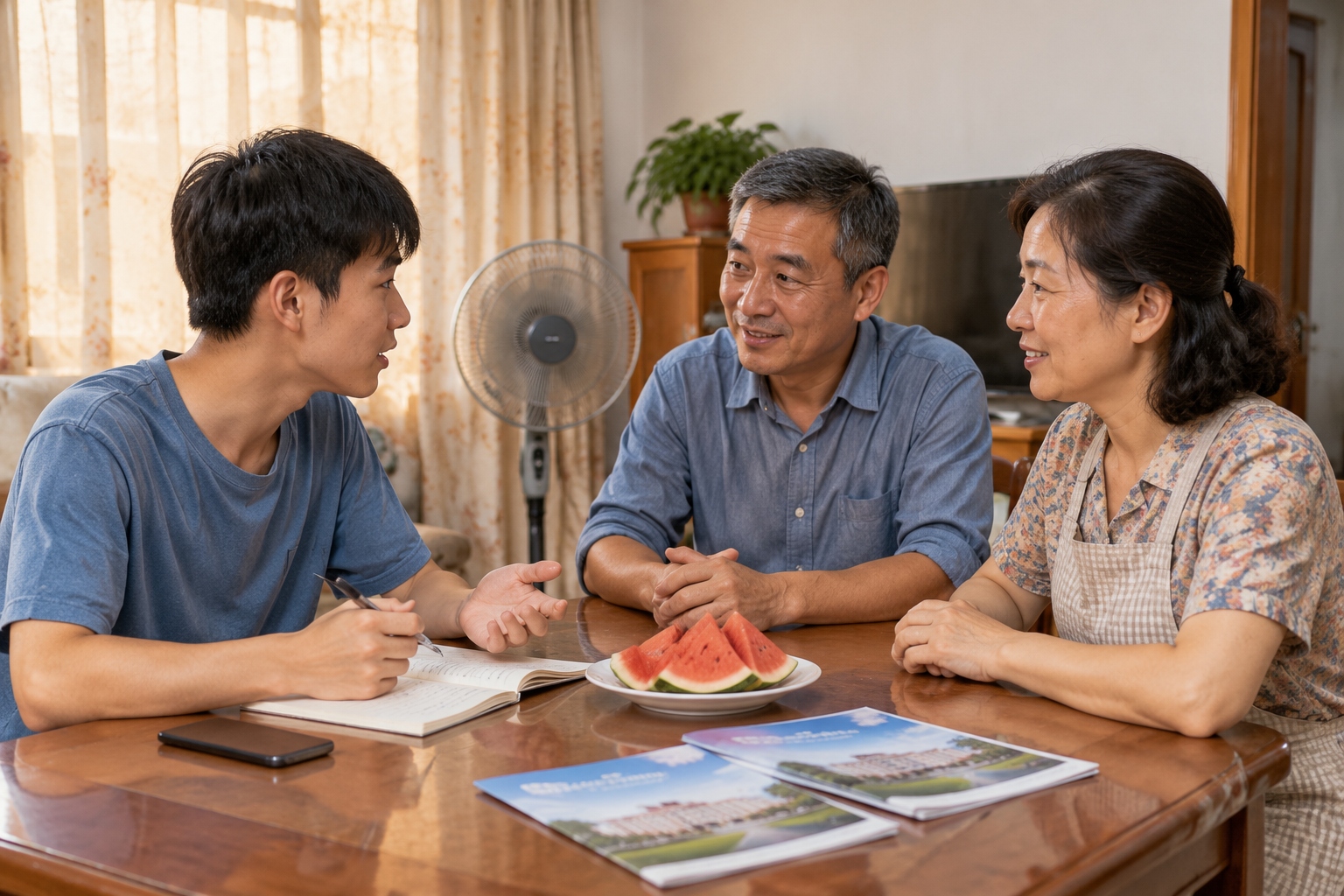
Back home at 3 p.m., the apartment was hot and the fan turned slowly. Chen’s father had come back early. For a while, no one asked the obvious question. His mother cut watermelon. His father checked the refrigerator and said the compressor was making noise again. Then he asked, carefully, “Math was okay?” Chen said, “The last question was strange.” That was enough for the moment. In many Chinese families, the day after the gaokao is a lesson in restraint. Everyone knows the score is already fixed. What remains is the wait.
The talk moved to majors and cities. Chen likes video editing and has thought about digital media, but his father has heard that computer science is safer. His mother prefers teaching or medicine, “stable work.” They discussed tuition in concrete numbers: a public university might cost 5,000 to 8,000 yuan a year, a private one 20,000 or more; a dormitory room around 1,000; living costs in Wuhan or Chengdu maybe 1,500 to 2,000 a month. Then they discussed distance. His mother said Shanghai was too far. His father said the high-speed train made it close. No one opened the application system yet. It was not open. But the family was already rehearsing.
Evening in the Neighborhood: Parks, Basketball, and Square Dancing
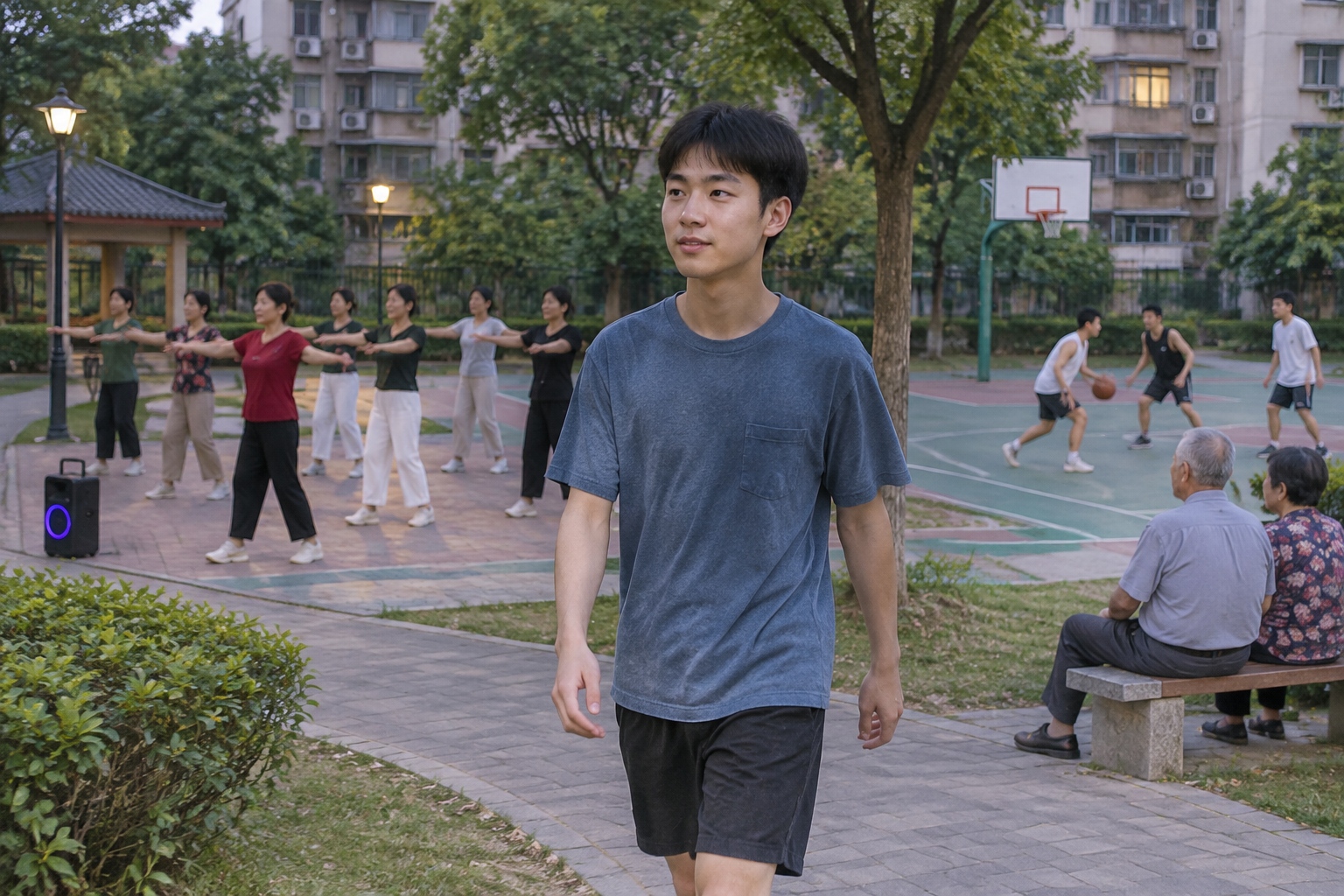
After dinner, Chen went downstairs. The neighborhood park was full. Elderly women danced in two rows to a speaker, not quite in sync. Boys played basketball on a cracked court. A neighbor, Aunt Li, asked Chen how the exam went. He said, “It’s over.” She laughed and said her daughter had cried for two days after hers, then went to Wuhan and now works in Shenzhen. “Don’t worry too much,” she said, which is what people say when they are also worried. Chen walked a lap, then another. The air smelled of cut grass and mosquito coils.
Night: Checking Answers and Estimating Scores
At 9 p.m., Chen sat at his desk with his phone and a notebook. Teachers had posted answer keys in the class group. He checked math first, then English. Some answers matched; some did not. He did not cry or celebrate. He wrote a rough estimate on a corner of the page, crossed it out, and wrote a range instead. In the living room, his mother searched train schedules to Wuhan and Changsha. His father looked at hotel prices near two universities, then closed the app because it was too early. They were not booking anything. They were trying to make the future feel less like a rumor.
Twenty-Four Hours Later: A Station, Not a Finish Line
The next morning, Chen woke at 5:50 without an alarm. Outside, the sky was the same weak-tea color. The gaokao was still over. The score would not arrive for about two weeks. In that gap, the family would eat, work, argue mildly about majors, check their phones, and go to bed. The day after the gaokao is not a dramatic turning point in the movies. It is a station where an ordinary Chinese family stands with too many bags and not yet the right timetable.
What Chen will choose—the city, the major, the summer job, whether to retake the exam if the score disappoints—is still open. That is the real story of the gaokao’s aftermath: not a single number, but a household trying to make a decision with incomplete information. The alarm will ring again soon. For now, it stays silent.
Start the discussion at forum.chinacomes.com