
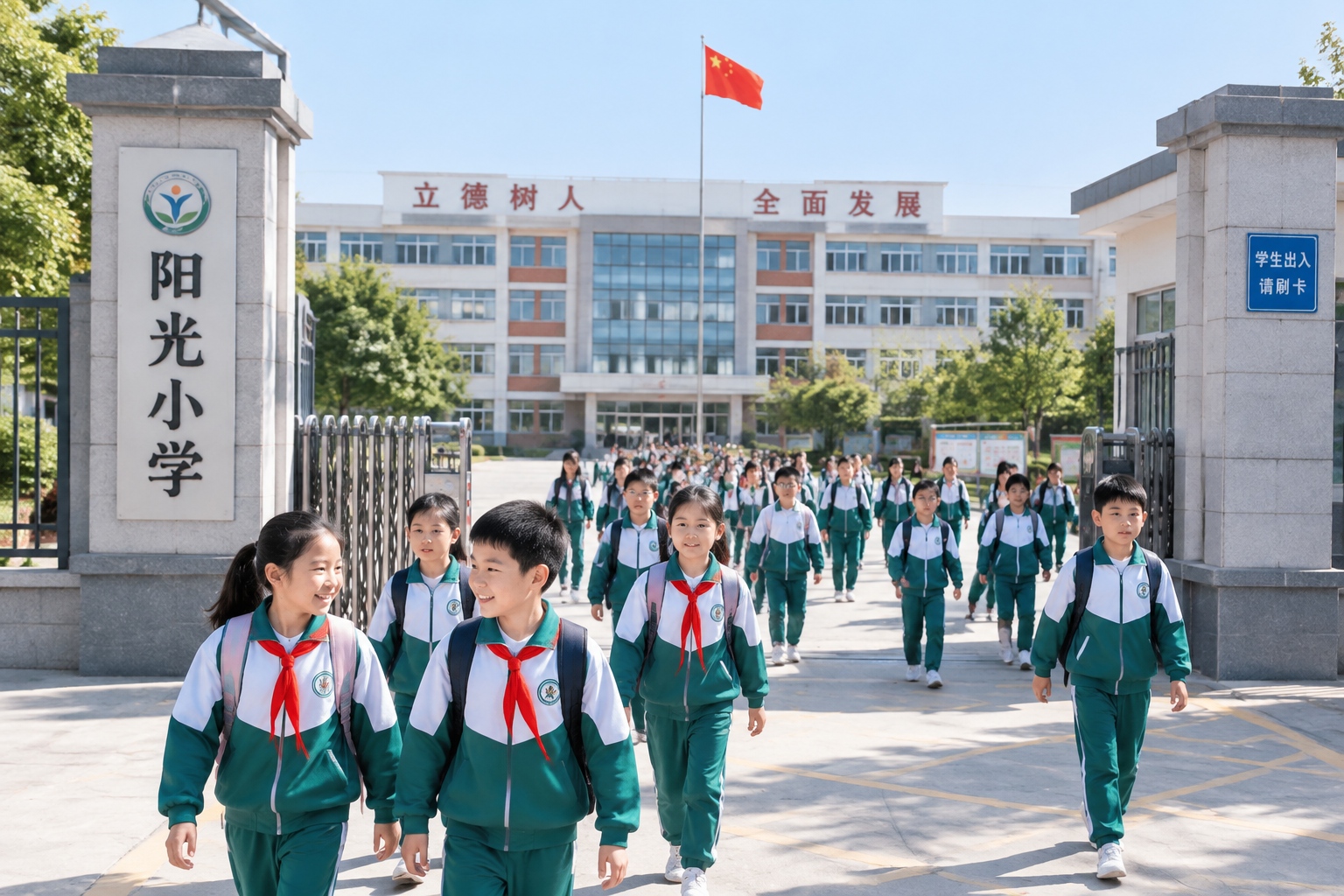

At 7:45 a.m., the school gates in most Chinese cities open and a river of green-and-white tracksuits flows in. One of those students is Lele, a 10-year-old fourth grader. Her backpack is heavy, so she follows a rule learned in first grade: keep the books you don’t need today in your desk to lighten the load. Today she needs all of them, because she has a full day of six classes. That’s the standard number for many Chinese primary schools.
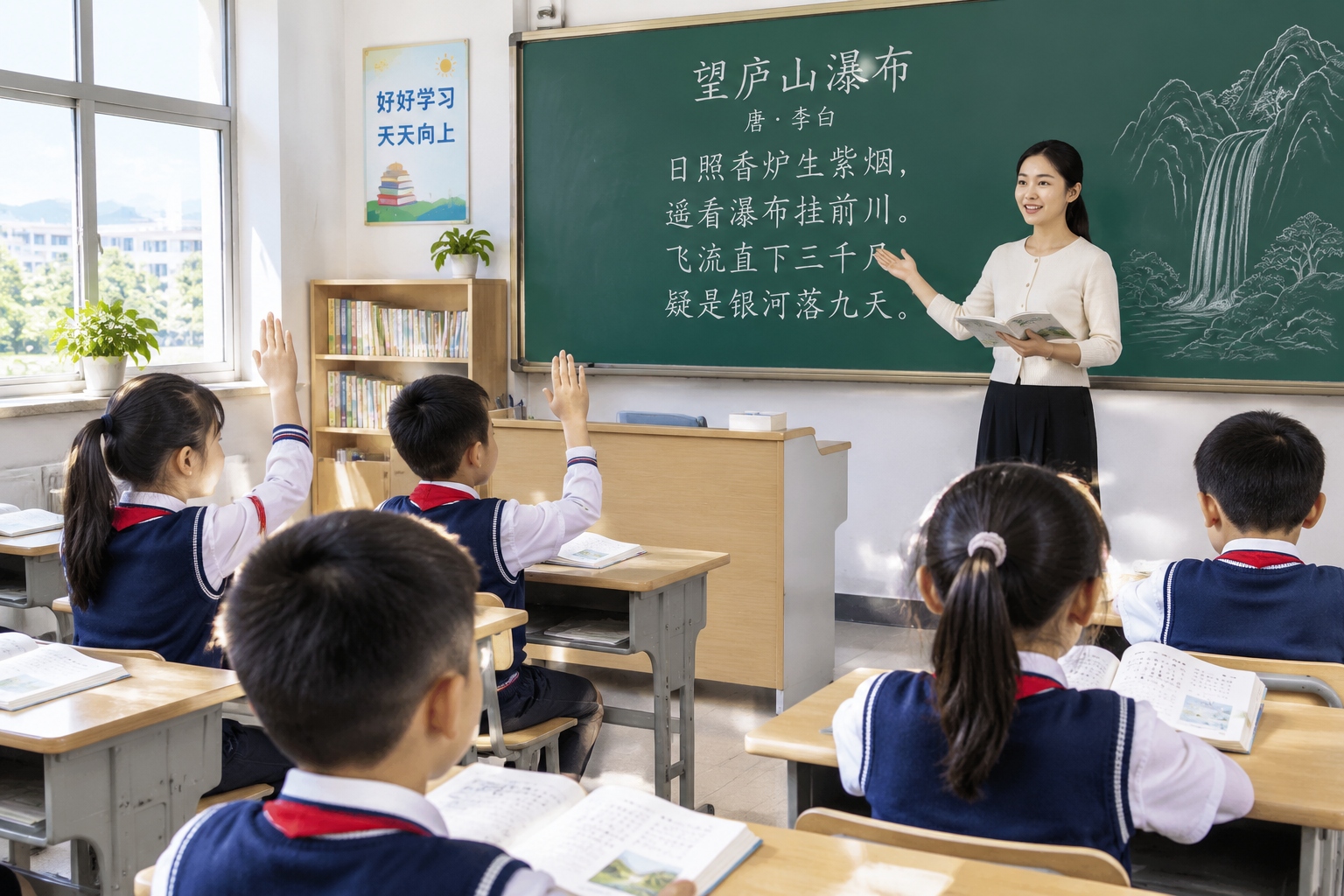
The first bell rings at 8:00. The teacher writes a Tang-dynasty poem on the blackboard in elegant brushstroke. Lele reads it aloud with the class, then copies the characters from memory. Chinese class in China is not just about speaking and grammar—it’s about connecting to a 5,000-year-old writing system and a shared cultural memory.
A Typical Six-Class Day in a Chinese Primary School
Although every region has its own schedule, a grade-four day in a mid-sized city usually looks roughly like this:
- Chinese – classic poetry, new characters, paragraph writing.
- Math – mental arithmetic, word problems, sometimes group challenges.
- English – vocabulary, simple dialogues, phonics songs (from Grade 3).
- Science – hands-on experiments like growing seeds or testing magnets.
- Morality and Law – discussions about honesty, safety, and social responsibility.
- PE, Music, or Art – these rotate; today it’s PE.
That’s only the frame. Most schools also squeeze in a morning broadcast exercise session, two rounds of eye exercises, a lunch break, and often a short afternoon nap.
The Big Three: Chinese, Math, and English
Chinese and mathematics are the undisputed giants of the curriculum. In grades one and two, kids spend nearly half of school time on these two subjects. Math stresses speed and precision—multiplication tables are drilled until they’re automatic, like pronouncing your own name. Chinese covers grammar, poetry, classical stories, and essay writing. By grade four, students are expected to write a short story or a descriptive paragraph on their own.
English jumps in from Grade 3 in most public schools, although urban kids often start earlier at private classes. English class is interactive—role-playing, singing, and repeating after the teacher. The focus is less on perfect grammar and more on everyday words and survival phrases.
Because these three subjects determine exam results, they also shape homework. In 2021, China’s “Double Reduction” policy (双减) limited written homework to about one hour for primary-school kids and banned for-profit tutoring in core subjects. Lele’s homework is now lighter than what her older brother endured. Yet many families still seek out private tutors or online materials to gain an edge, especially before big exams.
More Than Just Academics: PE and the Arts
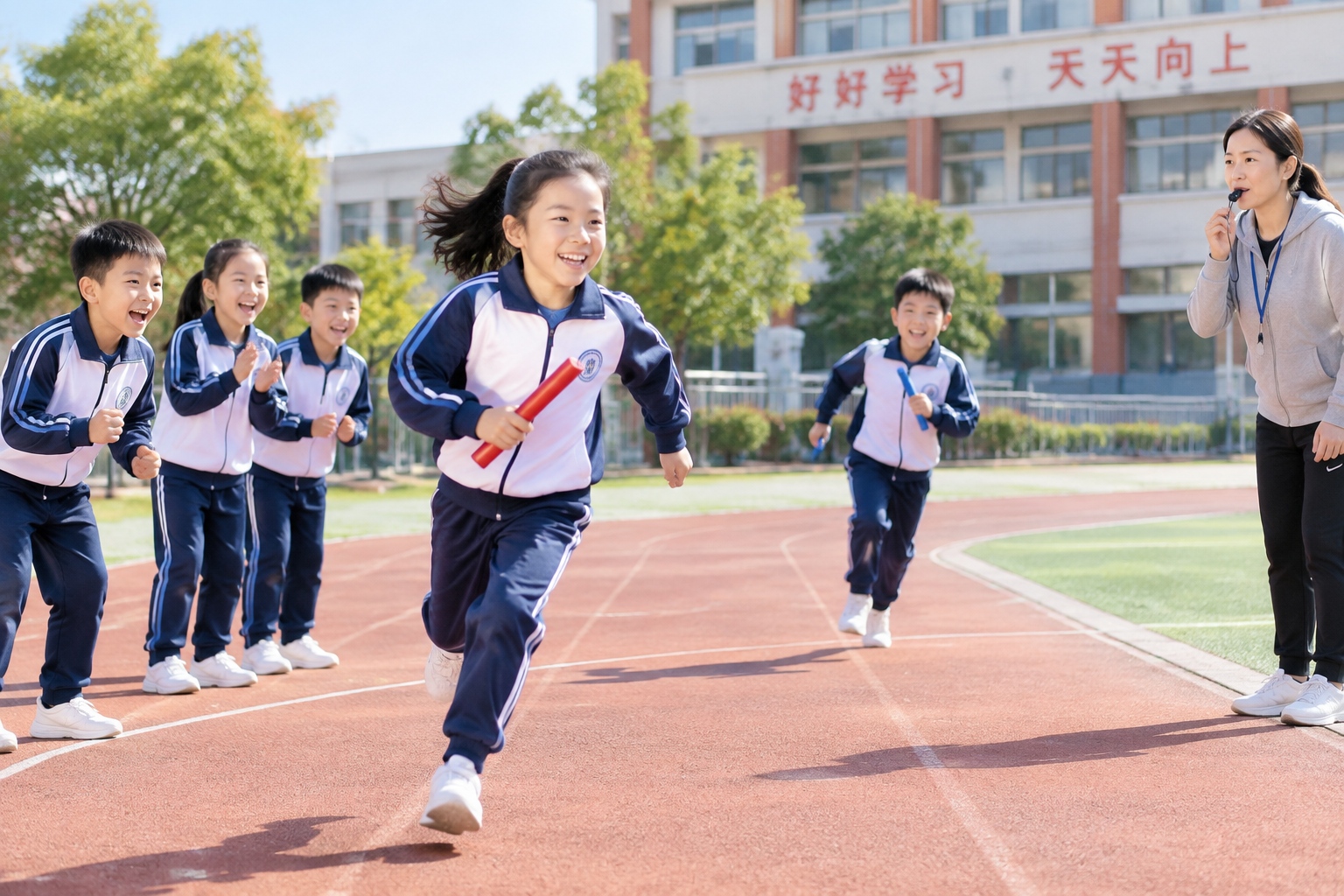
The afternoon is where the timetable softens. China’s Ministry of Education requires at least one hour of physical activity at school daily, so PE holds real weight. Lele’s PE class begins with jogging and high-knee drills, then a relay race. Some schools teach martial arts or jump rope—activities that need almost no equipment. Music and art classes appear several times a week, giving kids a chance to sing folk songs, paint, or practice paper cutting.
One subject that often surprises outsiders is 道德与法治 (“Morality and Law”). Think of it as civics mixed with everyday ethics. Students talk about being honest with friends, helping older neighbors, obeying traffic rules, and respecting public property. It’s not about memorizing legal clauses; it’s about how to behave in society.
Between Lessons: Recess, Lunch and “Napping Tables”
Outside the timetable, the school day has its own rhythm. Between classes are 10-minute breaks when kids chat, play hand games, or rush to the restroom. Twice a day, a recorded voice leads two rounds of eye exercises—massaging pressure points around the eyes to prevent fatigue. It feels strange to many foreigners, but for Chinese kids it’s as normal as brushing teeth in the morning.
At lunch, students eat either in a large cafeteria or right at their desks. Some schools have introduced foldable desks that turn into inclined beds for a post-lunch nap, a real luxury for growing bodies. After lunch, the afternoon classes begin, usually at 1:30 or 2:00 p.m.
Official lessons end around 3:30 p.m., but that’s not the end of the day for many children. Under the government-backed “after-school services” policy (课后服务), public schools now offer extended-hours programs until 5 or 6 p.m. These include homework guidance, library reading, and clubs like basketball, calligraphy, and even simple coding. A decade ago, most kids in cities would have headed straight to a private tutoring center instead.
Why the Chinese School Timetable Looks Like This
The six-lesson day mirrors what China’s education system has long valued: discipline, shared cultural knowledge, and strong academic fundamentals. For decades, intense competition for high school and university places pushed Chinese families into an exam-centered routine. The curriculum was built to give every child the same foundation—whether in a mountain village or a coastal megacity.
But change is underway. The “Double Reduction” policy is not perfect: some parents worry their children are losing an competitive edge, while wealthier families quietly hire private tutors. There are also big regional differences. A rural school may still run with just five classes a day and one teacher covering multiple subjects, while an elite private school in Beijing might offer robotics and theater. Yet the direction is clear—the timetable is becoming a bit less heavy, and slowly more colorful.
What Kids Really Think
After school, Lele sits on a bench outside the gate, drawing in a notebook. I ask her what she thinks of her school day. “It’s fun,” she says, “because I see my friends every day. But math is hard.” Her mother, tying her shoelaces, adds: “The schedule is good, but the day is long. I hope she still has time to be a kid.”
That sums up the real feeling of the Chinese school day. It’s rigorous and demanding, yet it also brings structure, shared memories, and a sense of belonging. For a 10-year-old, it’s simply “life.” For an outside observer, this timetable is a window into modern China—its ambitions, its constraints, and its slow but real evolution.
Start the discussion at forum.chinacomes.com