

The first question is not about the diagnosis
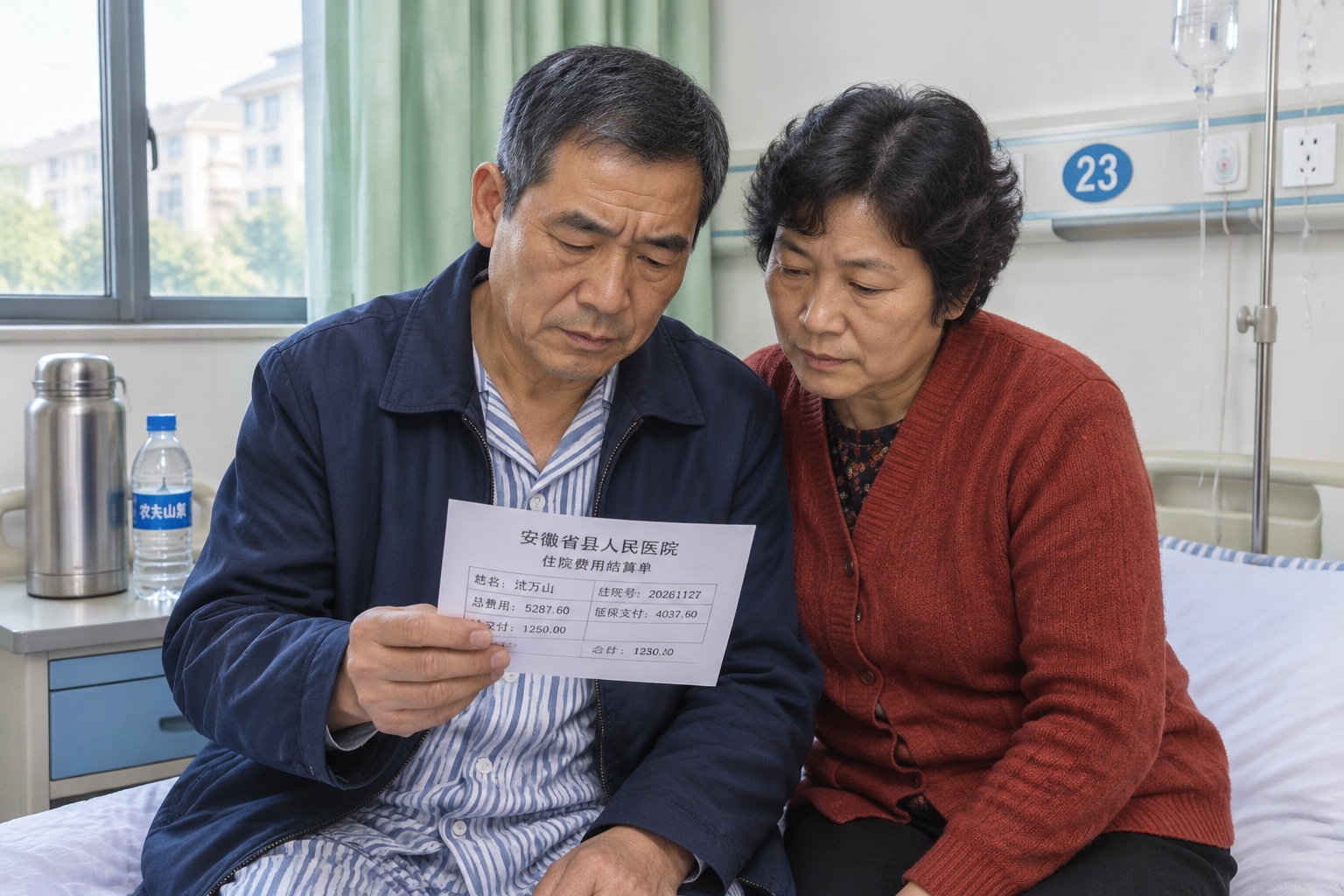
The corridor of the county hospital in Fuyang, Anhui, was crowded with folding beds and thermos flasks when Chen Jianhua got his gastroscopy results last spring. He was 56, a wiry man who had spent most of his adult life driving a small truck and doing construction work on the side. The doctor said the words carefully: stomach cancer, operable, but chemotherapy first.
Chen did not ask how long he had. He asked how much it would cost.
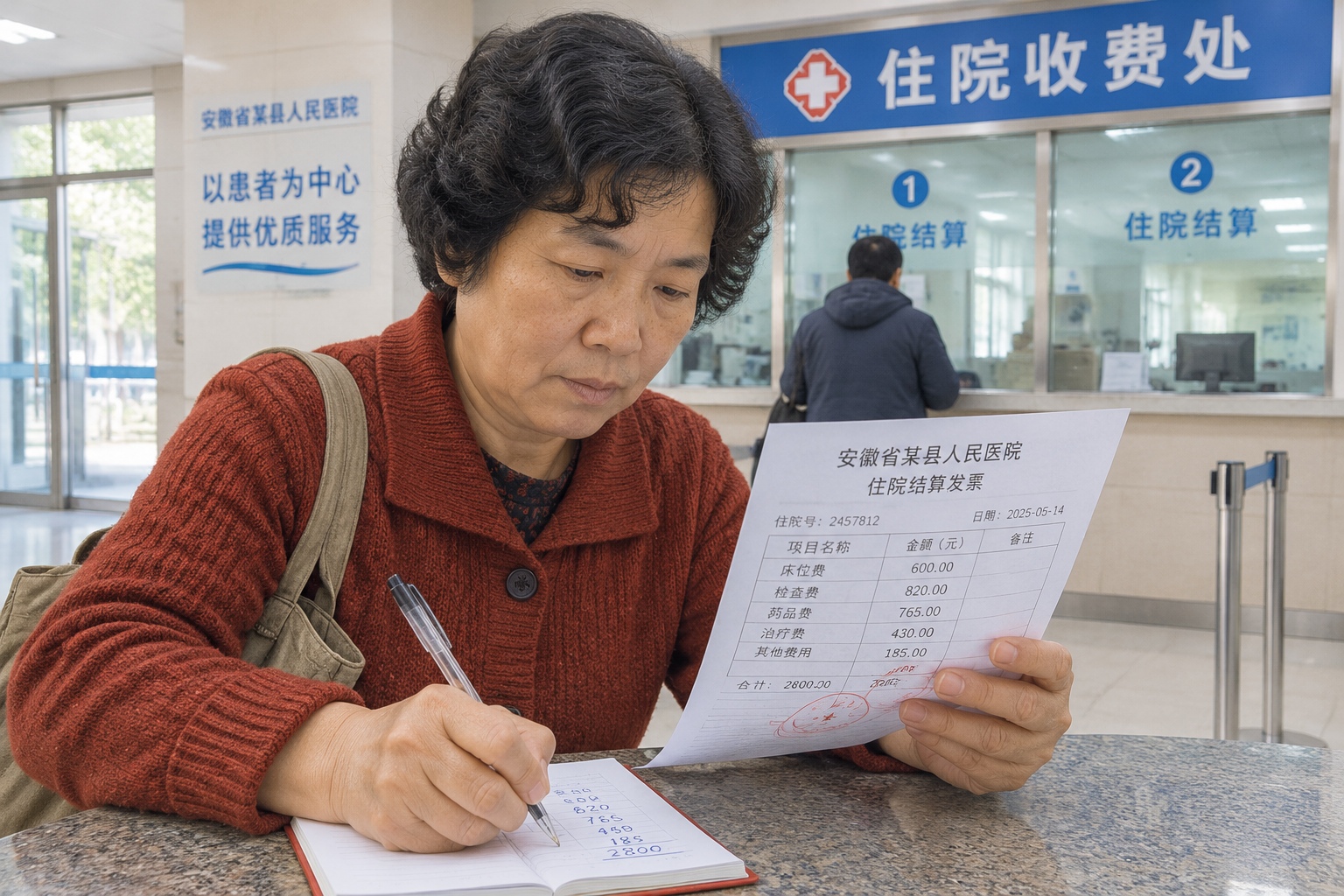
His wife, Wang Meiying, still keeps the notebook. It is a cheap school exercise book with a red plastic cover, and the first page is dated the day of the diagnosis. Down the left side she wrote the numbers she was given at the billing window: total estimated cost, deposit required before surgery, how much could be reimbursed, how much could not. The deposit alone was 30,000 yuan, roughly a year of the household’s disposable income.
Six months later, the final settlement slip told a different story from the one they had feared. The total bill came to about 186,000 yuan. Basic medical insurance paid roughly 98,000. Big-illness insurance, which kicks in automatically once a family’s own spending passes a threshold, paid another 24,000. The Chens paid around 64,000 out of their own pocket — about a third of the bill — plus perhaps 18,000 in train fares, cheap hotel rooms near the hospital, and the months Chen could not work.
That is not free healthcare. It is something more modest and, for a family like this one, more consequential: the difference between a bad year and a collapse.
How medical insurance in China actually works: three layers, one card
The system is easier to understand as a stack than as a single programme.
The base layer is basic medical insurance, and it comes in two flavours. Employee medical insurance covers people in formal jobs — roughly 370 million of them — funded by about 2% of salary from the worker and 6-8% from the employer. Resident medical insurance covers everyone else: children, farmers, freelancers, retirees who were never formally employed, around 960 million people. It is not free. In 2024 the individual premium was 400 yuan a year, with government subsidies of about 670 yuan per person on top. Together the two schemes cover about 1.33 billion people, or roughly 95% of the population.
The second layer is big-illness insurance (大病保险, literally “seriously ill insurance”). Nobody pays a separate premium for it; it is carved out of the basic insurance fund. Once the amount a patient pays within the reimbursable catalogue passes a threshold — usually set at about half the local average disposable income, somewhere between 10,000 and 15,000 yuan — this layer reimburses roughly 60% of everything above that line. It is the reason a 186,000-yuan bill did not end the Chen family.
The third layer is medical assistance, a means-tested safety net for households officially registered as very poor, on minimum subsistence support, or at risk of sliding back into poverty. It can pay part of what remains, and it is deliberately not advertised as universal.
All of it lives on one card — a social security card, or its QR code in a phone app — and that matters more than it sounds. In practice, the patient at the billing window is not navigating three bureaucracies. They are being asked to pay one number.
A family ledger, and the decisions it forces
Wang’s notebook is not only a record of money. It is a record of choices.
Page four lists two surgical options: the county hospital, or a provincial cancer centre in Hefei, three hours away. The county hospital could do the operation. The provincial centre had more experience with her husband’s particular case. The reimbursement maths tilted toward home: the deductible at the county hospital was a few hundred yuan, with 80% or so of eligible costs reimbursed; at a provincial tertiary hospital it would have been over 1,500 yuan, with 60-65% reimbursed. Treatment away from home also meant rent, food and a companion who was not working.
They stayed. Chen had surgery in June, six rounds of chemotherapy into the autumn, and a follow-up scan in December that came back clean.
The money that was not spent on hospital bills went somewhere equally ordinary. The family had planned to renovate the second floor of their house last year — new windows, a proper bathroom. They didn’t. Their son, 27, had been saving toward a flat in the city where he works; he put 30,000 yuan into his parents’ account instead and told them not to mention it again.
That is what a serious illness does to a household, even one that is insured: it rearranges the next five years.
Less money up front, less running around
Three hundred kilometres east, Liu Fang’s experience of the same disease was shaped by two changes that get less attention than they deserve.
Liu is 34, from a village near Nanchong in Sichuan, and has worked on an electronics assembly line in Suzhou, Jiangsu, for eleven years. She was diagnosed with breast cancer at 33, in a city where she has no household registration and, technically, no local insurance. Her coverage is resident medical insurance back in her home county.
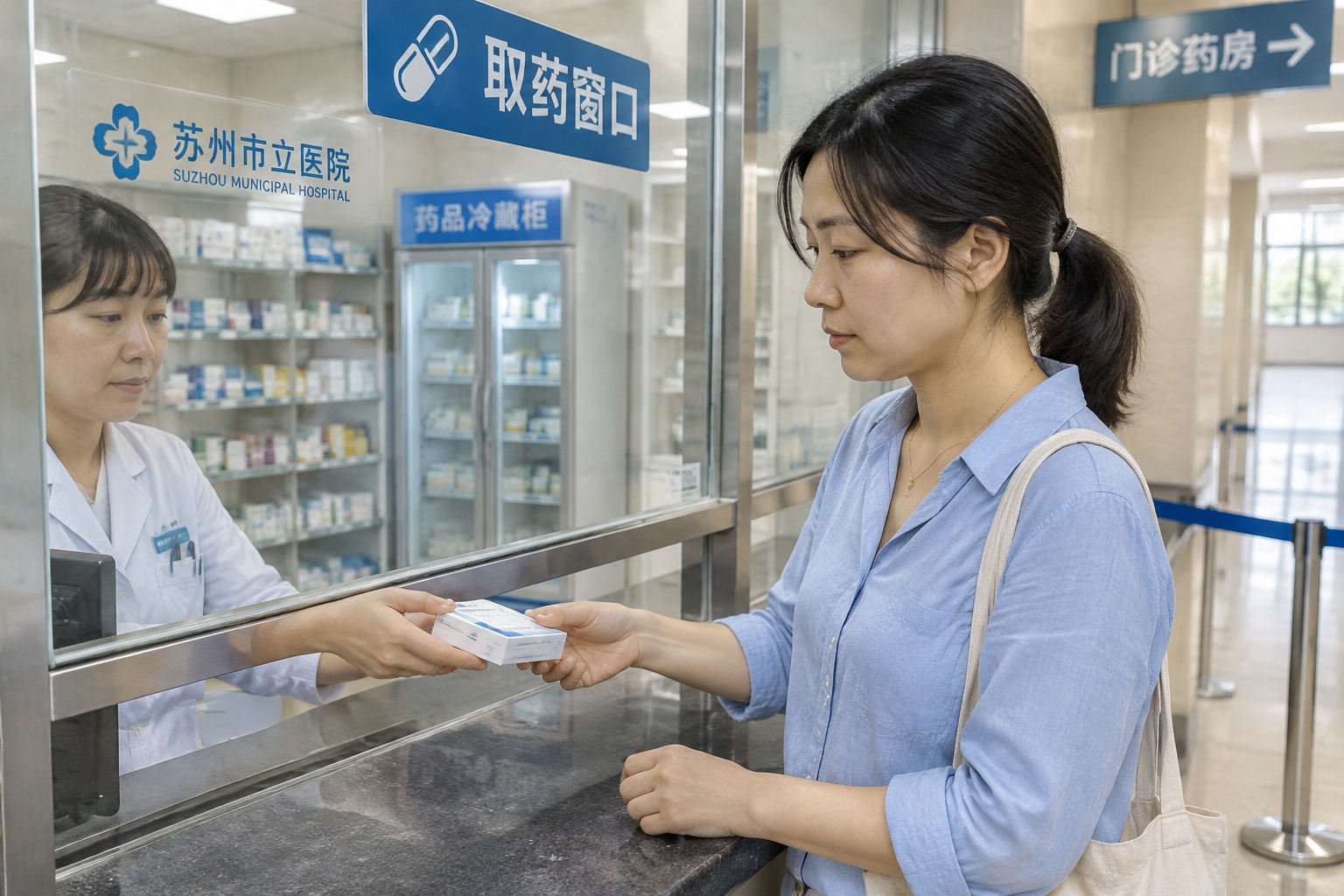
Fifteen years ago that combination meant paying the full bill in Suzhou, collecting stamped receipts, and going home to claim reimbursement months later — if the paperwork survived. Instead, Liu registered her cross-province treatment on a phone app in about ten minutes, and at discharge the hospital settled directly with the Sichuan insurance fund. Her bill of roughly 92,000 yuan was reduced to about 31,000 at the window. She never had to find the difference up front.
The second change is price. Liu’s treatment includes trastuzumab, a targeted drug that cost around 24,000 yuan per vial in China a decade ago. After government price negotiations brought it into the national reimbursement list and biosimilars entered the market, the list price fell by more than two-thirds, and her own share after reimbursement dropped to a few hundred yuan per dose. She keeps the receipts in a plastic folder and can tell you the exact trajectory.
The most quoted example of this is imatinib, the leukaemia drug, which fell from roughly 23,000 yuan a month to a few hundred after generic versions were bought in bulk by a government procurement scheme in 2018. It has become the standard anecdote for a reason: patients remember prices the way other people remember birthdays.
Where you are treated now shapes what you pay
Chen and Liu both ended up in hospitals close to home, and that is not an accident.
China’s reimbursement rules are deliberately tilted toward lower-level hospitals. Deductibles rise and reimbursement rates fall as you move from a county hospital to a city one to a big-city tertiary centre. The policy goal, in the jargon of the health ministry, is “graded diagnosis and treatment” — a polite way of saying the system is trying to stop everyone from queueing at the same famous hospitals in Beijing and Shanghai for problems a county doctor can handle. Village clinics and community health centres are meant to catch the routine cases; county hospitals the complicated but manageable ones.
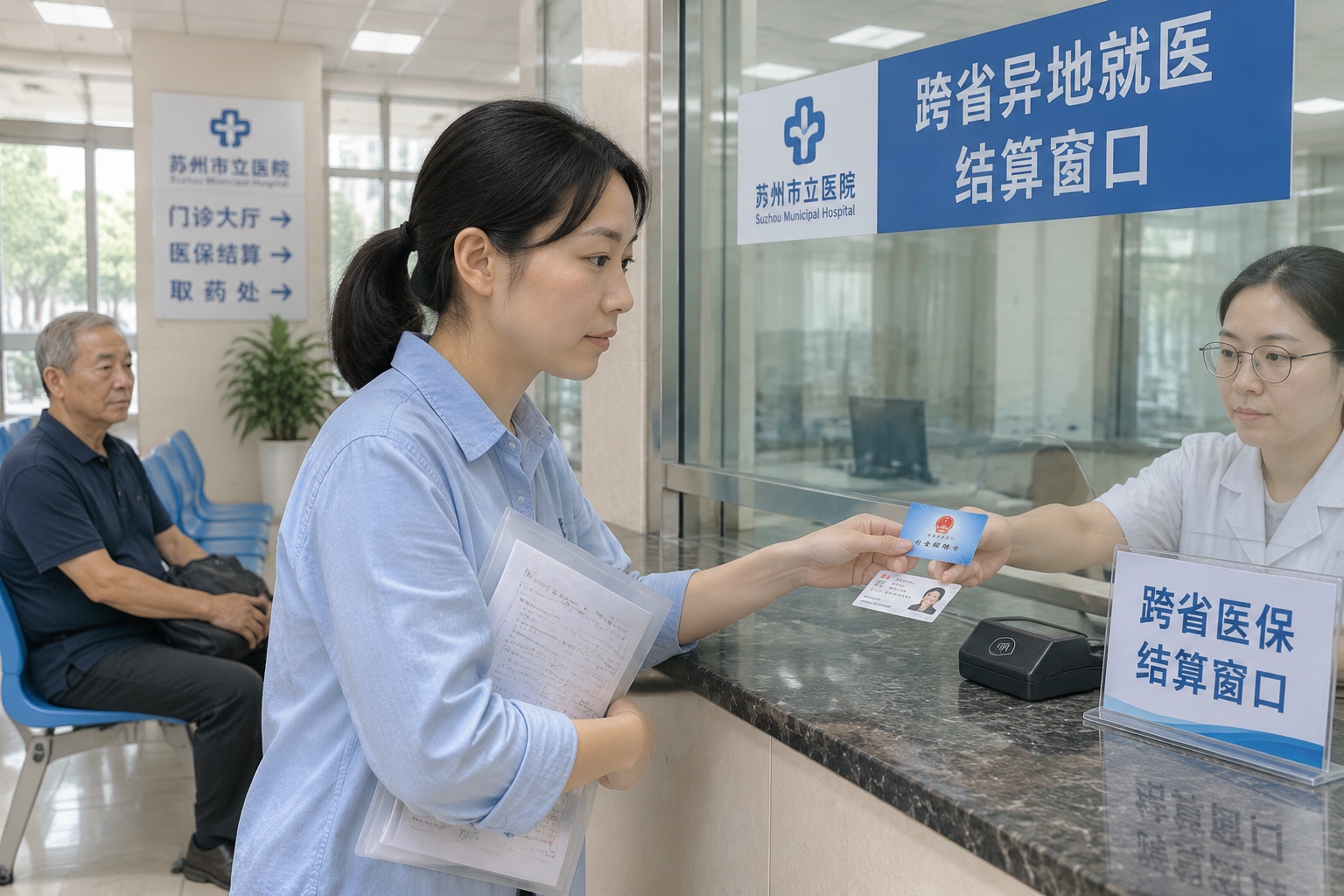
The financing side has changed too. Over the past few years, most hospitals have moved to paying by diagnosis group — DRG or DIP — rather than by item. Instead of billing for every test and every day of bed rest, the hospital receives a fixed sum for a given condition, and keeps or loses the difference. Supporters point to shorter stays and fewer unnecessary scans. Critics point to a subtler effect: hospitals may become reluctant to use expensive drugs or accept complex patients. To soften that, regulators created a “dual channel” rule letting patients buy price-negotiated medicines at designated pharmacies outside the hospital and still get reimbursed.
When insurance isn’t enough: medical assistance and its limits
For the poorest households, the big-illness layer becomes more generous. People registered as receiving minimum subsistence support get a lower threshold, a reimbursement rate about five percentage points higher, and no ceiling. Above that sits medical assistance, which can cover part of the leftover bill, and in some provinces pays for the hospital deposit itself.
Then there is everything else: hospital-based charity funds, corporate programmes, and crowdfunding platforms such as Waterdrop, which have become a familiar part of the landscape — the link forwarded in WeChat groups, the school classmate you haven’t spoken to in years. These work, unevenly. Whether a family raises 200,000 yuan depends on how well they can tell their story and how wide their network reaches. It is not a right, and everyone involved knows it.
What the system still doesn’t cover
Say this plainly: a serious illness in China is still expensive, and the insurance does not make it painless.
Drugs outside the reimbursement list are paid in full. The national list has grown to around 3,160 Western and Chinese medicines after annual negotiations, and each year brings new cancer drugs in — but new drugs arrive at new prices, and patients frequently ask for the imported original rather than a domestic equivalent.
Nursing is a bigger hidden cost than most outsiders expect. A hospital attendant in a ward costs 200-300 yuan a day in many cities, and families hire one because wards assume a relative will be present. None of that is reimbursable.
Then there is the cost that never appears on a bill: lost income. Wang stopped working for eight months. Chen’s truck sat idle. For a self-employed household, that is often the largest number in the notebook.
Cross-province direct settlement works well for hospitalisation and is patchier for outpatient care and pharmacy purchases, so migrant workers still occasionally pay first and claim later. And the 400-yuan premium, small as it looks abroad, is real money for a rural family of five — around 2,000 yuan a year. Some young, healthy people quietly decline to pay, which worries the people who run the pool.
What it means to be caught
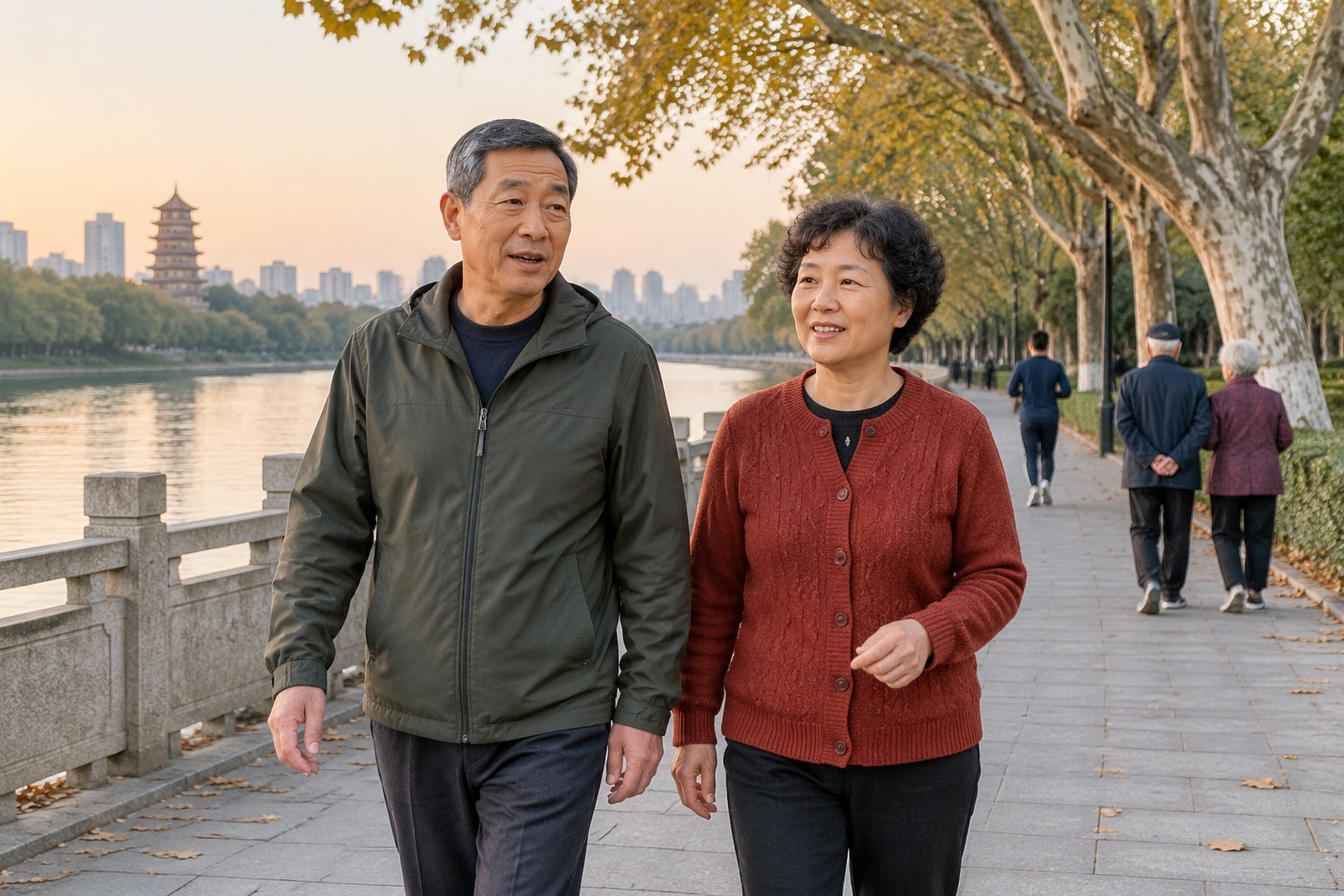
Chen is back doing light haulage jobs, three or four days a week. In the evenings, he walks a loop along the river with Wang, about forty minutes, slower than he used to. He goes for a check-up every three months. His hair grew back greyer.
Their debts are not gone, but they are manageable, and there is a plan for them. That, more than any statistic, is what “caught” means here. Not that illness became free. That a family with 80,000 yuan in savings and a truck on credit did not have to choose between a father’s treatment and a son’s future — and that the arithmetic of a bad year stayed inside the realm of arithmetic, instead of turning into a freefall.
A country’s health insurance system is judged in corridors like that one in Fuyang, on a weekday morning, by a woman holding a notebook and asking the clerk to repeat the number slowly.
Start the discussion at forum.chinacomes.com