
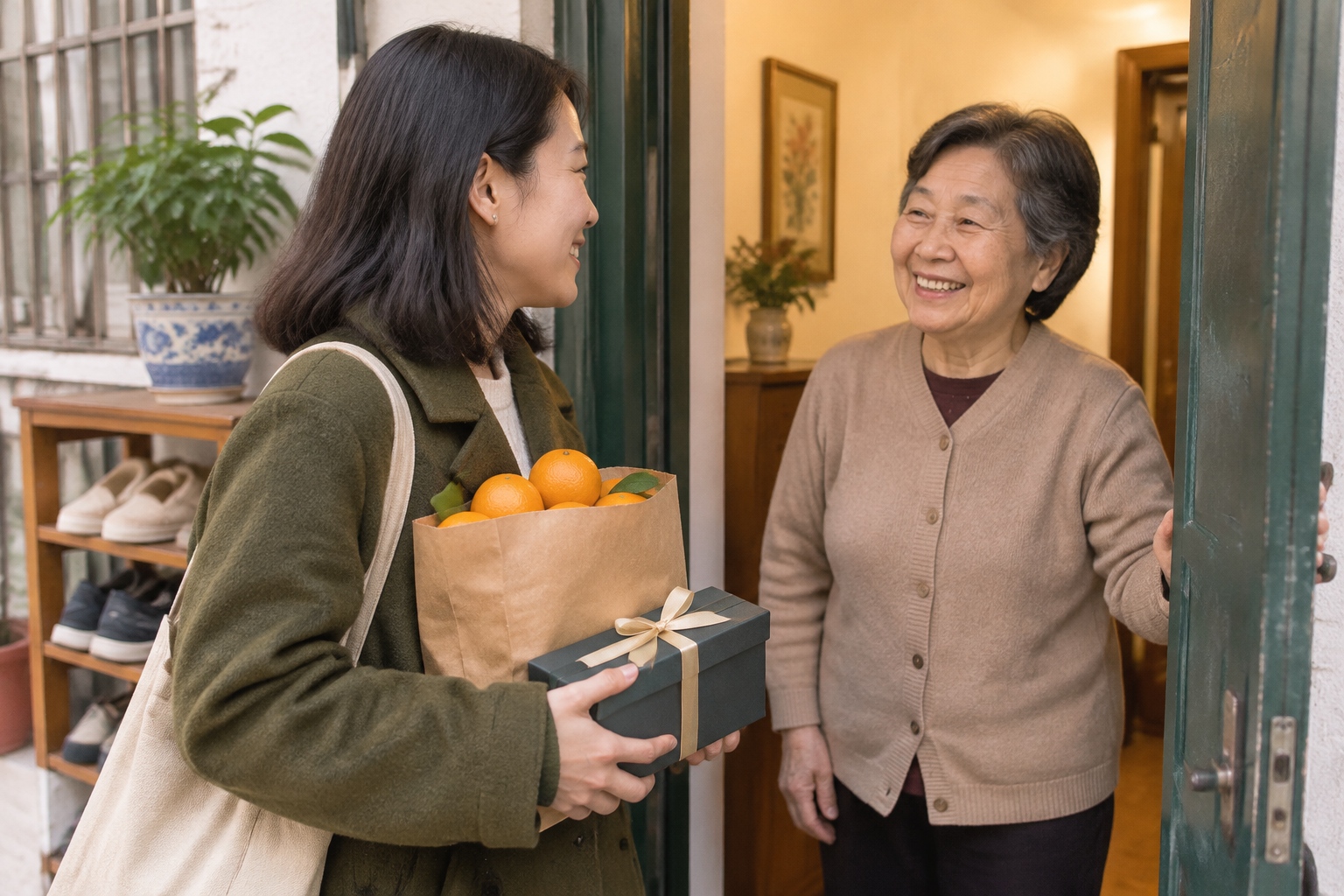

At the Door with a Bag of Oranges
Last December, on a damp Saturday evening in Shanghai, I stood outside a friend’s apartment with a paper bag of oranges and a small box of tea. I had walked through her neighborhood many times. I had never been inside her home. The corridor smelled of soy sauce, laundry, and the faint citrus of someone else’s cleaning spray. I suddenly felt foolish about the bag in my hand. Was it too much? Too little? What was the correct way to give a gift in China?
She opened the door before I knocked. “你来啦!” Then she saw the bag. “哎呀,你来就来,还带什么东西!”
I knew this line. It is not a rejection. It is the sound of a doorway being made polite.
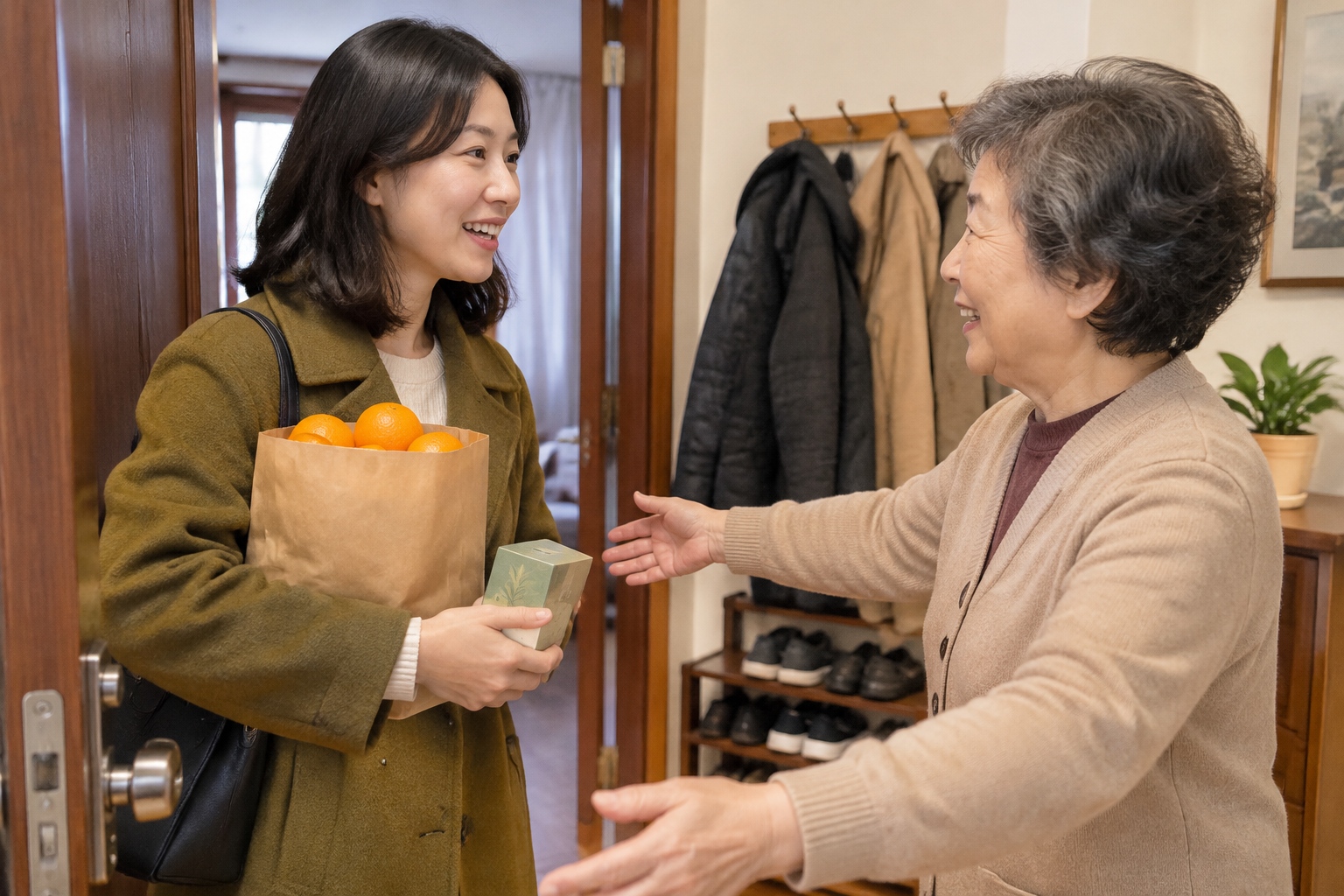
What happened in the next ten minutes taught me more than any list of rules. The gift was not the point. The point was helping both of us get through the doorway without either person feeling awkward.
First visit: fruit, tea, or something from home
If you are invited to a Chinese home for the first time, bring something edible and easy to share. Fruit is the safest choice. A bag of good seasonal oranges, grapes, or cherries works for almost any household. Skip the giant luxury fruit basket unless you are visiting a business contact or a very formal family occasion. It can make the host feel they have to reciprocate at the same level.
Tea is also a good first-visit gift if you know the person drinks tea. You do not need to buy the most expensive leaves. A small tin of something clean and drinkable is enough. If you are from another region or country, a local food item with a story can be better than a standard gift box: coffee from Yunnan, dried mushrooms from your home province, a small bag of pastries your family actually eats. The story matters. “This is from my hometown” gives the host something to ask about.
The best first-visit gift is one the host can put on the table without reorganizing the kitchen. Avoid live animals, enormous plants, and food that requires immediate special handling. If you are flying, check customs rules before bringing meat, dairy, or seeds.
Some traditional no-gos still circulate: clocks, knives, umbrellas, and pears, especially with older relatives. A clock can sound like the end of life, a knife can suggest cutting a relationship, and an umbrella can sound like separation. Younger urban friends may laugh at these rules. A grandparent may not. If you are unsure, ask a Chinese friend who knows the family.
Festival gifts: red and gold do a lot of social work
During Mid-Autumn Festival and Spring Festival, gift packaging in China becomes a landscape of red and gold. Supermarkets build walls of mooncake boxes, tea tins, nuts, fruit, and liquor. The colors are not just decoration. They signal that this object is meant to be given, not eaten alone on the bus.
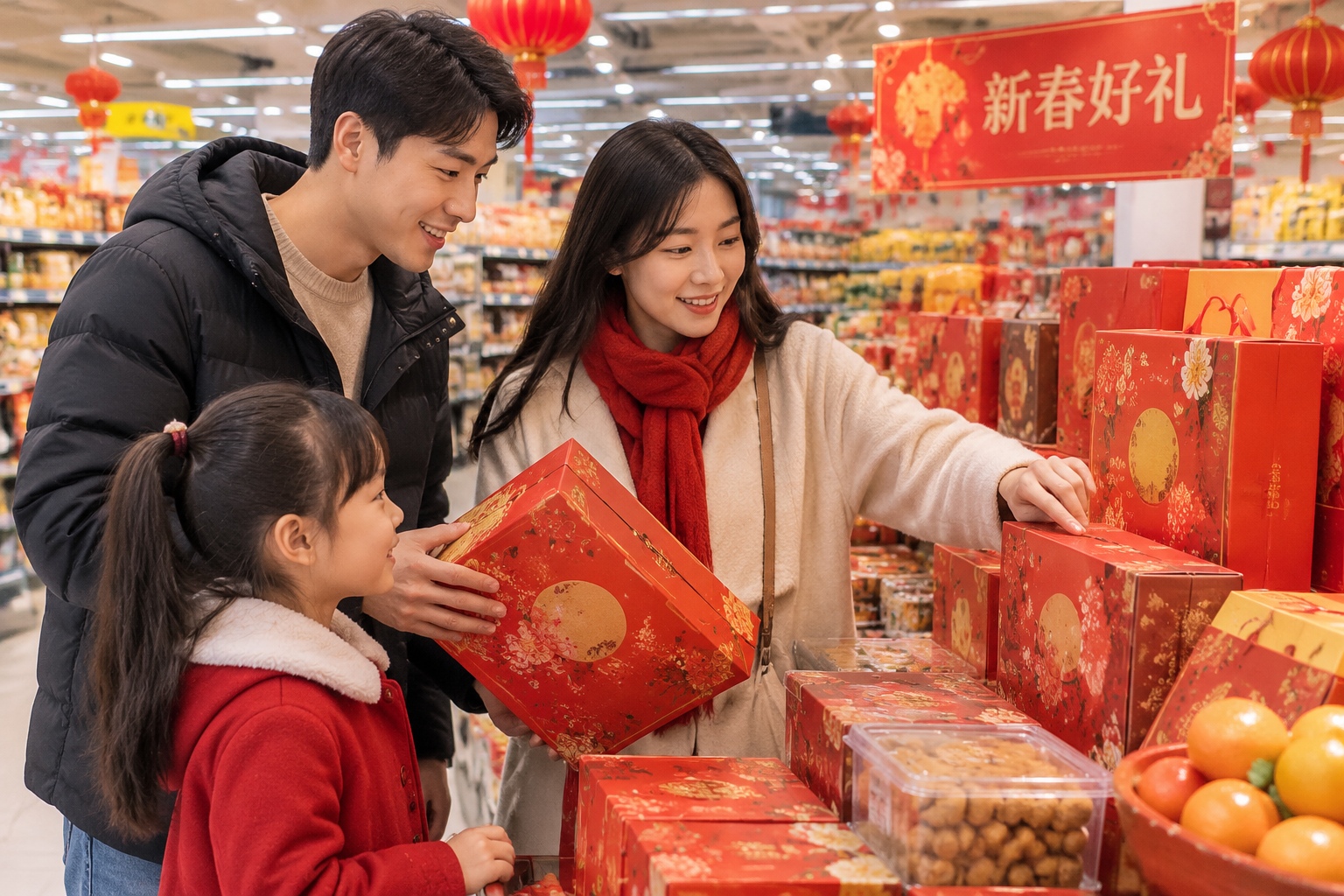
When you are invited to a family meal during a festival, a box of fruit and a box of tea are rarely wrong. If the family drinks, a bottle of liquor may be welcome, but do not assume. If there are children, a small red envelope is common at Spring Festival, but cash between adults can feel different: it can turn a friendly visit into a transaction. For a normal dinner, a consumable gift is usually warmer than cash.
Pay attention to what is inside the packaging. A beautiful box with eight tiny mooncakes and a lot of cardboard is a classic disappointment. Check expiration dates. If you are bringing food, ask whether anyone has allergies or does not drink alcohol. A gift that ignores the household is not generous; it is just expensive.
The two-handed handover
When you give the gift, use both hands, especially to someone older. A slight nod is enough. You do not need a speech. A short phrase works better than a long one:
“一点心意,您别嫌弃。” — “Just a small token, I hope you don’t mind.”
“给您尝尝鲜。” — “Something for you to try.”
“路上顺手买的。” — “I picked it up on the way.” This last one is useful. It lowers the pressure. Even if you spent a week choosing the tea, you do not need to announce the effort at the door.
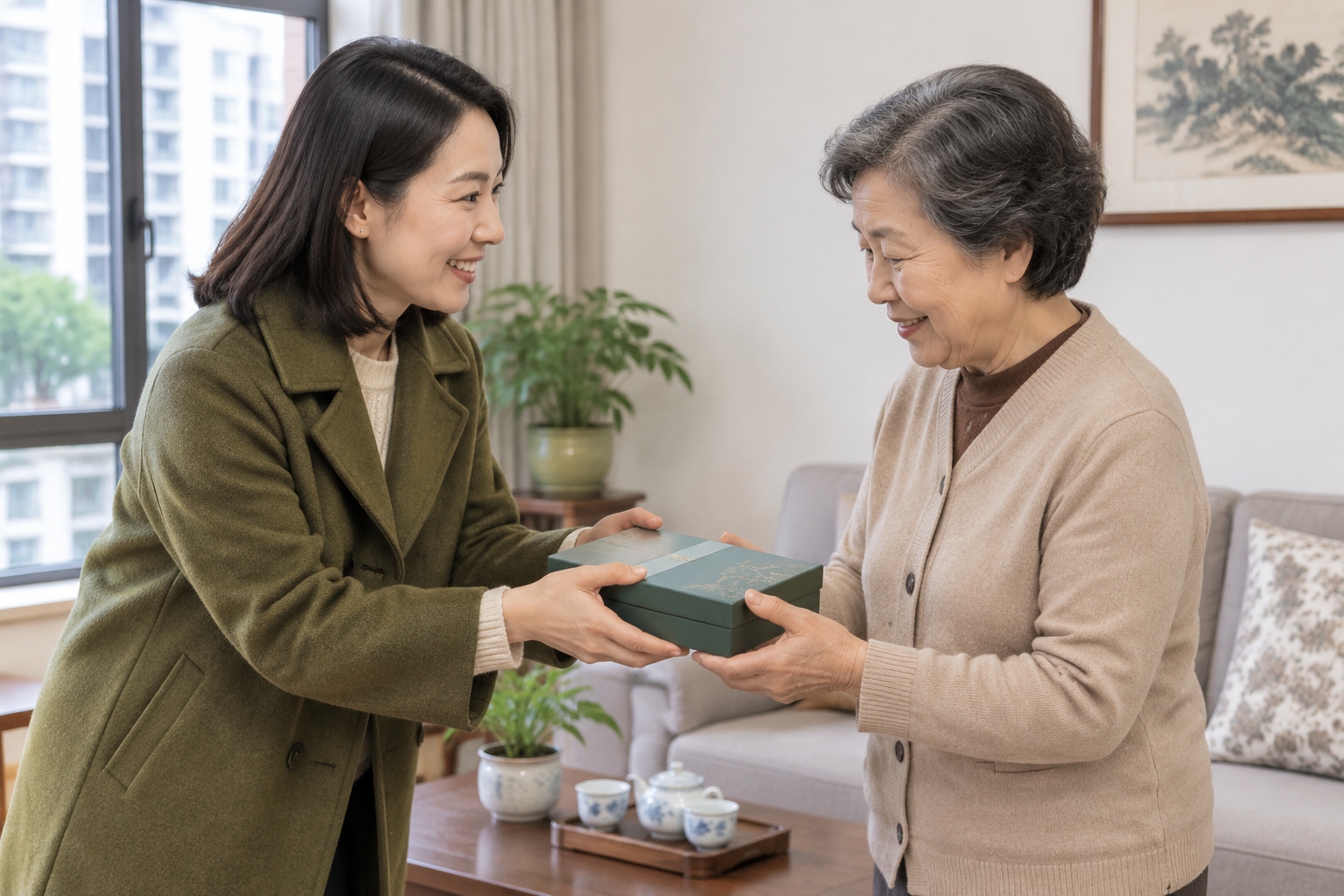
If you are wearing shoes, ask whether to take them off. Do not thrust the bag into the host’s chest. Do not put it on the floor. Hand it over, or set it on a table when invited. If the host is busy in the kitchen, place it somewhere clean and say, “我放这儿了。” — “I’ll leave it here.”
When the host says no—and when they mean it
Chinese hosts often make a small polite protest. It is a courtesy, not a negotiation. The first “no” usually means “you are too polite.” The correct response is to smile, say something modest, and let the gift settle.
Host: “哎呀,你来就来,还带什么东西!”
You: “就是一点水果,给您尝尝。”
Then put the bag on the table or near the door. Do not argue. Do not say, “This is nothing” three times. The moment passes quickly if you let it.
But there is a second kind of no. It is quieter and more physical. The host pushes the box back, says “这个太贵重了,真不能收,” and does not smile away the moment. That is not a ritual. That is a real refusal. Maybe the gift is too expensive. Maybe the family has a rule about accepting certain things. Maybe you have misread the relationship.
Host: “这个太贵重了,我真的不能收。”
You: “我明白了,那我带回去。下次带点您能收的。”
Then take it back. Do not leave it on the table and run. Do not hide it in the bathroom. The goal is not to win the exchange. The goal is to keep the relationship easy.
The gift may sit unopened—and that is not a snub
In many Chinese homes, the host will take the gift, thank you, and put it aside. They may not open it in front of you. This can feel strange if you are used to the immediate unwrapping of birthdays and Christmas. It is usually not coldness. Opening a gift right away can make the moment feel too focused on the object, or make the host seem greedy. The thanks may come later, in a message: “昨天的水果很甜,谢谢你想着我们。”
Among close friends and younger people, the rules loosen. A friend may open the box before you take off your coat. “快看看是什么!” If it is food, they may put it on the coffee table and everyone starts eating. If it is tea, they may brew it. If it is fruit, they may wash it and cut it. That is a good sign: the gift has become part of the evening, not a trophy on a shelf.
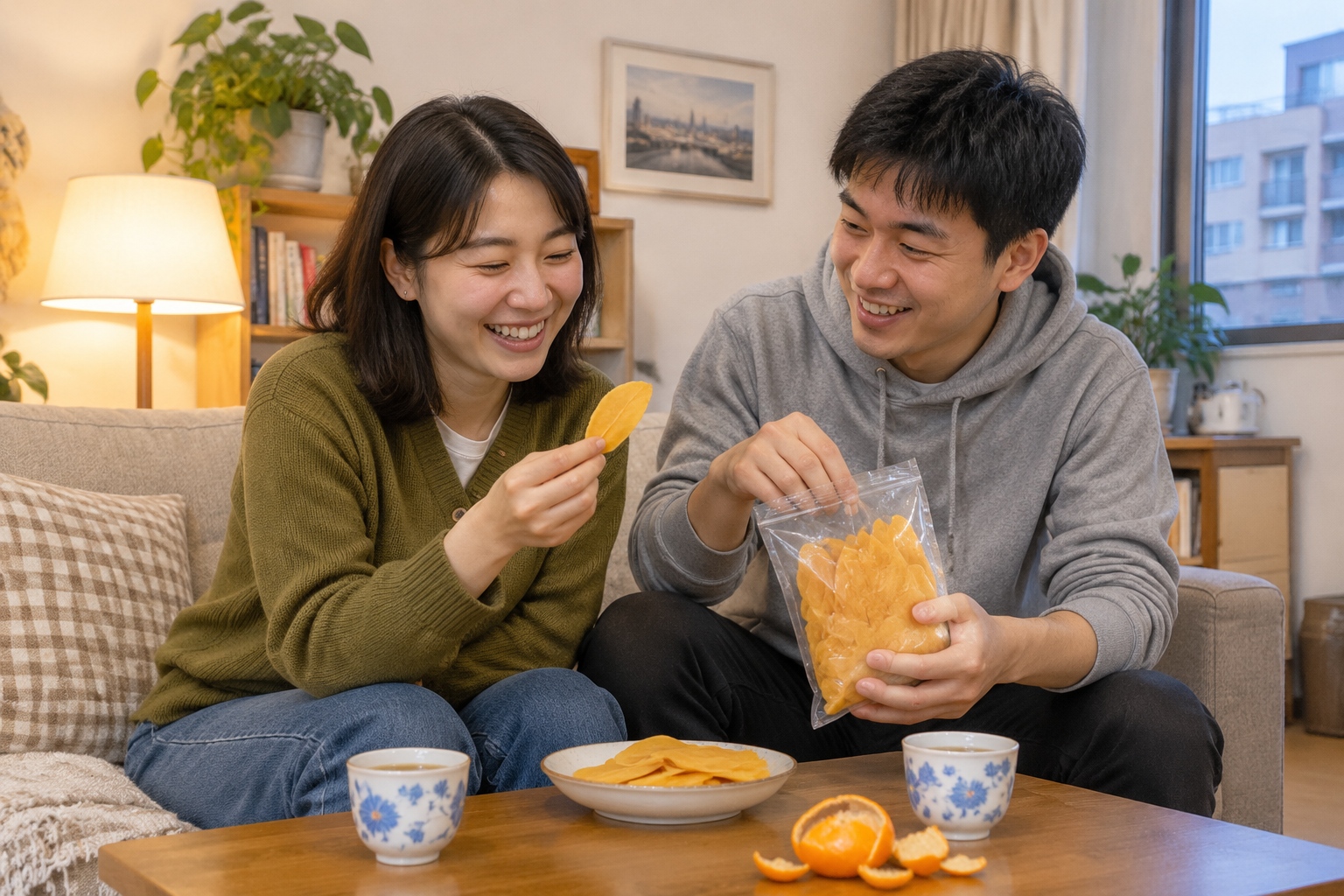
Do not ask the host to open it. If they do, react simply. “尝尝看,不合适下次换。” — “Try it. If it’s not right, we’ll get something different next time.”
A few quiet rules that make it easier
Bring something the host can use or share. A gift that creates work is not a gift. A giant bouquet, a live fish, or a complicated dessert can be lovely, but they also demand a vase, a tank, or a refrigerator shelf.
Match the size of the gift to the relationship. A first visit to a colleague’s home does not need champagne. A close friend’s new apartment does not need a ceremony. If you are staying overnight, bring something for the household: good coffee, fruit, a box of pastries for breakfast.
Send a short thank-you message the next day. It does not need to be formal. “昨天谢谢你们的晚饭,水果记得放冰箱。” — “Thanks for dinner yesterday. Remember to put the fruit in the fridge.” This small follow-up matters more than the price tag.
And remember that China is not one etiquette. A family in Shanghai, a grandmother in Sichuan, and a group of friends in Shenzhen may handle the same moment differently. Watch the host. Ask if you are close enough. The right gift is not the most expensive one. It is the one that makes the doorway easier to cross.
The oranges on the table
That December evening, my friend took the bag, said “你太客气了,” and put the oranges in a bowl by the window. She did not open the tea. We ate hot pot, talked about her mother’s recent hospital visit, and watched a drama with the sound too low. Near the end of the night, she cut two oranges and put them on the table. “挺甜的,” she said. “下次别带东西了。”
I knew she did not entirely mean it. Or maybe she did. Either way, the gift had done its job. It had given us something to do at the door, and then it disappeared into the evening.
Start the discussion at forum.chinacomes.com