
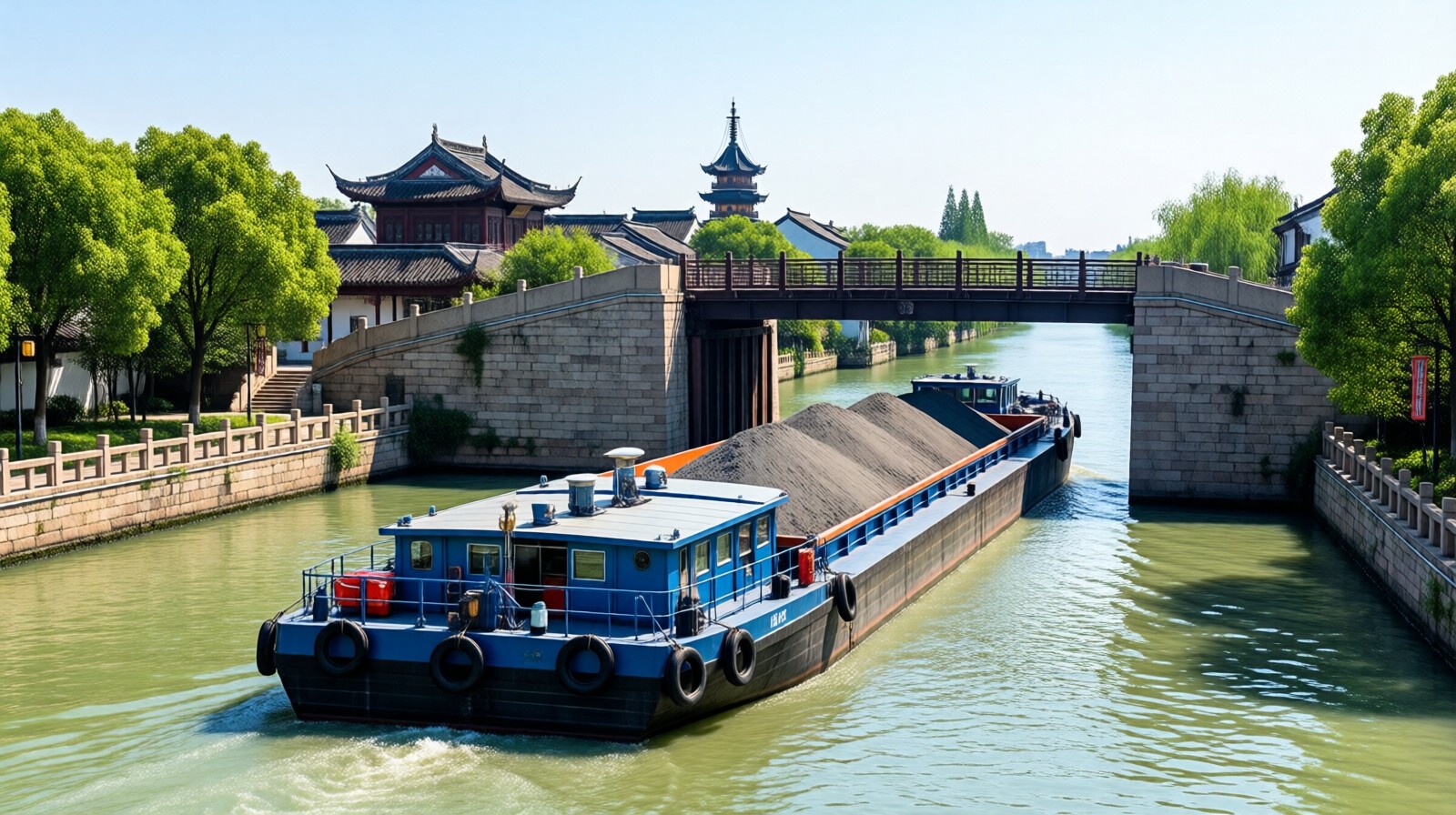

A Canal That Never Became a Relic
When most people think of UNESCO World Heritage sites, they imagine ancient ruins frozen in time — the pyramids of Giza, the Colosseum in Rome, or the Great Wall of China. These are monuments to past glories, carefully preserved but no longer serving their original purpose. The Grand Canal of China breaks that mold. Built over more than 2,500 years and stretching 1,794 kilometers from Beijing in the north to Hangzhou in the south, it is the world’s longest artificial waterway. It was listed as a World Heritage site in 2014, but unlike nearly every other site, it never stopped working.
Every day, some 200,000 tons of cargo travel along its main section south of the Yangtze River. Barges carry coal, construction materials, grain, and containers, connecting the industrial heart of the Yangtze River Delta with inland cities. In 2023, the canal handled over 800 million metric tons of freight — more than the combined cargo volume of many major European waterways. This is not a relic; it is a transport artery still pulsing with life.
Freight and Flow: The Canal as a Working Waterway
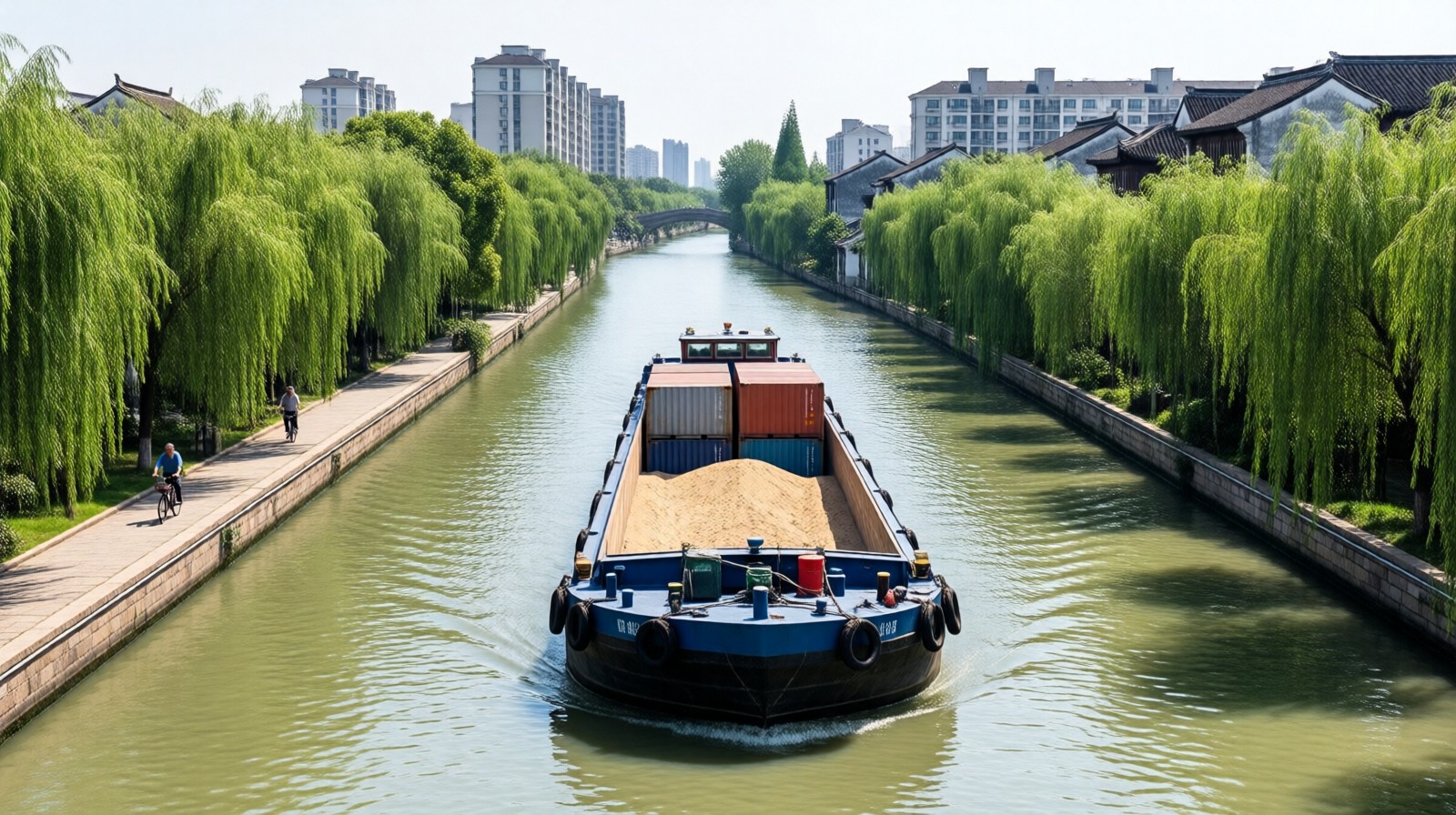
The busiest stretch of the Grand Canal runs through Jiangsu Province, where the waterway is wide and deep enough for 1,000-ton vessels. Here, the canal is part of a dense network of rivers and lakes. A boat captain we spoke with, who has been plying these waters for 20 years, described the canal as “a liquid highway.” He hauls sand and gravel from the mountains near Xuzhou to construction sites in Suzhou, a journey of about 400 kilometers that takes four days. Toll stations dot the canal, just like on expressways, and digital lock systems manage traffic around the clock.
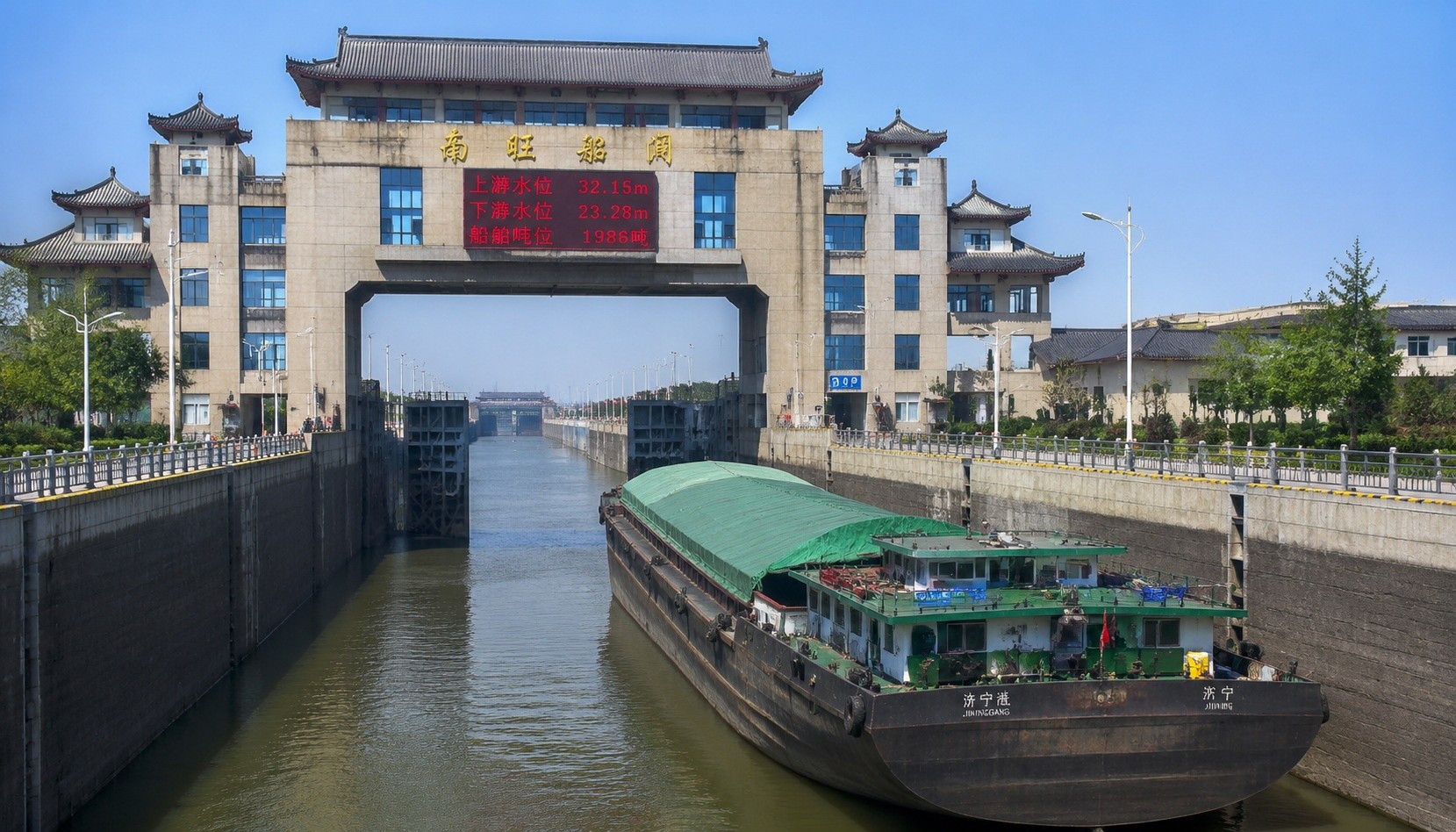
This freight function is not accidental. The Chinese government has invested billions of yuan in recent years to deepen and widen key sections, install modern locks, and remove bottlenecks. The goal: to shift more cargo from trucks and trains to water, reducing carbon emissions. According to the Ministry of Transport, the canal’s freight volume has grown by an average of 8% annually over the past decade. Today, it carries roughly 10% of China’s domestic water freight.
More Than a Trade Route: Water Supply and Ecology
The Grand Canal is not just a transport corridor; it is also a critical water diversion and supply system. In 2002, China launched the South-to-North Water Diversion Project, the largest such scheme in the world. The eastern route of this project relies entirely on the existing canal bed. Pumps lift water from the Yangtze River up 65 meters over 1,156 kilometers to reach dry northern cities like Tianjin and Dezhou. By 2023, the eastern route had transferred 13.8 billion cubic meters of water, benefiting 40 million people.
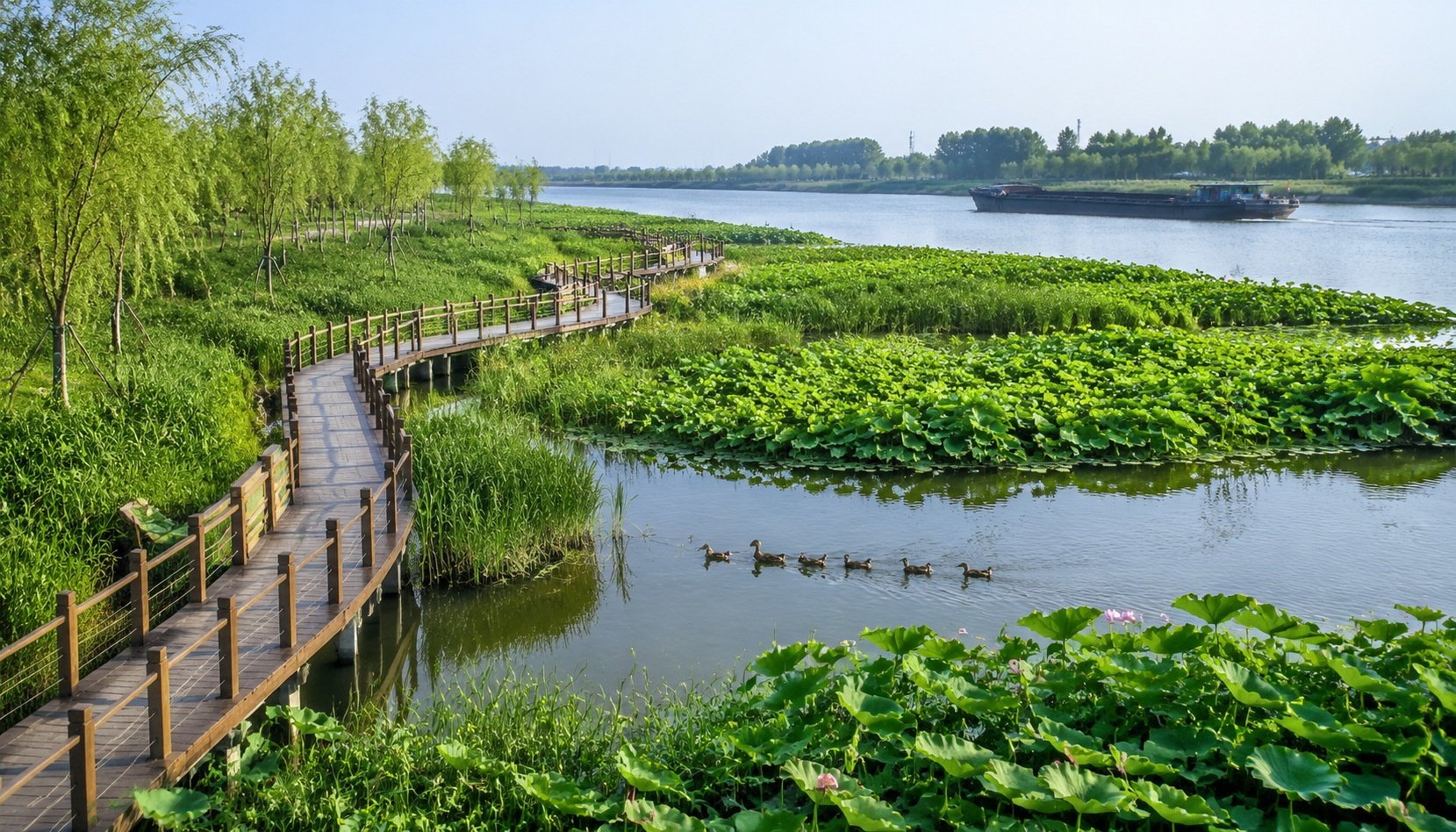
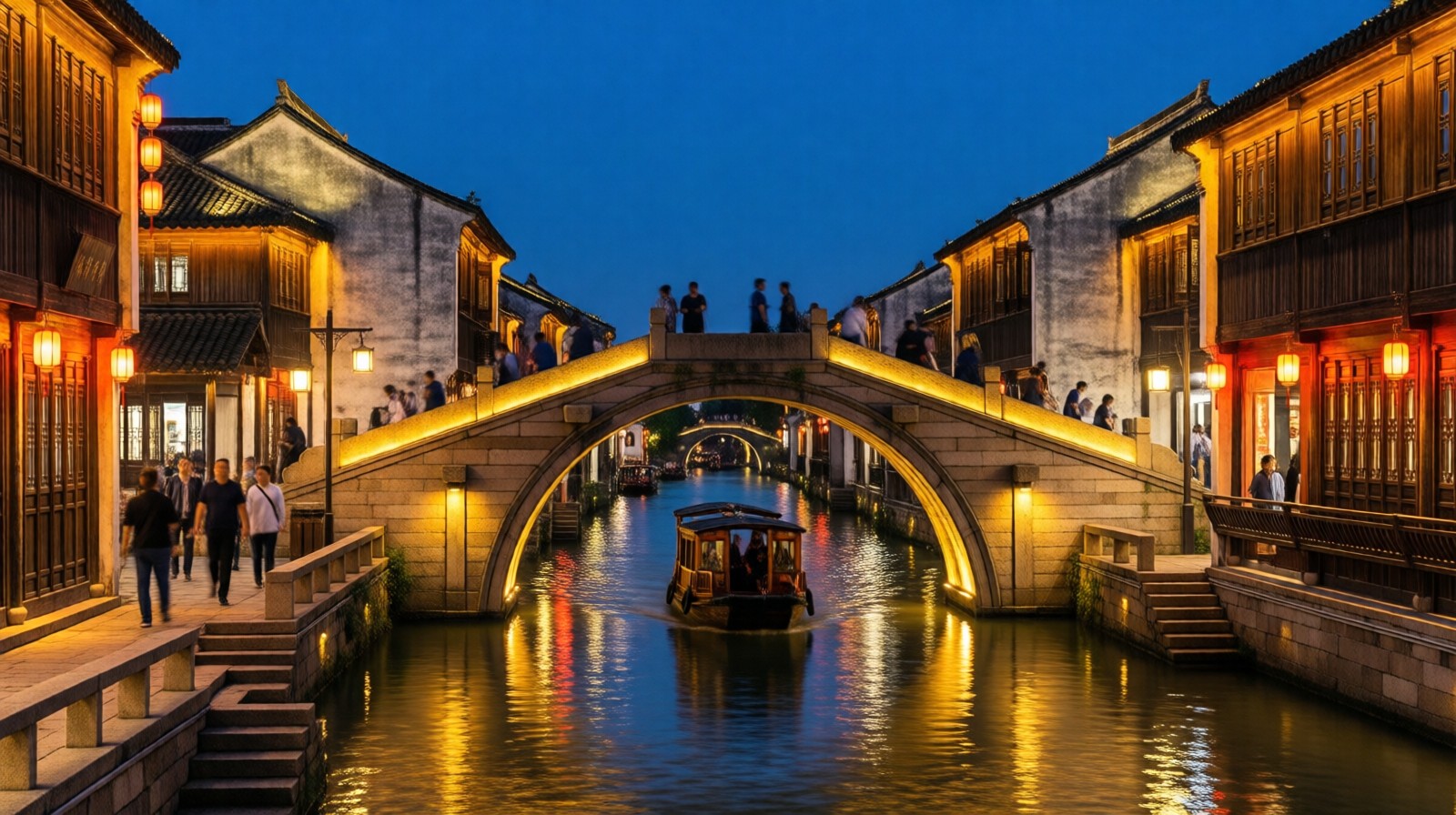
The canal also serves as an ecological corridor. A decade of bank restoration and wetland creation has transformed its edges into ribbons of green. In 2022, a survey found 85 species of fish and 150 species of birds along the Jiangsu section, including the rare Oriental stork. Walking or cycling on the towpath that follows the canal has become a weekend ritual for many urban residents. In Suzhou, the canal’s historic stone bridges and pagodas are illuminated at night, drawing both tourists and locals.
Living Heritage: Protection Through Use
Conventional wisdom holds that to protect a heritage site, you must freeze it in time. The Grand Canal challenges that idea. China’s State Administration of Cultural Heritage has adopted a strategy of “dynamic preservation” — the canal is conserved not by stopping its use, but by managing the balance between modern demands and historical integrity. Repair work on ancient locks and bridges uses traditional materials and techniques, while new infrastructure like modern locks and bridges are designed to blend with the landscape.
This approach has attracted international attention. In 2019, experts from the International Council on Monuments and Sites (ICOMOS) praised China’s efforts to keep the canal alive, noting that “the continuity of function is the best form of conservation.” The canal’s management master plan, updated in 2022, explicitly states that the canal must remain navigable, ecologically healthy, and culturally vibrant.
Lessons for Global Heritage Conservation
The Grand Canal offers a blueprint for other living heritage sites around the world. From canals in Venice to irrigation systems in Oman, many historic waterways face a choice: become museums or continue to serve. The Chinese experience shows that with careful planning, a working waterway can be both economically productive and culturally preserved. It also demonstrates that heritage does not have to be static to be authentic. The canal’s continuous adaptation — from a grain-transport artery of the Ming and Qing dynasties to a modern multi-purpose corridor — is itself part of its story.
Of course, challenges remain. Water pollution, encroaching urban development, and the pressure of ever-increasing barge traffic pose risks. But the canal’s “living” status also means it attracts sustained funding and public attention. In 2023, the Chinese government allocated 2.3 billion yuan for conservation and upgrades along the canal. Long may it flow.
Start the discussion at forum.chinacomes.com