


A Saturday Morning of Timetables
At 8:40 on a Saturday morning in a mall in Hangzhou, the escalators are already busy. Parents carry canvas bags, thermos flasks and folders of worksheets. Children in school uniforms or hoodies stand in line for the elevator, some still eating breakfast from a paper bag. A mother checks a WeChat group for the room number of a writing class, then sends a voice message to her husband: pickup at 11:30, lunch at 12:10, math at 2.
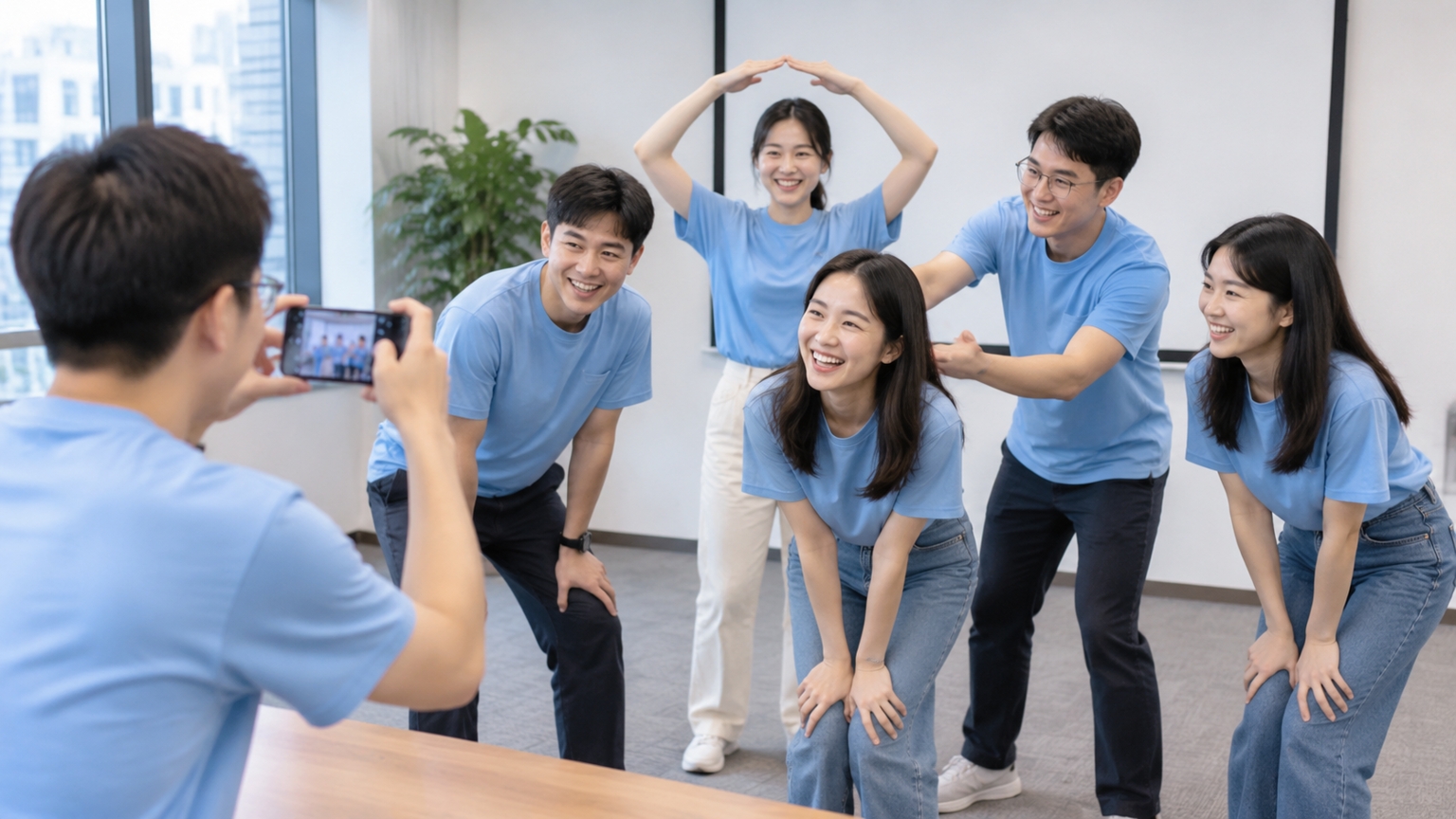
Two days later, in an office park on the edge of Shanghai, a different group is preparing for a different kind of Saturday. Young employees in matching T-shirts gather in a meeting room for a company team-building day. The HR manager asks everyone to form a circle for an icebreaker. A department head takes photos for the group chat. Nobody is taking an exam, but the room has the same quiet calculation: who speaks first, who looks enthusiastic, who can afford to hang back.

These two scenes are not usually discussed together. One belongs to education, the other to work. But they share a grammar. In China, the old Confucian phrase xue er you ze shi, often translated as study well and become an official, still echoes in the way families plan childhood, young people choose jobs, and companies ask employees to be visible. The phrase is not a slogan people repeat at breakfast. It is a set of habits, repeated until it feels like common sense.
What the Phrase Actually Means
The line comes from the Analects and belongs to a world of imperial exams, moral instruction and official service. For centuries, success meant passing exams and entering the bureaucracy. That history left a durable idea: education is a ladder, an examination is a fair test, and formal employment brings stability and respect. Modern Chinese has a word for part of this: bianzhi, an establishment post with job security and benefits. Parents may not use Confucian language, but they understand the logic.
The phrase is often misread as pure careerism. In practice, it combines three things: a moral claim that effort should be rewarded, a family strategy for reducing risk, and a social language for measuring dignity. A good university is not only about money. It is about face, marriage prospects, a parent’s standing among relatives, and the belief that a child will not have to struggle as they did. When a family pays for extra classes, it is buying instruction, but it is also buying a sense of having done the right thing.
From Exam Hall to Tutoring Queue
The most visible test is the gaokao, the national college entrance exam. More than 13 million people sat for it in 2024. For many families, it remains the single most important date in a child’s teenage years. A score can determine which city a student lives in, which subject they study, and sometimes which career is open to them. The exam is not the only route upward, but it is the one that feels most public and most comparable.
The tutoring industry grew around that feeling. Then, in July 2021, Beijing introduced the double reduction policy, which cut homework and restricted after-school tutoring in core school subjects. Weekend and holiday classes were banned for compulsory education. The biggest tutoring companies shrank or pivoted. The policy changed the market. It did not erase the anxiety.
On a Saturday, the tutoring may now be swimming, coding, calligraphy or a small private class that is harder to advertise. In a parents’ WeChat group in Chengdu, messages still fly about room changes, teacher qualifications and whether a class is worth the drive across town. The fees remain a family budget item: a few thousand yuan per term for a large class, more for a small one, before books, transport and meals. Parents calculate not only cost but time. One adult’s weekend often disappears into pickup and drop-off.

Parents give two reasons. The first is fairness: the exam is still seen as one of the few ladders that does not depend entirely on family connections. The second is fear: if everyone else is preparing, stopping feels like unfairness to your own child. Children feel both. They complain about early rises and endless worksheets, but they also repeat the adult language of not falling behind. The result is not a simple story of pushy parents and passive children. It is a family negotiation over hope, money and fatigue.
The Competition Follows You to Work
The classroom does not end at graduation. It continues in hiring, performance reviews and promotion. Degrees are screened, internships are compared, and the national civil service exam attracts millions of applicants for a limited number of secure posts. The Chinese word neijuan, often translated as involution, describes competition that raises effort without raising rewards. It is used by students, office workers and even restaurant owners. The word is newish. The experience is not.
Work hours add to the pressure. National Bureau of Statistics data have shown average weekly hours for enterprise employees hovering around 49 in recent years, well above the standard 40-hour week written into labor law. Not every office is the same. State-owned enterprises, tech firms, factories, schools and small businesses have different rhythms. But many young workers know the feeling of leaving the office after dark and still answering messages at home.
Team building is where the old exam logic becomes soft and social. The activities look playful: a rope course, a cooking contest, a quiz about company values. The real test is visibility. Who volunteers for the group leader? Who makes the manager laugh? Who posts the photos with the right caption? A young employee in Shenzhen says she does not mind the games, but she minds the mandatory enthusiasm. Another says team building is useful because it gives him a chance to talk to people outside his department. Both reactions are common.
The point is not that Chinese workplaces are uniquely performative. Offices everywhere have politics. The difference is the continuity. The classroom habit of being ranked and seen extends into the office habit of being evaluated and seen. The team-building game is a mild version of the exam: low stakes on the surface, high stakes in the group chat.
Belief, Fatigue and Recalibration
Not everyone buys the same story. Some young people still see study as the most reliable path. They point to classmates who changed their family’s circumstances through a good university and a stable job. Others are tired. They switch to vocational colleges, become technicians in new energy plants, move to smaller cities, or set boundaries around overtime. Some refuse compulsory fun without refusing work itself. They still want to do well, but they want to define what doing well means.
This is not a mass exit from ambition. It is a recalibration. Vocational education and advanced manufacturing have created jobs that pay decently and require skill, yet they still carry less social prestige than a government office or a large internet company. That gap is real, and it shapes family choices. Parents may admire a skilled technician in theory and still push their child toward a white-collar degree in practice.
A Tradition That Keeps Changing
Policies and markets are changing the old script. The double reduction policy reshaped the tutoring business. Some companies are experimenting with flexible hours and quieter forms of team building. Young consumers spend money on travel, pets, fitness and short escapes, not only on status goods. Success is becoming more plural, even if the exam and the stable job remain powerful reference points.
Tradition here is not a stone statue. It is a living compromise. Families keep what feels useful, drop what feels unbearable, and invent new rituals along the way. The phrase study well and become an official survives because it has been stretched: from imperial exams to the gaokao, from government offices to corporate ladders, from memorization to coding classes and team-building games.
The Habit Behind the Slogan
On Sunday night, a child falls asleep over a workbook while a parent charges the phone for tomorrow’s group chat. In another apartment, a young employee washes a team-building T-shirt and wonders whether the photos will help or hurt. The old phrase is rarely spoken aloud. It lives in the calendar, the fee transfer, the performance review and the family question: what will you do next?
Understanding China’s competition culture means holding two truths at once. It can open doors, and it can exhaust people. It can give a rural student a chance in a big city, and it can make a comfortable family feel permanently behind. Both are part of the same ordinary life, and both are why the tradition is still worth watching.