

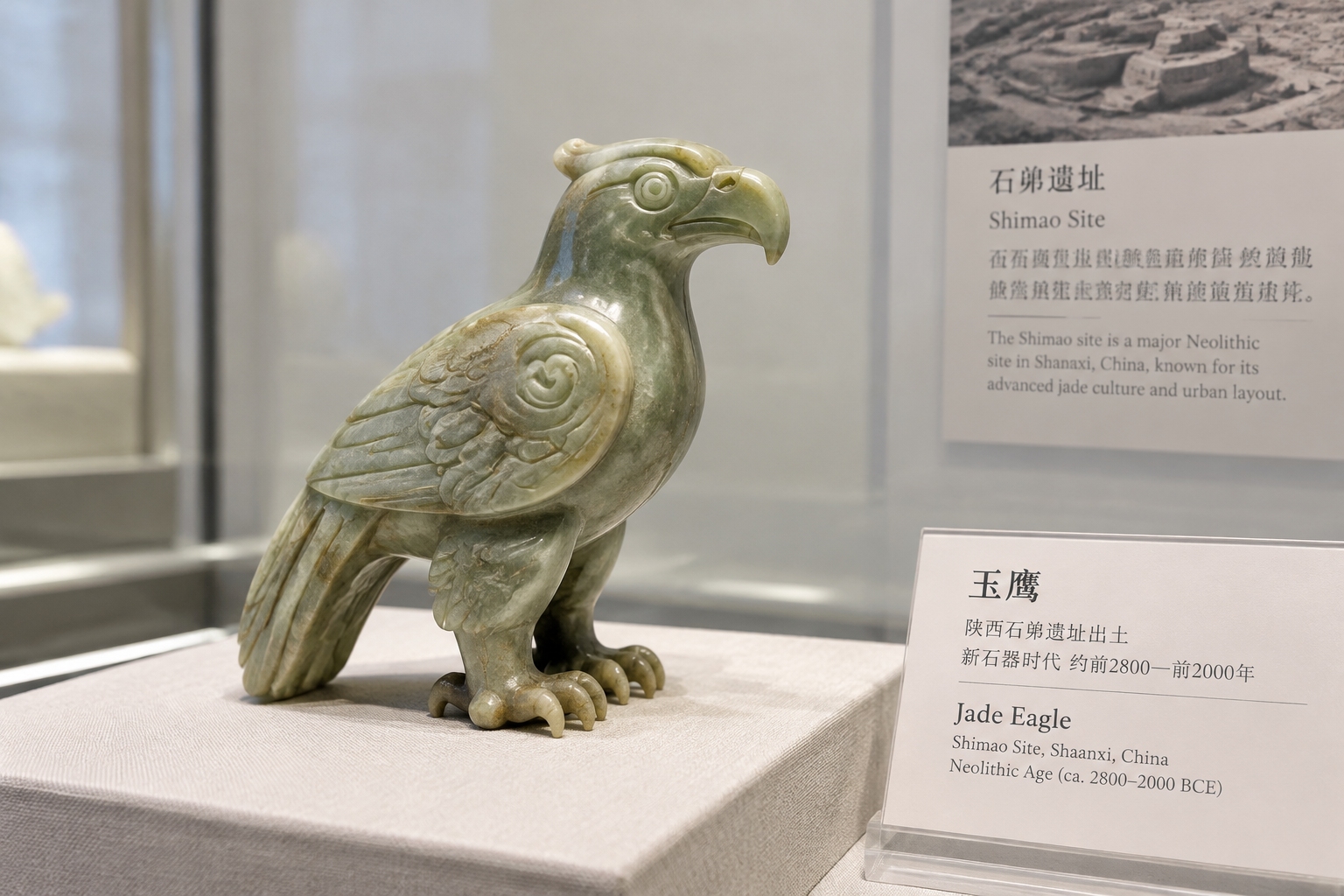
It starts with a small jade eagle. In a quiet corner of the Shaanxi History Museum in Xi’an, a tourist from abroad bends over a glass case, reading the label: ‘Shimao Ruins, c. 2300–1900 BCE.’ She looks up, confused. ‘I thought China’s history began with the Shang dynasty,’ she says. ‘What was this place?’
That confusion is understandable. Most history books outside China start with the Shang, famous for its bronze vessels and oracle bones, around 1600 BCE. But in the last twenty years, archaeologists working in Shaanxi province — the heart of China’s loess plateau — have uncovered a series of sites that push back the story of Chinese civilization by more than a thousand years, and challenge the very idea of a single origin.
A Fortress Older Than the First Dynasty
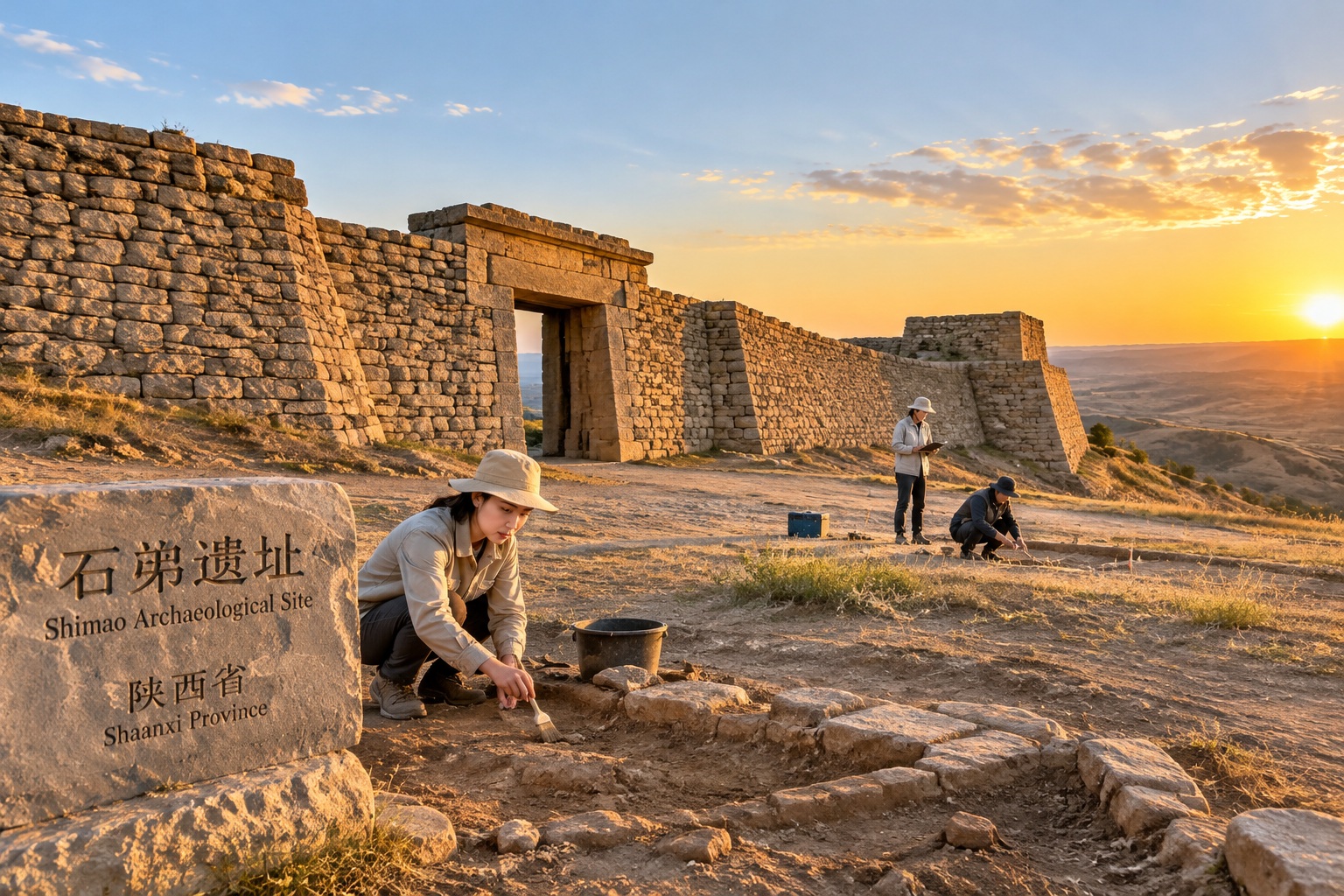
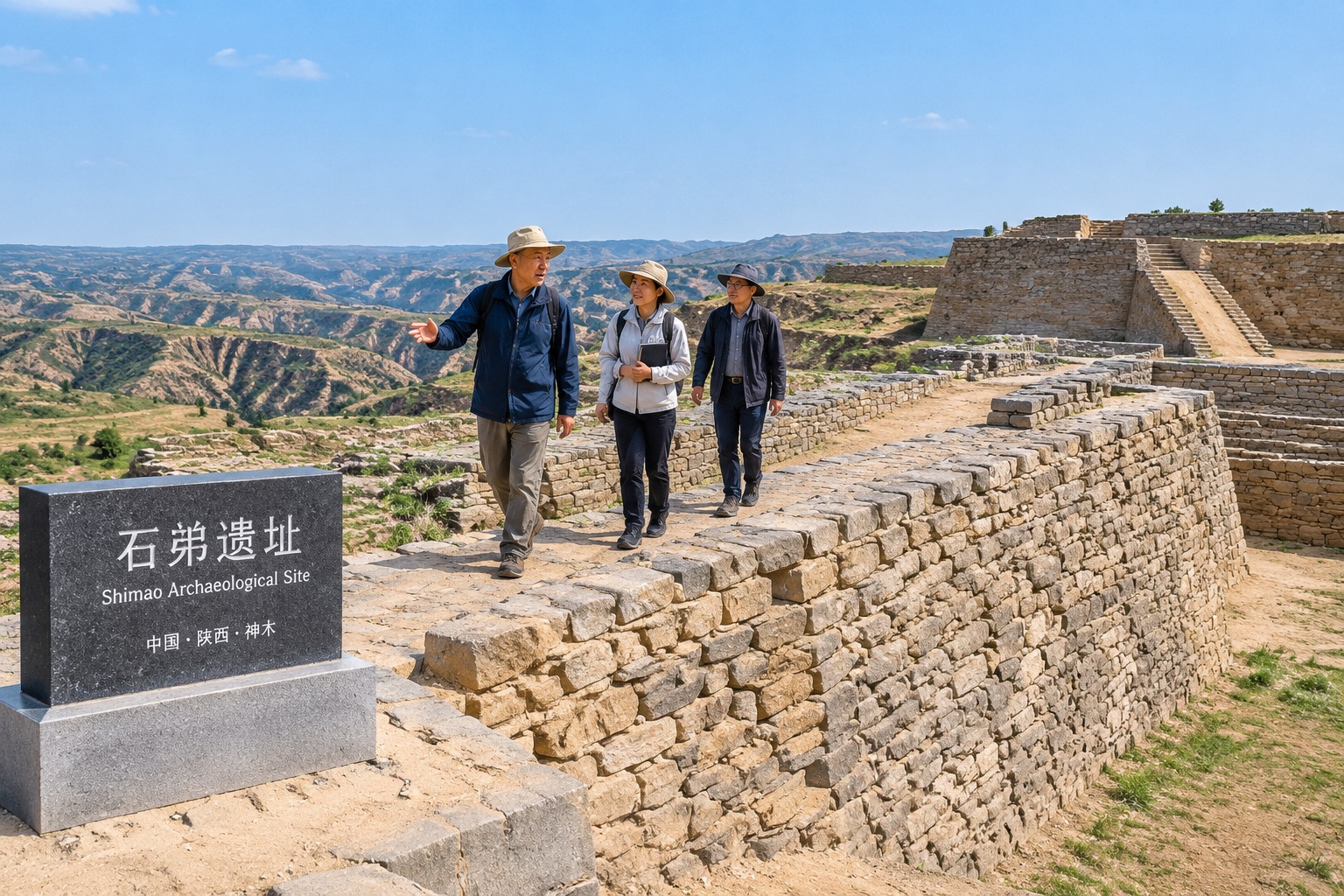
First stop: Shimao, in northern Shaanxi, a site that today looks like a ghost town of stone walls and crumbling towers. Its scale is staggering: more than 4 million square meters, protected by layers of stone ramparts, gates, and watchtowers. Excavations started only in 2012, but they’ve already revealed something no one expected — a full urban complex from the late Neolithic period.
Radiocarbon dates place the city’s height at approximately 2300–1900 BCE, which is older than the traditional starting date of the Xia dynasty, the first dynastic civilization in Chinese records. Yet the existence of the Xia has been debated for decades, with only mythical texts to support it. Shimao doesn’t settle that debate, but it does prove that people were building substantial cities with social inequality, specialized crafts, and long-distance trade well before any written record.
Inside the walls, archaeologists uncovered jade artifacts, wall paintings depicting giant figures, and even sculpted stone heads that may represent rulers or ancestors. There are hints of human sacrifice, too. About 200 individuals were found in a pit, though the evidence suggests it could be a mass burial associated with warfare. All of this fits the pattern of a powerful military theocracy.
Because Shimao sits on the border between the loess plateau and the steppe, it also served as a hub of exchange. Some of the decorative motifs in its pottery and jades show Central Asian influences, which implies that the ‘Silk Road’ might have had its roots here, thousands of years before Han silk was carried west. As one archaeologist put it: ‘We thought Chinese civilization started in the Central Plains. Now we know it had many beginnings.’
From Banpo to Yangguanzhai: Agricultural Pioneer
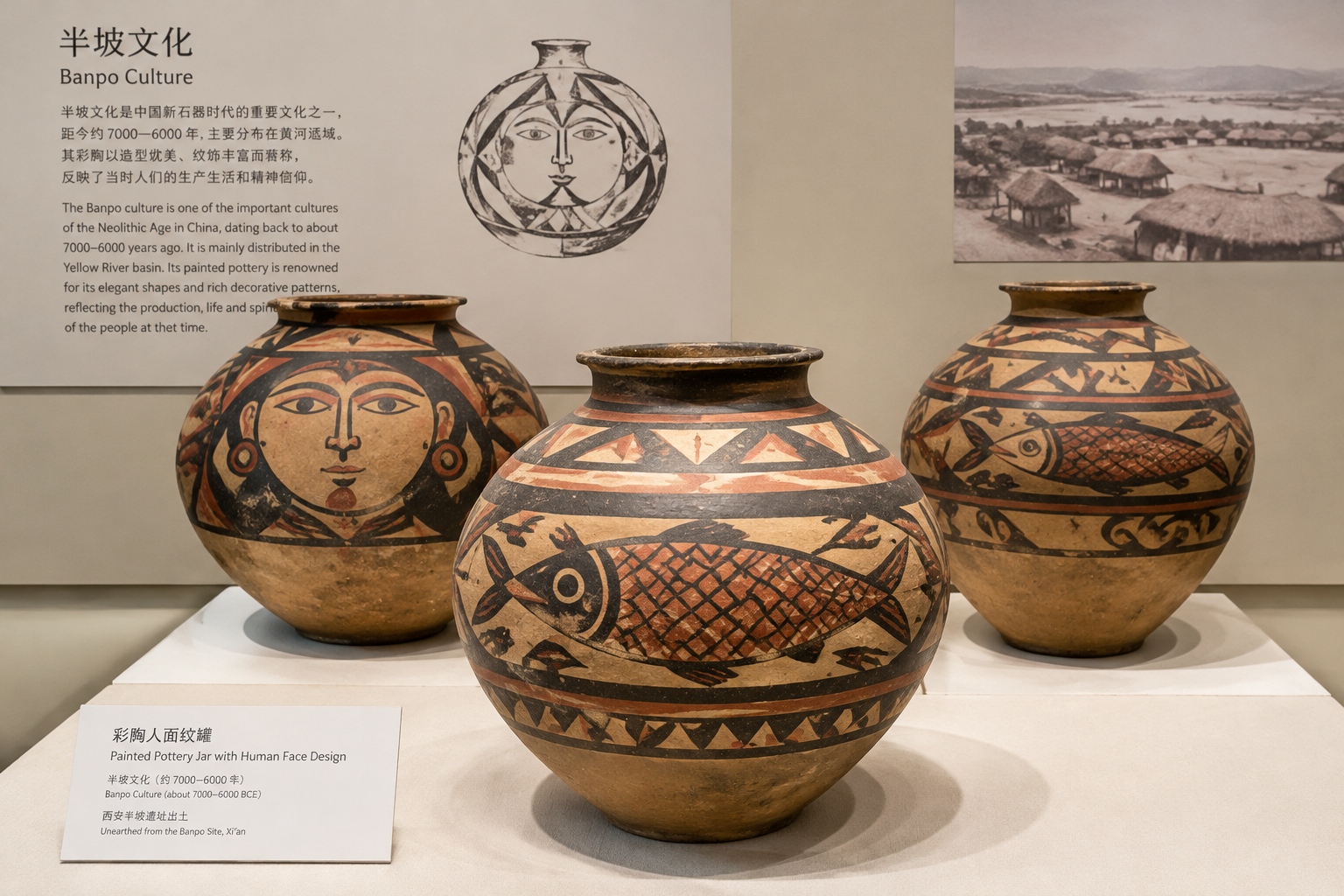
If you fly south to Xi’an, you can visit the Banpo Museum, which protects a far older settlement, belonging to the Yangshao culture, about 6,000 years old. Under a massive pyramid-like roof, you can see the remains of dozens of houses, storage pits, and pottery kilns, laid out as they were when the village was abandoned. Banpo is a favorite with school groups because it shows the day-to-day life of early farmers: they grew millet, kept pigs and dogs, and made beautifully painted pottery, some with fish patterns and human faces that are still intriguingly mysterious.
But Banpo has been known for half a century. The real news is from a nearby site, Yangguanzhai, found in 2004. It’s a Middle Yangshao settlement with a wide ‘ring trench’ — a moat that enclosed an area of about 10 hectares. Within it, archaeologists found organized streets, pottery-making areas, and what appears to be a central plaza. The planning is so careful that it suggests a strong social structure, with chiefs or councils directing labor.
The significance is not just architectural. Detailed botanical analysis of the soil has revealed seeds from broomcorn millet and foxtail millet, as well as rice — evidence of farming at a scale large enough to feed a crowded community. These findings push the timeline of Chinese agriculture back by probably a couple thousand years before the Shang dynasty. And they match the mythic memory of the legendary Yellow Emperor, who in traditional histories is credited with teaching people to farm and build houses. Maybe the legend was rooted in truth.
Bronze Inscriptions: The Speaking Stones
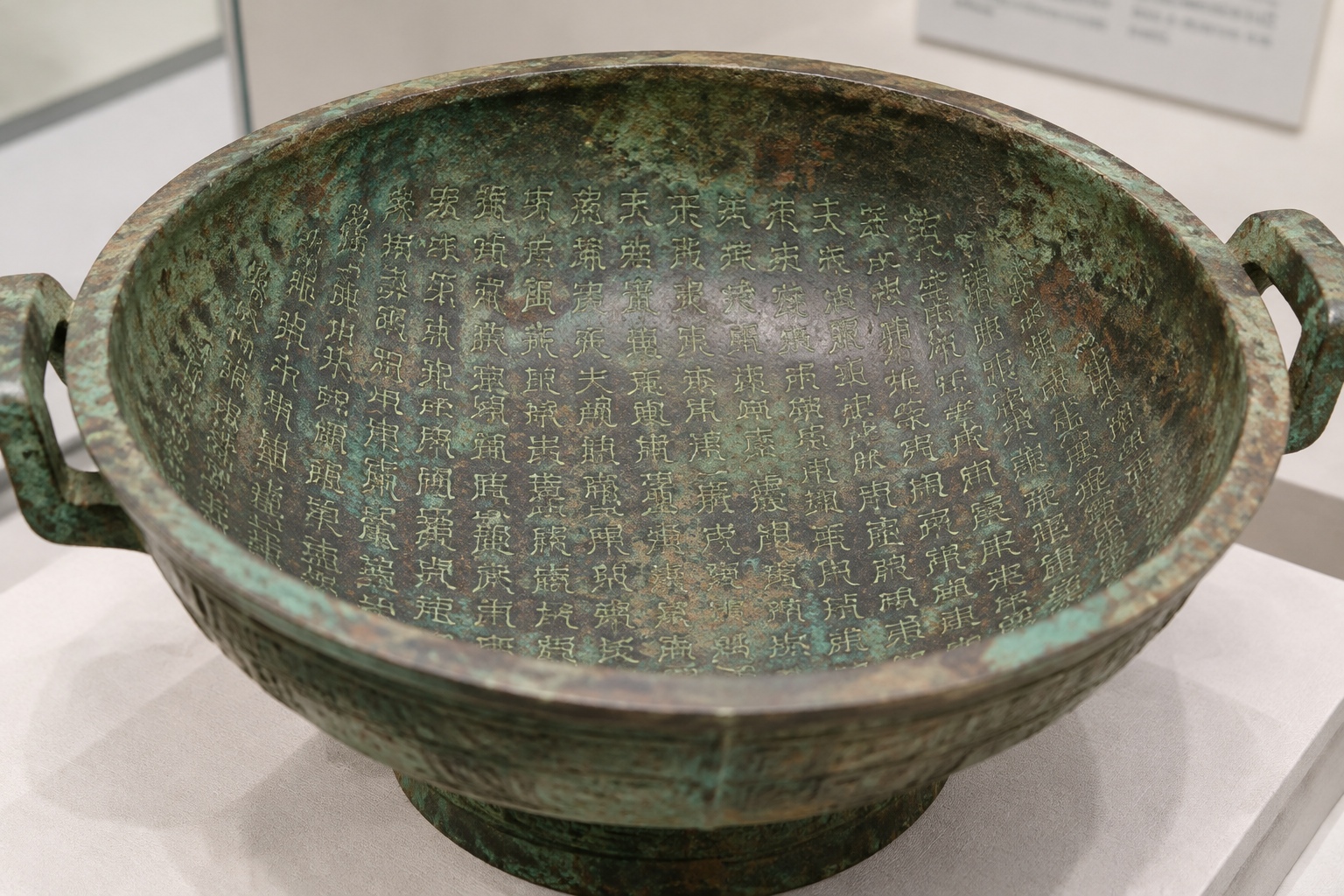
Shaanxi is also the undisputed homeland of Chinese bronze culture. In the city of Baoji alone, more than 50,000 bronze objects have been unearthed. Some are massive ritual vessels, but their real treasure is often their interior: inscriptions that record historical events, royal appointments, and legal cases.
One of the most important is the Shi Qiang pan, a round legless vessel found in 1976, with a long inscription of 284 characters. It recounts the deeds of the seven rulers of the Western Zhou dynasty, listing their accomplishments in a way that resembles the Bamboo Annals, one of the oldest Chinese historical texts. In effect, it’s a contemporary source that confirms and sometimes corrects what later historians wrote.
Another remarkable piece is the Zun vessel inscribed with the words ‘Zhai zi Zhongguo,’ which is the earliest known occurrence of the phrase ‘China’ (Zhongguo) in a written text. It was cast during the early Zhou dynasty, around 1030 BCE, and its discovery in Baoji in 1963 was a defining moment for Chinese self-identity. For modern Chinese people, this inscription is visceral: it proves that the term ‘China’ was already in use 3,000 years ago.
The inscriptions are also a check on memory. For centuries, historians relied on records compiled during the Han dynasty, hundreds of years after the events they describe. Bronze texts, by contrast, are primary sources, written by someone who either witnessed or heard the events as current history. As new bronzes are found, they add nuance — sometimes questioning the official version, sometimes adding details that no one expected.
Before the Silk Road: Traces of Global Exchange
Shaanxi was also the eastern gateway of the ancient Silk Road during the Han and Tang dynasties. But if you go back further, you find hints that long-distance contact began much earlier. Excavations at several sites in the province have yielded glass beads from the Eastern Zhou period, whose chemical composition resembles that of glass made in the Mediterranean region. Because the technology for making such glass wasn’t known in China at the time, these beads are almost certainly imports.
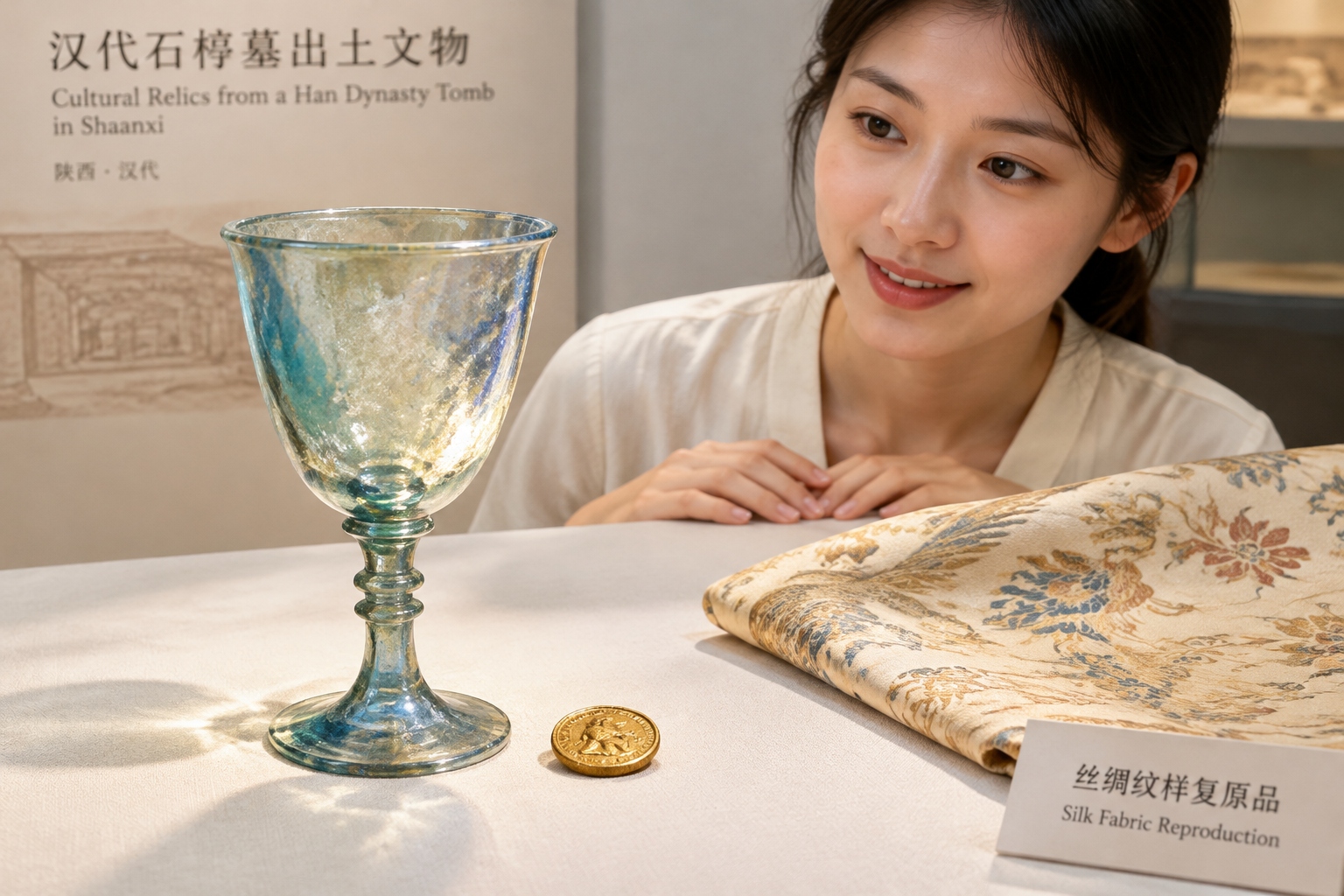
In a Han dynasty tomb near Xi’an, archaeologists discovered a small Roman gold coin and a piece of Roman glassware. These objects, dated to the first centuries BCE and CE, suggest that the famous Silk Road was not a single smooth route but a series of overlapping networks, through which goods, ideas, and even artistic motifs moved. That contact became more visible later, but its beginnings may go back to the Bronze Age, when jade from Khotan and seashells from tropical waters were being transported to the central plains.
So, when you stand in a Shaanxi museum and look at a turquoise bead, you are looking at evidence of a surprisingly connected ancient world — one that challenges the image of China as a closed empire.
A Younger Generation, A Fresh Passion for the Past
So why does this all matter today? Because these finds have triggered a new national conversation about China’s roots. For years, the official story of Chinese history was summarized as ‘one origin, one people, one civilization.’ But archaeological data is forcing a more nuanced view: that several regional cultures, each with distinct characteristics, coalesced into what we now call Chinese culture.
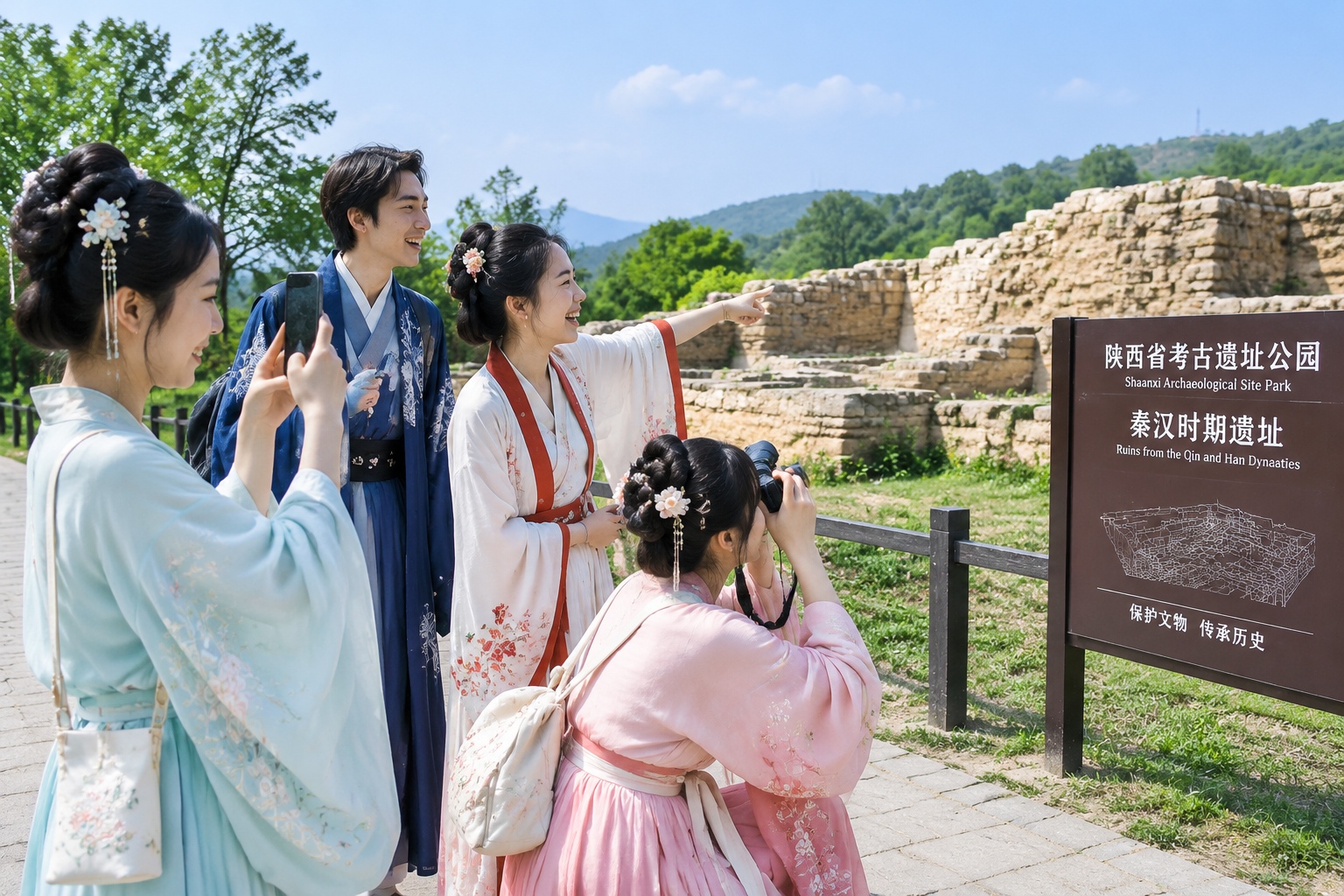
This shift is visible among ordinary people. In Xi’an, the Shaanxi History Museum can have queues over an hour long on weekends. Many visitors are under 35. Social media is filled with short videos about Shimao and Yangguanzhai, often with catchy soundtracks, and young people wear Han-style clothing while they visit the sites. They are not just taking selfies — they are reading the exhibition notes carefully.
A local university student named Wang Yue told me, ‘We grew up with the idea of five thousand years of civilization, but it was abstract. Now, when you go to Shimao and see the actual stones that built a city older than the pyramids of ancient Mexico, it becomes real. It feels like our nation is older, and also more connected with other places, than we ever thought.’
This cultural revival extends to tourism. The local government has built archaeological parks around major sites, with walking trails and visitor centers. At Shimao, you can stand on the ancient city wall and see the vast plain below. It is not like a museum where artifacts are isolated; it is an experience that allows people to touch the earth — and imagine the people who lived there 4,000 years ago.
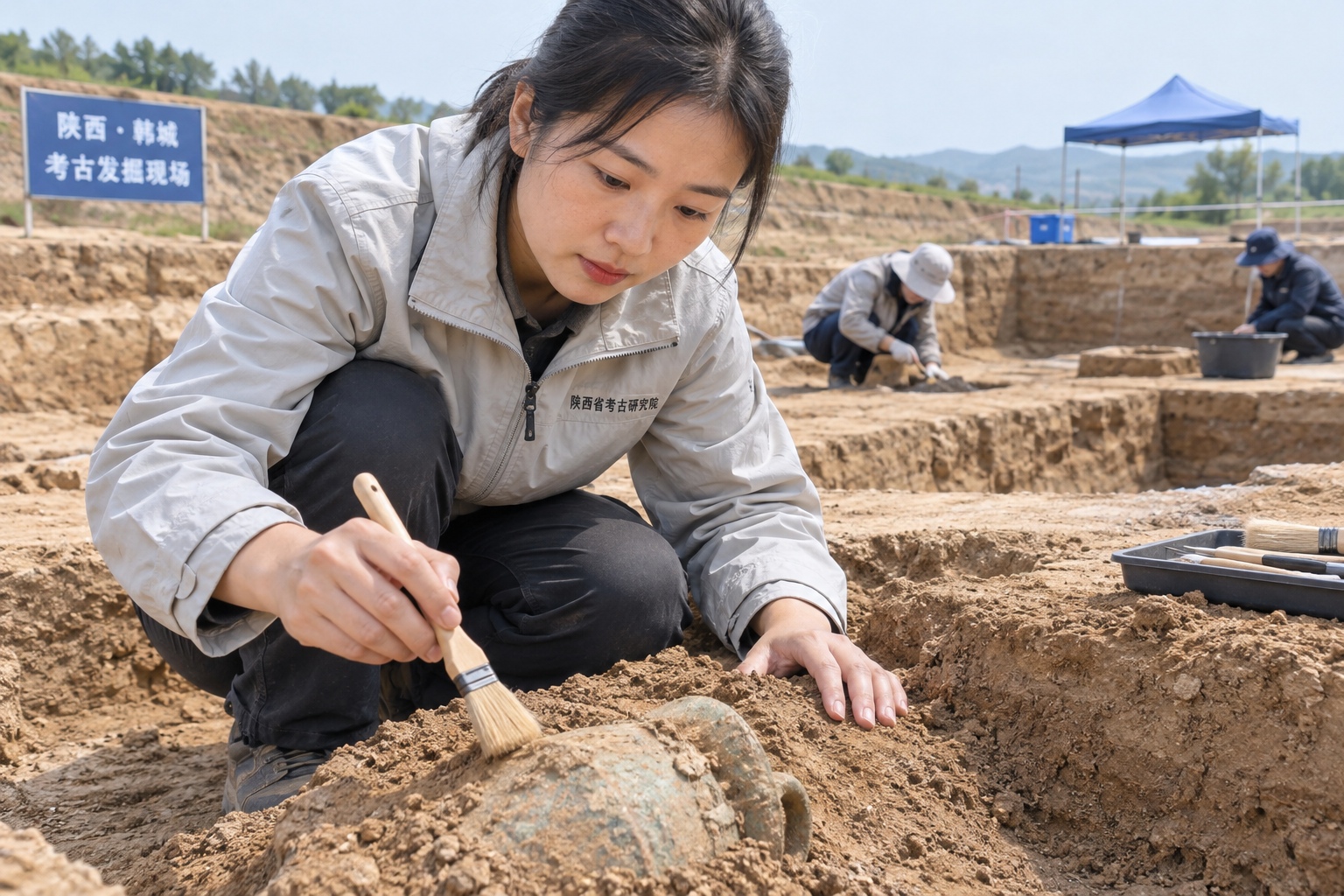
Archaeologists themselves are also leaning into public communication. Chinese TV channels have broadcast live excavations, and popular hosts explain what finds mean in real time. In 2021, the reopening of the Sanxingdui pits attracted millions of online viewers, but in Shaanxi, smaller digs also get attention. A recent excavation of a small Han tomb in Xi’an was streamed on Douyin, China’s TikTok, and revealed an intact ancient loom. Within days, that loom became a star.
This boom in public archaeology, however, is not without tension. Some scholars worry that the push for tourism can over-commercialize the past, turning complex history into a spectacle. But others argue that it’s better for people to engage with archaeology than to ignore it. One thing is certain: the new finds have made history a living subject, not just a collection of dates in textbooks.
A Story Still Unfolding
Shaanxi’s archaeology is far from finished. New finds continue to surface, driven by a mix of targeted excavations and infrastructure projects. The ‘One Belt, One Road’ initiative has also prompted archaeologists to study the Silk Road in more depth, leading to more discoveries about ancient international exchange.
What we know today is that the story of Chinese civilization is far more complex and older than earlier textbooks suggested. It did not begin with a single founder or dynasty, but evolved through centuries of interaction between regional cultures. It was not isolated from the West, but was a key hub in early global networks. These findings do not dismantle Chinese identity — they enrich it.
The next time you see a jade eagle in a museum, remember that it is not just a beautiful object. It is a key to a rewritten history. And in Shaanxi, the soil still holds many keys to be turned.
Start the discussion at forum.chinacomes.com