
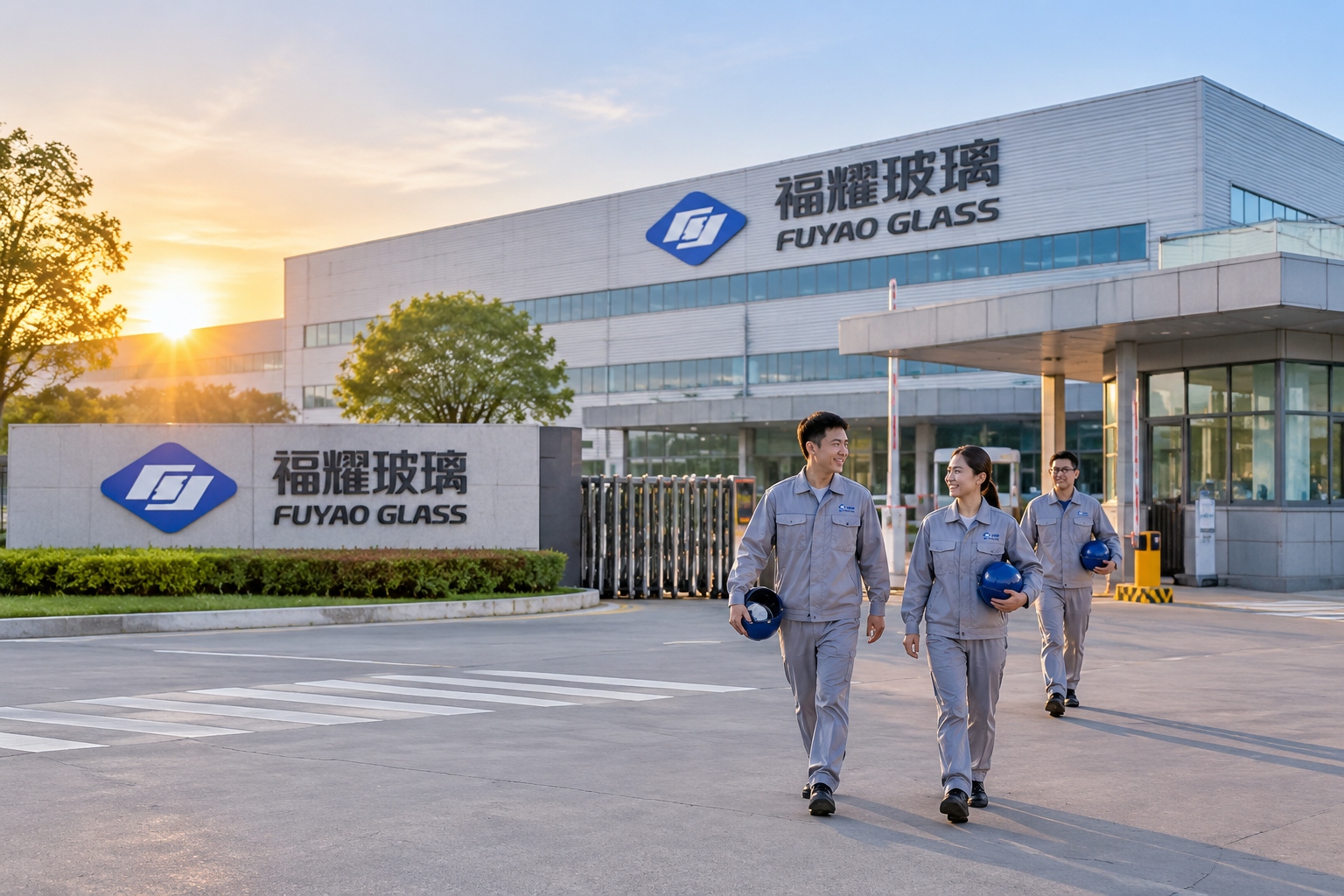

A Morning in Fuqing
At six in the morning, the streets of Fuqing, a small coastal city in southeast China’s Fujian Province, begin to fill with workers in gray uniforms. They stream through the gates of a vast factory complex that produces more than one in four auto glass windows used in cars around the world. Inside, giant furnaces melt sand and recycled glass at 1,600 degrees Celsius, while robotic arms move sheets of glass with surgical precision. The factory floor hums with a rhythm that has powered this town for nearly four decades.
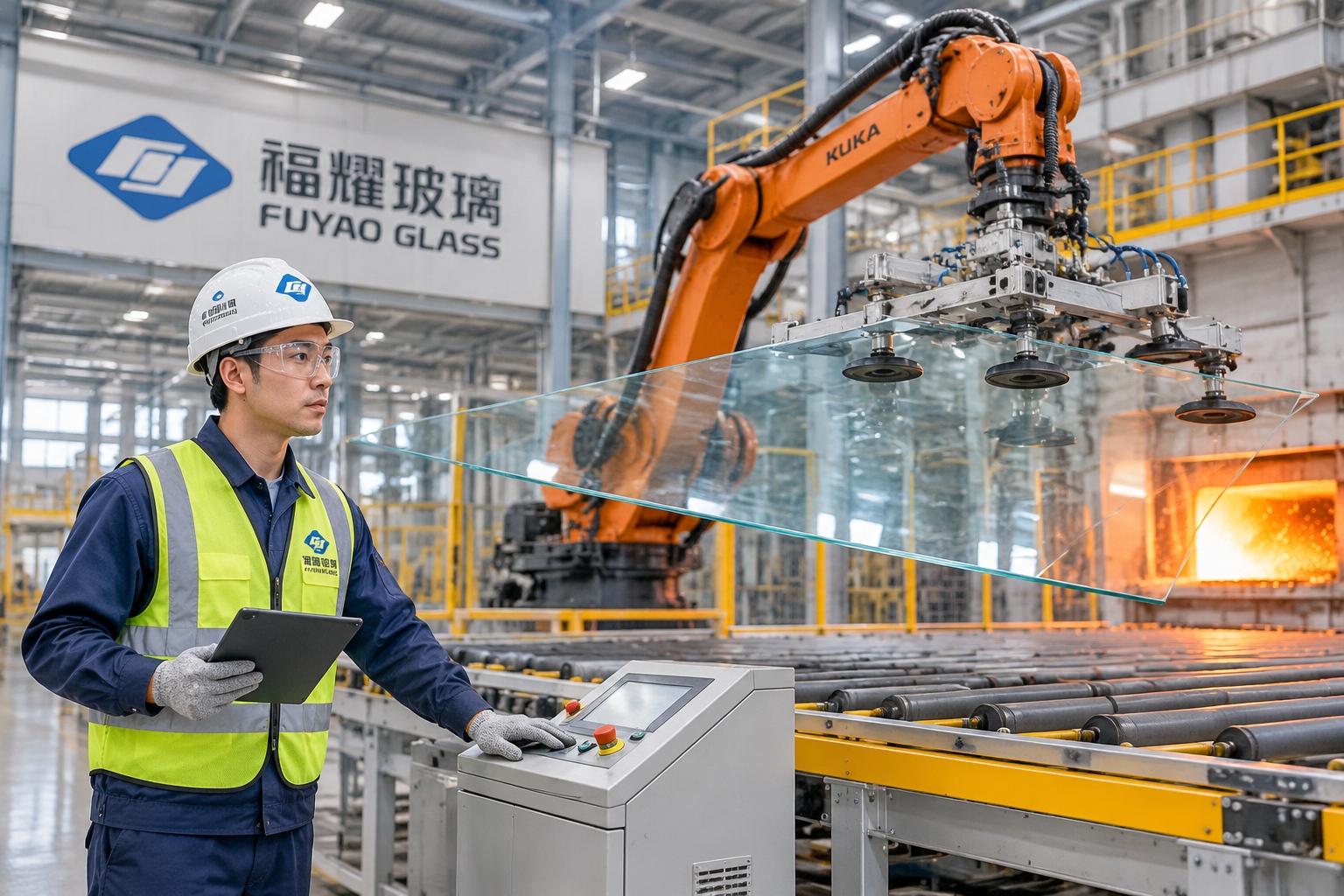
This factory belongs to Fuyao Glass, the world’s largest automotive glass supplier. Its founder, Cao Dewang, is still a familiar presence here. Now in his late 70s, Cao can often be found in a modest office, drinking tea and reviewing production charts. He is not the typical billionaire—he wears simple clothes, eats in the company canteen, and has donated billions of yuan to education and poverty relief. But it is his unassuming, blunt style that has made him one of China’s most watched businessmen.
Fuyao’s story is more than a corporate success. It is a story about how a small town in China went from agricultural obscurity to a node in the global supply chain, and how the people who work there see their own lives change in real time.
From a Broken Factory to a Global Giant
Cao Dewang was born in 1946 in Fuqing, into a family that had once been prosperous but lost everything in the turmoil of the mid-20th century. He started from the bottom, working odd jobs before eventually being assigned to manage a small, loss-making glass factory in 1983. At that time, almost all automobile glass in China was imported, and Cao saw an opportunity. With a loan from his father and a fierce obsession with quality, he began making windshields that could undercut foreign brands without sacrificing safety.
The timing was perfect. China’s automobile industry was about to boom, and domestic carmakers needed reliable glass. Fuyao won contracts by offering better prices and faster delivery than imports. By 1993, the company became the first auto parts manufacturer to be listed on the Shanghai Stock Exchange. The capital raised helped Fuyao build modern production lines and eventually take on the global market.
In the 2000s, Fuyao expanded aggressively abroad, setting up plants in the United States, Russia, Germany, and South Korea. Today, it supplies almost every major car manufacturer in the world, from Volkswagen to Tesla. Its global market share is estimated at around 25%, making it the largest auto glass maker by far.
The Man Behind the Glass
Cao Dewang is known for his candor. He has publicly complained about Chinese taxes and praised America’s business environment, yet he remains a fierce defender of China’s manufacturing base. His personal behavior is starkly different from many wealthy factory owners: he lives in a simple house, flies economy class, and has said he will eventually give away most of his wealth. He has donated over 12 billion yuan (roughly $1.7 billion) to charity, mostly for education, healthcare, and disaster relief.
His management style is hands-on. He often walks through the workshops, checking details like the cleanliness of the floors and the quality of the glass edges. He famously once broke a piece of glass with his hands in front of a production manager to show that it wasn’t strong enough. That attention to detail built Fuyao’s reputation for reliability. In a world where glass is often taken for granted, Cao insists that every windshield must be perfect enough to save lives in a crash.
A Factory Town Transformed
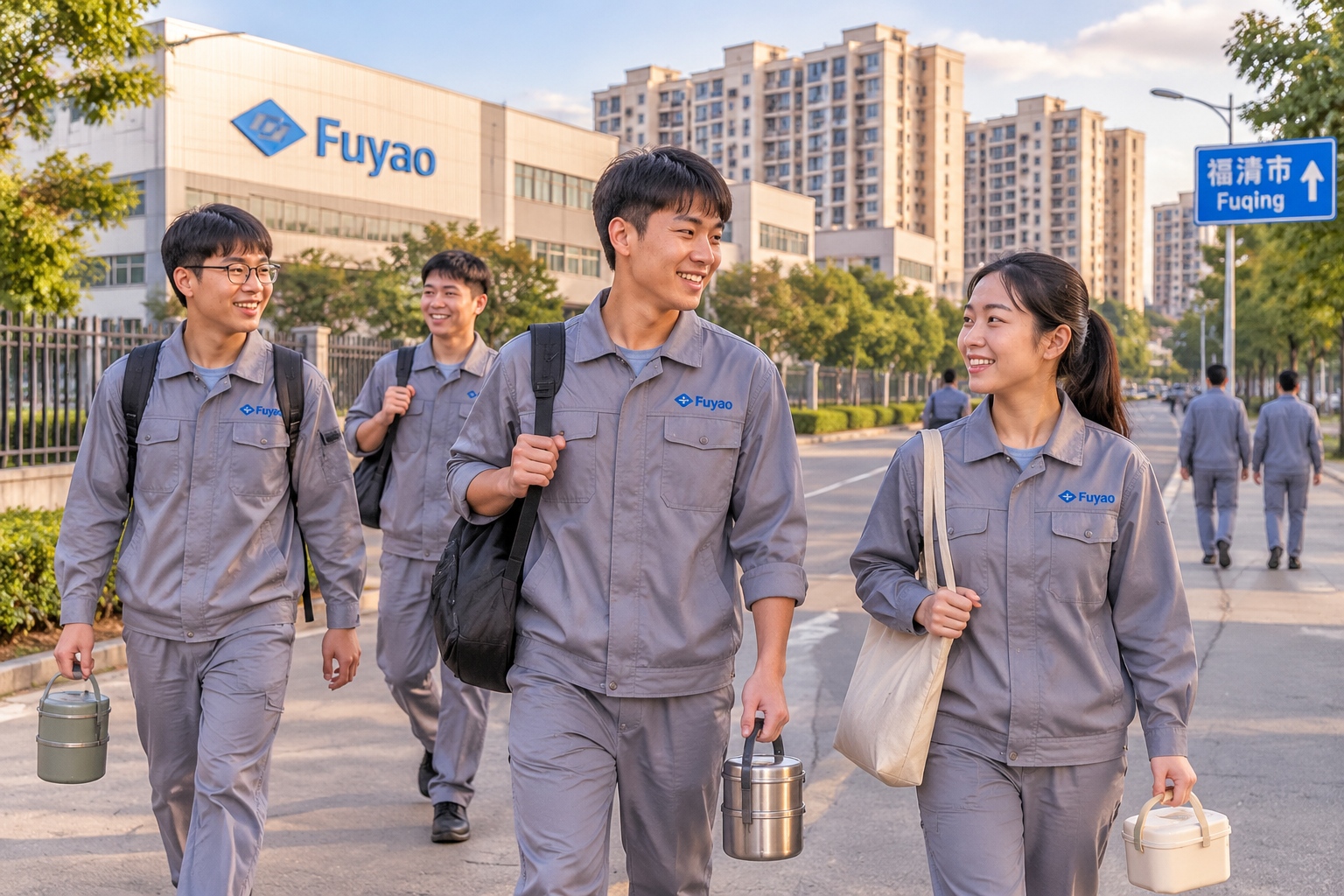
Fuyao’s presence has transformed Fuqing from an ordinary small town into a prosperous industrial hub. The company employs roughly 20,000 people in Fuqing alone, many of whom have spent their entire careers there. Local suppliers, from packaging companies to mold makers, have sprung up around the factory gates. Whole neighborhoods have grown as workers moved in with their families.
Take 52-year-old Wang Jianhua, who started at Fuyao in 1990 as a machine operator. He now supervises a team of 30. His wife also works in the factory, and his son has joined the engineering department. The family lives in a modern apartment that Fuyao helped to subsidize. “Before Fuyao, we had little opportunity here. Now, my son can stay in the town and have a good career,” Wang said.
But the town’s reliance on a single company also brings challenges. When auto sales decline, the factory slows down, and the whole community feels it. Local businesses depend on Fuyao’s payroll. That is a reality many factory towns around the world know too well.
Challenges of Going Global
Fuyao’s entry into the American market was not smooth. In 2014, Cao opened a plant in Moraine, Ohio, on a former General Motors site, promising to bring jobs back to a region hit by deindustrialization. The project hired thousands of local workers, but it quickly faced friction with some employees over wages, conditions, and unionization. Armed with a blunt management style, Cao publicly said he did not welcome unions, which led to criticism and a high-profile documentary, “American Factory,” that captured the cultural clash.
Yet Fuyao has gradually adapted. It has raised wages, installed better ventilation, and worked with local leaders to rebuild trust. The Ohio plant is now profitable and employs around 2,500 people. The experience taught Cao that Chinese management practices—long hours, strict discipline—do not always translate across borders, and that understanding local workers is just as important as capital investment.
What Fuyao Says About China’s Manufacturing Today
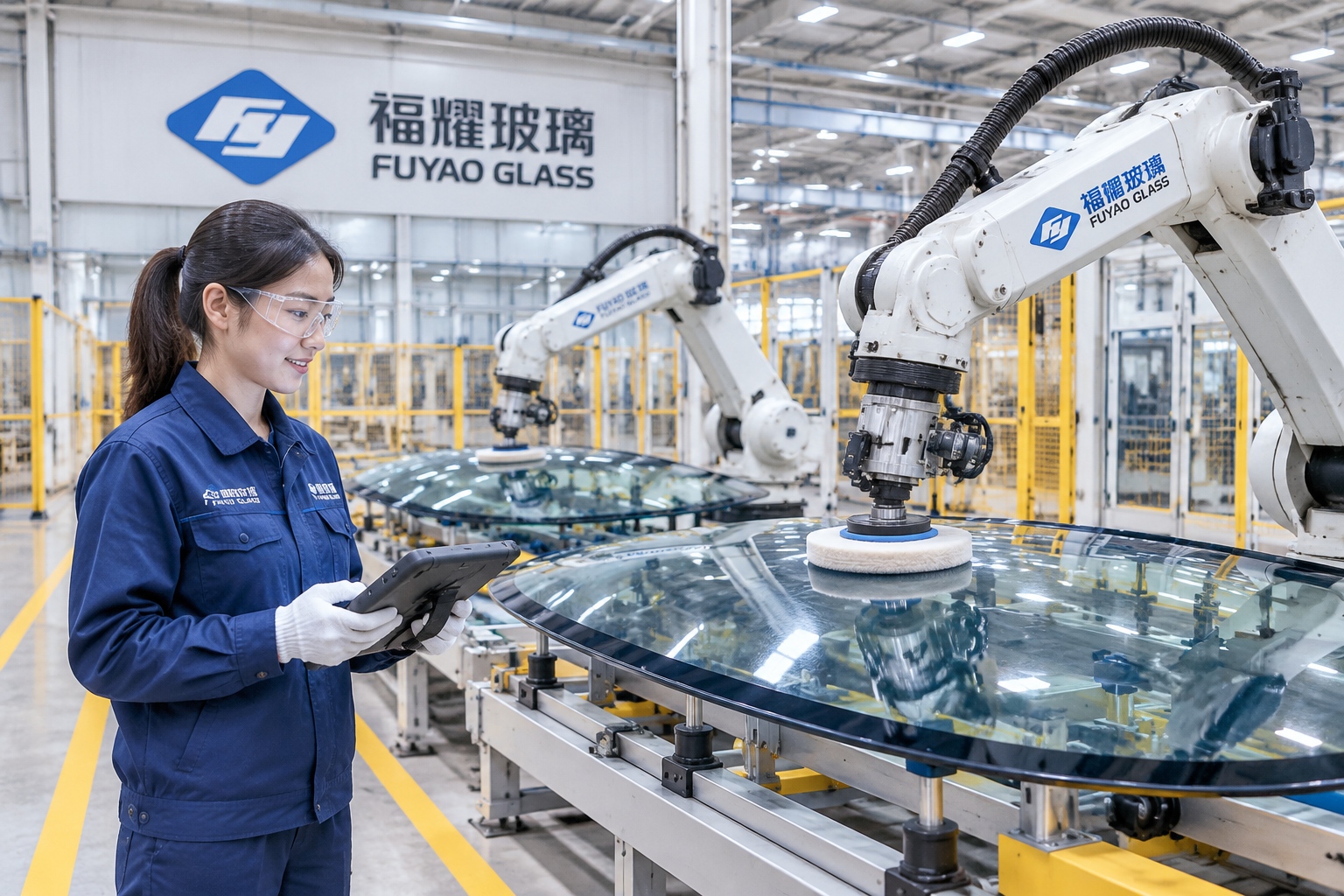
Fuyao’s story is often used as an example of China’s manufacturing rise, but it also reveals the industry’s current pressures. Rising labor costs, energy prices, and a trade war have forced Chinese manufacturers to rethink their strategies. Fuyao has invested heavily in automation and research to stay competitive. Its factory in Fuqing now uses hundreds of robots for cutting, polishing, and shaping glass, reducing the need for low-skilled labor.
At the same time, Fuyao is expanding into new products like solar glass and lightweight glazing for electric vehicles. It has set up research centers in China, the United States, and Germany. Cao often says that “the age of cheap Chinese labor is over,” but he believes that the country’s strength lies in its engineering talent and complete supply chain. He is less optimistic about the future than he was decades ago, but he remains committed to making good products.
Conclusion: The Human Side of a Global Factory
For many people outside China, Fuyao is simply a name on a car window sticker. But for the residents of Fuqing, it is the heartbeat of their town. Cao Dewang and Fuyao represent a chapter of Chinese history in which ordinary people, with hard work and timing, built global companies from scratch. The story is not just about glass—it is about the grit of a generation that turned a small town into a node in the global economy. As China’s economy continues to evolve, the human element of that transformation, the workers who get up at dawn and the manager who still checks the furnace, remains the most telling truth.
Start the discussion at forum.chinacomes.com