

The Night Market That Never Sleeps
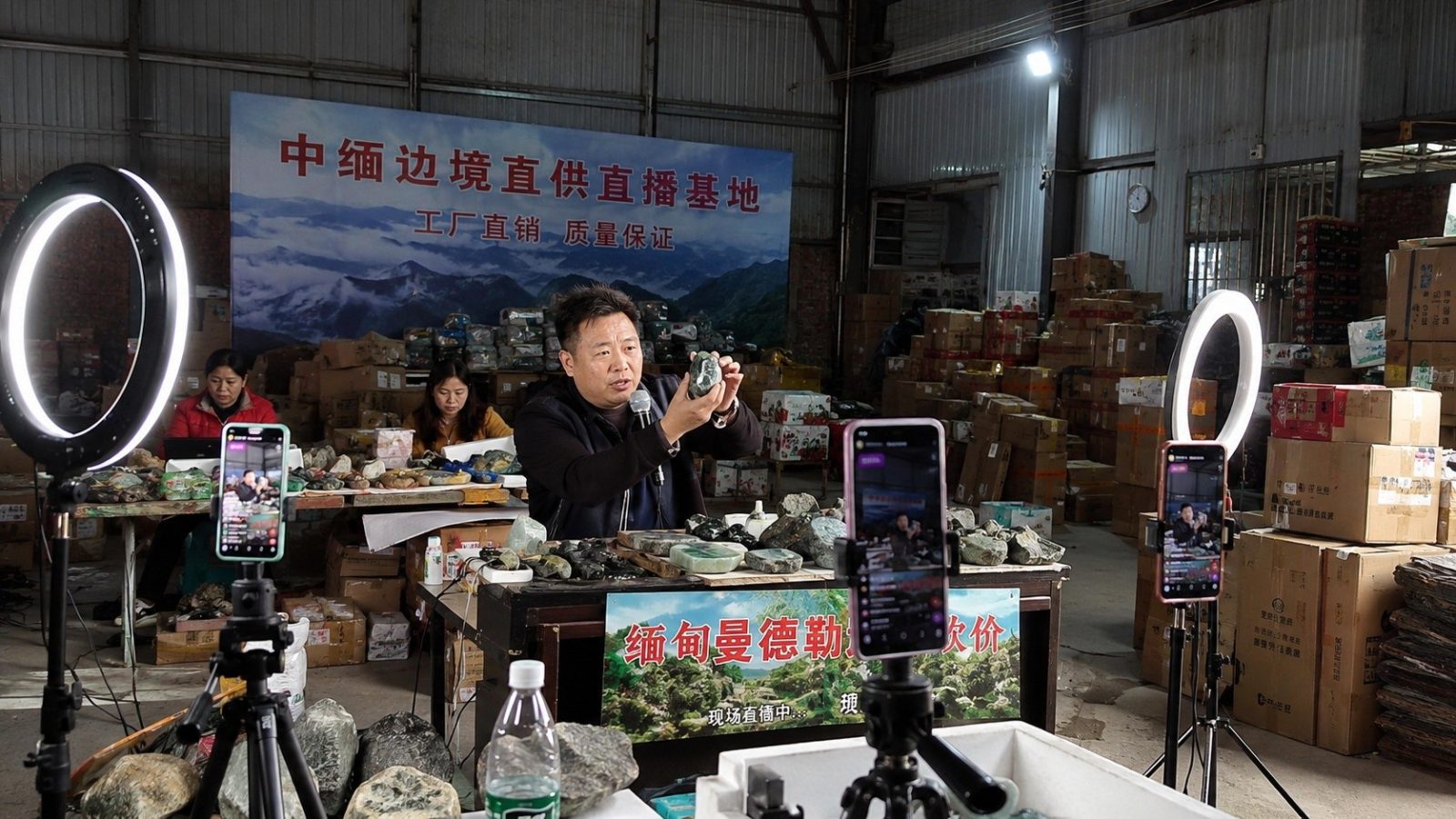
It is 11:30 PM in Pingyu County, Henan Province. While most of China is winding down, the air inside a converted warehouse is thick with the smell of instant noodles and heated plastic. Under harsh LED strip lights, forty-year-old Li Wei adjusts his ring light, checking his reflection in the screen of his iPhone 13. He is not selling software or beauty products. He is holding a rough stone, shouting into a microphone about its “vibrant green hue” and “imperfections that prove its natural origin.”\p>
Li is a livestream host. But unlike the polished anchors in Shanghai skyscrapers, Li’s background is a stack of cardboard boxes filled with raw jadeite. Behind him, his 65-year-old father is quietly sorting stones by size and color, a task that has defined their family’s livelihood for decades. Now, those tasks are digitized.
From Farm Fields to Digital Stalls
Few years ago, this village was known only for its cornfields and aging population. The young people left for factories in Guangdong or construction sites in Beijing. The remaining residents made a living processing jade—cutting, polishing, and selling to middlemen in major cities like Guangzhou and Beijing. The margins were thin, and payments often took months.
The shift began around 2019. A local teenager, bored with his daily chores, downloaded Douyin (the Chinese version of TikTok) and started live-streaming his grandfather’s jade workshop. He didn’t have professional equipment—just a tripod and a ring light bought from a nearby electronics market. But he had something platforms valued: authenticity.
The first stream attracted 200 viewers. By the end of the night, he had sold three bracelets for a total of 3,000 yuan ($420). The profit margin was 80%. Word spread fast. Within six months, half the village had bought smartphones capable of stable video streaming. Within a year, the “middleman” model collapsed. Why wait weeks for a buyer when you can sell directly to a woman in Shenzhen or a collector in New York?
Technology as the New Irrigation System
The transformation wasn’t just about attitude; it was about infrastructure. China’s rural e-commerce boom relies on three invisible pillars: 5G coverage, logistics networks, and digital payment systems.
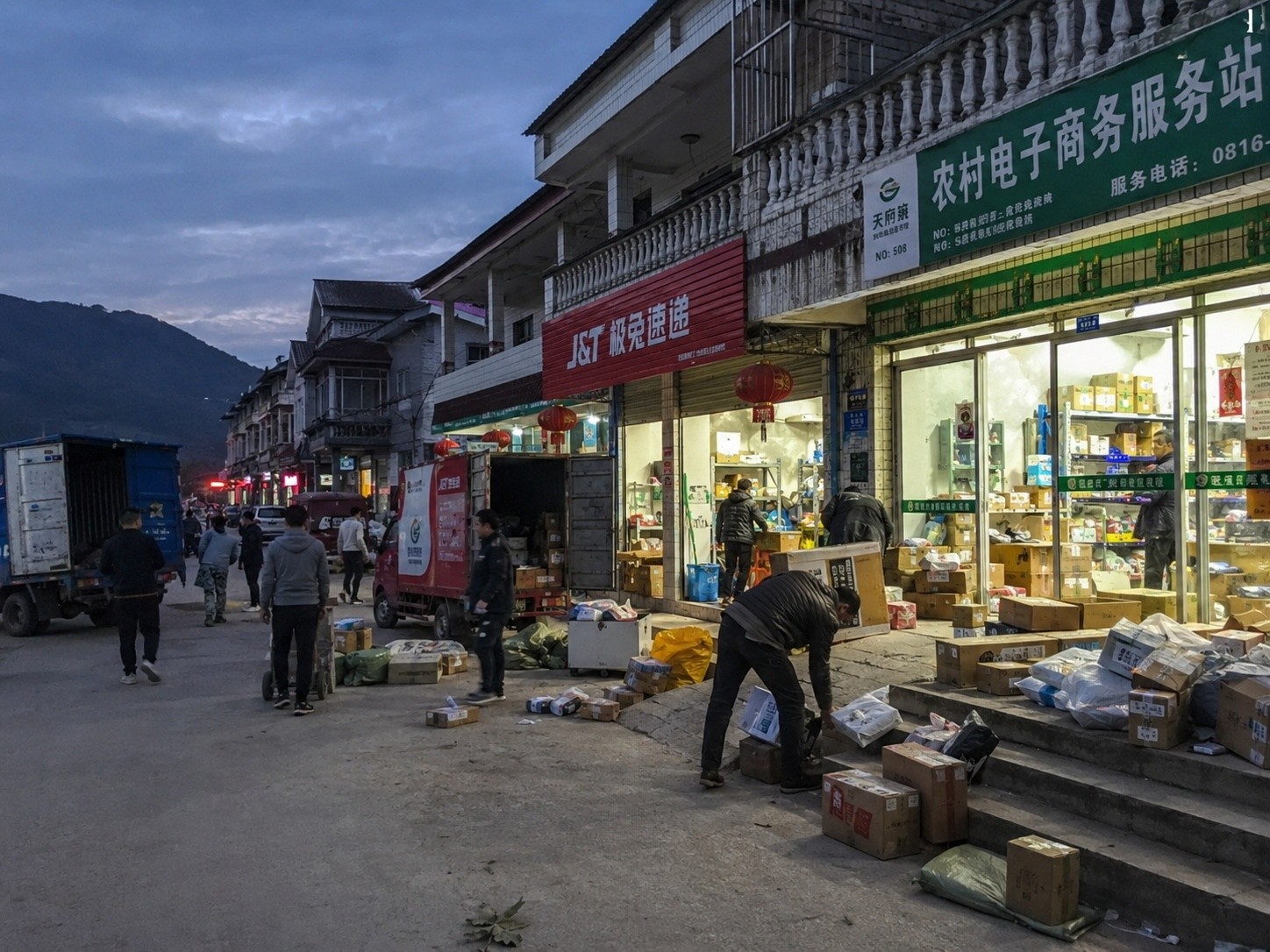
In this village, 5G signals are strong enough to support high-definition video uploads without buffering. More importantly, the “last mile” delivery system is efficient. A package sent from Li’s warehouse in Henan can reach a customer in Guangzhou in 48 hours, often for less than the cost of a cup of coffee. This logistical efficiency, built over the last decade, lowered the barrier to entry for rural entrepreneurs.
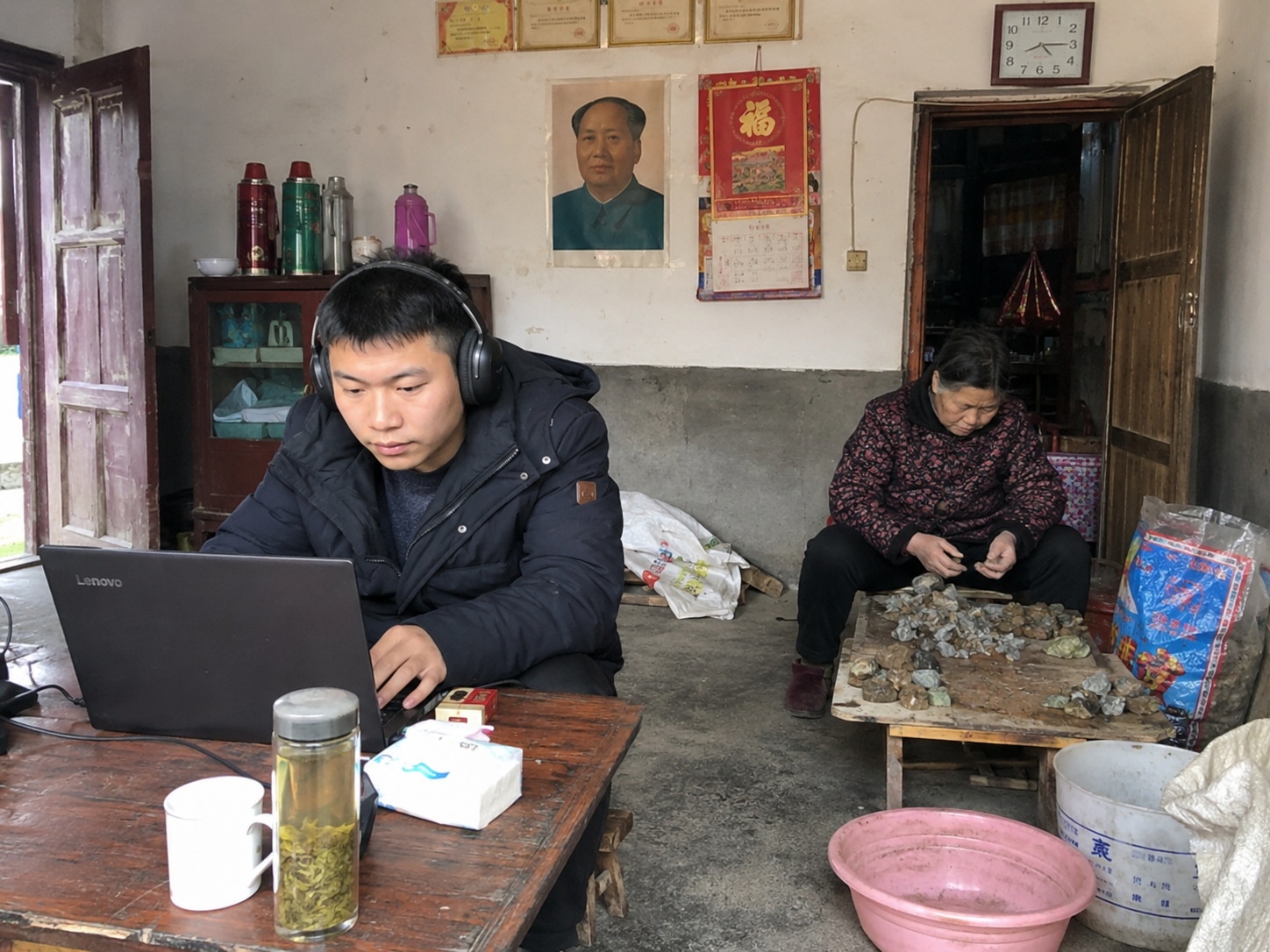
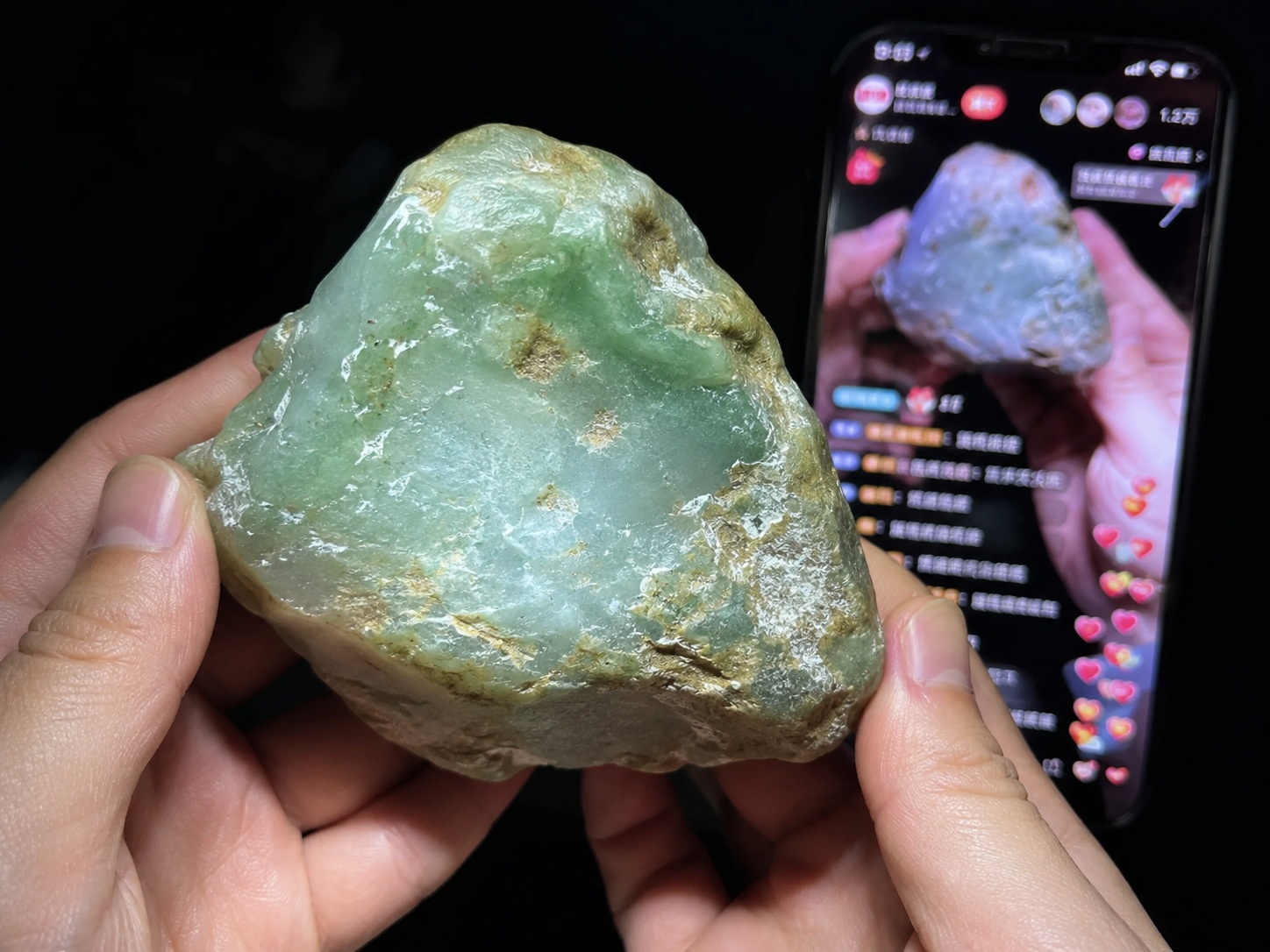
Smartphones became the new tool of production. For farmers, the learning curve was steep but manageable. Local training centers, often subsidized by county governments, taught basic skills: how to balance audio, how to highlight a stone’s transparency against a black background, and how to handle customer comments in real-time. The “script” became as important as the stone itself.
Reversing the Brain Drain
The most profound change is demographic. For years, rural China faced a “hollowing out” crisis, where villages were left with only the elderly and children. Livestreaming has reversed this trend, at least in specialized hubs like this jade village.
Zhang Min, 28, returned from Shenzhen two years ago. In the city, he worked as a graphic designer, earning a modest salary but facing long commutes and high rent. Back home, he manages the brand accounts for his family’s operation. His younger sister, a former teacher, handles customer service and community management on WeChat.
“In Shenzhen, I was a cog in a machine,” Zhang says. “Here, I can see my customers. I know their faces. And I earn more than I did in the city.” This “returnee” phenomenon is spreading. Young people are not just selling goods; they are bringing urban skills—branding, data analysis, design—back to rural settings.
The Shadow Behind the Spotlight
However, the golden era is not without its cracks. The barrier to entry is now so low that competition has become fierce. Every household on the main street has at least one livestream going on simultaneously. The noise is deafening, and the attention span of viewers is short.
Quality control is a major issue. While many sellers are honest, the industry suffers from “glass houses”—cheap glass dyed green to look like jade, or treated stones passed off as natural. Platforms are cracking down on misleading content, and rules change frequently. A seller can be banned overnight for a minor infraction, losing their entire customer base.
Furthermore, the reliance on algorithms is risky. When a platform changes its traffic distribution logic, sales can drop by 50% in a week. Li Wei admits he spends half his night worrying about whether his next stream will be pushed to the “for you” page, rather than just focusing on the product.
A New Rural Reality
This village is not a utopia. It is a busy, noisy, competitive marketplace where traditional values meet digital pressure. But it is also a testament to adaptability. The same hands that once plowed fields now hold ring lights. The same stones that once sat in dusty shops are now being sold to millions of screens across the globe.
For overseas observers, this scene challenges the stereotype of a static, traditional China. It shows a rural population that is tech-savvy, entrepreneurial, and deeply integrated into the global digital economy. The jade may be ancient, but the way it is sold is thoroughly modern.