


Introduction: The Rise of Chinese Cultivation Fiction
In China, web novels featuring “xiuzhen” (cultivation) have become a cultural phenomenon. Titles like A Mortal’s Journey to Immortality (Fanren Xiuxian Zhuan) amass billions of clicks, and their influence now extends to overseas readers through translations on platforms like Wuxiaworld. But these stories are more than escapist fantasy: they embed a distinct value system that resonates deeply with Chinese youth navigating a hyper-competitive society.
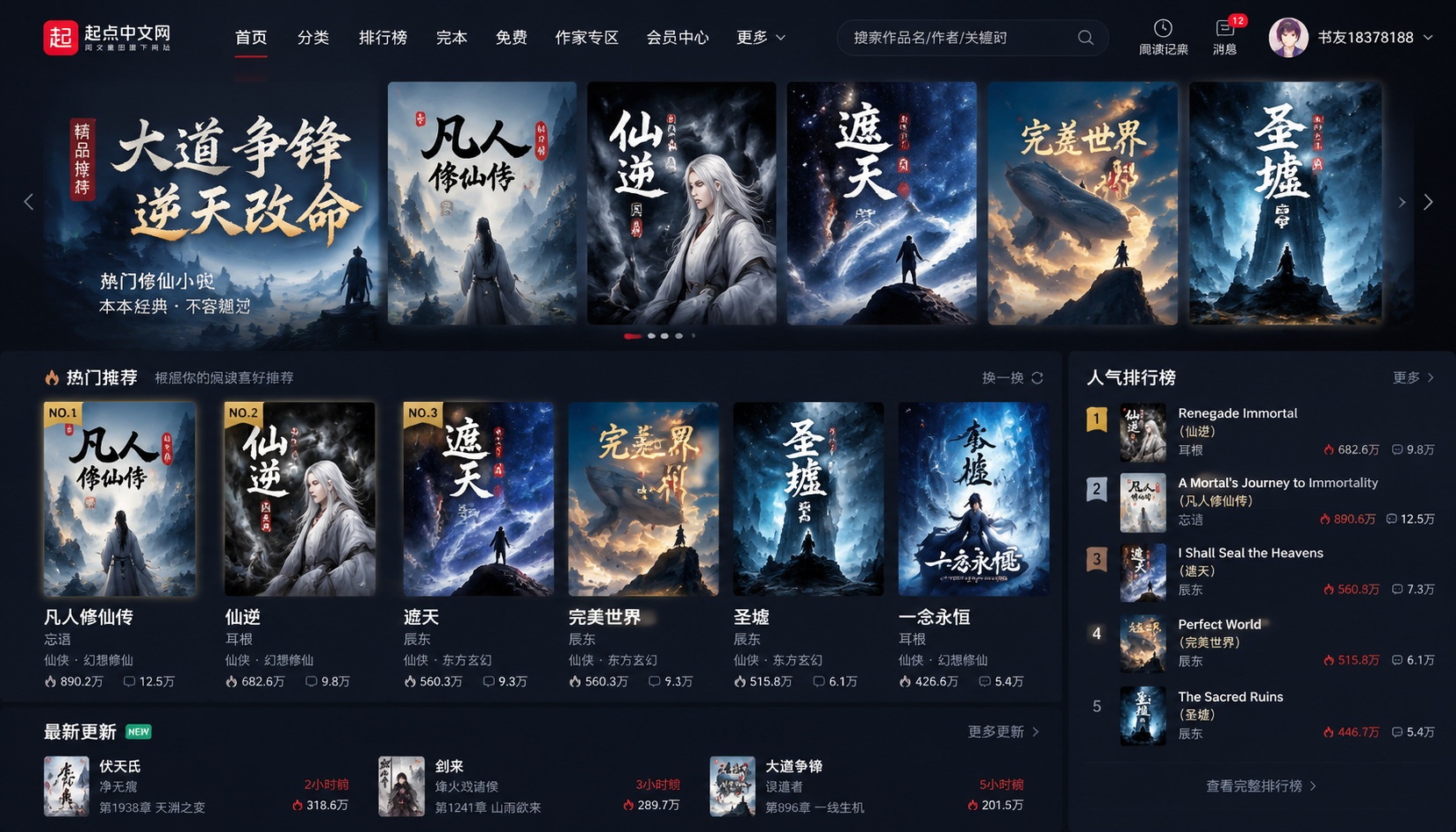
A 2023 survey by a Chinese reading platform found that over 60% of regular cultivation novel readers are aged 18–30. Among them, 45% said the novels made them reflect on their own life’s purpose and goals. This suggests that the concept of “xiuzhen” — a path of self-improvement through constant effort, tribulations, and breakthroughs — is being internalized as a metaphor for real-world struggles.
What Is “Xiuzhen”? A Familiar Growth Narrative
At its core, cultivation is about a mortal human using techniques (often a mix of meditation, martial arts, and alchemy) to evolve into an immortal being, progressing through stages like “Qi Condensation,” “Foundation Establishment,” and “Nascent Soul.” Each stage requires immense effort, resources, and luck. This is essentially a Chinese version of the hero’s journey — think Harry Potter mastering spells or Luke Skywalker training with Yoda, but on steroids and spanning millennia.
What sets cultivation apart is its emphasis on personal agency and the possibility of transcending one’s birth. In these novels, a poor village boy can, through relentless cultivation, surpass powerful aristocrats. This meritocratic fantasy is especially appealing to young Chinese who feel trapped by the rigid education-to-employment pipeline, famously known as the “thousands of troops crossing a single-plank bridge” for the college entrance exam (Gaokao).
Why Youth Relate: Projecting Real-Life Pressures
Chinese young people face intense competition: high academic demands, a grueling job market, and the infamous “996” work schedule (9am to 9pm, six days a week). A 2022 study by the Chinese Academy of Social Sciences noted that 76% of young workers experience moderate to severe anxiety about career advancement. Cultivation novels offer a mental escape where hard work is clearly rewarded — a stark contrast to real life, where effort doesn’t always guarantee success.
On social media platforms like Weibo and Douban, readers commonly use cultivation terminology to describe their daily struggles. For example, “crossing a tribulation” (dujie) — originally a life-or-death trial in the novels — is now a buzzword for dealing with workplace problems or financial crises. “Flying up to immortality” (feisheng) is used sarcastically for retirement or escaping pressure. One viral post from a young programmer read: “This week I’m going into seclusion (biguan) to debug the code. Wish me luck crossing my tribulation.”

This linguistic penetration shows how the cultivation framework helps young people make sense of their frustrations and aspirations, turning abstract anxiety into a narrative with clear stages and potential breakthroughs.
Core Values Impact: Individual Effort, Ambiguity Toward Rules, and Long-Termism
The cultivation ethos influences Chinese youth in several key areas:
1. Faith in Individual Effort Over Structural Barriers
Cultivation novels often downplay systemic inequality by focusing on the protagonist’s grit and “luck” (or fate). This reinforces a belief that success is primarily a function of personal hard work — a perspective common among China’s post-80s and post-90s generations. A survey by Tencent Penguin Intelligence found that 37% of young readers agreed with the statement: “If I work hard enough, I can change my class,” a figure notably higher among cultivation fans (49%).
2. Ambiguity Toward Social Rules and Authority
In cultivation worlds, the strong often dominate the weak, and moral rules are flexible. Protagonists sometimes justify revenge or theft if it aids their advancement. This can translate into a pragmatic view of rules in real life: some young readers become skeptical of authority and more tolerant of rule-bending when pursuing their goals. However, interviews suggest most separate fiction from reality — only about 12% of readers in one small study said the novels made them more willing to break laws.
3. Long-Term Orientation and Delayed Gratification
Cultivation requires patience — breakthroughs can take hundreds of novel-years. This aligns with the Chinese cultural value of “eating bitter” (chiku) and the modern phenomenon of “involution” (neijuan): intense competition requiring sustained effort. Many young professionals, particularly in tech and finance, cite cultivation novels as a reminder to focus on incremental progress. A 28-year-old AI engineer from Shenzhen shared: “When I feel stuck on a research problem, I think of cultivation breakthroughs: you just keep grinding, and eventually things click.”
Controversies: Positive or Negative Influence?
Critics argue that cultivation novels promote escapism, unrealistic expectations, and a transactional view of relationships (where people are resources). And indeed, a 2023 editorial in China Youth Daily warned about the potential for young people to substitute fictional achievement for real-world action. Yet, the picture is nuanced. A Chinese Academy of Social Sciences report concluded that “cultivation fiction offers a flexible narrative framework that can be both inspiring and problematic, depending on the reader’s interpretation.” Most young people, it seems, maintain a clear boundary between fantasy and reality.

On the positive side, cultivation novels have reignited interest in traditional Chinese philosophy (Daoism, Buddhism) and practices like meditation and qigong. Some readers have even taken up calligraphy or martial arts after being inspired by the stories. The grassroots creativity of the web novel ecosystem itself — millions of writers and readers engaged in a massive participatory culture — is a counterbalance to concerns about passive consumption.
Conclusion: A Window into Chinese Youth’s Mindset
The concept of “xiuzhen” is not just a literary device; it’s a cultural code. Drawing on ancient Daoist ideas of self-cultivation and the pursuit of transcendence, cultivation fiction modernizes these themes for a generation searching for meaning in a pressure-cooker society. For international readers wanting to understand why Chinese young people speak in terms of “tribulations” and “breakthroughs,” these novels offer a direct path. They reveal a generation that is simultaneously ambitious, anxious, and surprisingly resilient — qualities that may define the future of the world’s second-largest economy.
Start the discussion at forum.chinacomes.com