

An Impossible Number
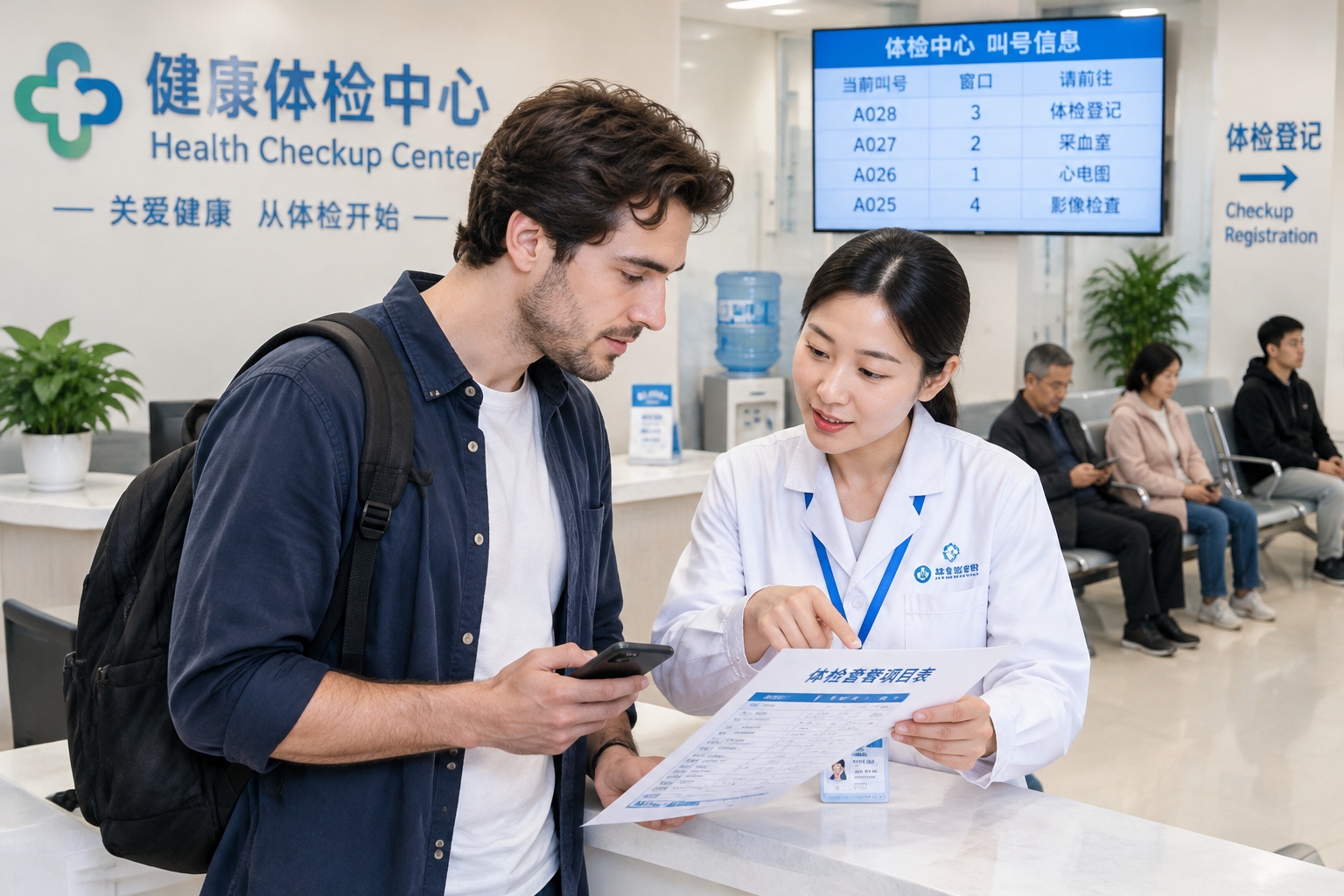
James lives in Suzhou. He is a British engineer, in his late thirties, and on his last trip home to Manchester he asked his GP to refer him for a colonoscopy. His father had polyps removed a few years earlier, so the concern was not abstract. The NHS waiting list, he was told, ran “roughly four to six months.” He flew back to China before his turn came.
A week after returning to Suzhou, he opened the WeChat mini-program of a local public hospital, booked a gastroenterology appointment, and had the procedure done. The bill, converted into pounds, was so low that his friend in London replied: “You’re joking.”
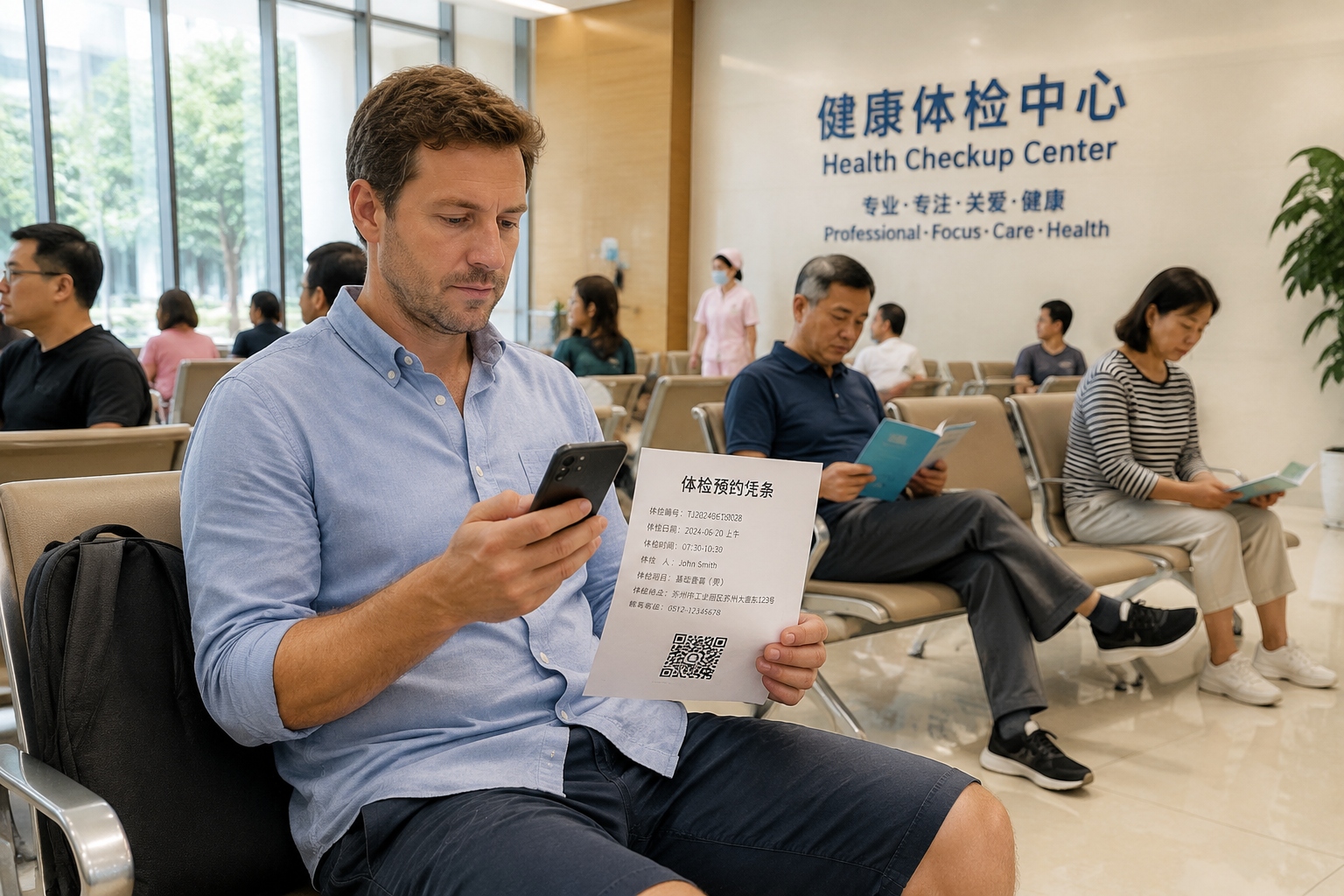
That story is not unusual. Walk through the health checkup centers of major Chinese hospitals in Beijing, Shanghai, Guangzhou, or Shenzhen, and you will notice foreign faces — expats who live here, business travelers in town for a week, and employees of multinational companies who treat Chinese cities as their regional base for routine health matters.
This Is Not a Medical Tourism Advertisement
It is worth being clear about what this article is not. It is not a pitch to fly to China for surgery, and it is not a claim that Chinese hospitals are faster or cheaper in every case. They are not. What follows is a look at how ordinary foreign visitors and residents do the math: how long they wait, what they pay, how they communicate, and who follows up afterward. The goal is to show the texture of a real calculation, not to sell a system.
The Time Ledger: From Booking to Report
Start with the process. In large Chinese cities, routine checkups are usually booked through a hospital’s WeChat account, app, or mini-program. Some hospitals still take phone calls and walk-ins. At the checkup centers of major public hospitals, a standard package can often be booked three to seven days ahead. A more comprehensive package — one that includes gastroscopy, colonoscopy, or CT — usually needs one to two weeks of lead time.
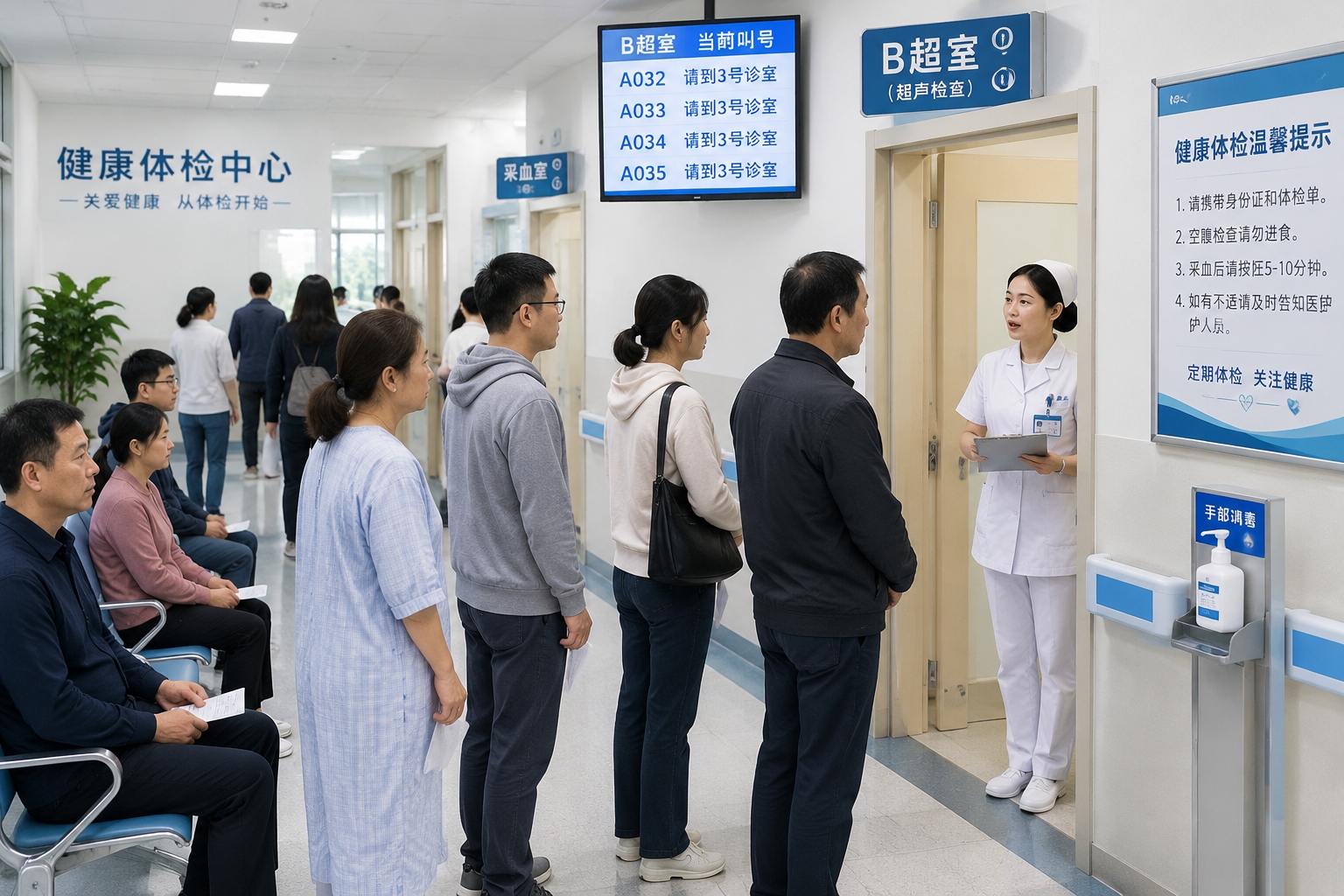
On the day itself, the flow is tight. Blood draw, ultrasound, ECG, chest X-ray, and physical exams are clustered on the same floor or adjacent floors of the checkup center. Most people finish in a morning. Results come next: routine panels are typically ready in two to five working days, and many hospitals push electronic reports to the phone. Some patients see the main indicators by the afternoon of the same day.
Compare that with the waiting times many foreign visitors are used to. In England, the NHS target for referral-to-treatment is 18 weeks, but actual waits are frequently longer, and endoscopy lists in many regions run into months. In Canada, MRI and CT wait times vary widely by province, with median waits measured in weeks or months. In the United States, the wait depends on your insurance network — someone with good coverage may be seen in weeks; someone without it faces a different kind of wall.
None of this means Chinese hospitals are always fast. Popular specialists, specific scans, and peak seasons all involve waiting. But for routine checkups and non-urgent screening, the time cost is genuinely compressed.
The Cost Ledger: What Is Cheap, and What Is Not
Cost is the part most easily flattened into “cheap” or “expensive.” The reality is layered.
Using publicly listed prices from major public hospitals in 2024 and 2025 as a rough guide: a basic checkup package — blood count, liver and kidney function, lipids and glucose, urinalysis, ECG, chest X-ray, abdominal ultrasound, and a physical exam — generally runs between 800 and 2,000 yuan, or roughly 110 to 280 U.S. dollars. Add-ons raise the total. A painless gastroscopy or colonoscopy typically adds 1,500 to 3,000 yuan. A low-dose chest CT adds several hundred to just over a thousand yuan. Cardiac ultrasound and carotid ultrasound each add a few hundred yuan.
Choose a public hospital’s international department or premium outpatient clinic, and the registration fee jumps — from tens of yuan at a standard clinic to several hundred yuan for international services — but so do the scheduling priority, the environment, and the likelihood of English-speaking staff. Private and foreign-invested clinics cost more again: a single GP consultation can run several hundred to over a thousand yuan. For expats with international insurance that pays directly, the process feels more familiar.
There are hidden costs too. Translation or an accompanying interpreter, if the hospital does not provide English service, runs by the hour. There is transport, accommodation, and the extra days added to a business trip. The ledger is not just the hospital invoice.
So the comparison needs a qualifier. Which layer are you comparing? A basic package or a full screening with endoscopy? A standard public clinic or an international department? Self-pay or international insurance? Saying “checkups in China are cheap” without those distinctions misses most of the picture.
Three Paths, Three Daily Realities
Foreigners in China tend to take one of three routes.
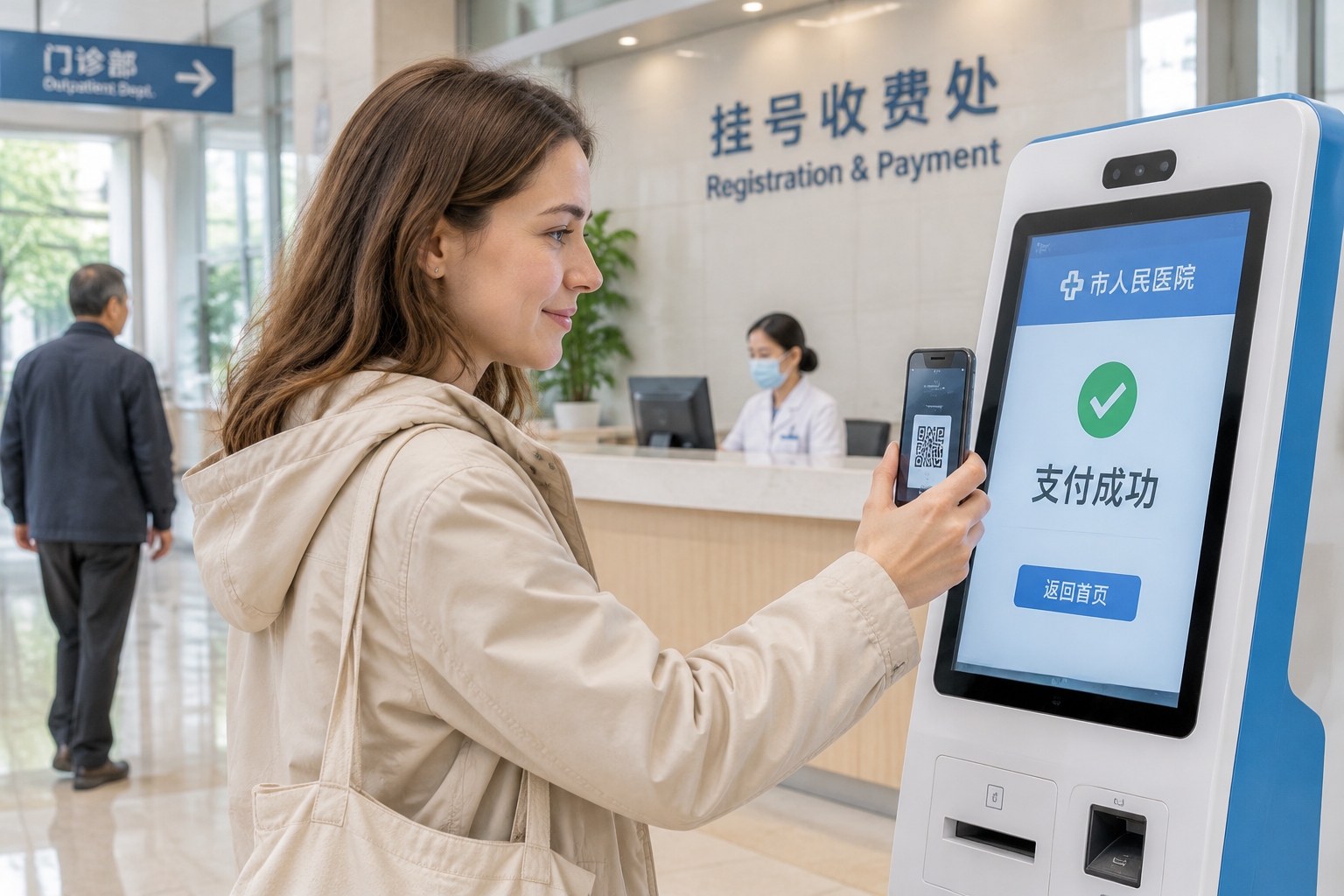
The first is the standard public hospital outpatient department or checkup center. Access is broad, prices are relatively low, equipment is often new, and test volumes are high. The challenge is language. Top hospitals in big cities usually have English signage and some English-speaking staff, but the ordinary windows and individual doctors vary widely. Payment is heavily mobile: WeChat Pay and Alipay are the default, with cash and bank cards still accepted, though visitors need to set up the apps first.
The second is the public hospital’s international department or premium clinic. Registration costs more, but booking is smoother, the environment feels closer to a private clinic, and English communication is more reliable. Many expats treat it as a familiar middle ground — cheaper than private care, smoother than the standard queue.
The third is a private or foreign-invested clinic. The process resembles a clinic in Europe or North America. Direct insurance billing is common, doctors often speak multiple languages, and reports follow international formats. The trade-off is price, and for certain complex tests, a referral back to a public hospital may still be needed.
Why It Works — and Where It Stops Working
The reason this is feasible is not one single advantage. It is several things stacked together. Major cities have a high density of top-tier hospitals and broad access to imaging equipment. Checkup centers and outpatient flows have been refined over years, so routine tests follow short, familiar paths. Mobile booking and electronic reports cut the friction of queuing and collecting paper. And dense urban transport and abundant accommodation make “fitting in a checkup” less costly in time than it sounds.
The limits are just as clear. This works best for routine checkups, chronic-disease monitoring, and non-urgent screening — blood lipids and glucose, thyroid ultrasound, colonoscopy screening, women’s routine exams. It is not suited to emergencies, complex surgery, or cases needing multidisciplinary review. Nor does it work well when a tourist itinerary is packed too tightly around medical appointments.
The Risks: Don’t Turn One Case Into a Plan
Several practical issues deserve thought before booking.
First, medical records. Chinese hospitals generally expect patients to bring prior records, medication lists, and allergy history. English records are best accompanied by a Chinese translation, or confirmed with the hospital in advance. Without a full history, the interpretation of results is weaker.
Second, insurance. Most international travel medical policies cover emergencies, but planned checkups and preventive screening are not always included. Before departure, confirm with the insurer how outpatient visits, tests, translation, and follow-up are handled.
Third, interpretation and follow-up. Getting the report is only step one. Who reads the abnormal values? If something is found, is the next step in China or back home? The handoff across borders is the most underestimated part of the ledger.
Fourth, accountability. Cross-border care involves two sets of regulations, and the path to recourse differs if something goes wrong. Choosing licensed institutions with English service and transparent pricing is the basic risk-reduction move.
How Chinese Patients Are Changing Too
Step back from the foreign visitor and look at local patients, and another layer appears. Over the past decade, urban Chinese residents have moved from queuing early in the morning to booking on their phones. Tiered diagnosis and treatment, promoted by the National Healthcare Security Administration and local health commissions, has pushed community clinics to handle more common and chronic conditions, while top hospitals concentrate on complex cases. Checkups have shifted from an employer benefit to part of personal health management. Young people now pay out of pocket for gastroscopy, thyroid ultrasound, and tumor-marker screening. Checkup packages are sold directly on e-commerce platforms.
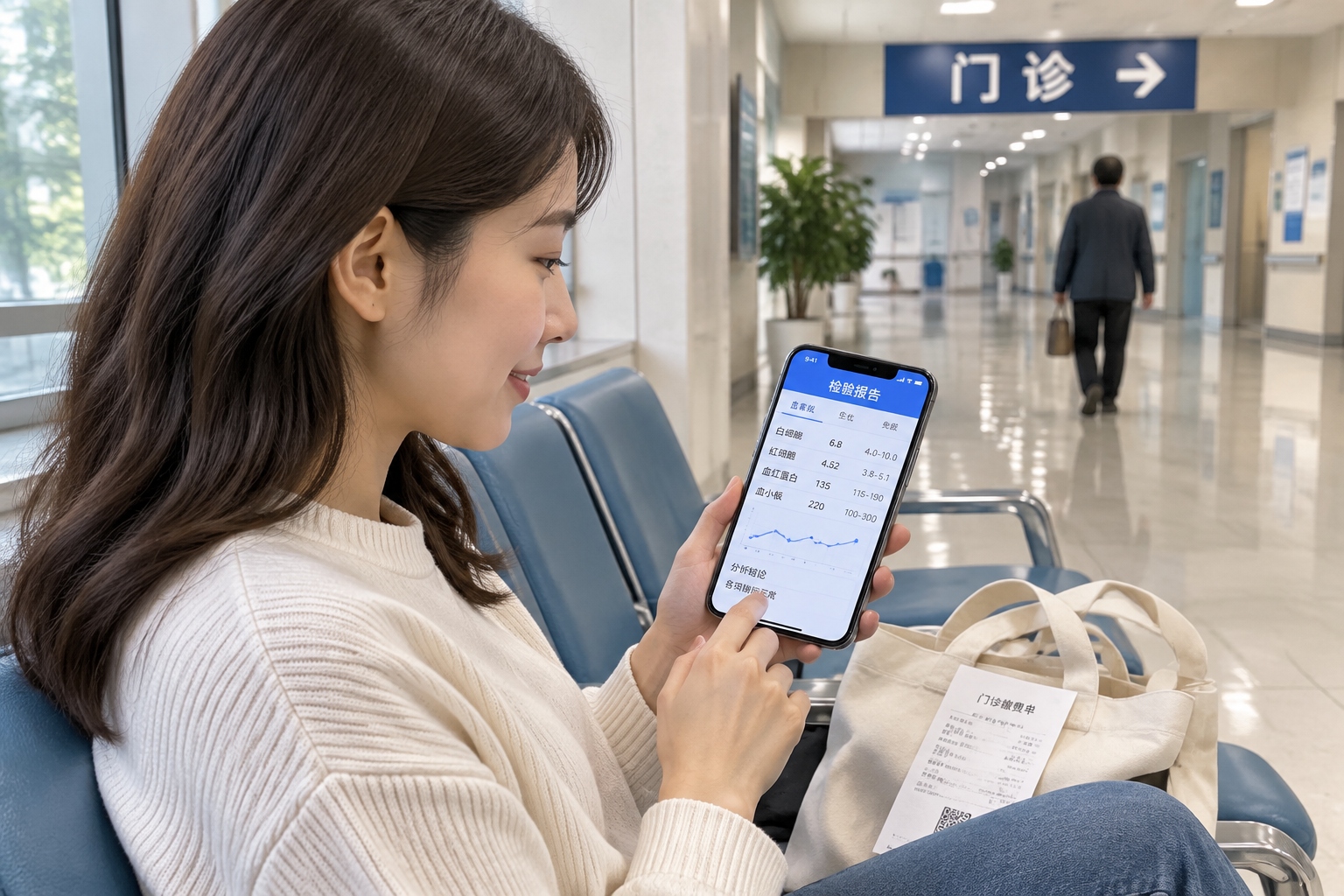
What this means for foreign visitors is that they are not encountering a system designed for tourists. They are encountering a system that locals use daily and that is still being adjusted. Understanding that is more useful than memorizing which hospital is fastest.
Back to the Ledger
James sent his colonoscopy report to his GP in London. The result was confirmed, and he was advised to repeat the exam in three years. He did the math: the procedure, translation, and travel came to roughly half what the same test would have cost him out of pocket at a private clinic in England, and he saved months of waiting. But he also said that if the finding had required long-term follow-up, he would not have kept all of it in China. He would have needed to stay connected with his doctor in the UK.
That is probably the real state of most foreigners seeking care in China: not choosing sides, but stitching resources from both places together. The specific efficiencies, prices, and conveniences of daily Chinese healthcare go into a personal ledger, on the same page as waiting times, insurance terms, and language barriers. There are no slogans about which system is better — only rows of numbers and dates.