
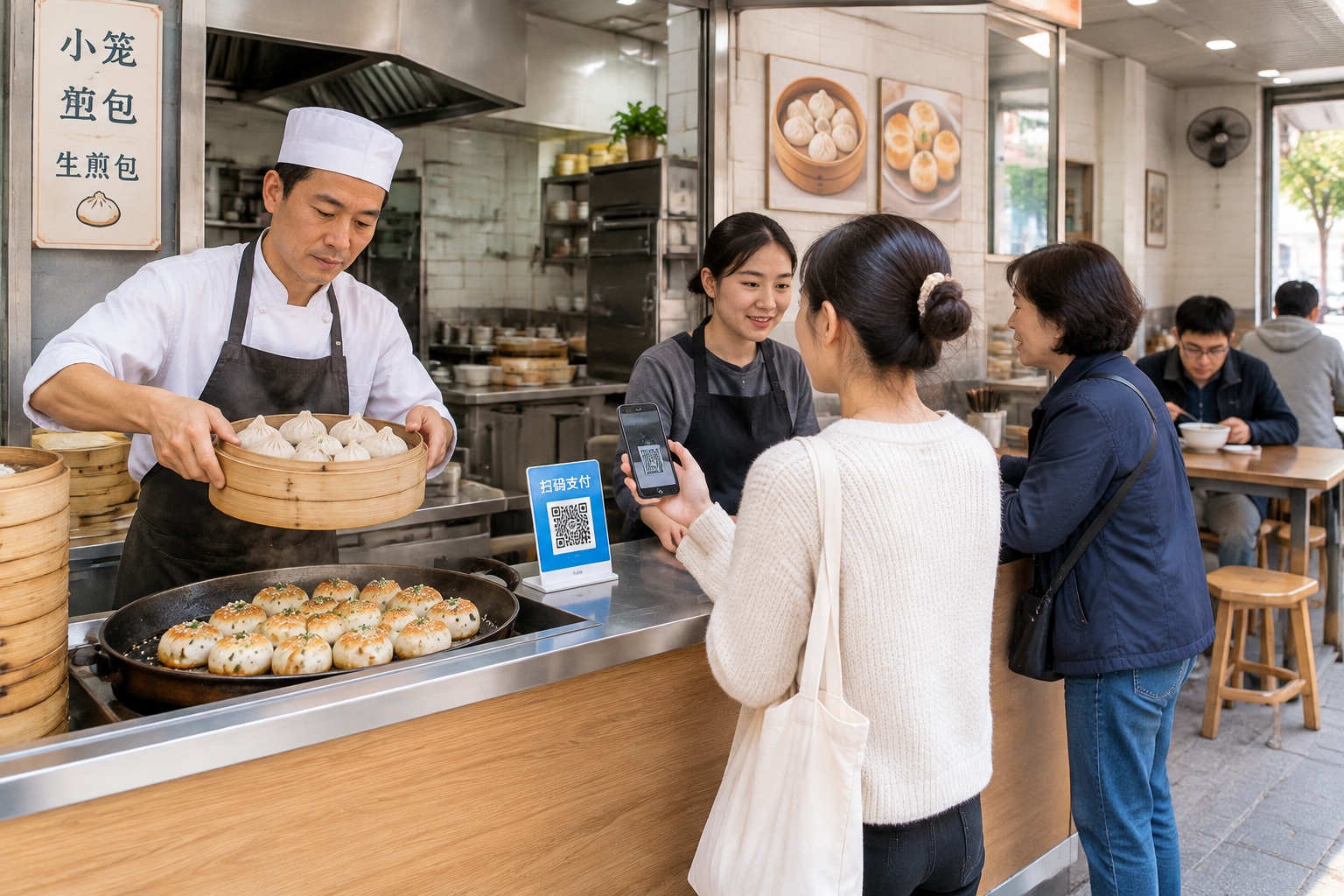

Picture a Shanghai breakfast counter: a cook lifts a bamboo steamer, a customer holds up a payment screen, and a delivery rider waits beside someone ordering aloud. This is an illustrative scene, not a reported visit to a particular shop. It frames a practical question: what has to work behind the counter for a hot breakfast to reach someone before work?
The answer connects Shanghai street food to refrigerated transport, ingredient suppliers, payment networks and human labor. Technology changes how breakfast reaches the table, but its effects depend on the shop, the dish and who pays for convenience.
Shanghai breakfast culture: three dishes, different rhythms
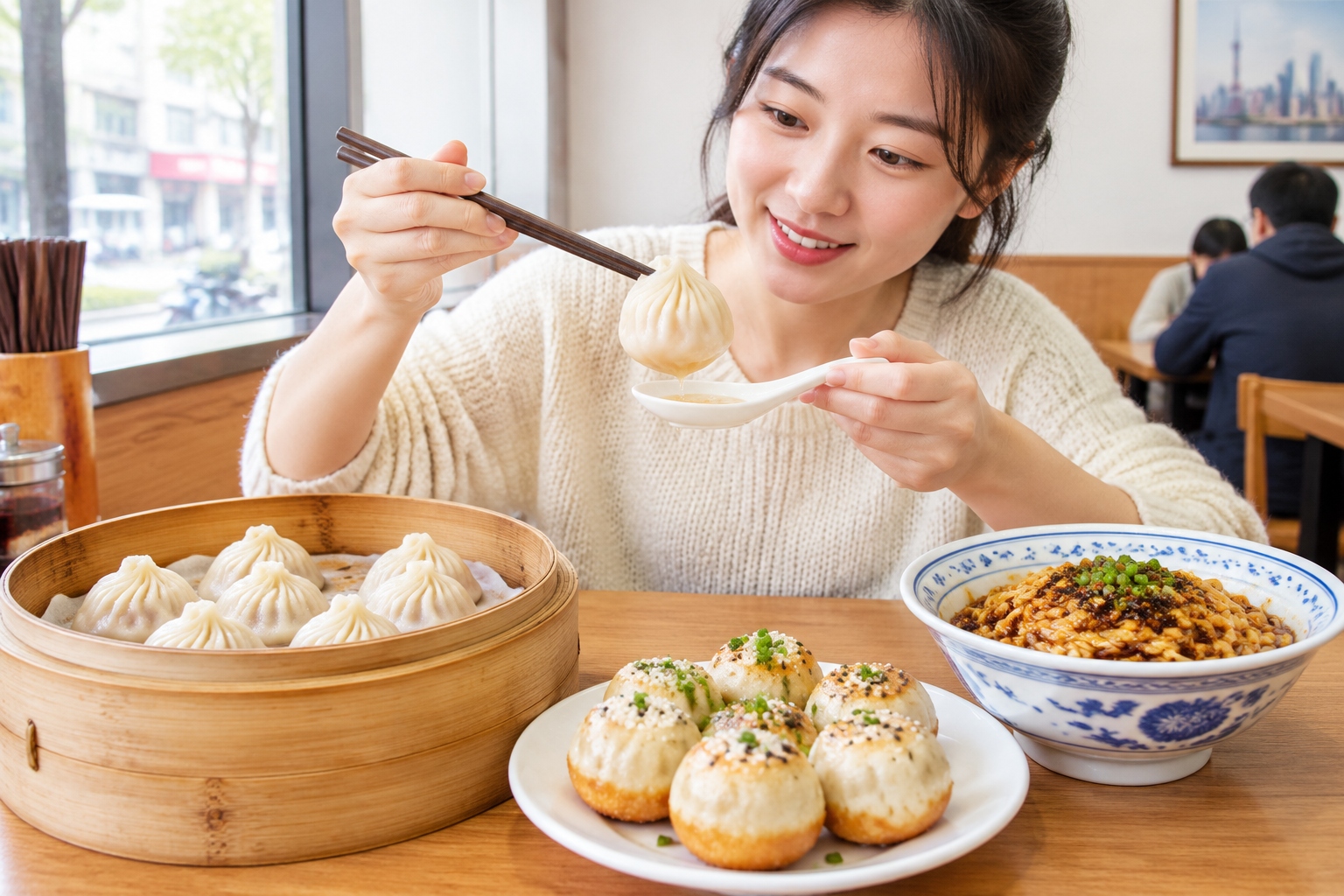
Xiaolongbao, also written xiao long bao, are small steamed dumplings with thin wrappers and soup inside. Traditionally, gelatin-rich stock sets into the filling when cool and melts during steaming. Lift one gently, let it cool and take a small bite before drinking the broth.
Shengjianbao are pan-fried buns, usually with a thicker, often partly leavened wrapper, a browned base and a juicy filling. They cook in broad pans with water and oil. A fresh batch may require waiting even when finished buns move quickly across the counter.
Congyou banmian means noodles tossed with scallion oil, commonly with a soy-based seasoning. Unlike soup dumplings, their appeal lies in the coating on each strand. Together, these dishes show why Shanghai breakfast cannot be reduced to a single dumpling—or a single production method.
Prices require equally careful reading: a menu may charge per bun, per basket or per portion. This article does not quote current prices or measured waiting times because neither has been verified through a dated shop visit.
The food supply chain before the doors open
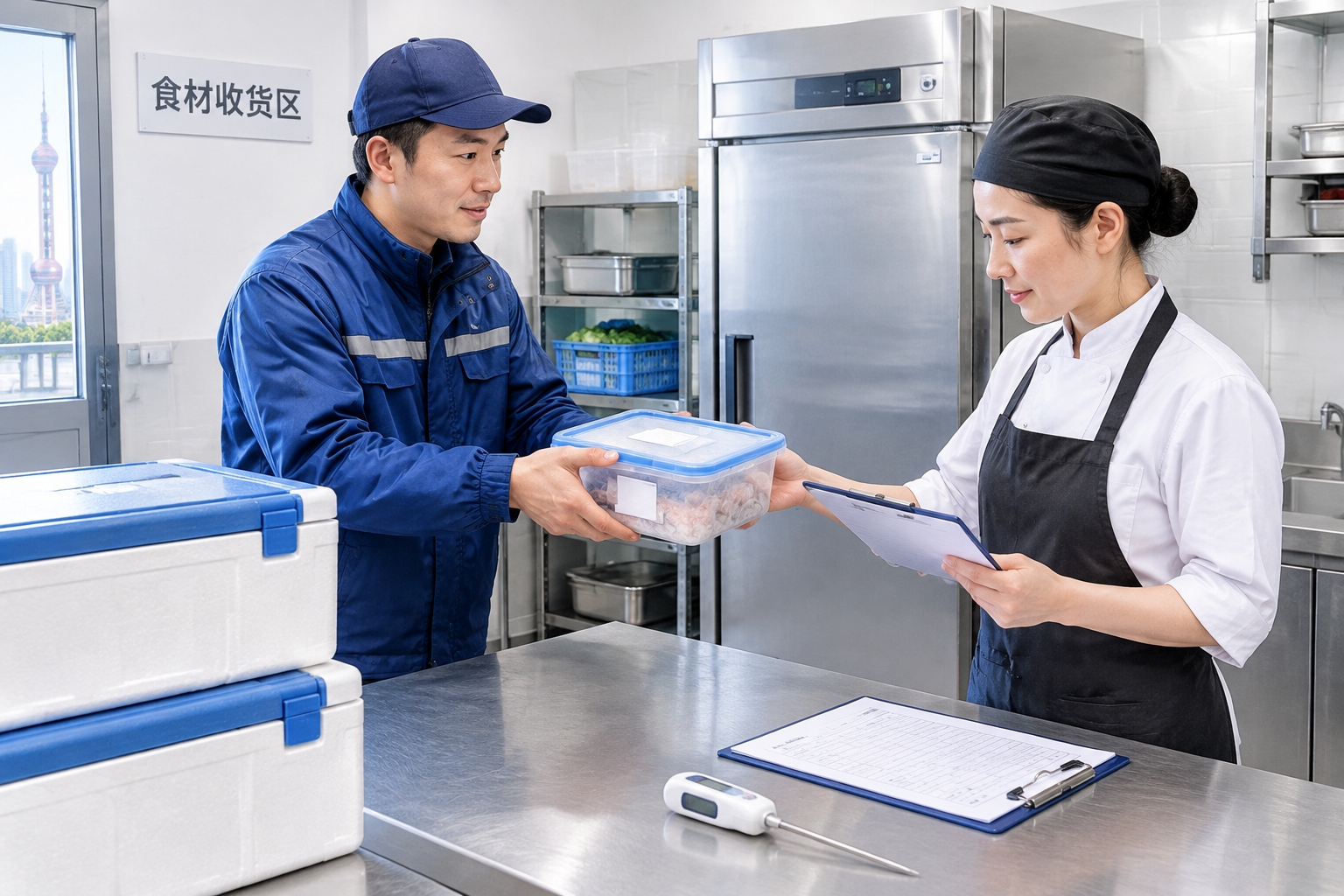
Before customers arrive, flour must be stored, pork kept under suitable temperature control, and fillings prepared. A small independent shop might buy through wholesalers and mix, roll and fold on site. Another business might receive prepared filling or formed dumplings. A chain may use centralized purchasing and a central kitchen, although arrangements vary.
A central kitchen is a facility that prepares food for multiple outlets. It can concentrate equipment, purchasing and quality checks in one place. The receiving branch may still perform important work: proofing dough, steaming dumplings, frying buns and deciding when a batch is ready.
Seeing someone fold dumplings establishes that folding happens there; it does not establish where the filling was mixed. Equally, seeing a delivery crate does not prove that finished buns arrived frozen. A reliable account needs the operator’s explanation, product labels or purchasing records.
Shanghai also sits within the Yangtze River Delta, a region linking the city with neighboring Jiangsu and Zhejiang provinces through extensive road and logistics networks. That geography supports sourcing beyond the immediate neighborhood. It does not tell us which farm or factory supplies an individual counter.
Cold chains, frozen dumplings and consistent breakfasts
A cold chain keeps temperature-sensitive food within specified conditions through storage and transport. Chilled pork, frozen dumplings and a freshly folded bun describe different things: an ingredient’s storage condition, a preserved product and a preparation step.
Frozen foods are commonly stored at around −18°C or below, subject to their labels and applicable requirements. Chilled products are held above freezing under conditions appropriate to the product. Neither category automatically reveals flavor, freshness at production or how carefully a kitchen handles food afterward.
China’s GB 31605-2020, the national food safety standard for hygiene in cold-chain logistics, provides a concrete reference for transport and storage management. Temperature control, cleaning and records matter because contamination and warming cannot be detected reliably by looking at a delivery box.
For a familiar commercial example, Wanchai Ferry sells packaged frozen dumplings in China. Its retail products demonstrate how labeled storage and cooking instructions accompany standardized food. They do not establish that a Shanghai breakfast shop uses that brand or the same process.
Standard recipes and portion sizes can help a business predict yields and reduce variation. Freezing can extend the planning window and reduce some spoilage risks when properly managed. Trade-offs remain: wrappers may behave differently after freezing, and steaming or frying technique still determines the result.
Mobile payments in China: what customers actually encounter
The most visible technology may be a small QR code. One code opens a menu; another simply lets the customer pay an amount. Scanning to pay does not necessarily create a kitchen order. At a basic counter, a worker may still call the order aloud.
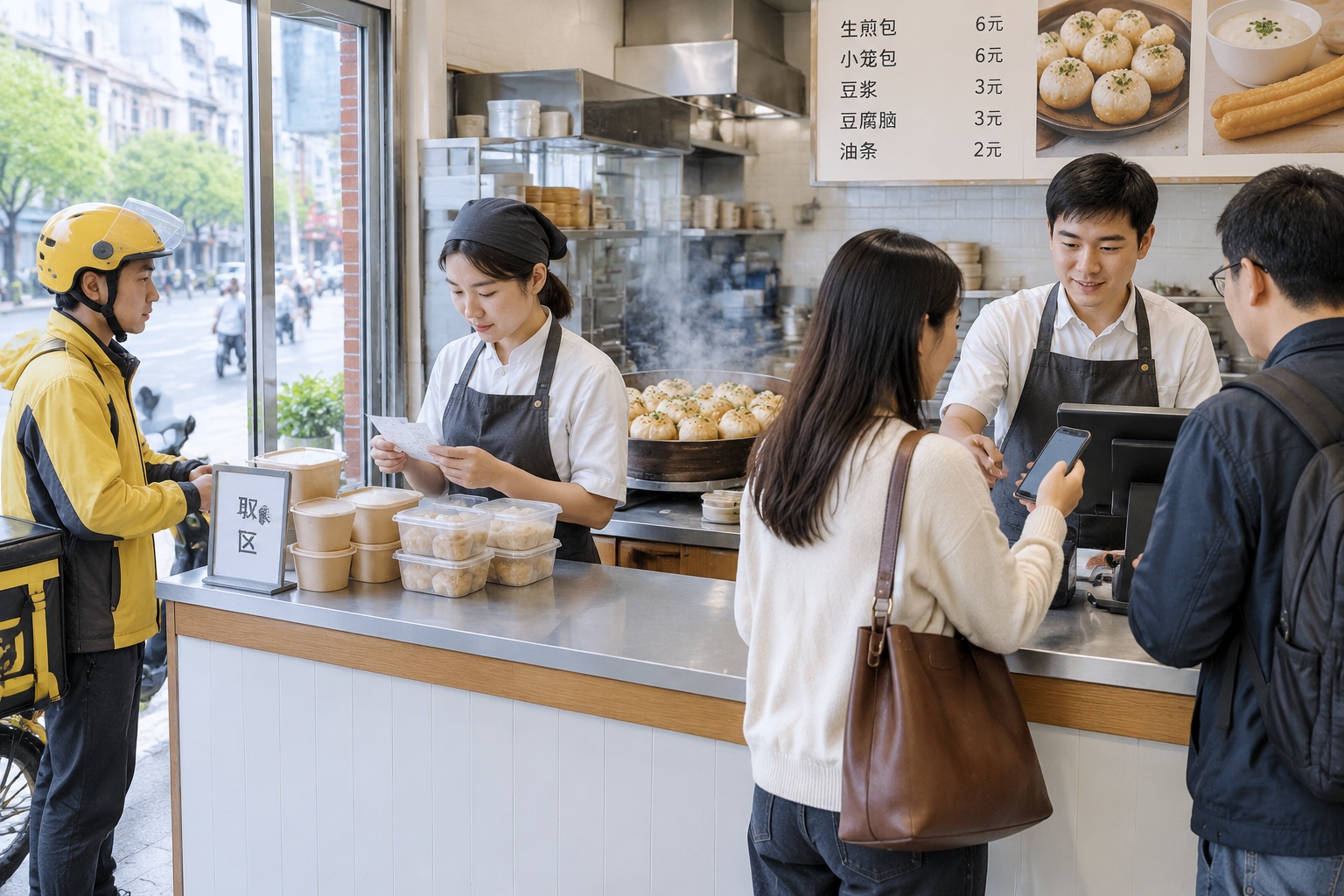
Where ordering systems are connected, a submitted order can appear on a kitchen screen or print as a ticket. Delivery-platform orders may enter the same workflow, although some shops manage separate devices. A customer sees a simple transaction; staff may be coordinating several queues.
Sales records can help an equipped operator estimate how much filling to prepare or when to start another batch. That is useful digital management, but it is not automatically artificial intelligence. Claims about AI forecasting or food automation need evidence from the business using them.
For visitors, Alipay and WeChat Pay support linking eligible overseas bank cards, subject to identity checks, card eligibility and transaction restrictions. The People’s Bank of China’s 2024 payment guide for overseas visitors explains mobile payments alongside bank cards and cash. Acceptance and setup still need checking.
Renminbi cash remains legal tender, and official policy addresses improper refusal. Nevertheless, a small shop may have limited change or rely heavily on phone ordering. Carry small notes, ask about counter service and set up a payment option before the breakfast queue.
Who pays for a convenient, inexpensive meal?
A breakfast bill has to cover ingredients, rent, wages, utilities, equipment and waste. Delivery adds packaging and platform-related charges. There is no single fee percentage that accurately describes every merchant: contracts, services, promotions and delivery arrangements differ.
Consider a shop receiving several delivery orders while its pan of shengjianbao is nearly empty. Those orders may raise sales, but a worker must assemble containers, check tickets and coordinate collection while serving the queue. Higher revenue does not guarantee a proportional increase in profit.
The rider also has a sequence to manage: arrival, collection, travel and access to the destination building. A delayed batch can disrupt it. The customer receives convenience, while kitchen staff and riders absorb some of the pressure created by overlapping orders.
Food changes in transit, too. Steam trapped inside packaging can soften a crisp bun base; noodles can clump; delicate wrappers can tear. Packaging design helps, but eating beside the pan and opening a box twenty minutes later remain different experiences. That interval is illustrative, not a measured delivery promise.
One street, several ways to run a breakfast shop
In Shanghai, “street food” often means an everyday dish sold from a permanent storefront, neighborhood restaurant or market counter. It does not necessarily mean an outdoor cart. Premises, licensing requirements and neighborhood management shape where these businesses operate.
An independent shop can build its identity around a cook’s technique and a regular clientele. Its output may vary with staffing and batch timing. A centrally supplied chain can offer more consistent portions and purchasing, while a delivery-focused outlet may prioritize packing space and order handling.
These are tendencies, not rankings. Chains can preserve distinctive recipes; independent shops can buy prepared ingredients. Opening hours and prices need checking branch by branch. The more useful questions are what happens on site, how frequently batches are cooked and whether the dish travels well.
A first-time visitor’s Shanghai breakfast checklist
Look for bamboo steamers when identifying xiaolongbao and broad frying pans for shengjianbao, then confirm with the menu. Check portion size before comparing prices. Choose dine-in when a crisp base or delicate wrapper matters, and ask whether takeaway packaging costs extra.
For allergies, ask specifically about wheat, soy, sesame, shellfish and other relevant ingredients, including stocks, sauces and shared equipment. A visible pork filling is not a complete ingredient list. Translation software helps communication but cannot guarantee an accurate allergen assessment.
Return to that imagined counter: a hot basket, a spoken order, a payment confirmation. What makes the breakfast work is the coordination behind each small action. For the person eating before work, its success is tangible: the right portion, a manageable wait and a dumpling that reaches the table intact.
Sources and reporting scope
Payment information draws on the People’s Bank of China’s 2024 Guide to Payment Services in China, available through its English-language website. The cold-chain reference is GB 31605-2020, searchable through the national standards portal. This explanatory article contains no original shop interviews, verified supplier tracing or live menu checks; individual operating arrangements, prices and payment options require confirmation at the shop.
Start the discussion at forum.chinacomes.com