

A Scene You’ve Probably Seen Before
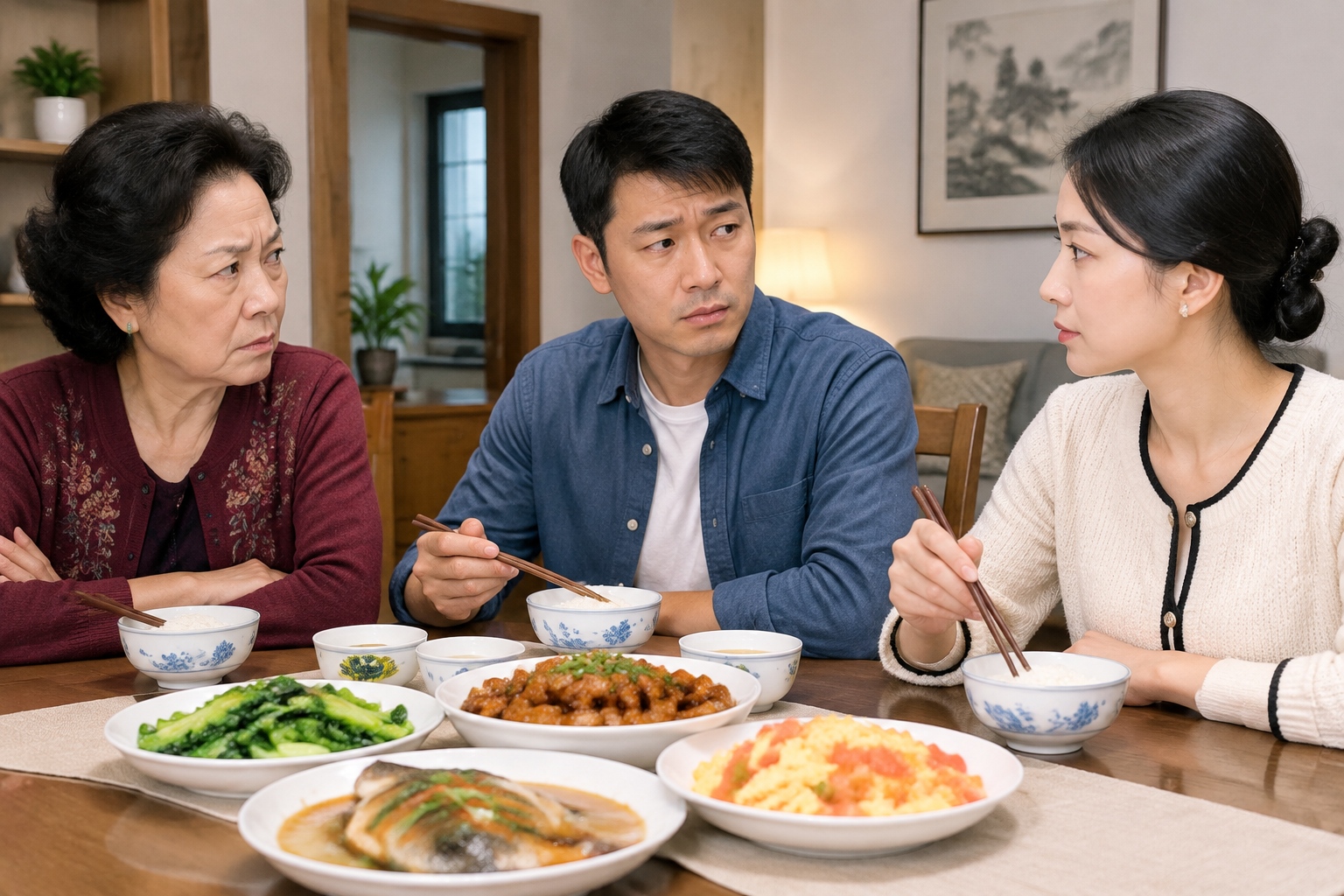
It’s 8 p.m. on the Shanghai subway. A woman in her early 30s, still in her work clothes, holds her phone in one hand and a bag of groceries in the other. On the screen, a mother-in-law is screaming at her daughter-in-law over a bowl of soup. The daughter-in-law doesn’t yell back. She just looks up and says, very quietly, ‘You’ll regret this.’
The woman watching smiles. She’s seen this scene a hundred times. She knows exactly what happens next.
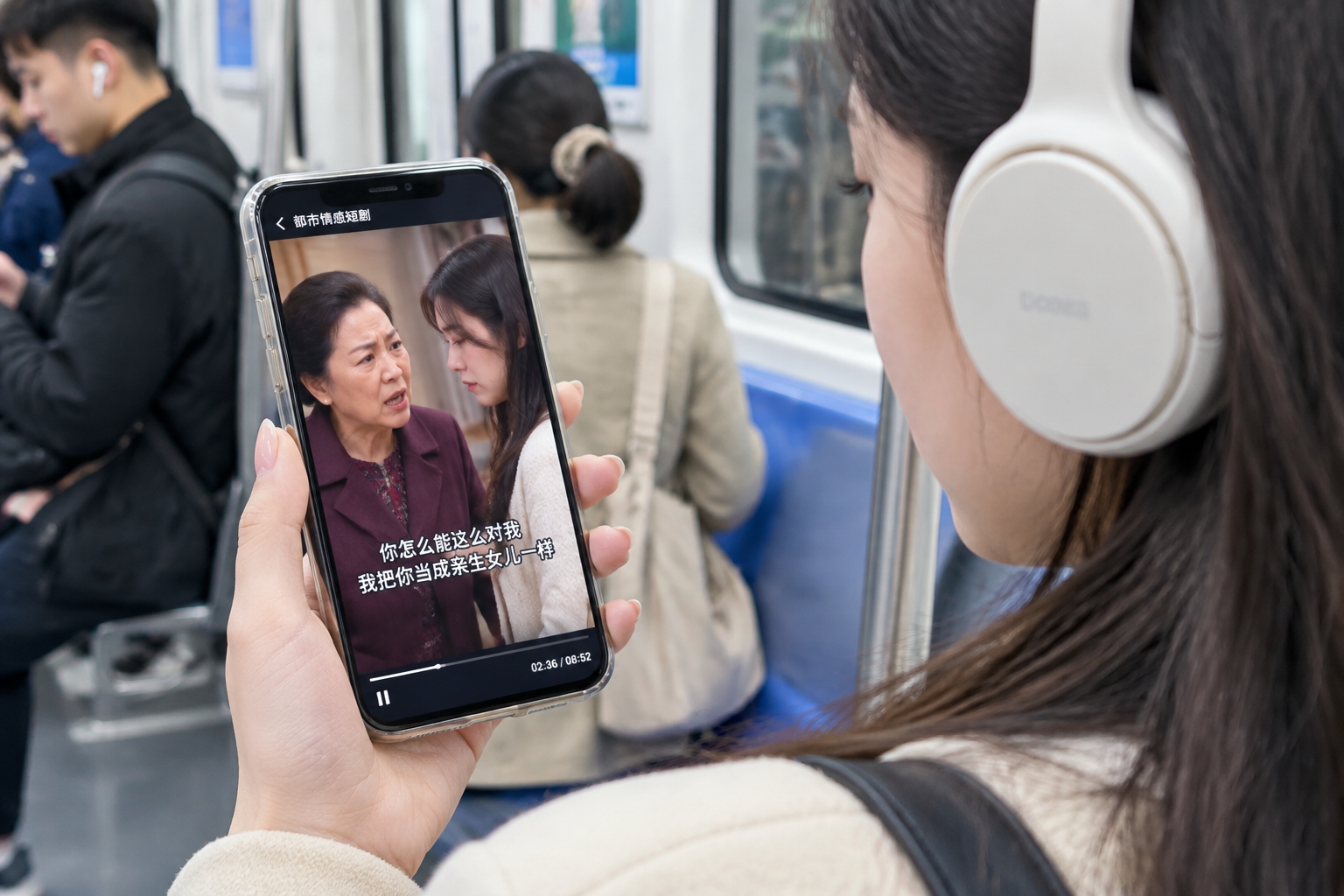
If you’re not Chinese, you might not know this scene. But you probably will soon. This is the classic setup of the Chinese family ethics drama — a genre that has been running on Chinese television for more than twenty years. Now, a version of it is showing up on your phone, in English, on apps like ReelShort and DramaBox. And Western audiences are watching.
The Formula: Four Steps to a Family Meltdown
Chinese family dramas are not subtle. They follow a recipe that has been refined over two decades. Once you see it, you can’t unsee it.
Step 1: The mother-in-law despises the daughter-in-law. It doesn’t matter why. Maybe the daughter-in-law is from a poorer family. Maybe she works too much. Maybe she just isn’t ‘good enough’ for the son. The mother-in-law makes her feelings known — loudly, in front of everyone.
Step 2: The husband sides with his mother. This is the crucial part. The husband is not a villain, exactly. He’s weak. He says things like ‘She’s my mother, I can’t abandon her’ or ‘Just apologize, it’ll be easier.’ He wants peace, but he wants it at his wife’s expense.
Step 3: The daughter-in-law endures. She cooks, cleans, takes the insults, and keeps a secret. Because she has one. She might be a hidden billionaire, a genius doctor, a long-lost heiress, or a top lawyer who quit her job for love. She is never just an ordinary woman.
Step 4: The reveal and the regret. The secret comes out. The mother-in-law realizes she has insulted someone powerful. The husband realizes he chose wrong. They beg for forgiveness. The daughter-in-law, now calm and confident, walks away. Or she stays, but on her own terms.

You can find this exact structure in shows like Double-Sided Adhesive (2007), which is about a Shanghai woman married to a man from a rural family, and The Mother-in-Law Is Here (2009). But the most extreme versions are now in short dramas — vertical, one-minute episodes designed for your phone.
Why This Story Works in China
To understand why this formula has lasted so long, you have to understand the Chinese family. In many Chinese families, marriage is not just between two people. It’s between two families. And the mother-in-law often holds a lot of power.
This goes back to filial piety — the traditional idea that children owe their parents respect and obedience. A son is expected to take care of his parents, especially his mother. When he marries, his wife is expected to join the family and follow the same rules. But modern Chinese women have different expectations. They have educations, careers, and their own money. The clash is real.
Then there’s the one-child policy. For decades, many urban families had only one child — often a son. That son became the center of his mother’s world. She invested everything in him. When he brings home a wife, the mother-in-law can feel like she’s losing her son. The competition is intense.
The identity reveal is the fantasy. In real life, you can’t suddenly become a billionaire to silence your mother-in-law. But in the drama, you can. It’s a revenge fantasy that also speaks to something deeper: the desire to be seen and valued for who you really are, not for how you’re treated.
A Quick Guide to the Key Players
If you’re new to this genre, here’s who you’ll meet.
The Mother-in-Law: She is the gatekeeper. She believes she knows what’s best for her son. She often sees the daughter-in-law as an outsider who is taking him away. She can be cruel, but she can also be surprisingly vulnerable.
The Daughter-in-Law: She is the underdog. She is usually kind, hardworking, and patient — until she isn’t. Her secret identity is her weapon.
The Husband: He is the weak link. He loves his wife, but he fears his mother. He wants everyone to get along, but he doesn’t want to do the work. He is often the most hated character in the show.
The Other Man: There is almost always a richer, more powerful man waiting in the wings. He sees the daughter-in-law’s true worth from the beginning. He is the fantasy alternative.
Why the West Is Watching Now
In 2023, a Chinese-owned app called ReelShort hit the top of the U.S. App Store. It offers short, vertical dramas in English, with American actors and American settings. But the stories? They are straight from the Chinese playbook.
Take The Double Life of My Billionaire Husband, one of ReelShort’s biggest hits. A young woman marries a man she thinks is a nobody. His family treats her like dirt. Then she discovers he’s actually a billionaire. The mother-in-law who insulted her now has to bow. Sound familiar?
Western viewers are drawn to the pace. Each episode is one to two minutes. There’s a cliffhanger every thirty seconds. It’s designed to be addictive — like a soap opera, but faster. And the emotional core is universal. In-law conflict is not unique to China. Neither is the fantasy of proving your worth to people who dismissed you.
But there’s a cultural translation happening. In the Chinese version, the mother-in-law’s power often comes from tradition. In the Western version, it comes from money and class. The daughter-in-law might be a waitress, and the mother-in-law a rich snob. The husband is still weak, but his excuses change. ‘She’s my mom’ becomes ‘She’s family, we have to try.’ The beats are the same.
The Chinese short drama market exploded in 2023, reaching over 37 billion yuan (about $5.1 billion) in revenue, according to Chinese media reports. That’s bigger than the country’s box office that year. ReelShort, owned by Crazy Maple Studio, a subsidiary of Chinese company COL Group, has been downloaded millions of times in the U.S. and topped the iOS App Store in November 2023.
Why One-Minute Episodes Work
Traditional Chinese family dramas are long. Double-Sided Adhesive has 22 episodes. The Mother-in-Law Is Here has 34. But short dramas cut all that down. Each episode is a scene, a conflict, a cliffhanger. You can watch a whole series in one sitting.
The format is not just a Chinese thing. It’s a global trend. But Chinese companies were early. They took stories that had already been tested on Chinese audiences and localized them for the U.S., Europe, and Southeast Asia. The result is a kind of cultural copy-paste that works surprisingly well.
What It Says About Both Cultures
The fact that this formula travels so well says something. Both Chinese and Western audiences worry about family, money, and status. Both enjoy watching someone who has been humiliated rise up. The details differ, but the emotions are the same.
There is a difference, though. In Chinese dramas, the mother-in-law is often a tragic figure too. She may have suffered herself. She may be lonely. The story sometimes asks for understanding, not just revenge. In the Western short dramas, the mother-in-law is usually just a villain. The pleasure is simpler.
Also, the Chinese version is often longer. A traditional TV drama might run for 30 to 40 episodes. The short drama condenses that into 80 minutes. Both have their fans.
The Script Isn’t Going Away
Twenty years ago, Chinese audiences were watching mother-in-law dramas on TV. Today, they’re watching them on their phones. Tomorrow, your neighbor might be watching a version with different names and a different city, but the same angry mother-in-law and the same quiet daughter-in-law.
Why? Because the story is about something real. It’s about power in families, about the gap between generations, and about the moment when someone who was underestimated finally gets to say, ‘You’ll regret this.’ That moment works in any language.
Start the discussion at forum.chinacomes.com