

Introduction: A Doll That Doesn’t Belong to a Global Brand
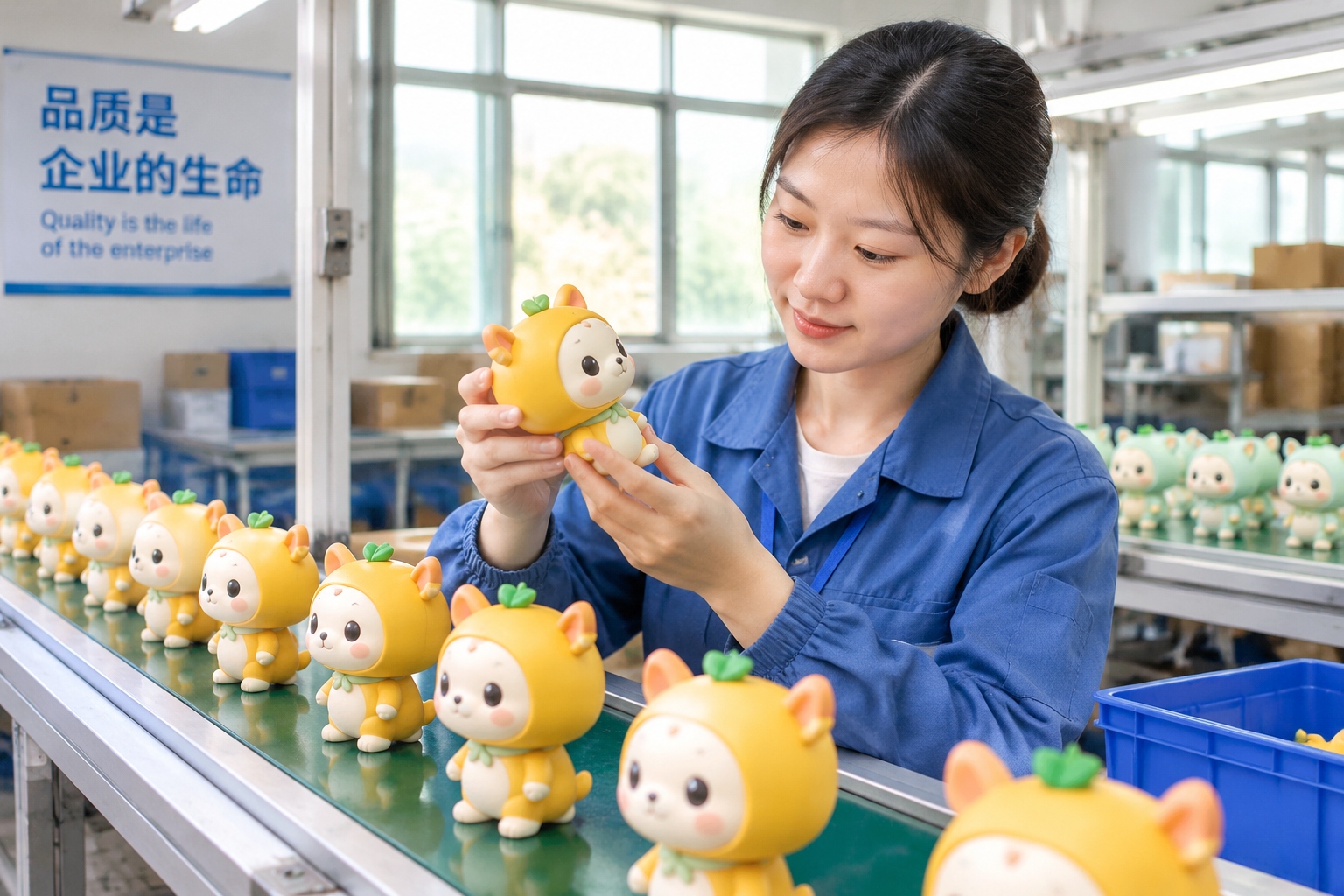
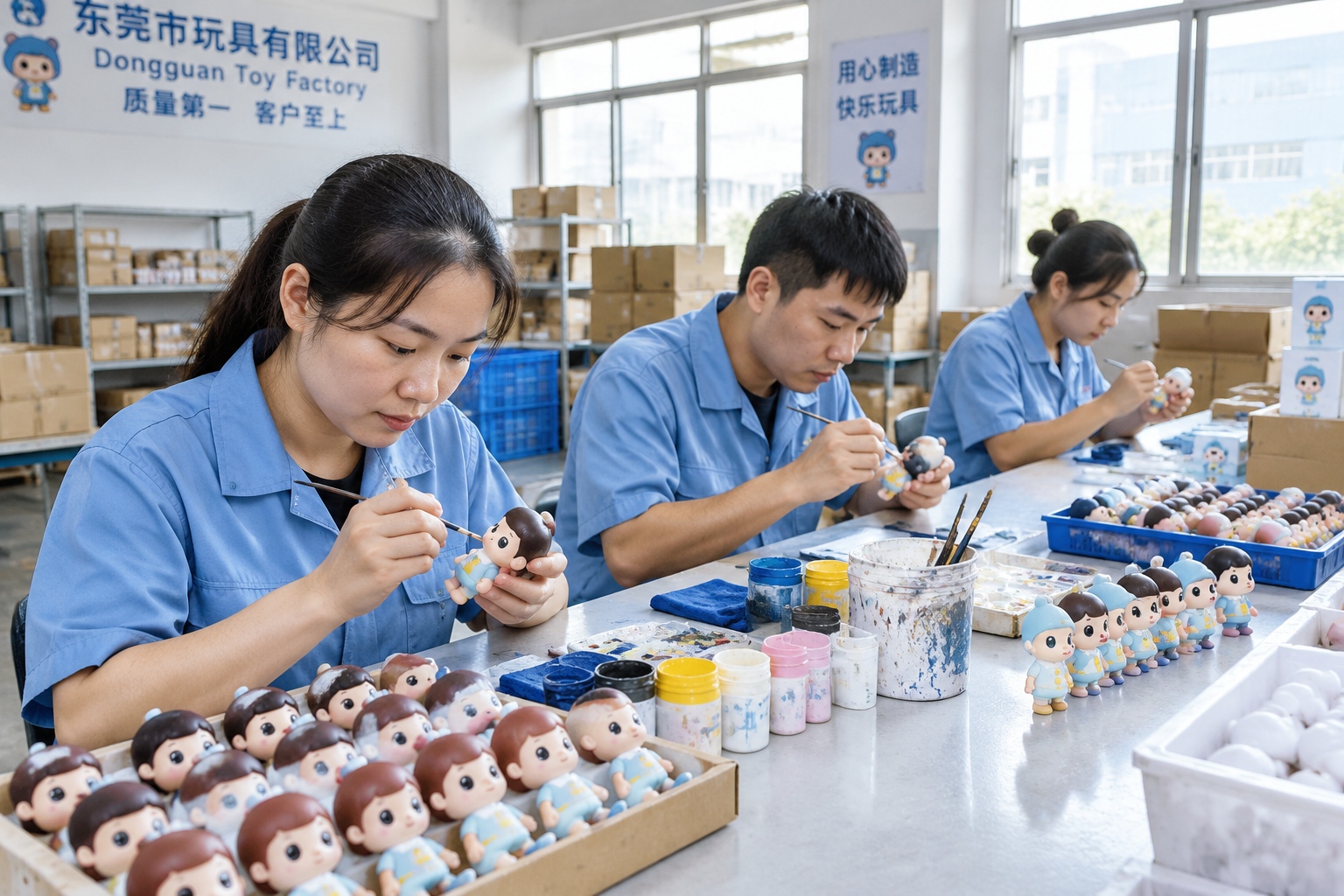
In a dusty workshop on the outskirts of Dongguan, a city in southern China, rows of workers are carefully painting a small vinyl doll. The doll isn’t a licensed character from a movie or a cartoon. It has no logo on its back. It’s a native-born Chinese toy character named Yue Tu, or Moon Rabbit.
The factory that makes Yue Tu belongs to Chen Ming, a 56-year-old entrepreneur who has spent two decades as an OEM manufacturer for global toy giants. “For years, we made toys that ended up in Walmart and Target, but nobody knew our factory’s name,” he says.
That’s changing now. As China’s manufacturing heartland faces rising costs and stiffer global competition, many factories in Dongguan are turning to a new strategy: building their own intellectual property (IP). The journey is painful, unpredictable, and full of lessons about what it means to move from “made in China” to “created in China.”
Welcome to Dongguan: The World’s Toy Box
Dongguan is not a name most overseas consumers recognize. But if you’ve ever held an action figure, a Barbie, or a plastic dinosaur, there’s a good chance it was born here. According to the local government, Dongguan produces about 30% of all toys sold globally, and its toy industry generates more than RMB 50 billion in revenue annually. The city is home to more than 4,000 toy-related companies, ranging from tiny workshops to massive plants.
For most of the past 30 years, these companies played a supporting role. They would receive a design from an American or Japanese brand, set up production lines, and churn out millions of identical items. The profit margin was razor-thin: often one or two yuan per toy, while the brand owner collected the bulk of the value.
Chen Ming knows this math better than anyone. “We made a line of talking teddy bears for a famous American retailer,” he recalls. “The retail price was $19.99. Our factory earned ¥3.5 per unit. That’s less than 50 cents.”
A Factory Owner’s Leap of Faith
In 2018, Chen began to worry. Overseas orders were getting smaller and less predictable. Meanwhile, at home, a new craze called “Chaowan” (潮玩, or trendy art toys) was sweeping Chinese cities. Young consumers were paying ¥59, ¥99, even ¥199 for a small designer toy, often without knowing what they’d get inside a sealed box — a phenomenon called “blind boxes.”
“I saw grown-ups queuing to buy these little plastic figures,” Chen says. “I thought: These are just toys. And I make toys. Why can’t we make our own?”
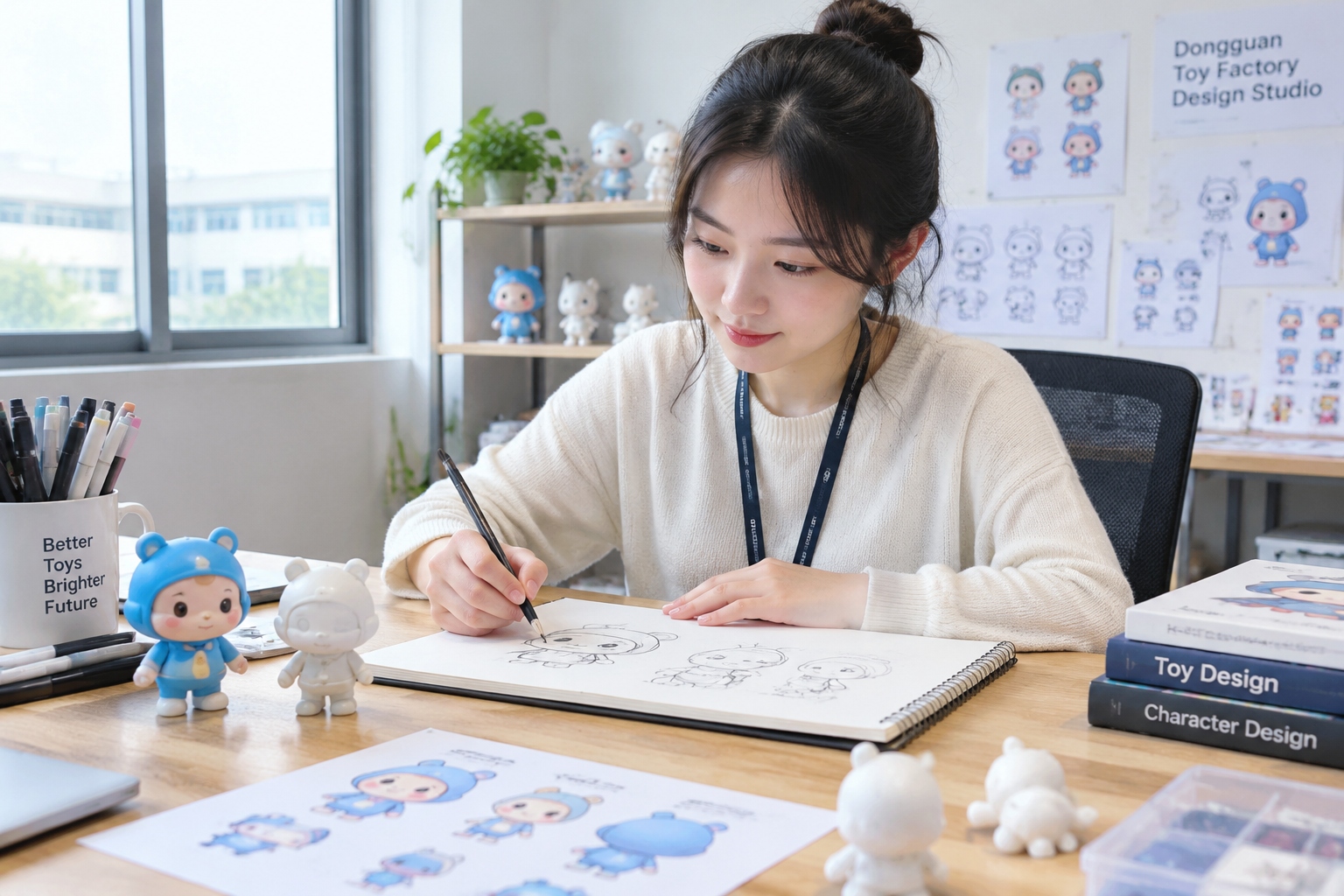
The idea was tempting, but risky. Chen’s factory, like most OEMs, had no design department. Its strength was speed and cost control, not creativity. Still, he decided to invest. In 2019, he hired two young designers and gave them a shocking amount of freedom: “Draw something that you would want to keep on your desk.”
The first character they submitted was a cute but oddly melancholic hedgehog. Chen had his doubts. “I told them it wasn’t cute enough,” he laughs. “But they argued that Gen Z didn’t want cute. They wanted real.” That prototype was eventually abandoned, but it opened a door.
“We didn’t know what would work,” Chen admits. “We were learning to listen to a market we had never sold to directly.”
Meet Xiaolin: A Designer Who Found Purpose in a Factory
One of those first designers was Xiaolin, now 27. She grew up in a small town near Dongguan and studied visual design at an art school in Guangzhou. After graduation, she landed a job in Shenzhen’s tech marketing scene, designing social media ads. “Big salary, but it felt distant,” she says. “I was drawing things that existed only for 24 hours and then disappeared.”
When a friend told her that a toy factory in Dongguan was hiring designers, she almost said no. “Toy factory? I thought it would be boring. But then I visited, and I saw the machines, the surfaces, the materials. It felt real.”
Xiaolin’s breakthrough came with a moon rabbit. Inspired by the Mid-Autumn Festival, a holiday when Chinese families gather under the moon, she drew a white rabbit with a crescent scar on its cheek, clutching a small glowing orb. “The rabbit is tired of chasing the moon, but it can’t stop,” she explains.
The product, named Yue Tu, launched in 2021 in an edition of 2,000. It sold out through Tmall and Pop Mart’s offline stores within two weeks. Resellers instantly doubled the price on online marketplaces. “I was shocked,” says Chen. “I think we made about ¥100,000 in profit from that tiny run. That’s more than several OEM orders combined.”
The Painful Lesson: Making a Toy Is Easy, Selling a Story Is Hard
But Yue Tu’s success was not a straight line upward. The second character, a skateboarding panda, flopped. “We thought pandas were so marketable,” Xiaolin sighs. “But consumers saw it as just another cute panda. They wanted more depth.”
Chen quickly realized that the hardest part of the new business wasn’t production. “In an OEM factory, your job ends when the goods leave the loading dock,” he says. “With our own IP, we have to create a personality, feed social media accounts, build a fan community, and handle complaints. That’s a brand company’s work, not a factory’s.”
His team now includes a part-time social media manager, but the budget is tiny. They cannot compete with giant IP companies like Pop Mart, which spends millions on marketing. “We are like a small boat in a big ocean,” Chen says. “We survive by being fast and by staying close to our customers.”
Why Dongguan’s Factories Might Actually Win
Yet Chen believes his factory background gives him a surprising edge. “We can make a new design sample within 48 hours. A big studio might take two weeks,” he says. This agility allowed his team to test multiple variants in front of selected consumers and quickly adjust.
Dongguan’s local government is also nudging factories toward creativity. The city offers subsidies for IP registration and innovation awards, and it has hosted an annual “China International Mobile Game and Toy Expo” that promotes local brands. Several factory owners have formed a small community to share lessons about branding.
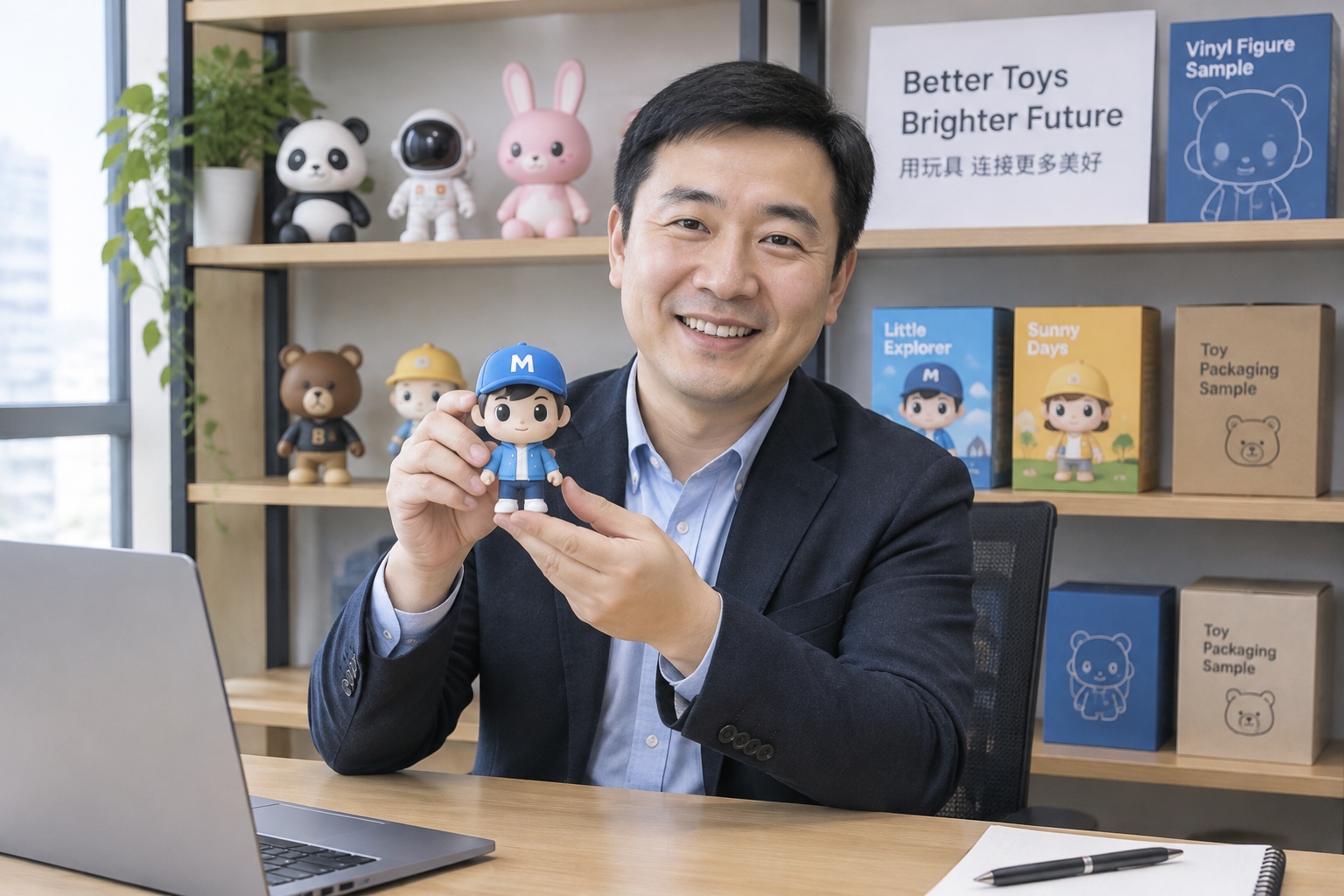
For many, the long-term goal is to sell original IP overseas. Chen is already negotiating with a distributor in Southeast Asia. “We’ve exported our OEM toys to 30 countries for years. Now we want to export something with our own name on it.”
Beyond “Made in China”: The Era of “Created in China”
The story of Dongguan’s toy industry is a microcosm of a larger shift in China’s economy. The country’s factories, once content to be the world’s production line, are now increasingly trying to own the front end of the value chain. Not every factory will succeed; many will remain OEM simply because it’s safer. But the ones that try are opening a path for younger workers to imagine new futures.
Xiaolin no longer sees herself as just a factory designer. She now has a portfolio piece she’s proud of, and she’s working on her fourth original character. “When I was in school, I never imagined working at a toy factory,” she says. “Now I tell my friends: This is where Chinese toys are born. Not just made.”
Chen is more cautious. He knows the odds of becoming the next Disney are tiny, but that’s not the point. “For 20 years, we were invisible. Now people ask me about our brand. That’s already a win.”
The next time you hold a toy, look for the manufacturer’s label. If it says “Dongguan,” remember: the factory behind it might be dreaming up its own character right now.
Start the discussion at forum.chinacomes.com