

Lost in the Hutong – Saved by a Grandpa’s English
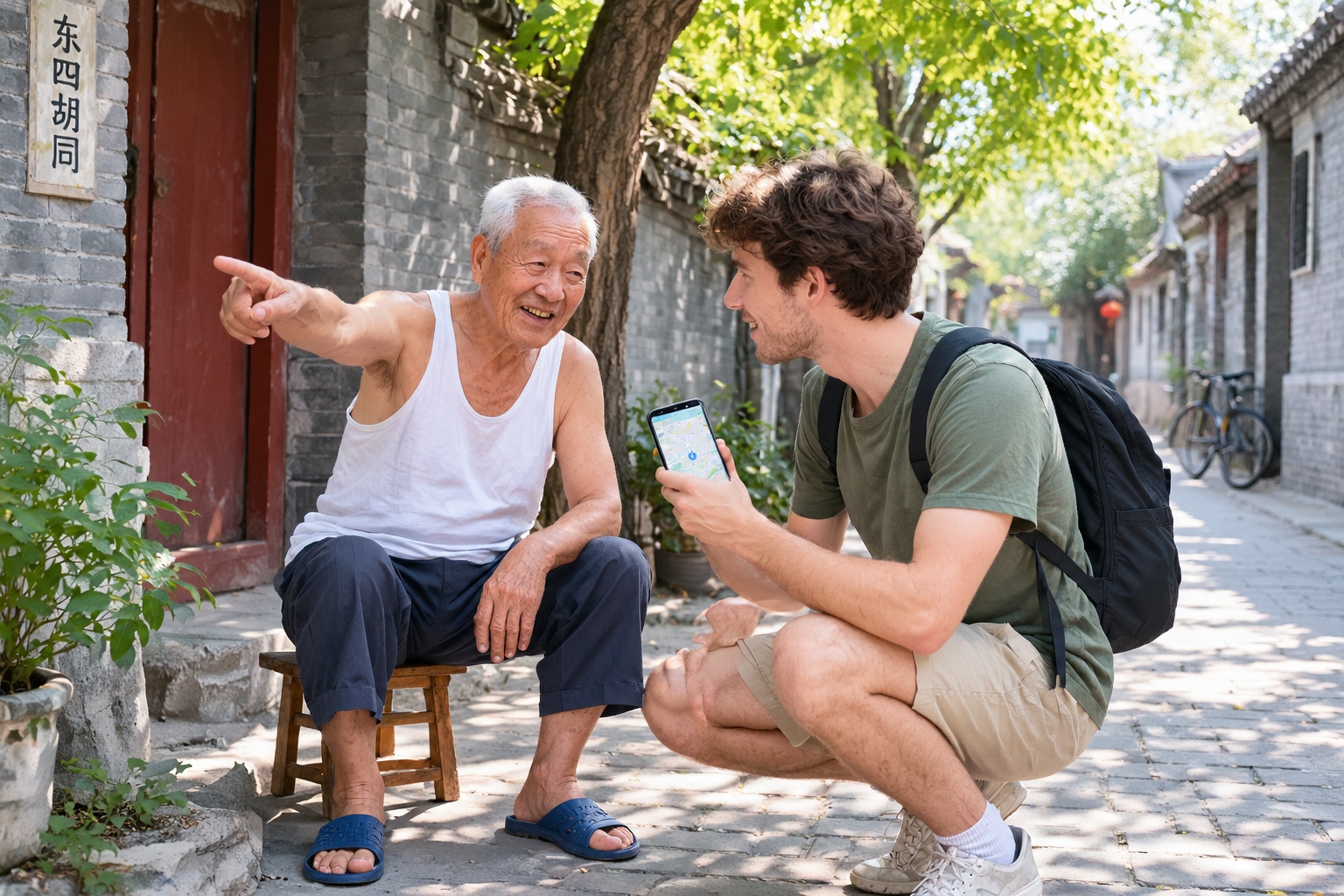
I was wandering through a narrow alley in the Dongcheng district, trying to find a particular courtyard house that supposedly had a great coffee shop. My phone map was spinning, showing a blue dot that refused to settle. A few locals sat on stools by their doorways, fanning themselves and watching me circle. I approached an old man in a white undershirt, guessing he might understand my hand gestures.
‘Excuse me, sir, do you know where this address is?’ I showed him my phone screen. He squinted, then smiled. ‘Ah, this one. Go straight, then second left.’ His accent was heavy – the ‘r’ sounds were rolled hard, the ‘th’ came out like ‘d’ – but the words were unmistakably English. I was stunned.
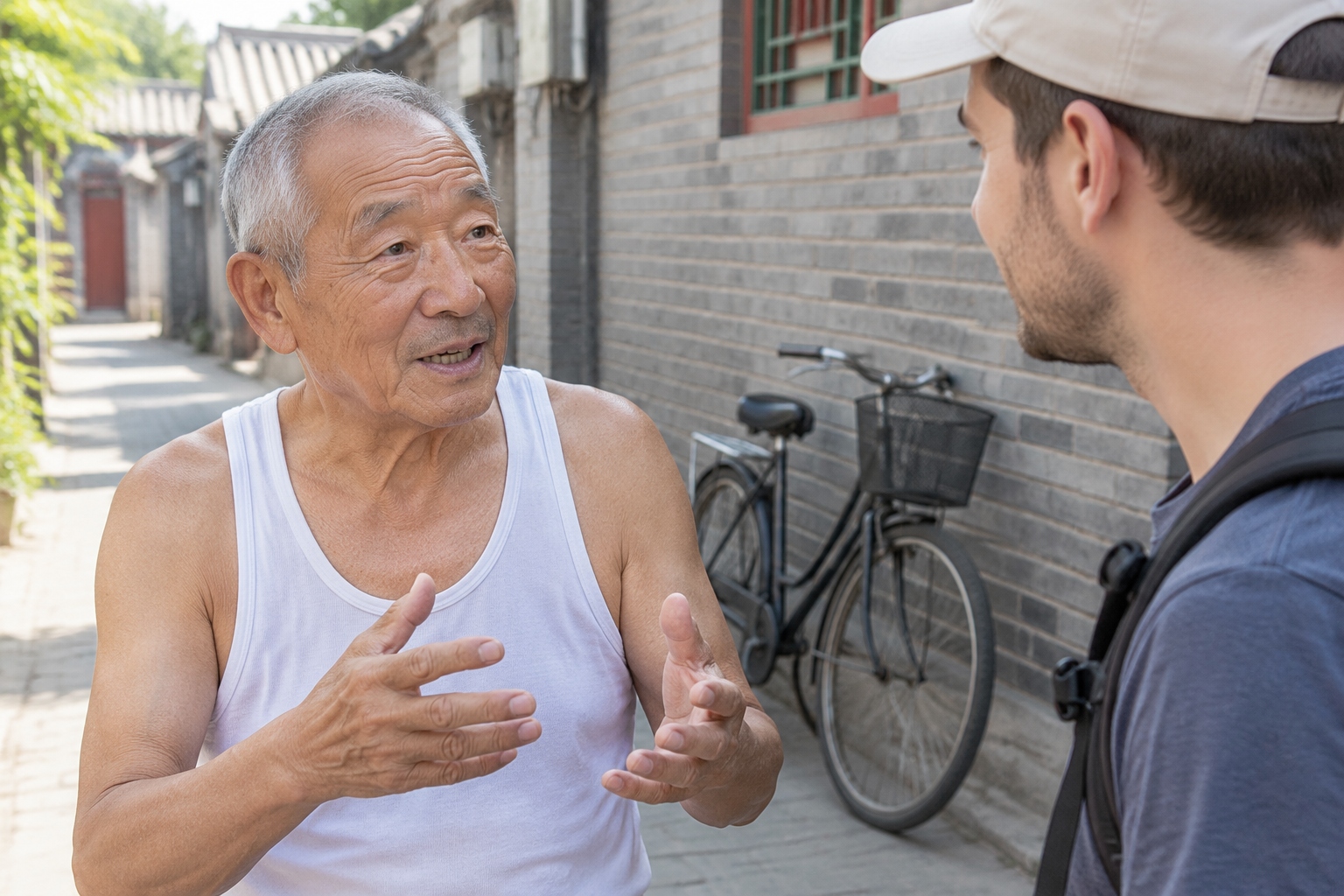
That morning in a Beijing hutong changed how I think about language learning. I had walked into the neighborhood with the usual tourist assumptions – that English in China belongs to the young, the educated, the urban professionals. But here was a man in his 70s, a retired factory worker, casually giving directions in English. According to a 2023 survey by the Beijing Elderly Association, about 12% of retirees in central Beijing districts report being able to hold basic English conversations. That’s roughly one in eight grandpas and grandmas in the hutongs.
Why Do They Learn? It Starts with Curiosity
Zhang Weiguo, 72, has lived in the same courtyard near Nanluoguxiang for 50 years. He never formally studied English, but he picked it up from the China Global Television Network (CGTN) and from chatting with tourists who wandered into his alley. ‘I started learning when I was 60, after I retired,’ he told me. ‘The government made English lessons free for seniors at the community center. But most of what I know, I learned right here, from foreigners who got lost.’
Beijing’s older generation has a unique motivation. Many lived through the 2008 Olympics, when the city launched an ambitious ‘English for All’ campaign. Street signs became bilingual, taxi drivers took crash courses, and volunteers fanned out to teach basic phrases to residents in old neighborhoods. The momentum never fully died. Today, over 2,000 ‘English Corners’ operate across Beijing’s parks—free, informal gatherings where seniors practice speaking with each other and with native speakers.
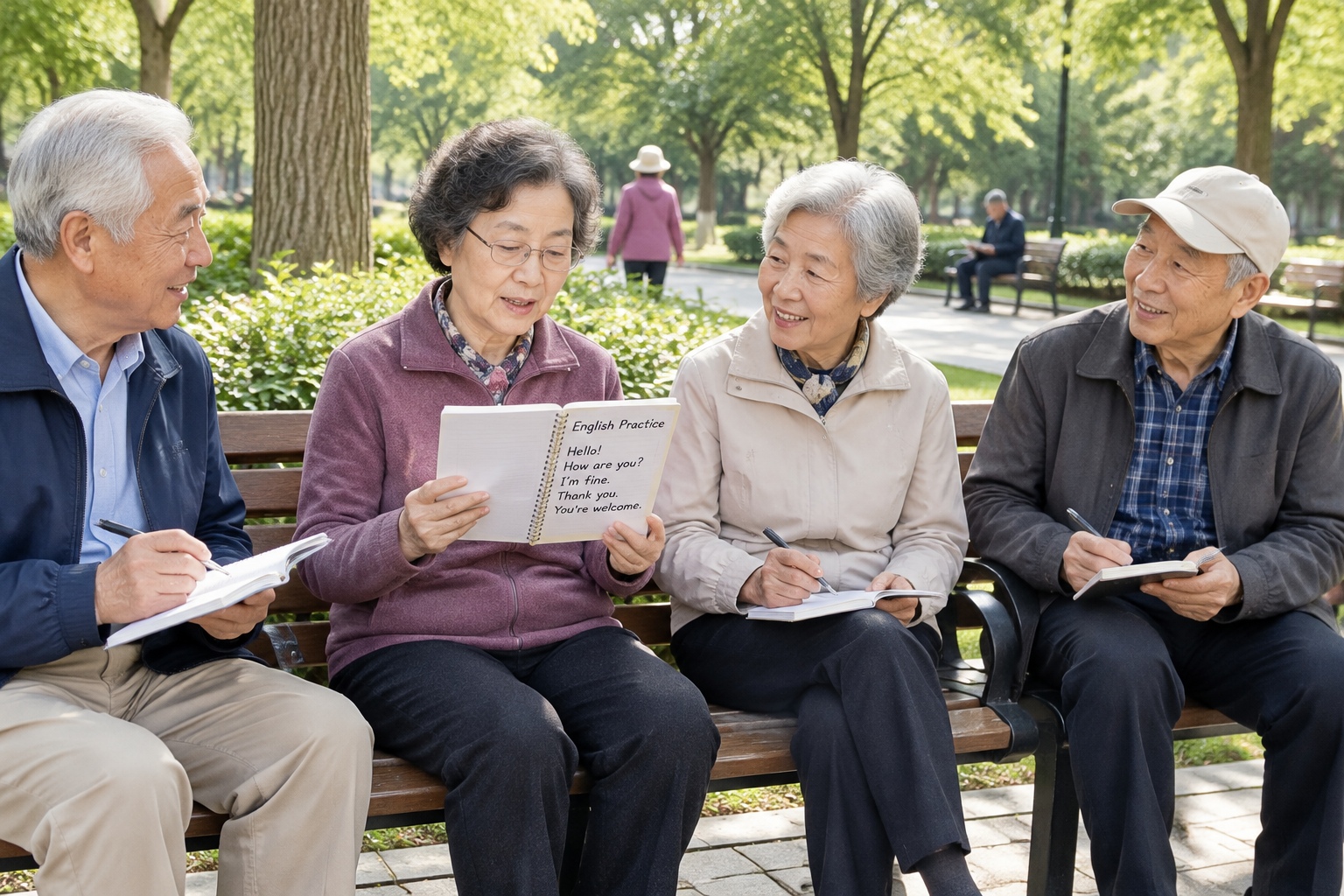
‘My grandson taught me ‘Where is the toilet?’ and ‘How much?’ but I wanted more,’ said Li Fen, 68, a regular at the English Corner in Ritan Park. She carries a small notebook with phrases written in pinyin. ‘Hello. Thank you. No problem. You are welcome. I am 68 years old. My hobby is dancing.’ She recites them proudly. Her goal? To be able to have a three-minute conversation with any foreign visitor who stops to ask for directions.
Not Perfect, But Effective
The English spoken in the hutongs is far from textbook. Grammar is often mangled. Tenses disappear. ‘Yesterday I go to park’ is a common construction. But meaning rarely gets lost. The elderly speakers rely on context, body language, and a willingness to laugh at their own mistakes. ‘Foreigners always correct me, but I don’t mind,’ said Chen Daye, 75. ‘We understand each other. That’s what matters.’
This pragmatic approach reflects a broader Chinese attitude toward language: it’s a tool for connection, not a test of proficiency. According to a 2024 report from the Beijing Municipal Education Commission, over 60% of seniors in hutong communities who attend English classes cite ‘talking to foreigners’ as their primary reason. Only 15% list ‘tourism’ or ‘grandkids’ homework’ as motivators. The desire to be hospitable runs deep.
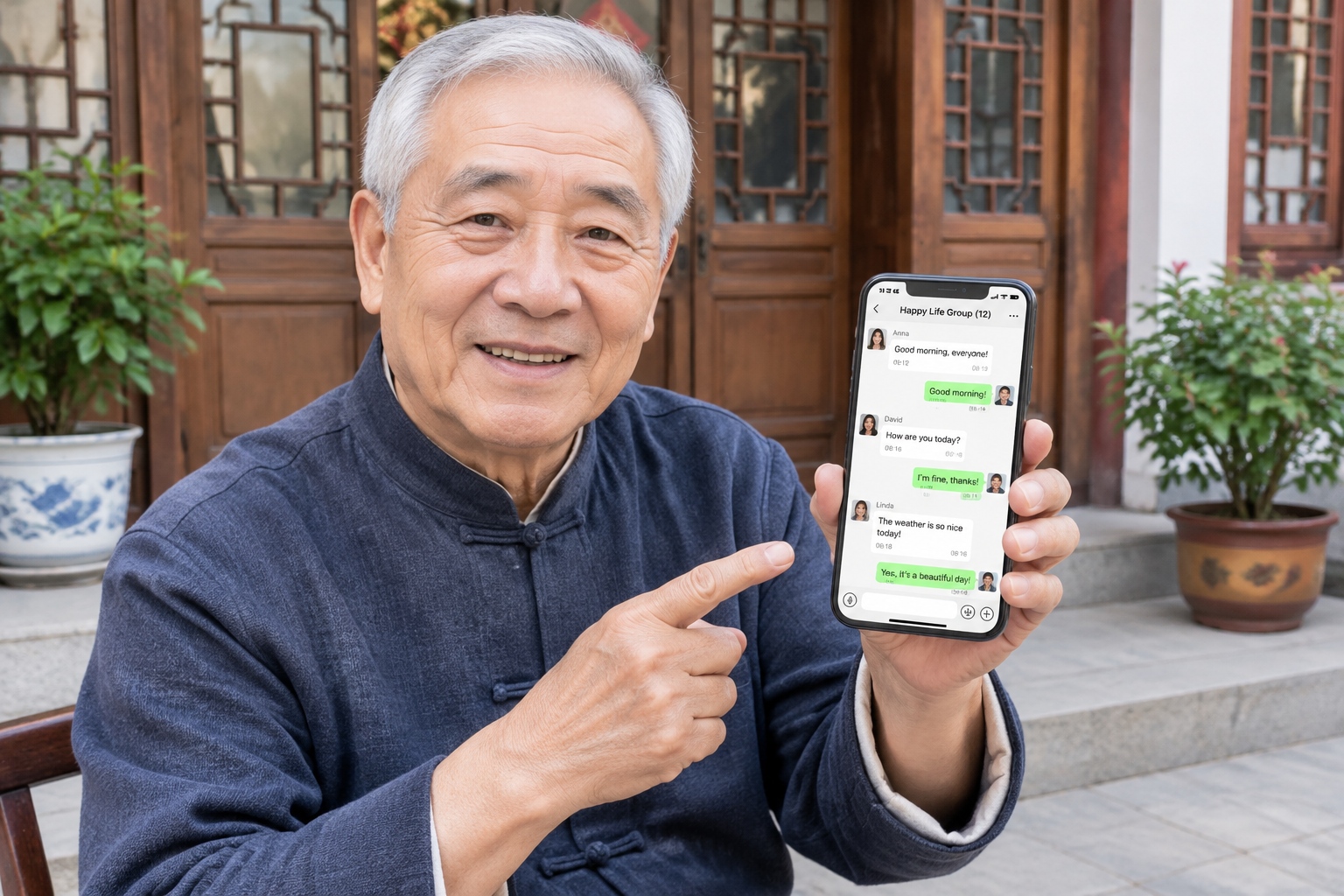
What’s more, the digital age has given these seniors new tools. WeChat groups dedicated to English learning for seniors have exploded in popularity. One such group, ‘Silver Hair English Club’, has 3,000 members across Beijing. Members send voice messages correcting each other’s pronunciation, share short videos of daily phrases, and even organize face-to-face meetups. ‘I practice every morning while I walk my bird cage,’ said 71-year-old Ma Wenbo, referring to the traditional hobby of carrying pet birds in bamboo cages.
More Than Just Words: A Bridge Between Generations and Cultures
The benefits go beyond simple communication. Learning English helps seniors stay mentally active, socialize, and feel connected to a rapidly changing city. Many told me it gives them a sense of purpose. ‘When a foreigner says my English is good, I feel young again,’ said Zhang Weiguo. ‘It makes me feel like I still belong in this city that’s becoming so modern.’
For tourists, the sight of a white-haired man or woman offering directions in English can be a transformative moment. It challenges the stereotype that Chinese elderly are isolated or uninterested in the outside world. In fact, many are curious, warm, and eager to engage. The hutong grandpas and grandmas are unofficial ambassadors, and their broken English is a handshake across cultures.
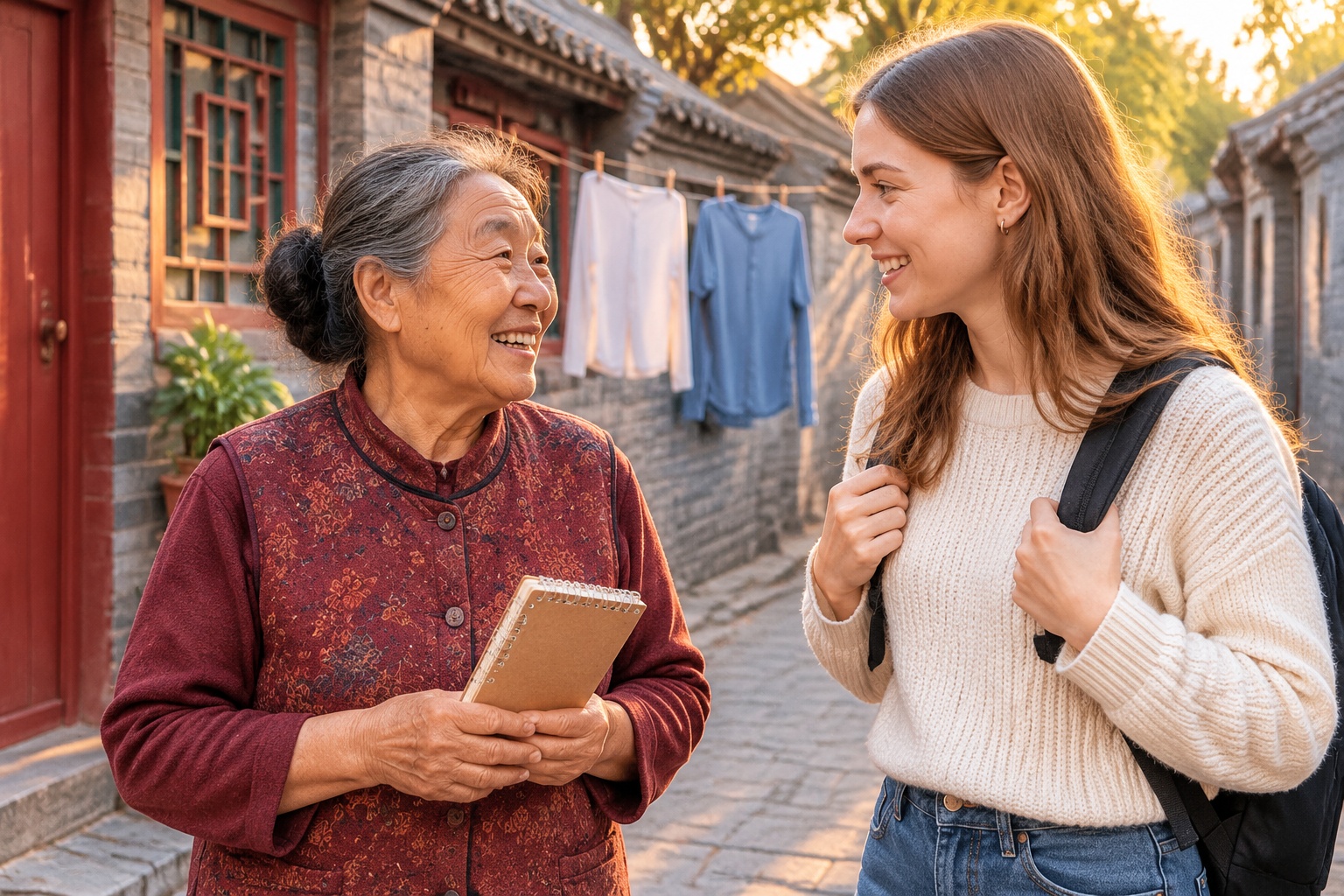
Yes, not every old Beijing resident speaks English. Many still rely on gestures or simply smile and wave. But in a city of 21 million, the presence of hundreds of thousands of English-speaking seniors is a quiet phenomenon worth noticing. It speaks to China’s openness, the resilience of older generations, and the small, human ways that globalization touches everyday life.
So next time you’re lost in a hutong, don’t be afraid to ask that old man in the undershirt. He might just surprise you.
Start the discussion at forum.chinacomes.com