


Why China’s Healthcare System Feels Different to Foreigners
At 2 a.m. in Shanghai, a foreign teacher named Sarah wakes with a fever of 39°C. She opens WeChat, finds a hospital mini-program, and tries to book an appointment. The form asks for a Chinese ID number. She has a passport. She switches to a private international clinic app, books a 9 a.m. slot, and sees an English-speaking doctor. The visit costs 1,200 RMB. Her insurance reimburses 80%. The system worked—but only because she knew which track to use.
China’s healthcare system is not one system. It is a layered network of public hospitals, international departments inside public hospitals, private clinics, and specialized international hospitals. For foreigners, the experience depends heavily on city, insurance, language ability, and the type of care needed. Understanding the two main tracks—public and private/international—is the first step.
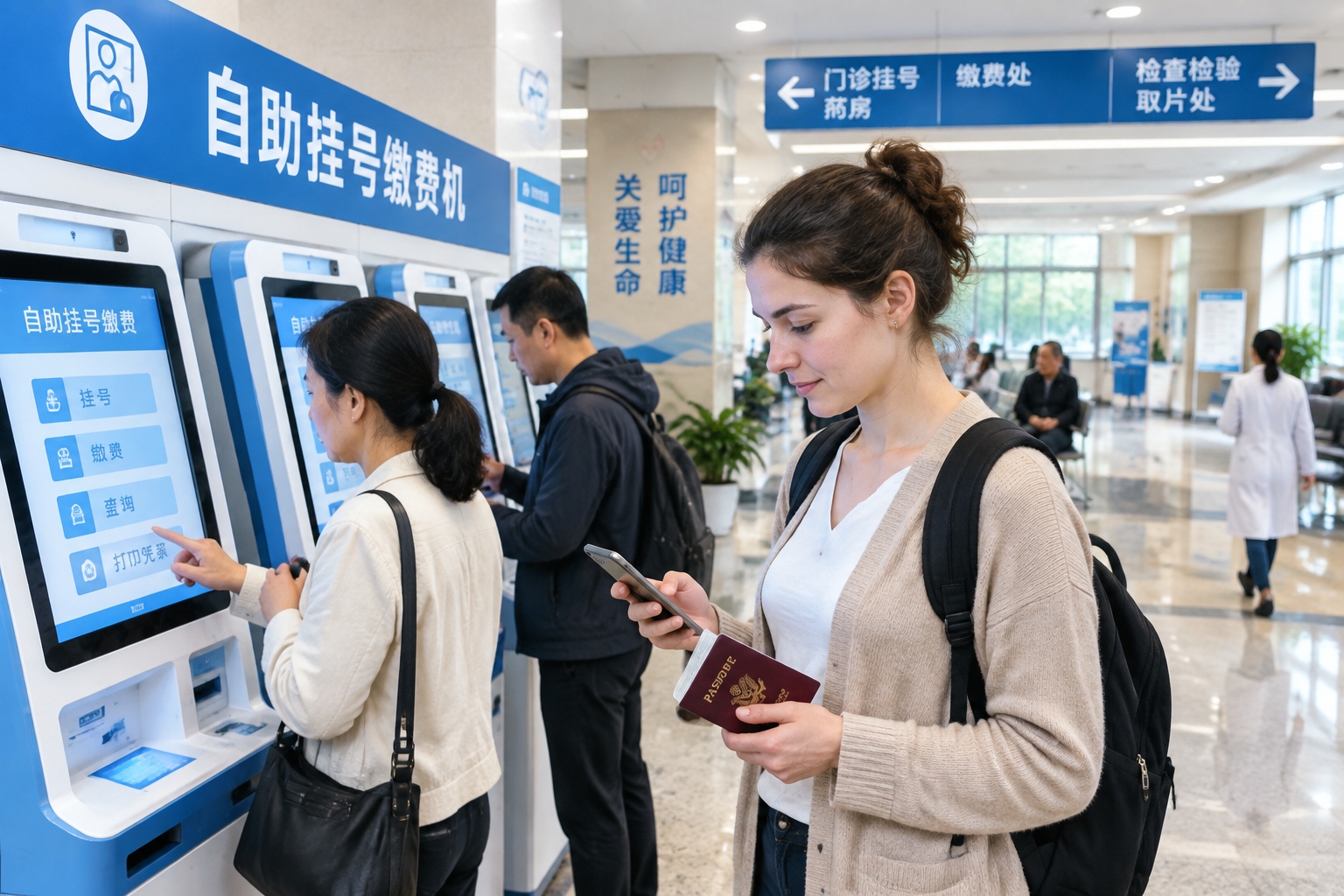
Public Hospitals vs. International Hospitals: Two Tracks
Public hospitals dominate Chinese healthcare. Top-tier facilities, known as Grade 3A (三级甲等), handle the most complex cases. They have advanced imaging, surgery, and specialist care. Prices are low by global standards. A specialist registration fee might be 50–300 RMB. An MRI can cost 500–1,200 RMB. But public hospitals are crowded, and most signage and staff communication are in Chinese.
Many large public hospitals have an international medical department (国际医疗部). These departments offer English-speaking coordinators, shorter waits, and higher fees. A specialist consultation might cost 600–1,500 RMB. Some accept direct billing with international insurance; others require upfront payment and receipts for reimbursement.
Private international hospitals—such as Beijing United Family, Shanghai United Family, ParkwayHealth, OASIS, and Raffles—provide English-language primary care, pediatrics, maternity, and emergency services. They feel more like Western clinics. A GP visit typically costs 800–2,000 RMB; a specialist visit 1,500–3,000 RMB. They often bill international insurers directly. However, for complex surgery or rare conditions, they may refer patients to public hospitals.
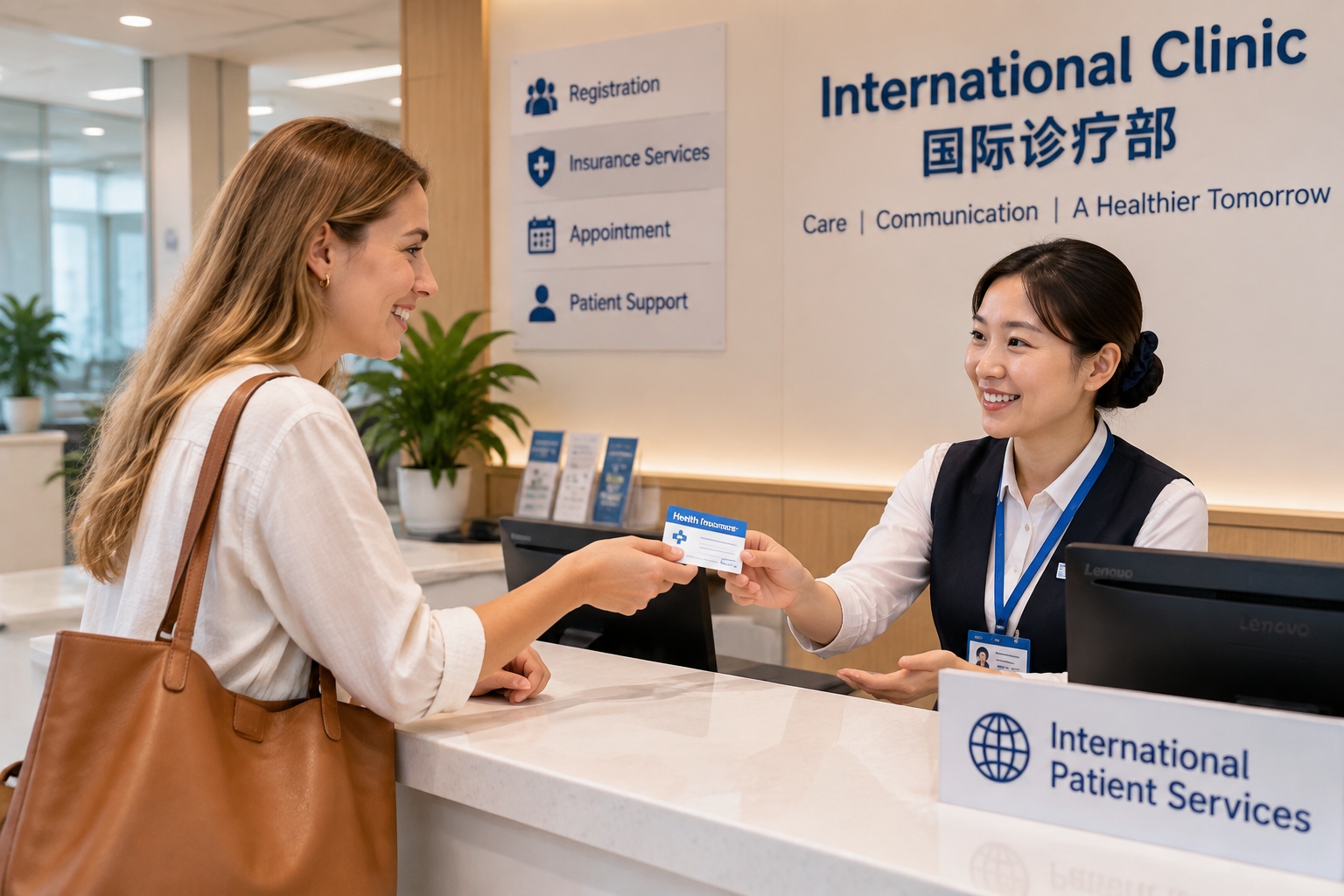
How to See a Doctor: Registration, Language, Insurance
Registration
Public hospitals use online appointment systems through WeChat, Alipay, or hospital apps. Foreigners often need a Chinese mobile number and passport. Some hospitals have English mini-programs; many do not. Appointment slots for popular specialists are released daily, often at 7 a.m. or 8 a.m., and can disappear in minutes. Onsite self-service kiosks exist, but they usually require a Chinese ID or passport and a local phone number. International departments and private clinics let you book by phone or email in English.
Language Support
In Beijing, Shanghai, Guangzhou, and Shenzhen, major hospitals often have some English-speaking staff. Outside these cities, English support drops sharply. Translation apps like WeChat Translate or Baidu Translate help, but medical conversations can be nuanced. A Chinese-speaking friend, a medical concierge, or a professional interpreter is worth the cost for serious issues.
Insurance
China’s public health insurance (医保) is available to many employed foreigners with a work permit. It lowers costs but coverage is basic and tied to the local system. Most expats rely on international commercial insurance—Cigna, Bupa, Allianz, MSH, AXA, and others. Check whether your policy offers direct billing at hospitals in your city. If not, you pay upfront and claim later. Keep every receipt, diagnosis, and prescription. For short visits, travel insurance with medical evacuation is essential.
Emergencies
Call 120 for an ambulance. Public hospital emergency rooms are open 24/7. For non-critical cases, waits can range from 1 to 4 hours. Registration and initial tests might cost 100–500 RMB. Private international emergency rooms are faster—often 15–30 minutes—but cost 2,000–5,000 RMB before treatment.
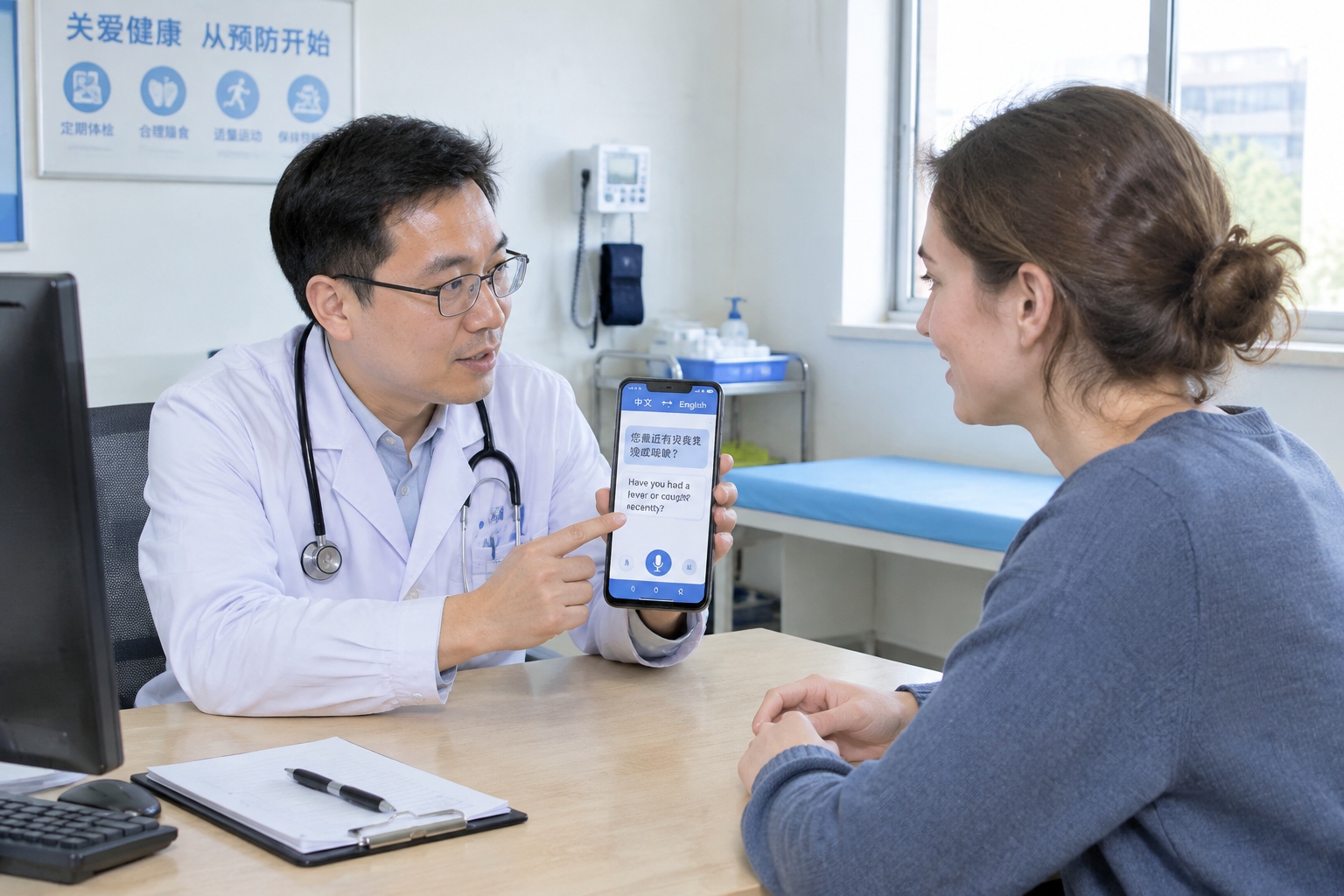
What Expats Actually Experience: Three Scenarios
1. Emergency Care
Mark, an American engineer in Shenzhen, slipped and broke his wrist on a Saturday night. He went to a public hospital emergency room. Triage had no English, so he used a translation app. X-rays and a cast took 2.5 hours. The total bill was 1,800 RMB. He paid upfront and submitted the paperwork to his insurer, which reimbursed 80%. A private international hospital quoted 6,000–10,000 RMB with a 30-minute wait. He chose public care to save money.
2. Chronic Disease Management
Elena, an Italian teacher in Beijing, has hypothyroidism. She sees an endocrinologist at an international clinic. The specialist visit costs 1,200 RMB, blood tests 400 RMB, and monthly medication 150 RMB. Appointments are in English by phone. But the brand of levothyroxine she used in Italy is not sold in China, so she switched to a local equivalent. A public hospital would cost less—perhaps 100 RMB for the visit and 100 RMB for tests—but booking and communication are harder. She keeps a shared digital record and orders refills every three months.
3. Surgery
David, a British project manager in Shanghai, needed knee arthroscopy. A public hospital international department offered surgery in three weeks for 25,000 RMB. A private international hospital offered it in one week for 80,000 RMB. He chose the public international department, paid upfront, and claimed insurance. An English-speaking coordinator helped with admission and follow-up. For post-op physiotherapy, he used a private clinic closer to home.
Regional Differences and Resource Gaps
China’s best medical resources are concentrated in Tier 1 cities. Beijing, Shanghai, Guangzhou, and Shenzhen have international clinics, English-speaking doctors, and insurance direct billing. Tier 2 cities like Chengdu, Hangzhou, and Suzhou have some options. Smaller cities and rural areas often have none. A foreigner in a Tier 3 city may need to travel to a provincial capital for complex care.
Non-local residents—including foreigners—can face extra friction. Public insurance is usually tied to local employment. Community health centers may ask for a residence permit. Without a local network, booking specialists and understanding follow-up plans is harder. Strategies include: using public hospital international departments when available; traveling to a Tier 1 city for major procedures; hiring a medical interpreter; and keeping a Chinese-speaking friend on call.
Practical Advice for Choosing Care and Insurance
For minor issues, start with a private clinic or a public hospital international department. Expect to pay 500–1,500 RMB. For emergencies, call 120 or go to the nearest public hospital ER. Save your insurer’s hotline. For specialists, book early through hospital apps or international departments. For surgery, compare public international departments and private hospitals: public is often better for complex cases, private for speed and comfort.
Insurance matters. International health insurance with direct billing in China is the most convenient. Check the network list before you need care. If you are employed in China, ask HR whether you can join the employee medical insurance scheme. It reduces routine costs but is not a replacement for international coverage. Always carry your passport, insurance card, and a list of medications. Save a translation app and the Chinese phrase for “international medical department” (国际医疗部).
Conclusion: A System of Contrasts, Not a Single Story
China’s healthcare system for foreigners is not simply good or bad. It offers world-class specialists at low public prices, but navigation can be difficult. Private international hospitals offer comfort and English, but at a cost. The best approach is to understand the two tracks, insure properly, and plan ahead. With the right information, most expats can get good care—even if the first step is learning which door to open.
Start the discussion at forum.chinacomes.com