

The $20 Bill Nobody Would Take
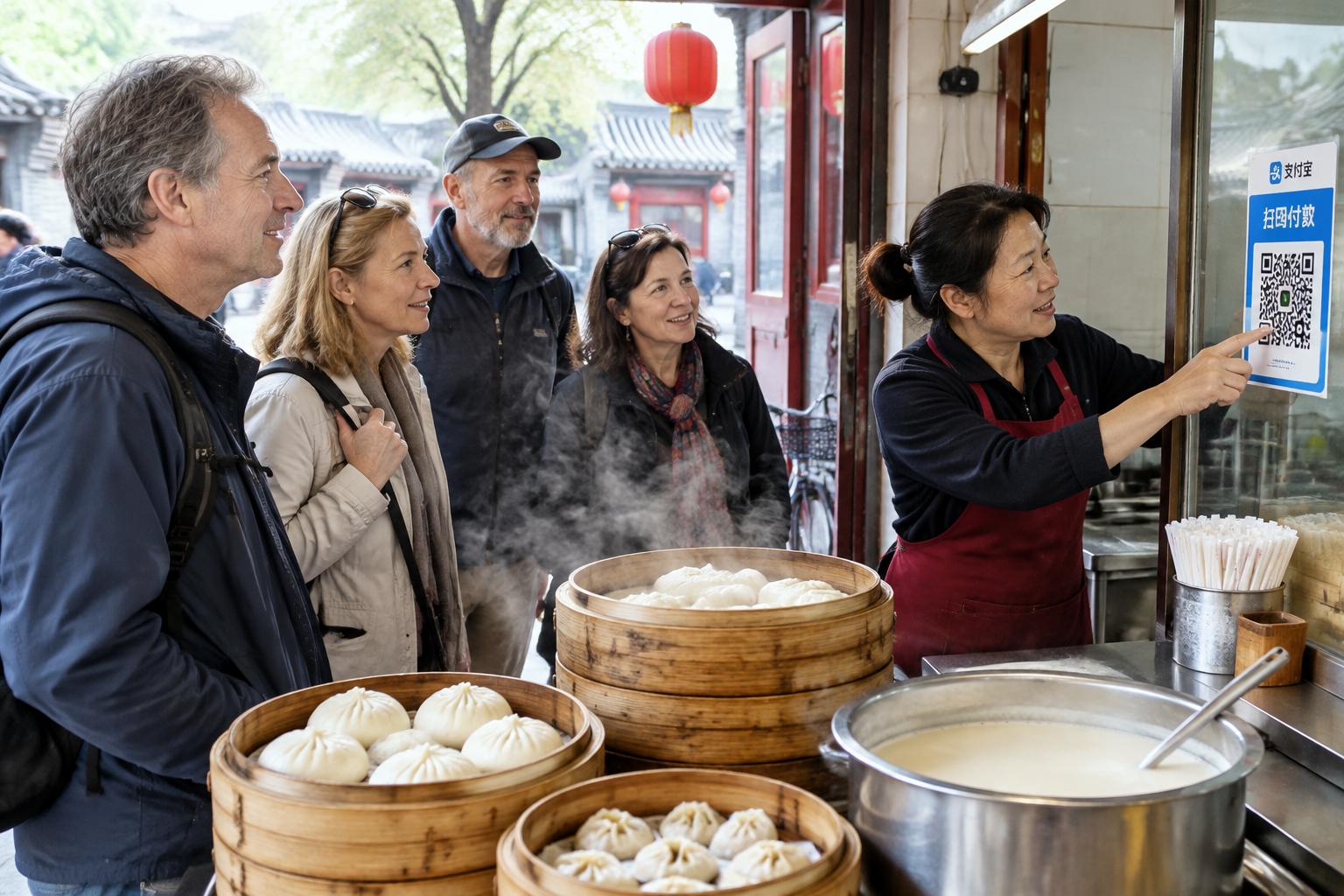
On the second morning of their trip, seven of the eleven walked into a breakfast shop in a Beijing hutong and ordered soybean milk, fried dough sticks and steamed buns. The total came to about 40 yuan — roughly $5.50 for the group. Ray, a retired fire captain from Ohio, pulled out a $20 bill.
The woman behind the counter smiled, pointed at a QR code taped to the glass, and said something none of them understood. It wasn’t that she was refusing their money. She had no cash drawer, no card terminal, and no reason to expect either. A college student in line behind them tapped her own phone twice, paid for the group, and waved away the cash they tried to hand her.
That moment — small, slightly embarrassing, entirely ordinary — set the tone for the next ten days. The group of eleven had arrived with a suitcase of assumptions. Most of them didn’t survive the first 48 hours.

Who These Eleven People Were
The group was deliberately unglamorous: a municipal planner from a mid-sized Texas city, a high school history teacher from Michigan, a nurse practitioner from Seattle, a logistics manager who runs a 90-truck fleet, a software founder, a pastor, the retired fire captain, a restaurant owner, an MBA student, a local newspaper editor, and a small manufacturer from Wisconsin. Nobody worked on China policy. Nobody spoke Mandarin. Most had never left North America except for a beach holiday.
They landed in Beijing, took the train to Shanghai, then to Hangzhou, then flew home from Shanghai. Ten days, three cities, a lot of walking. What follows is what actually landed — the things that made them stop mid-sentence, and the things that were still bothering them on the flight back.
Shock One: A Country That Runs on a Phone
Mobile payment is the first wall every visitor hits, and the first thing they learn to climb. Two apps, Alipay and WeChat Pay, handle the overwhelming majority of daily transactions in China: breakfast, taxis, subway fares, hospital bills, a 3-yuan bottle of water from a street kiosk.
For years, foreign cards on those apps were unreliable. That changed in 2023 and 2024, when both platforms opened up to Visa and Mastercard, and transactions under roughly 200 yuan (about $28) are now typically fee-free for foreign users. It still takes twenty minutes of fiddling at the airport. After that it works, and it never stops working.
The fleet manager put it best: “It’s not that payment is faster. It’s that payment disappears. You stop thinking about money as an object.”
What struck the group harder was that this isn’t a big-city luxury. In Hangzhou, a farmer selling lotus roots near West Lake took a QR payment. In a village forty minutes outside the city, an elderly woman selling vegetables off a plastic sheet did the same.
Shock Two: 1,318 Kilometres Before Lunch
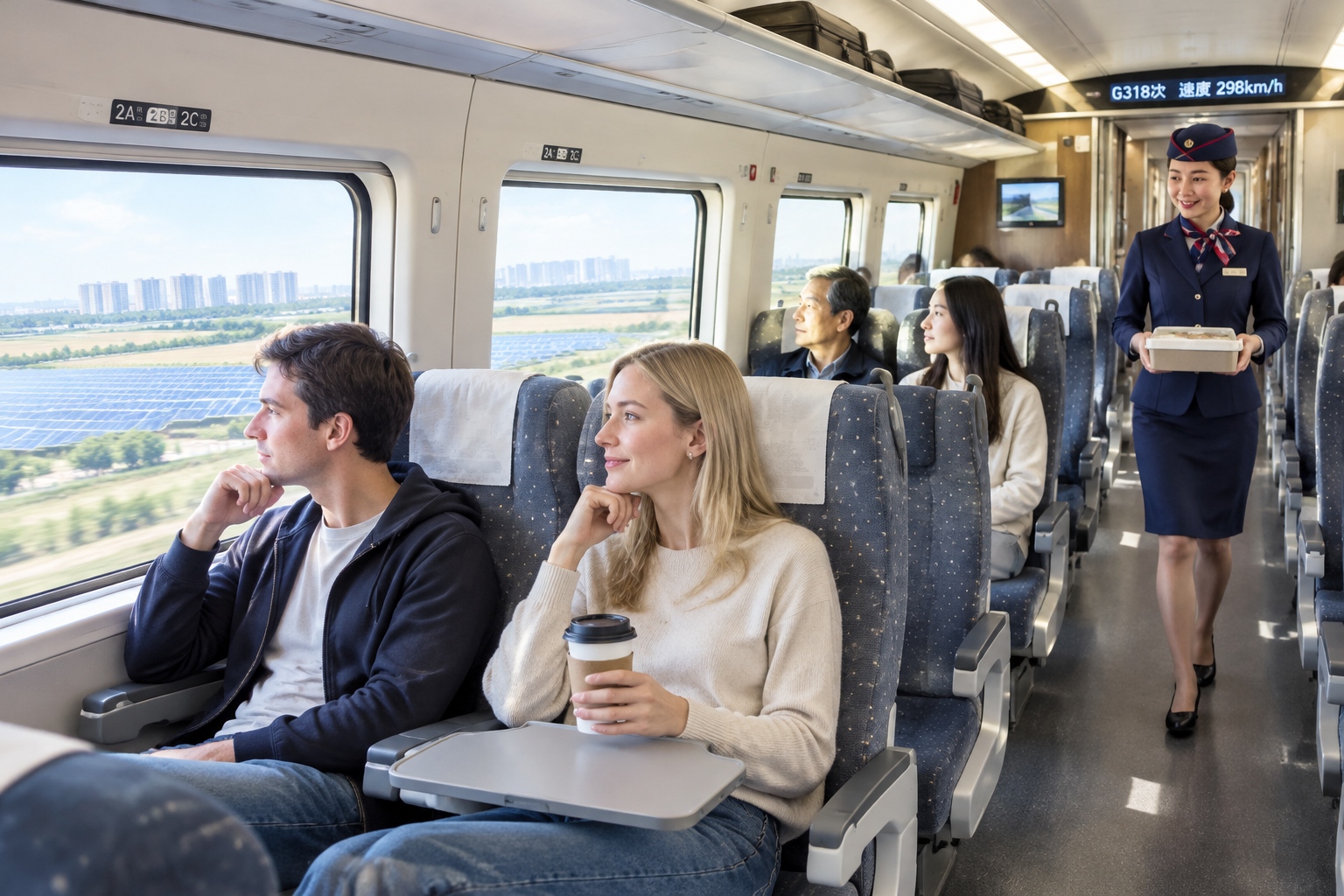
The Beijing–Shanghai high-speed train covers 1,318 kilometres in about four and a half hours. A second-class seat costs roughly 553 yuan, about $76. China’s high-speed rail network passed 48,000 kilometres at the end of 2024 — more than the rest of the world combined.
Statistics like that are easy to read and easy to dismiss. Sitting in the seat is different. The train leaves on the second. There is no boarding scrum, no baggage chaos, no announcement apologising for a delay that never arrives. A woman two rows up ordered a coffee and a rice box through an app; a staff member delivered it eight minutes later.
The planner from Texas spent most of the ride staring out of the window, watching apartment towers, solar farms, greenhouses, factories and restored wetlands slide past at 350 kilometres an hour. “In the US, a project like this is a thirty-year argument,” he said. “Here it’s a Tuesday.”
Shock Three: The Hospital Waiting Room
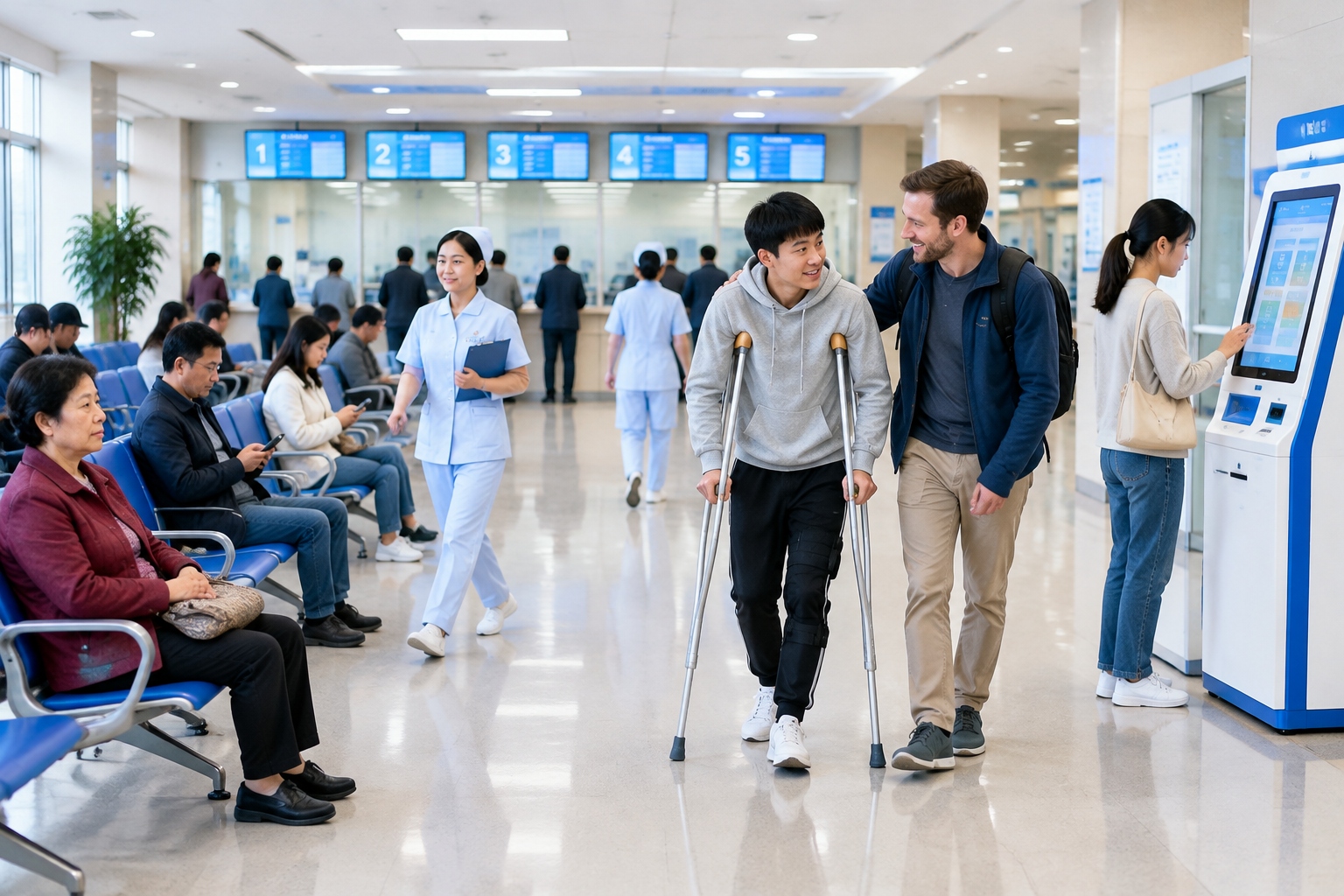
Halfway through the trip, one of the eleven twisted an ankle badly on the stairs of a Shanghai metro station. They went to a large public hospital.
What happened next is the story they tell most often back home. They booked an appointment that same morning through the hospital’s app — a staff member helped, because it required passport registration. They were seen in about forty minutes. X-ray, diagnosis, a walking boot, painkillers. The bill came to under 700 yuan, about $95, and nobody asked about insurance.
The nurse practitioner from Seattle was the most shaken. She works in an emergency department where a sprain can mean a five-hour wait and a bill in the thousands. She was careful not to overstate it: “Chinese hospitals have their own problems. The crowds, the queues, doctors who see a hundred patients a day, places where you’d want a second opinion. But the floor of what’s available — showing up and being treated the same day, at that price — that floor is higher than I expected.”
Shock Four: The Thing That Wasn’t Technology at All
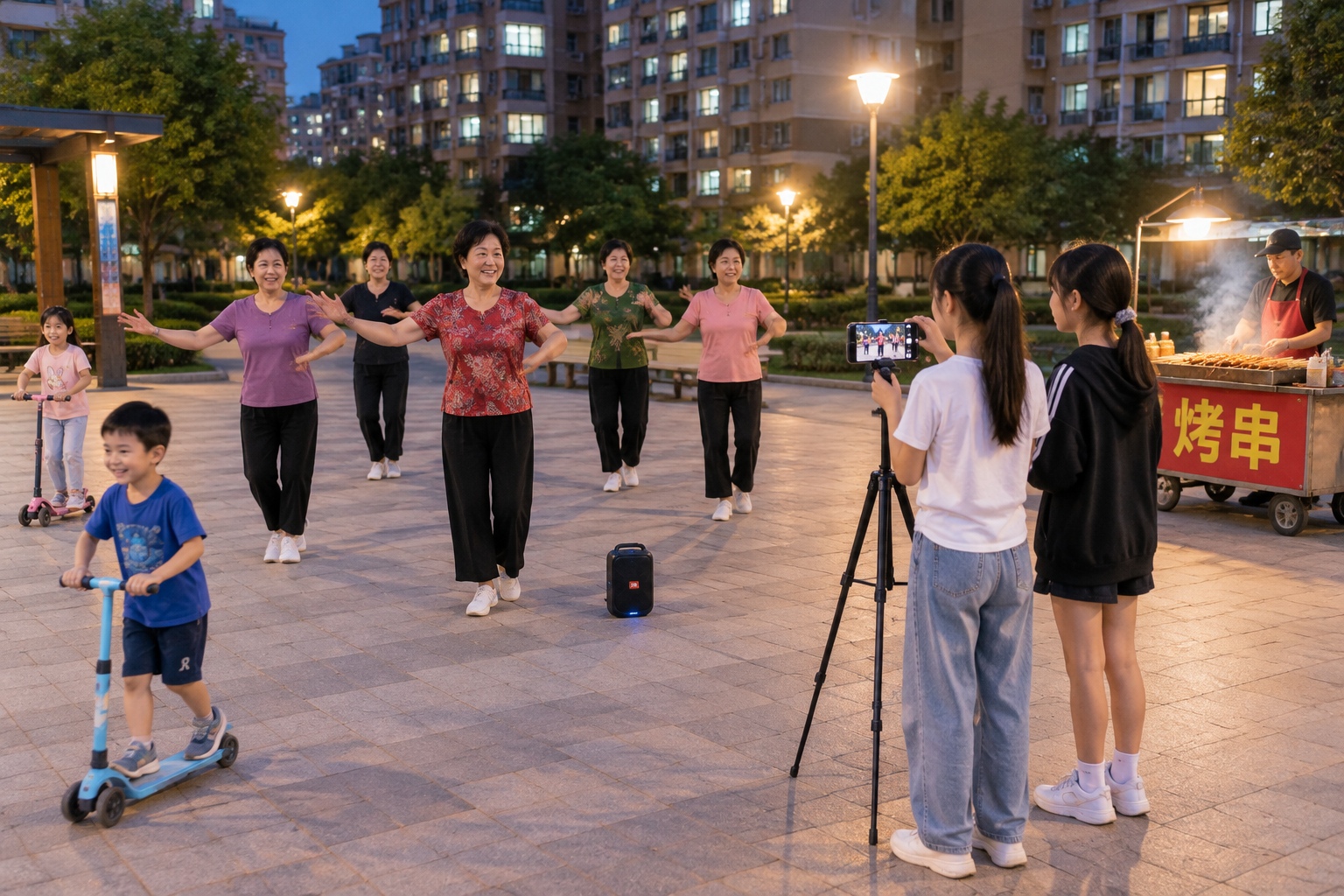
Ask any of the eleven what surprised them most, and almost none of them mention trains or phones. They mention the street at 10 p.m.
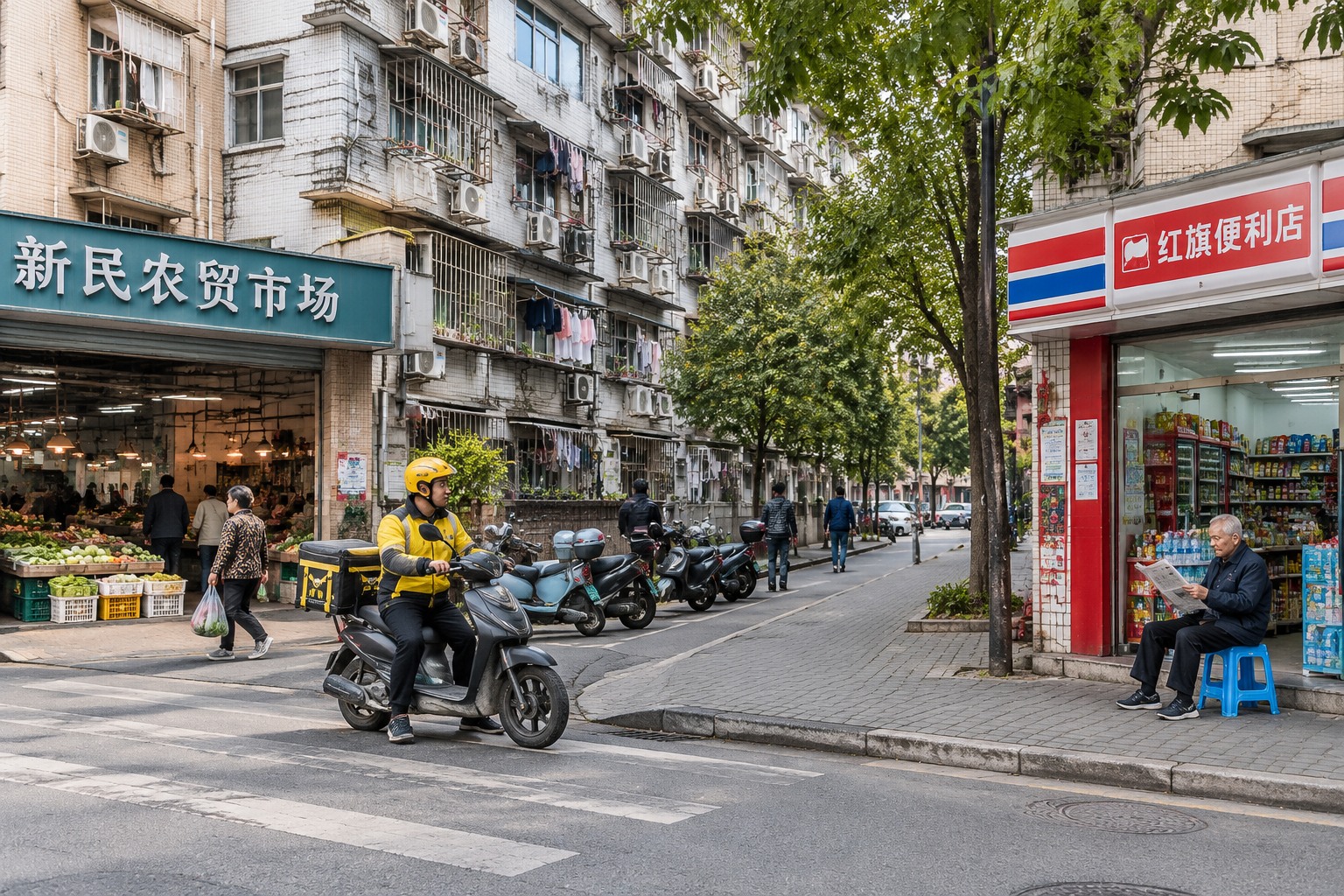
In Shanghai, the group walked back from dinner through a residential neighbourhood. Elderly women were dancing in a plaza to a speaker the size of a shoebox. Toddlers were on scooters. Two teenage girls were filming a dance video. A man was grilling skewers on a cart. Nobody was drunk, nobody was shouting, and — the detail that came up again and again — the women in the group never once thought about walking alone.
Urban China is dense, well-lit and heavily surveilled, and those three facts are connected. There are an estimated 350 million electric bikes and scooters on Chinese roads, and by European standards the traffic is chaotic. Yet violent street crime is rare enough that most middle-class Chinese women treat an 11 p.m. walk home as unremarkable.
You can’t explain that to a group of Americans without them noticing the trade-off. When I asked the pastor whether the cameras bothered him, he paused for a long time. “I don’t love it,” he said. “But I grew up in a city where I don’t walk to the corner store after dark. I’m not sure I get to be smug about the answer.”
Why China Looks Like This
Most of the differences these eleven noticed aren’t mysterious. They come from a few structural facts.
Density changes everything
Roughly 94% of Chinese people live on about 43% of the land, and Chinese cities are far denser than American ones. Frequent buses, 24-hour delivery, all-night convenience stores and cheap taxis only make financial sense when 20,000 people live within a five-minute walk.
Cities have unusual operating capacity
A Chinese city government is not only a regulator. It is often also the landlord, the developer, the transit authority and the social services provider. If a district decides to build forty community canteens for elderly residents, or a “15-minute life circle” with a clinic, a school and a wet market inside one walk, that decision can be executed within a couple of years. The flip side is that residents have far less formal power to block a project they dislike.
China leapfrogged, then kept going
When mobile payments spread around 2015, most Chinese consumers had never owned a credit card. There was no incumbent to defend and no legacy terminal network to protect. A generation simply skipped a step that Americans and Europeans are still paying for.
What Still Didn’t Make Sense
A good trip report includes the parts that don’t resolve. Here is what the eleven kept worrying at.
The app wall. Almost every useful service lives inside a Chinese-language app. Translation helped. It never solved passport verification loops, phone-number requirements, or restaurant menus that exist only as a QR code image with no text underneath. Convenient for locals, work for visitors.
Privacy and the camera question. The group moved through stations and streets where facial recognition is routine. Nobody was stopped or hassled. Several felt the unease of being permanently visible and unable to fully understand the rules.
Work and worry. They met young professionals who work ten-hour days without complaint and admit they are tired. Youth unemployment has been a genuine policy concern, the property market has cooled sharply since 2021, and young Chinese talk openly about “lying flat” or moving to a smaller city. The optimism isn’t blind. It’s negotiated.
Not all of it is Shanghai. The itinerary was privileged — three of China’s wealthiest cities. Per capita GDP in some inland provinces is roughly a third of Shanghai’s. The rural-urban gap is real, and so is the difference between a village with an e-commerce collection point and one without.
What They Took Home
None of the eleven became a China expert in ten days, and most of them know it. What changed was narrower and more useful: they stopped asking whether China is “ahead” or “behind.” That is the question most Americans arrive with.
The restaurant owner said it best on the last night, over a bowl of noodles in Hangzhou. “I came here thinking I’d see the future,” she said. “Instead I saw a different set of decisions. Some of them I’d take. Some I wouldn’t. But at least now they’re decisions, not a rumour.”
Names and some identifying details have been changed at the travellers’ request. Figures cited come from public sources including China State Railway Group, the People’s Bank of China and national statistics for 2024.
Start the discussion at forum.chinacomes.com