

It’s 2 a.m. and the Village Is Awake
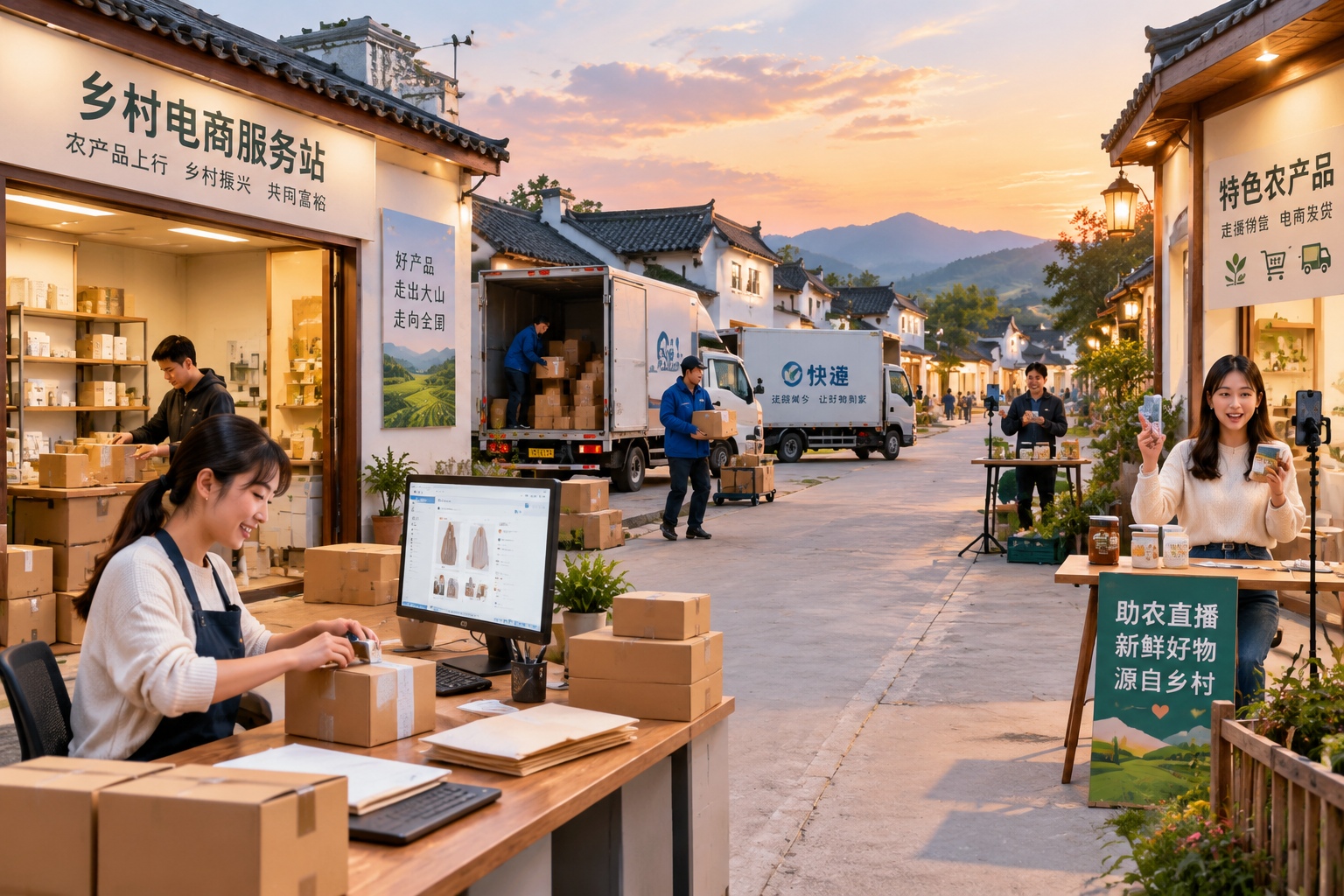
In most rural areas around the world, 2 a.m. means silence. But in a cluster of villages in eastern China’s Zhejiang Province, it is the busiest hour. Lights are on in small houses converted into studios. A woman in her fifties talks to her phone, showing a bamboo basket to thousands of viewers. Next door, a man in his twenties types replies to customer messages while his parents pack ceramic tea cups into cardboard boxes. Outside, a courier truck waits to load the night’s orders.
This is not a scene from a futuristic movie. It’s the daily reality of China’s “Taobao Villages” — rural communities where online sales have become the main economic engine. There are over 7,000 such villages across China, and Zhejiang alone hosts more than 500 of them. What connects them all is a simple thing: a broadband connection.
What Exactly Is a Taobao Village?
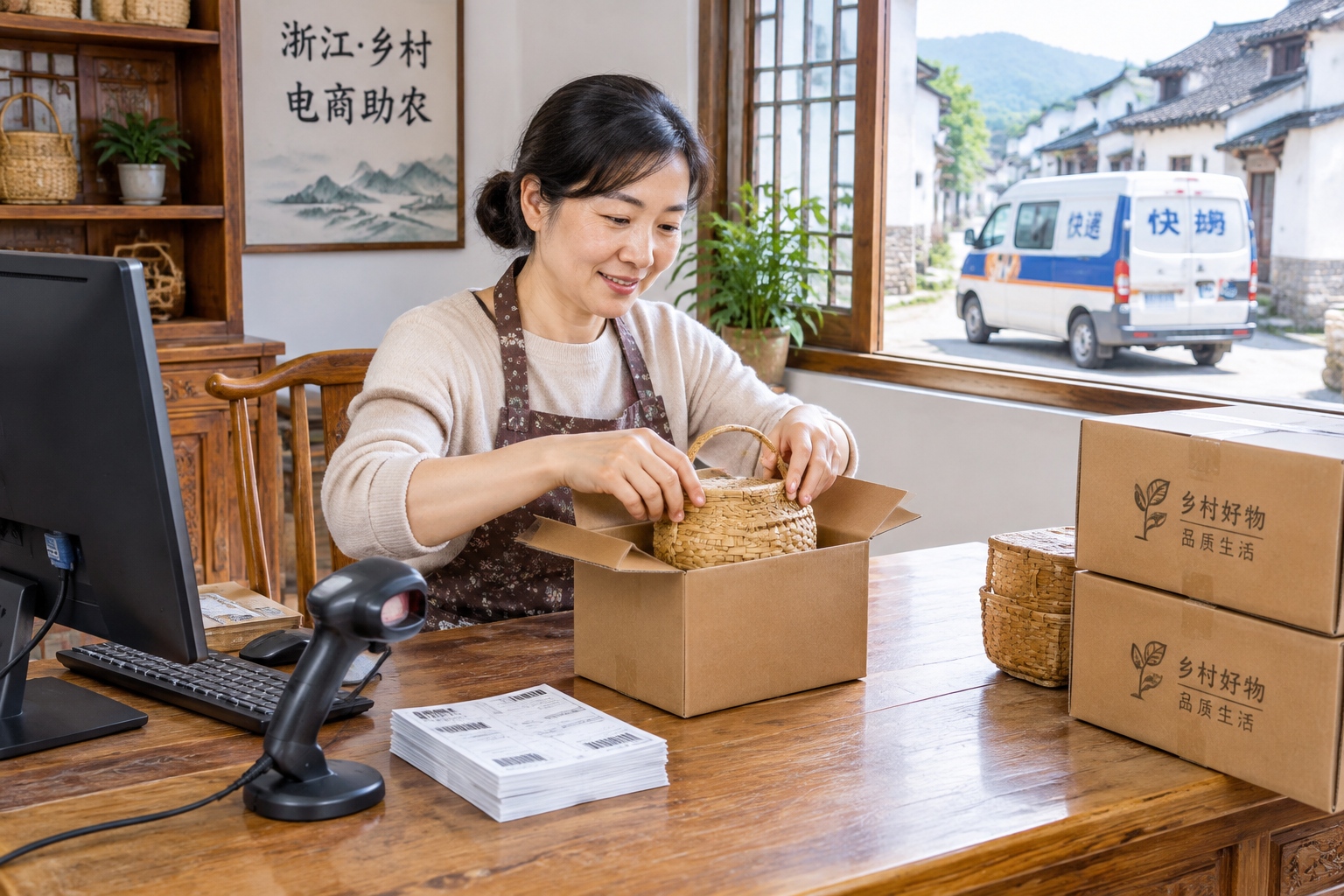
The term “Taobao Village” was coined by Alibaba Group, the e-commerce giant that operates Taobao, China’s largest consumer-to-consumer marketplace. To qualify, a village must have at least 10% of households actively selling online, and annual e-commerce sales must exceed 10 million yuan (about $1.4 million). But the real definition is more organic: it’s a place where almost everyone you meet has a shop in their pocket.
Zhejiang’s villages didn’t become digital hubs overnight. Many were already known for making small goods — socks, ties, lighters, kitchenware. But for decades, these products depended on slow, layered supply chains: factory, wholesaler, retailer, customer. The internet collapsed that chain. Farmers and craftspeople discovered they could sell directly to anyone in the country, and eventually, the world.
Why Zhejiang? Geography, Guts, and a Push from the Government
Zhejiang’s success isn’t just luck. The province has a long tradition of entrepreneurship. In the 1980s, when China began economic reforms, Zhejiang’s farmers became traders and small factory owners, building a dense network of small-scale manufacturing. When e-commerce arrived in the early 2000s, this ready-made supply chain gave local villages a head start.
But there’s another factor: proactive local governments. In many townships, officials offered free training on how to open an online store, set up shared logistics hubs, and provided subsidies for broadband and cameras. For example, in the city of Yiwu, known worldwide for its small commodities market, the local government turned a former industrial zone into a massive e-commerce park. Today, the nearby village of Qingyanliu — often called “China’s first Taobao village” — is packed with young sellers and overnight warehouses.
“The government didn’t force us to go online,” says a local shop owner. “They just made it easy. They made sure we had fast internet, cheap rent, and a delivery truck that comes every hour.”
From Bamboo Weaving to a Global Business
Take the village of Xiazhuang in rural Zhejiang. Twenty years ago, most villagers made a living by farming tea and weaving bamboo products. Their income was tiny and unpredictable. Then, in 2011, a young man who had moved to the city for work came back for the Lunar New Year and posted a picture of a bamboo weaving basket on Taobao. Someone bought it within minutes. His father was shocked: “People pay for this online?” He soon launched a store, and within a year, a dozen neighbors followed.
Today, Xiazhuang’s bamboo products — baskets, trays, lampshades, even cat beds — are shipped to over 30 countries. The village has more than 200 online stores, and many families earn more from e-commerce in a month than they used to earn from farming in a year. Some have even hired university graduates to handle design and social media.
“We thought the internet was for young people,” says a 58-year-old woman who now runs a successful store. “Then we realized it’s just a way to sell. The bamboo doesn’t change. Only the table we sell it on changes.”

The People Behind the Screens: Families, Migrants, and Second Chances
The shift has changed more than incomes. It has redrawn village social structures. In traditional Chinese villages, the young and able often leave for cities, leaving behind the elderly and children. Taobao villages reverse this trend. In Zhejiang’s e-commerce hubs, the average age of residents has dropped, and once-deserted streets are alive with cafes, co-working spaces, and delivery bikes.
There’s also a quiet gender transformation. In many villages, women who once stayed home to care for children now run their own shops online. One mother in the village of Beishan, famous for its outdoor clothing, started by sewing sleeping bags in her living room. She now employs eight neighbors and sells to customers in Germany and Australia.
“My mother-in-law used to say I was wasting electricity on a computer,” she laughs. “Last week she asked me to teach her how to live-stream.”
Live-Streaming: The New Village Square
If you visit a Taobao village today, you’re likely to see people talking to their phones as naturally as chatting over a fence. Live-streaming has become the new village square. Instead of writing product descriptions and uploading photos, many sellers simply turn on a camera and show their goods in real time. They answer questions, offer discounts, and tell stories — all while viewers scroll and click.
This shift has created surprising stars. In the village of Jiangshan, a 62-year-old grandmother sells handmade spicy sauce by cooking a live meal every evening. Her streams attract over 10,000 viewers, and she has shipped jars of sauce to every province in China. “I don’t know why people watch an old woman cook,” she says with a grin. “But they do.”
Even local officials have joined in. Some township mayors appear in short videos, promoting their region’s products. In Zhejiang, this isn’t seen as undignified — it’s just good business.
The Backbone: Logistics and the “Last Mile”
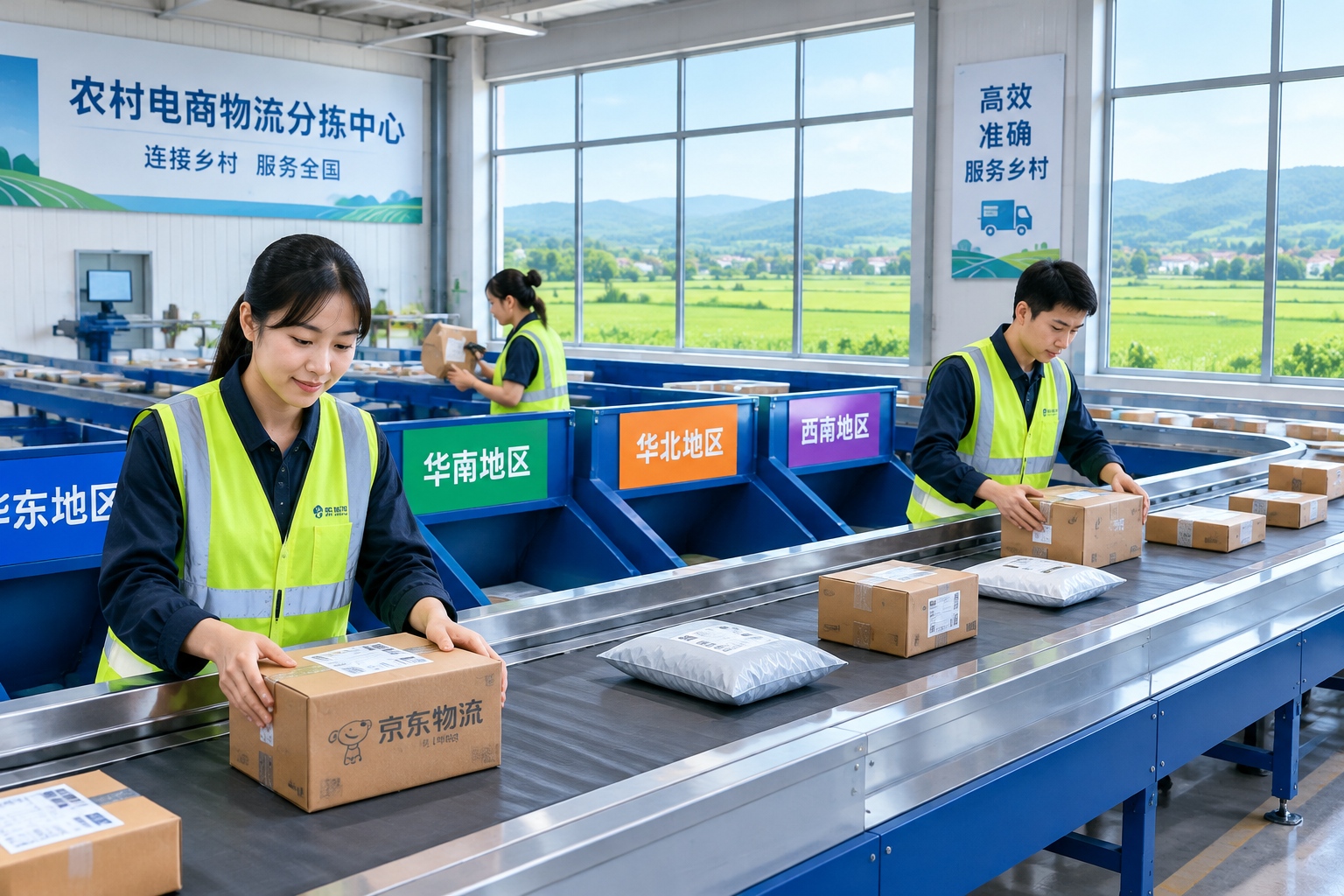
None of this would work without logistics. In most developing countries, rural areas are the last to receive express delivery, if they receive it at all. But China has built one of the world’s most extensive rural logistics networks. In Zhejiang’s Taobao villages, several courier companies set up pickup points directly next to workshops. Some villages have dedicated “cargo streets” where trucks load and unload all day.
The scale is staggering. A single village can ship over 20,000 packages a day during peak sales seasons like “Double 11” (November 11). To handle this, villages have formed cooperatives to negotiate better shipping rates. Some have even built their own sorting centers, turning a farming hamlet into a mini-hub that rivals a small city.
“The network is the real miracle,” says a logistics manager. “It’s not just a road or a wire. It’s the connection between every part of the country, and now the world.”
Not a Fairy Tale: Fierce Competition and Other Realities
It would be dishonest to present Taobao villages as utopias. Competition is brutal. Because thousands of stores sell similar products, prices are driven down, and profit margins are thin. Many small sellers are locked into a cycle of low-cost production and constant ad spending on the platform. Seasonal sales spikes create intense pressure, and not every shop survives.
There’s also a dependence on Alibaba’s ecosystem. The algorithms that decide which products appear in search results can change overnight, wiping out traffic to a store. To diversify, some villages have expanded to other platforms like Pinduoduo, Douyin (TikTok’s Chinese version), and even their own independent websites.
Rural land policy also adds constraints. Many e-commerce workshops run in residential areas, which were not designed for heavy packaging or parking. Local governments are scrambling to build industrial parks, but regulations often lag behind the digital economy.
Still, most villagers see the trade-offs as worth it. “We’re not going to be millionaires,” says a young seller in Qingyanliu. “But we don’t have to leave our home to chase a job. That’s a big deal.”
The Bigger Picture: A Template for Rural Revitalization
Zhejiang’s Taobao villages are more than a business story. They are a social experiment that shows how technology can breathe life into places that were being left behind. The model — combine local craftsmanship, digital skills, and improved logistics — is now being replicated in other parts of China. In inland provinces such as Henan and Guizhou, villages are learning from Zhejiang’s playbook.
There’s even global interest. Officials from Southeast Asia and Africa have visited Zhejiang to study how rural communities can benefit from e-commerce. The message is not complicated: give people a fast connection, teach them how to use it, and let their own stories sell.
As one village elder put it: “Before, we dreamed our children would leave the village. Now we dream they will come back.”
That is perhaps the most profound change of all. In a country where urbanization has long pulled people toward megacities, Taobao villages have written a different narrative — one where the countryside can be a place of ambition, not just nostalgia.
Conclusion: The Wire That Rewrote a Way of Life
So what does a Taobao village actually look like? It looks like a place where a 60-year-old woman can become an internet star, where a farmer’s son can return to build a company, where the night is lit by screens instead of streetlights. It’s not perfect. It’s not evenly distributed. But it’s real, and it’s growing.
The next time you buy a cheap product from a Chinese seller, there’s a good chance it came from a village like these. Behind that package is a story of courage, adaptation, and a very long piece of wire.
Start the discussion at forum.chinacomes.com