


You expect gray. That’s the stereotype: smog-choked skylines, endless concrete, and a landscape sacrificed for speed. But walk into Ritan Park in Beijing on a Tuesday morning, and the air smells like damp earth and blooming jasmine. Elderly residents practice Tai Chi under trees that weren’t there ten years ago. This isn’t just landscaping; it’s a visible reversal of an ecological footprint that once seemed irreversible.
For decades, China’s rapid urbanization came at a steep environmental cost. But today, the narrative is shifting—not from top-down mandates alone, but from the ground up. Ordinary people are becoming active guardians of natural heritage, blending ancient traditions with cutting-edge tech in ways that surprise even local observers.
The Morning Routine: Waste Sorting as Social Norm
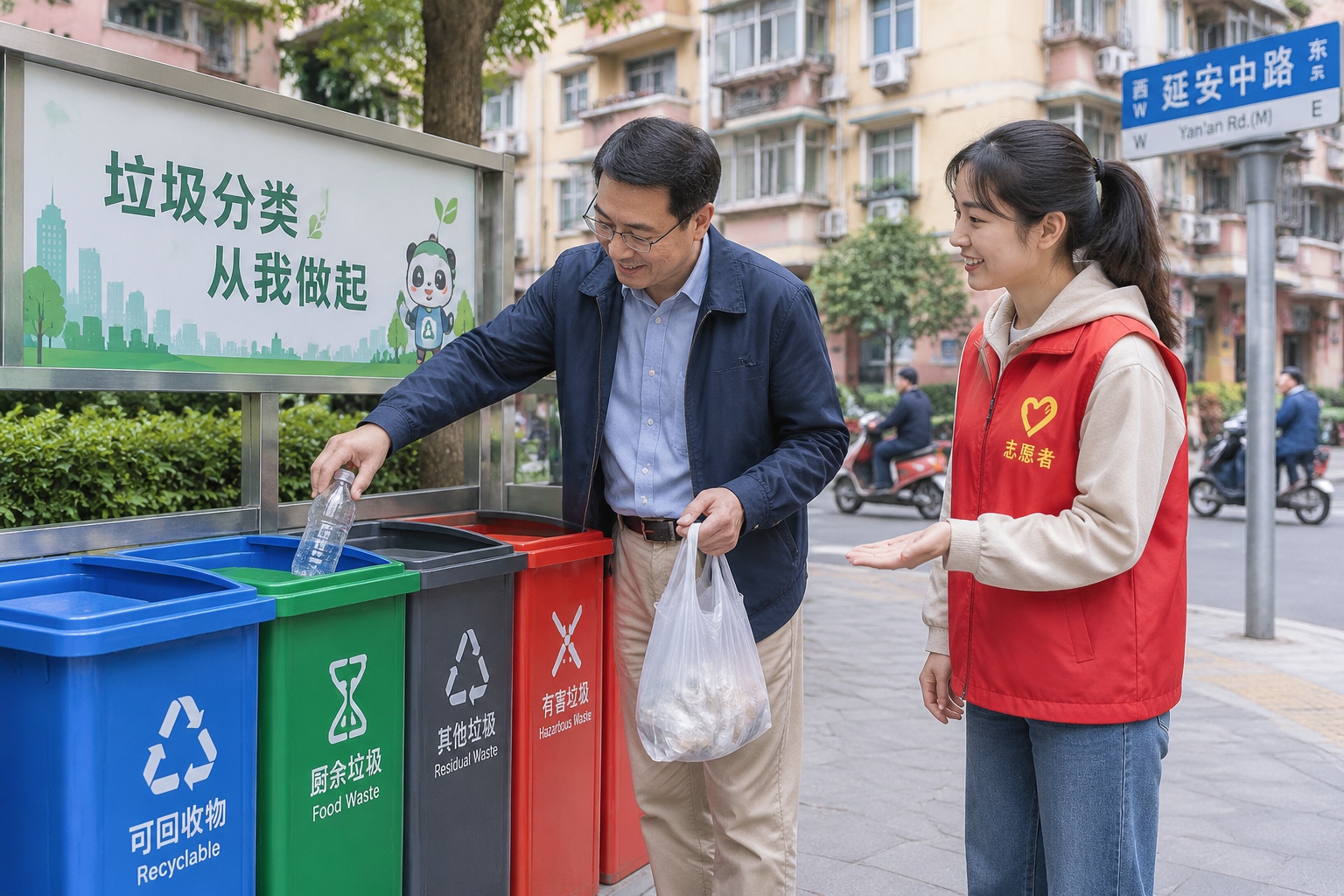
In many Chinese cities, waste sorting is no longer a suggestion; it’s a daily ritual enforced by community volunteers and smart bins. At 7:30 AM outside an apartment complex in Shanghai, Li Wei, a 45-year-old accountant, pauses before throwing away his breakfast container. He checks the label: “Recyclable.” The bin opens automatically via facial recognition or QR code scan. If he hesitates, a nearby volunteer gently corrects him.
“It felt annoying at first,” Li admits with a laugh. “But now, if I see someone littering, it feels wrong. It’s like forgetting to say thank you.” This shift in daily habits has reduced landfill waste significantly in pilot cities. Community gardens have sprouted on rooftops and vacant lots, turning concrete jungles into small pockets of biodiversity where residents grow vegetables and herbs.
Tech Meets Nature: The Invisible Guardians
While the volunteers are visible, the technology supporting them is often invisible. In Chengdu’s Jinjiang River park, neighborhood watch groups use smartphone apps linked to IoT sensors embedded in the soil and water. These sensors monitor air quality, noise levels, and water purity in real-time.
Zhang Min, a retired engineer who volunteers as a “park steward,” shows me her phone screen. “See this red dot? That’s a spike in particulate matter near the main road. We report it, and the city adjusts traffic flow or increases sprinkler usage.” This isn’t just data collection; it’s community-driven environmental management. The feedback loop is fast: report, verify, act. Residents feel empowered because they see immediate results.
Smart irrigation systems in public parks have cut water usage by up to 30% in some districts. Instead of flooding lawns, sensors detect soil moisture and release water only when needed. It’s a quiet revolution happening underfoot, unnoticed by most visitors but crucial for sustainable urban living.
Beyond the Headlines: Eco-Startups in Small Towns
When we think of green innovation, we often picture Silicon Valley or Shenzhen. But some of the most interesting eco-friendly businesses are emerging in smaller, less glamorous towns. In Guizhou province, far from the coastal tech hubs, 28-year-old Chen Yu runs a startup that turns agricultural waste into biodegradable packaging.
“Everyone thought I was crazy,” Chen says, sitting in her modest office filled with samples made from bamboo and corn starch. “But the demand is real. Local farmers have too much waste, and global brands want plastic alternatives.” Her company employs dozens of local villagers, providing stable income while reducing agricultural pollution. This model—linking rural livelihoods with environmental sustainability—is gaining traction in other inland provinces.
These entrepreneurs aren’t just selling products; they’re selling a new identity for their hometowns. They prove that economic growth and ecological preservation don’t have to be enemies. For young people in smaller cities, staying home doesn’t mean stagnation; it means building something meaningful.

Why This Grassroots Movement Matters
China’s environmental journey is often discussed in terms of national targets and international agreements. But the real change is happening in living rooms, community centers, and local startups. It’s messy, imperfect, and deeply human.
The shift from “end-of-pipe” pollution control to prevention through daily habits and local innovation offers a blueprint for other rapidly developing nations. It shows that sustainability isn’t just about policy; it’s about culture. When sorting trash becomes as normal as brushing teeth, when protecting a river becomes a neighborhood pride point, the ecological footprint begins to shrink.
For global readers, this is the story to watch: not the grand announcements, but the quiet persistence of ordinary people who are deciding that nature is worth saving, one recycled bottle and one planted tree at a time.