

The Meeting Ends. The City Doesn’t.
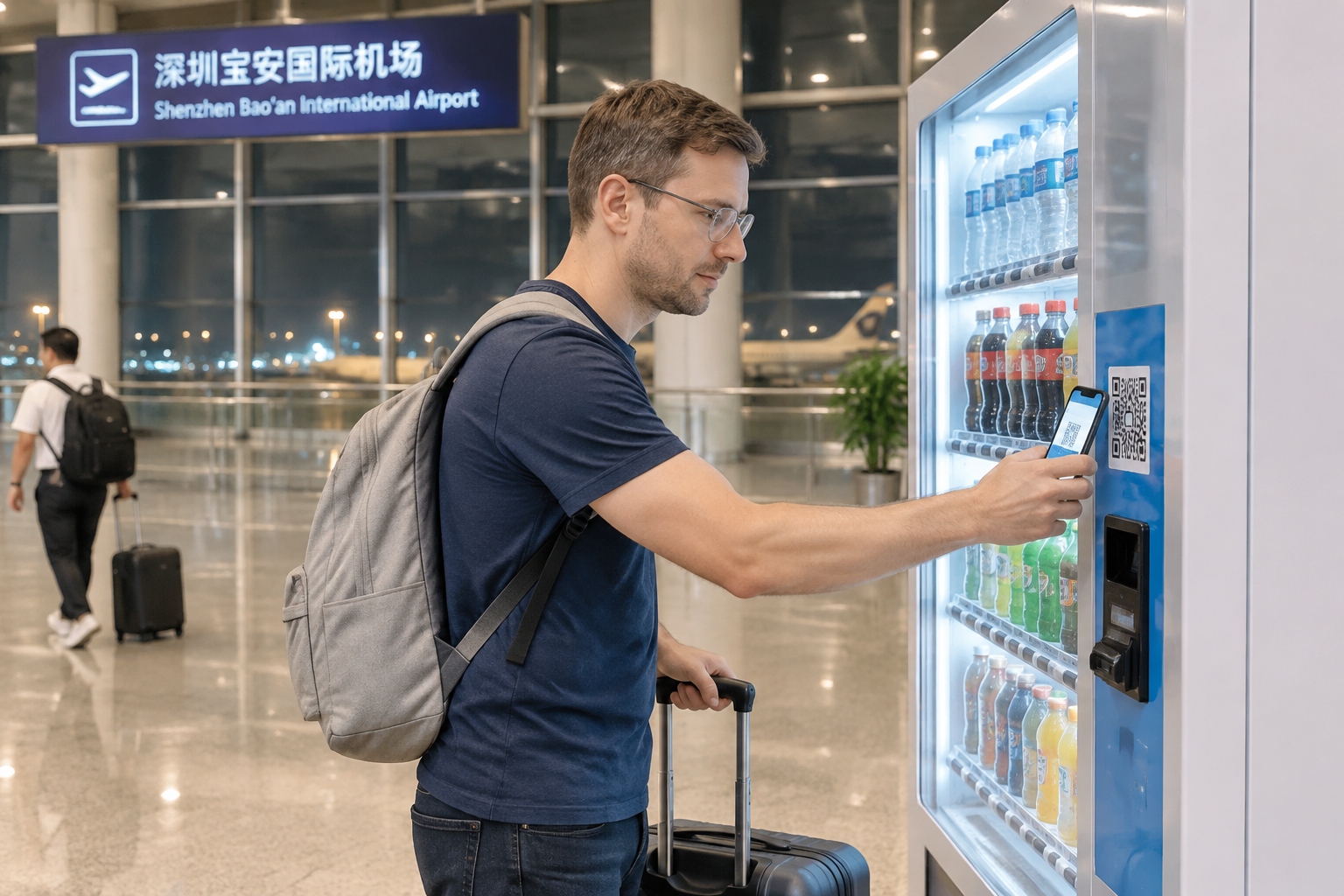
It is just after 11 p.m. at Shenzhen Bao’an International Airport. The last flight from Bangkok has emptied into the arrivals hall, and a German engineer named Lukas is standing in front of a drinks machine with a dead phone and no yuan in his wallet. His hotel is in Futian, 35 kilometres east. He has no idea how he is going to pay for anything.
Ten minutes later a stranger points at his phone, then at the QR code taped to the machine. He connects to the airport wifi, downloads Alipay, links his Visa card, and buys a metro ticket with a tap. By midnight he is on Line 11, watching container cranes slide past the window.
That small scene — a stranger, a QR code, a train — is Shenzhen’s real entry exam, and it tells you more about the city than any summit will. APEC meets here in November 2026. It will fill the news for a week, close a few roads, and leave behind some upgraded venues and a great deal of English signage. What matters if you are thinking of coming afterwards is duller: whether the visa rules, the payment apps and the airport trains still work once the cameras go home.
This is the practical answer.
Getting In: What Actually Opens the Door
Visa-free entry — if your passport is on the list
China has spent two years quietly dismantling its visa wall. Citizens of more than 40 countries can now enter for tourism or business for up to 30 days with no visa at all: the UK, most of the EU, Australia, New Zealand, Japan, South Korea, Brazil and much of Southeast Asia. The scheme has been extended through the end of 2026. The United States, Canada and India are not on it.
Check the current list before you book. It has been revised several times a year, and the direction of travel has been one-way — wider, not narrower.
The 240-hour transit workaround
If your passport is not on that list, you may still get in without a visa by transiting. Citizens of 55 countries can pass through China on the way to a third country and stay up to 240 hours, which is ten days. Shenzhen’s airport and its land crossings with Hong Kong are both designated entry points.
Two rules trip people up. You need an onward ticket to a different country, and if you enter through Guangdong you are expected to stay inside Guangdong. Hong Kong counts as that third country, which is why “fly into Bangkok, transit through Shenzhen, leave via Hong Kong” is one of the most common itineraries in the region. Bring printed confirmations; border officers do ask.
Flights and the airport
Bao’an has rebuilt its international network faster than almost any Chinese hub. There are nonstops to most of Asia’s big cities and a growing list of European and Middle Eastern routes. The arrivals hall is a decent first impression of the place: quiet, orderly, and signed in English as well as Chinese. If you hold an APEC Business Travel Card, nothing has changed — it remains the smoothest way through the queue.
Getting Around Without Speaking Chinese
Metro Line 11 runs from the airport to Futian in about 40 minutes for under ¥10. Line 20 is quicker if you are heading for the convention centre in Bao’an. Trains run until roughly 11 p.m., announcements are in Mandarin and English, and every station has lifts — a detail you stop noticing until you are dragging a suitcase.
Taxis are cheap and plentiful, but the app is the point. DiDi has an English interface and accepts foreign cards. The ride-hailing mini-program inside Alipay does the same without a second download. Both show you a fixed price before you get in, which removes the oldest argument in travel.
Then there is the train that makes Shenzhen unusual. From Futian station you can be in Hong Kong’s West Kowloon in 14 minutes, clearing immigration at both ends. Day trips to Hong Kong, Macau or Guangzhou — 30 minutes by high-speed rail — are not a special excursion here. They are how people live.
A Tech Route You Can Actually Walk Into
Most “innovation tours” of Shenzhen are a bus and a windscreen. These are places you can walk into on your own.
Huaqiangbei — two to three hours
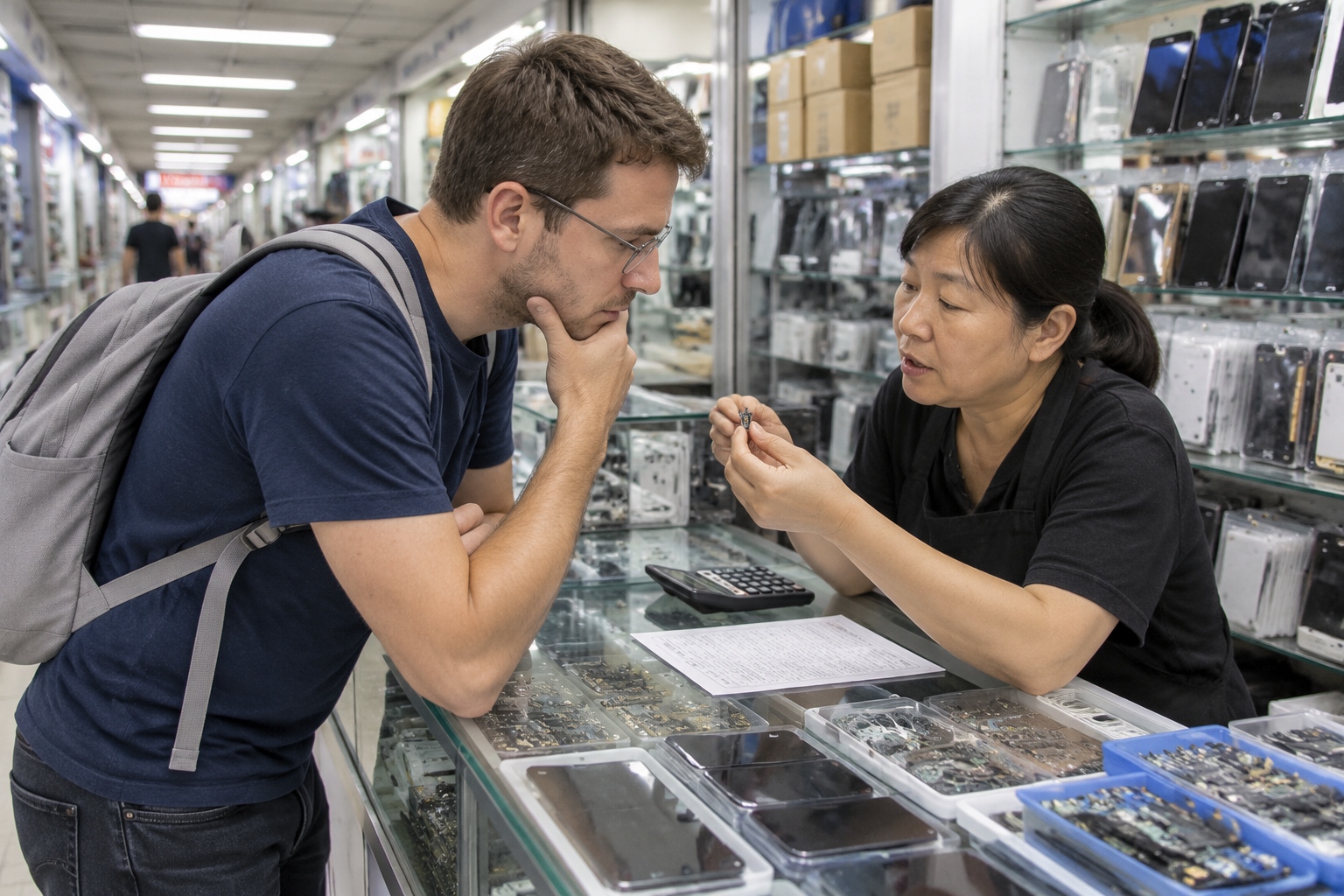
This is the electronics district that helped build half the world’s gadgets, and it is still a working market rather than a museum. The SEG Electronics Market and the buildings around it hold floors of components, screens, motors, cables and small robots. A stallholder will quote you a price for 500 of something before you have finished asking. Go on a weekday morning, keep some cash as backup, and do not expect much English — a translation app and a calculator do the job.
Robotaxis in Nanshan — 45 minutes
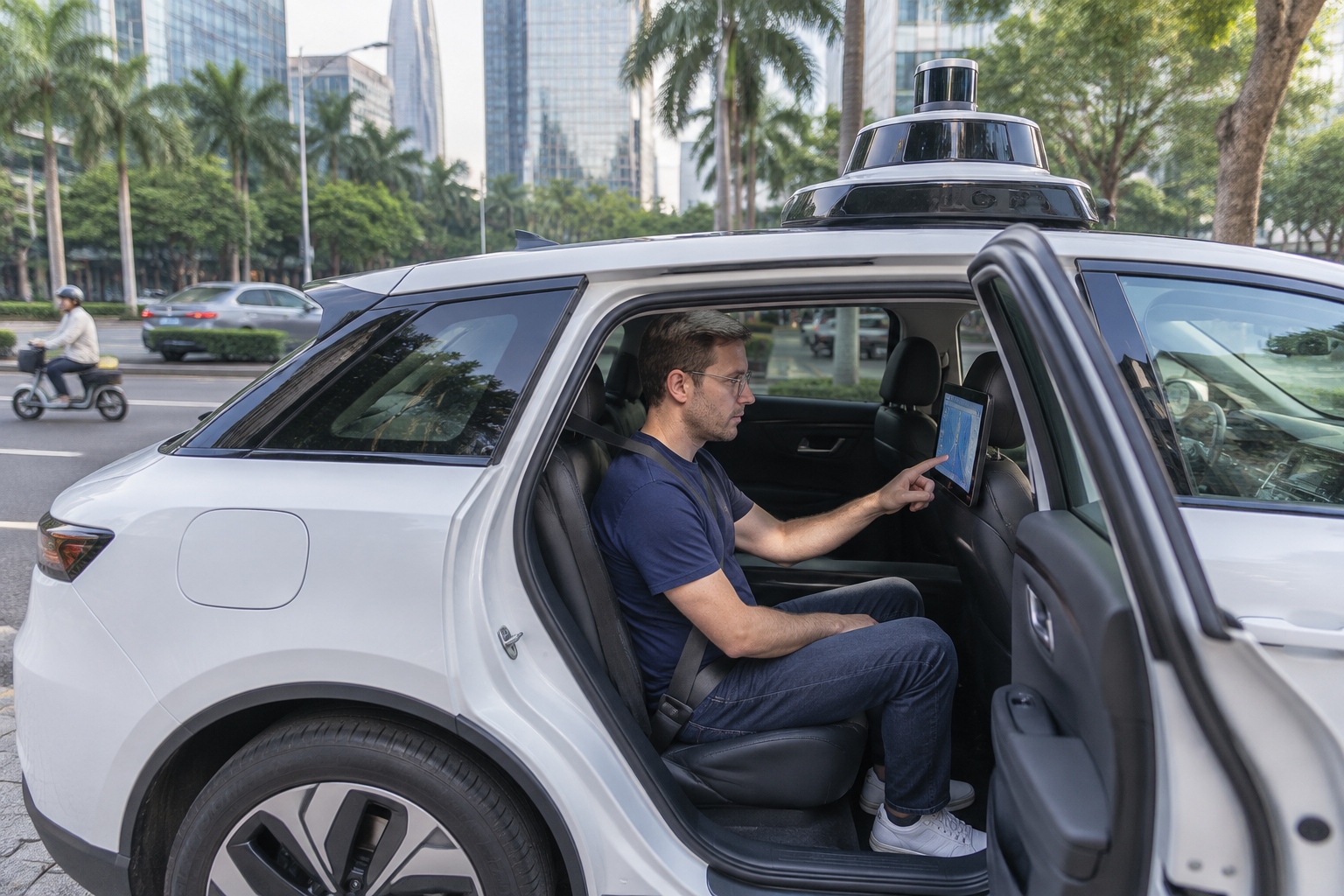
A handful of companies now run robotaxis in parts of Nanshan and Bao’an. You book through their apps, the car pulls up, and on some trips there is nobody in the driver’s seat; others still carry a safety operator. A screen tells you to buckle up. It is not a theme-park ride. It is a normal, slightly boring journey through normal traffic — which is exactly what makes it worth doing.
Museums, makers and drones — half a day
The Shenzhen Museum in Futian tells the city’s 45-year story in about two hours, and it is genuinely worth the time: free, closed Mondays, book a slot online. Twenty minutes away, the Museum of Contemporary Art and Planning Exhibition covers architecture and urban planning. In between, Chaihuo Makerspace — one of the country’s first — still runs open workshops and welcomes visitors. At OCT Harbour you can stand in the DJI store and watch people fly drones indoors. In several districts you can also order coffee by app and collect it from a locker on a rooftop, delivered by drone.
Company visits — manage expectations
BYD, Huawei and Tencent do not run public tours. Visits happen through trade delegations, university programmes, or a contact inside the company. If a factory visit is your reason for coming, arrange it weeks ahead through an organisation rather than turning up at the front desk.
The Unglamorous Things That Decide Your Trip
Paying for anything
China is close to cashless but not cash-hostile: refusing cash is illegal, and shops have to take it. In practice you will want Alipay or WeChat Pay. Both let you link a foreign Visa or Mastercard, both have English modes, and small payments are fee-free — expect a charge of roughly 3% once a payment goes above ¥200. Set it up at the airport, on wifi, before you actually need it.
Getting help in English
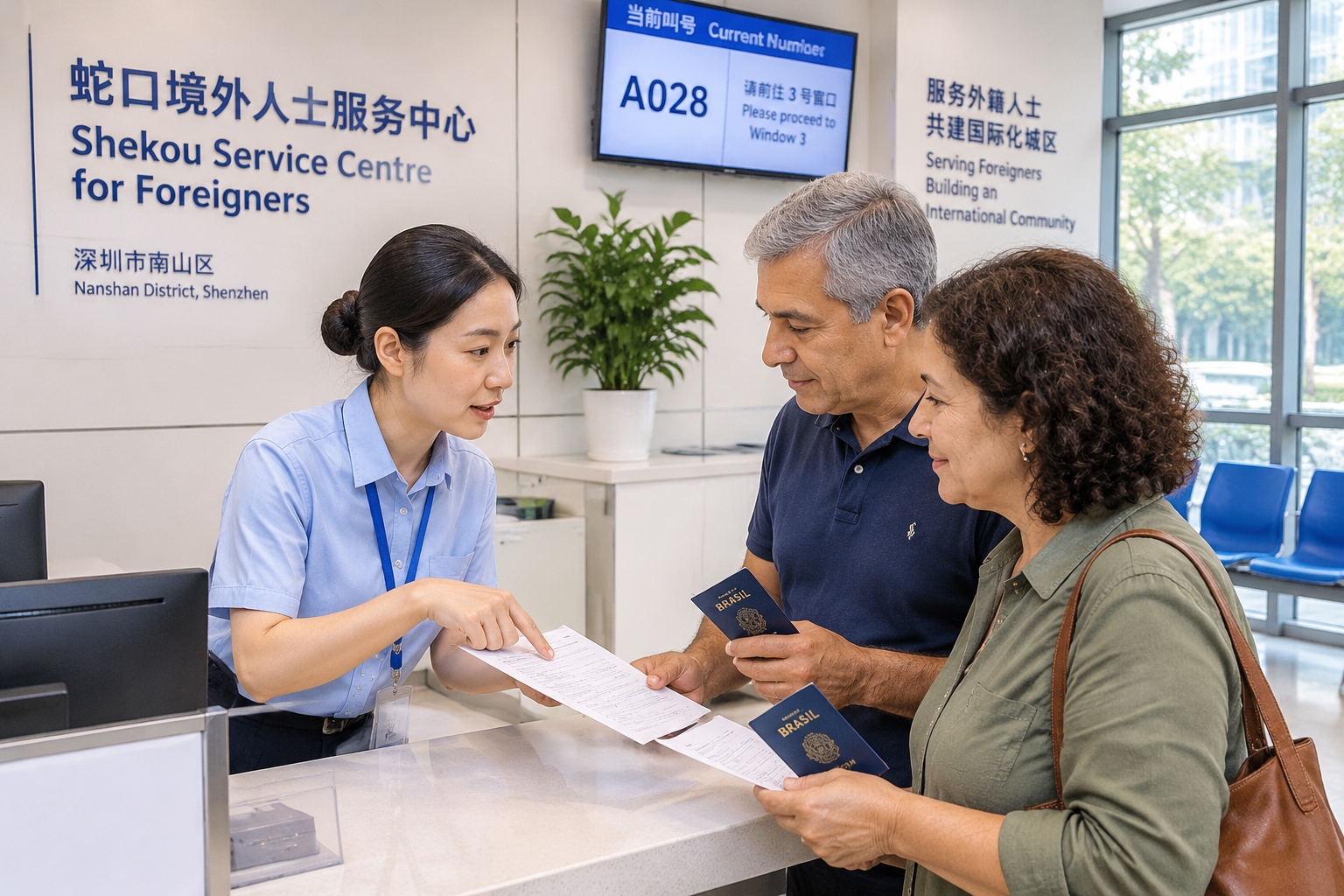
The city’s 12345 hotline has English-speaking operators. Many district government service halls have counters for foreigners. In Shekou, the old expat neighbourhood in Nanshan, there is a walk-in service centre for foreigners where you can ask about residence permits, school enrolment and medical insurance — the kind of question that is impossible to Google and easy to answer in person. For anything medical, the University of Hong Kong–Shenzhen Hospital runs an international clinic with English-speaking staff and clear pricing.
Getting your tax back
Departure tax refunds are real and underused. Spend at least ¥200 in a single participating store on one day, ask for the refund form and keep the receipts, then claim at the airport, at Shekou cruise terminal, or at the Futian and Luohu land crossings. You get 11% VAT back minus a 2% agency fee. Bring the goods, unused, and your passport.
If You Want to Stay Longer

A 30-day visa-free entry is for visiting, not for working. Anything paid needs the right permit, and this is where Shenzhen is unusually straightforward for a Chinese city — and as bureaucratic as everywhere else in China.
The normal route for a founder is: register a company, then apply for a work permit and a residence permit. A wholly foreign-owned entity can be set up in a few days with a local agent. Shenzhen runs a points-based system for foreign employees with a fast track for recognised high-end talent, and the Qianhai and Hetao zones offer tax breaks and subsidies aimed at specific industries — finance, logistics, AI, biotech. Apply through the zone’s own service centre rather than a generic agency; the incentives are administered locally and the staff know the rules.
The honest caveat: policies change, eligibility is narrow, and paperwork takes longer than the websites suggest. Talk to an accountant who has done it before, and budget three months rather than three weeks.
Three Ways to Do It
48 hours
Land, drop your bag in Futian, walk Huaqiangbei in the morning, take the metro to Shenzhen Bay Park for sunset, eat in Shekou, and ride a robotaxi home. You will have seen the city’s two faces: the market and the waterfront.
Five days
Add the Shenzhen Museum and the Museum of Contemporary Art and Planning Exhibition, a morning at OCT-LOFT, an afternoon in Nantou Ancient Town where the old village grid sits under new glass, and a day at the beach — Dameisha is the easy one, Dapeng the prettier one. Keep one evening free for the night stalls around Shuiwei.
Two weeks
Now it becomes a base. Hong Kong for a day, Guangzhou for lunch, Songshan Lake in Dongguan for hardware suppliers, Macau by ferry from Shekou. Add a co-working week in Qianhai if you are testing whether to set something up here. Most people who come for two weeks start looking at apartments by day ten.
After the Cameras Leave
Shenzhen’s problem has never been attention. It is retention. Summits come, roads get repaved, and then everyone goes home. What tends to last here is the practical stuff: a metro that runs on time, a hospital that answers the phone in English, a payment app that accepts your card.
That is the honest case for coming after APEC rather than during it. In November 2026 you will get road closures and hotel prices. In February you will get the same city with the lights on and nobody in your way.
If you want more context before you book, the rest of this series goes deeper: how Shenzhen’s neighbourhoods actually work, how to get official paperwork done without losing a week, what the 260-kilometre coastline looks like on an ordinary Sunday, and where technology quietly does something useful rather than impressive.