

The bill doesn’t arrive — someone goes to get it
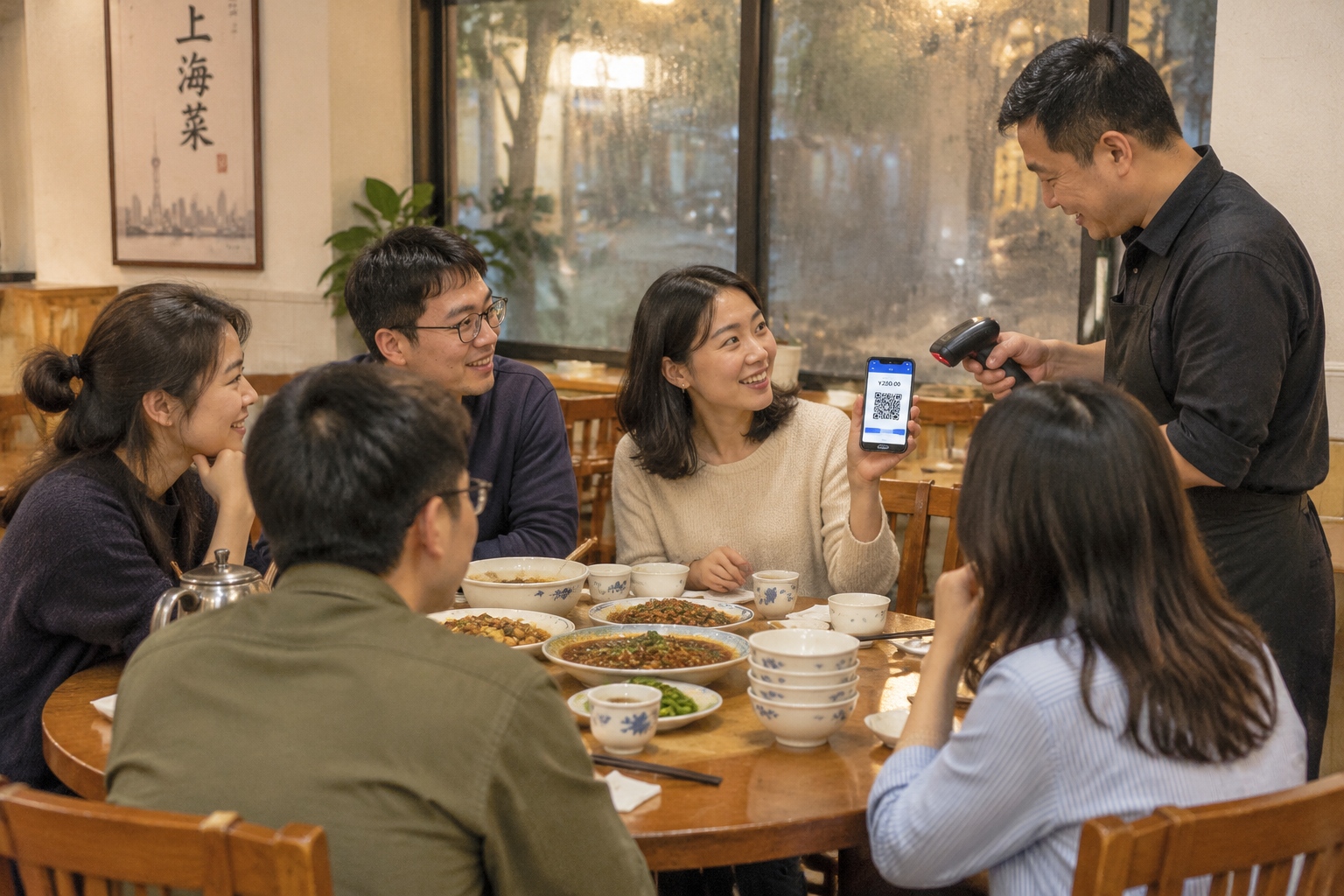
It’s 8:40 on a Tuesday night in a thirty-seat restaurant off Wuding Road in Shanghai. The last plate, stir-fried greens, is half gone. Nobody is waiting for a check, because in most Chinese restaurants nobody brings one. Someone at the table says mǎi dān (买单) to a passing waiter. The waiter either points at the QR code taped to the corner of the table or comes back with a handheld scanner.
Then the interesting part starts. Four people reach for their phones. They’re not fighting over who pays — they’re working out how the money comes back. One person settles the whole bill with a single tap. Thirty seconds later, three transfer requests land in the WeChat group these friends made two years ago and never renamed.
If you come from the US, the UK or Australia, this is where the script stops matching. Chinese dining doesn’t run on either of the two systems you probably know: separate checks for everyone, or one generous person covering the table and adding a 20% tip. It runs on a third arrangement. Once you can see it, meals here get a lot less awkward.
What “AA制” actually means
“AA” (pronounced ah-ah) is the everyday Chinese word for splitting a bill. Nobody is entirely sure where the letters came from; the popular guess is that they were borrowed from “algebraic average,” which tells you how unromantic the concept is. In practice it covers two different things, and Chinese speakers usually let context decide which one they mean.
Even split vs. paying for your own
When a group shares dishes — the normal way to eat in China — AA usually means dividing the total evenly, per person. When people order separately, at a noodle shop or a food court, it means each person pays for their own bowl. The phrase 各付各的 (each pays their own) is the precise version if you want to be specific.
Why it feels frictionless here
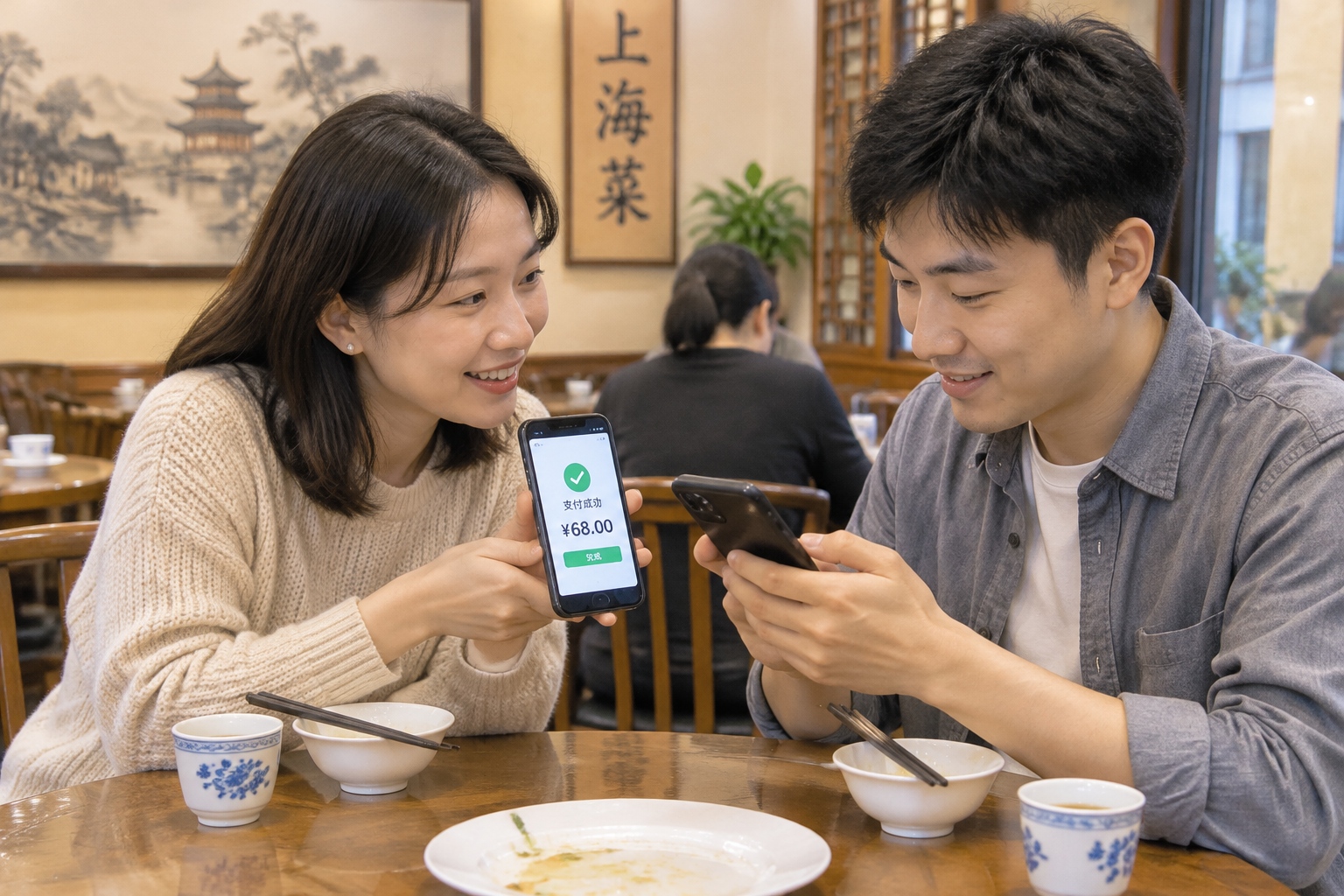
The technology matters more than people admit. WeChat has a built-in group payment request, and Alipay has an AA collection feature. One person pays the restaurant; the app then calculates everyone’s share and posts a request in the group chat. No one has to flag down a server, no one has to hand over cash, and nobody has to do mental arithmetic after two beers.
This is a genuinely different starting point from most of Europe and North America, where splitting a bill for eight usually means asking the server for separate checks and waiting while they re-enter the order. In China the restaurant side stays simple — one table, one payment — and the social side carries all the negotiation. That’s why the etiquette feels more elaborate than the technology.
Three kinds of dinner, three different answers
The mistake visitors make is treating every meal the same. In practice, the invitation tells you most of what you need to know.
Friends arranging dinner
Among people under about 45 in big cities, splitting is the default for casual meals. Someone will usually say it out loud before anyone gets uncomfortable: wǒmen AA ba (我们AA吧 — let’s split). Close friends often drift toward taking turns instead — you paid last time, so this one is mine — which is not the same as splitting but comes from the same instinct about fairness.
Colleagues at lunch
Workday lunches are usually split through a group chat, sometimes down to the yuan. But watch for exceptions. A team leader may simply pay, especially after a project wraps up. A company dinner is paid by the company. If a senior colleague says wǒ lái (我来 — I’ve got it), the socially cheap move is to let them, then say thank you clearly.
Someone has clearly invited you
If the message is wǒ qǐng kè (我请客 — my treat), it isn’t an opening bid in a negotiation. It means the host has already decided, and often has a reason: a promotion, a birthday, a visitor from out of town, or simply that they chose the restaurant. Reach for your wallet here and you can turn a warm gesture into a small scene.
If you’re the guest: ask once, then let it go
A single, cheerful offer is considerate and reads as good manners: yào bùyào AA? (要不要AA — shall we split?). Ask before the bill is settled, not after. If the host waves it away once, you can offer one more time. If they wave it away twice, stop. Two refusals is a clear answer in Chinese social language, and continuing to push starts to imply the host can’t comfortably afford it, which is the opposite of the compliment you’re trying to pay.
What to do instead: thank them specifically, and put a marker down for next time. Nà xià cì wǒ lái (那下次我来 — then next time it’s on me). This is how the reciprocity works. It’s not a debt with an amount attached, it’s a running loop of invitations that keeps a friendship easy to maintain.
The thing visitors sometimes get wrong in the other direction is performing the elaborate fake fight over the bill. It exists, and at business dinners among older guests it can be genuinely competitive. But as a guest from abroad, miming a struggle usually reads as awkward rather than generous, and it puts the host in the position of having to manage you.
Tipping: at ordinary restaurants, no
At a normal mainland Chinese restaurant — the kind with plastic menus and fluorescent lighting and a queue at 6:30 — nobody expects a tip. Staff are on wages. The price on the menu is the price you pay. Leaving extra cash on the table will sometimes result in a server jogging after you to return money they assume you forgot.
This is the point where the comparison is genuinely useful. In the US, a 15–20% tip is part of how restaurant work is paid for, which is why leaving nothing feels like an insult rather than a saving. In mainland China, service labor is priced into the food, so the tip never became a wage mechanism. Neither system is more generous; they move the same money through different channels.
Service charge is not a tip
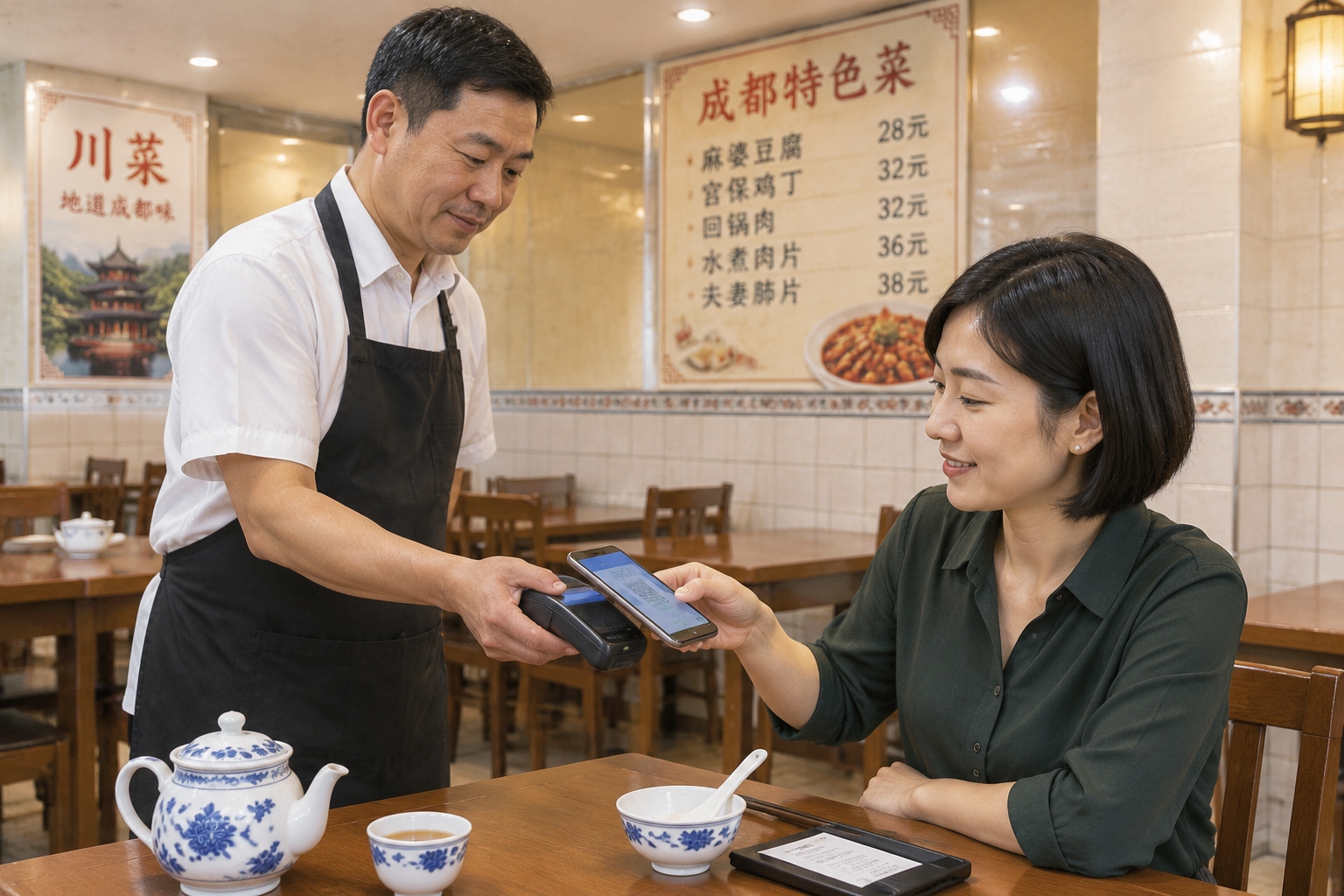
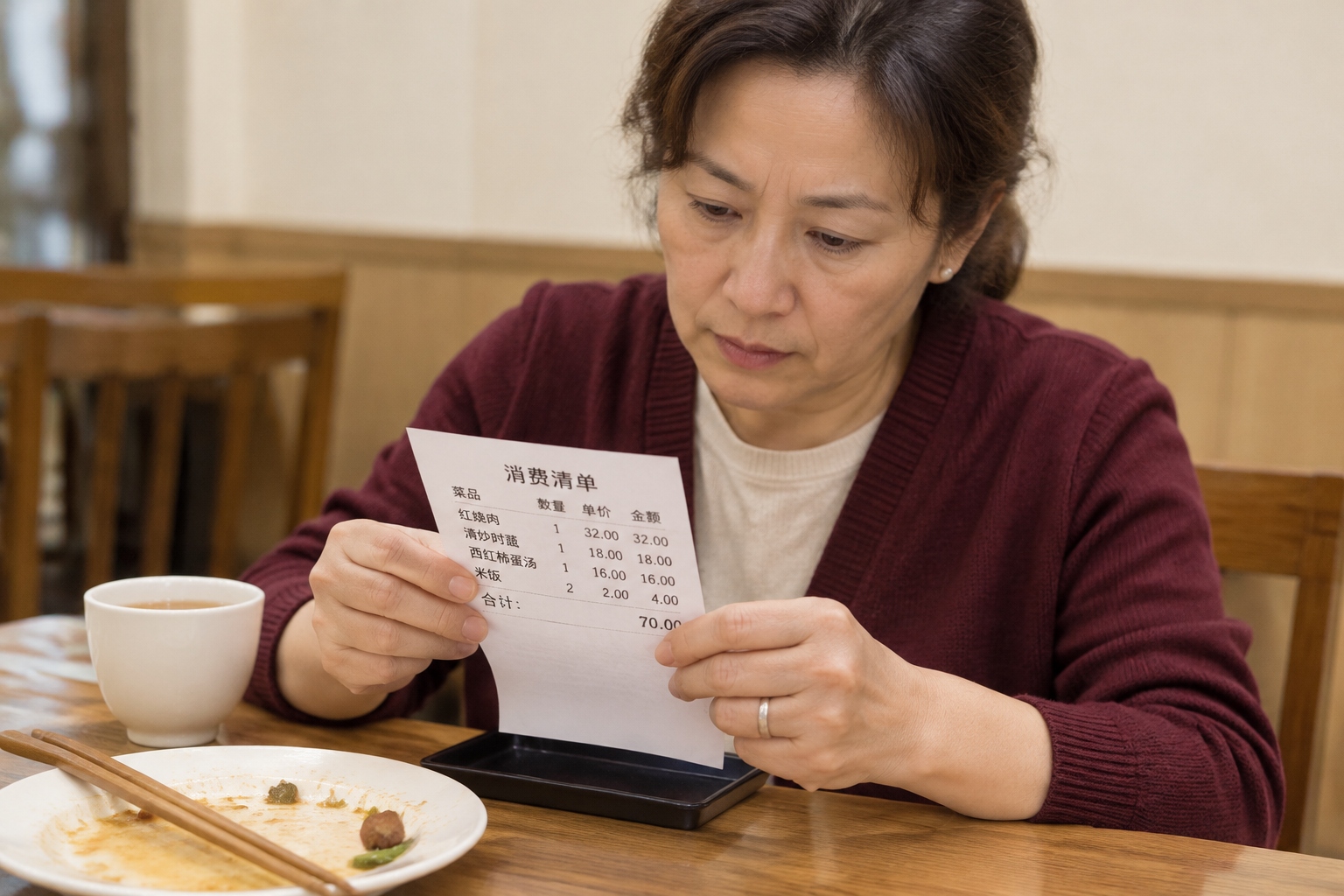
Here’s where people get caught out. Many mid-range and upscale restaurants in China print a service charge — usually 10%, sometimes 15% at hotel restaurants — on the menu or the final bill. It often appears as fúwùfèi (服务费) or jiāshōu 10% fúwùfèi (加收10%服务费 — 10% service charge added). Some private rooms carry a minimum spend as well. That money goes to the restaurant, not to the individual who looked after your table. You pay it because it’s on the bill, and you don’t add a tip on top.
Check the menu’s fine print before you order if it matters to you; the charge is normally disclosed there rather than sprung at the end.
Where voluntary tipping does appear
It exists, just not where visitors look for it. Delivery apps have a small reward button that lets customers send a rider a few yuan after a late-night order. Hotel bell staff and airport porters may accept a tip, though many will politely decline. Foreign-language tour guides and drivers are sometimes tipped by international groups. None of this is expected at a neighbourhood restaurant, and none of it is a percentage of anything.
Hong Kong and Macau are different
Worth flagging for trip planning: Hong Kong restaurants commonly add a 10% service charge, and small change on top is normal in nicer places. Macau runs similarly. So “does China expect tips” doesn’t have one answer — it depends which side of which border your table is on.
A short practical script for visitors
Let whoever organised the meal reach for the bill first. Offer once — yào bùyào AA? — and accept the answer you get. If you are paying, use your phone at the table rather than waiting for a check that won’t come. Look for a service charge line before you decide anything else. And skip the cash on the table at an ordinary restaurant.
One more thing worth knowing: paying is not always done by the wealthiest person in the room. It’s usually done by whoever did the inviting, or whoever is hosting the visitor. If that’s you, paying promptly and without ceremony is the actual gesture of hospitality.
Why the two systems ended up so far apart
Mobile payment is the honest explanation for the splitting habit. When moving money to a friend takes four seconds and costs nothing, splitting stops being a hassle and becomes the polite default — it protects the friendship by preventing small debts from piling up. Tipping never took root because restaurant wages were never structured around it, and because a price printed on a menu is treated here as the whole price.
For a visitor, that combination is actually convenient: you don’t have to calculate a percentage, and you don’t have to guess what your share is. You just have to be a little attentive at the one moment that matters — the moment someone reaches for their phone.