
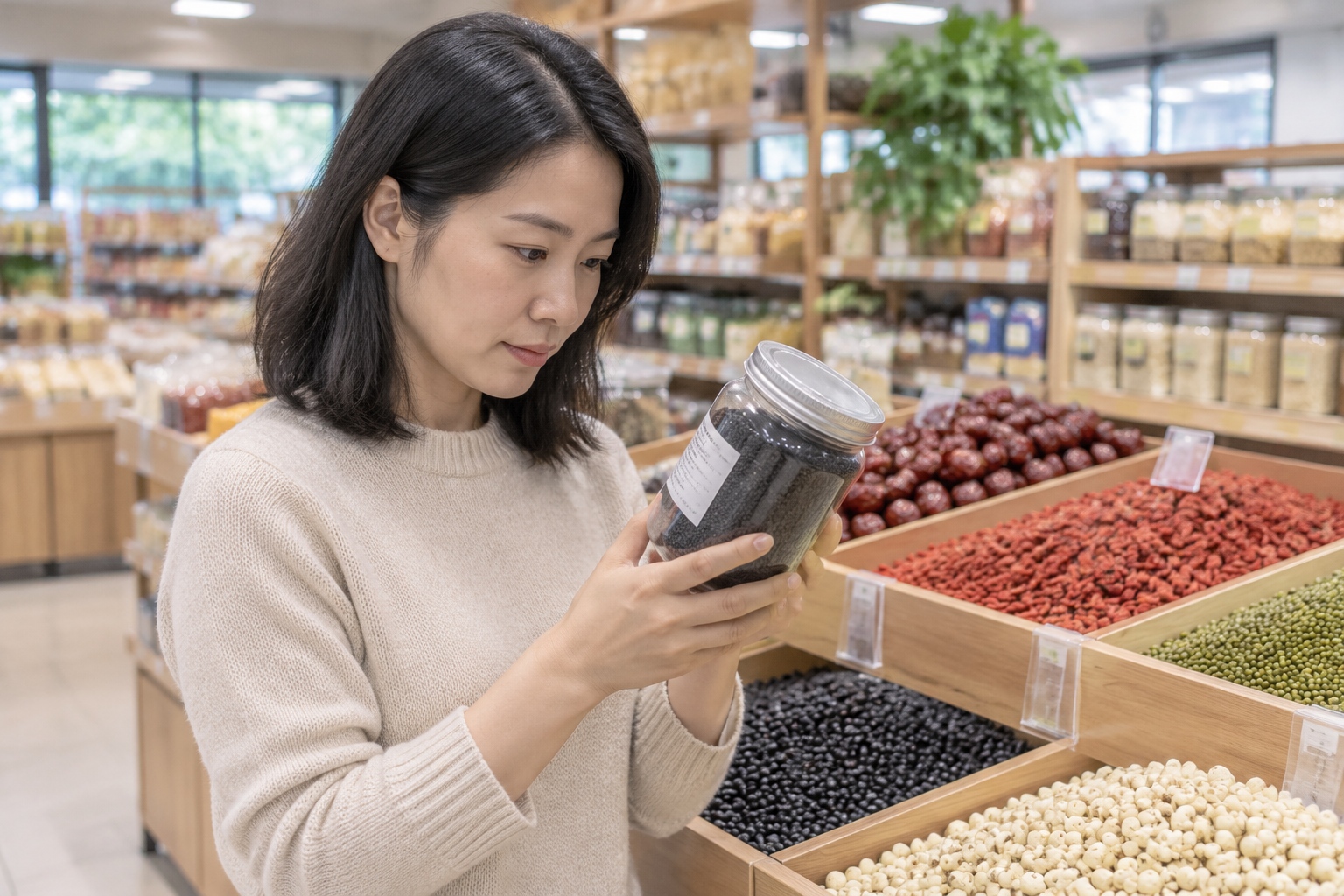

A Jar of Black Sesame in Aisle Seven
Xiao Zhou is 34, works in HR in Hangzhou, and is standing in a supermarket grain aisle holding a jar of ground black sesame. Her mother sent a 12-second voice message on WeChat that morning: “Buy some black sesame. It’s good for your kidneys. And your hair.”
She buys it. Not because she has a kidney problem, and not because she believes sesame is medicine. She buys it because the sentence makes sense to her. A color, an organ, a food. In China, that chain of association is part of ordinary household vocabulary, the same way “eat more vegetables” is elsewhere.
For anyone outside China, the five-color idea — green, red, yellow, white, black, each tied to one of the five organ systems — is one of the easiest doorways into traditional Chinese medicine. It’s also one of the easiest to misread. So let’s walk through what it actually says, and where it stops.
Where the Five Colors Come From
The system is called wuxing, usually translated as the Five Phases or Five Elements: wood, fire, earth, metal, water. Each phase comes with a bundle of correspondences — a season, a direction, a taste, an emotion, a body organ, and a color.
Think of it as a filing system rather than a chemical formula. Ancient practitioners needed a way to organize observations about the body into patterns they could remember and teach. Color was the most visible handle they had. What you saw on a patient’s face, tongue, or skin became one clue among several, sorted into five rough categories.
The classic pairing runs like this:
Green (青) → Liver
Green is the color of wood and spring — things that grow and spread. In the body it’s linked to the liver, and by extension to the smooth flow of qi. A greenish or blue-green cast to the complexion is traditionally read as cold, pain, or stagnation, and it’s also just the color of a bruise.
Red (赤) → Heart
Red is fire, heat, and movement. It corresponds to the heart and to blood circulation. A flushed, overly red face suggests heat rising; a bright red tongue tip is read the same way. Red foods in the diet — goji berries, red dates, tomatoes, lean meat — are the ones people reach for when they feel run down.
Yellow (黄) → Spleen
Yellow is earth, harvest, and digestion. The “spleen” here is not the anatomical organ that filters blood; in Chinese medicine it’s closer to the whole digestive and transforming function. A sallow, yellow-tinged complexion is traditionally linked to weak digestion and dampness. Millet, pumpkin, corn, and sweet potato all sit in this bucket.
White (白) → Lungs
White is metal, autumn, and dryness. It maps to the lungs and the skin, and to moisture in the body. Pear, white fungus, lotus root, radish, and almond are the classic autumn foods — the season when everyone in northern China starts coughing.
Black (黑) → Kidneys
Black is water, winter, and storage. It corresponds to the kidneys, which in this framework hold your constitutional reserves — growth, aging, bone, hair, reproduction. Black sesame, black beans, walnuts, and dark mushrooms are the standard list. This is exactly the message Xiao Zhou’s mother sent.
A crucial note for outside readers: 肝、心、脾、肺、肾 in Chinese medicine are not identical to the liver, heart, spleen, lungs, and kidneys on an anatomy chart. They are functional systems, broader than the organs and sometimes overlapping with what a Western doctor would call hormones, circulation, or digestion. That single distinction clears up most confusion.
Reading a Face: What Looking Actually Means
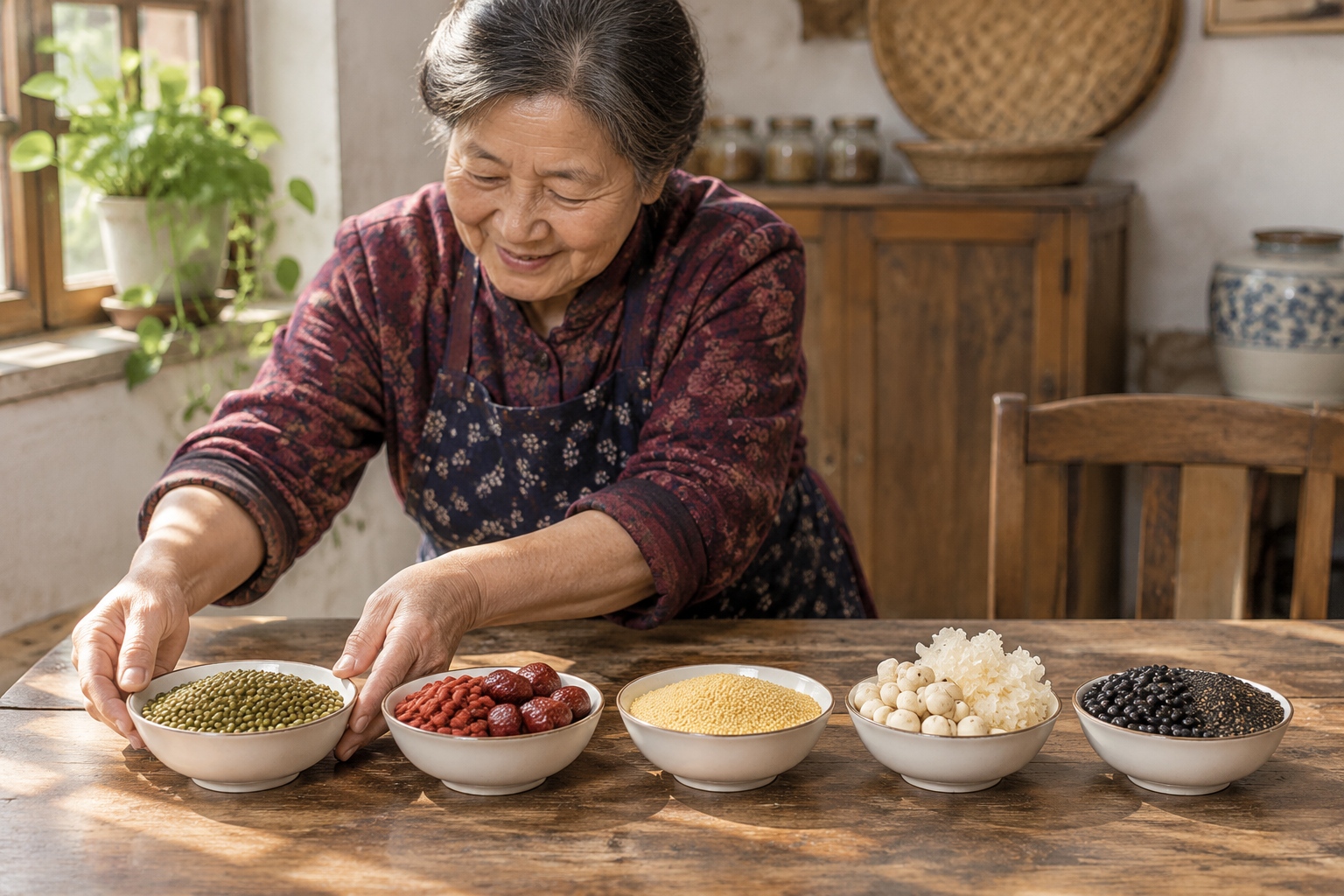
Wang zhen (望诊), the “looking” part of diagnosis, is usually the first thing people notice in a Chinese medicine clinic. The practitioner looks at your complexion, your eyes, your posture, your tongue — and, in a modern hospital, glances at the blood test results on the screen behind you.
What they’re reading is not a literal color. A “green” face is not green. What matters more is the quality of the skin: is it lustrous or dull, moist or dry, does the color sit in one spot or spread evenly. A practitioner will also factor in that skin tones vary enormously across China, from Harbin to Guangzhou, and adjust accordingly.
In broad strokes: blue-green suggests cold or pain; red suggests heat; yellow suggests digestive weakness or dampness; white suggests deficiency or cold; dark and dull suggests a longer-standing pattern. Each of those is a hypothesis, not a conclusion.
The tongue is the other famous window. Practitioners look at the body color, the coating (thin or thick, white or yellow), the shape, and how wet it looks. A pale tongue with a thick white coating reads differently from a red tongue with almost no coating. But no trained practitioner diagnoses from the tongue alone.
That’s the principle of si zhen he can — combining all four diagnostic methods: looking, listening and smelling, asking, and pulse-taking. One color cue is a sentence fragment. The full exam is the paragraph.
Color on the Plate
Food therapy, or shiliao, takes the same map and moves it into the kitchen. It’s less a prescription than a set of gentle nudges, shaped by centuries of eating habits rather than clinical trials.
Some everyday examples you’d see in China:
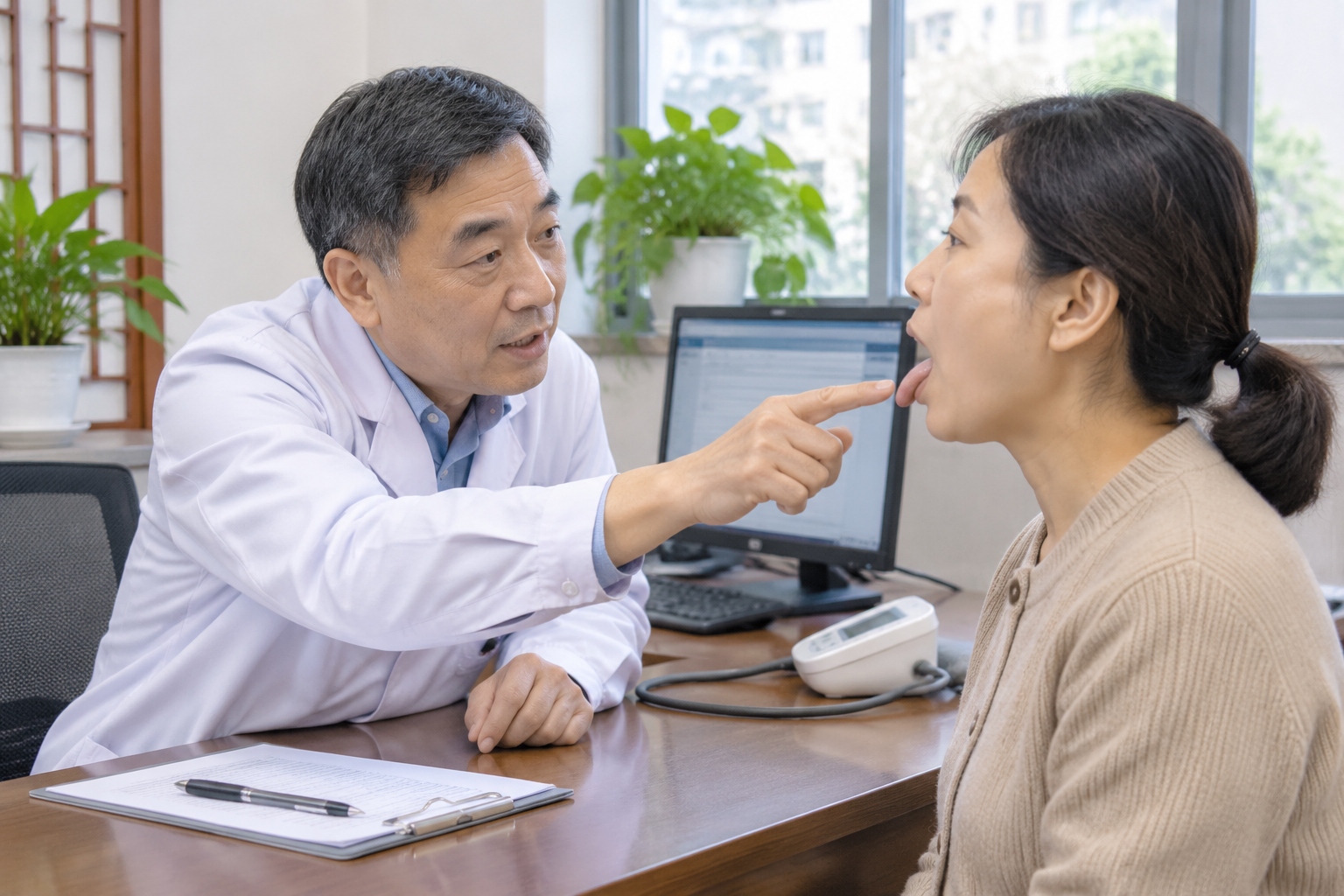
A bowl of mung bean soup in July, when the heat in Nanjing turns sticky and relentless. Green, cooling, liver-linked.
Millet porridge for breakfast, especially for anyone with a sensitive stomach. Yellow, gentle, spleen-friendly. It’s on the menu of almost every breakfast stall in the north.
Stewed pear with white fungus in October, when the air dries out and everyone starts clearing their throat. White, moistening, lung-linked.
Black sesame paste, black beans, walnuts — often pushed at people in their forties and fifties, or in winter, or after a period of overwork.
Red date and goji tea in an office thermos. You’ll see it in nearly every office in China, and it’s as much about taking a break as about nutrition.
Here’s where honesty helps. Several of these foods are genuinely nutritious: black sesame and black beans are decent sources of protein, iron, and calcium; goji berries contain antioxidants; pears and white fungus are mostly water and fiber, which is fine for a dry throat. But the color-to-organ link is analogy, not pharmacology. Eating black food doesn’t “tonify” a kidney in the medical sense. The system’s value is that it made people eat a varied diet long before anyone could measure a vitamin.
Where the Logic Breaks Down
It breaks down the moment someone uses a color clue as a diagnosis.
A friend of a friend noticed her eyes looked yellow and assumed her spleen was “damp.” She drank millet porridge for two weeks and felt worse. Yellowing of the whites of the eyes is a medical red flag — it can point to liver or gallbladder disease — and it needs a hospital, not a grain.
Something similar happens with the phrase shang huo, “heatiness,” which gets attached to everything from a canker sore to a bad mood. People self-prescribe “cooling” herbal teas, drink them daily for weeks, and end up with loose stools and a cold stomach.
It’s worth knowing that in China, traditional medicine is not a separate folk world running in parallel to modern hospitals. It’s regulated. Practitioners hold national licenses. Big hospitals have dedicated TCM departments, and many have integrated departments where a patient might get an ultrasound, a blood panel, and a pulse reading in the same visit. Licensed practitioners refer patients onward when something looks surgical or acute.
How to Use This Without Overreading It
For readers outside China, keeping three layers apart solves most of the confusion.
Cultural symbolism. Color associations are part of how Chinese people talk about the body, food, and seasons. Understanding them helps you follow conversations, menus, and family advice.
Everyday eating habits. Millet porridge, pear soup, black sesame paste — these are foods first. They’re worth trying because they taste good and fit a balanced diet, not because they replace treatment.
Clinical practice. Diagnosis and herbal prescribing are a licensed profession with real risks, including interactions with drugs like blood thinners and concerns during pregnancy. If something is actually wrong, that’s a doctor’s job — and in China, that doctor may well be sitting in a hospital that also does CT scans.
Back to Aisle Seven
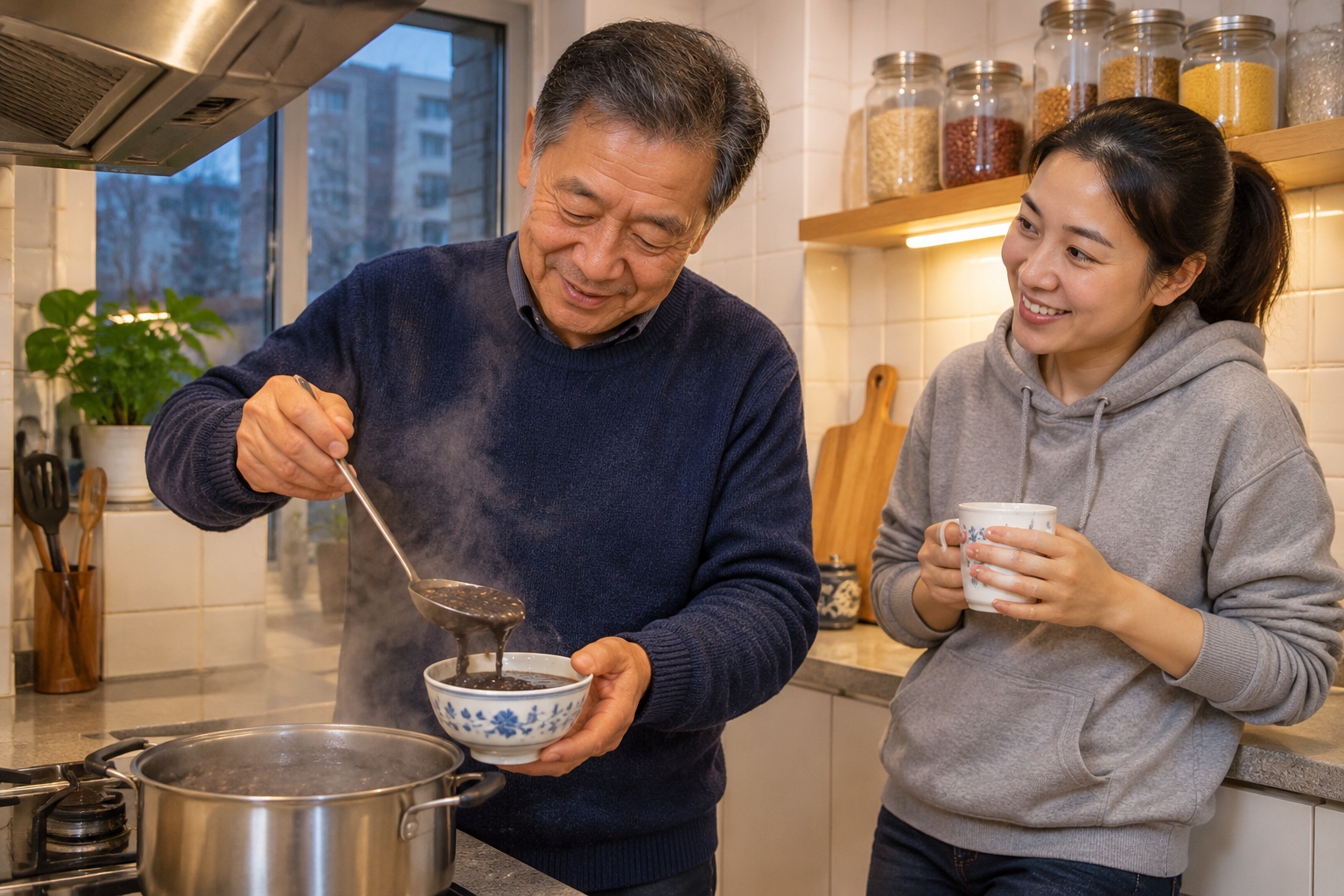
Xiao Zhou puts the black sesame in her basket, next to the eggs and the spinach. She isn’t expecting it to fix anything. Her mother’s message is maybe 30 percent nutrition and 70 percent care — the ordinary language one generation uses to say look after yourself.
That’s the most useful way to hold the five colors: as a folk system of attention. It tells people to notice their face, their tongue, their sleep, their mood, and to eat something warm. Once you can hear that in a jar of black sesame, a lot of daily life in China becomes legible — the thermos of goji tea, the millet breakfast, the friend who says “you look pale, drink this.”