
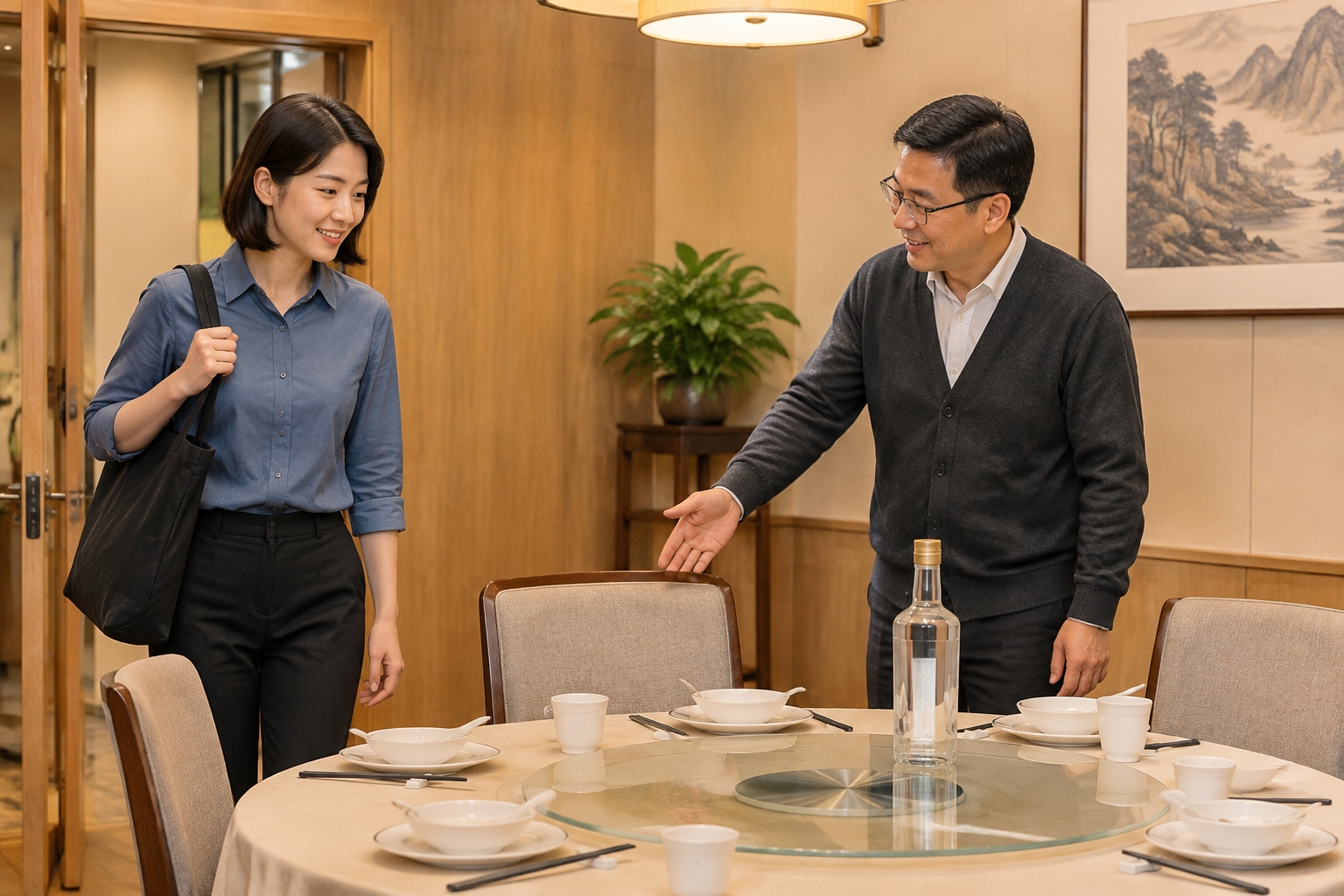

At 6:40 on a Thursday evening in Ningbo, Lin Wei stepped into a restaurant’s private dining room and saw six place settings, a glass turntable, and an unopened bottle of baijiu. That afternoon, her manager had sent her a WeChat message. ‘The supplier’s in town. Let’s have a couple of drinks tonight.’ Lin had pictured a quick dinner after work, maybe a beer, and the bus home by eight. Then her manager pointed to the chair beside him. ‘Sit here. You can walk them through the sample schedule when we get to it.’ She slipped her phone into her bag.
The Ningbo dinner is a fictionalized illustration. Its dialogue, timing, and guests’ reactions belong to that scene.
The invitation sounded like an hour
In Mandarin, hē liǎng bēi, literally ‘drink two cups,’ can be as loose as ‘grab a drink’ in English. A friend might say it while making plans for Friday. Here, the phrase gives a work dinner the informality of a social invitation. Lin knows whom she’ll be meeting and where to go. She has to infer how long her manager expects her to stay and how much of the evening will involve drinking.
The six diners come with different plans. Lin has allowed about an hour. Her manager, Chen, has left the evening open for dinner and a delivery discussion. He expects the group to raise a glass when the food arrives. Zhou, the supplier’s representative, tells the table he has taken a taxi and can stay until nine. He expects a few rounds of toasts. They agreed to the same invitation without once comparing these expectations.
Who raises the first glass?
Chen has booked the room and invited everyone, so he opens the meal. Once the waiter has set down the fish, Chen stands and thanks the visitors for making the trip. A colleague pours baijiu, a Chinese distilled spirit, into small clear glasses. Chen says dàjiā suíyì, roughly ‘drink as you like.’ Lin takes a sip. Across the table, Zhou drains his glass. Both have followed the host’s lead in raising it, and each has taken a different cue about how much to drink.
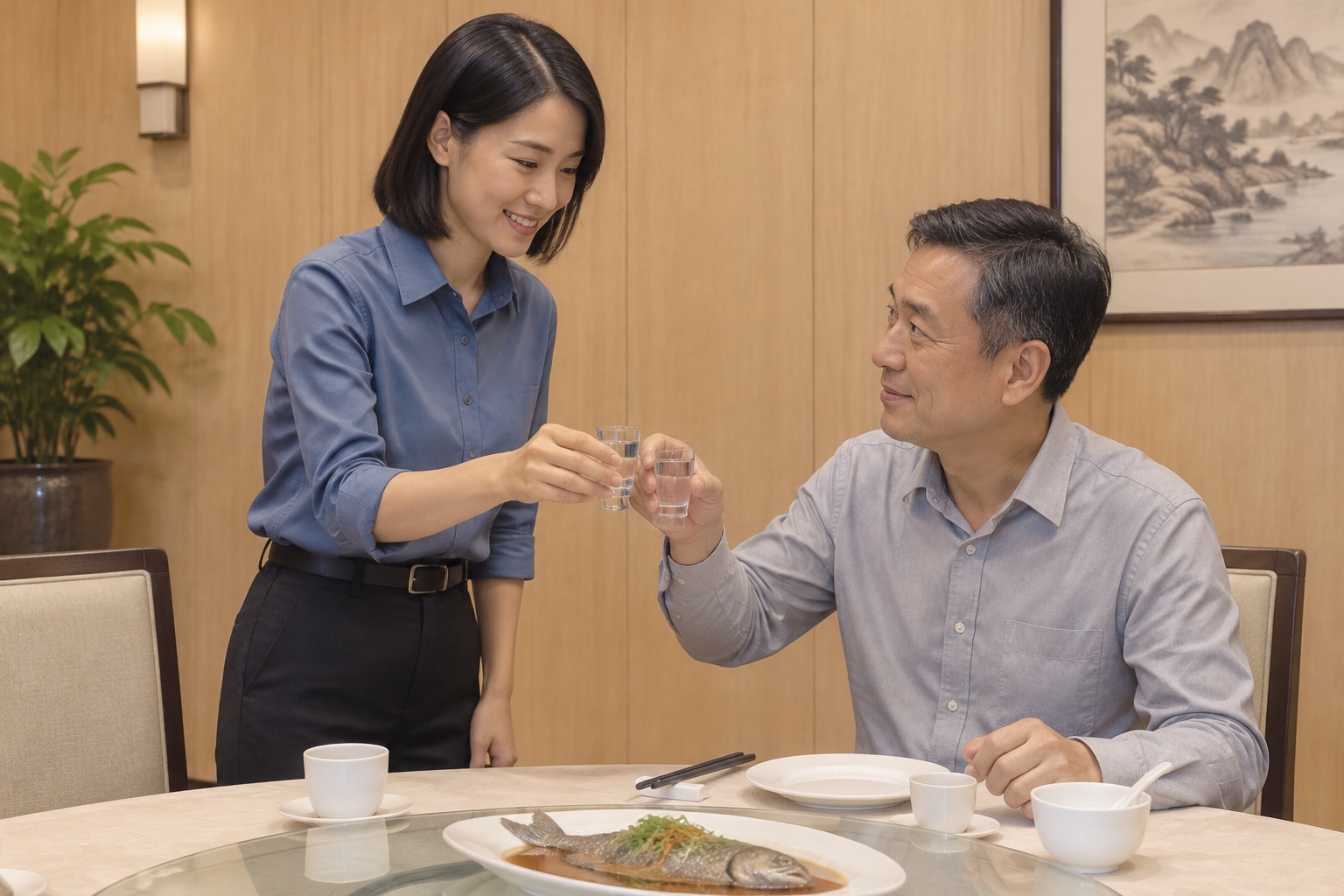
After the group toast, Lin goes around the table to thank Zhou for getting a replacement sample shipped the previous week. As their glasses meet, she holds her rim slightly below his. Zhou lowers his hand too, and for a second both glasses hover near the edge of his plate. In the imagined conversation afterward, Lin describes her gesture as deference to an older guest she has just met. Zhou says he lowered his glass to return the courtesy. The two have read the same gesture differently enough to make it awkward to finish.
That little negotiation belongs to this work dinner. A younger relative may make a similar gesture to a grandparent at a family banquet, while friends who rarely stand up to toast may barely register where the rims meet. At Chen’s table, going first lets him welcome the whole group. Lin’s quieter, one-to-one toast gives her a chance to acknowledge a favor.
How one toast turns into several
The next refill comes while Lin is picking bones out of her fish. A colleague sees the low glass and tips the bottle toward it. In his view, he’s saving her the trouble of asking. From her seat, a glass she was slowly emptying has become another full one. Then a supplier colleague thanks her for answering messages about the samples. A coworker lifts his glass a few minutes later and says, ‘Your turn to toast them back.’ Each prompt feels small to the person making it. Lin is the one fielding all of them.
By eight, the time she’d planned to be home, someone has pulled up a delivery calendar on a phone. Lin has barely touched her rice. Chen is still asking when the next batch can leave the factory. For him, the timetable is the reason to keep sitting. For Zhou, there’s time for a few more conversations around the table. Lin has now revised both estimates she made when she read the message. A couple of drinks has become several occasions to raise a glass, and her hour has passed with the work still under discussion.
This is what makes the invitation such a concentrated example of high-context communication. Much of its practical meaning comes from who sent it, who showed up, and what happens once the first glasses are poured. Even among people who understand the words perfectly, the host may hear room to improvise while the guest hears a plan. The uncertainty has a cost when one person can extend the evening and someone else has to decide whether leaving will be taken personally.
What happens when a guest toasts with tea?
When the bottle comes around again, Lin moves her liquor glass back and lifts her porcelain teacup. ‘I’m switching to tea,’ she says. ‘Here’s to getting the samples out on time.’ The colleague with the bottle pauses. ‘Really? Just a little more?’ Chen gestures toward the teapot. ‘Tea is fine.’ Zhou taps his glass lightly against her cup and asks whether Friday is still an option for dispatch. The colleague moves the bottle along to the next person.
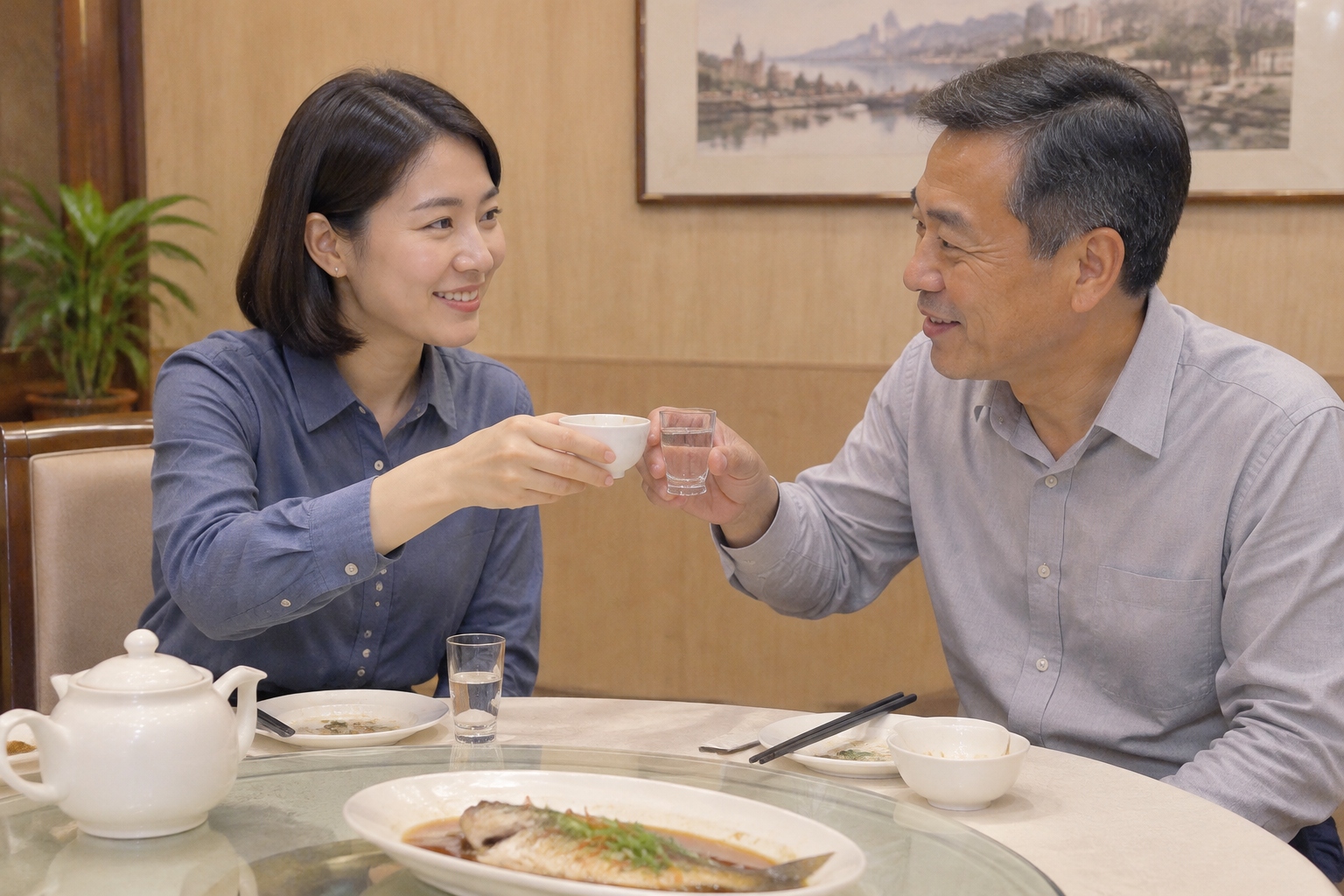
Lin stays in the toast and in the conversation about the shipment. The colleague’s first response shows that her choice still needs to be negotiated at this table. Chen’s response settles it. Later, when someone comes by with the teapot and refills Lin’s cup without asking about the baijiu, the table has absorbed the change. A soft drink can serve the same purpose at a meal where others accept it. The reaction to the substitute tells a guest more about their freedom to choose than the mere presence of tea or soda on the table.
How the pressure changes with the company
At a dinner with close friends, people who know one another’s habits may settle the drinking question as soon as they order. One friend gets a beer, another a plum soda. An invitation to ‘have a couple’ can also stretch late precisely because nobody has a train to catch. And a group of old friends who treat matching rounds as part of a reunion can make declining feel surprisingly public. Familiarity gives people more information about what to expect, along with a shared history they can use to tease each other.
At a family banquet, the occasion can matter as much as the relationship. At a grandparent’s birthday, younger relatives might go up to the head table together and offer birthday wishes with whatever they’re drinking. At another gathering, an uncle might call attention to the adult nephew who has left his liquor untouched. In each case the drink is visible because the relatives are gathered to recognize someone. Whether it becomes a test depends on who makes an issue of it and whether anyone else joins in.
At a business dinner like Chen’s, people may know each other’s job titles better than their preferences. A team member who can decline a drink with friends may spend longer deciding how to respond when a customer offers a refill. A host who accepts tea without making a speech about it can spare that person a second negotiation. Company habits and the immediate purpose of dinner matter here. A long meal for a visiting supplier and a quick dinner before a train can begin with the same words, even at the same firm.
At 8:45, Lin pulls her bag off the back of her chair. The group has agreed when it will check the shipment schedule again. Chen asks the waiter for the bill. On her way out, Lin opens the bus app she’d checked that afternoon. The bus she had meant to catch is long gone. The liquor glass she pushed aside is still on the table, with baijiu in it.