

A Tuesday morning at a neighborhood clinic
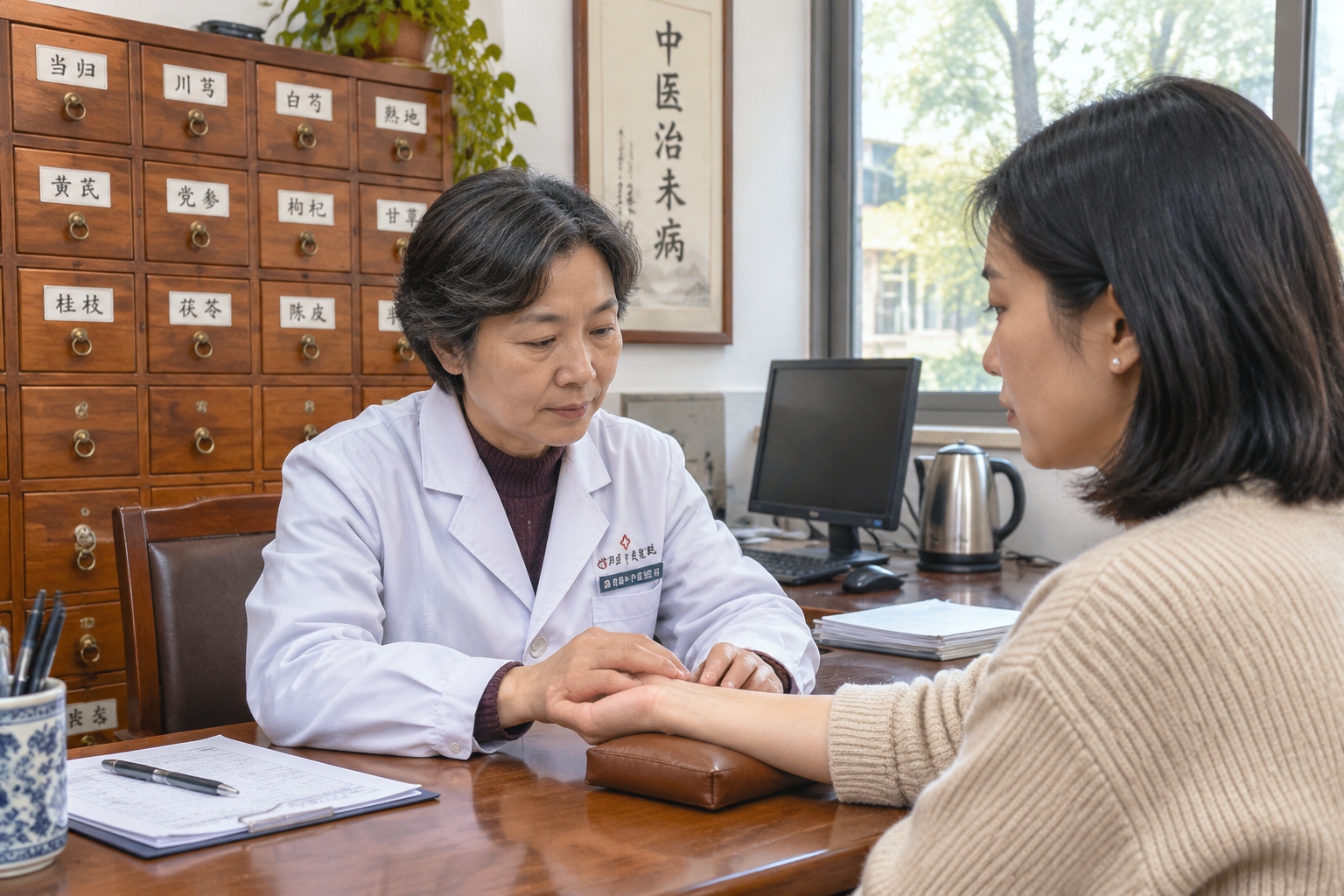
At nine on a Tuesday morning in Chengdu, a young woman sits on a stool in a clinic that smells of dried herbs and disinfectant. Outside the window, a noodle shop is steaming.
She is 29, works in product at an internet company, goes to bed around 1 a.m., and has come because her shoulders feel like they belong to someone else. We’ll call her Lin.
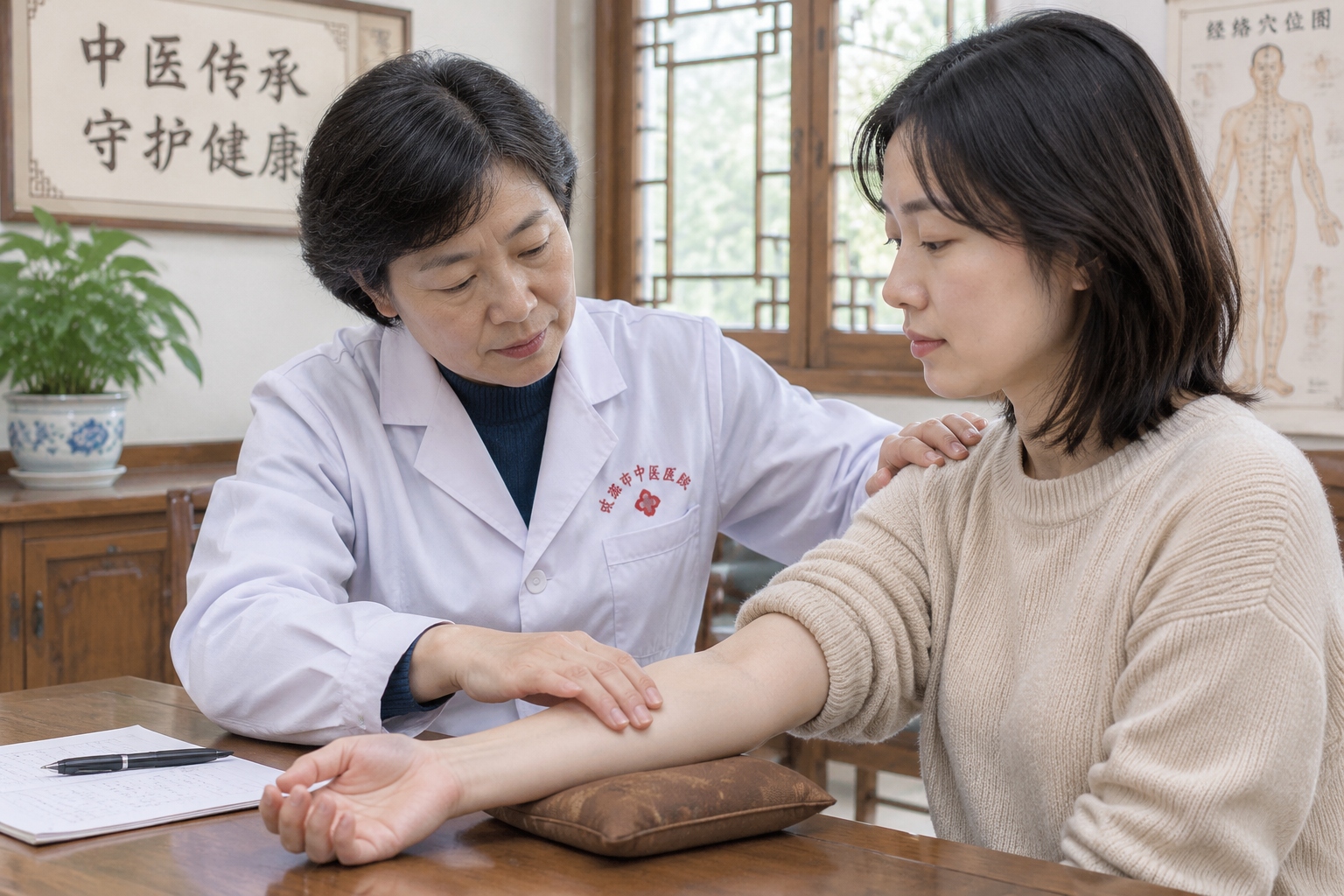
The doctor is a woman in her fifties, short hair going grey, a pen clipped to the pocket of her white coat. She takes Lin’s wrist and holds it. She asks about sleep, about cold drinks, about whether Lin’s hands get cold. She looks at her tongue, then at her nails.
“Your liver qi is a bit stuck,” she says. “And your tendons are tight.”
Lin blinks. “My liver?”
A lot of foreign readers would get stuck at the same sentence. What does an organ in your abdomen have to do with stiff shoulders?
A map made of five windows
Traditional Chinese medicine (TCM) describes the body through a set of pairings known as the Five Body Tissues, wu ti (五体), linked to the Five Zang Organs, wu zang (五脏). The idea is simple enough to state and strange enough to need unpacking:
- Tendons (筋, jin) are the window to the liver.
- Vessels and pulse (脉, mai) are the window to the heart.
- Flesh and muscle (肉, rou) are the window to the spleen.
- Skin and body hair (皮, pi) are the window to the lung.
- Bones (骨, gu) are the window to the kidney.
A window doesn’t cause what happens inside a house. It lets you see it. That is the claim here: the state of a deep organ shows up somewhere on the surface, and a trained eye can read it.
Why Chinese medicine reads the outside
TCM developed without X-rays, blood panels, or biopsies. What it had was observation, accumulated over centuries and written into texts that doctors still study. The four examinations — look, listen and smell, ask, touch (wang, wen, wen, qie) — are essentially a system for turning visible signs into guesses about invisible processes.
You already do a version of this. A gardener looks at leaves to guess at roots. A mechanic listens to an engine. The difference is that TCM built an entire vocabulary and treatment system on top of those guesses, and kept refining it for roughly two thousand years.
Whether every link holds up to modern testing is a separate question, and a fair one. Some do better than others. What’s worth understanding first is the logic, because it shapes how hundreds of millions of people in China describe their own bodies every day.
Five windows, one by one
Tendons and the liver
Jin gets translated as “tendons,” but it stretches further: ligaments, fascia, the springy quality of a healthy body. The liver “stores blood,” and blood moistens the tendons. When liver blood is plentiful, movement is easy. When it isn’t — or when qi stagnates, as the doctor said — you get tightness, cramping, that feeling of being rusted shut.
Nails count too. An old line calls them “the surplus of tendons.” Ridged or brittle nails get read as a signal about blood and liver.
Lin’s version of this is a desk, ten hours a day, and shoulders that have crept up toward her ears.
Vessels and the heart
Mai means both the blood vessels and the pulse you feel at the wrist. The heart “governs blood and vessels,” and the pulse is the most famous of all TCM windows: three positions on each wrist, felt with three fingers, read at different depths. Classical texts describe dozens of pulse qualities — slippery, wiry, hollow, thready.
Other heart windows: the tongue’s color, the face’s glow, whether hands stay warm.
Modern research on pulse diagnosis is mixed. Studies find experienced practitioners agree with each other more than beginners do, but not with the consistency a lab test offers. That doesn’t make the pulse meaningless; it makes it a skill, like listening to a chest was before stethoscopes got standardized.
Flesh and the spleen
Here’s where translations trip people up. The TCM spleen is not the fist-sized organ that filters blood. It’s closer to a digestive hub — the body’s “source of qi and blood,” the thing that turns lunch into energy.
Rou, flesh, means muscle bulk and tone. Strong limbs, good appetite, and firm stools are read as a functioning spleen. Heavy limbs after eating, bloating, loose stools, easy bruising, and a feeling of dragging fatigue point the other way.
This is why a Chinese breakfast often means warm congee or noodles, and why a doctor might raise an eyebrow at an iced latte first thing in the morning. Cold and raw food is thought to tax the spleen’s “digestive fire.” You can file that under folk wisdom or under centuries of trial and error; either way, it’s why the advice exists.
Skin and the lung
“The lung governs skin and body hair.” In TCM the lung is not only the pair of organs that exchange oxygen. It also runs wei qi, the “defensive” layer at the body’s surface — the thing that decides whether a draft gets in.
So dry skin in autumn, eczema that flares with the seasons, a nose that runs at the first cold wind, catching every cold that goes around the office — all of these get read through the lung window. So does sweating, since the pores are considered the lung’s opening.
Bones and the kidney
The kidney “governs bone and produces marrow.” This one covers more ground than a foreign reader expects: bones, teeth (called “the surplus of bone”), the lower back, the knees, hearing, hair, and the whole arc of growth and aging.
Weak lower back, cold knees, thinning hair, ringing in the ears, and a sense that you’re aging faster than you’d like are all kidney-window signals. So is a child’s slow growth. The anatomical kidney, the one that makes urine, is only a small part of what the word means here.
What this is not
It’s worth being clear: these are not the same categories as Western anatomy, even when the English words overlap.
A Western “tendon” is a specific band of collagen that attaches muscle to bone. Jin is a functional category that includes that tendon but also fascia, ligaments, and the felt quality of flexibility. The TCM “liver” is not the organ that processes toxins, though liver disease can produce signs — jaundice, for instance — that any tradition would notice.
Chinese medicine doesn’t ignore anatomy. It just doesn’t stop there. The categories are about function and relationship, not structure alone.
This is also why Chinese doctors usually learn both systems. A patient with stomach pain in a Chinese hospital might get an ultrasound and a prescription for herbs in the same visit. TCM hospitals run labs and CT scanners. In 2019, the World Health Organization’s assembly approved a chapter on traditional medicine in the ICD-11 classification — a coding decision, not a verdict on efficacy, but a sign of how widely the system is used.
Where you actually see this in China
Once you know the five windows, you notice them everywhere.
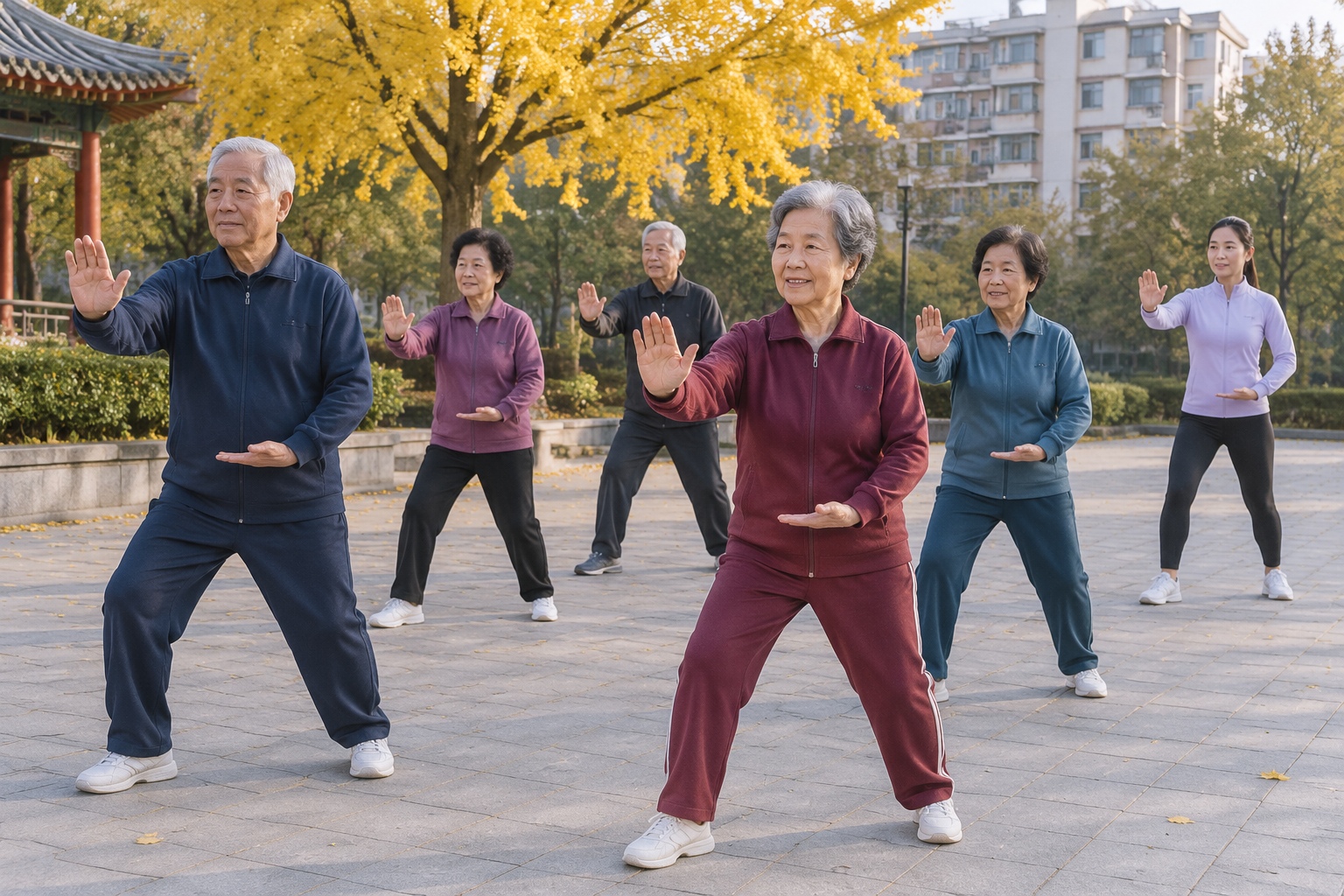
At a public swimming pool in summer, you’ll see round purple cupping marks on swimmers’ backs — a therapy that works on the surface to move what’s stuck underneath. In city parks at seven in the morning, groups of retirees move slowly through baduanjin, a set of eight stretching movements that treats tendons, flesh, and bones as one system.
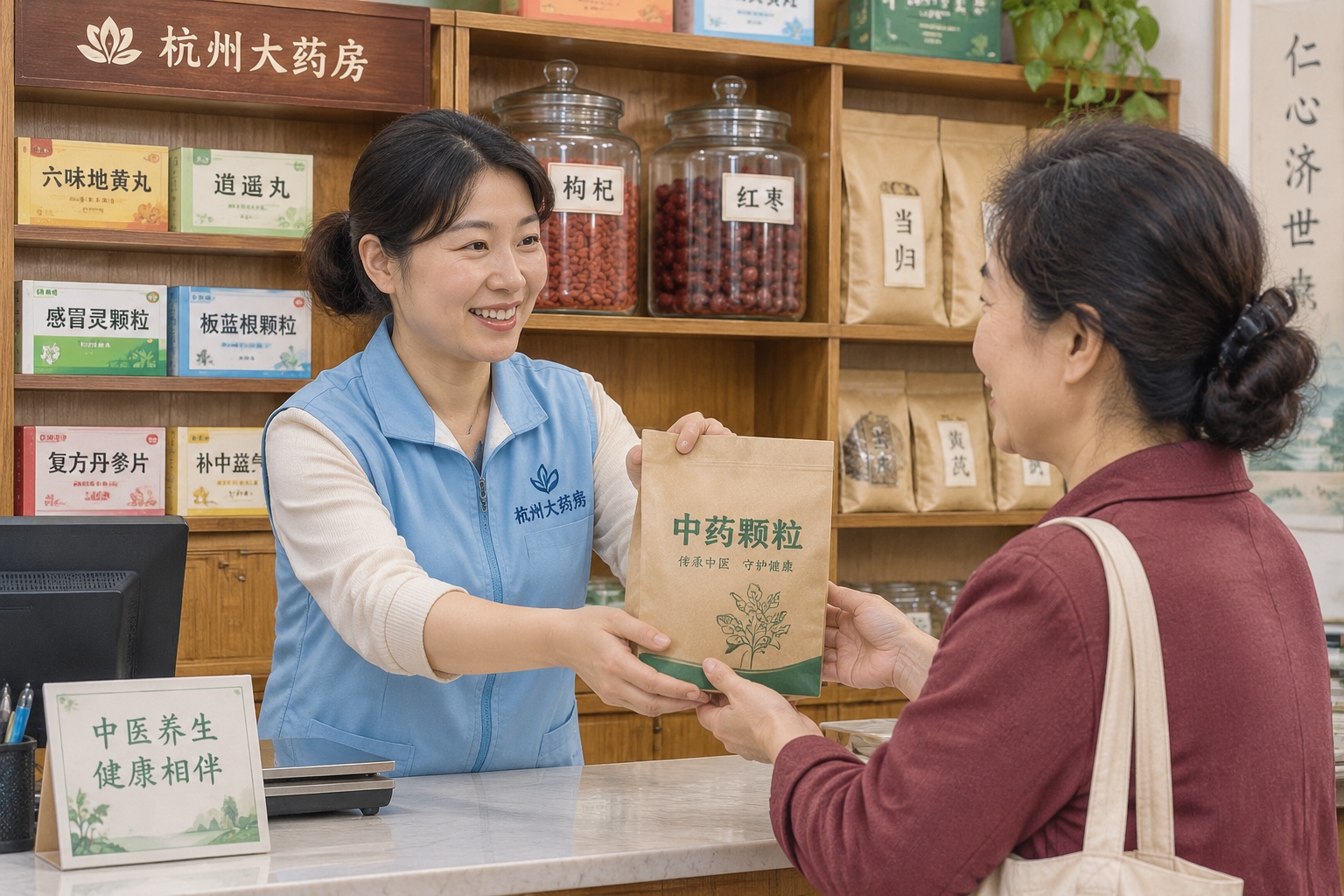
In pharmacies, boxes of Liuwei Dihuang Wan sit next to goji berries and red dates, sold for what shoppers call “nourishing the kidney” or “supplementing qi.” The phrase yao shi tong yuan — “medicine and food share the same source” — is why a supermarket aisle can look like a mild pharmacy.
And in ordinary conversation, people say “I’ve got internal heat” (shang huo) for a mouth ulcer or a sore throat, or “my qi and blood are weak” for feeling drained. These aren’t medical diagnoses. They’re the five-window logic worn smooth by daily use.
Young Chinese have picked it up too, in their own way. Mugwort moxa sticks, foot-soaking buckets, and eight-section brocade videos circulate on the same apps that sell sneakers and phone cases.
What a foreign reader can take from it
Treat it as a language for paying attention, not a replacement for a doctor.
If you’re tired all the time, your skin is dry, your back aches, and your hands are always cold, the five windows give you a way to organize those complaints — and a nudge toward sleep, movement, and warm food. That’s useful. What it can’t do is rule out anemia, thyroid disease, or a compressed nerve.
In China, TCM is regulated: practitioners need licenses, and hospitals employ both traditions. Quality still varies from clinic to clinic, and herbs can interact with prescription drugs. If you’re in China and something feels wrong, the reasonable move is a hospital, not a massage shop.
Back to the stool by the window
Lin left the clinic with a paper bag of granule herbs, a receipt, and three instructions: sleep earlier, stretch your chest and shoulders every hour, and stop drinking iced drinks at your desk.
Three weeks later she said her shoulders felt looser and she was falling asleep faster. She couldn’t tell you which part did it — the herbs, the stretching, or simply forty minutes of someone paying attention to her body.
The doctor, I suspect, would say it doesn’t matter. The window was open. She just looked through it.