

Start at the knee
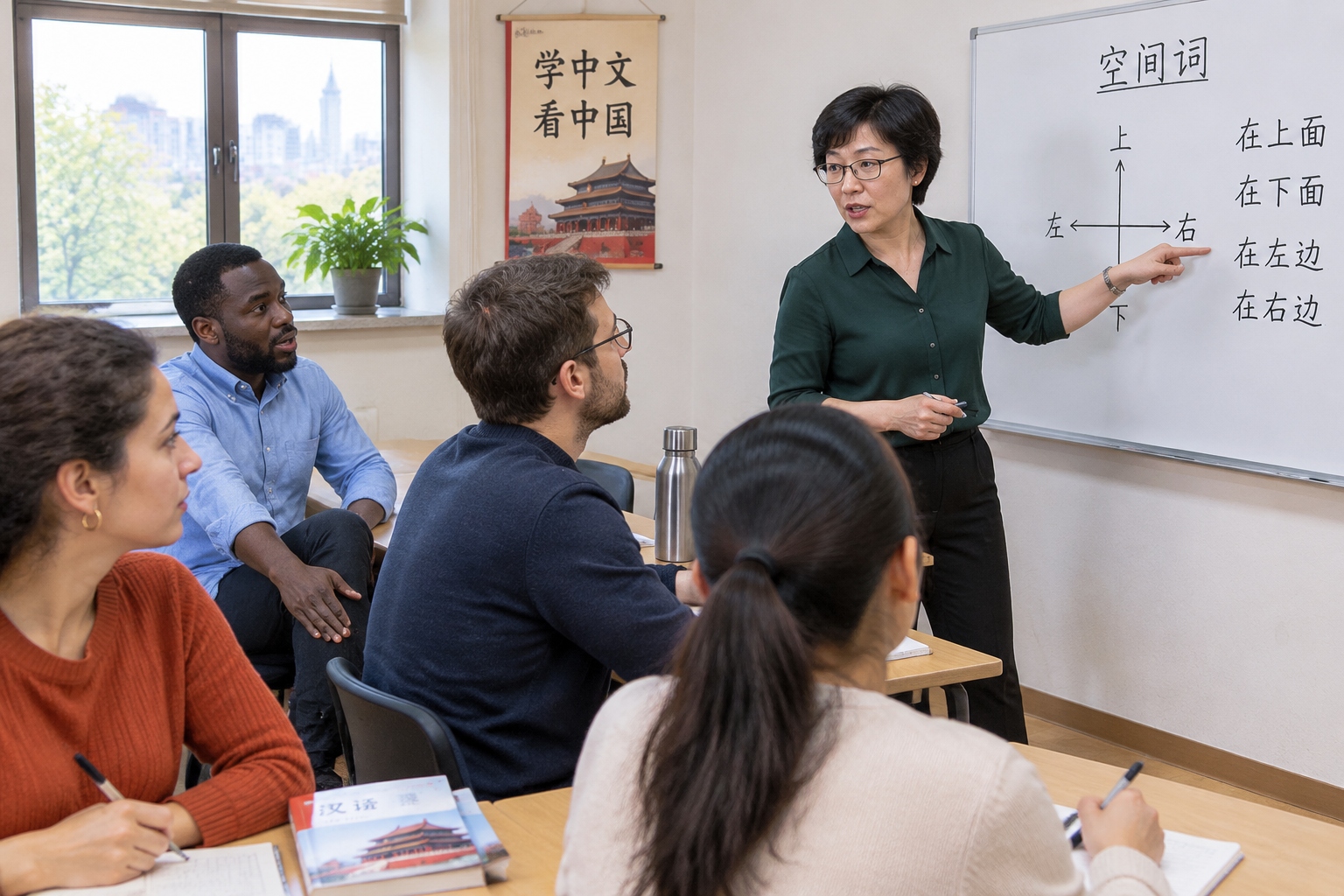
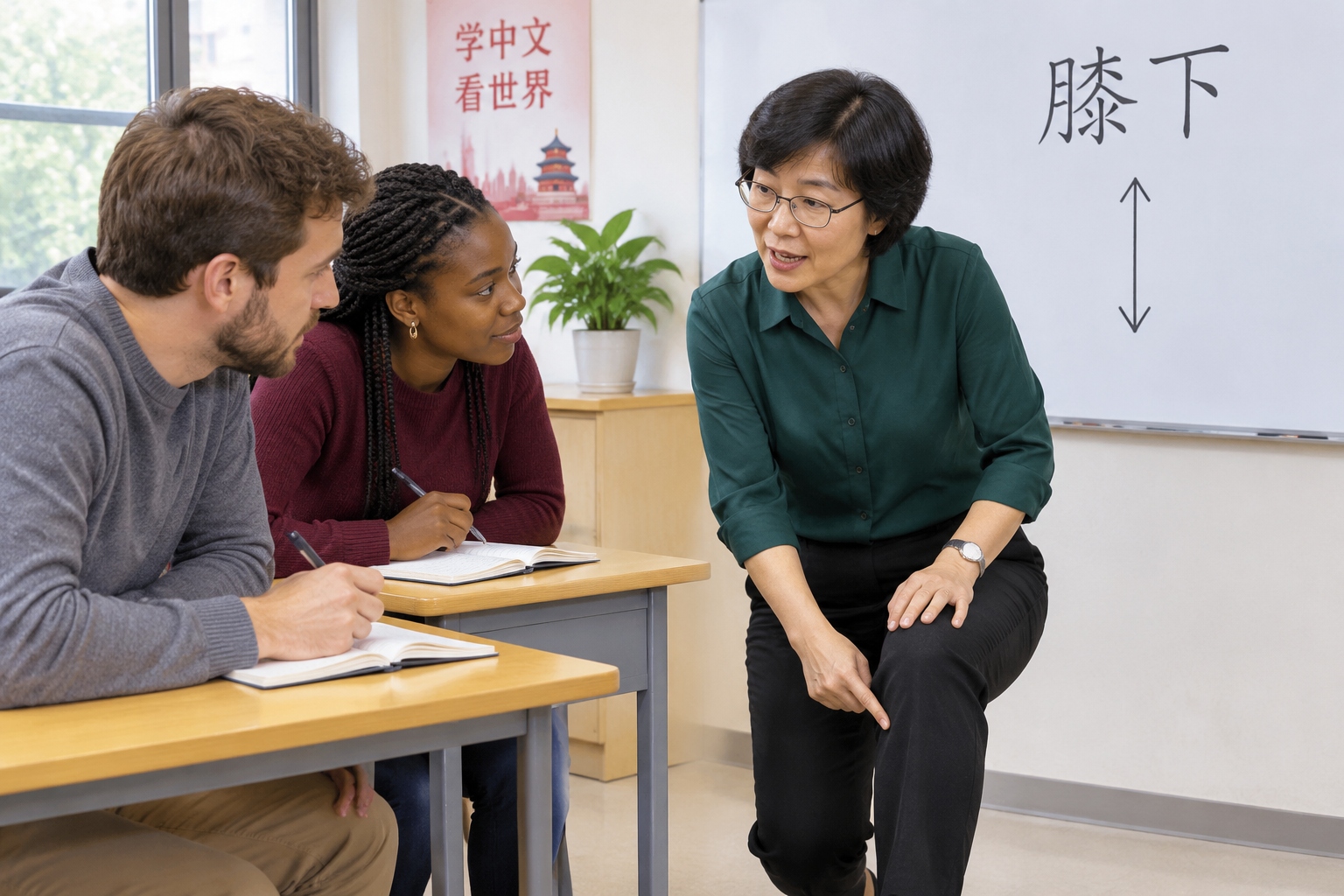
In an adult Mandarin class in Beijing, a German student stopped at xixia wuzi (膝下无子). The dictionary said it meant to have no children. She looked down at her knee. Why the knee? The teacher did not explain anatomy. She asked the class to picture an old family scene: children seated close to their parents, near the parents’ knees. The phrase describes a family position, not a body part.
Chinese often takes an abstract social situation—intimacy, humiliation, trust, danger, urgency, control—and draws it as a map of the body. Where you stand, whom you are near, who is above you, what is in your palm, which way you face, what is behind your back: all can become meaning. For learners, the useful question is not only which body part but where is the body in relation to someone else.
The vertical axis: height becomes status
Up and down is the most common spatial axis in Chinese. The head is above, the feet below; parents are above children, leaders above subordinates. Position words easily become words for power and predicament.
Xixia (膝下), below the knee, means the presence of parents or the place where children are close to them. Xixia wuzi means having no children; chenghuan xixia (承欢膝下) means bringing joy to one’s parents by staying near them. It is a family location.
Kuaxia (胯下), below the crotch, appears in kuaxia zhi ru (胯下之辱), the humiliation of crawling between someone’s legs. The lower the position, the less dignity.
Shouxia (手下), under the hand, means under someone’s command: shouxiaren (手下人), a subordinate; shouxia baijiang (手下败将), someone you have defeated. Buxia (部下) and huixia (麾下) work the same way. Yet zuxia (足下), literally at your feet, is a respectful way to address someone. The same downward position can mean family intimacy, humiliation, command, or respect. Collocation decides.
Yang ren bixi (仰人鼻息), to look up at another person’s breath, means to depend completely on someone and watch their mood. Chengyao (撑腰), to support the waist, means to back someone up; zheyao (折腰), to bend the waist, means to bow or submit. The axis is not only height. It is posture.
The inner–outer axis: intimacy, core, and hidden risk
The second axis runs from inside the body to outside it. Chinese uses distance from the body to talk about trust, danger, and shared interest.
Xinfu (心腹), heart and belly, means a trusted aide. Xinfu zhi ren (心腹之人) is someone close enough to trust with private matters. But xinfu zhi huan (心腹之患) is not a problem caused by a confidant. It means a hidden danger in the vital center.
Zhouye (肘腋), elbow and armpit, is very close to the body. Biansheng zhouye (变生肘腋) means trouble arises from close inside, not from a distant enemy. Chunchi (唇齿), lips and teeth, are neighbors that depend on each other. Chunchi xiangyi (唇齿相依) means closely connected; chunwang chihan (唇亡齿寒) means that if the lips are gone, the teeth will feel cold. The closer the distance, the more central the relationship—and often the more personal the risk.
The front–back axis: urgency, sequence, and control
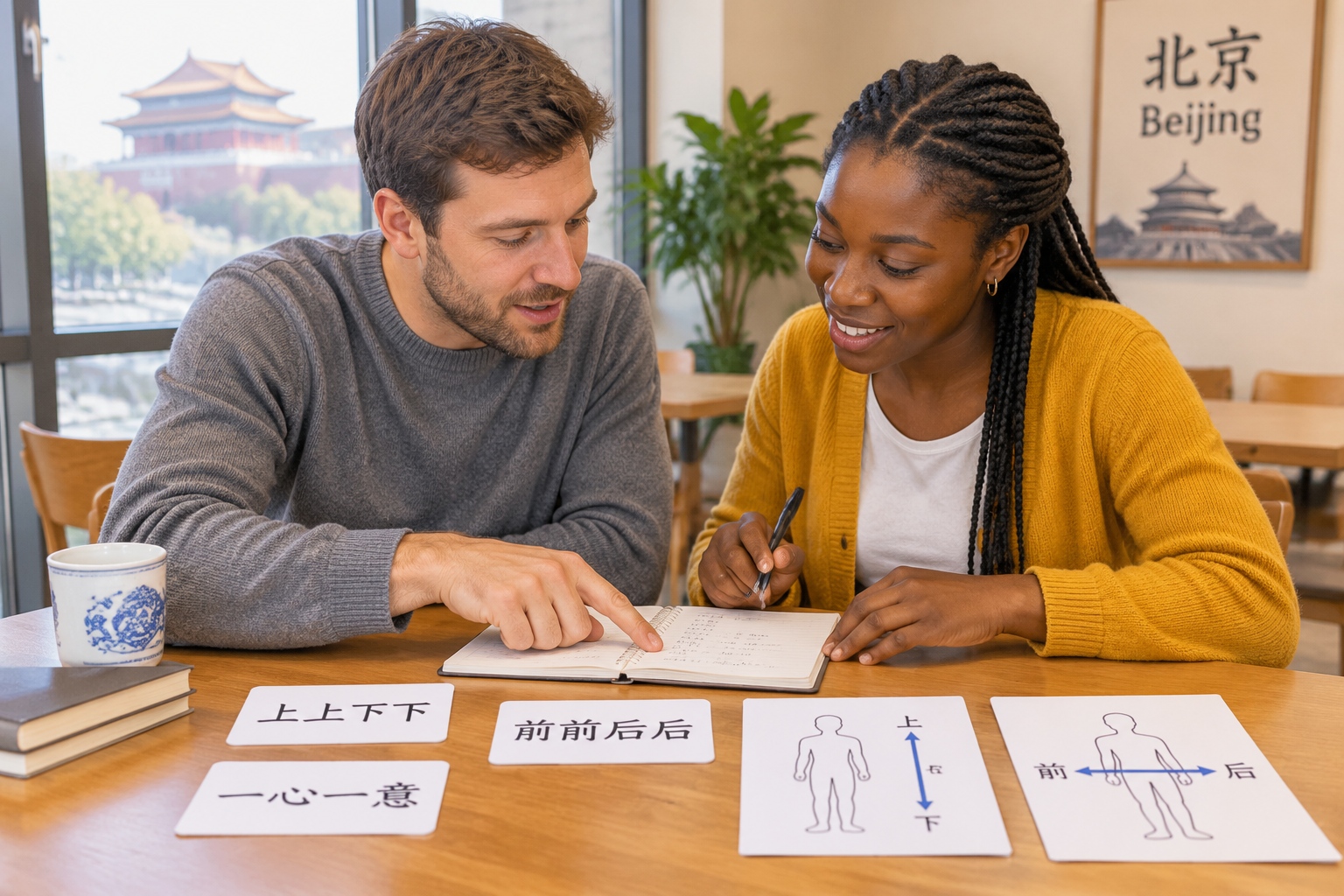
The third axis is front and back: face and spine, head and tail, first and last. Chinese uses it to describe urgency, order, and who controls whom.
Po zai meijie (迫在眉睫), pressing on the eyebrows and eyelashes, means extremely urgent. The distance between eyebrow and eyelash is tiny, so the image suggests that something is about to happen. Ranmei zhi ji (燃眉之急), fire burning the eyebrows, works the same way.
Shou dang qi chong (首当其冲), the head taking the first impact, means being the first to be hit or affected. Shouqu yizhi (首屈一指) means first-rate, literally first bending one finger. Shouwei xiangying (首尾相应) means head and tail support each other. Wei da bu diao (尾大不掉), a tail too big to wag, means subordinates or lower units have grown too powerful to control. The body becomes an organization chart: the head commands, the tail follows; if the tail is too heavy, the head loses control.
Fubei shou di (腹背受敌), belly and back both attacked, means facing enemies front and rear. There is no safe direction.
The distance axis: control, intervention, and footing
Chinese also uses contact and distance to talk about control, involvement, and whether a person can stand firm.
Guzhang (股掌), thigh and palm, describes something held between the thigh and the palm: fully controlled. Wan nong yu guzhang zhi jian (玩弄于股掌之间) means to play with someone in the palm of one’s hand. The image is more oppressive than complete control: the object is small, close, and unable to escape.
Zhizhang (指掌), fingers and palm, gives us liao ru zhizhang (了如指掌), to know something as clearly as one’s own palm. Yi ru fanzhang (易如反掌), as easy as turning over the palm, uses the same familiar body part.
The foot words are productive. Lizu (立足) means to gain a foothold, to have a basis for living or arguing. Shizu (失足), to lose one’s footing, means to go astray or make a serious moral mistake. Chazu (插足), to put a foot in, means to intervene, often in someone else’s marriage. Shezu (涉足), to wade into, means to enter a field. Jiaogen (脚跟), the heel, means one’s footing or position: zhanwen jiaogen (站稳脚跟), to stand firm. Jiao ta shi di (脚踏实地), feet on the ground, means practical and steady.
Chezhou (掣肘), to pull someone’s elbow, means to restrain or obstruct. It is resistance applied at a key joint, so the person cannot act freely.
Why Chinese turns a situation into a body map
First, spatial experience is immediate. Everyone knows up and down, inside and outside, front and back, near and far. These experiences make abstract social relations easier to grasp.
Second, traditional ritual and political order supplied the pattern. Ruler and minister, parent and child, close and distant, head and tail: these were basic relationships in old Chinese society. The body was a ready model for social space.
Third, Chinese word building is flexible. One xia (下, below) can form xixia, kuaxia, shouxia, and zuxia. One shou (首, head) can form shou dang qi chong, shouqu yizhi, and shouwei xiangying. One jiao (脚, foot) can form lizu, shizu, chazu, and jiaogen. Grouped by axis, the vocabulary becomes a network rather than a list.
Fourth, spatial words carry judgment. Xixia feels warm; kuaxia feels humiliating; xinfu feels close; zhouye feels dangerous; guzhang feels oppressive; chengyao feels supportive; zheyao feels like submission. Space is not neutral.
How a foreign learner can read the map
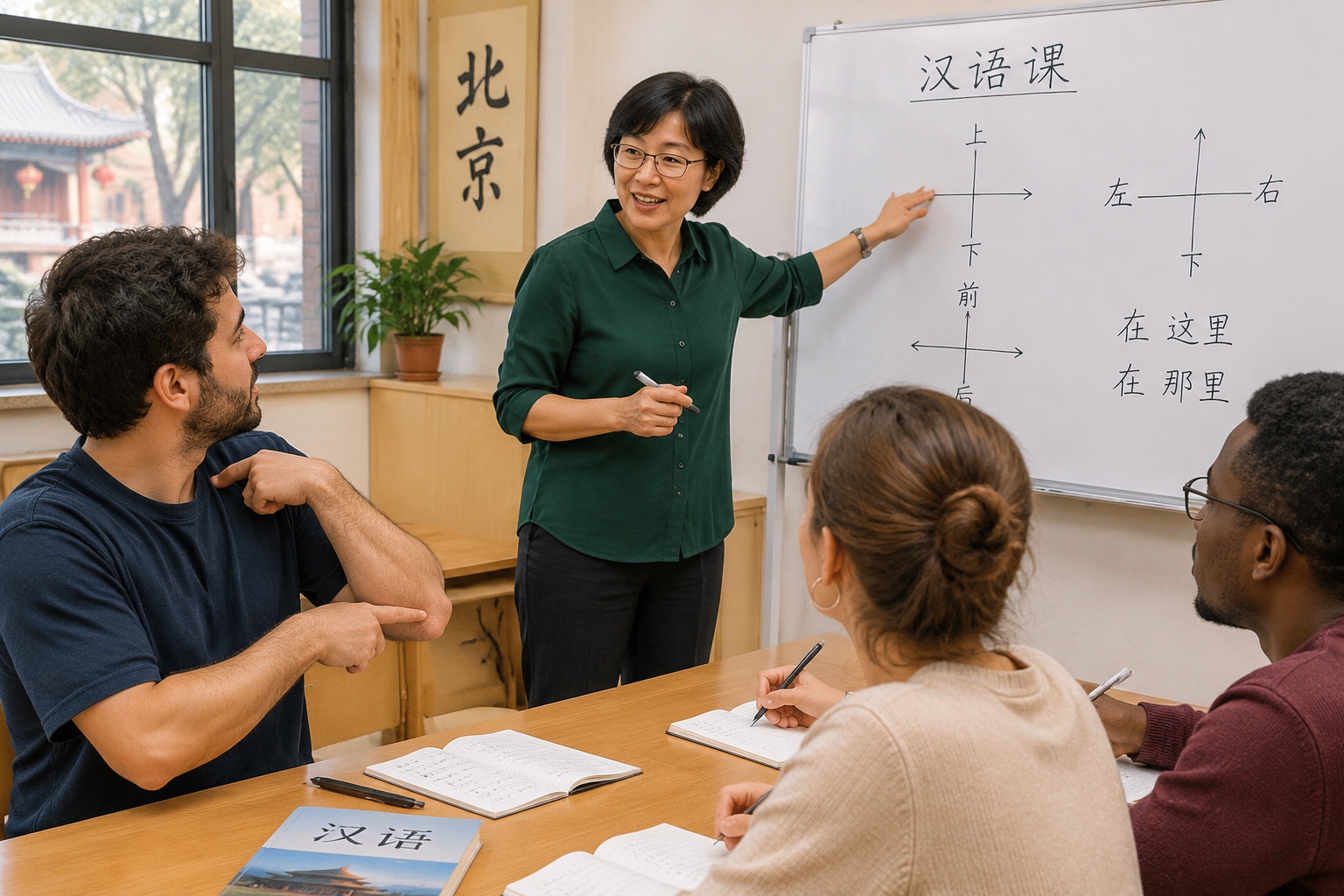
Draw the axes. Put xixia, kuaxia, shouxia, zuxia, and yang ren bixi on the vertical axis. Put xinfu, zhouye, and chunchi on the inner–outer axis. Put po zai meijie, ranmei zhi ji, shou dang qi chong, wei da bu diao, and fubei shou di on the front–back axis. Put guzhang, zhizhang, fanzhang, lizu, shizu, chazu, and jiaogen on the distance axis. A drawing does more than a word list.
Then learn collocations. Xinfu zhi ren is a trusted person; xinfu zhi huan is a hidden danger. Lizu is to stand firm; shizu is to go astray. Chazu is to intervene; shezu is to enter a field.
Watch the emotional charge. Xixia is warm, kuaxia is humiliating, guzhang is oppressive, chengyao is supportive, zheyao is submission, and yang ren bixi is clearly negative.
Finally, put each word back into its picture. For po zai meijie, see the tiny gap between eyebrow and eyelash. For chunwang chihan, see the teeth left exposed when the lips are gone. For fubei shou di, see the belly and back both under attack. For guzhang zhi jian, see something trapped between palm and thigh.
Conclusion: the real location is the situation
The precision of this body-space system is that it turns abstract relations into pictures you can feel and remember. The vertical axis speaks of status and predicament; the inner–outer axis, of intimacy and hidden risk; the front–back axis, of urgency and control; the distance axis, of intervention and footing. Next time you meet one of these words, ask: which part of the body is it? Near whom? Under whom? Facing where? The answer is often the word’s real situation.