
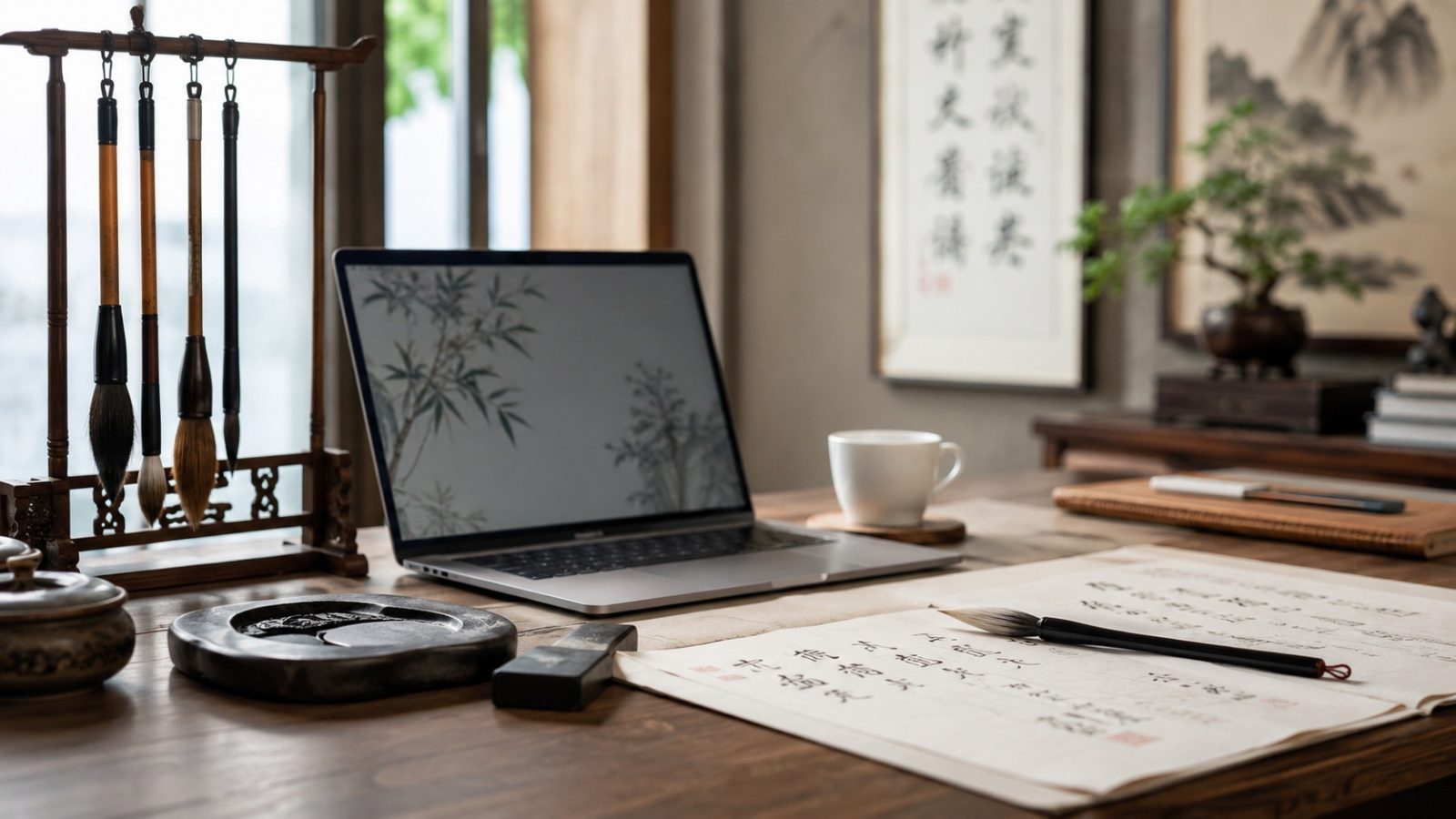

Beyond the Museum: The Modern Price of Tradition
Li Wei, a 24-year-old graphic designer in Hangzhou, recently bought his first set of calligraphy tools. He spent exactly 15 yuan ($2) on a plastic case containing a synthetic brush, a block of cheap ink, and some rough paper. It arrived via e-commerce delivery within two days. For him, it was an experiment—a way to connect with a heritage that feels both distant and intimately part of his daily visual language.
Li’s experience highlights a common misconception among Western observers: that traditional Chinese culture is inherently expensive or elitist. In reality, the market for the “Four Treasures of the Study” (brush, ink, paper, and inkstone) is one of the most stratified in China, reflecting the country’s broader economic shifts. You can buy a functional set for less than the price of a cup of coffee, or spend more than a month’s rent on a single brush crafted by a living national treasure.
To understand modern China, you don’t just look at skyscrapers; you look at how ordinary people engage with their past. The pricing of these tools reveals a fascinating duality: hyper-industrialized mass production coexists with high-end artisanal craftsmanship, serving entirely different social and economic needs.
The $1.50 Tier: Calligraphy as a Mass Hobby
If you scroll through Pinduoduo or Taobao, the entry-level market is overwhelming. Sets priced between 9.9 yuan and 50 yuan ($1.50–$7) are ubiquitous. These are not “antiques” in any traditional sense; they are consumer goods designed for volume.
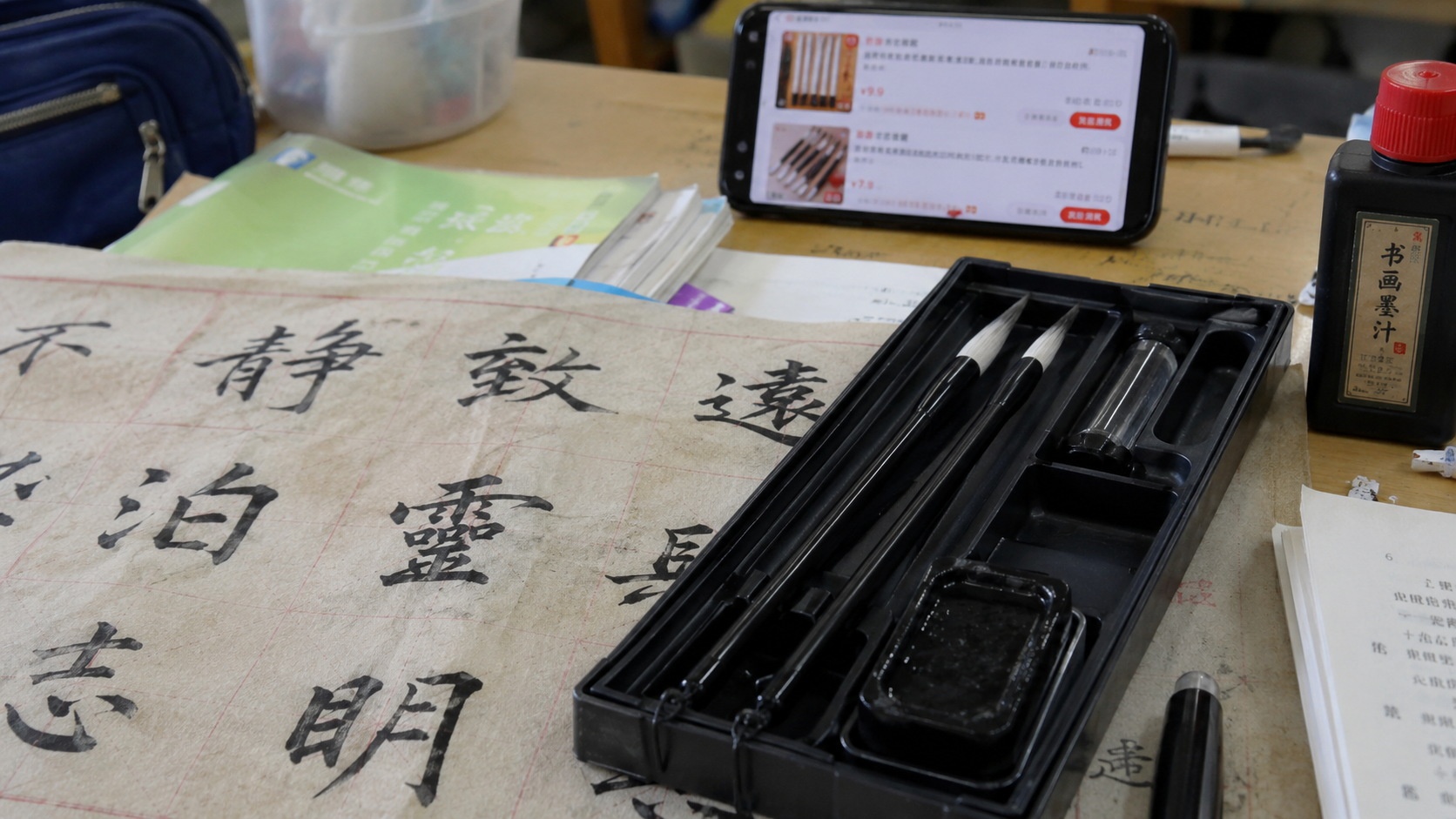
Who buys them? Mostly students and beginners. The brushes are made from synthetic fibers or mixed animal hair, the ink is pre-mixed or low-grade soot, and the paper is often thin mulberry paper that bleeds easily. But the quality is irrelevant for the first month of practice.
This tier reflects the “democratization of culture.” In a competitive society where young people face high pressure, hobbies like calligraphy have become a form of digital detox. The low barrier to entry means that millions of Chinese youths can experiment with traditional arts without financial risk. It is not about collecting; it is about doing.
The $100–$500 Tier: The Middle-Class Ritual
As skills improve, so does the equipment. The mid-range market, spanning 100 to 500 yuan ($15–$70), is where the serious hobbyist lives. This is the “sweet spot” for urban middle-class families.
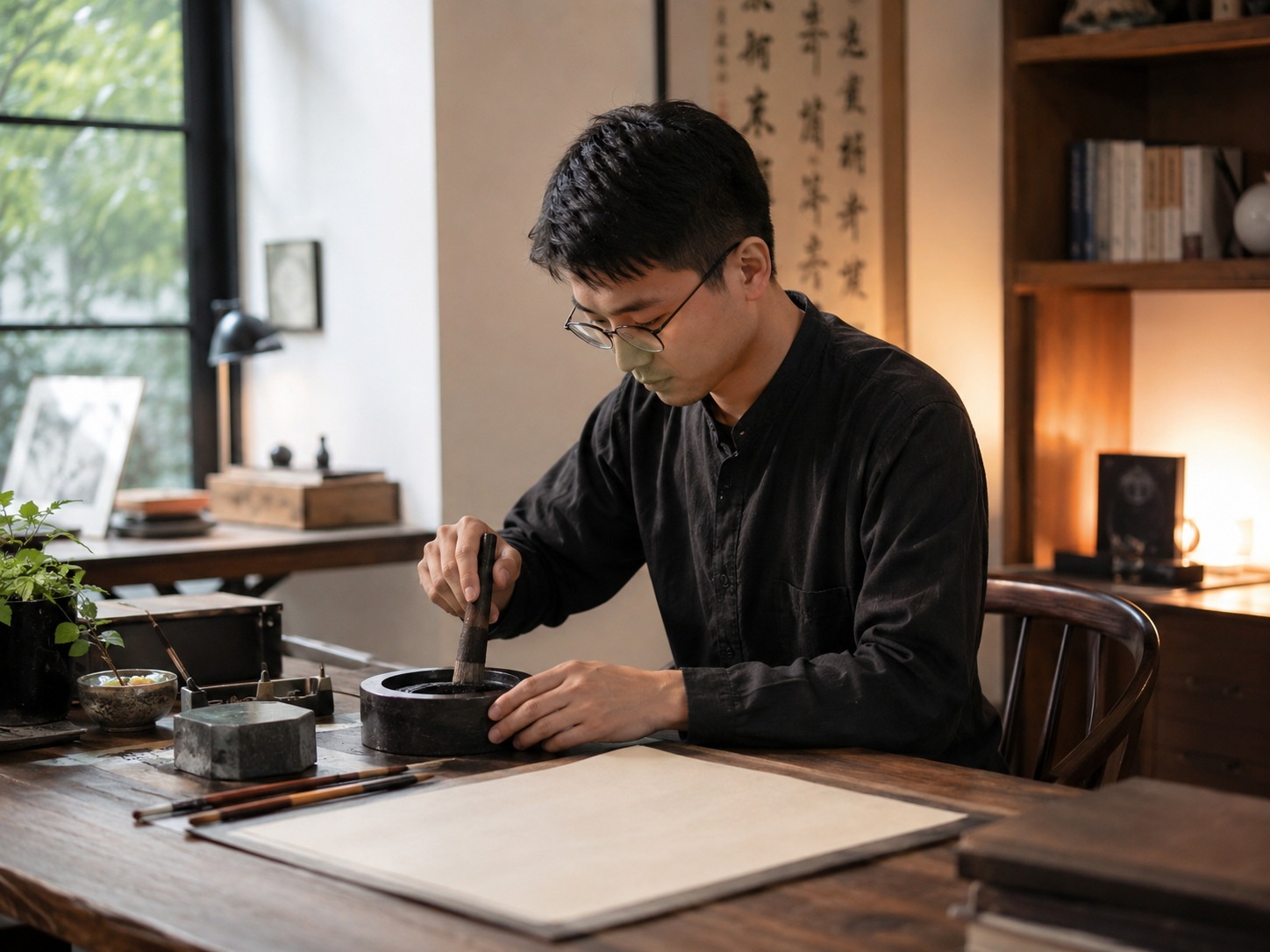
Here, buyers start looking for specific origins: Hu brushes from Anhui province, Hui ink sticks, and Xuan paper from Anhui. The distinction matters. A proper Hui ink stick, for example, may contain real musk or gold powder, creating a distinct aroma and deeper black tone when ground.
Take Sarah, a marketing manager in Shanghai. For her weekend calligraphy classes, she invests in a decent goat-hair brush and genuine rice-paper sheets. “It’s not just about writing,” she explains. “It’s about the ritual. Grinding the ink takes time. It forces you to slow down in a city that never sleeps.” This tier represents the commercialization of wellness. Traditional tools are repackaged as lifestyle accessories, bridging ancient aesthetics with modern stress management.
The $1,000+ Tier: Art, Status, and Investment
At the top end, the logic shifts entirely from utility to art. Sets priced at several thousand to tens of thousands of dollars are sold as investments or social currency.
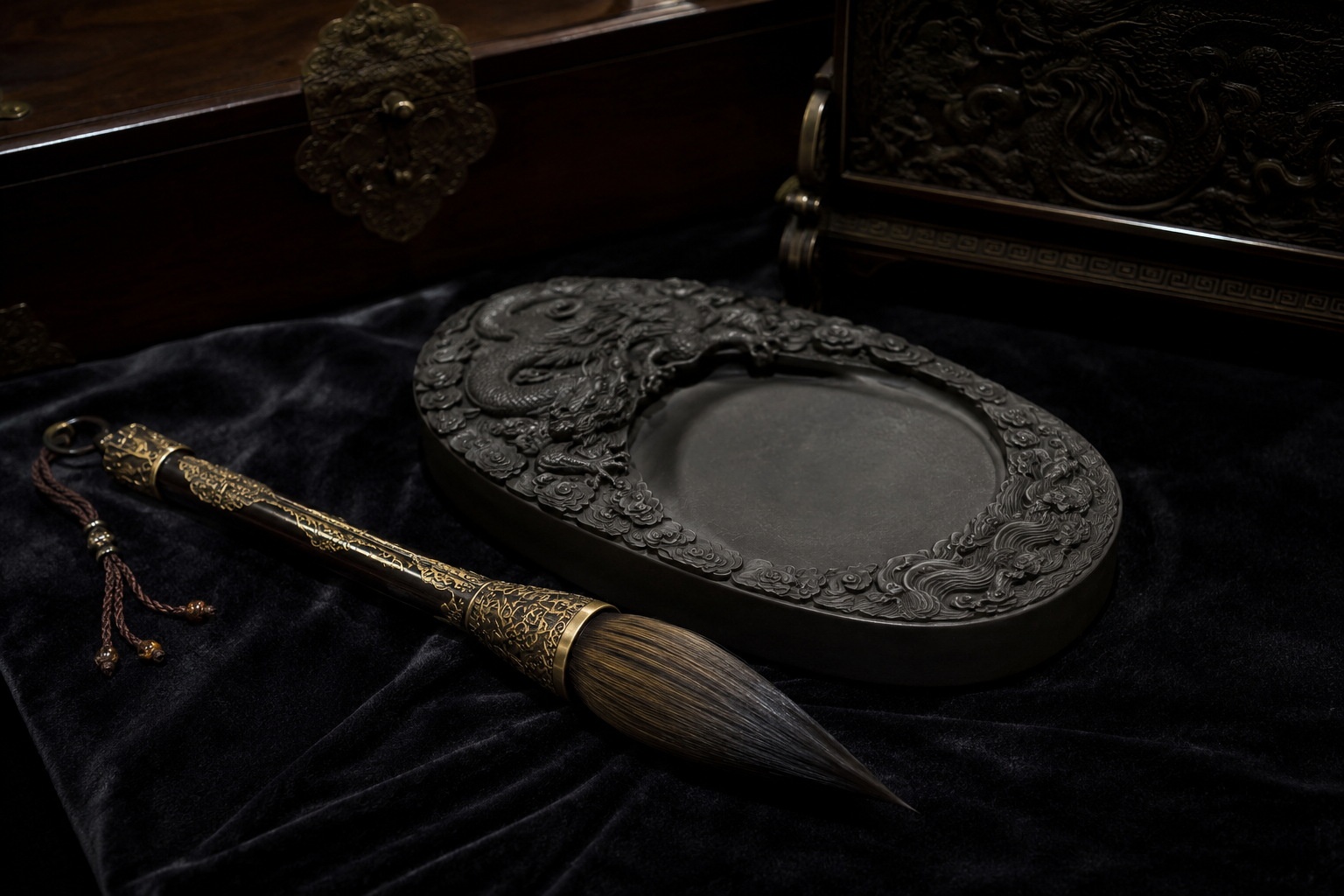
A single brush here might cost $5,000 if it is hand-tied by a recognized master artisan using rare squirrel or weasel hair. The inkstone may be carved from a specific piece of Duan stone from Guangdong, a mineral resource that is increasingly scarce. These items often come with certificates of authenticity, limited edition numbers, and videos of the master crafting them.
Why do people pay this much? In China’s business culture, gifting a high-end set of Four Treasures is a sophisticated way to build guanxi (relationships). It signals respect, cultural literacy, and financial stability. Unlike luxury watches or handbags, a master-crafted inkstone carries historical weight. It is a tangible link to centuries of literati tradition, making it a unique form of status symbol that resonates deeply within Chinese social circles.
Industrial vs. Artisanal: The Core Divide
The vast price gap boils down to one factor: labor intensity and material scarcity.
Mass-produced tools are made in automated factories in places like Jinhua (Zhejiang) or Shexian (Anhui). A machine can cut thousands of brush hairs in minutes. The result is uniform, durable, and cheap. This sector employs hundreds of thousands of workers and supplies the domestic and global markets for students and tourists.
Conversely, artisanal production is a race against time. A single high-end brush can require over 100 manual steps: sorting hairs, aligning them with microscopic precision, and tying them without glue. A master might take months to produce a single inkstone, carving details that machines cannot replicate. This is why the price jumps exponentially. You are not paying for the material; you are paying for decades of human skill.
Conclusion: More Than Just Tools
The story of the Four Treasures is a microcosm of modern China. It shows a society that has not abandoned its traditions but has integrated them into a complex, multi-layered economy. Whether Li Wei is practicing on a 9.9-yuan kit or Sarah is grinding ink in her Shanghai apartment, they are participating in a continuous cultural dialogue.
For the outside world, understanding this price spectrum helps dismantle the stereotype of China as either purely futuristic or exclusively traditional. It is both. The tools may be ancient, but the market that sells them is thoroughly modern, efficient, and deeply human.