

Introduction: A Simple White Line
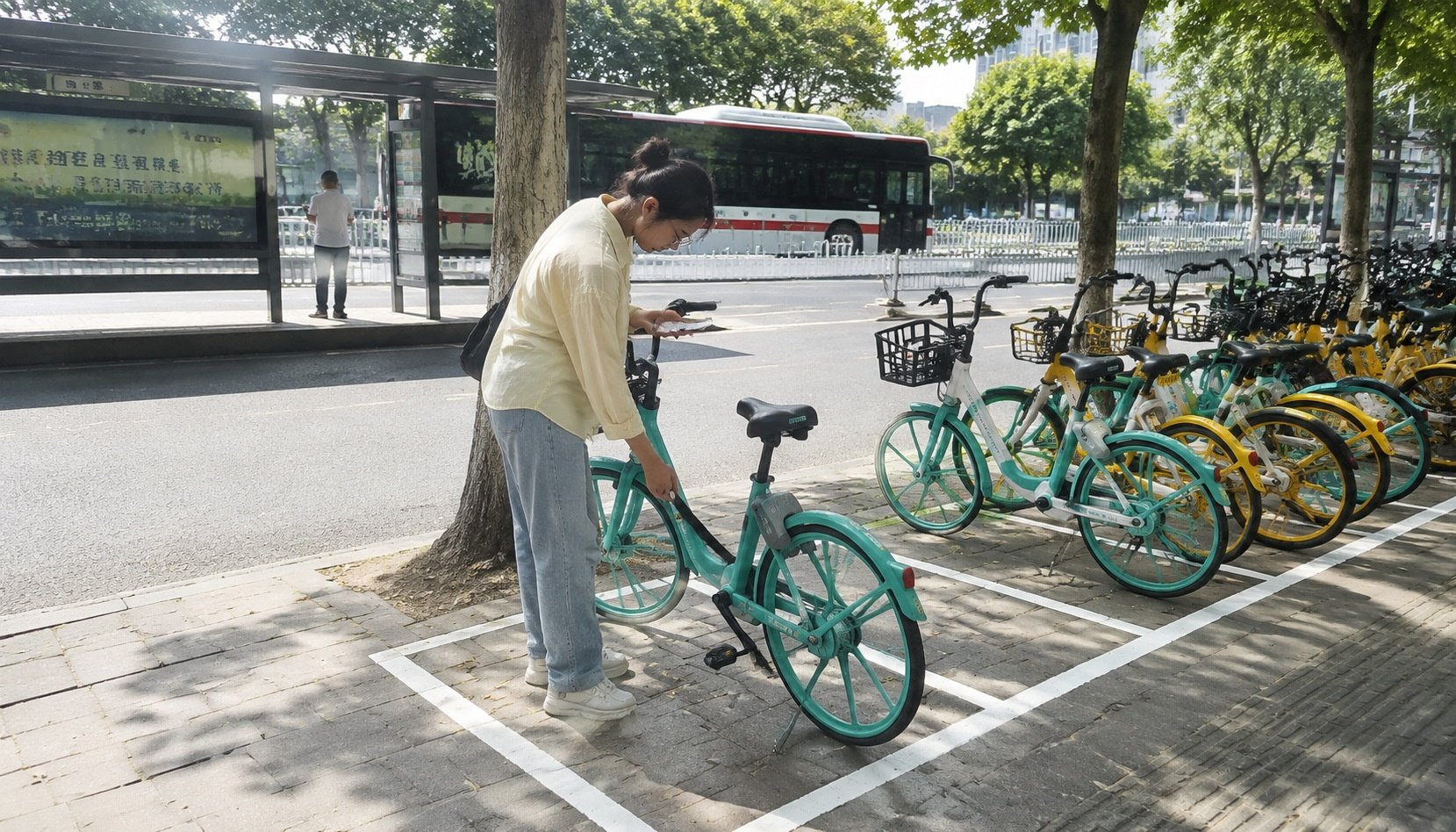
On a quiet street in Chengdu, a young woman parks her blue shared bike precisely inside a painted white rectangle on the sidewalk. She doesn’t look down; she just nudges the rear wheel a bit. A few seconds later, her phone buzzes — trip ended, payment 1.5 yuan (about 20 cents). No fuss. No searching. No blocking pedestrians.
This scene, repeated millions of times daily across China, hides a quiet infrastructure story that many visitors find surprising. Before 2016, bike lanes in Chinese cities were often narrow, broken, or occupied by parked cars. Shared bikes themselves were chaotic — piled like colorful junk on street corners. But something changed. Not just the technology, but the streets themselves.
The Parking Problem That Almost Killed the Business
When dockless shared bikes exploded in 2016–2017, cities weren’t ready. In Beijing and Shanghai, sidewalks became obstacle courses. Angry residents complained. Municipal authorities started confiscating bikes by the truckload. Industry insiders recall that 2017 was the year of “bike graveyards” — massive storage lots filled with tens of thousands of impounded bicycles.
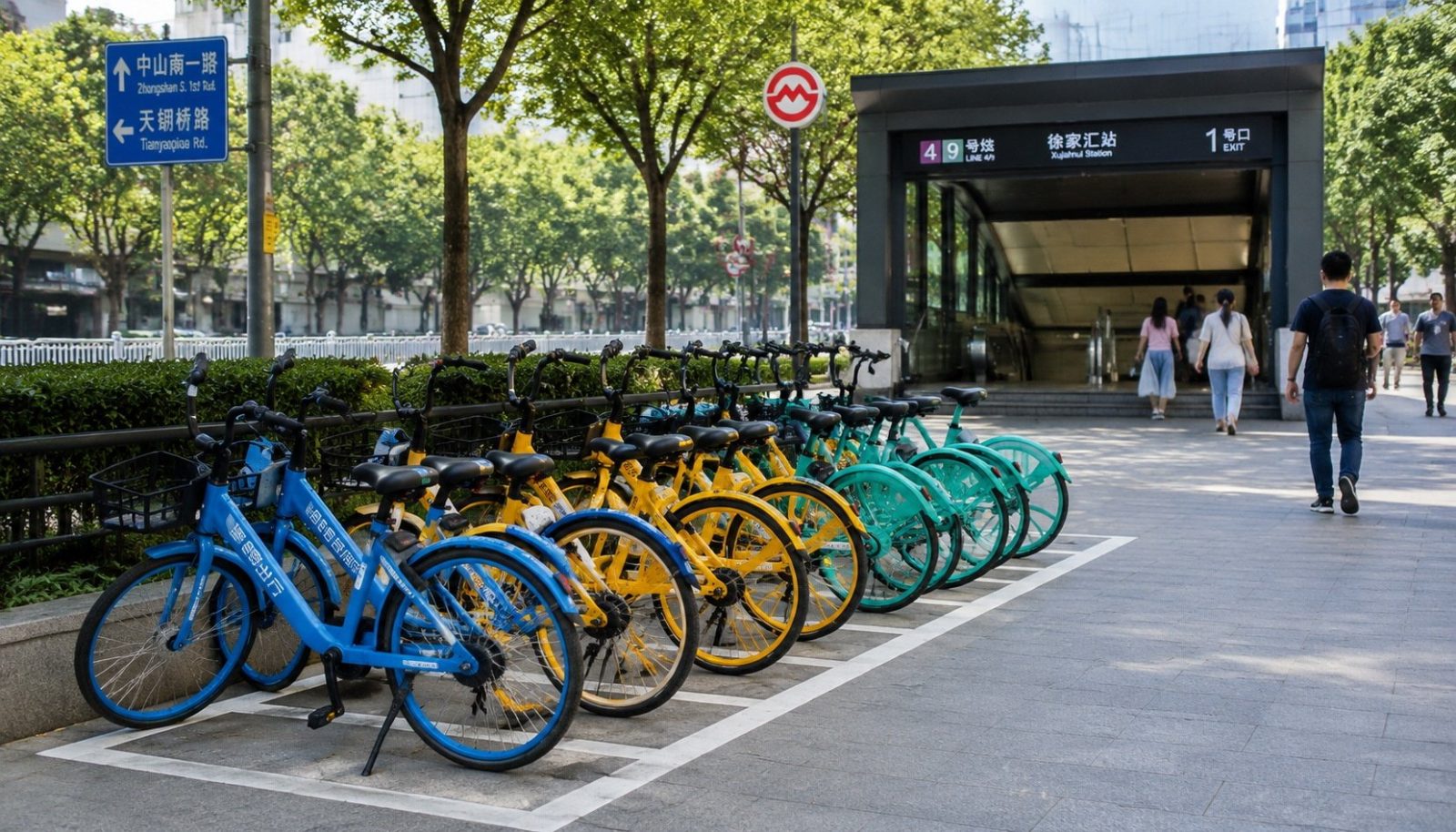
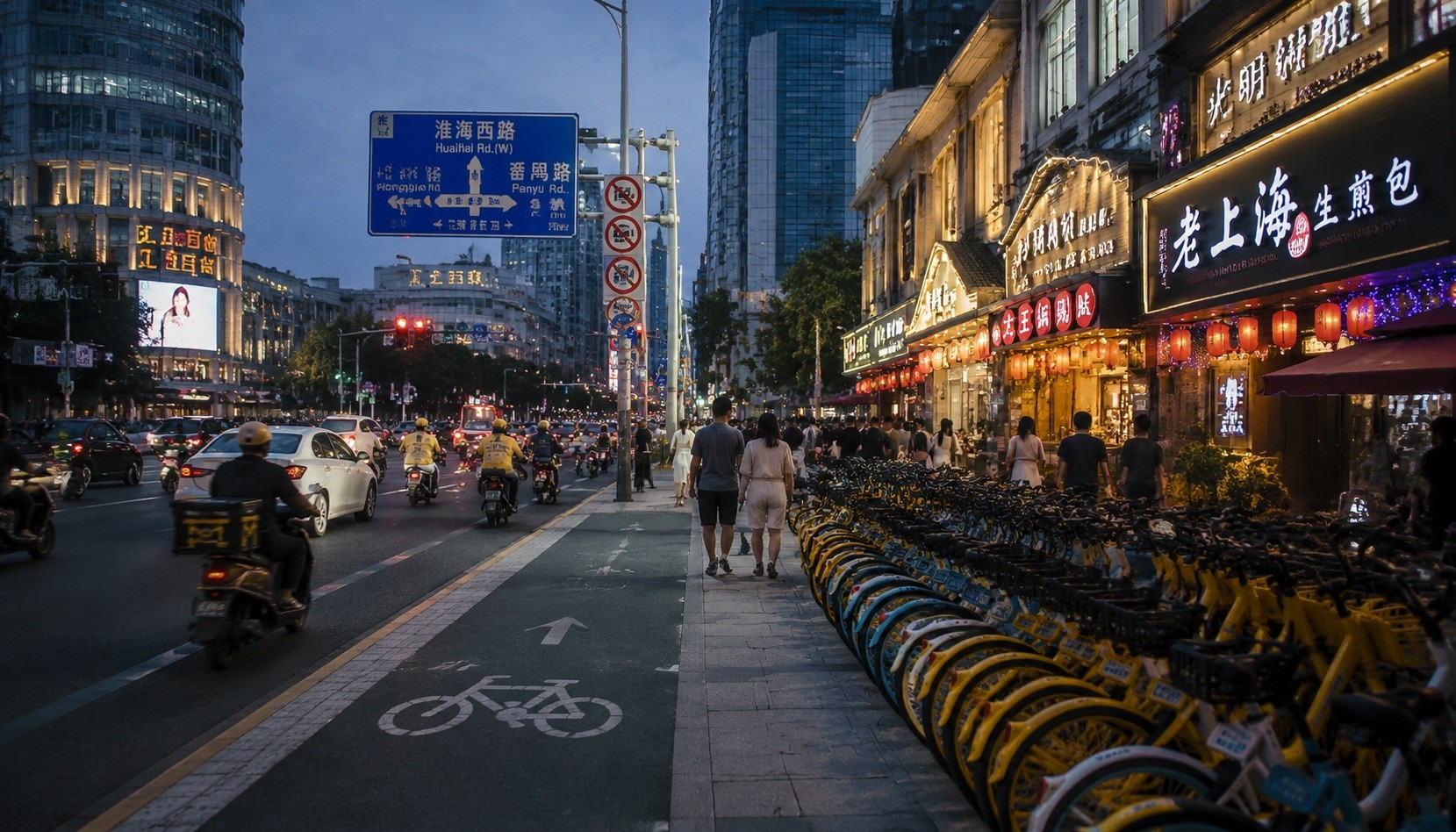
The turning point came not from the companies alone, but from city planners who realized: if you want shared bikes, you need dedicated parking spots. Starting around 2018, Chinese cities began painting thousands of white rectangles on sidewalks — “non-motor vehicle parking zones.” These weren’t random. They were placed near subway exits, bus stops, residential gates, and office buildings. Each zone typically holds 10–30 bikes. The painted lines are now a familiar sight from Shanghai to Kunming.
But painting lines wasn’t enough. Companies like Meituan, Hellobike, and Didi added GPS-based “electronic fences” — virtual boundaries that require bikes to be parked within designated areas. If you park outside, the lock won’t close (or you pay a fee). This combo of physical paint and digital enforcement tamed the chaos. In 2023, over 80% of shared bike trips in major cities ended within a marked zone, according to industry reports.
Bike Lanes: From Afterthought to Network
Parking spots alone don’t make a cycling city. You need safe lanes to ride on. Ten years ago, cycling in many Chinese cities felt like playing Frogger: cars honked, delivery scooters weaved, and bike lanes often disappeared at intersections. Today, that’s changing, though unevenly.
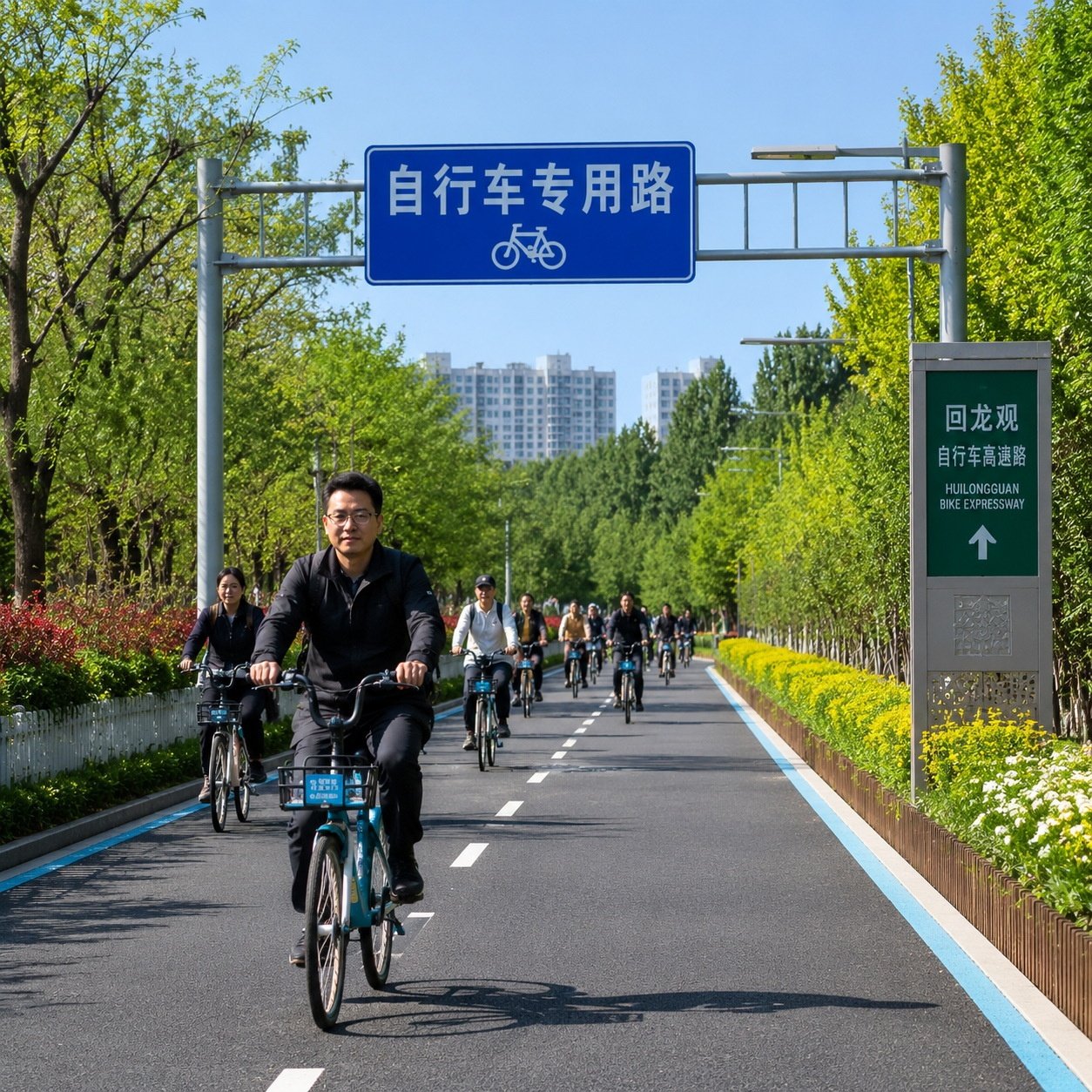
Take Beijing. In 2018, the city started a “bike lane revival” program. One flagship project: a 6.5-kilometer dedicated cycling expressway connecting the residential area of Huilongguan to the tech hub of Shangdi. No traffic lights, no cars, just bikes. Commute time dropped from 40 minutes by car to 26 minutes by bike. It now carries over 10,000 riders daily.
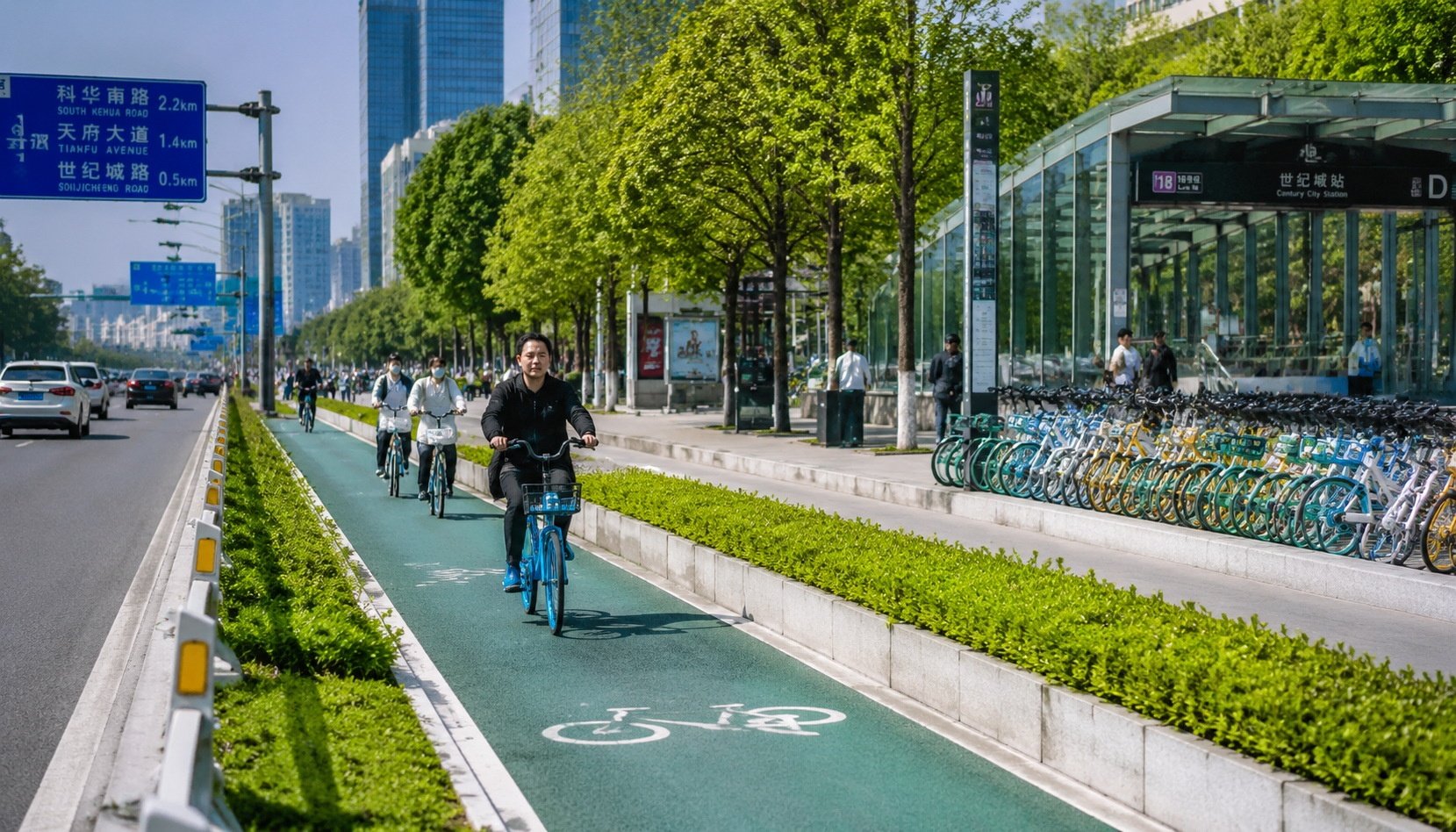
Cities like Xiamen and Guangzhou built elevated cycling paths along waterfronts. Shenzhen added blue asphalt bike lanes that are visually distinct and physically separated from car traffic by curbs or planters. By the end of 2023, China had over 80,000 kilometers of bike lanes in urban areas — more than any other country, though per-capita density varies.
But not every lane is perfect. Many are still shared with e-bikes and scooters, which move faster and sometimes intimidate casual cyclists. In older districts, lanes can be narrow or blocked by delivery trucks. The progress is real, but incomplete — a story of steady improvement rather than overnight transformation.
How Ordinary People Feel the Difference
Chen Lin, a 29-year-old accountant in Shanghai, used to take the metro to work. Now she bikes. “The first thing I noticed was the new bike lane on my route — it’s painted green, separated from cars. I feel safer,” she says. “Also, there’s always a parking spot at the metro exit. Before, I’d have to walk an extra block to find a place to leave it.” For her, the infrastructure upgrade makes the choice to bike effortless.
In smaller cities like Zhenjiang or Wenzhou, similar patterns emerge. A 2022 survey by the China Academy of Urban Planning found that 68% of shared bike users cited “convenient parking” as the top reason for frequent use, followed by “safe riding environment.” These numbers reflect a shift: infrastructure is no longer an afterthought; it’s the foundation of the service.
Yet gaps remain. Nighttime parking near bars and restaurants can be messy. Some residential compounds still ban shared bikes from entering. And in rapidly growing suburbs, bike lanes sometimes end abruptly at construction zones. But the direction is clear: cities are learning to adapt to new mobility, one painted line at a time.
The Bigger Picture: What This Tells Us About China
The story of shared bike infrastructure is, in a way, a microcosm of how China solves large-scale urban problems. It’s not magic. It’s iterative: chaos → regulation → physical redesign → digital tools → mainstream acceptance. The government, companies, and citizens all played a role. The result is a system that worked remarkably well in many places, though not perfectly everywhere.
For a foreign visitor, the most visible sign of this invisible system is those white rectangles on the sidewalk. They are as Chinese as dumplings and QR codes — small, pragmatic, and quietly effective. Next time you see a row of shared bikes neatly aligned, remember: it took a lot of planning (and a few thousand tons of paint) to make that ordinary scene possible.
Conclusion
Shared bikes didn’t just drop onto Chinese streets; the streets themselves had to change. By investing in parking zones, bike lanes, and digital enforcement, cities turned a chaotic experiment into a reliable daily service for hundreds of millions. It’s a reminder that in modern China, infrastructure is not just concrete and steel — it’s also paint, GPS, and the habit of millions of people parking inside the lines.
Start the discussion at forum.chinacomes.com