

The Wall That Defines Modern Chinese Life
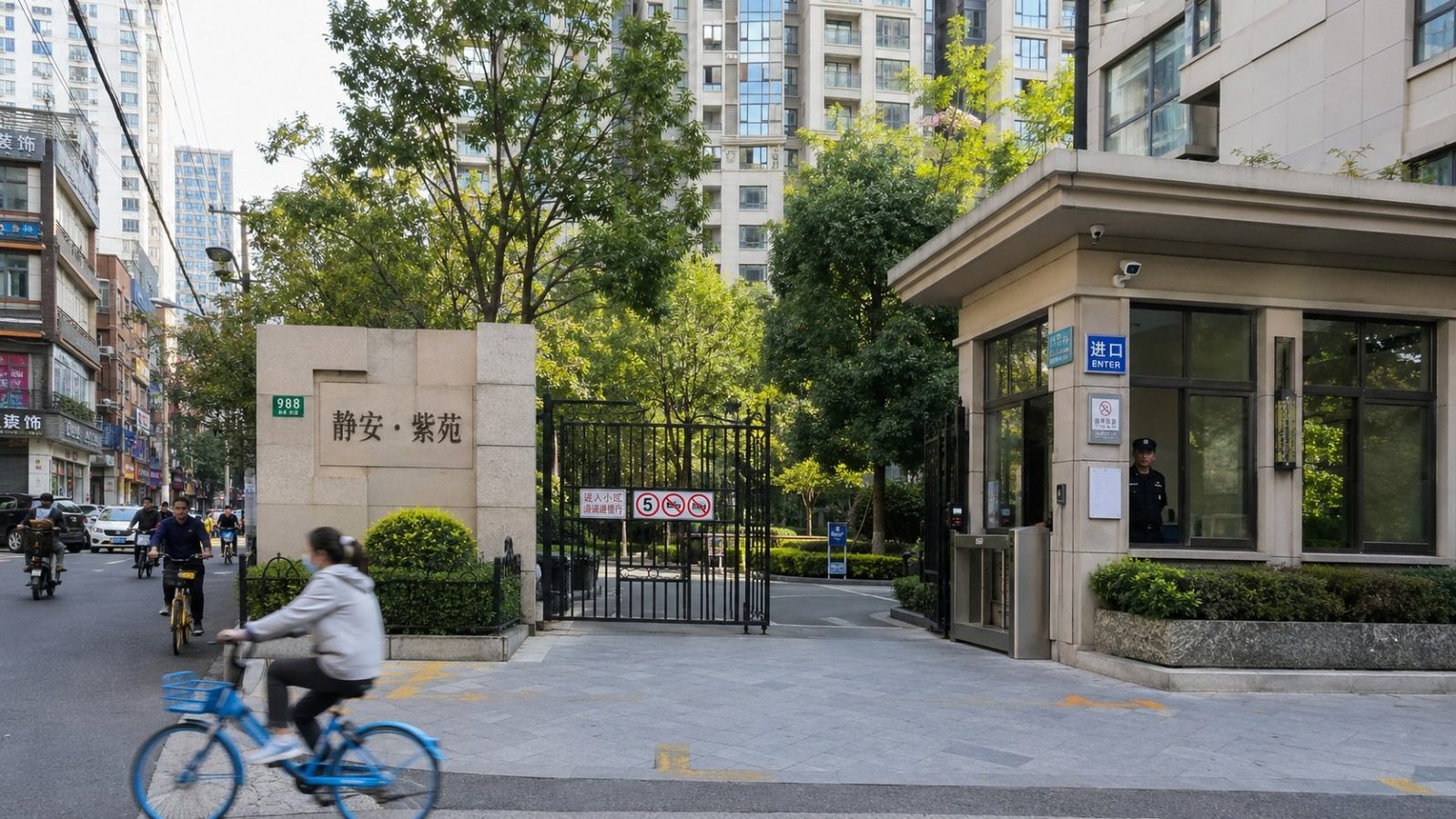
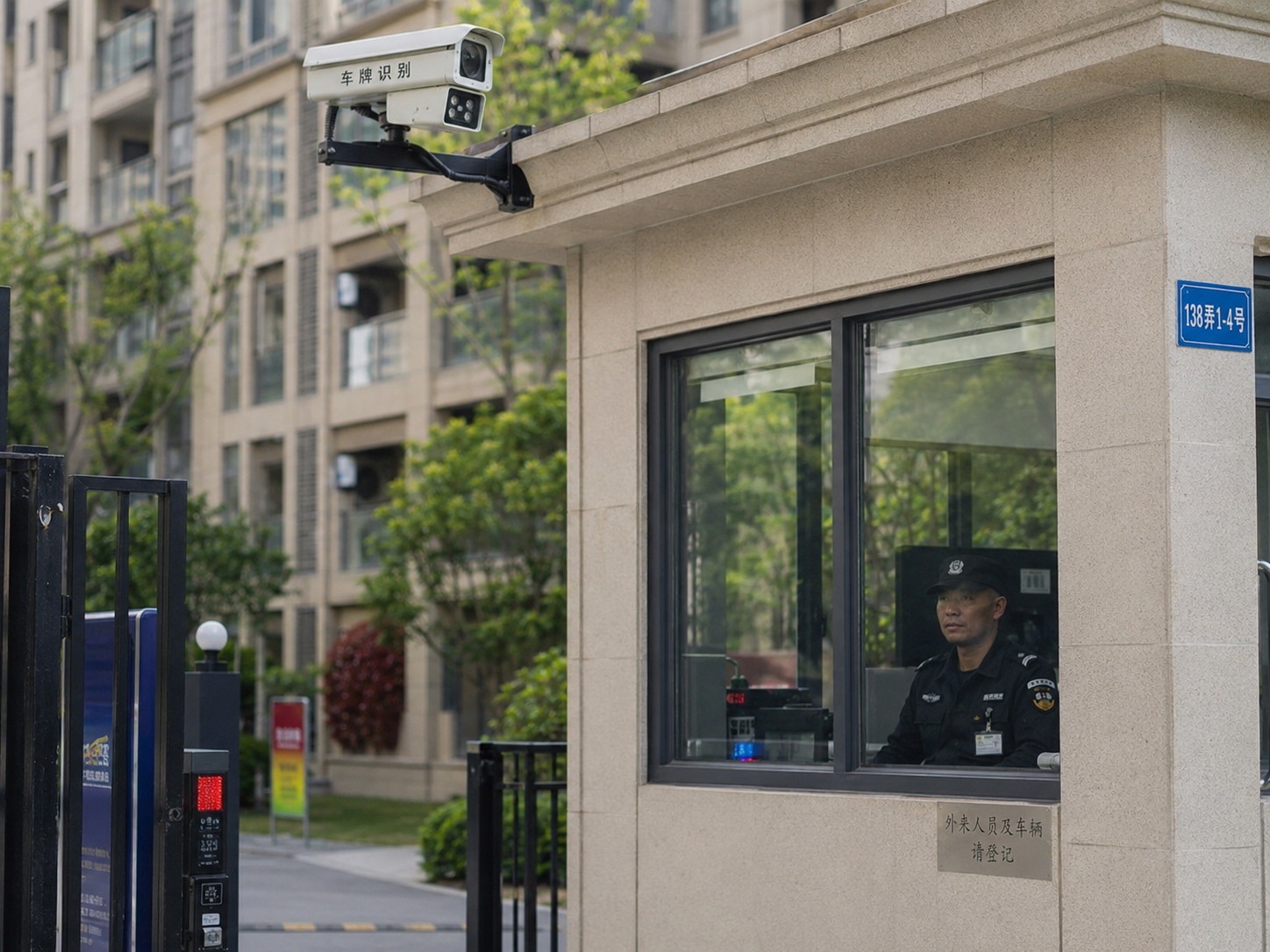
Walk through any major Chinese city, from Shanghai to Chengdu, and you will notice a distinct pattern. The wide, bustling avenues are lined with tall, uniform buildings, but they do not open directly onto the street. Instead, each cluster of buildings is enclosed by a high wall or fence, behind which lies a self-contained universe of gardens, playgrounds, and walking paths. At the entrance, a small booth manned by a uniformed security guard controls access via license plate recognition or fingerprint scans.
This is the xiaoqu (小区), the fundamental unit of urban living in contemporary China. To an outsider, the sheer prevalence of these walled enclaves can seem surprising, even contradictory to the idea of an open, connected society. But for the millions of residents inside, the wall is not a symbol of exclusion; it is a guarantee of order, safety, and community.
From Work Units to Commercial Communities
The xiaoqu did not always exist in this form. To understand why China looks the way it does today, we have to look back to the 1980s. Before the economic reforms, most urban housing was owned by state-owned enterprises or government agencies. These were known as danyuan (单位大院), or “work unit compounds.” A worker lived, worked, and raised their children within the same compound, which often included its own schools, hospitals, and canteens. The community was defined by one’s employer, not just by geography.
As China transitioned to a market economy in the late 1980s and early 2000s, the state stopped providing housing as a welfare benefit. Private developers entered the scene, buying land and constructing residential complexes for sale. The danyuan model evolved into the modern xiaoqu. The key difference was the shift from employer-provided security to paid property management services. Residents began paying monthly fees to private companies that maintained the walls, cleaned the streets, and hired guards. This privatization of public space created a new social contract: in exchange for fees, residents received a clean, secure, and well-maintained environment that the city government could not always provide at the street level.
Safety and the “Free-Range” Childhood
For many Chinese families, the wall serves a critical practical function: safety. In a country with hundreds of millions of residents and historically high population density, the internal streets of a xiaoqu are designed to be car-free or low-speed zones. This has profound implications for daily life.
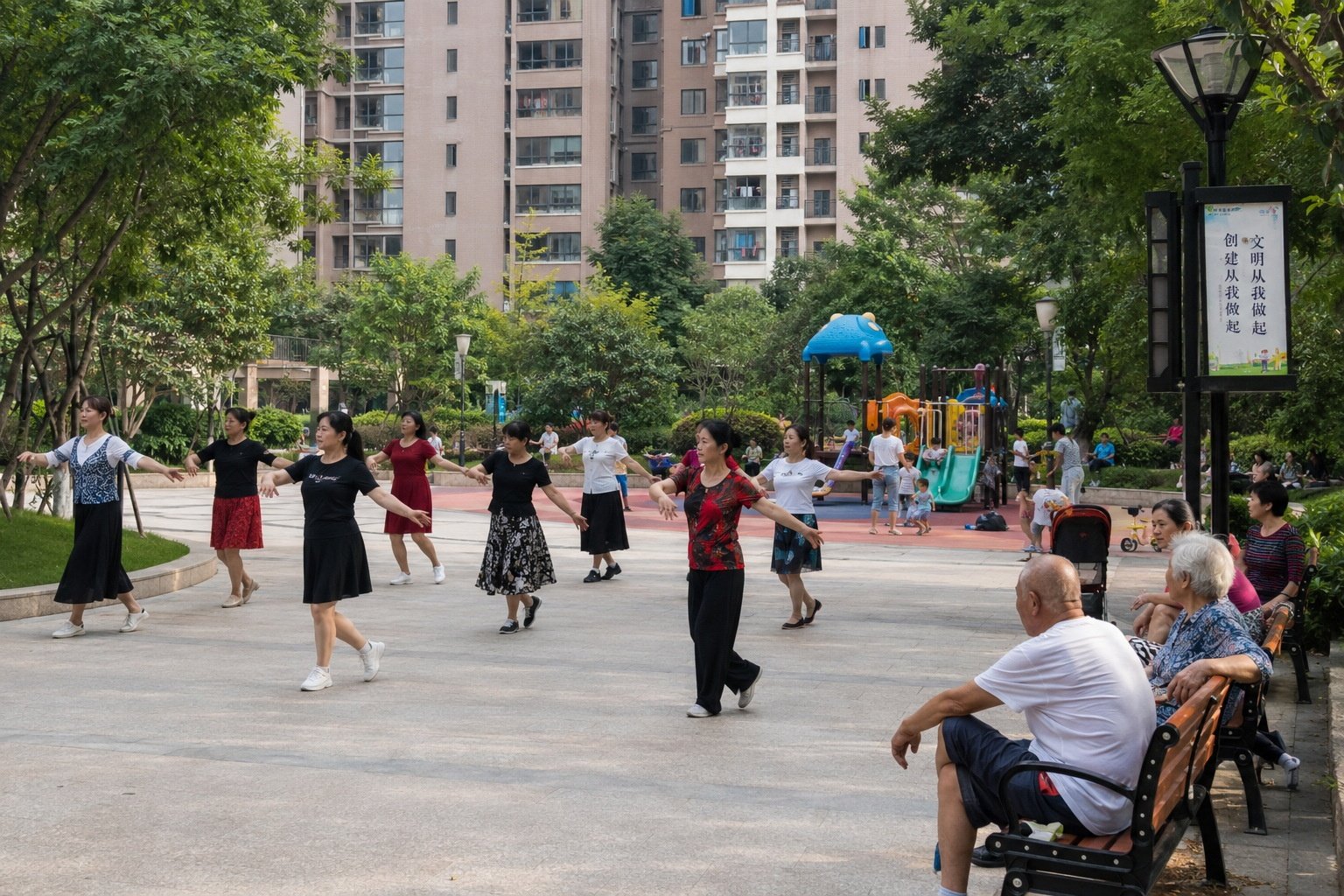
Outside the wall, traffic is fast and dense. Inside, it is quiet. This distinction allows for a lifestyle that might seem unusual in other parts of the world. It is common to see young children riding bicycles or scooters independently within the compound, while parents sit on benches nearby chatting. The xiaoqu creates a “third space”—not quite public, not quite private—where children can have a degree of freedom that is rare in cities with high traffic risks.
The security presence is also a major factor. While China has one of the lowest violent crime rates in the world, residents value the predictability and order that guards and surveillance cameras provide. The guard booth is not just a barrier; it is a node of community monitoring. Strangers are noticed immediately, which provides a psychological sense of control over one’s immediate environment.
A Micro-Society Within the Walls
Because xiaoqu can house anywhere from a few hundred to tens of thousands of people, they function as micro-cities. Inside these walls, a complete social ecosystem develops.
One of the most visible aspects of this ecosystem is the role of shared public space. In the evenings, you will often see groups of middle-aged and elderly women performing synchronized dance routines in the central plazas. This phenomenon, known as “square dancing” (guangchang wu), is a cornerstone of social life for retirees who may have fewer opportunities for social interaction elsewhere. The xiaoqu provides the physical stage for this collective activity.
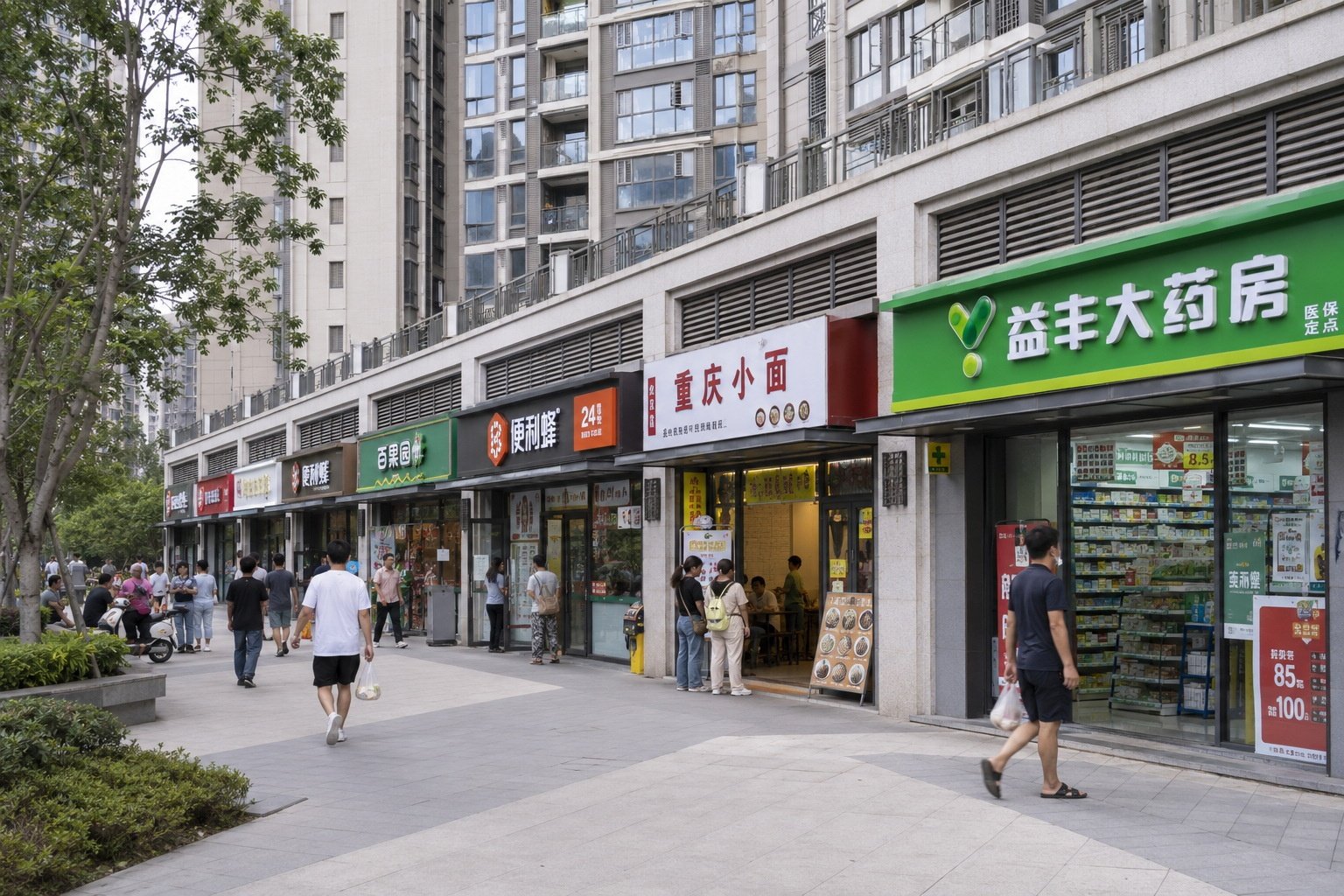
Moreover, the ground floors of most residential buildings in China are designed as commercial spaces. This means that within the xiaoqu, you can find convenience stores, noodle shops, barber shops, and dry cleaners. This “bottom-commerce” model ensures that residents can meet their daily needs without leaving the compound. It creates a self-sufficient loop that reduces the need for car travel for minor errands, contributing to a distinct rhythm of urban life that is both convenient and insular.
The Debate: Openness vs. Enclosure
However, the xiaoqu model is not without its critics. Urban planners and some citizens argue that walls fragment the city. They contend that large, super-blocks of housing disrupt the traditional street grid, making it difficult for pedestrians to navigate and reducing the vitality of public sidewalks. In many older European or American cities, fine-grained streets allow for more organic interaction between neighbors and strangers. The xiaoqu, by contrast, prioritizes internal privacy over external connectivity.
This tension has led to policy debates in recent years. Some cities have experimented with “opening up” large compounds, breaking down walls to create smaller, more connected street networks. The goal is to improve traffic flow and enhance public space. Yet, the resistance from residents is strong. For many, the wall is a property right and a safety guarantee that they are unwilling to give up. The result is a complex urban landscape where modern planning ideals clash with deeply ingrained habits of living.
Conclusion
The walled neighborhood is more than just an architectural feature; it is a reflection of China’s rapid social transformation. It represents a trade-off: residents have traded the openness of the street for the security and comfort of the compound. As China continues to urbanize, the xiaoqu remains the dominant form of housing, adapting to new technologies like smart home systems and AI-driven security. Understanding this phenomenon is key to understanding how ordinary Chinese people live, work, and find community in the 21st century.