

A Sunday in the Park
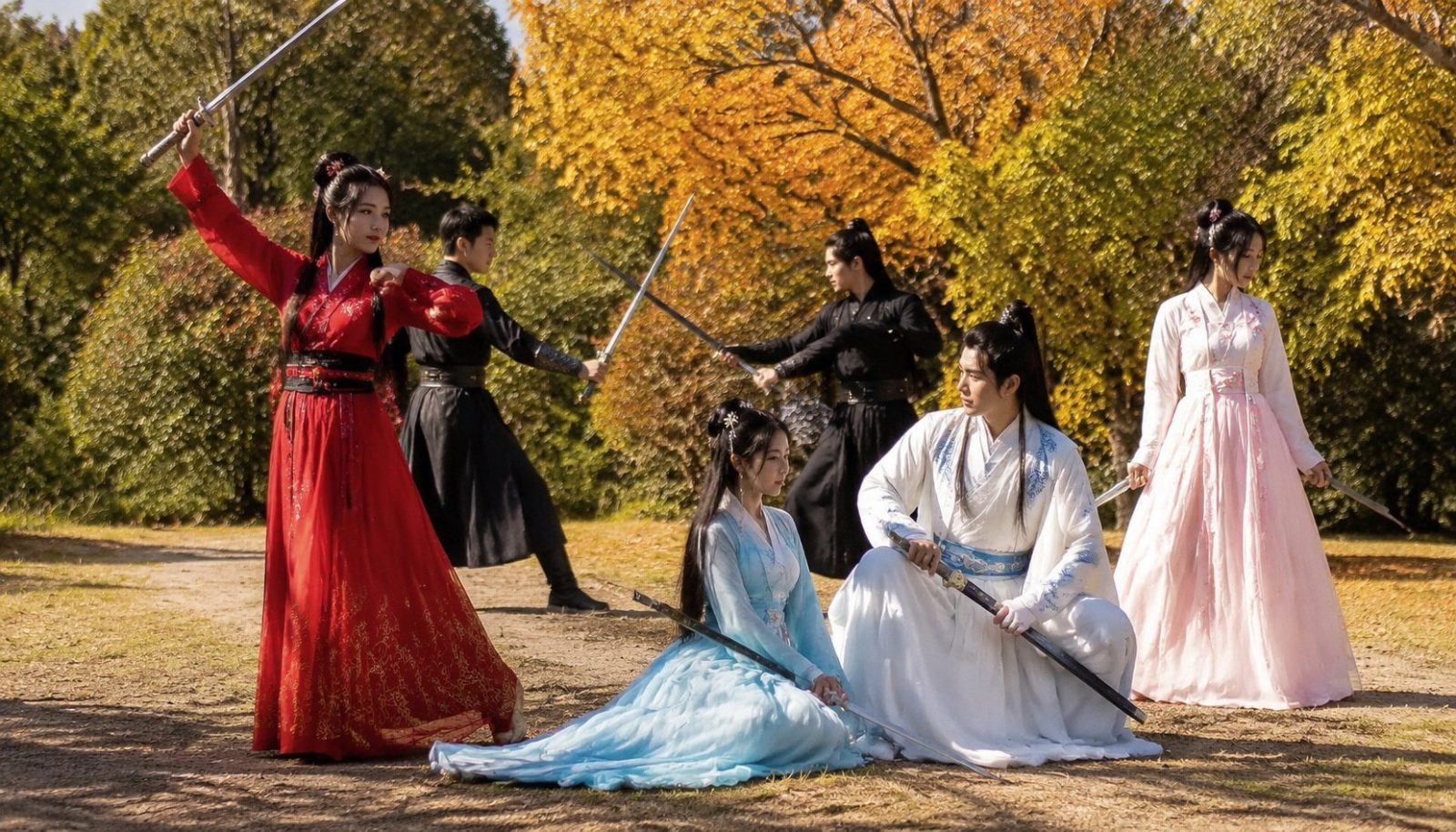
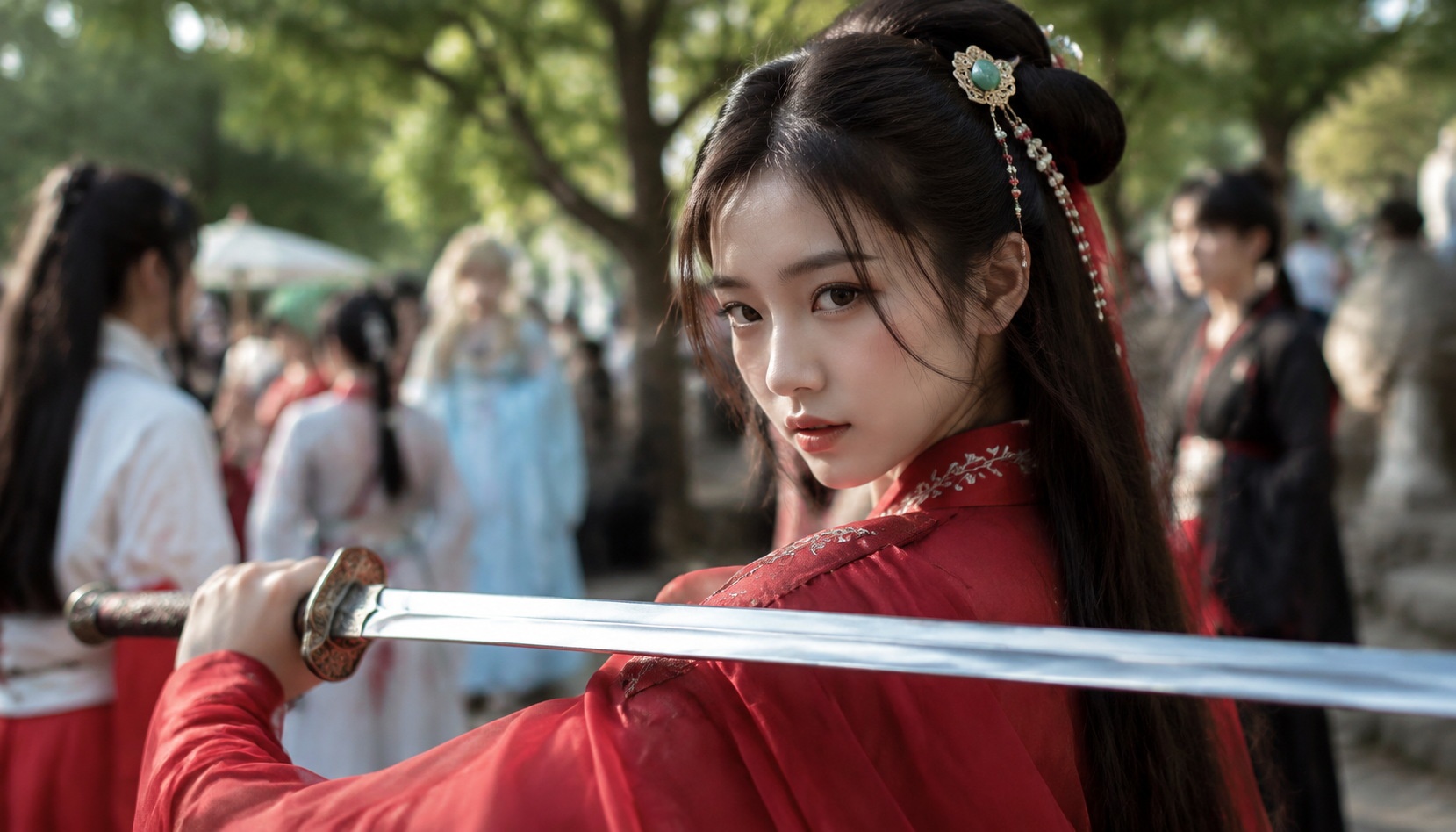
On a crisp Sunday afternoon in a park in Chengdu, I spotted a young woman in a flowing crimson hanfu, her long hair pinned with a jade hairpin. She held a polished steel longsword, its blade catching the winter sunlight. A few steps behind, two young men in black warrior robes pretended to spar, their laughter echoing across the lawn. Passersby stopped to watch, some pulling out phones, others simply smiling.
More Than a Costume
This is not a film set. It’s a weekend gathering of Chinese youth who practice wuxia cosplay — a blend of traditional Han clothing (hanfu) and the martial arts hero aesthetics made famous by generations of novels, films, and TV series. For them, it’s a way to step into a different identity, one that feels both ancient and personally meaningful.
I sat down with three regular participants to understand what draws them to this subculture.
Three Voices, One Passion
Xiao Wei, 24, graphic designer: “I grew up watching wuxia dramas with my grandmother. Wearing hanfu and holding a sword makes me feel connected to the stories she told me — loyalty, righteousness, a sense of adventure. It’s also a break from my screen-filled life. When I’m in costume, I’m not a designer staring at a monitor; I’m a wanderer in a world of my own making.”
Lin, 27, software engineer: “I joined a cosplay group after moving to a new city. It was hard to make friends, but here we have a shared language — sword poses, historical references, character backstories. The community is incredibly welcoming. We even help each other sew costumes and practice fight choreography.”
Yue, 22, university student: “For me, it’s about reclaiming a sense of beauty that feels Chinese. Modern fashion is global, but hanfu has these specific lines, colors, and textures that speak to my heritage. Carrying a sword adds a bit of fierceness — it’s not just pretty, it’s powerful.”
Not Just Retro, But Reimagined
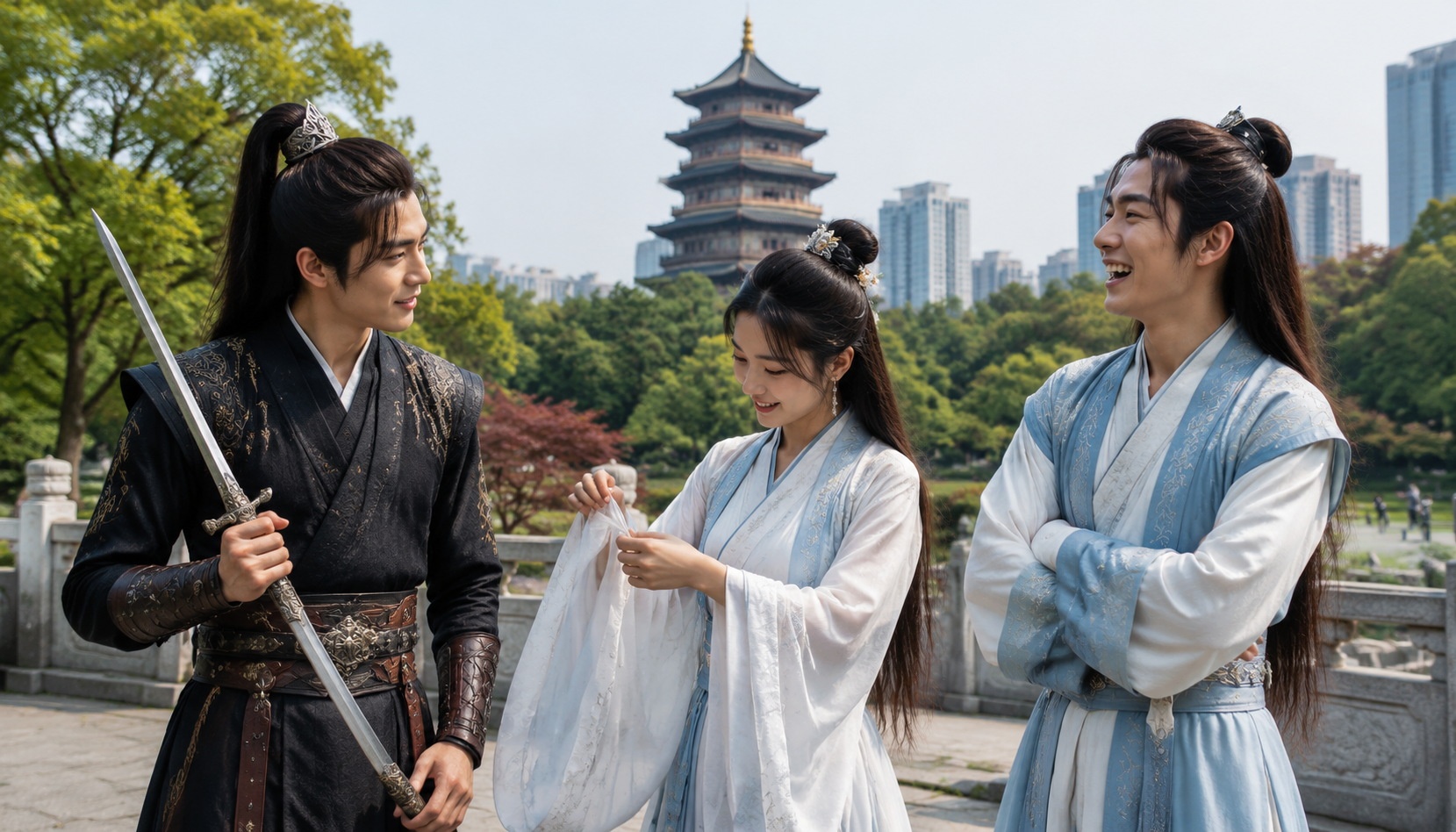
This movement is part of a larger hanfu revival that began in the early 2000s. Young enthusiasts research historical clothing, but they also mix periods and add fantastical elements from wuxia and xianxia (fantasy martial arts) stories. It’s not historical reenactment — it’s creative self-expression.
The influence of Chinese pop culture is undeniable. Hit dramas like “The Untamed” and “Joy of Life” have popularized wuxia aesthetics worldwide. On platforms like Douyin and Bilibili, sword-wielding influencers rack up millions of views. The longsword, often made of alloy or stainless steel, is as much a prop as a symbol of inner strength.
From Suspicion to Acceptance
Public attitudes have shifted noticeably. “Five years ago, people would stare like we were aliens,” says Lin. “Now, grandparents come up and say, ‘That’s beautiful — where can I get one for my granddaughter?’” Local governments in cities like Xi’an and Hangzhou have even begun hosting hanfu parades and wuxia-themed festivals, recognizing the economic and cultural appeal.
Family support has grown too. Xiao Wei’s mother initially worried her daughter was wasting money on “costumes.” But after attending a public performance, she started sewing hanfu herself. “Now she’s more into it than I am,” Xiao Wei laughs.
A Global Cousin to Cosplay Everywhere
This phenomenon resonates beyond China. Western Renaissance fairs, Japanese cosplayers dressing as samurai or anime heroes — humans everywhere have long used clothing and performance to explore alternate selves. What makes wuxia cosplay distinctive is its deep roots in a still-living storytelling tradition. Young Chinese are not just copying a media franchise; they are reinterpreting a cultural archive that spans centuries.
For many, the sword is the key. “It changes the way you stand, the way you breathe,” says a choreographer I meet at another park gathering. “It demands respect.”
Creativity Between Tradition and Now
As I walk away from the park, the sound of clashing swords fades behind me. What stays is the image of a generation weaving together threads of history, fantasy, and personal identity. They are not running away from modernity — they are enriching it with layers of meaning. In a rapidly changing world, wuxia cosplay offers a space where the past becomes a playground, and the self can be both ancient and brand new.
Start the discussion at forum.chinacomes.com