
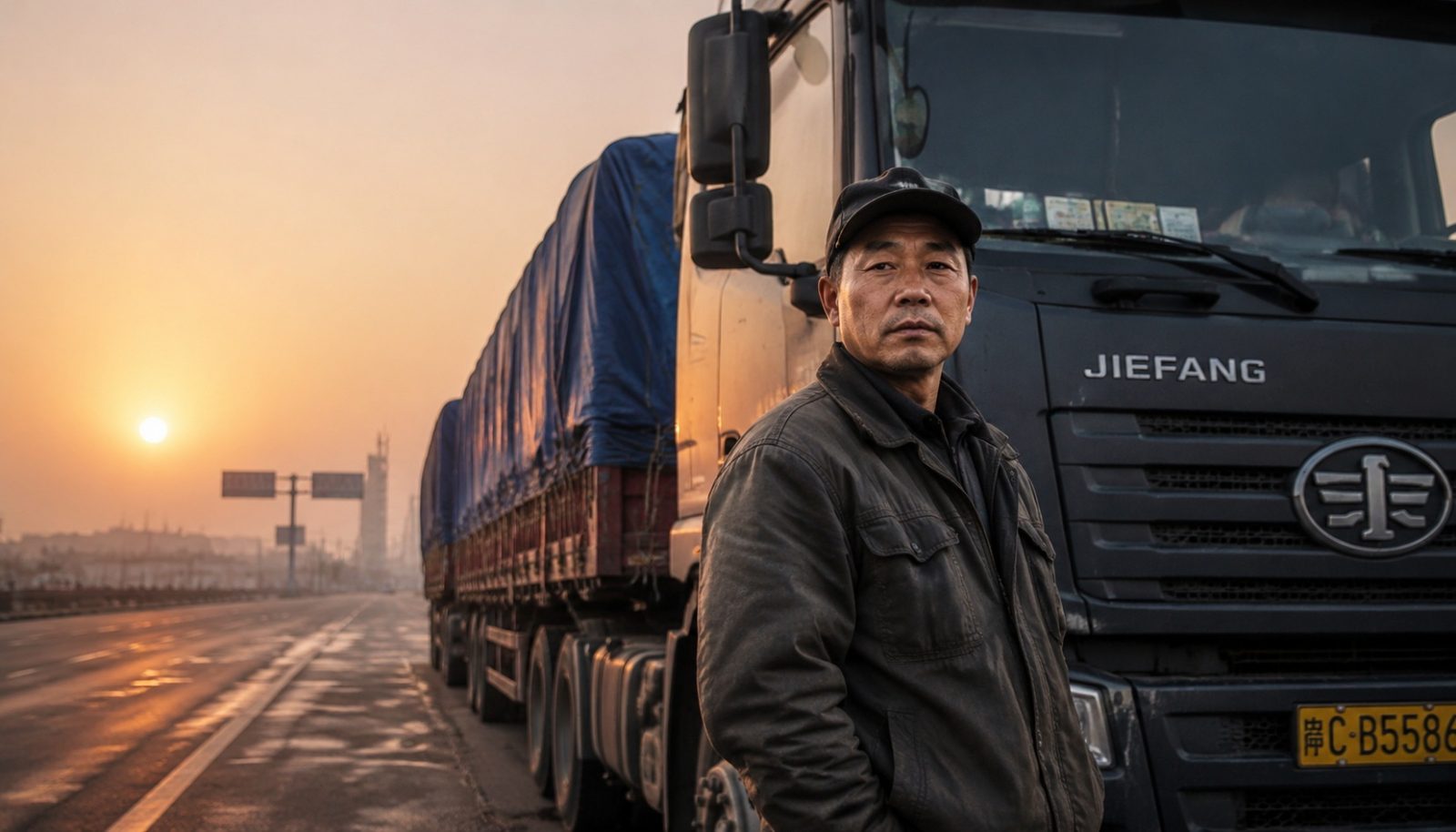

The 4 AM Routine
At 4:15 a.m., the parking lot behind a truck stop on the outskirts of Zhengzhou is already humming. Li Wei, 38, tightens the last strap on a load of auto parts destined for a factory in Guangzhou, 1,100 kilometers south. He wipes sweat from his forehead with the back of his hand, though the autumn air is cool. The diesel engine of his Jiefang-branded truck rumbles to life, and he climbs into the cab—a cramped space that doubles as his bedroom, kitchen, and office for the next 18 hours.
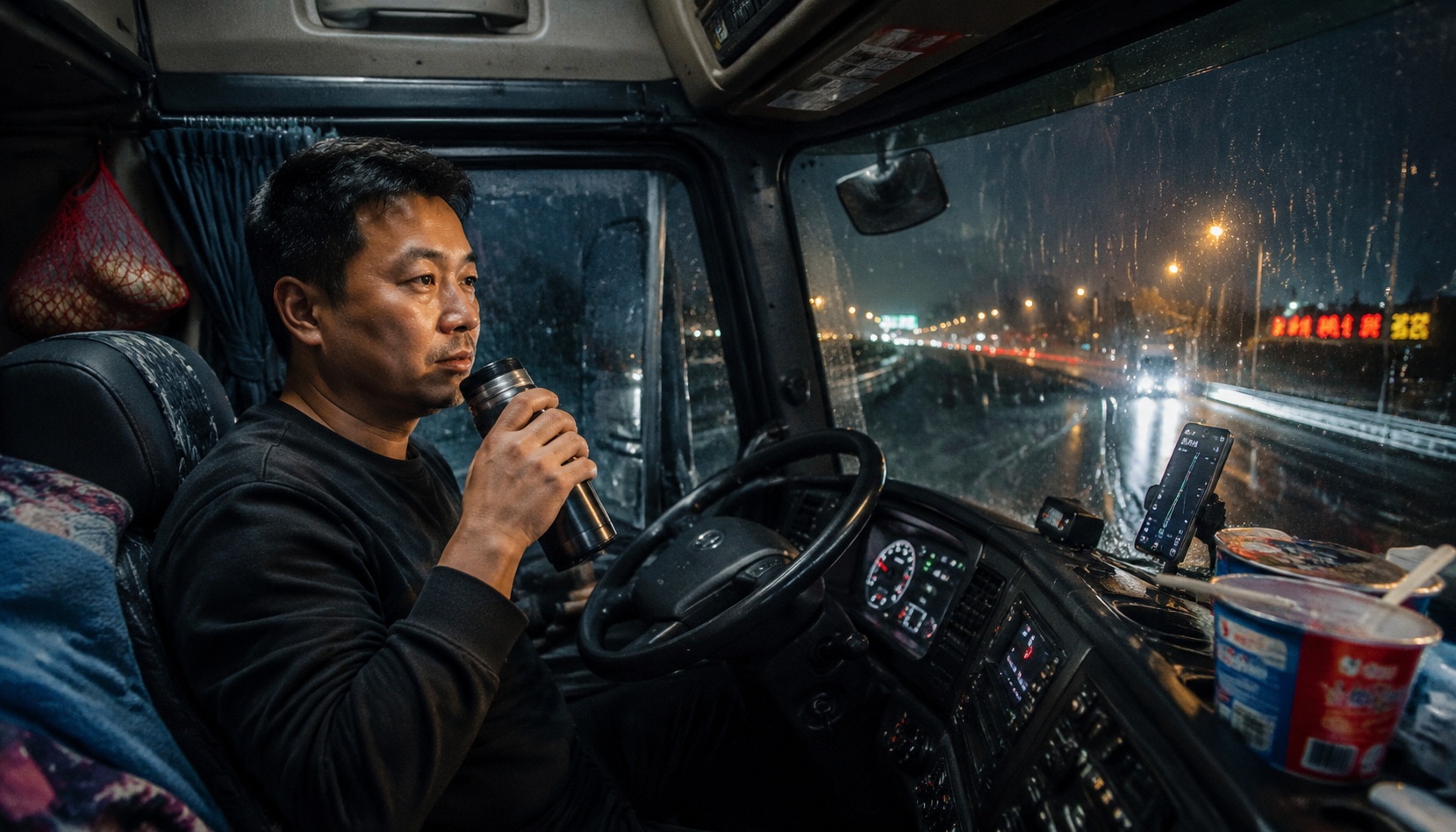
A Typical Week: 2,000 km Across Provinces
Li Wei’s week starts on Monday morning. He leaves his small apartment in a suburb of Anyang, Henan Province, where his wife and two children still sleep. By Tuesday evening, he’s delivered the auto parts in Guangzhou, grabbed a 4-hour nap in a rest area, and picked up a load of fresh produce bound for Beijing. By Thursday, he’s back in the north, then heads west to Xi’an with electronics. By Sunday night, he’s logged around 2,000 kilometers—the distance from London to Moscow, but on roads snaking through mountains, industrial zones, and sprawling cities.
His phone buzzes constantly with orders from freight-matching apps like Huolala (货拉拉) and Full Truck Alliance (满帮). “Without these apps, I’d never have started my own business,” he says, tapping the screen. “I can find a load within minutes of dropping one off.” The apps have transformed China’s trucking industry, cutting out brokers and putting negotiation power into drivers’ hands—at least for those who own their trucks.
The Business Side: How He Started His Own Trucking Company
Li Wei used to drive for a state-owned logistics firm, earning a fixed salary of about 6,000 yuan (around $830) a month. In 2019, he took a gamble. He pooled savings with a loan from his brother-in-law and bought a second-hand truck for 180,000 yuan ($25,000). Today, his “company” is the truck itself. He earns between 15,000 and 20,000 yuan ($2,100–$2,800) a month before costs—diesel, tolls, maintenance, and insurance eat up about 60% of that. Net profit: roughly 6,000–8,000 yuan ($830–$1,100). “It’s not much more than being an employee, but I’m my own boss,” he says, shrugging. “And there’s room to grow—I’m planning to buy a second truck next year and hire a driver.”
His ambition reflects a broader trend in China: the rise of micro-entrepreneurs in logistics. According to the China Federation of Logistics & Purchasing, over 70% of China’s road freight is now carried by individual operators or small fleets. The trucking industry employs over 30 million people, and many are self-employed, leveraging digital platforms to find loads and optimize routes.
Challenges: Long Hours, Road Conditions, and Regulations
Life on the road is grueling. Li Wei drives 12 to 14 hours a day, often through the night to avoid city traffic. He sleeps in the cab, eats instant noodles at service stations, and showers at truck stop public baths when he can. “The biggest problem is fatigue,” he admits. “Sometimes I have to pull over and close my eyes for 20 minutes. It’s dangerous, but what choice do I have? The delivery deadline is tight.”
Road conditions vary widely. In the eastern provinces, expressways are smooth and well-lit. In remote areas of Yunnan or Gansu, potholes and winding mountain roads test both vehicle and nerves. Then there are the regulations: China’s trucking industry is heavily policed for overloading and overspeeding. GPS trackers on his truck monitor his speed and hours; if he exceeds 4 hours without a break, the system alerts his company—in Li Wei’s case, himself. “It’s a pain, but it keeps everyone safe,” he says.
Family Life: Balancing Work and Home
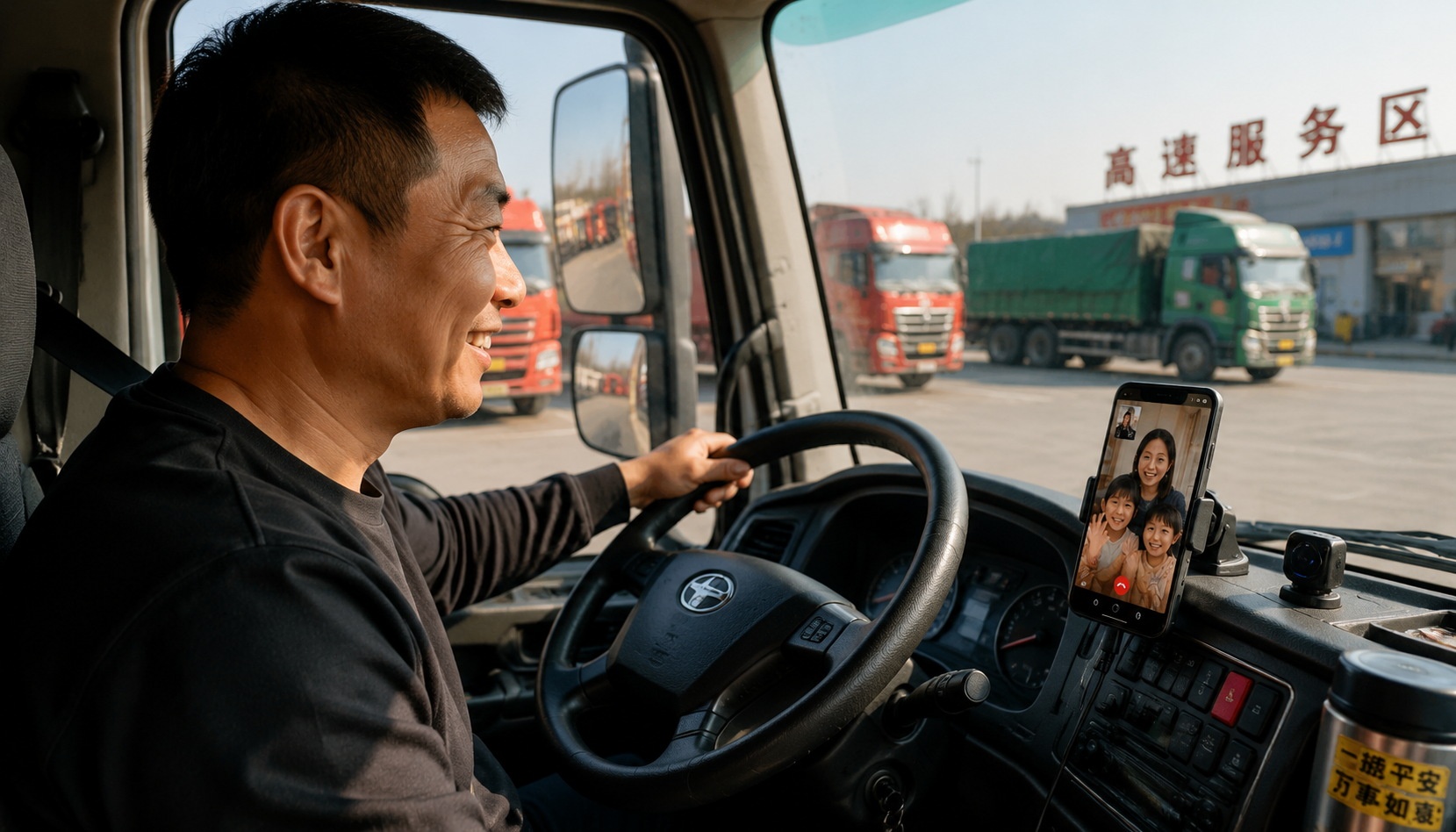
Li Wei’s wife, Zhang Ling, runs a small convenience store in Anyang. She manages the household and their two children, ages 9 and 11. “I see my husband once a week, if that,” she says, her voice steady but weary. “The kids ask for him, but we video call every night. He’s a good father—just absent.”
Li Wei carries a worn photo of his family in the sun visor of the cab. “This is my motivation,” he says, tapping the photo. “I want to give my kids a better education than I had. Maybe they can go to university and not drive a truck.” For now, he drives on, covering more than 100,000 kilometers a year—a distance that would circle the Earth two and a half times.
Insights: What His Story Reveals About China’s Logistics Boom
Li Wei is one of 30 million truck drivers powering China’s economy. Their collective effort moves 75% of the nation’s freight by volume—more than rail, air, and water combined. As China shifts from a manufacturing-dependent economy to one driven by consumption and e-commerce, the demand for quick, flexible road transport has exploded. Same-day delivery for a smartphone ordered from Shanghai to a village in Sichuan? That’s possible because drivers like Li Wei are on the road 24/7.
But the industry also faces pressure: rising fuel costs, aging truck fleets, and a shortage of young drivers. Many drivers are over 40; few young people want a life on the road. Li Wei’s story encapsulates the contradictions of China’s rapid development—opportunity and exhaustion, entrepreneurship and precariousness, all rolled into one.
Conclusion: The Grit Behind the Goods
At 10 p.m., Li Wei pulls into a rest area near the border of Hubei and Hunan. He kills the engine, climbs into the back bunk, and sets an alarm for 4 a.m. Tomorrow, he’ll deliver the vegetables and pick up a new load heading north. In the darkness, the cab glows with the blue light of his phone screen as he messages his wife: “Safe and sound. Kiss the kids for me.” Then he closes his eyes, wearing the faint smile of a man who, despite the odds, is living his own American Dream—Chinese style.
Start the discussion at forum.chinacomes.com