
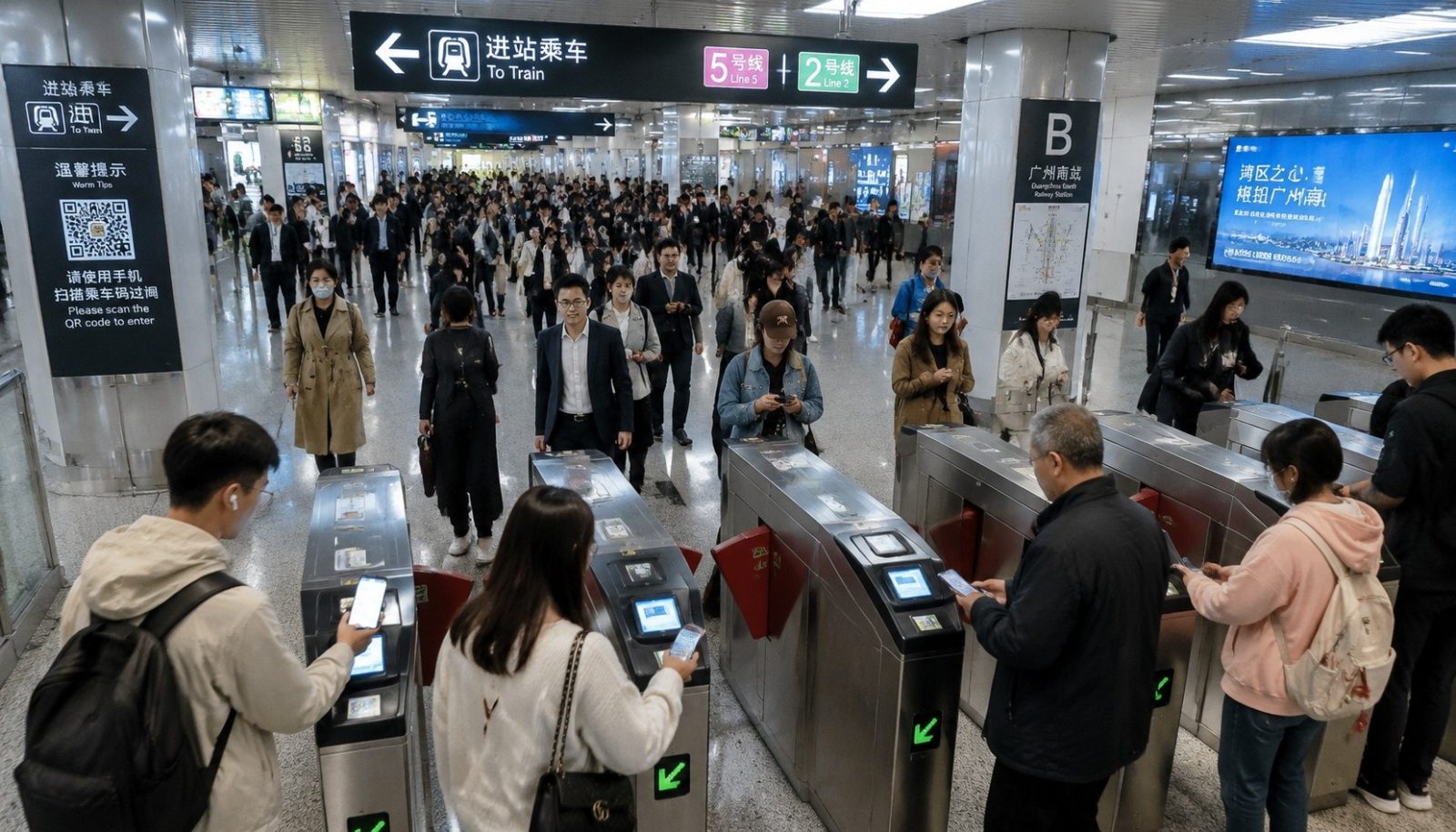

Morning Rush at a Subway Station
It’s 8:30 AM at Beijing’s Guomao Station, one of the busiest in the city. Thousands of commuters stream through the turnstiles, each pausing for less than a second to tap their phone against a scanner. A green light flashes, the gate opens, and they move on. There’s no ticket to buy, no card to swipe—just a QR code generated by a mobile app. This scene repeats millions of times every day across China’s 50+ subway systems, collectively handling over 200 million daily trips. How did Chinese cities build such a seamless ticketing system? The answer lies in a combination of mobile payment ubiquity, robust backend infrastructure, and smart urban planning.
The Evolution: From Paper to QR Code
China’s subway ticketing didn’t always look like this. A decade ago, commuters had to queue at ticket machines to buy magnetic paper tokens or recharge stored-value cards. The turning point came in 2017, when Shanghai and Beijing started piloting QR code payments. Within two years, almost all major metro lines supported scanning via Alipay and WeChat Pay. Today, paper tickets are nearly extinct—over 90% of subway trips in cities like Shenzhen and Guangzhou use QR codes or contactless smart cards that sync with phone apps. The shift was driven by China’s high smartphone penetration (over 70%) and the dominance of mobile payment platforms. The government also played a role, standardizing QR code formats across operators to avoid fragmentation.
Under the Hood: How a Scan Happens
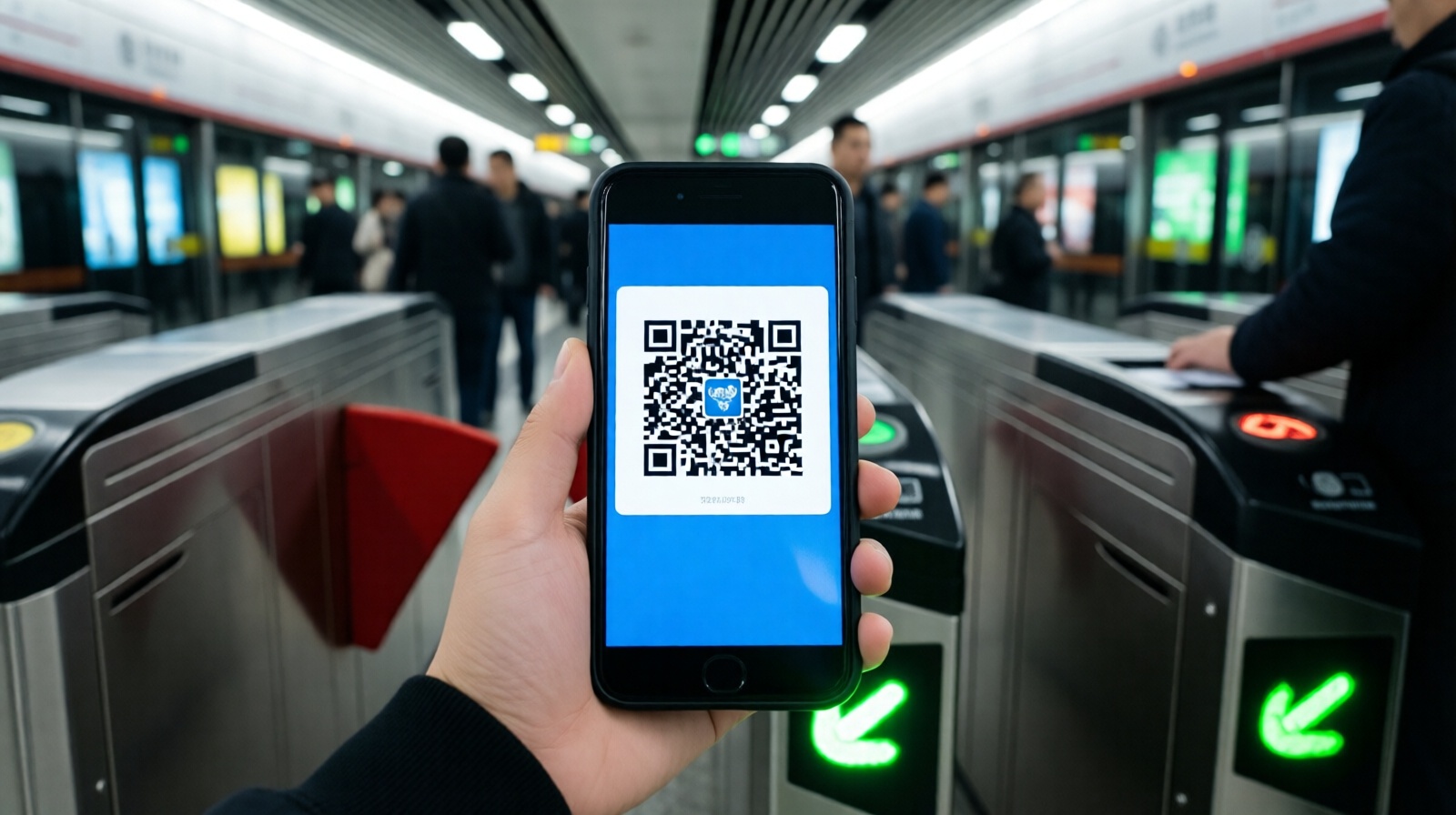
When a commuter scans a QR code, it triggers a complex chain of events. The gate’s scanner reads the encrypted code and sends it to the subway operator’s cloud server. That server verifies the code’s validity, checks the user’s account for sufficient balance, and then communicates with Alipay or WeChat’s payment gateway. If the account has a credit arrangement (like a deposit or linked credit card), the ride is authorized instantly—even if the balance is zero. The entire process takes about 300 milliseconds, with a success rate of 99.9%. The system handles billions of daily requests, peaking at 500 million monthly active users across all metro networks. To ensure reliability, each major city has redundant servers and backup power for turnstiles.
A Commuter’s Day: Xiao Wang’s Efficiency Gain
Xiao Wang, a 28-year-old accountant in Shanghai, used to waste 10 minutes every morning buying a ticket. Now, she simply opens her Alipay app on the platform, generates a QR code, and scans it. “I save at least 20 minutes a day—10 in the morning and 10 in the evening,” she says. “Over a month, that’s over 6 hours. I use that time to read or catch up on news.” Xiao Wang’s experience is typical. For the average Chinese subway commuter, the switch from paper tickets to QR codes has cut total daily commuting time by 15–25 minutes. At a national scale, that translates into billions of hours saved annually—a massive productivity gain for the economy.

Smart Operations: Big Data Keeps Trains on Time
Smooth ticketing is only half the story. Chinese metro operators use big data from QR code scans to predict and adjust service. For instance, in Guangzhou, the number of real-time scan events per minute at each station feeds into a control center that detects crowding patterns. If a station’s throughput drops suddenly, dispatchers can increase train frequency or add shuttle buses. Historical data also helps with long-term planning: knowing that line 3 has the highest QR code usage at 8:15 AM on weekdays allows the operator to schedule more trains during that window. In Beijing, AI-powered systems even predict passenger flow up to 30 minutes ahead, reducing congestion at transfer stations by up to 20%.
Challenges Under Extreme Crowds
Despite the efficiency, high passenger volume creates constant challenges. At stations like Shanghai’s People’s Square, which handles over 600,000 riders daily during rush hour, operators implement “flow control” measures—blocking entry to some gates for a few minutes to prevent overcrowding. For special events like holidays, they deploy temporary QR code scanners and manual teams to assist. Technical failures, though rare, can cause chaos. When a system glitch occurred in Beijing in 2022, thousands were stuck until staff switched to offline mode, allowing gates to open without verification. To minimize such risks, metro apps now cache tickets locally, letting passengers scan even without mobile data.
Global Comparison: QR vs. NFC vs. Paper
Compared to subways in London (Oyster card/contactless), New York (OMNY/NFC), and Tokyo (Suica/NFC), China’s QR-code system stands out for its low cost and high adoption. While NFC requires phone hardware, QR codes work on virtually any smartphone. This is crucial in a country where many low-income workers still use older phones. However, QR scan times (0.3 seconds) are slightly slower than NFC (0.1 seconds), and the process requires an unlocked phone and open app. In Tokyo, Suica cards can even be linked to Apple Watch for a faster tap. Still, for sheer scale and reliability, China’s mobile-first approach is unmatched: Beijing’s 1,200 daily trips per gate—one of the highest rates globally—run on QR technology that would fail under such load in many other cities.
Conclusion: Technology Serving Humanity
The shift to QR-based subway access is more than a convenience upgrade. It reflects a deliberate effort by Chinese cities to design public services around everyday needs. By leveraging existing mobile payment ecosystems and investing in backend infrastructure, they’ve built a system that saves time, reduces friction, and adapts to extreme demand. Next time you see a commuter quickly scanning a QR code to pass through a gate, remember: behind that 300-millisecond transaction is a decade of tech evolution and a continuing commitment to making urban life a little easier.
Start the discussion at forum.chinacomes.com