

Introduction: The Backyard Swordsman
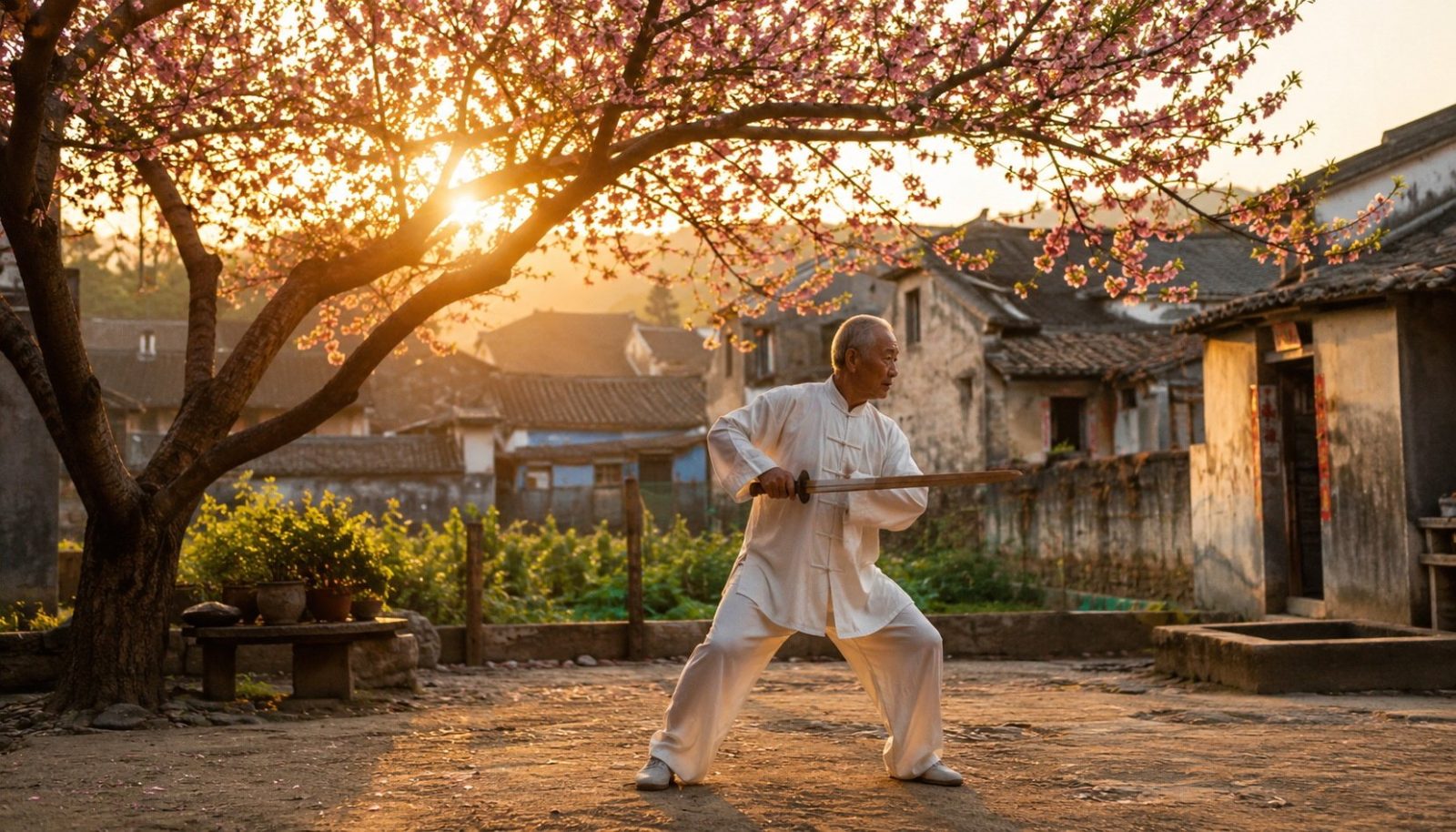
At 5 a.m., while most of the town is still asleep, a thin, gray-haired man steps into his backyard in a small Chinese town. Dressed in a loose white martial arts suit, he picks up a wooden sword and begins to move. For the next two hours, the only sounds are the soft rustle of leaves and the whoosh of the blade cutting through the air. This is Mr. Li, a 75-year-old retired teacher who has been practicing swordplay in his backyard for 30 years.
A Dream Born from Wuxia Novels
Mr. Li grew up in the 1960s, a time when books were scarce but imagination was vast. He recalls sneaking readings of wuxia novels—stories of wandering swordsmen, honor, and martial arts. “I wanted to be like those heroes,” he says with a shy smile. But life took him to a teacher’s college, and then to a middle school classroom where he taught Chinese literature for 40 years. The dream never died; it just got buried under lesson plans and exam papers.
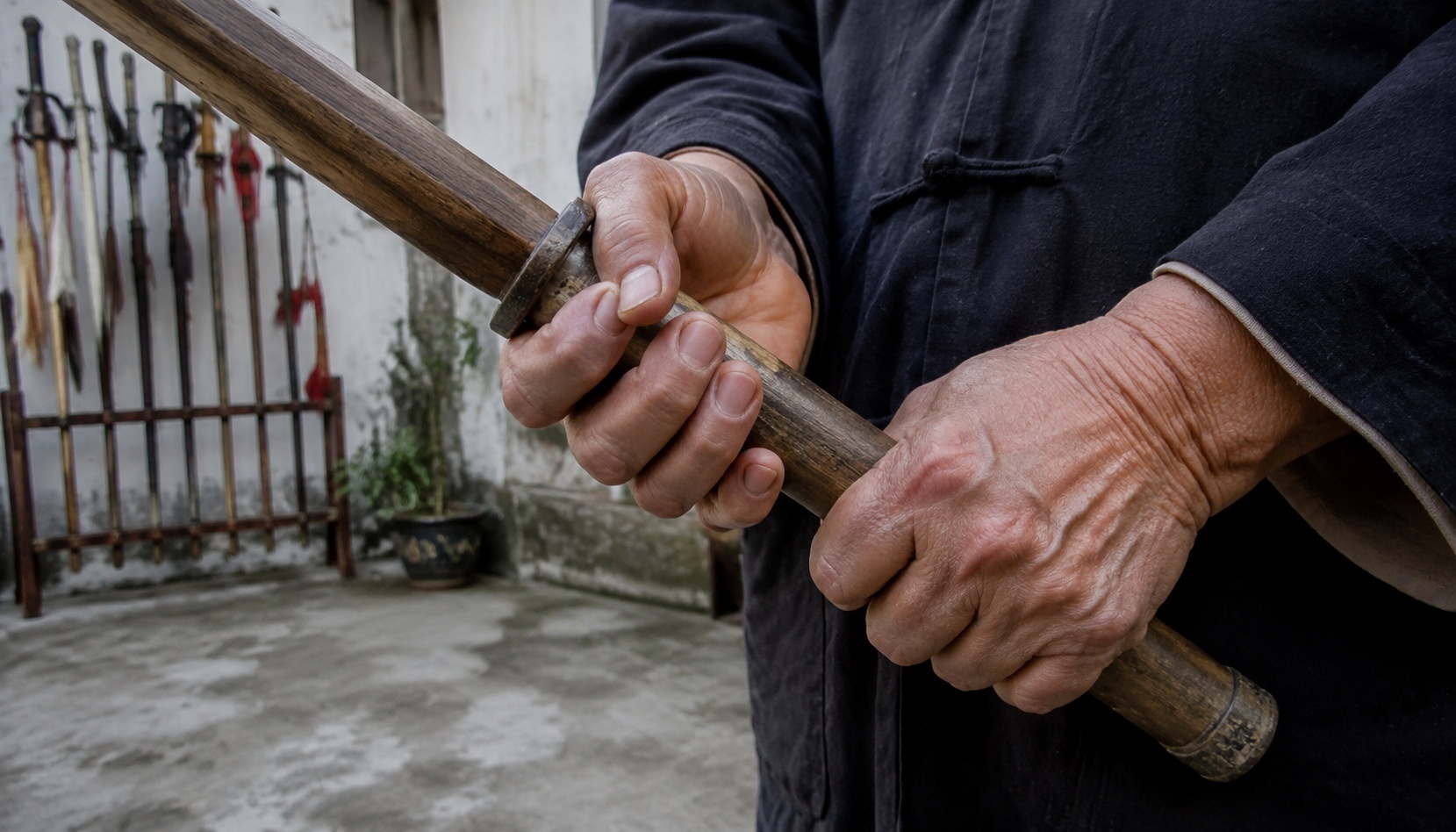
When he retired in 1994, Mr. Li finally had time. He bought a wooden sword from a local market and started practicing in his backyard. “I didn’t know any proper forms. I just moved the way I imagined a swordsman would,” he explains. Over the years, he studied from old books and online videos, slowly mastering traditional sword techniques.
Perseverance Through Pain and Teasing
For 30 years, Mr. Li has never missed a day—except when he was hospitalized for pneumonia. Even then, he practiced gentle moves in his hospital room. His backyard is a modest space: a concrete floor, a small peach tree, and a rusted rack where he hangs his practice swords. Neighbors initially found him odd. “Some kids laughed at me, called me ‘the crazy old man with a stick,’” he says, chuckling. “But laughter doesn’t hurt. Giving up does.”
At 70, he developed arthritis in his right wrist. The doctor advised him to stop. Instead, Mr. Li switched to a lighter bamboo sword and modified his techniques. “Pain is part of practice. You learn to work with it, not against it,” he says. His determination turned the teasing into respect. Now, neighbors greet him with a nod and sometimes stop to watch.
From Solitary Practice to Community Impact
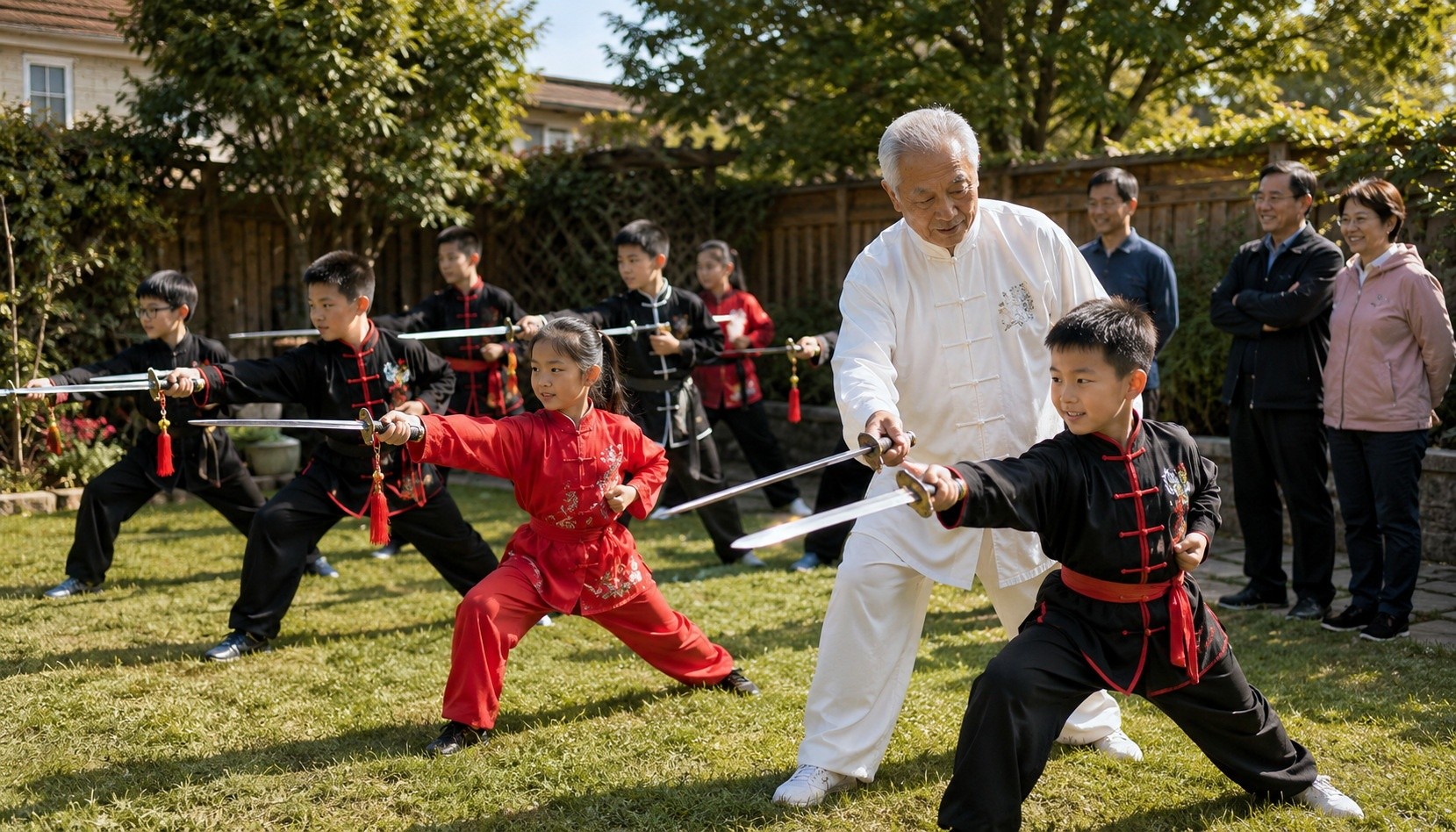
Word of Mr. Li’s daily ritual spread. First, a few curious children peeked over the low wall. Then one boy asked if he could learn. Today, about a dozen local kids and teenagers gather in his backyard every Saturday afternoon. Mr. Li teaches them basic stances and sword forms for free. “I’m not a master. I just love it,” he insists. But the kids call him “Master Li” with reverence.
Parents appreciate the activity. “My son used to spend all day on his phone,” says Liu Wei, a father of two. “Now he looks forward to Saturday practice. He even tells me stories about ancient swordsmen.” For the children, Mr. Li’s backyard has become a portal to a world beyond screens—a world of discipline, tradition, and quiet strength.
Modern Relevance: A Living Heritage
In an age of fast food, fast entertainment, and fast information, Mr. Li’s 30-year dedication stands out. His story is not unique—across China, many ordinary people quietly keep traditional arts alive, but it reveals a deep, grass-roots connection to cultural heritage. While the government promotes “traditional culture revival,” Mr. Li’s practice is organic: no funding, no publicity, just one man and his sword.
“I don’t think about heritage,” he says. “I just do what makes me happy. If others learn something from it, that’s a bonus.” His simplicity is disarming. In a world that often celebrates youth and innovation, he reminds us that perseverance itself is a form of beauty—a slow dance against time.
Conclusion: The Sanctuary of the Backyard
Mr. Li’s backyard is not a grand dojo. It’s a small, ordinary space in a town that would not make any travel guide. But every morning at 5 a.m., it transforms into a stage for a personal legend. The peach tree blossoms each spring, and Mr. Li moves beneath its branches, his shadow tracing the strokes of a lifelong dream. “I will practice until I can’t stand anymore,” he says. In a small corner of China, a retired teacher shows us that sometimes the greatest adventures happen not in faraway lands, but right in your own backyard.
Start the discussion at forum.chinacomes.com