
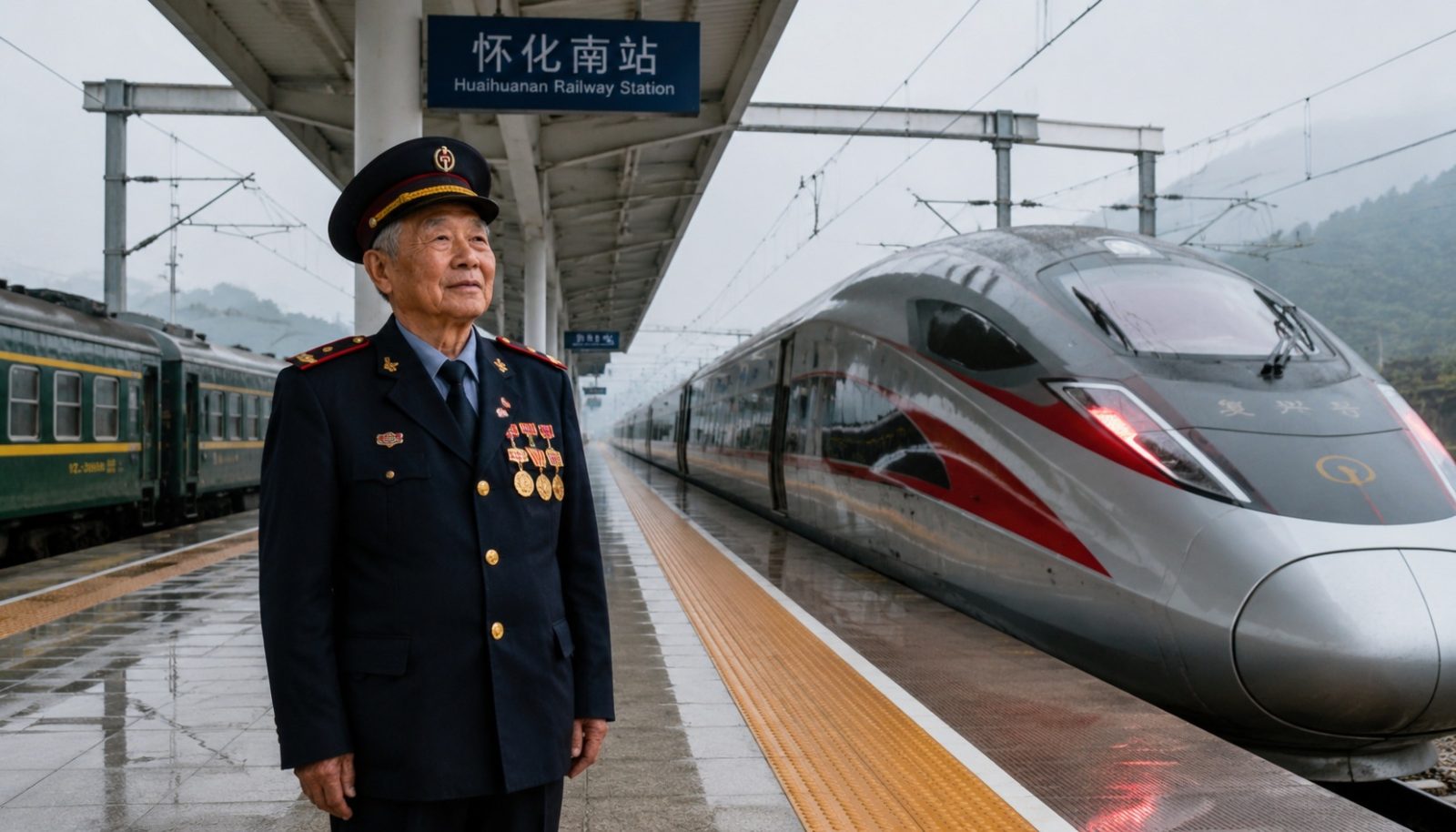

Introduction: A Man and His Railway
In 1994, when Zhang Weiguo first stepped onto the platform of Zhengzhou Station as a new train attendant, the iconic green train—known as “lü pí chē”—was the backbone of China’s railway. The carriages were crowded, noisy, and often smelled of instant noodles and coal smoke. “We used to joke that the most reliable thing on the train was the noise,” he recalls. Today, at 53, Zhang works as a station supervisor at Zhengzhou East, one of China’s busiest high-speed rail hubs. The contrast between his two careers is a story of China’s own rapid transformation.
The Green Train Era: Slow, Crowded, but Full of Life
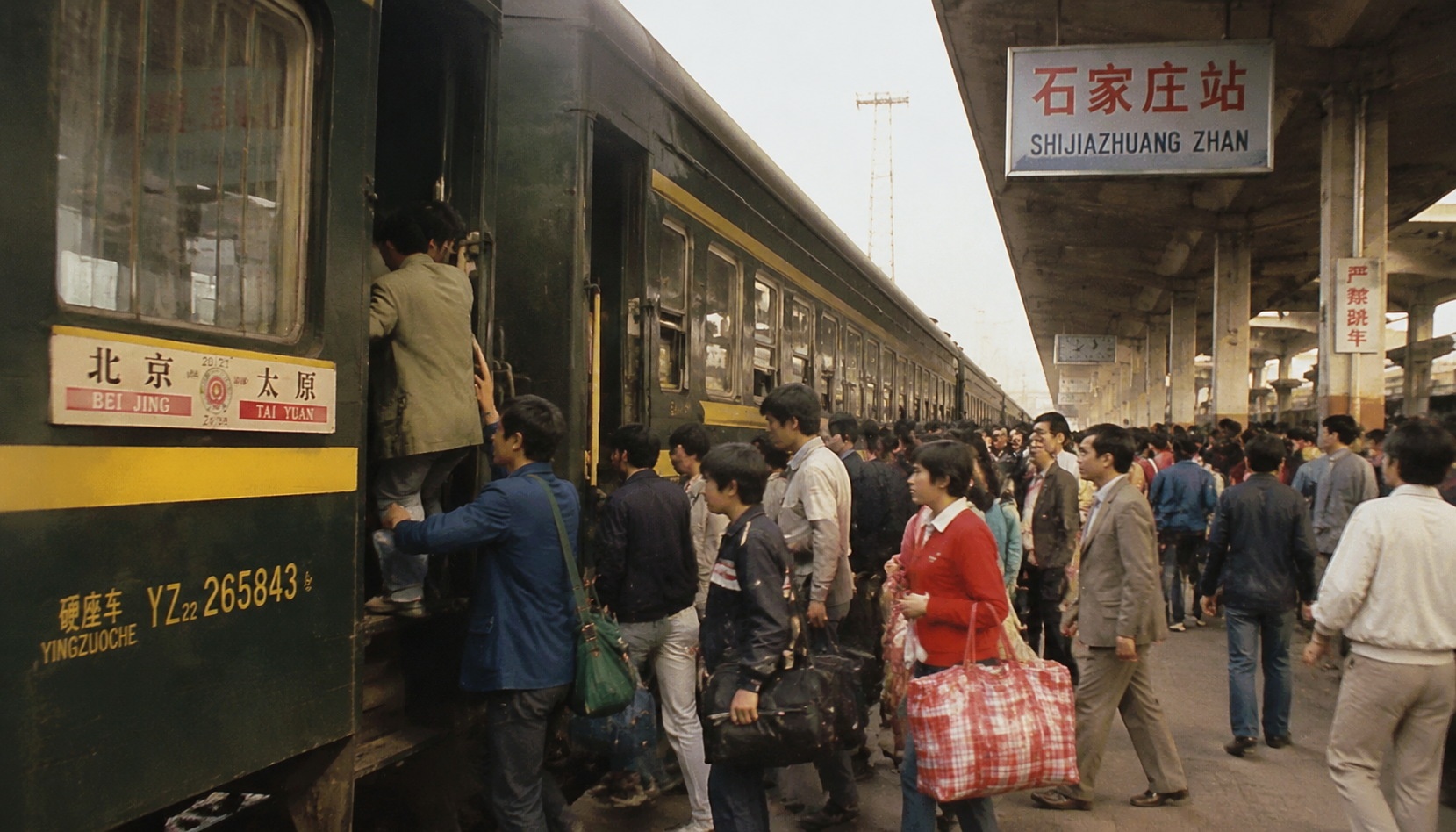
Zhang’s first assignment was on the K180 train from Zhengzhou to Beijing, a journey of nearly 700 kilometers that took 12 hours. The carriages had no air conditioning, and wooden benches were standard for hard-seat class. “During Spring Festival, you couldn’t even walk to the bathroom—passengers were packed like sardines,” he says. Yet, the green train was more than transportation; it was a moving community. Vendors sold snacks, passengers shared newspapers, and long journeys sparked conversations among strangers. For many Chinese, the green train symbolized a slower, more connected way of life. In the 1990s, China’s rail network was similar in scale to India’s—extensive but aged. Average speeds hovered around 50 km/h, and delays were common.
The High-Speed Leap: Fuxing and the New Normal
China’s first high-speed line, the Qinhuangdao-Shenyang corridor, opened in 2003. By 2008, the Beijing-Tianjin intercity railway cut travel time to 30 minutes—a journey that once took two hours. Zhang witnessed the transformation firsthand when he transferred to high-speed operations in 2012. “The first time I saw a CRH train glide into the station silently, I felt like I was in a sci-fi movie,” he says. The newest generation, the Fuxing (Rejuvenation) series, runs at up to 350 km/h—the fastest in the world. Today, China’s high-speed network exceeds 40,000 kilometers, more than the rest of the world combined.
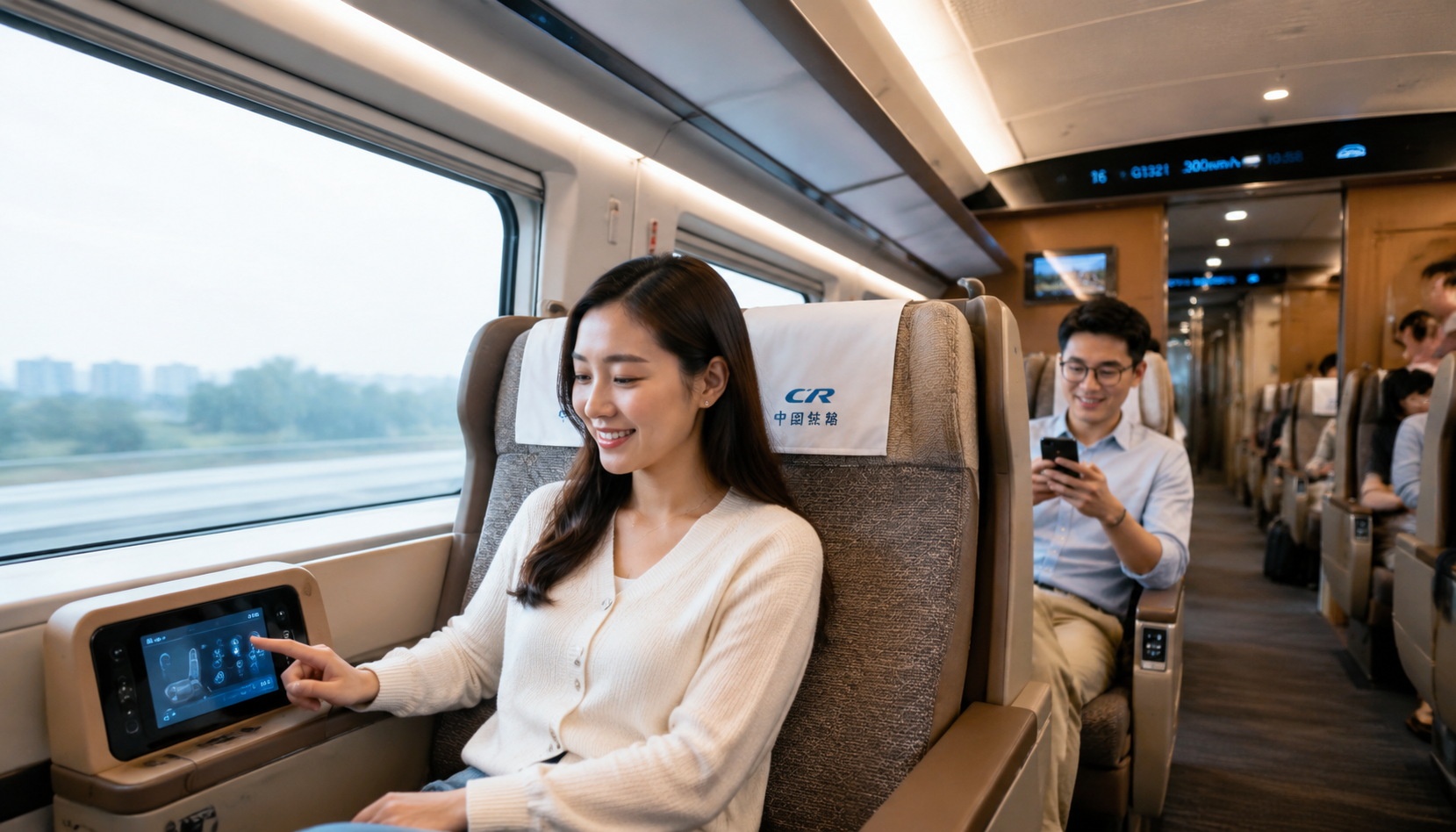
For passengers, the experience is unrecognizable: touch-screen seat controls, quiet carriages, Wi-Fi, and on-time performance above 99%. Zhang notes a cultural shift: “People now expect the train to be perfectly punctual. If it’s five minutes late, they complain—back in the green train days, a two-hour delay was normal.”
Comparing with Foreign Railways: Different Paths to Modernity
American readers may be familiar with Amtrak’s Acela, which averages about 110 km/h on the Northeast Corridor—a fraction of the Fuxing’s speed. Japan’s Shinkansen and France’s TGV are comparable in speed but limited in network length and frequency. For instance, Japan’s entire Shinkansen network (about 2,800 km) is smaller than China’s new lines added in just the last five years. What explains China’s aggressive expansion? A combination of centralized planning, state investment, and high population density made high-speed rail economically viable. In contrast, the U.S. has relied more on cars and aviation, with passenger rail lagging due to lower density and fragmented funding. Zhang offers a simple perspective: “In China, when the government decides to build something, it gets built fast. The land, the money, the labor—they come together quickly.”
Everyday Impact: How Ordinary Lives Changed
For the average Chinese commuter, the high-speed revolution means more than just speed. It has reshaped migration patterns, tourism, and even romance. Young professionals can live in cities like Tianjin and commute to Beijing in 30 minutes—a phenomenon known as “high-speed commuting.” During holidays, families reunite across provinces in hours instead of days. Zhang’s own daughter studied in Wuhan, 500 km away. “Before high-speed rail, she would come home twice a year. After the Zhengzhou-Wuhan line opened, she visited every month.” The economic ripple effects are profound: smaller cities along high-speed lines have seen surges in investment and tourism, while air travel on routes under 1,000 km has lost market share to rail.
Challenges and the Road Ahead
Despite the success, China’s high-speed rail faces challenges. Massive construction debt, the environmental cost of building through sensitive landscapes, and questions about long-term profitability persist. Rural areas not connected to the network still rely on slower trains. Zhang acknowledges these issues: “We’ve built something incredible, but we have to maintain it and make sure everyone benefits.” China is also testing high-speed sleepers, vacuum-tube trains, and even autonomous operations. For Zhang, the next frontier is making the experience even more seamless: one-ticket travel combining trains, buses, and subways.
Conclusion: A Veteran’s Perspective
Standing on the platform at Zhengzhou East, Zhang watches a Fuxing train depart at 350 km/h. He remembers the whistle of the green train 30 years ago. “Both trains take people home, but the journey is completely different,” he says. “I’m proud to have been part of this change.” For the rest of us, Zhang’s story is a lens into how China transformed from a nation of bicycle paths to one of bullet trains—and how the people who made it happen feel about the ride.
Start the discussion at forum.chinacomes.com