

The 48-Hour Fame Cycle
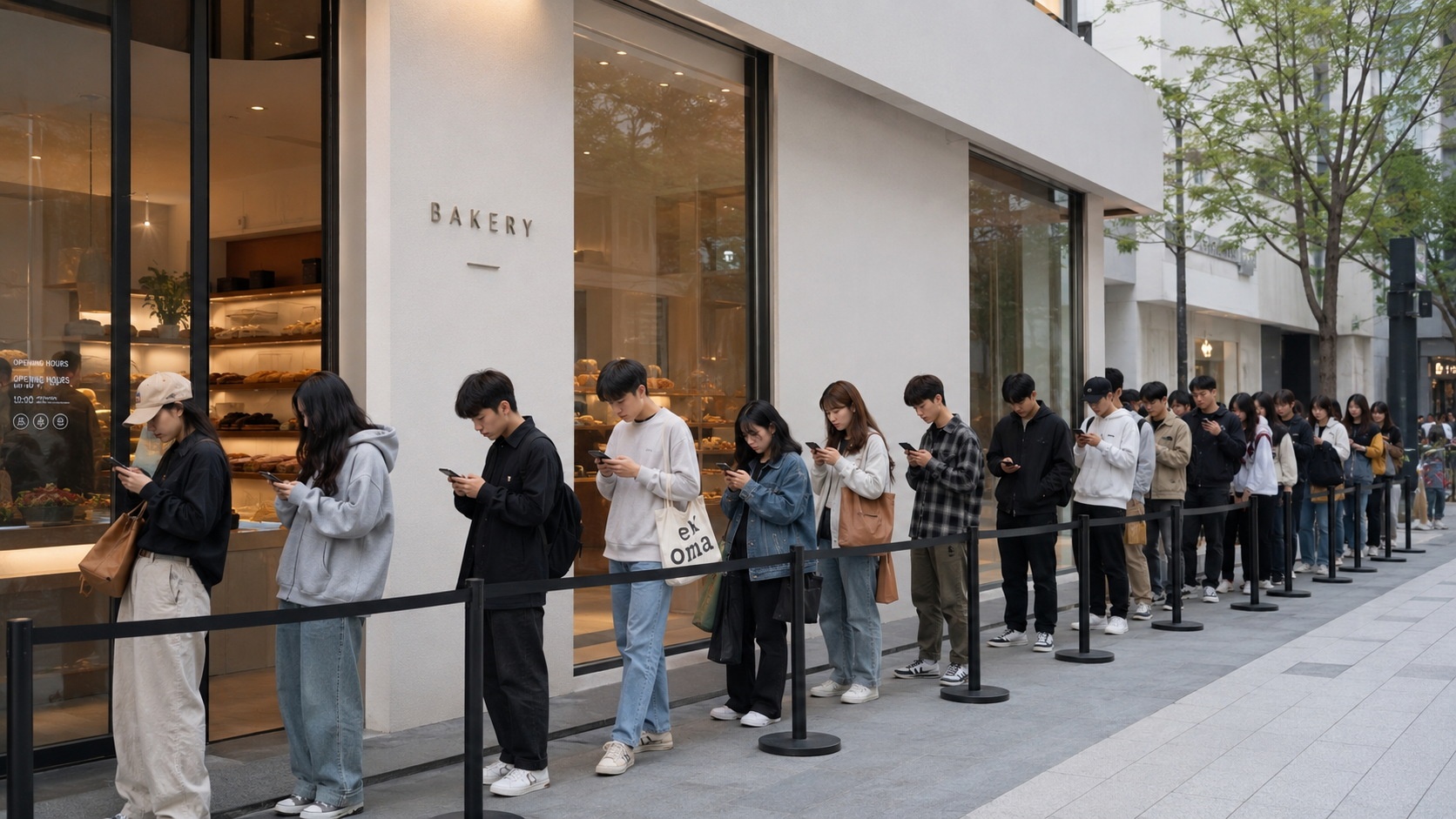
At 7:30 AM, Lin, a 26-year-old marketing manager in Shanghai, joins a queue that snakes around the block. She isn’t waiting for the city’s most famous century-old pastry shop, known for its delicate flaky crusts and historical lineage. Instead, she is waiting for a newly opened bakery that serves “lava cheese croissants” infused with osmanthus scent—a dish that has just topped Xiaohongshu (Little Red Book), China’s leading lifestyle social platform.
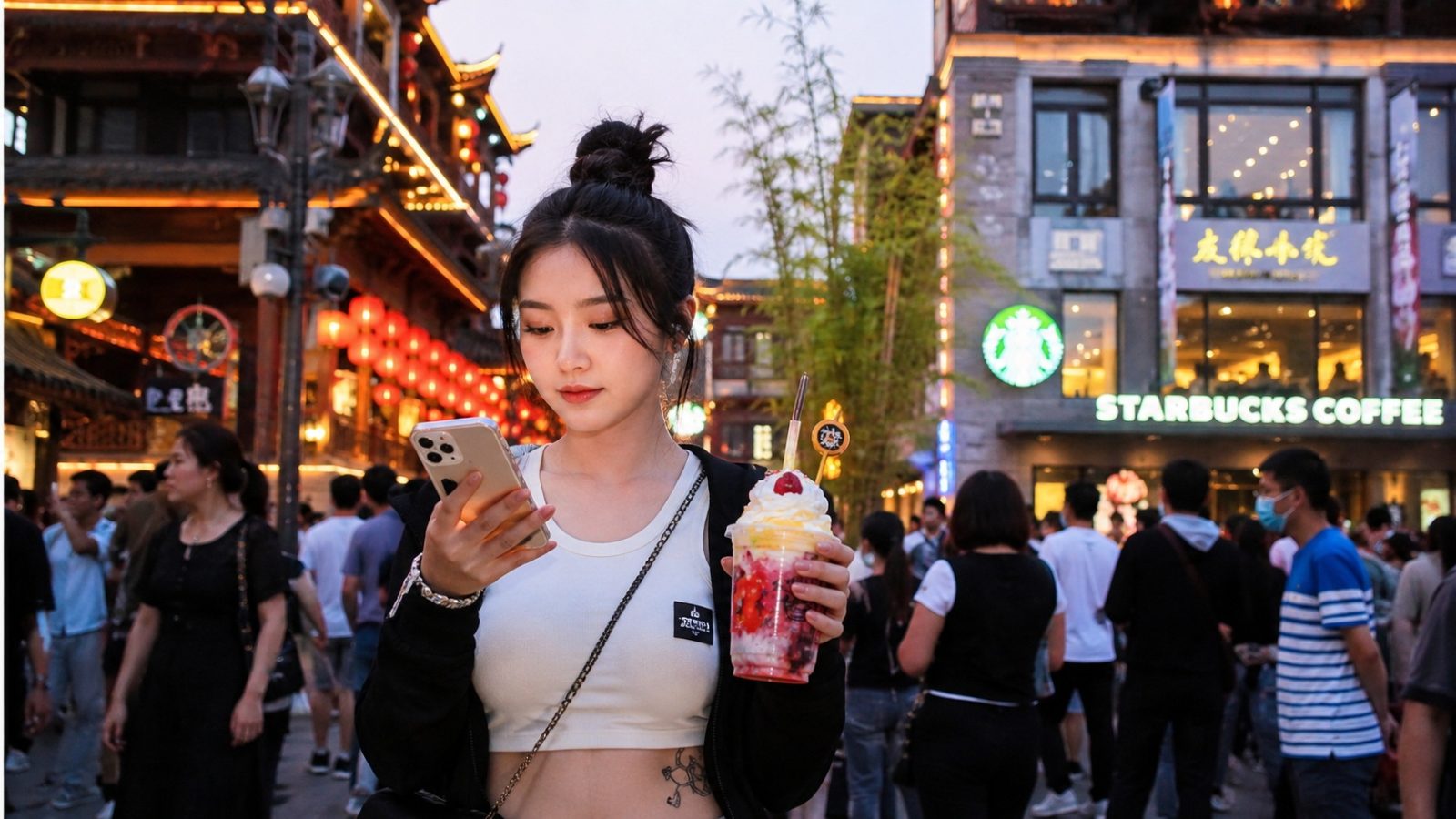
Within an hour, the queue dissipates. Lin posts her photo with a specific filter and location tag, earning hundreds of likes before she even takes a bite. This is the new rhythm of Chinese dining. For young urbanites, food is no longer just about sustenance or even pure taste; it is a form of social currency. The phenomenon, often termed the “Internet Celebrity Economy” (Wanghong Jingji), has turned every meal into a potential content piece.
Guochao: When Tradition Gets a Makeover
While Western observers might assume traditional cuisine is being erased, the reality is more nuanced. It is being rebranded. This shift is part of a broader cultural movement known as “Guochao” (National Trend), where young Chinese consumers are reclaiming domestic brands but filtering them through modern aesthetics.
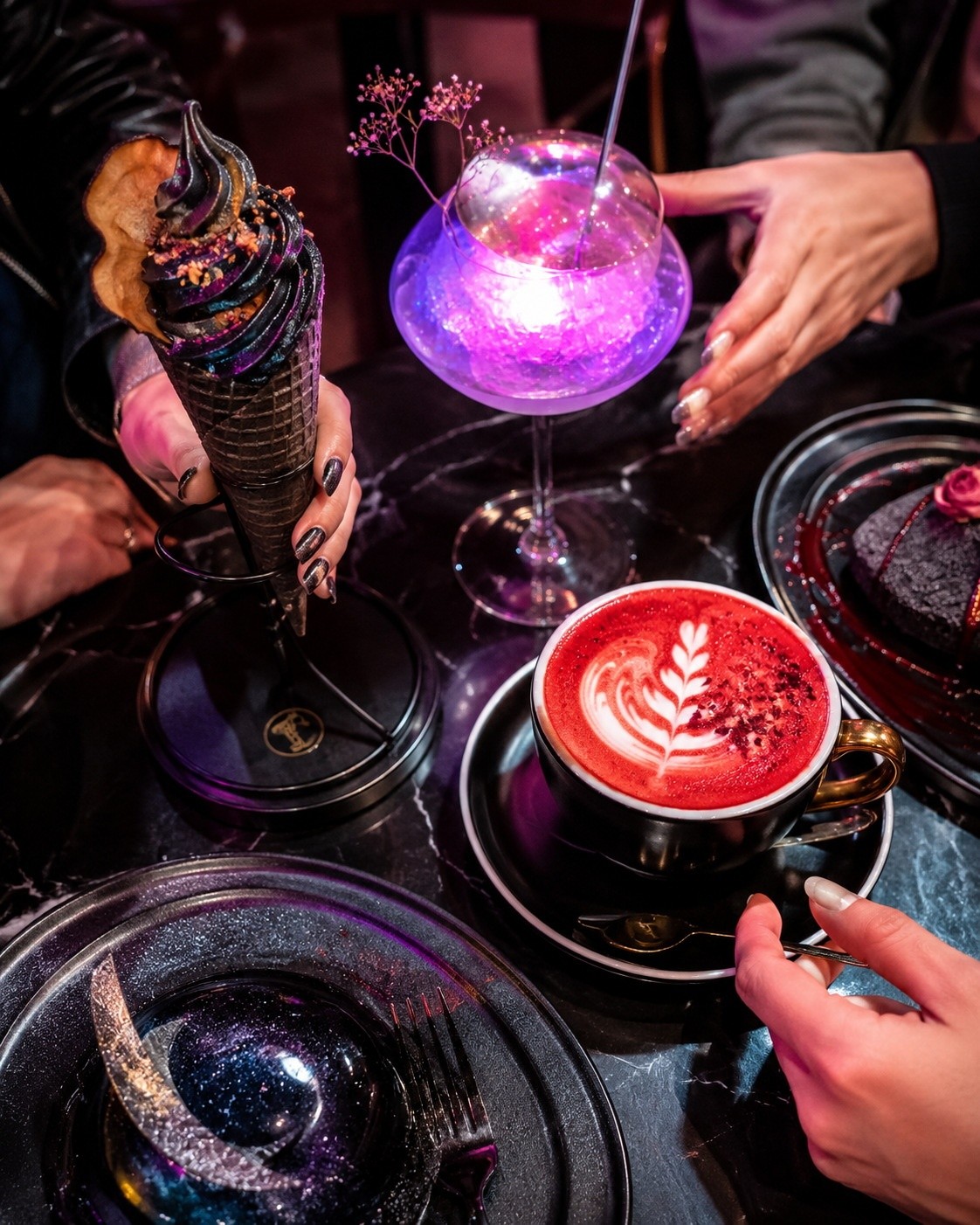
Take the case of “Sichuan Spicy Bullfrog” restaurants. Traditional family-run hotpot joints are seeing their daily customer counts drop by 30% in historic districts. Meanwhile, trendy chains like “Fei Fei” or independent cafes serving “Spicy Latte” or “Black Garlic Ice Cream” report lines out the door. The appeal isn’t just the flavor profile, which often leans heavily towards the extreme (spicy, sweet, or sour), but the visual experience. These dishes are designed to look extraordinary on a smartphone screen.
The Psychology of FOMO and Cultural Pride
Why do young people trade historical authenticity for viral appeal? For many, it is a mix of FOMO (Fear Of Missing Out) and a modern expression of cultural confidence. In the past, “Western” was synonymous with “modern.” Today, “Chinese-made” is trendy, but it must be Instagrammable.
“I don’t care if the pastry shop has been here for 100 years,” says Wei, a 24-year-old graphic designer in Beijing. “If the new place has better lighting, faster Wi-Fi, and a menu that looks good on my feed, that’s where I’m going. It’s not about disrespecting history; it’s about participating in the present moment.”
This mindset is driving a rapid evolution in urban landscapes. Street corners that once housed quiet noodle shops are now occupied by high-concept dessert bars with neon signs and industrial decor. The “vibe” has become as important as the calories.
The Economic Ripple Effect
This shift has profound implications for local economies. Viral food trends can breathe new life into neglected neighborhoods. A small alley in Chengdu might remain empty for years until a single “crispy pork belly” stall goes viral on Douyin (TikTok). Suddenly, the area becomes a tourist hotspot, boosting rent and creating jobs.
However, this boom is fleeting. The average lifespan of a “viral” restaurant in China is often less than six months. Once the social media hype fades, many of these establishments collapse under high renovation costs and lack of loyal repeat customers. Meanwhile, traditional family businesses, which operate on thin margins and rely on generational loyalty, struggle to compete with the aggressive marketing budgets of viral chains.
Adaptation: How Old Brands Survive
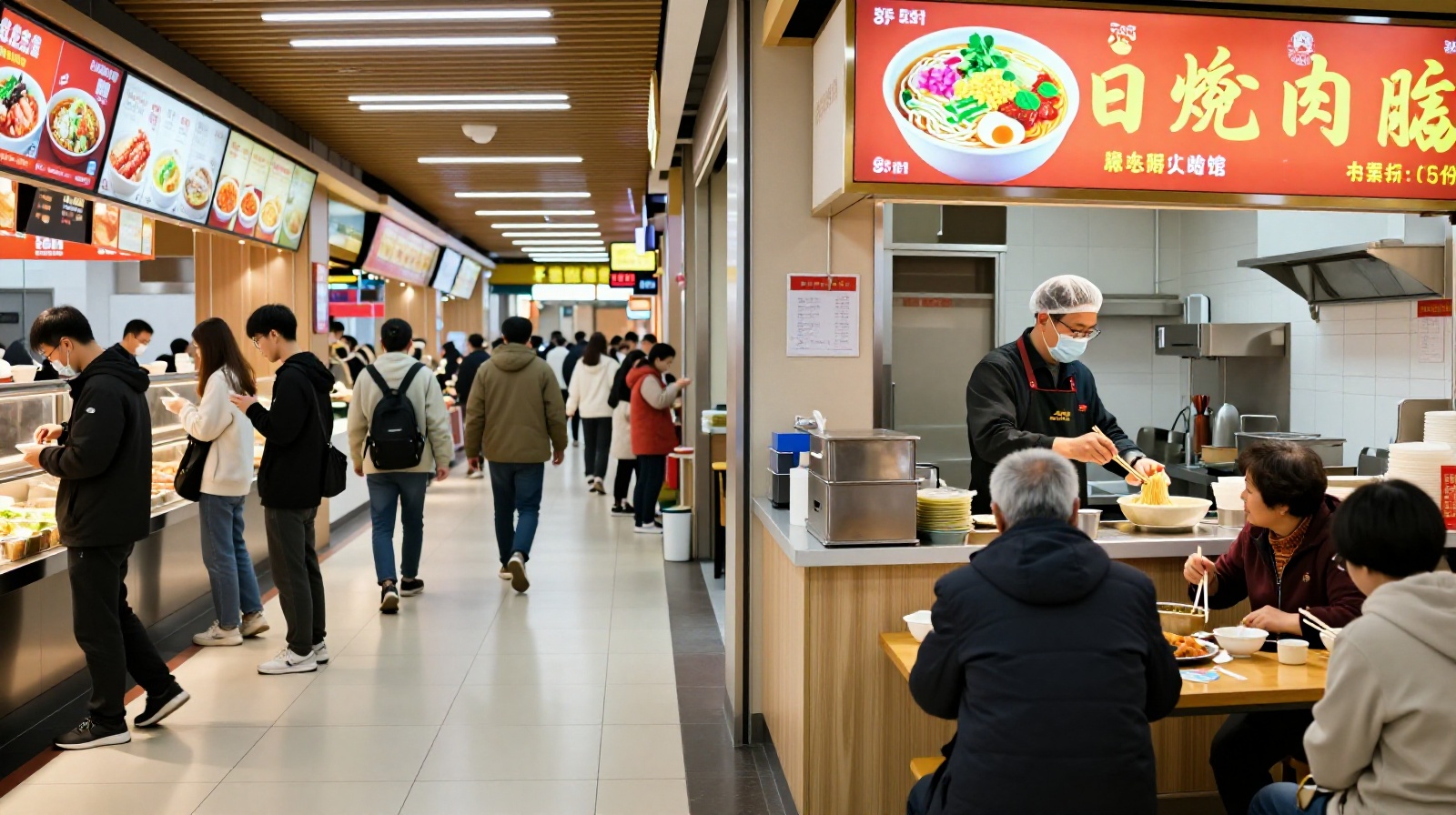
Yet, to say tradition is dying would be incorrect. It is adapting. Many century-old brands are now hiring young social media managers to reinvent their image without losing their core recipes. For instance, the famous Beijing duck roasters have launched pre-packaged gift boxes and partnered with trendy tea brands to create “duck-flavored bubble tea.”
The goal is no longer just to sell a product, but to sell an experience that bridges the gap between heritage and hype. Young Chinese consumers are not abandoning their culinary roots; they are demanding that those roots speak their language. They want the authenticity of the past packaged in the aesthetics of the future.
Beyond the Feed
As evening falls, the lines for viral cafes begin to thin. Lin, who posted her croissant earlier, is now at a small, unglamorous dumpling shop with her parents. The lighting is dim, the tables are sticky, and there is no Wi-Fi. They order three types of dumplings, a dish that has been made in this family’s recipe book for decades.
Here, the social media noise disappears. The conversation is not about likes or trends, but about life, work, and family. This duality defines modern Chinese dining: a public face driven by digital trends and a private heart anchored in tradition. The “Internet Celebrity” wave has not washed away the old ways; it has simply added a new layer to them, creating a complex, vibrant, and constantly shifting food culture that is uniquely Chinese.