

A Day in the Life: Li Xiang, 18
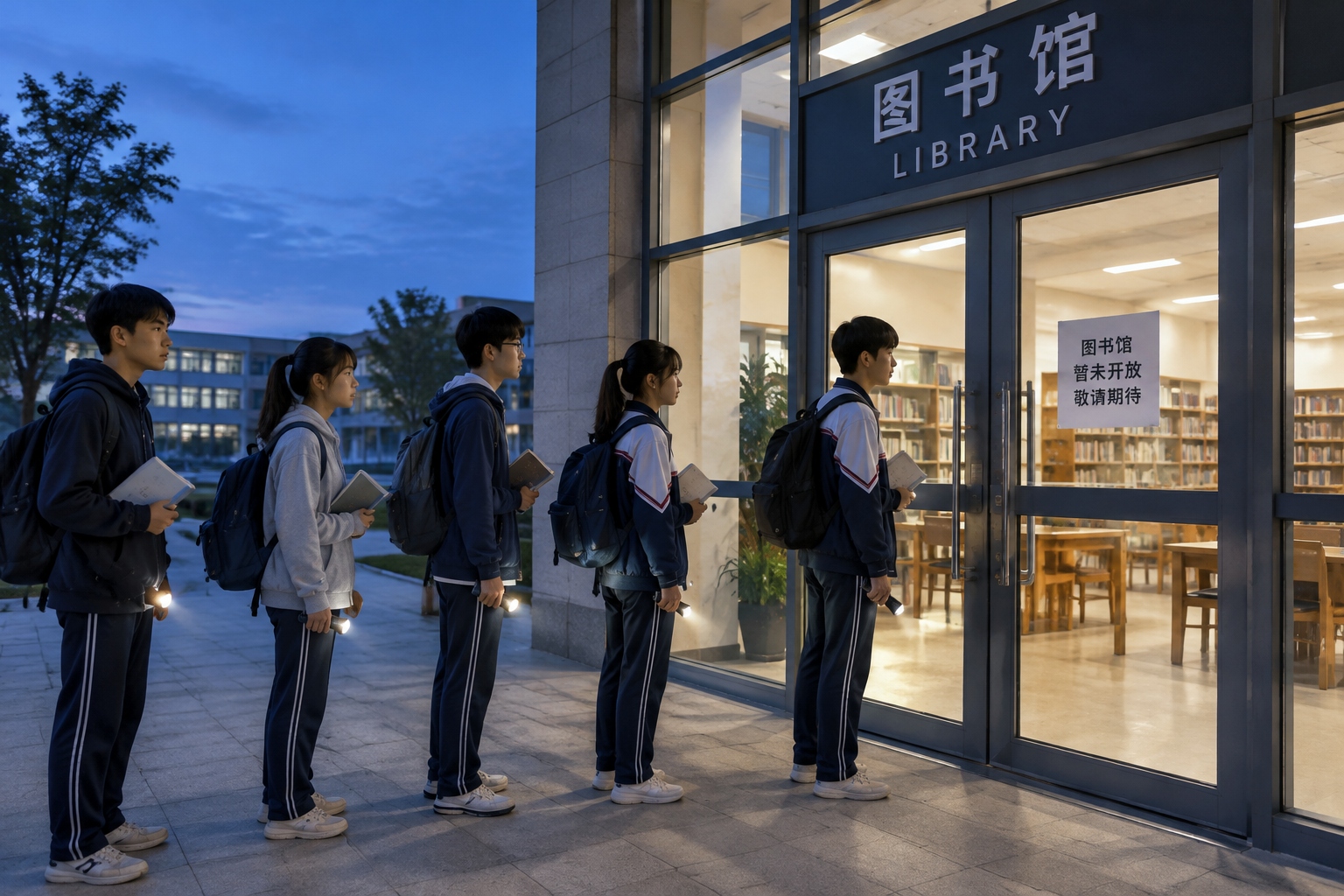
The alarm rings at 4:45 a.m. Li Xiang’s hand slaps the phone silent before it can wake his roommate. In the dark, he pulls on a hoodie, grabs a steamed bun from the dormitory canteen, and joins the stream of silhouettes hurrying toward the school library. It’s still pitch black outside, but the line at the library door already has 20 students. By 5:00 a.m., when the doors open, there will be over a hundred.
Why So Early? A Race for a Desk
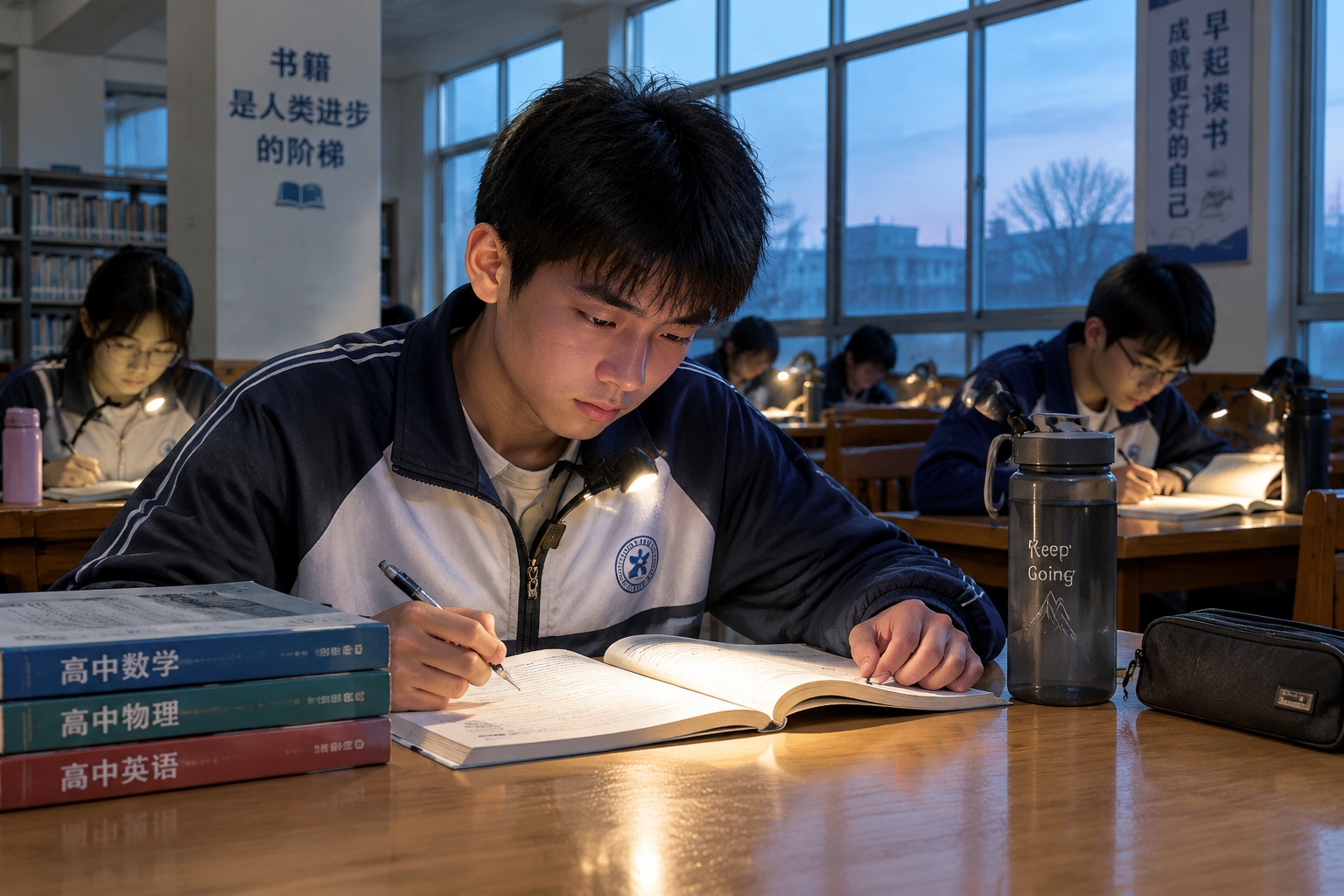
Li Xiang is a senior at a county-level key high school in Henan Province, one of the most populous provinces in China. His school houses 3,000 students, but the library only has 400 seats. “If you come after 5:30, you’re basically standing in the hallway,” he says, speaking in short bursts between bites of his bun. Posters of prestigious universities cover the library walls—Peking University, Tsinghua, Fudan—each one a promise and a pressure.
The early morning session lasts until 6:40, when the first official class begins. During that hour and a half, Li Xiang reviews English vocabulary and recites classical Chinese essays. He uses a flashlight clipped to his book because the library lights only turn on at 6:00. “It’s quieter before dawn,” he explains. “No phone, no distractions. Just me and the textbooks.”
The Gaokao Pressure Cooker
Li’s schedule is not unusual. In China, the gaokao (university entrance exam) is the single most important academic event for high school students. It determines not just which university they attend, but often their future career and social mobility. In 2024, over 13 million students took the exam, competing for roughly 4.5 million university spots. The competition is especially fierce in provinces like Henan, which has the largest number of test-takers.
“Every day I feel like I’m racing against time,” Li says, showing me the schedule taped to his desk. It starts at 5:00 a.m. and ends at 11:00 p.m., with only short breaks for meals and a 20-minute nap. Saturday is a “normal school day,” and Sunday afternoon is for a cram school.
After School, the Cram School Begins
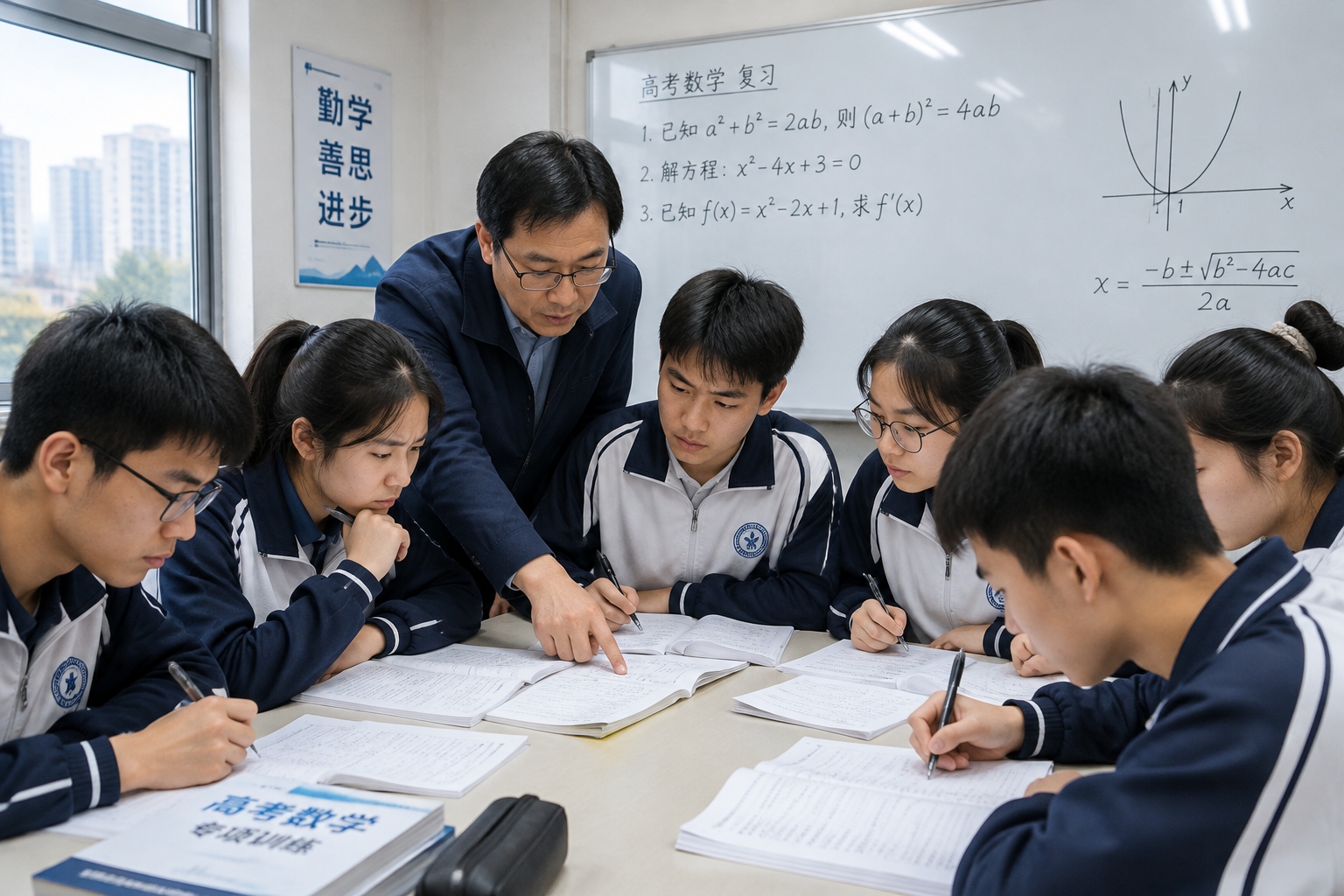
At 5:30 p.m., after eight classes and a one-hour dinner break, Li heads to a private tutoring center two blocks from campus. The center’s fluorescent lights flicker over rows of students hunched over practice exams. The instructor, a veteran math teacher in his 50s, moves between the aisles pointing out common mistakes. For three hours, seven students in this small class drill problems from previous gaokao papers.
Li’s parents pay 3,000 yuan (about $420) per month for this extra instruction—a significant expense for a family earning the local median income. “My father drives a taxi. My mother works in a garment factory. They never complain about the cost, so I can’t afford to waste their money,” he says quietly.
The cram school ends at 8:30 p.m., but Li returns to the school’s study hall, where he stays until 10:45 p.m. reviewing physics formulas. The last bus leaves at 11:00 p.m., and he finally collapses into bed around 11:30 p.m. Sleep: about 5 hours and 15 minutes.
The Mental Toll and Small Escapes
Not everyone can sustain this pace. The Chinese Ministry of Education has repeatedly tried to reduce the academic burden, banning after-school tutoring on weekends and holidays in 2021. But the demand for private tutoring remains strong, especially in the form of “covert” classes in private homes or small centers. According to a 2023 survey by the China Youth Research Center, 62% of urban high school students still attend some form of after-school academic training, often disguised as “interest classes.”
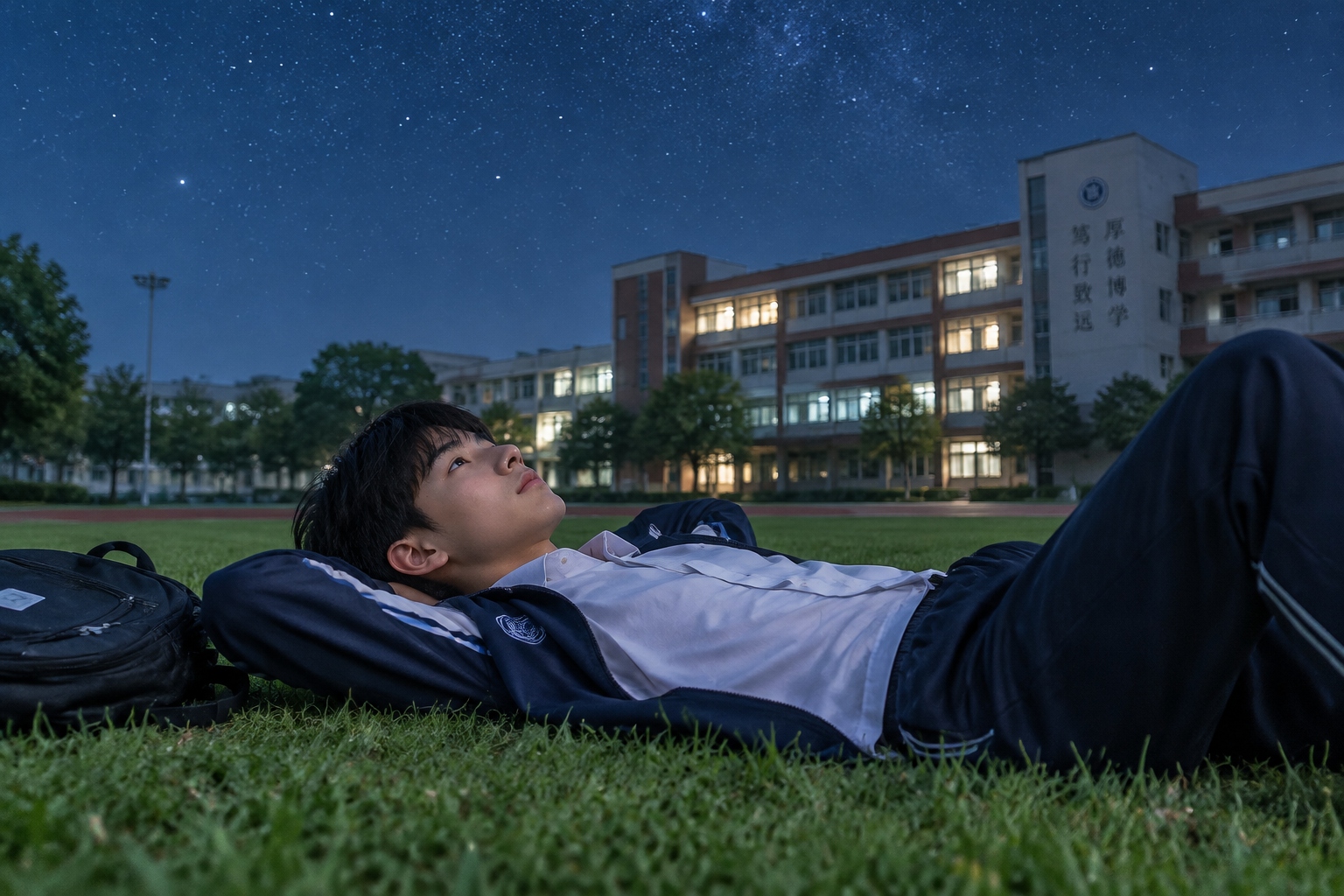
Li says he sometimes feels “like a machine that only processes exam questions.” His outlet is a 10-minute break every evening at 9:00 p.m., when he lies on the grass outside the study hall and stares at the sky. “I don’t think. I just look at the stars and breathe. That’s my only real rest.” He also keeps a small notebook of “crazy ideas”—short stories and drawings he’ll never show anyone, but that remind him there’s a world beyond the exam paper.
Is It Worth It?
Li’s dream is to study computer science at Zhejiang University, a top-tier school in Hangzhou. The gaokao score required for that program is around 680 out of 750, while Li’s current mock exam average is 655. “I’m close, but not close enough,” he says. “Thirty more points. That means thirty fewer mistakes.”
His mother, whom I reached by phone, is proud but worried. “We don’t push him; he pushes himself. Sometimes I tell him to rest, but he says he can’t afford to. If he fails the gaokao, there’s no second chance,” she says, her voice tired.
Whether the system is healthy or not, Li Xiang doesn’t have the luxury to question it. He is living it, one 17-hour day at a time. For him and millions like him, the library at 5 a.m. is not a choice—it’s the only road they can see to a better future.
Start the discussion at forum.chinacomes.com