
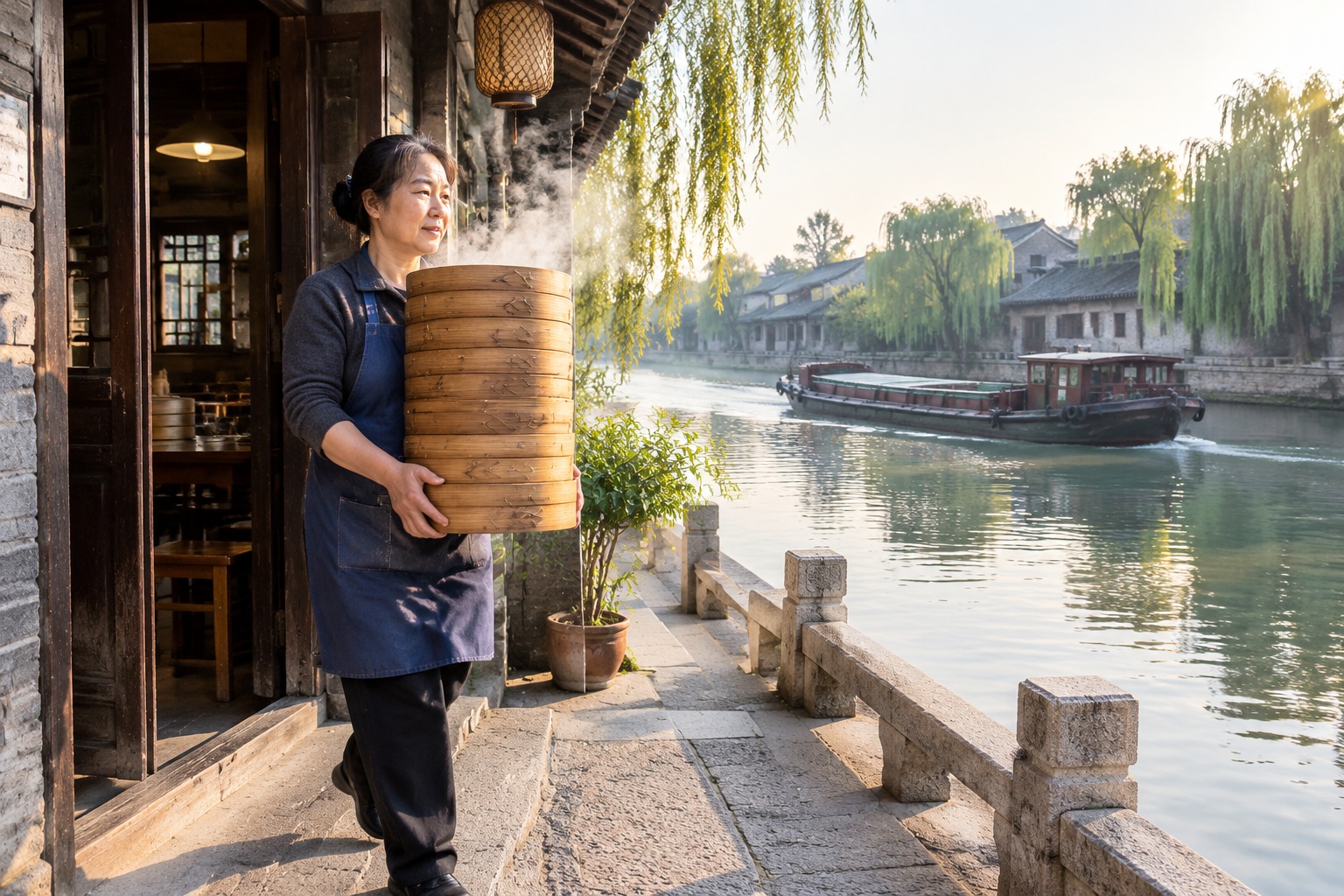

Early Morning in Yangzhou
At six thirty in the morning, on the east bank of the old canal in Yangzhou, a teahouse owner is carrying a stack of bamboo steamers out the front door. Steam rises into the cool air. A few steps away, the water that once made this city one of the richest places in imperial China slides past without much noise. A motorized barge putters by, its flag still dripping with dew. On the bank, a few elderly men have already started their tai chi under a row of willows.
Centuries earlier, the same spot would have looked very different: salt boats, grain boats, and the sedan chairs of officials all queuing for their turn. Yangzhou rose not because it was on the coast or at the center of some fertile plain—it was neither—but because it sat exactly where the Yangtze River meets the main trunk of the Grand Canal. The canal, ancient China’s inland waterway, runs nearly 1,800 kilometers between Beijing and Hangzhou. Before highways and railways, it was the country’s main artery for moving goods north and south.
The Salt Boom That Made Yangzhou Rich
Where the canal crossed the Yangtze, Yangzhou became a natural distribution hub. By the Ming and Qing dynasties, it was essentially a salt capital. In the late Qing period, the Huai salt region contributed close to a quarter of the entire country’s salt tax revenue. One city, sitting on one canal, produced almost a fourth of the state’s salt fortune.
How rich were the Yangzhou salt merchants? Some families kept a full Kunqu opera troupe inside their private gardens. Others built private libraries and their own docks. The most famous surviving landmark is the Ge Garden, a bamboo-and-rock garden built by the salt merchant Huang Zhiyun in 1818. It still sits in the middle of downtown Yangzhou, visible from the street through bamboo groves and stone formations.
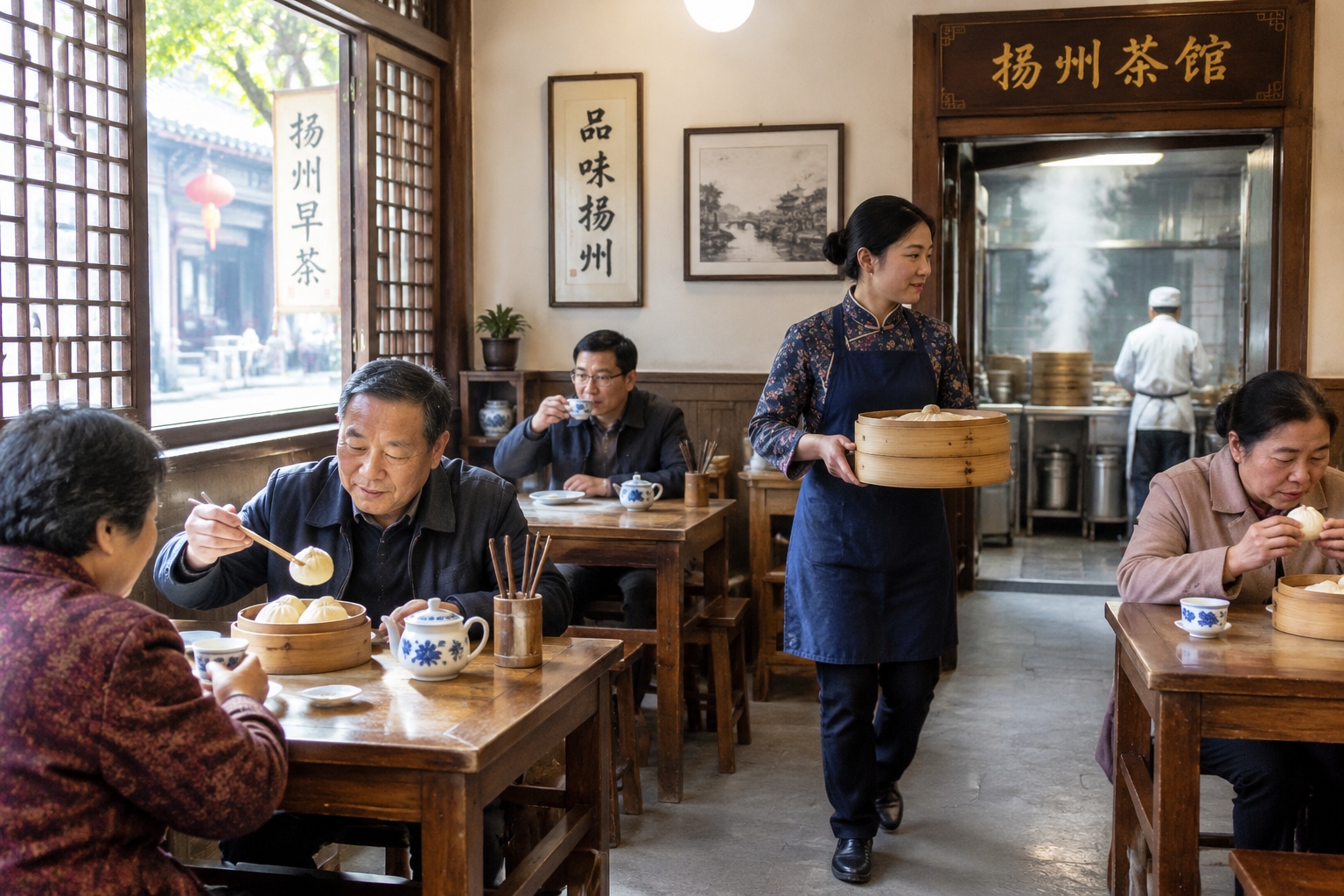
Dongguan Street preserves the old layout: gray brick paving, salt merchants’ former residences, and teahouses and dye shops that have stayed in place for generations. Local gazetteers record more than three hundred shops along this street by the nineteenth century. Many of the buildings you walk past in Yangzhou—the gardens, the temples, the academies—were built on salt tax money.
One other figure is worth mentioning: Jiang Chun, a merchant of Huizhou origin who ran a salt business in Yangzhou. He was not just a salt trader; he also handled the reception when the Qianlong Emperor toured the south. A local story claims he built an entire tower in his garden for that visit and spent several chests of silver on it. The exact figures are hard to verify, but he represents a pattern: Huizhou merchants dominated Yangzhou’s salt trade and poured their earnings into gardens, academies, and architecture. The canal brought more than salt to Yangzhou. It brought merchants, capital, and culture to the same place.
Suzhou: Where the Canal Meets the Scholar’s World
Suzhou’s canal system is more capillary than artery. Water lanes run beneath residential windows and shopfronts. In many parts of the old city, people can still hear oars moving through water outside their back windows.
Suzhou’s silk industry depended on the canal to move its fabrics north. But Suzhou was never just a silk warehouse. The wealth of merchants and officials flowed into literati culture—gardens, private schools, printing houses, and Kunqu opera. Many of Suzhou’s famous gardens were built by retired officials and wealthy merchants. The Humble Administrator’s Garden was created by a demoted Ming official. The Master of the Nets Garden is associated with a Qing official’s retirement. These gardens were not merely decorative. They were the product of commercial wealth meeting scholarly taste.
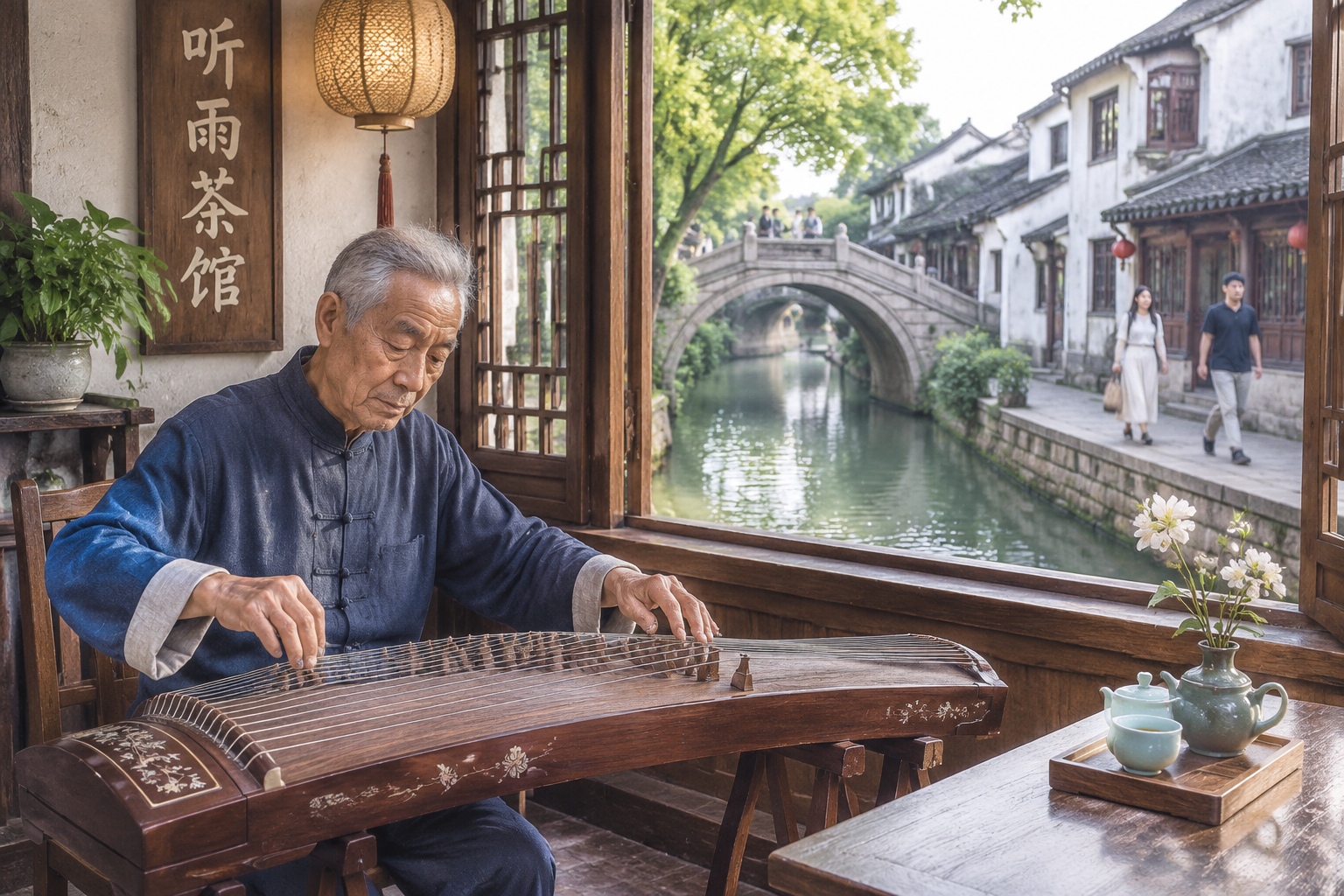
Pingjiang Road today still shows this history. The old street runs along a canal branch lined with Ming- and Qing-style houses, many converted into teahouses, bookshops, and silk stores. In the afternoon, pingtan—a type of local ballad singing—drifts from teahouses across the water. The music itself traveled along canal cities, carried by merchants who listened to it and brought it to new places.
Jining: The Northern Crossroads
Jining, in Shandong Province, was a crucial node on the canal because the waterway passed through a stretch of uneven terrain there. The office of the canal governor was based in Jining, making it an administrative center for the waterway. Grain, timber, salt, cloth, and bamboo from the south arrived here first, then were transferred north or sent elsewhere.
Jining’s Zhugan Alley—Bamboo Pole Lane—was known for bamboo products. Most of the bamboo arrived from the south along the canal. Local craftsmen split it into strips and wove baskets, furniture, and farm tools. In its heyday, the street had dozens of bamboo workshops. Today, the name remains, and a few households still split bamboo in front of their doors.
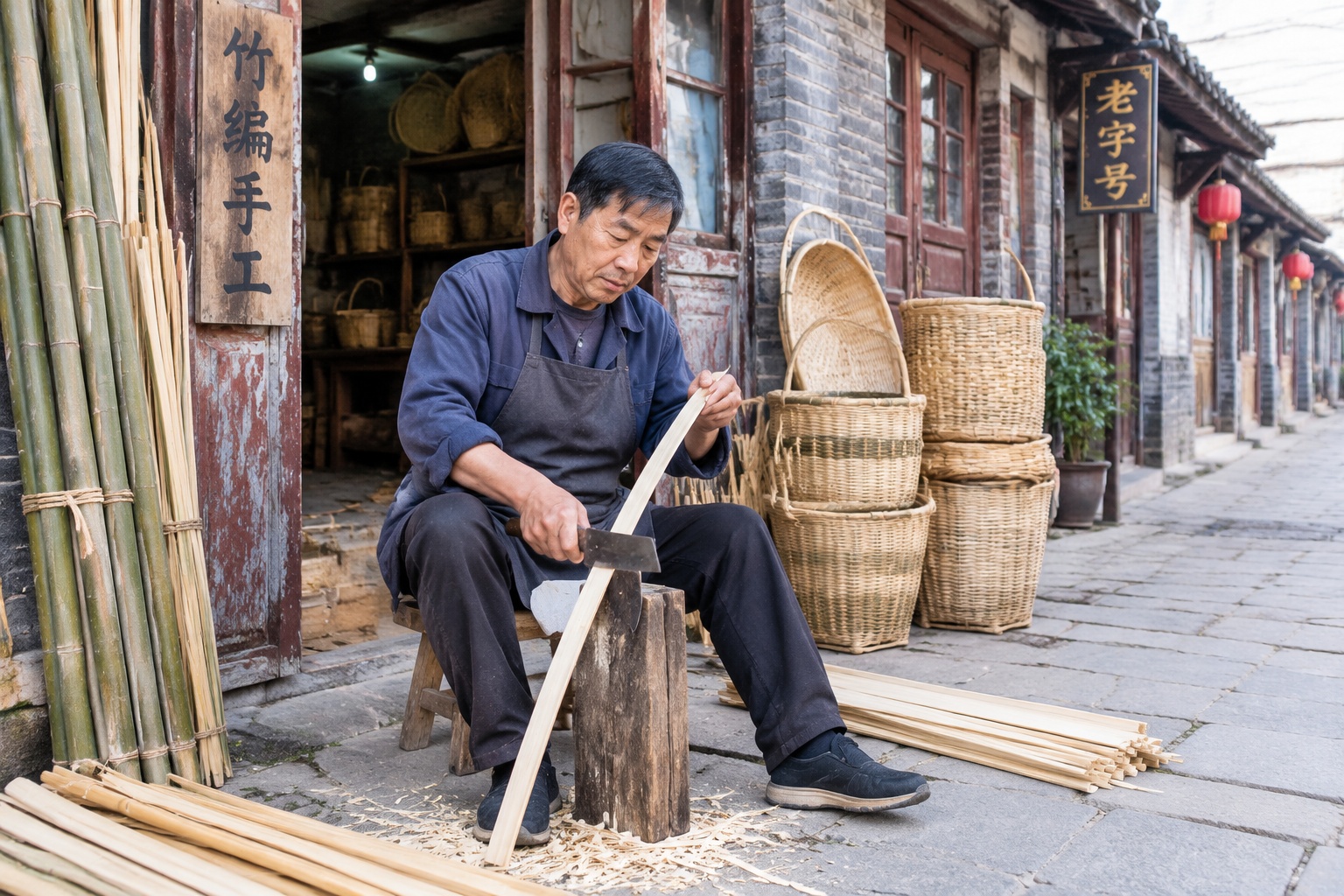
Bamboo products are a practical example: northern China does not grow much bamboo, so it came down the canal from the south. The canal moved not only luxuries but everyday goods. Along the route, countless small workshops grew up around exactly this kind of trade.
Selling Along the Canal: Shanxi and Huizhou Merchants
Starting in the Ming and Qing periods, merchant groups grew powerful along the canal network. The two best known were the Shanxi merchants, or Jin merchants, and the Huizhou merchants. Both operated along the canal and used guild halls to organize fellow natives in unfamiliar cities.
The Shanxi merchants were famous for their draft banks, an early form of Chinese banking. Rishengchang, founded in 1823 in Pingyao, Shanxi, opened branches in multiple cities, some of them along the canal. Merchants could transfer money through the bank instead of carrying silver on the road. Shanxi traders also moved tea and silk north, trading for hides and horses. Their network relied on the canal to connect the northern grasslands with southern markets.
Huizhou merchants dominated in many sectors: salt, tea, timber, and pawnshops. Many of Yangzhou’s wealthiest salt merchant families came from Huizhou. Huizhou merchants built guild halls in canal cities—places that served as inns, merchant clubs, and mutual aid societies for people from the same hometown. They funded academies, bridges, and roads, and sometimes bought landmark gardens.
There is also a visible layer of social mobility. Many Huizhou merchants started small. A common story is that a young man arrived in Yangzhou with modest silver, began working in a small salt shop, and twenty years later had his own house and garden. The story is not dramatic, but it illustrates a possibility: the canal offered a path upward that was hard to find elsewhere.
How the Canal Shaped Urban Life
The canal was not just water and boats. It brought people, money, and institutions. Wherever there was a lock, a wharf, or a tax station, a town grew up. First came the post stations, then the teahouses, guild halls, opera stages, and temples. Commercial wealth was reinvested in buildings, gardens, and academies.
But the canal story was not all prosperity. In the mid-nineteenth century, the Yellow River changed course and the canal silted up, cutting off navigation. Some cities declined as a result. Yangzhou never returned to its peak. Shanghai, rising with ocean trade, eclipsed many canal towns.
Today, the Grand Canal is a UNESCO World Heritage Site, and some sections still carry sand, gravel, and other cargo. Yangzhou and Suzhou have turned their old canal banks into parks, museums, and pedestrian areas. Local people walk along the same stretches of water in the evening—where, just a few generations ago, salt boats were moored.
Water and the City
Standing by the canal in Yangzhou, it is hard to connect this quiet waterway with the busiest logistics corridor of imperial China. But walk the gray-brick streets, look at the gardens and guild halls, and one thing becomes clear: the canal was more than a water route. It was a place where planners, merchants, and ordinary people lived together. The steam is gone. The boat fleets are gone. But the layout remains—streets curving toward the bank, businesses following the water.
That is probably the canal’s legacy: cities need more than walls and plans. They need flow—people and goods, money and ideas, constantly moving in and out. Where those flows met, people built places their descendants would call home.
Start the discussion at forum.chinacomes.com