
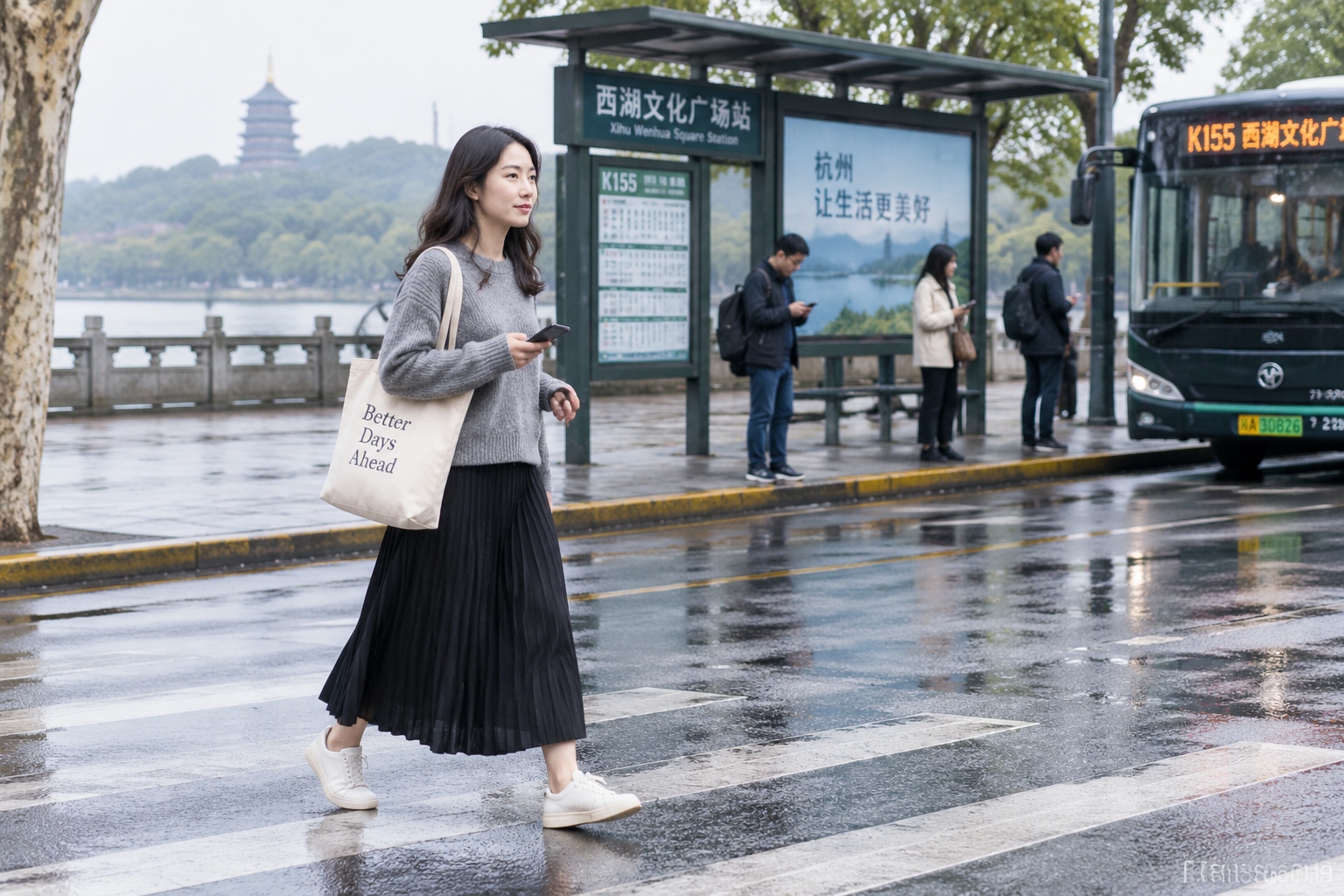

A wet Tuesday, 7:40 a.m.
Zhou Yutong stands in front of an open wardrobe with the weather app glowing in her hand: 19 degrees, rain from mid-afternoon. She is 27 and works in operations for a home-goods brand in Hangzhou. She pulls out a black mamianqun — a pleated skirt that falls to the ankle, flat panel across the front, knife pleats at the sides — and holds it first against a grey knit sweater, then against a white T-shirt. She takes the sweater.
Two small things happen before she leaves the flat. She clips the pleats at the hem with two plastic laundry pegs so they keep their line on the bus. And she checks that her phone fits in the pocket sewn into the skirt’s lining — a detail the first generation of these skirts did not have, and one that sellers now advertise in bold on the product page.
On the No. 5 bus, nobody looks twice. At the metro entrance, a woman in a puffer jacket holds the gate open for her. On the platform, two schoolgirls in short ruqun-style skirts are comparing a homework photo on a phone. A man in his forties wears a dark jacket with a stand collar and frog buttons, quietly, like a cardigan.

None of this is a scene anymore. That is the story.
What hanfu means, and what it doesn’t
Hanfu is a broad modern word for clothing worn by Han Chinese before the Qing dynasty — not one costume but centuries of cut and layer: Tang round-collar robes, Song jackets with narrow sleeves, Ming skirts like the mamianqun. What people wear on the street today is a mix of historical reference and contemporary clothing design.
It is not cosplay. Cosplay means dressing as a specific character. It is also not the shiny, zip-backed “ancient costume” rented by the hour in photo studios, though those studios did teach a lot of people what they liked.
The commonly cited starting point is November 2003, when an electrician named Wang Letian walked through downtown Zhengzhou in a garment he had made himself, and the photos travelled across early Chinese internet forums. For the next decade, hanfu lived in university clubs, Baidu tieba threads and arguments about which dynasty cut a collar correctly. Buying something meant messaging a tailor, waiting weeks, and paying for fabric you had chosen from a market stall.
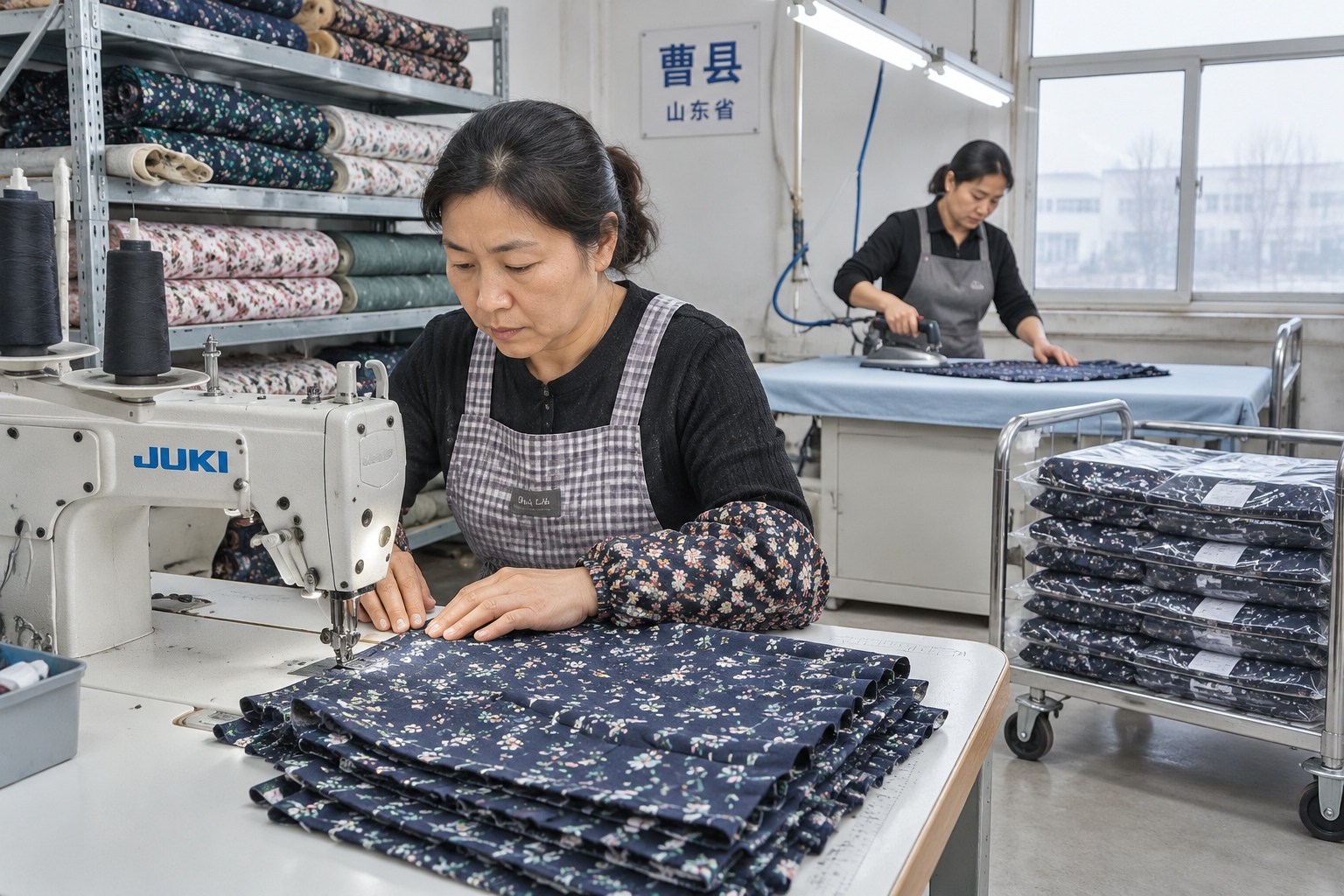
Taobao shops appeared. Then Douyin and Xiaohongshu turned getting dressed into content. The mamianqun broke through around 2023 and 2024 — partly as a Spring Festival outfit, partly because a pleated skirt photographs well in almost any city, and partly because factories in Caoxian, a county in Shandong that local officials describe as home to more than 2,000 hanfu-related businesses, could produce them at a price that made an impulse buy possible.
From photo prop to commute wear
The change is mostly a list of unglamorous fixes. Hems shortened by ten centimetres so they clear a wet pavement. Hidden zips and elastic side panels instead of a full tie-and-wrap. Polyester blends that survive a washing machine. Deeper armholes. Pockets. Skirts sold as separates, so the top half can be an ordinary sweater.
Price bands have spread wide. A basic printed mamianqun runs 99 to 200 yuan. Something with a better cut and lining goes for 400 to 800. Silk, hand-finished, in the thousands. Rental is now normal in tourist cities: 50 to 150 yuan a day, often including hair and a photographer.
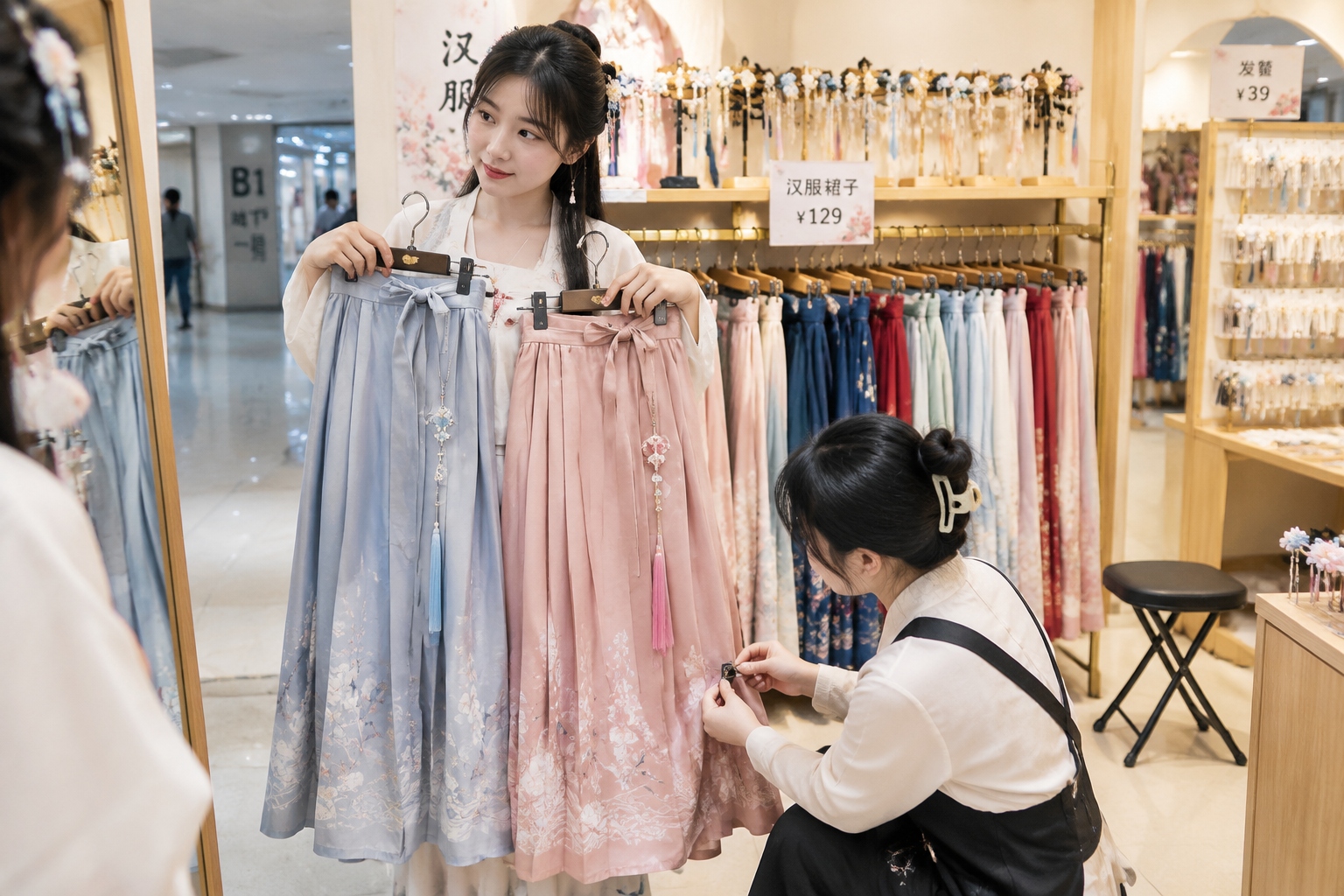
What decides whether a piece gets worn on a Tuesday is almost never the historical accuracy. It is the stairs at the metro exit, the bike-share ride, the office air conditioning, whether the fabric creases on a two-hour train, and whether you can eat noodles in it without thinking.
Who wears it, and where
In a Chengdu park on a Saturday, a group of friends in their early twenties spread out a mat, a teapot and a bag of oranges; two wear mamianqun, one wears jeans. In Zhengzhou, an accountant in her thirties wears a shortened skirt to the office roughly once a week and keeps a spare pair of flat shoes in her drawer. In Hangzhou, a mother pushes a stroller in a knee-length version because the long one trips her on escalators. Men appear more slowly, mostly in stand-collar jackets and round-collar robes that read to most passers-by as slightly formal shirts.
Big cities with a strong tourism identity — Xi’an, Luoyang, Hangzhou, Chengdu, Beijing — have the densest everyday presence, and streets like Xi’an’s Datang Everbright City have effectively built a commercial ecosystem around it. But county towns have their own route in, through wedding photography, school performances and temple fairs. A 2024 survey by a Chinese consumer research firm found most buyers were under 30, and a large share owned only one or two pieces. This is not a wardrobe replacement. It is an addition.
The small businesses following the fabric
Follow one skirt backwards and you pass through more hands than most buyers imagine. In Caoxian, women in their forties run industrial sewing machines along rows of printed fabric, pleating panels by the hundred. In Hangzhou, a shop of about twelve square metres in a basement mall sells skirts, hairpins and clips; the owner says half her revenue now comes from alterations — shortening hems, taking in waists, adding pockets.
Around that, other small trades have grown: steaming and pressing services for pleated fabrics that ruin easily in a domestic washing machine; second-hand listings on Xianyu where a barely worn skirt sells for half price; makeup-and-photo packages in old neighbourhoods; market stalls that rent by the hour. None of it is a grand industry. It is the ordinary way a hobby becomes a livelihood — someone notices that people will pay 30 yuan not to iron pleats themselves.
The arguments inside the circle
Hanfu has an internal argument that outsiders rarely see, between people who care about historical cut and construction and people who treat the whole thing as clothing. Purists post side-by-side comparisons of seam placement. Wearers post photos of themselves on a bus. Both groups are sincere, and the argument is not going to be settled here.
The more common friction is external and small. A wearer gets asked, on a metro, whether the outfit is Japanese. Someone gets stopped at a temple gate by a guard unsure about dress rules. A grandmother says the skirt is pretty but asks why. Office dress codes are rarely written down and vary by manager.
Most of the people I spoke to were careful to keep the frame narrow. They liked how the fabric moved. They liked that a skirt made in a county workshop could be worn to a supermarket. A few mentioned feeling more Chinese in it, and then immediately qualified that — proud, but not making a speech about it. Treating a personal aesthetic choice as a national statement is something most of them actively resist.
Why this decade
Four things had to line up. The supply chain got cheap and fast enough that a skirt could be an impulse purchase rather than a project. E-commerce live streams made small workshops visible far outside their province. Social media turned styling into a shared, copyable skill — what to wear with a mamianqun, which shoes, how to sit on a bus. And Chinese cities became, quietly, more used to people dressing differently in public.
There is a broader shift underneath, usually labelled guochao — the domestic-trend wave in which younger consumers stopped treating “traditional” as something inherited and heavy, and started treating it as material to use. You can see the same instinct in tea shops, in museum merchandise, in furniture. Hanfu is the version you can wear to buy groceries.
Back to the drying rack
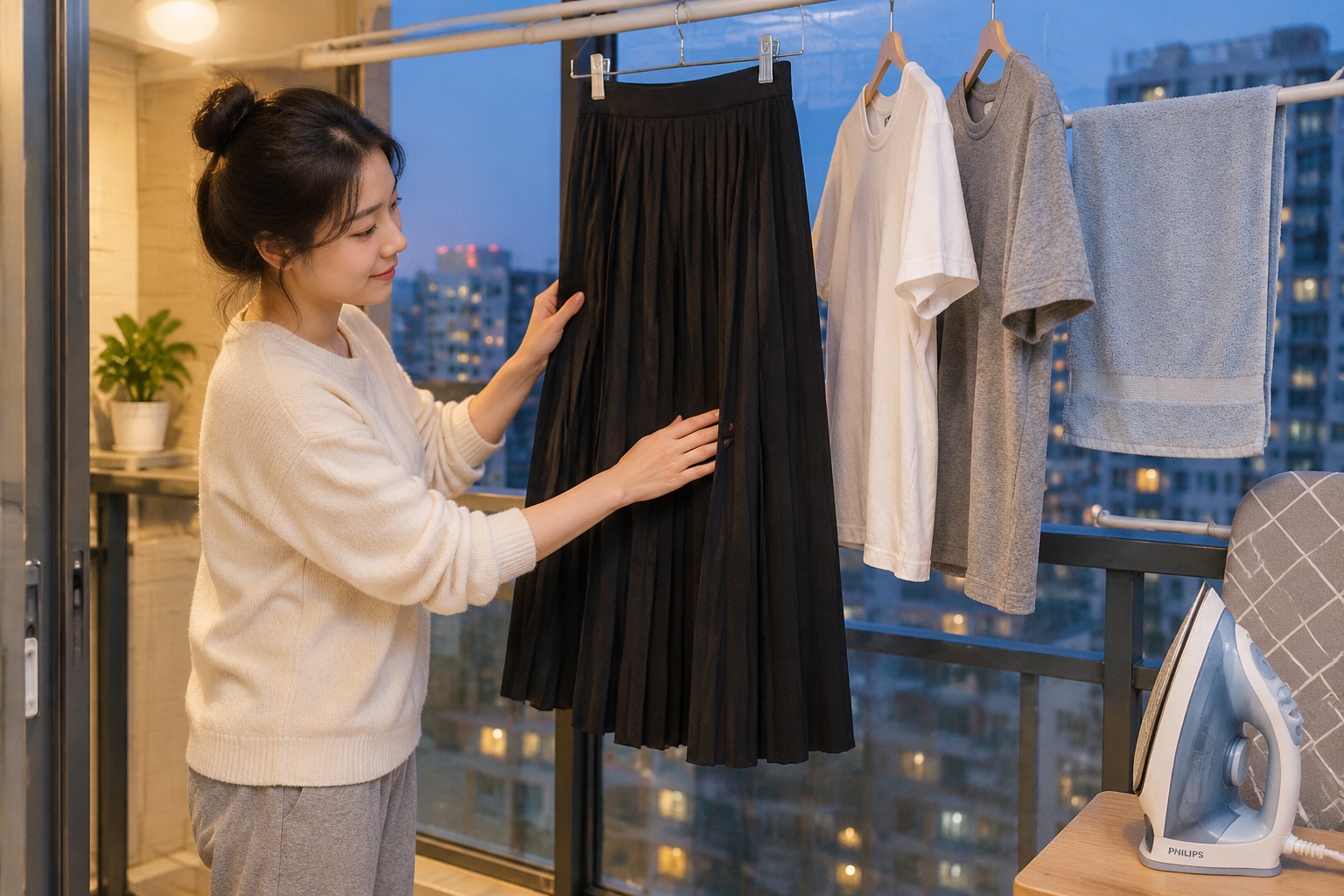
At nine in the evening, Zhou Yutong takes the skirt off, checks the hem for splashes from the rain, and hangs it on a rack on the balcony next to two T-shirts and a towel. She sprays the pleats, lets them hang, and steams them in the morning if she is going to wear it again that week.
Wednesday, she wears jeans. Thursday, the skirt again, to a client meeting, with boots.
The change is not in a slogan. It is in a wardrobe where a Ming-dynasty skirt and a Uniqlo sweater occupy the same rail, and where choosing one over the other in the morning takes about four seconds and requires no explanation to anyone.
Start the discussion at forum.chinacomes.com