
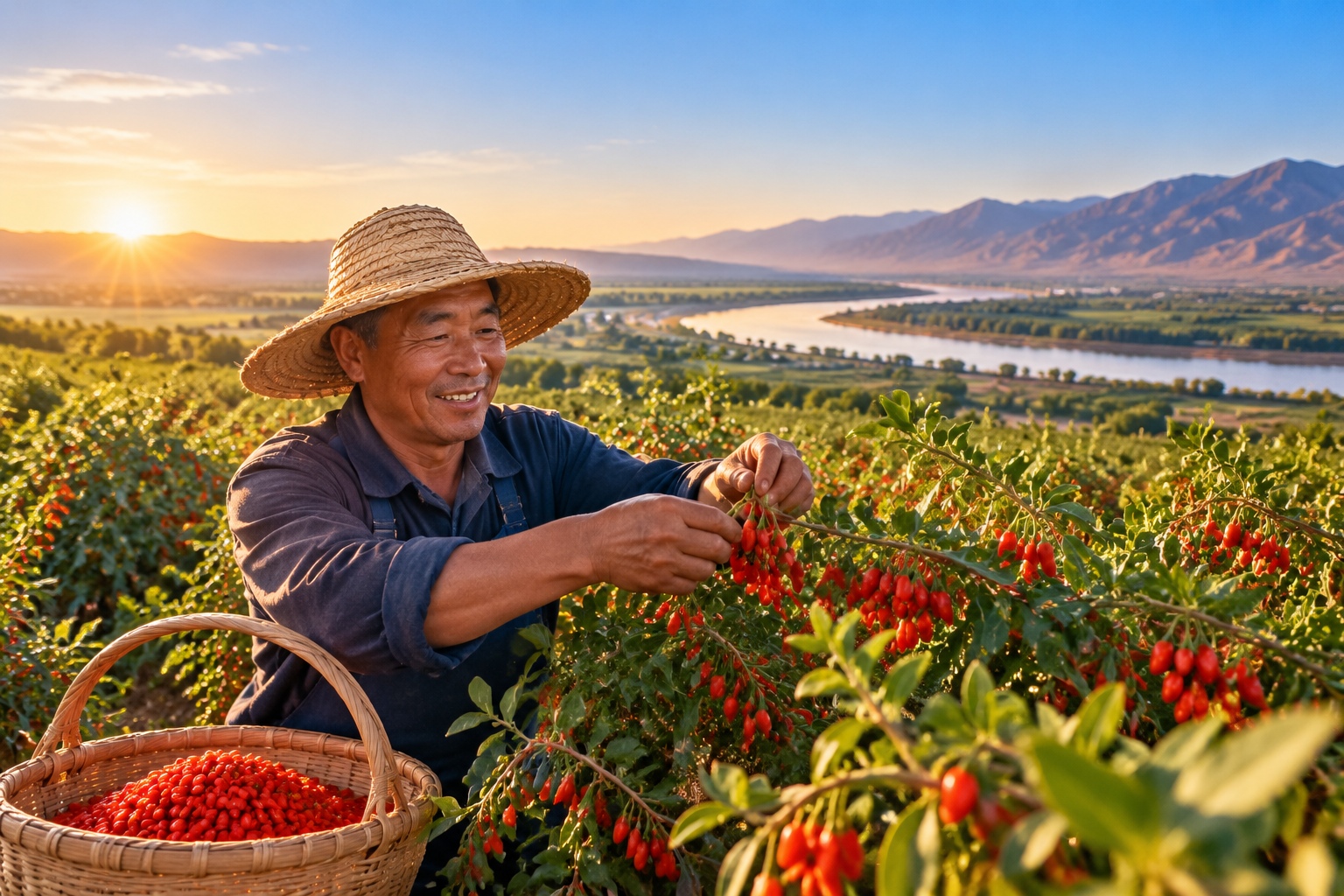

A Morning in a Zhongning Goji Orchard
At dawn, the first sunlight hits the Helan Mountains, painting the yellow earth in shades of gold. In a goji berry orchard near Zhongning County, Ningxia, 55-year-old farmer Ma Yulan ties a cotton pouch around her waist and begins picking the day’s first berries. The air is dry and crisp. Each pluck is careful—only the ripe, plump berries, glowing red like ruby beads, go into the pouch. “The best berries are picked before 9 a.m.,” she says, “when the sugar and nutrients are at their peak.”
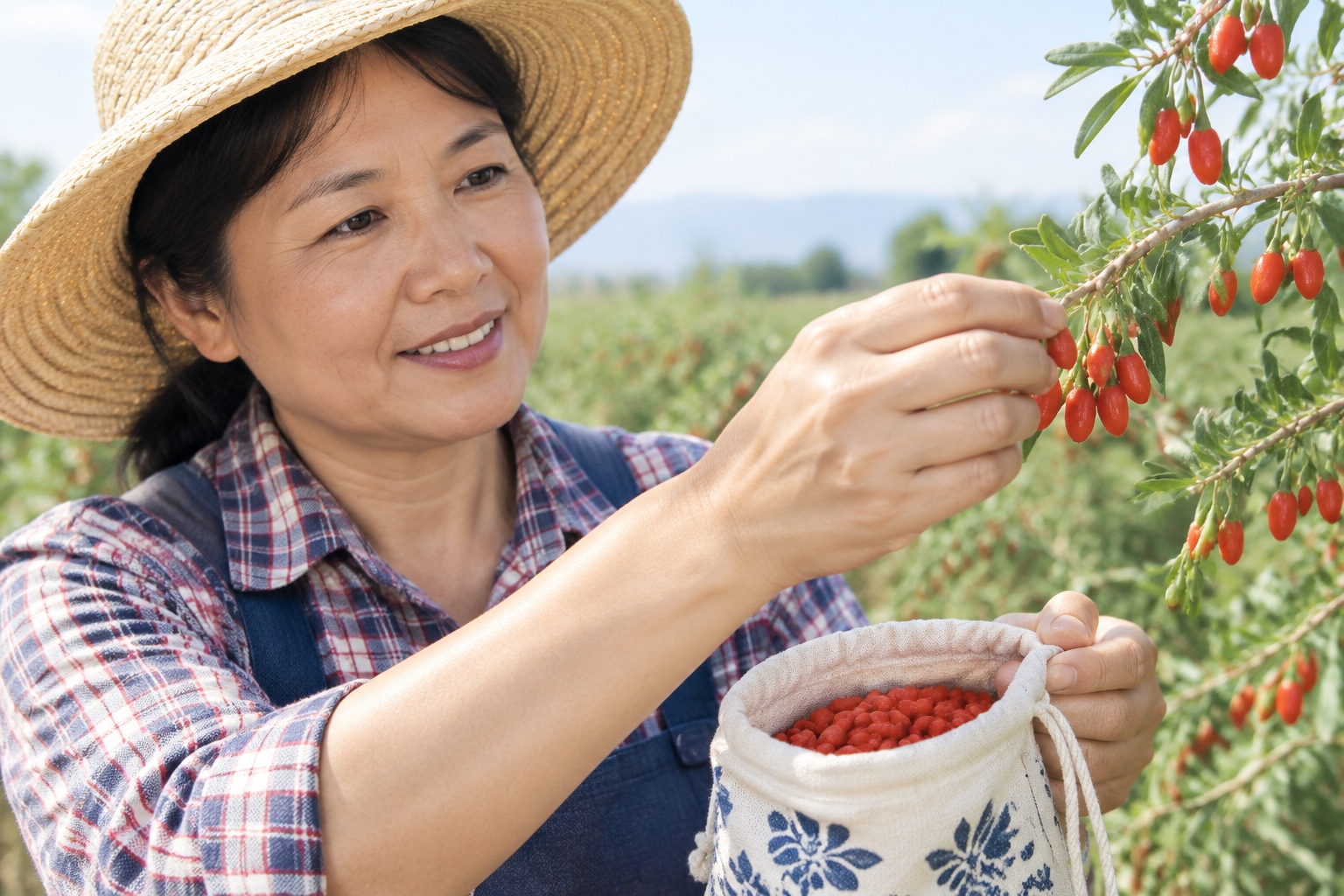
Why This Tiny County Produces Superior Goji Berries
Zhongning County, tucked into the north-central part of China, has been growing goji berries (known as wolfberries in some Western markets) for more than 600 years. But it isn’t just tradition that makes these berries special. The region sits on the alluvial plain of the Yellow River, where silt deposits create soil that is rich in minerals like selenium and zinc. The desert climate brings long sunny days, large temperature swings between day and night, and low rainfall—conditions that stress the plants just enough to boost their production of antioxidants and polysaccharides.
“People often ask me why my berries taste sweeter and have a deeper flavor,” says Wang Liping, a local agronomist. “It’s the combination of soil, water and climate—what we call ‘the natural recipe.'” Indeed, in blind taste tests, Zhongning goji berries consistently score higher on sweetness, tartness and mouthfeel compared to berries from other regions. The fruit also contains higher levels of betaine, a compound associated with liver health, and zeaxanthin, beneficial for eyesight.
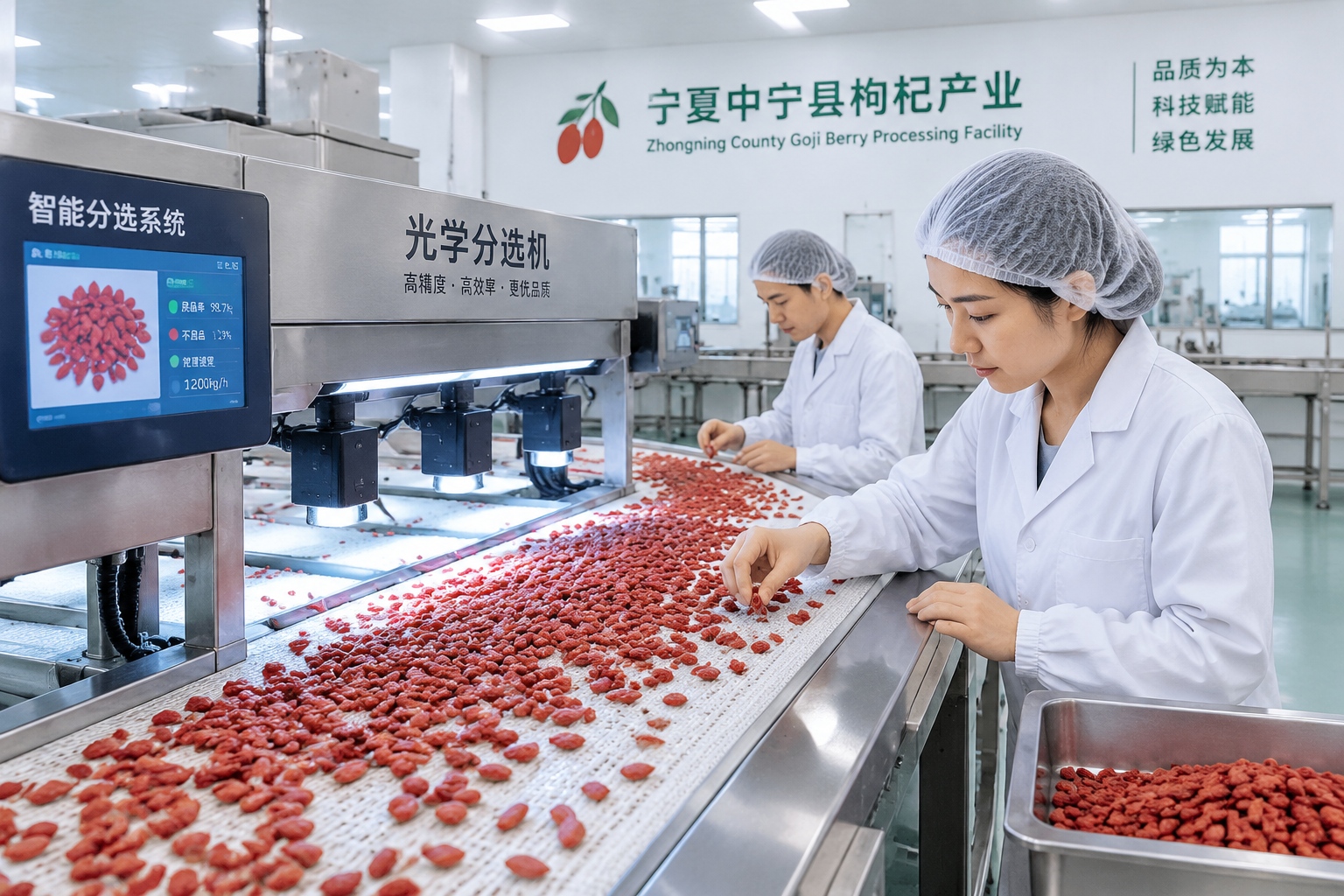
From Hand-Picked to High-Tech: The Modern Processing Chain
Just a decade ago, most Zhongning farms sold only dried berries. Today, the supply chain looks very different. After harvesting, berries are rushed to nearby processing hubs where they are cleaned, graded and dried using controlled-temperature tunnels that preserve their natural compounds. Some are turned into juice, powders, and even skincare serums. Local companies have invested heavily in food safety labs, where every batch is tested for pesticide residues and heavy metals. One such company, Ningxia Goji Group, now operates a fully automated sorting line that uses optical sensors and AI to detect defects invisible to the human eye. In 2023, Zhongning’s goji processing industry generated over ¥9 billion (about $1.25 billion) in output, with products reaching more than 90 countries.
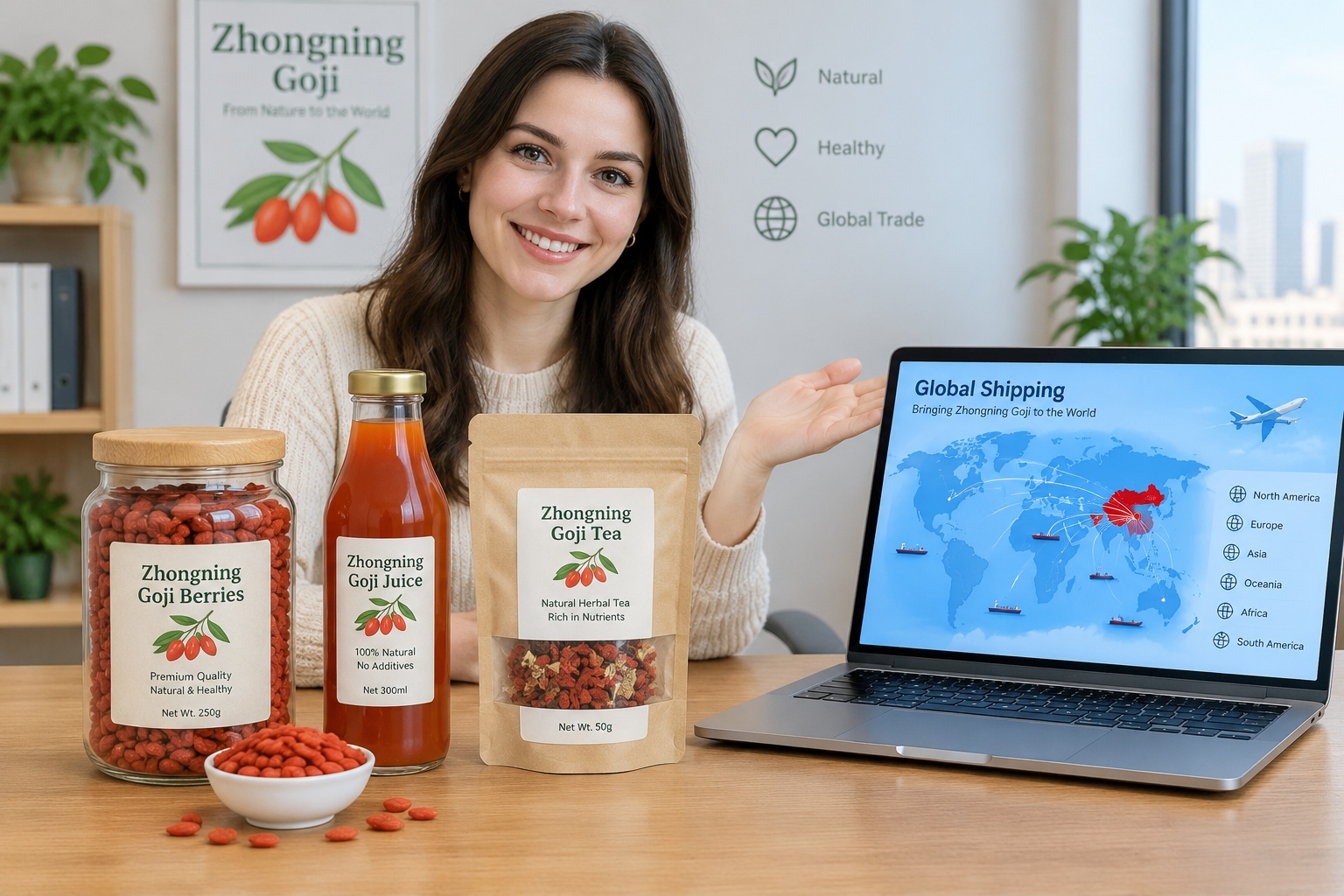
How Zhongning Goji Reaches the World
Visit a health food store in London or Tokyo, and you’ll likely find packages labeled “Ningxia goji.” But the story behind that label is one of logistics and quality control. Zhongning is connected to the outside world through highways, high-speed rail and air cargo. Fresh berries can be delivered to major Chinese cities within 24 hours; dried berries and extracts are shipped in temperature-controlled containers to Europe, America and Southeast Asia.
The county government has also established strict geographical indication (GI) protection, meaning only berries grown within the certified area can be called “Zhongning goji.” This stamps out mislabeling and ensures buyers get the genuine product. For foreign importers, this translates into confidence. “We used to source from multiple places in China,” says Elena Rodriguez, a food importer based in Barcelona. “Now we only buy Zhongning. The taste and quality are always consistent.” In 2024, Zhongning’s goji exports reached 9,800 tons, a year-on-year increase of 15%.
More Than Just a Fruit: A Rural Economy That Works
The goji industry is the backbone of Zhongning’s economy. Around 100,000 local residents—roughly half the county’s population—are employed in planting, harvesting, processing or logistics. Farms are a mix of small family plots and large cooperatives. Many farmers have doubled their incomes by leasing land to companies and working as skilled pickers. The county has also become a model for rural revitalization, with young people returning to start goji-themed tourism projects and e-commerce stores.
At the end of the day, what makes Zhongning goji the best is not just nature. It is a marriage of old-world patience and new-world precision. The berries help Chinese families stay healthy, and they bring prosperity back to the villages where they are grown. As Ma Yulan finishes her morning round, she smiles at the full pouch on her waist. “Every berry here has a story,” she says. “And the world is beginning to listen.”
Start the discussion at forum.chinacomes.com