

An Early Start in the Yellow River Plain
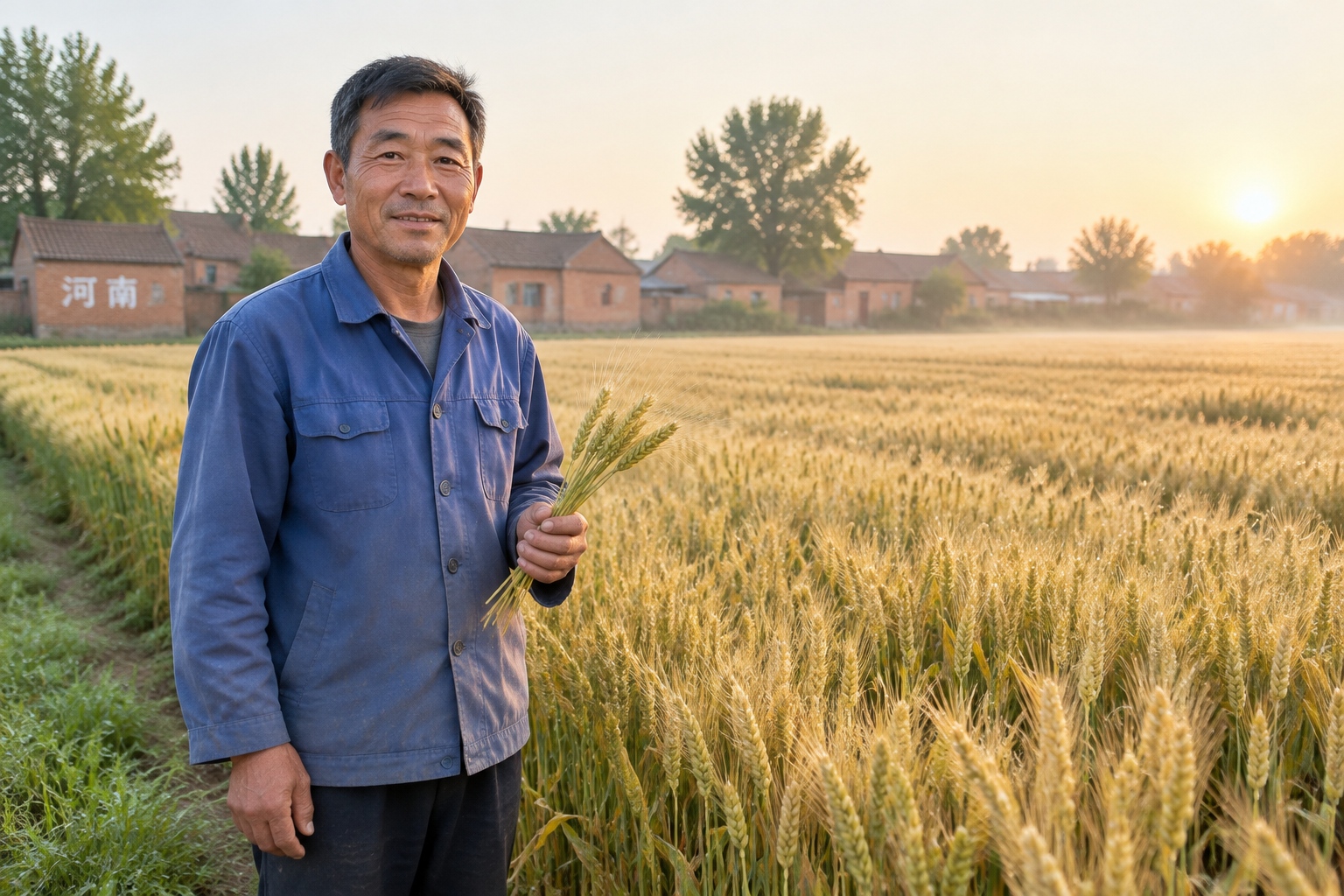
At 5:40 a.m., the sky over Luyi County is pale blue. Wang Jianguo, 52, puts on a faded blue work jacket, grabs the keys to his electric tricycle, and steps out of the courtyard. The air smells of wet soil and ripening wheat. Luyi County sits in the eastern part of Henan province, in the broad Yellow River floodplain. Henan grows more wheat than any other Chinese province, and Luyi is part of the core wheat belt.
Wang has about 14 mu of farmland — just under a hectare — split into several small plots, a legacy of the family plots passed down through generations. Some of his neighbors have rented their land to larger farms, but Wang still works it himself, with occasional help from his wife and hired laborers at peak season.
He rides his tricycle two kilometers past neat brick houses, a village clinic, and a newly installed solar streetlight, then turns onto a rutted earth road. His first plot is a neat rectangle of wheat, now at the late-milk stage. The heads are heavy and pale gold; in about ten days they will be ready for the combine.
Smartphone, WeChat, and the New Farmer’s Toolkit
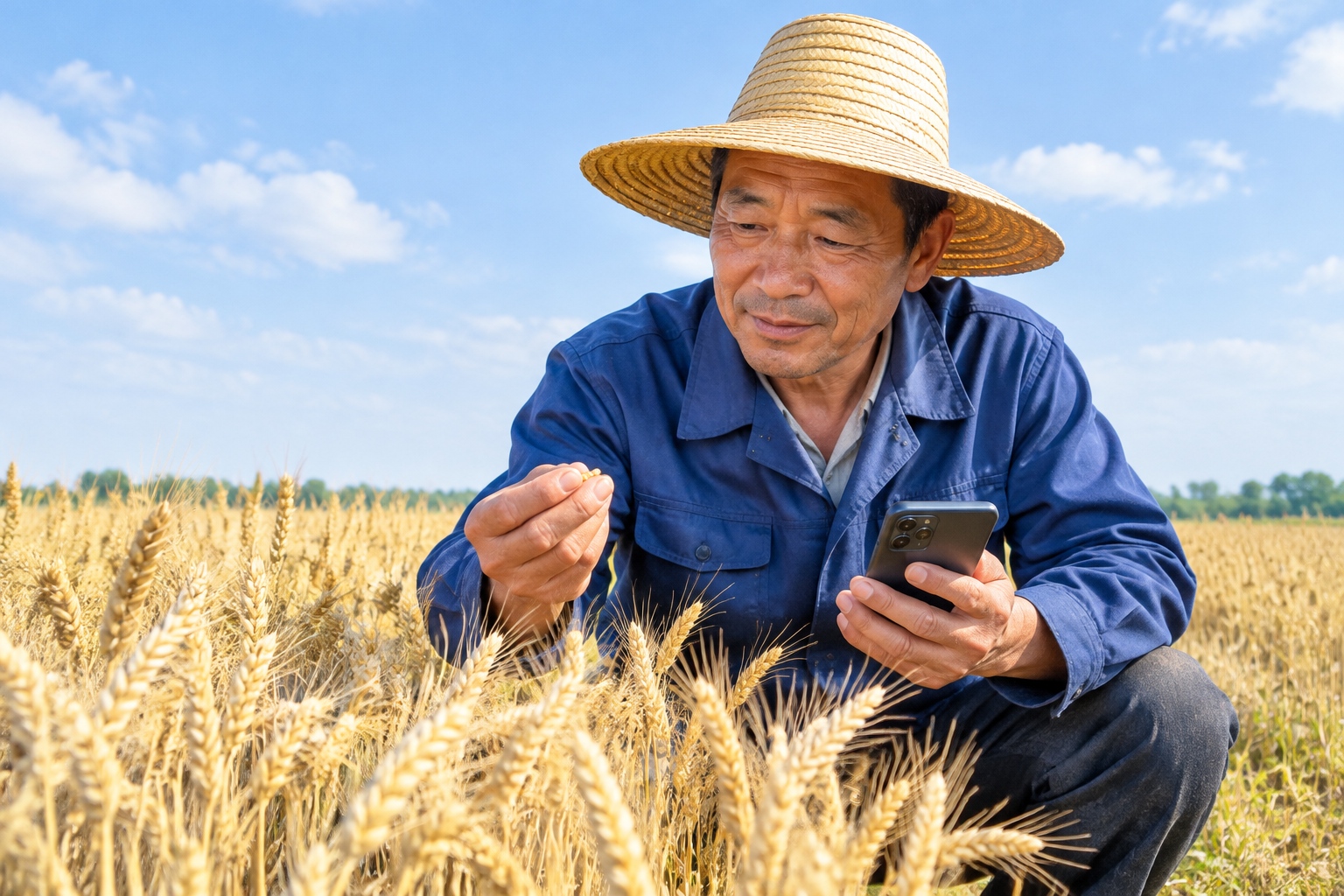
Wang pulls out a smartphone with a cracked screen. It is the same brand his father used to marvel at — the old man died in 2020 and never owned one. Wang checks the weather app: sunny for the next five days. Then he opens a WeChat chat group called “Luyi Agricultural Technical Exchange.” A video posted by the county agronomist explains how to identify wheat midge, a small mosquito-like pest that can ruin the grain when the spring is warm and humid.
“We sprayed last year at full flowering, but this year they say to wait a bit longer,” Wang says, squinting at the screen. He has learned to trust the agronomists in the group, and the cooperative’s contracted specialists, rather than relying only on memory.
The cooperative he refers to is the Zhongyuan Grain Cooperative, founded in 2017, now covering about 300 households. It buys seeds, fertilizer, and pesticide in bulk, negotiates with the local flour mill, and organizes drone spraying and harvesting. For Wang, the biggest advantage is not the collective discount but the direct link to the mill. “Before, we sold to middlemen who came through the village. Sometimes they paid very low prices. We had no bargaining power,” he says.
He fiddles with the phone and pulls up a photo of his last crop certificate from the cooperative. “For the mill in Zhoukou, we grow a specific high-gluten wheat variety. It sells for a premium, maybe 5 to 10 percent more than commodity wheat. That’s only possible with a contract.”
In the Fields: A Morning of Close-Up Work
Wang puts the phone back in his pocket and walks into the wheat. He crouches, pulls a stem, and rubs the grains between his thumb and forefinger. “These are still soft,” he says. “Another week and they’ll harden.” He does this every morning in the last two weeks before harvest, a habit he developed from his father. The fields are flat, stretching to a distant line of poplar trees. The sky widens under the plain’s big proportions.
Two weeks earlier, he had applied fertilizer with a small spreader. Now his main task is irrigation. He opens a valve on a steel pipe that connects to a well, and water starts to snake through the narrow furrows. He follows the water along the channel, stomping across the sticky soil to fix small leaks with his boots. It is hard, lonely work, but also quiet. The vibration of the pump motor is the only noise besides birds and the rustle of wheat.
“People say we’re all using drones now,” he says, wiping sweat from his forehead. “It’s true, the drone does the spraying. But the land still needs boots on the ground. You have to look at the plants, feel the leaves, smell the earth.”
The Arithmetic of a Wheat Field
At about 9:30 a.m., Wang stops for a break. Sitting on a low concrete slab with a thermos of tea, he mentally runs the numbers. On an average year, each mu yields about 500 to 600 kilograms of wheat. At the current contract price of 1.20 yuan per jin (half a kilogram) — roughly 2.4 yuan per kilogram, or about 37 US cents per kg — that’s about 1,200 to 1,400 yuan per mu. After paying for seed, fertilizer, diesel, pesticide, and occasional hired help, he nets perhaps 400 to 600 yuan per mu. On 14 mu, that’s about 6,000 to 8,000 yuan a year just from wheat. He grows corn after the wheat harvest, which gives him roughly the same again.
These figures are modest by urban standards, but the real income of a farmer like Wang is not just cash. There is also self-produced food — wheat for flour, vegetables from the garden, eggs from hens, and pork from the occasional pig. Housing is paid for. He is not rich, but he is not poor either. “If you don’t count your own labour, you can make a living,” he says with a smile. “If you count it, you’re better off working a factory job.”
Still, he stays. The land is a safety net. And when the harvest succeeds, it brings a satisfaction that a monthly salary cannot match.
Noon: Handmade Noodles and a Short Rest
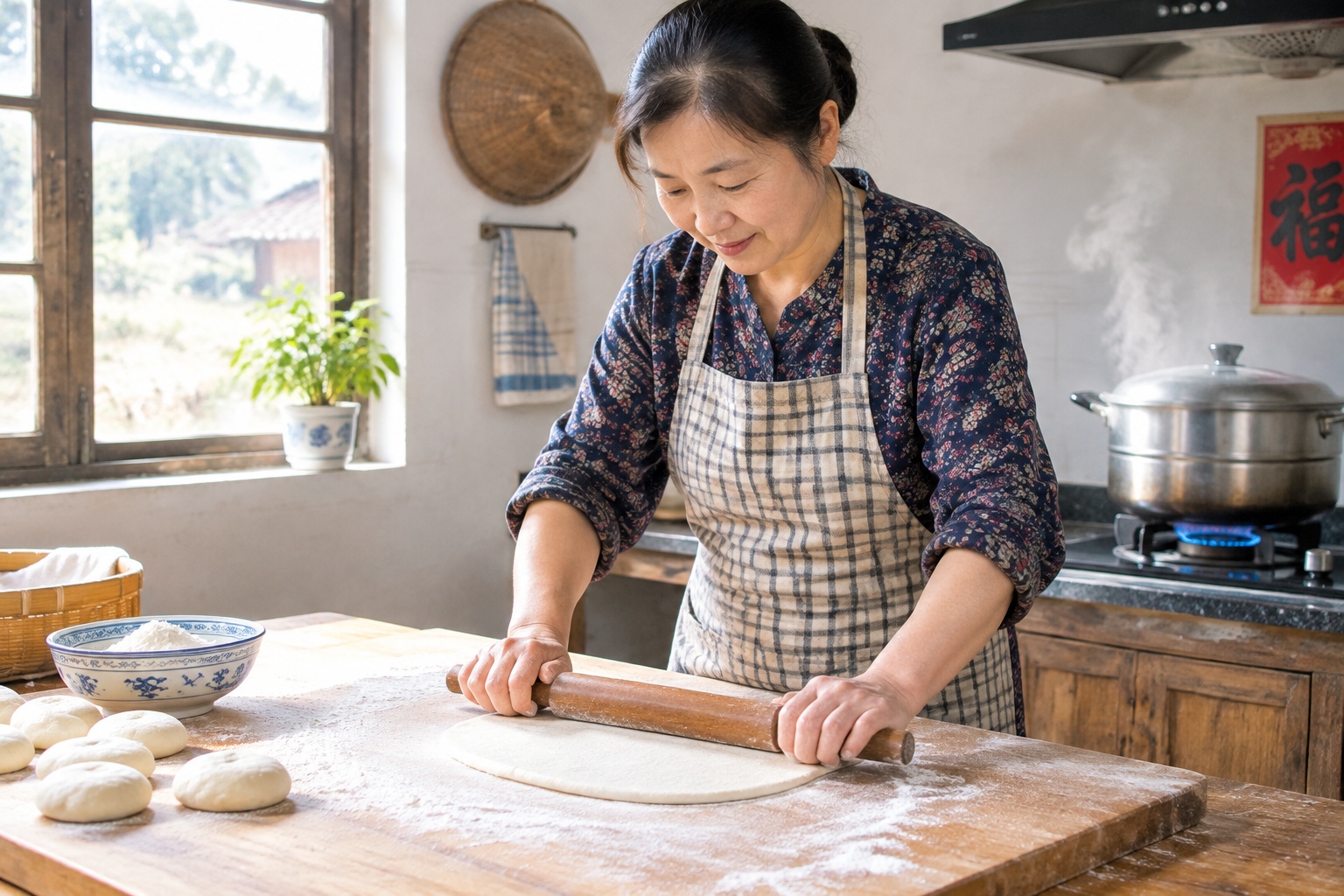
At noon, Wang returns home, a four-sided courtyard house with brick walls and a tiled roof. His wife, Li Xiaomei, is in the kitchen, kneading a ball of dough on a low table. The kitchen is simple: a gas stove, a steel sink, a row of spices in jars. Li has already boiled water for noodle soup. She rolls the dough thin, folds it, and cuts it into strips. The soup is made with tomatoes, eggs, and wild vegetables collected from the field edges.
Wang slurps the noodles under a shaded porch. The wheat in the soup is from last autumn’s harvest, ground into flour at the cooperative’s small mill. It is, in a very literal sense, the food he grows, processed on the same site, cooked at his own stove. That circular relationship is normal here, but it is also something he values. “In the old days, all our food came from the village,” he says. “It’s still mostly true.”
After lunch, he dozes on a bamboo bed for half an hour, then checks his phone. A message from the cooperative asks him to meet at their grain yard later in the afternoon.
Afternoon: The Cooperative Grain Yard
There are already a dozen farmers sitting on benches under the roof when Wang arrives. Manager Zhang Guofeng, dressed in dusty blue overalls, is going over a clipboard. The yard is a large concrete expanse with a 200-tonne steel silo, a weighbridge, and a small office building. A laboratory room holds moisture meters, a grain grinder, and a portable spectrometer used to check protein content.
Today’s meeting is about the upcoming harvest logistics. Zhang explains that two combine harvesters will arrive from the county’s agricultural machinery station on June 10. They will work village by village, and members must agree on a schedule so the machines don’t get stuck waiting. Wang signs up for the third day. “Last year we had to hurry because rain was coming,” he says. “This time we want to be better prepared.”
After the meeting, Wang walks over to the laboratory where a technician is testing a sample brought by another member. The technician pours the grain into a moisture meter. “13.2% — good,” he says. Then he takes a handful and rubs it between his hands, feeling for foreign seeds. The quality test is important because the flour mill pays premiums for wheat that meets high-grade standards, and the cooperative uses the results to sort batches at the reception point.
Wang takes a tour of the new dryer, a piece of equipment the cooperative installed last year with government subsidies. “If we have a rainy harvest, we’ll no longer have to dry the wheat on the road,” he says. “That’s a big deal.”
From Granary to City Table
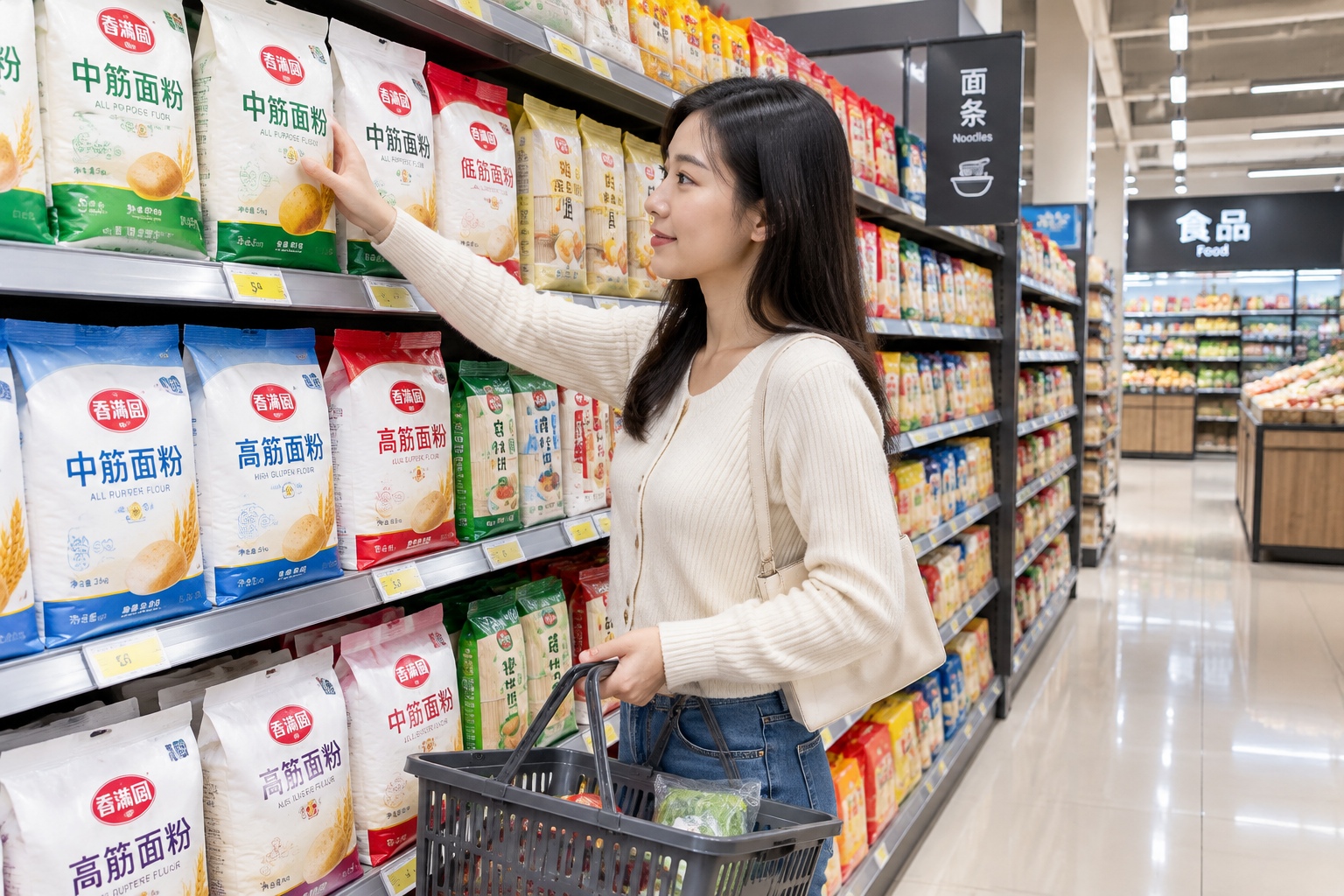
In the late afternoon, a truck loaded with wheat from a neighboring village begins to move slowly out of the yard. The driver is heading to the flour mill in Zhoukou, about 60 kilometers away. The mill grinds the grain into several grades of flour, mostly for the industrial bakery and noodle market. Within days, the flour will be shipped to city supermarkets and food factories across China.
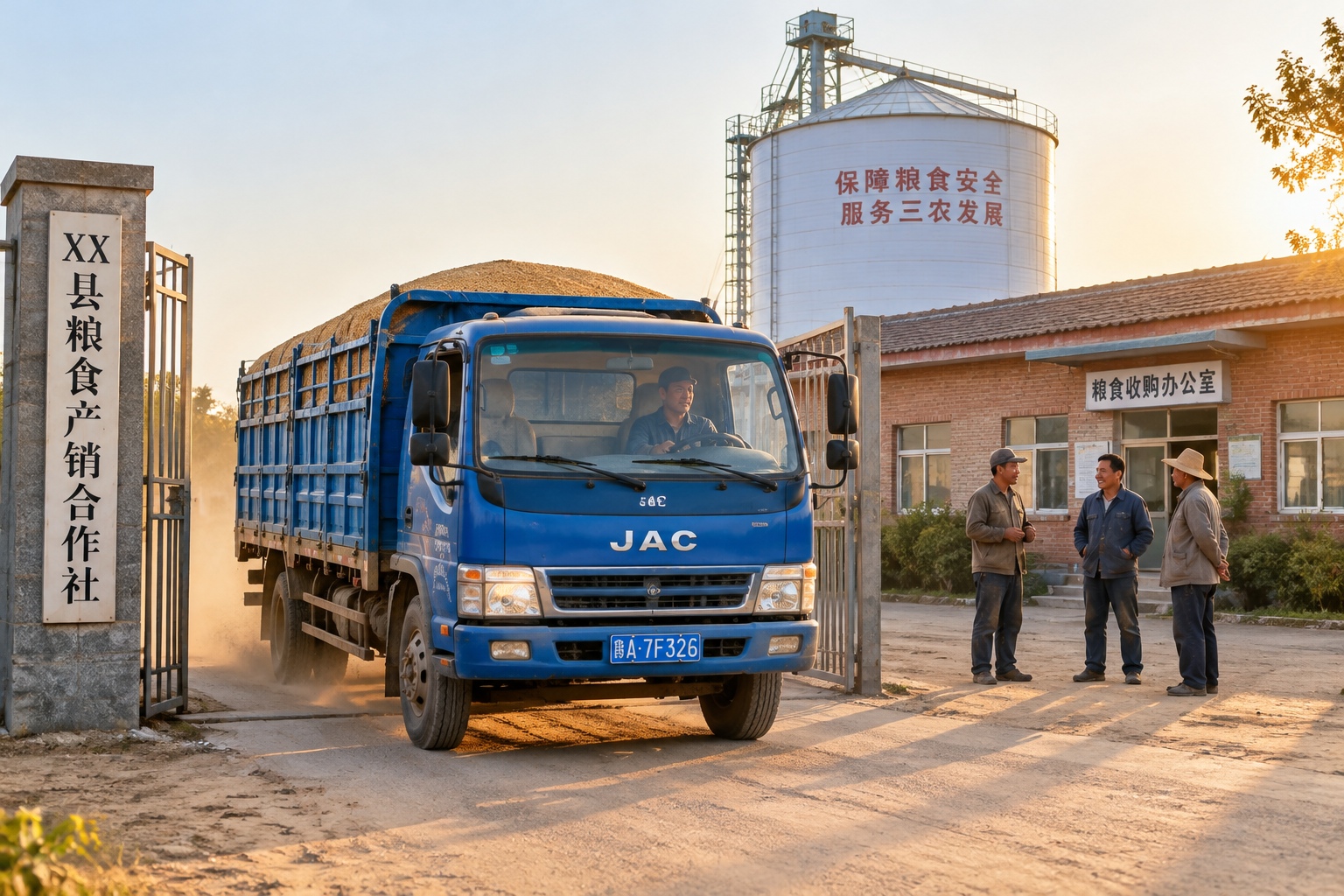
Wang watches the truck until it turns onto the asphalt road. He has seen this same scene many times, but this afternoon he thinks about the whole chain. “I’ve been to the mill once, on a field trip,” he says. “You see this big modern building with pipes and machines. But when you walk in, all the wheat looks the same. We grow the raw material. The market decides the value.”
Henan’s agricultural output is phenomenal: one-quarter of China’s wheat is grown in this province. The port city of Lianyungang is more than 300 kilometers away, but some specialty products are also exported. In the rural interior, however, the physical distance from field to table has been shrinking due to cooperative logistics and direct contracts.
Home Before Dark
Wang arrives home at seven, the sky just beginning to turn orange. He washes his hands under the courtyard tap and changes out of his dusty clothes. His daughter-in-law calls from the city in a video chat. “Have you harvested yet?” she asks. “Not yet, in a few days,” Wang says. She tells him to be careful. The grandchildren say hello and wave.
At the dinner table, there are again noodles, this time with a stir-fried eggplant and a piece of cold pork. Wang eats quietly and then checks the forecast on his phone. It hasn’t changed. He will wake up at 5:40 tomorrow, do the same routine, and the day after that. The cycle of growing and harvesting is older than the smartphone, older than the co-op, older than the country itself.
He stands at the door for a minute, looking at the last light on the wheat. “The work is never finished,” he says. “But the field is honest. You give it attention, and it feeds you.” And with that, he goes back in to watch a little television before sleep.
Start the discussion at forum.chinacomes.com