

A prototype begins with a bag of parts
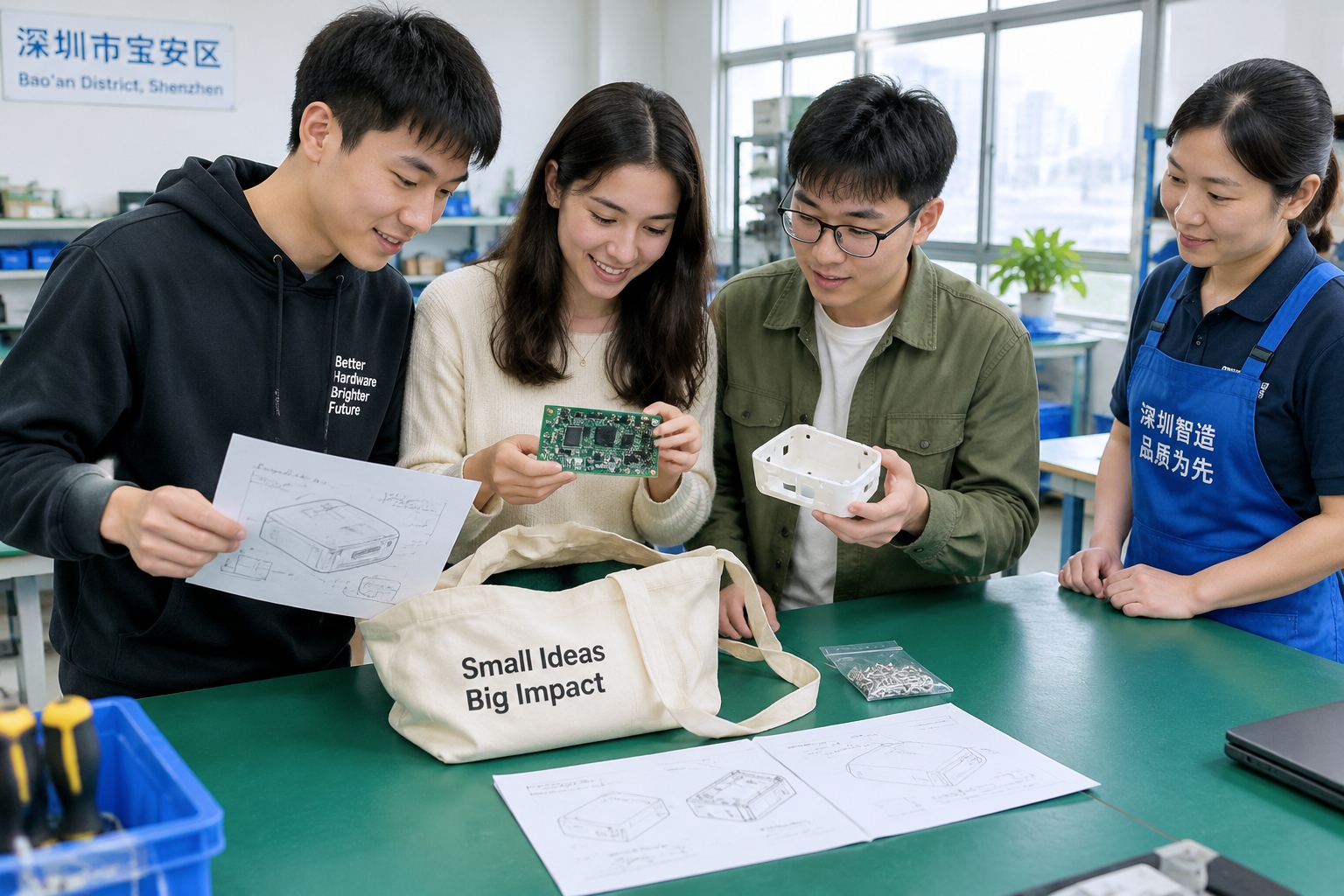
On a Tuesday morning in Bao’an, Shenzhen, three people walk into a small workshop carrying a canvas tote bag. Inside are a hand-drawn sketch, a bare circuit board, a 3D-printed plastic shell and a small bag of screws. They are not visiting a giant plant with rows of assembly lines. They are visiting a workshop with a dozen machines, a few technicians and a owner who asks to see the drawing first.
Within an hour, the team has a quote and a list of problems. The USB port opening is too tight. The screw bosses may crack. The plastic color is not quite right. None of this is fatal. By Friday, they have a working sample. It is not perfect, but it is real enough to hold, test and show to a potential customer. In hardware, that week matters.
This is a different way to look at Guangdong. The container ports and long assembly lines are still part of the story. But so are sample rooms, small workshops and engineering groups on WeChat. The province still makes things at enormous scale. It has also become very good at making a few things quickly, changing them, and making them again.
The old label is still real
Guangdong earned the label “factory of the world” for a reason. Cities such as Dongguan, Shenzhen, Foshan and Guangzhou built dense networks of factories making electronics, furniture, garments, appliances and components. Overseas buyers could place huge orders, and the system delivered. That system has not disappeared. If you need 100,000 phone cases or a million circuit boards, Guangdong can still do it.
What has grown alongside it is rapid prototyping and small-batch production. Rapid does not only mean faster shipping. It means a shorter loop between an idea and a physical object. A startup can make 50 units, test them, change the design, make 200 more, and only then decide whether to scale. That is a different kind of manufacturing relationship from the old image of a buyer sending a finished design and waiting for a container.
In many markets, a hardware founder might wait weeks for a custom circuit board or plastic enclosure, dealing with separate vendors for board fabrication, parts, machining, assembly and testing. In Guangdong, those vendors can sit in the same district, sometimes in the same industrial park. Proximity changes the conversation. You do not just upload a file into a portal. You can stand next to a machine and ask why a hole is 0.2 millimeters off.
Why the ecosystem works: density, small orders, and redoing it
First comes density. Shenzhen and the wider Pearl River Delta have component markets, PCB fabricators, mold shops, CNC workshops, 3D printing services, testing labs and packaging suppliers. Huaqiangbei is the famous electronics market, but the wider region is what makes the system work. Need a connector, a cable, a case or a rare screw? Someone nearby probably has it, or knows who does.
Second comes people. Mechanical engineers, electronics engineers, mold makers and technicians who can read a drawing and fix a fixture. Many learned their skills on the factory floor, not only in university. Their knowledge is practical: which plastic warps, which surface finish scratches, which tolerance is realistic for a small run. That kind of judgment is hard to put in a brochure. It shows up when a sample comes back wrong and someone knows what to change.
Third comes a willingness to take small orders. A 30-person workshop in Dongguan may run a 500-piece order while waiting for a larger job. It is not charity. Small orders often pay more per unit. Owners negotiate on WeChat, send photos of samples, and use courier receipts as a project log. A founder can send a revised CAD file at night and see a new part in the morning.
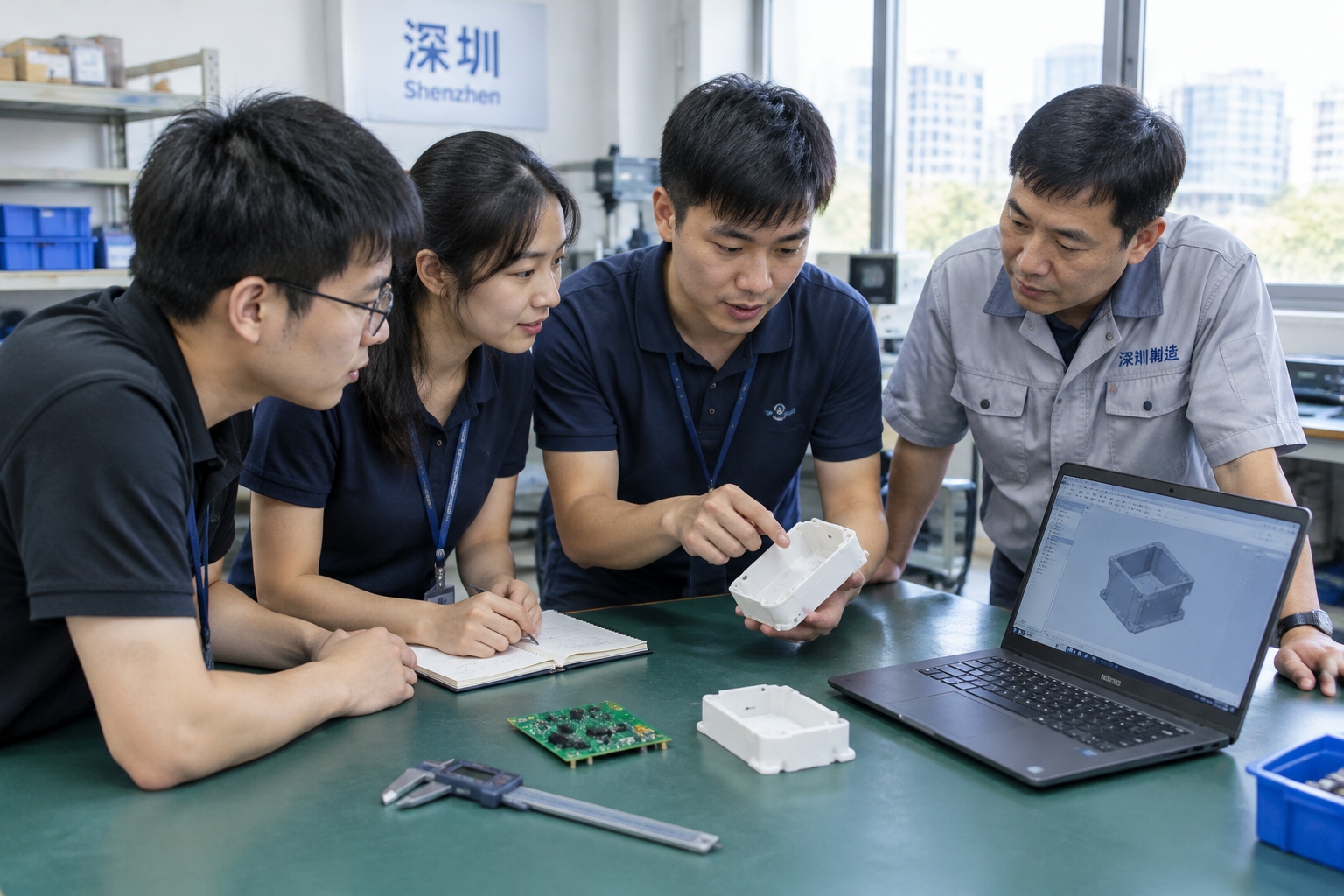
Iteration is the core. A team prints a shell, assembles it, finds the button too stiff, changes the CAD file, mills a new version and tests it again. Each loop may take hours or days, not months. The factory floor becomes part of the design process. This is why rapid prototyping is not just 3D printing. It is an industrial arrangement: suppliers, engineers, small machines, fast delivery and people who are used to redoing things.
The people behind the speed
A typical founder in this world might be 28, previously employed at a consumer electronics company, now working from a shared office in Shenzhen. At 9 p.m. he is still in a WeChat group with a factory manager, sending a photo of a cracked sample and asking for a new material. “The first sample is always wrong,” he says. “The question is whether you can make the fourth sample fast.”
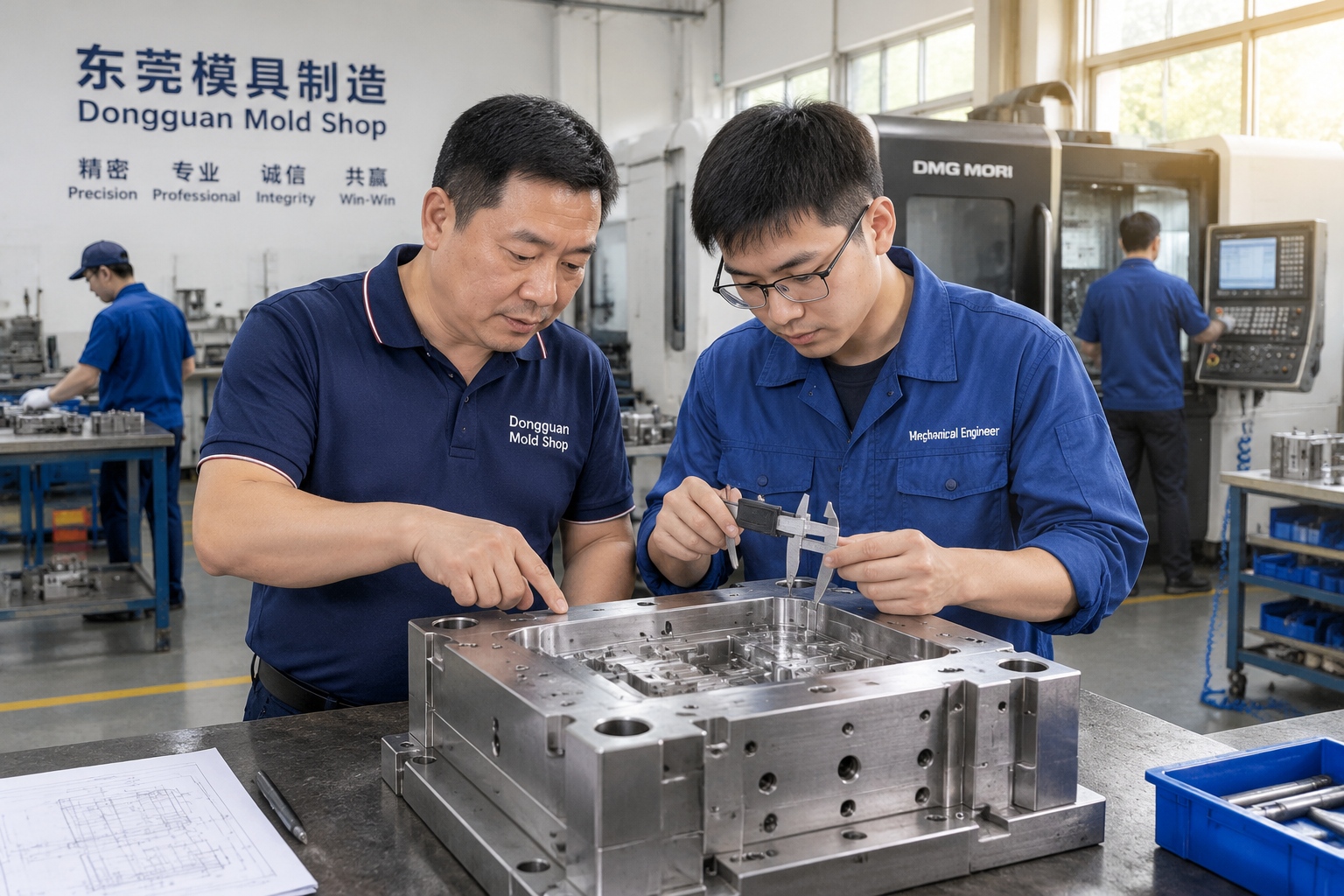
Behind him is a mechanical engineer, let us call her Chen. She spends her morning adjusting draft angles in CAD and her afternoon at a mold shop in Chang’an, Dongguan. She checks the steel, the cooling lines and the color of the plastic. A proper mold can cost tens of thousands of yuan and take days or weeks to cut. For a small run, the team may choose CNC machining or 3D printing instead. Every choice trades speed against cost and finish.
The factory owner matters too. Mr. Huang runs a small workshop in Dongguan with about 40 workers. Big orders pay the rent, he says, but small orders keep the team sharp. His technicians work overtime before deadlines, order takeout and drink iced tea. Young workers move between jobs, take the metro or ride e-bikes, rent shared apartments and spend on milk tea, phones and short trips. Some see a path to becoming technicians or engineers. Others change jobs often. The speed of the ecosystem rests on their ordinary routines.
What it means on the street
Industrial upgrade is not only a boardroom story. In Shenzhen and Dongguan, old factory buildings now hold design studios, 3D printing shops and coffee bars filled with laptops. At lunchtime, noodle shops and Hunan restaurants fill with engineers and factory workers. Rents rise near new industrial parks. Landlords repaint buildings. Delivery riders wait outside sample rooms with small packages.
Some workers benefit from higher-skill jobs. Others feel pressure as low-end assembly moves inland or abroad. Ordinary residents talk about jobs, school places, metro lines and food prices, not “supply chain resilience.” Young people buy affordable phones and e-bikes, spend on milk tea and travel, and still worry about rent and overtime. The city’s tech ambition is real. So is the need for practical stability.
The limits of speed
Speed is not a guarantee. Quality varies. A cheap prototype can look good and fail reliability testing. Intellectual property concerns are real: founders worry about designs being copied, and factories worry about being blamed for unclear files. Communication costs are high. A WeChat voice message is fast, but it is not a contract. Small orders cost more per unit, and some suppliers quietly deprioritize them when a bigger customer calls.
Certification, safety testing and international logistics still take time. No amount of factory density removes regulatory steps. Some factories still prefer big orders. Some advanced components remain hard to source. The ecosystem is dense, but it is uneven. The useful question is not “Is Guangdong fast?” but “Which part of the process can be fast, and which part must be slow?”
Look at the sample room, not only the port
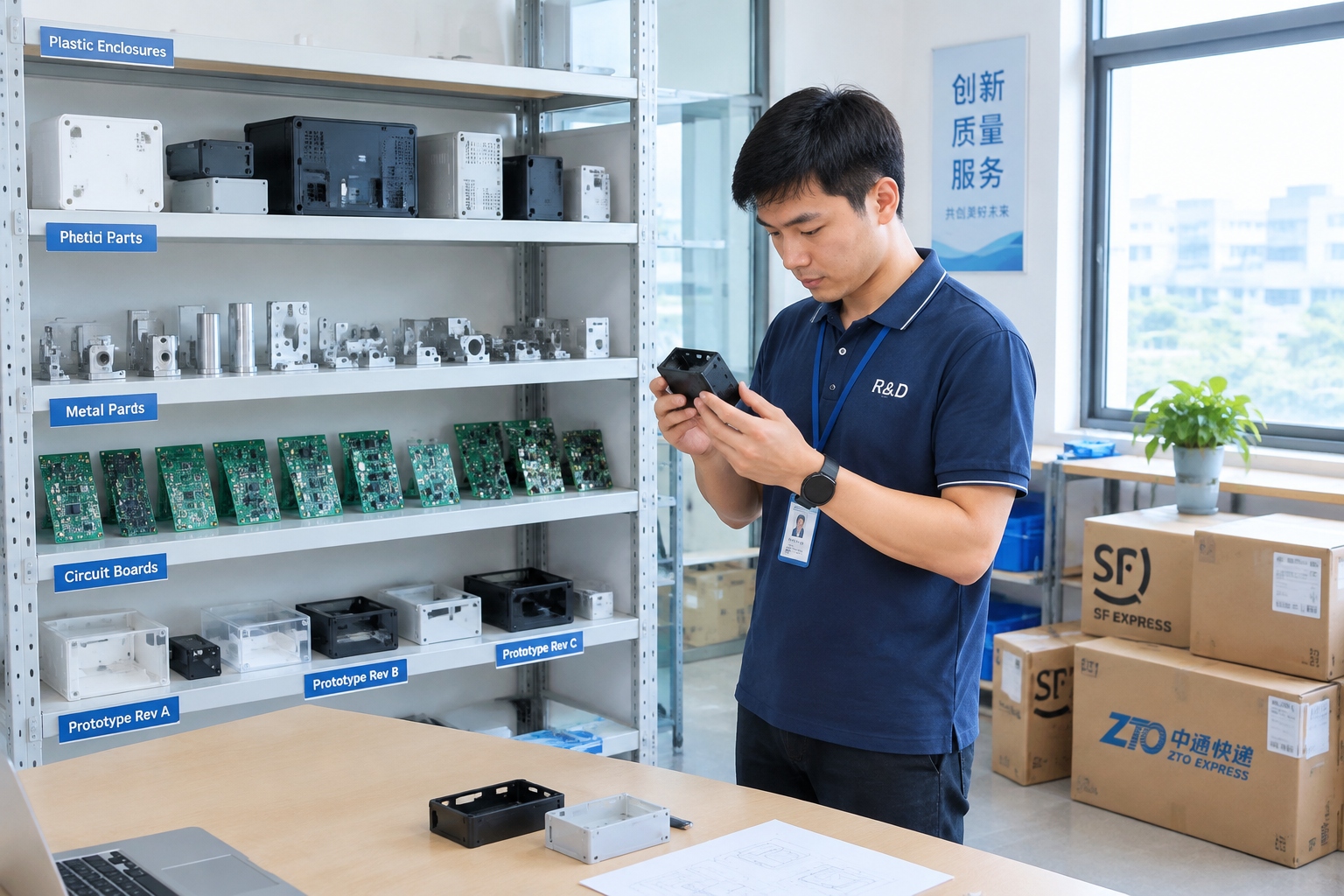
For overseas readers, Guangdong’s change is easiest to see in a sample room: shelves of plastic shells, metal brackets, circuit boards and half-finished gadgets, each with a label and a revision number. It is also visible in midnight WeChat engineering groups and in courier slips for small packages sent between workshops. The world factory is still here. But it now does something more interesting: it lets a small team turn a rough idea into a physical product, test it, and try again.
That does not mean everyone in Guangdong is a hardware entrepreneur. Most people are living ordinary lives, working shifts, raising children and commuting. But the ecosystem around them has changed the pace of possibility. Next time you see “Made in Guangdong,” ask a second question: how many versions came before this one? The answer may tell you more about China’s manufacturing future than a container ship ever could.
Start the discussion at forum.chinacomes.com