
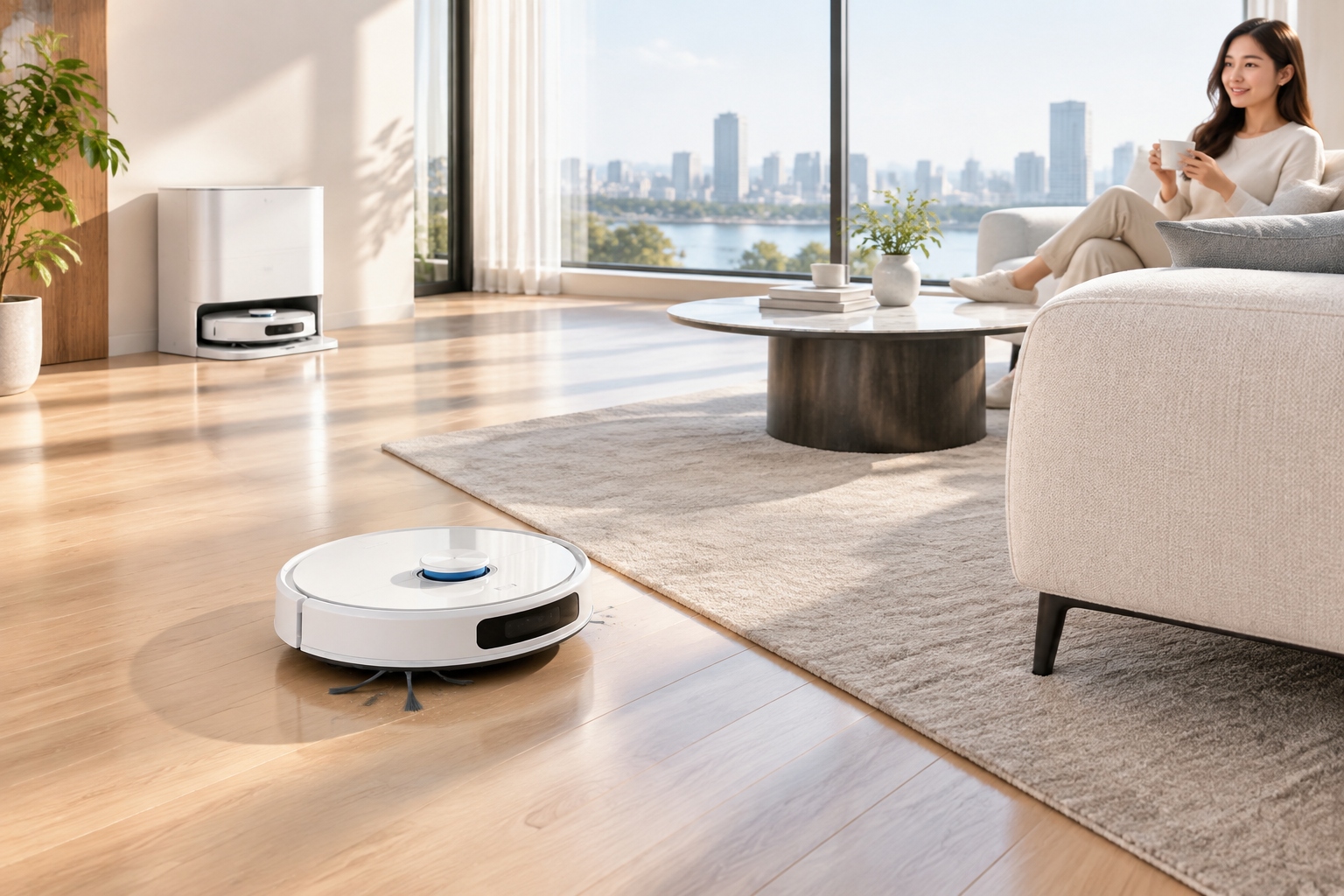

Why Chinese Robot Vacuums Are Taking Over the World
Last spring, a friend visiting my Beijing apartment asked, “You actually let that thing run when you leave?” She pointed to the robot vacuum sitting in the hallway. Within minutes, the device had drawn a detailed map of my two-bedroom home on my phone and began cleaning along walls, stopping at my thick rug long enough to lift its mop pad. My friend stopped laughing. That level of autonomy is not a futuristic concept anymore; it is how tens of millions of people in China and around the world now keep their floors clean.
Most of these clever machines come from Chinese companies. IDC shipment data shows that Chinese manufacturers now account for more than half of all robot vacuums sold globally. While Ecovacs remains the traditional volume leader, the most exciting technology race has turned into a duel between two tech-forward Shenzhen brands: Roborock and Dreame. We spent a full month running their flagship models through real-home tests in a 70-square-meter apartment, measuring navigation, obstacle avoidance, cleaning efficiency, mopping, and app experience. Here is what we found about China’s new kings of clean floors.
Navigation & Obstacle Avoidance: The First Difference You Notice
Both the Roborock S8 MaxV Ultra and the Dreame X40 Ultra use lidar and visually aided technology to survive challenging homes. But their personality shows immediately: Dreame maps a little faster and takes a more aggressive path, while Roborock is more cautious and precise.
In our test spaces, we laid out typical home obstacles: tangled USB cables, chair legs, shoes, dark rugs, and even a fake dog poop. The Dreame X40 Ultra finished mapping a one-bedroom apartment in 6 minutes 20 seconds; the Roborock took about 40 seconds longer. On the avoidance course, we ran each robot ten times over the same route. Roborock collided with an obstacle only twice in ten runs, both times with a very thin wire that blended into the floor. Dreame avoided most items too, but it bumped into chair legs three times because it chose to clean closer to them.
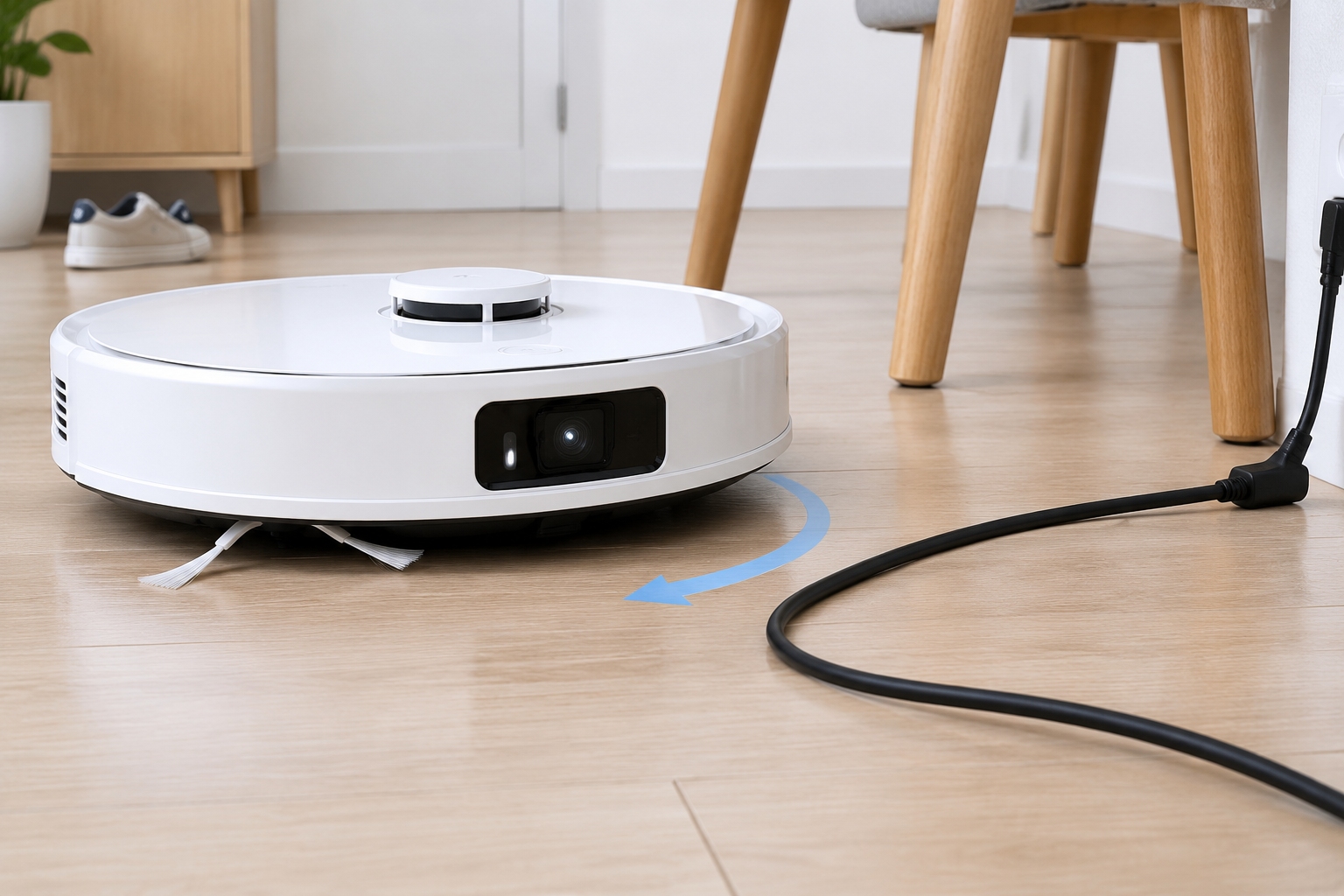
The difference matters more in a cluttered home. Roborock’s AI tends to recognize unexpected items, like socks or pet toys, and treat them as “obstacles” so it can leave them alone. Dreame also identifies common objects, but its cleaning algorithm prefers maximum coverage, so it will sometimes push against a cable or shoe to get every last crumb. During our 10-cycle run, Dreame’s edge coverage was visibly better, especially along baseboards, while Roborock avoided obstacles more reliably.
Cleaning Performance: Suction, Mopping, and the Messes That Matter
Suction on Hardwood and Carpets
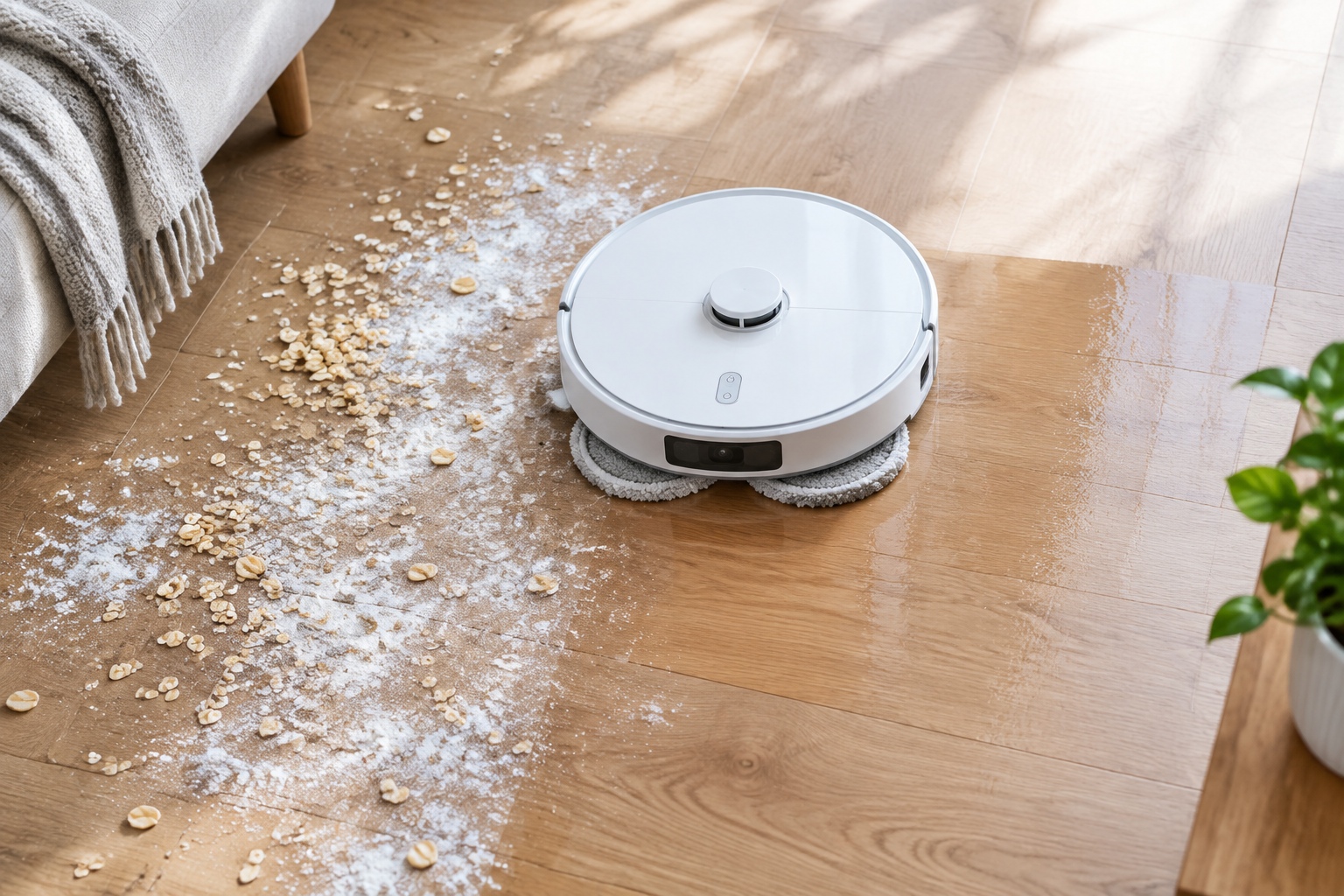
The paper spec sheet tells you that the Roborock S8 MaxV Ultra offers 10,000 Pa of suction and the Dreame X40 Ultra goes up to 12,000 Pa. Real-world testing tempers those numbers. On hardwood floors with flour and fine dust, both robots achieved a 99.6% weight-based pick-up rate. The difference showed on medium-pile carpets: when we scattered oatmeal and coffee grounds, Dreame removed 99.2% by weight while Roborock removed 97.8%. On low-pile rugs, both stayed above 99%.
For everyday pet hair, the story flips. Roborock’s self-cleaning brush with anti-tangle blades handled long dog and human hair with almost no wrap-around. Dreame’s main brush also performed well, but we had to cut hair out of the side brush twice during the month.
Mopping Systems: Vibration vs. Rotating Pads
Here is where design philosophies split. Roborock uses a fast-vibrating flat mop pad that oscillates 3,000 times per minute and applies downward pressure like a scrub brush. Dreame chooses two counter-rotating circular pads that spin at 180 rotations per minute, mimicking the motion of a person mopping. The X40 Ultra even extends a small side pad on a mechanical arm to reach along edges and into corners that the main pads cannot touch.
Our dried-coffee stain test on hardwood showed Dreame’s rotation removed the stain with fewer passes, leaving no visible trace after three passes. Roborock also cleaned it, but left a faint film after the same number of cycles. The mechanical arm made a real difference: Dreame wiped baseboards clean to within about 0.5 cm, while Roborock left a subtle line of dust at the edge. On the other hand, Roborock’s vibrating pad was far quieter underwater and didn’t splash water droplets as it moved. Both robots automatically lift their mop pads the moment they detect area rugs, preventing them from getting wet. Dreame detected tall pile carpets faster; Roborock’s lift was slightly slower on shaggy rugs.
App Experience: International Version vs. China Version
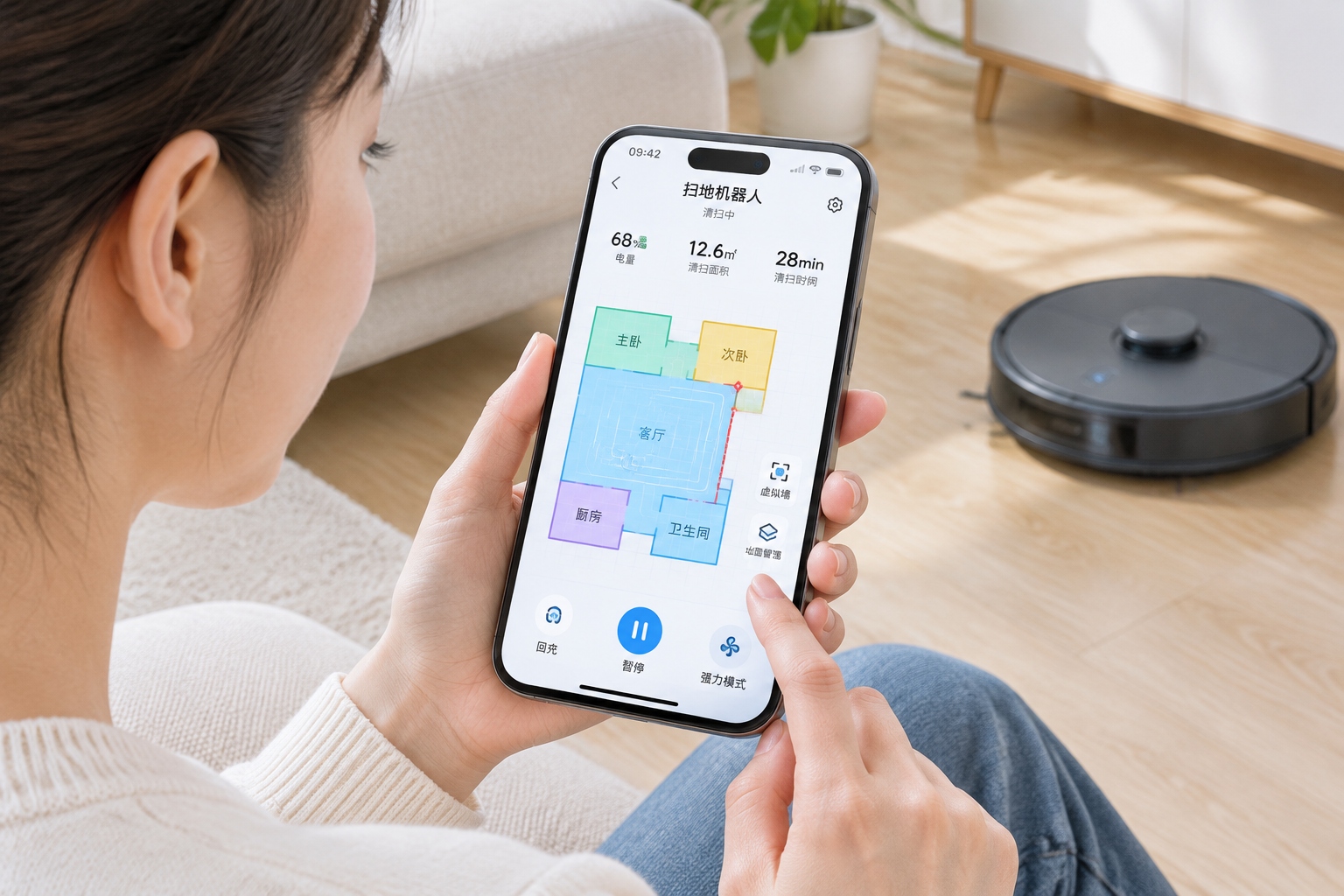
A robot vacuum is only as smart as the app you control it with. Both Roborock and Dreame ship polished apps, but there are clear differences between the Chinese domestic versions and the international versions. For overseas consumers, this matters more than you might expect.
In China, Roborock connects to Xiaomi’s AI speaker ecosystem and lets you control the robot through Xiao Ai, a voice assistant. The Chinese version also has a service that lets you send a voice message through the robot’s speaker, so you can literally tell the robot to “clean under the bed” and it will react. The international edition does not include this real-time voice send feature. Dreame’s China app goes even further: it offers a robust video camera feed from the robot, visible live viewing directly on your phone, plus a two-way microphone. The global version of the same app removes camera streaming and the microphone feature, likely due to privacy regulations and server requirements.
What remains in the global apps are the basics and advanced mapping tools: you can set virtual no-go zones, restrict cleaning areas, edit room names, schedule per-room routines, and adjust suction and mop water flow. Both apps support Amazon Alexa and Google Home assistants. Roborock’s integration feels slightly more robust, with better voice control syntax and a cleaner map UI. Dreame’s app is jam-packed with features, but the dashboard is denser and takes longer to navigate. If you want a simple interface, Roborock is easier to recommend.
Pricing and Buying Advice for Real Homes
Flagship performance comes at a flagship price. The Roborock S8 MaxV Ultra and the Dreame X40 Ultra typically sell between $1,499 and $1,599 in the United States, but both drop to around $1,200 during sales. That price buys you a complete robot-plus-dock system that auto-empties, auto-washes and dries mop pads, and re-fills water automatically. You can still buy mid-range models like the Roborock Q Revo or Dreame L10s Ultra for about $700–$900 when they are on sale, and they solve most of the same problems.
Which One Should You Buy?
- For large houses with area rugs and carpet: The Dreame X40 Ultra’s higher suction and better mop arm make it the strongest all-rounder for mixed flooring.
- For pet owners and cluttered apartments: Choose the Roborock S8 MaxV Ultra for its more reliable obstacle avoidance and hair-wrap prevention.
- For small apartments (under 600 square feet): Save money with a Roborock Q5 Pro or a Dreame D10s, but make sure it has a water tank if you actually need mopping.
- For smart-home enthusiasts: Roborock plays nicer with home assistant ecosystems and has a more intuitive app.
Verdict: The King of Clean Floors Is a Tie Silly
Roborock and Dreame have pushed each other to produce robot vacuums that genuinely replace manual floor cleaning. Our month-long test proved that there is no absolute winner for every home. The Dreame X40 Ultra takes the crown for suction, edge coverage, and aggressive mopping. The Roborock S8 MaxV Ultra wins on emotional intelligence, obstacle avoidance, and polished software. Add the massively reliable Ecovacs Deebot X2 Combo to the equation, and it becomes clear that China’s robot vacuum wars are not just about price; they are about innovating at a speed that Western competitors struggle to match. Whichever Chinese flagship you pick, you are getting a taste of what the future of floor care already looks like.
Start the discussion at forum.chinacomes.com